
You open your kitchen cabinet, your bathroom drawer, or your gift list and realize half the stuff you buy on autopilot is forgettable. The coffee is fine. The soap is fine. The candles look like every other candle. You can do better, and local businesses often give you that upgrade.
Buying from independent makers is one of the easiest ways to improve what you use every day. You get products with more care behind them, sharper quality, and details that feel considered. You also get a buying experience that feels human instead of automated, especially when brands sell through a direct-to-consumer model that lets you buy straight from the people making the product.
The community benefit is real too, but that is not the only reason to do it. The bigger win for you is simple. Better beans from the neighborhood roaster. Better skincare from someone who knows the ingredients. Better pantry staples, home goods, and gifts that feel specific, useful, and worth the money.
These nine ideas will help you support a local business in ways that stick, while getting products and experiences you will be happy to bring into your routine.
Table of Contents
1. Go Direct With Regular Buys and Reorders
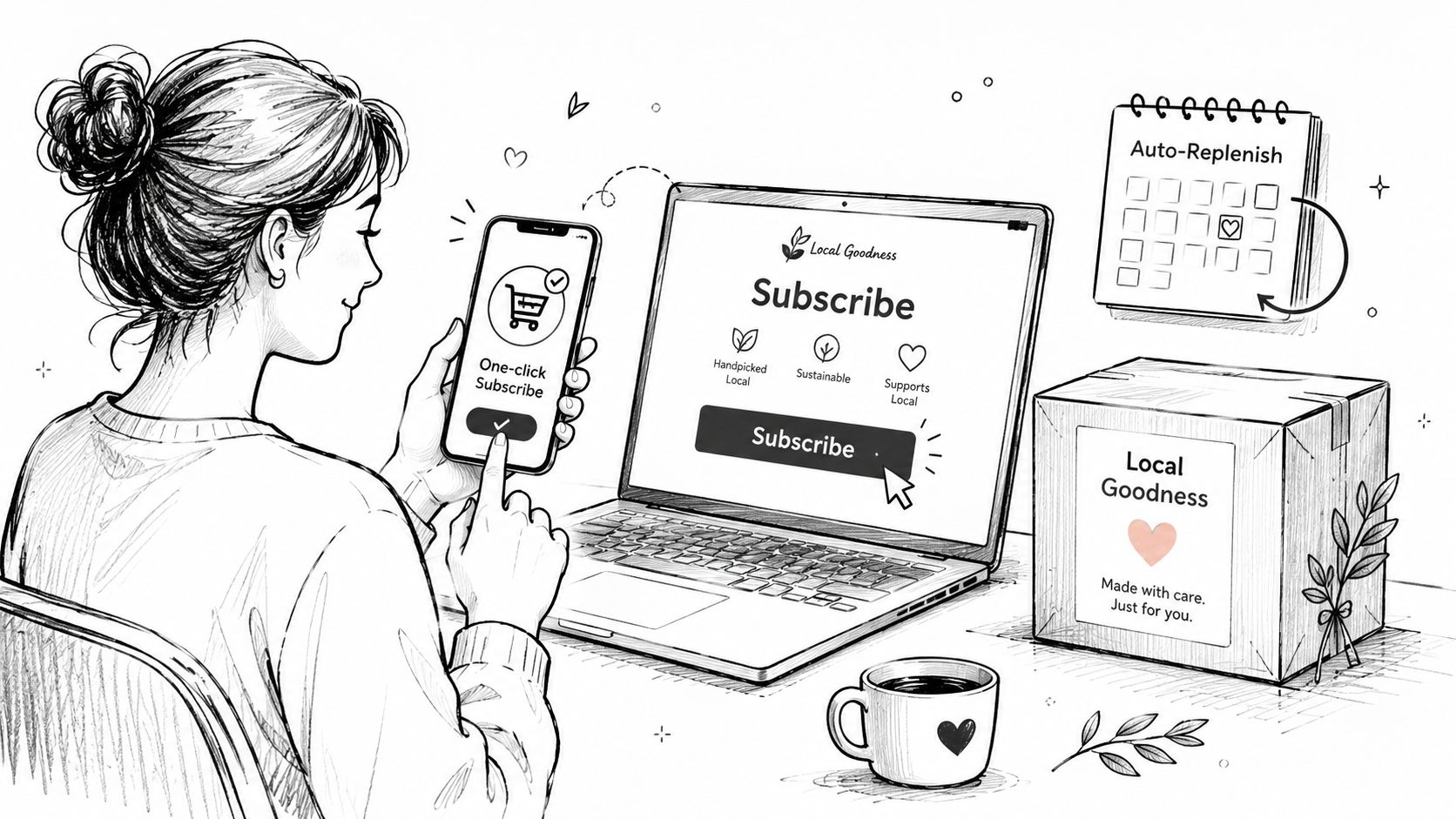
You run out of coffee on a Tuesday, open a big marketplace app, and settle for whatever ships fastest. That habit is convenient, but it usually gets you a more generic product and zero connection to the person who made it. A better move is to buy your repeat-use staples straight from an independent brand you like, then reorder before you run low.
Regular direct orders do more than check a box. They give you fresher products, clearer sourcing, and a smoother buying experience once you find the right fit. They also help small businesses plan inventory and keep quality high because they can count on real demand instead of random one-off sales.
Pick the products you already buy anyway
Start with products that are already part of your week. Coffee is the easiest place to begin because you know whether you go through a bag in two weeks or six, and you notice quality fast.
A solid example is Pumpkin Spice Flavored Coffee, Indonesian Medium Roast, Pumpkin Pie Notes, 12 oz Bag, Whole Bean or Ground | Desert Hills Roastery by Loyaltie. It is described as a smooth Indonesian medium roast with a medium-to-heavy body, mild sweetness, and a familiar pumpkin spice finish. If that sounds like your everyday cup, reorder it directly and skip the constant search for a substitute that never tastes quite right.
Practical rule: If you buy it at least every other month, set it up as a direct reorder.
Keep this simple.
- Start with one category: Choose coffee, face serum, vitamins, or pet food.
- Set a realistic cadence: Monthly is easier to manage than placing rushed replacement orders.
- Keep a short rotation: Save two or three independent brands you want to try next, not twenty.
- Buy from businesses that earn repeat trust: Clear policies, consistent quality, and good communication matter. This guide on how businesses build customer trust online explains what to look for.
- Learn the model: If you are new to buying straight from brands, this guide to direct-to-consumer selling explains why buying without a middleman often feels simpler and more personal.
For makers, this is the kind of customer relationship worth protecting. The brands that make reordering easy, ask for useful feedback, and stay consistent are the ones people keep in their routines. If you sell online, these effective review generation strategies can help turn first-time buyers into confident repeat customers.
2. Share Your Experience Online Photos Videos and Reviews
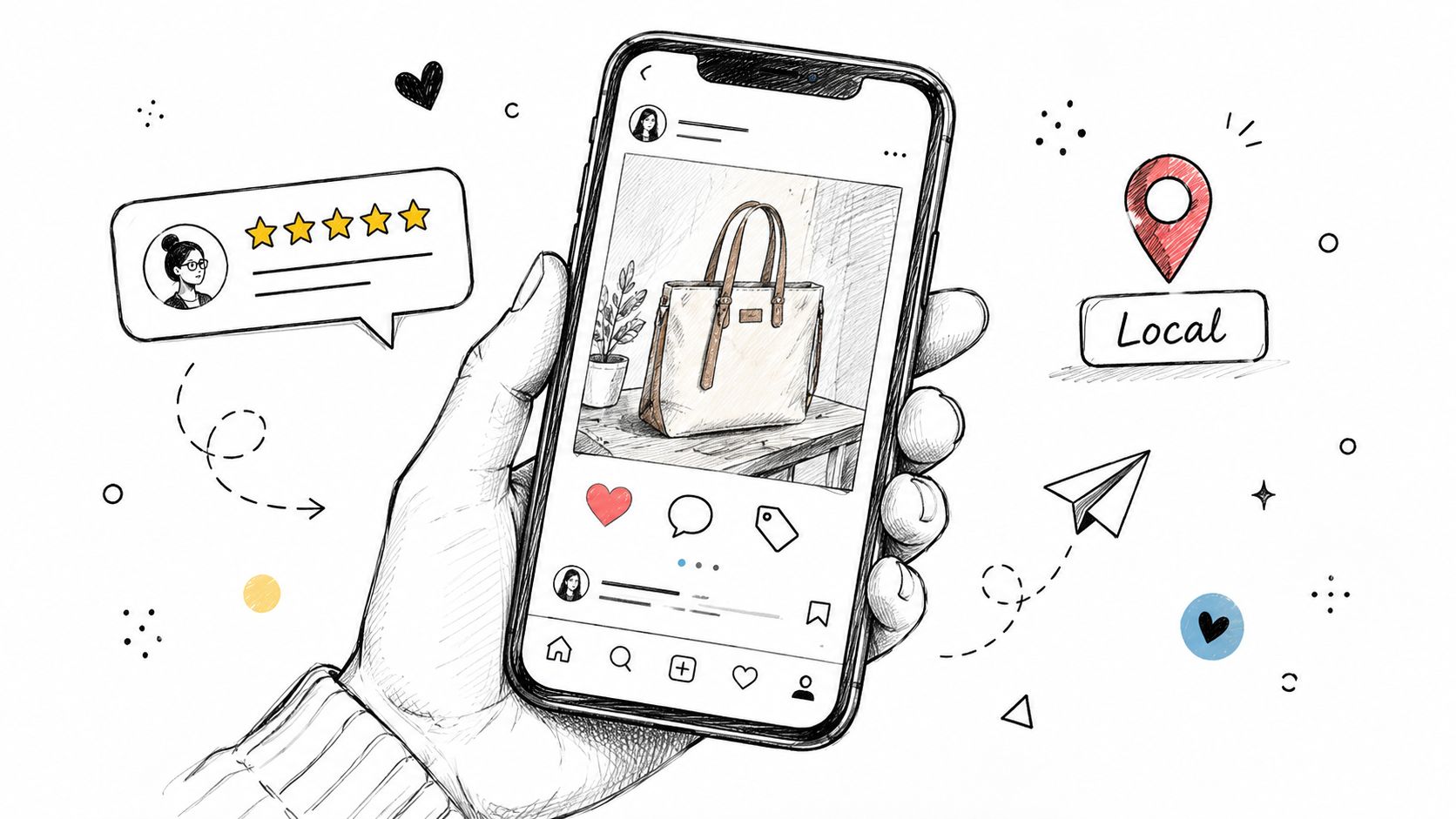
If a product is good enough to become part of your routine, show people. A quick photo on your counter, a short video of an unboxing, or a thoughtful review on the product page can help someone else decide to try it.
This is one of the lowest-effort, highest-impact ways to support a local business because you're adding context that a product listing can't. You're showing what it looks like in an actual kitchen, bathroom, gym bag, or dog treat jar.
Show how the product fits into real life
Don't worry about making polished content. Useful beats polished almost every time. If you post your tea steeping on a rainy night, or your morning coffee setup before work, you're giving the brand something much better than generic promotion. You're giving proof that the product belongs in a real person's day.
A good review should answer simple questions:
- What did you buy: Name the product clearly.
- How do you use it: Morning routine, post-workout, evening wind-down, daily pet feeding.
- What stood out: Texture, flavor, scent, ingredient transparency, packaging, ease of reorder.
- Who is it for: Someone who likes smoother coffee, fragrance-light skincare, or cleaner ingredient lists.
Good customer content doesn't sound like an ad. It sounds like, “I tried this, here's where it fits, and here's why I'd buy it again.”
If you want to make your review more useful, these effective review generation strategies are also a good reminder of what details buyers look for. And if you run a brand yourself, Loyaltie's article on how to build customer trust is worth reading because trust grows from exactly this kind of specific, everyday feedback.
3. Become a Champion With Referrals
When you find something you love, tell one person immediately. Not ten. One.
That keeps your recommendation believable and personal. You're not broadcasting. You're matching a product to someone who'll enjoy it. Your friend who's tired of bland grocery-store coffee. Your sister who's always testing new skincare. Your neighbor who spoils their dog and reads every ingredient label.
Recommend like a friend not a marketer
The best referrals sound casual. “You'd like this roast because it's smoother than the stuff you've been buying.” Or, “This face oil absorbs fast and doesn't leave that heavy finish you hate.” That's what gets people to click, ask questions, and order.
Try this approach:
- Send it after a good experience: Right after your second or third reorder is ideal because you know it wasn't a fluke.
- Explain the fit: Tie the product to the person's habits.
- Keep it simple: A text, DM, or quick mention at dinner works.
- Answer follow-up questions: Tell them how often you use it, what it smells like, or whether you'd buy it again.
Some brands offer referral links or store credit. That's a nice bonus, but it shouldn't be the reason you do it. The core value is helping a great maker find another customer who's likely to stick around.
A tea brand can grow because one member of your book club brings a box to the next meeting. A pet brand can gain a loyal customer because you mentioned it at the dog park. That's how independent brands spread. Person to person, with actual trust behind the recommendation.
4. Encourage Creative Team-Ups and Bundles
Some of the best products don't show up alone. They show up as combinations that make life easier and more enjoyable. A coffee roaster paired with a mug maker. A tea brand paired with a candle company. A skincare maker paired with a soft headband or travel pouch.
When you buy those combinations, or even suggest them, you help independent brands grow together instead of competing for attention separately.

Buy the pairings you wish existed
Think about your own routine. What naturally goes together?
Coffee and biscotti. Herbal tea and a ceramic mug. Face serum and a gentle cleanser. Dog treats and a storage tin. If you yourself would buy those together, there's a good chance other people would too.
A thoughtful bundle feels less like “more stuff” and more like a ready-made routine.
You can help this happen in very direct ways:
- Comment with ideas: If two makers already follow each other, suggest a pairing.
- Buy collaborative drops: Holiday boxes, gift sets, and seasonal bundles often introduce you to a second brand you'll end up loving.
- Follow the partner brand too: One good product usually leads to another.
- Give feedback after buying: Tell the maker what worked and what you'd love to see next.
This is especially helpful if you're buying gifts. A bundle solves the “what do I get them?” problem while also introducing someone else to products they might reorder later for themselves.
5. Buy Products That Give Back to the Community
Some independent brands make products you already want, and they also tie their work to a cause that makes sense for their neighborhood. That could mean supporting a food pantry, helping a rescue group, backing youth programs, or organizing seasonal donation drives.
When the brand is clear about what they support, your order does more than upgrade your shelf. It helps extend the impact into the place where the brand operates.
Look for clear alignment
The best give-back programs feel natural. A pet food maker supporting a rescue group makes sense. A food brand helping a community pantry makes sense. A wellness company backing local care initiatives can make sense too, if they explain it clearly.
What should you look for?
- A cause that matches the product: The connection should feel obvious, not random.
- Clear explanation: You should understand what the brand is doing without digging.
- Visible follow-through: Updates, event photos, or simple campaign recaps matter.
- Products you'd buy anyway: Don't settle for a weaker product just because the message sounds good.
You're still buying for quality first. That part doesn't change. The give-back angle is a bonus when it's genuine and easy to understand.
This can also make gift buying easier. A bag of coffee, skincare set, or pantry item that comes from a brand with local community ties feels more considered than another generic order from a national marketplace.
6. Engage With Their Educational Content
You buy a jar, bag, bottle, or box. Then you realize the maker is also showing you how to get better results from it. That is a better deal than a generic product page and a guess.
Independent brands often teach as part of the product. They explain ingredients, show real use cases, answer practical questions, and share the reasoning behind what they make. Pay attention to that. Read the post. Save the tutorial. Ask a useful question. Share the video that helped you choose well.
Use their expertise to get more from what you buy
Educational content makes the product better in real life, not just more appealing at checkout.
A coffee roaster can help you fix a flat cup by adjusting grind size. A skincare maker can explain why one formula works better in the morning and another at night. A pet food brand can walk you through the differences between recipes based on age, activity, or sensitivities. That kind of guidance saves you from buying the wrong thing, using it poorly, or giving up on a good product too soon.
It also creates something big retailers rarely offer. Connection.
When a maker teaches you clearly, you get more confidence in the purchase and more value from it once it arrives. That is one of the strongest reasons to keep buying from independents. You are not just getting the product. You are getting the know-how that helps the product earn a place in your routine.
If you sell products yourself, study how content and conversation support repeat buying. Loyaltie's explanation of how community commerce connects education, trust, and purchasing lays that out clearly. And if you want to turn that engagement into repeat orders, examples of effective loyalty programs for growing e-commerce can help you connect useful content with a buying habit that sticks.
7. Join and Participate in Loyalty Programs
If a brand you already like has a loyalty program, join it. Then use it.
A lot of people sign up, collect points, and forget the whole thing exists. That's a missed opportunity for you and for the maker. Loyalty programs work best when they turn occasional customers into regulars with a little momentum behind every order.
Use the rewards instead of forgetting them
A good loyalty program should feel easy. You buy. You earn something. You redeem it without needing a spreadsheet or a support ticket.
Here's what to look for:
- Simple earning rules: You should understand them in one glance.
- Rewards you'll find useful: Credits, product perks, early access, or member-only offers.
- Clear reminders: Brands that remind you to redeem points make life easier.
- A reason to stay engaged: New launches, seasonal releases, or reorder nudges help.
There's also a mindset shift here. Don't treat loyalty programs as a coupon game only. Treat them as a reason to consolidate your purchases around the makers you already trust.
If you run a brand, reviewing examples of effective loyalty programs for growing e-commerce can help you keep your own program clear and worth joining. If you're the buyer, your part is simple. Join, redeem, and keep your purchases focused instead of scattering them across random retailers.
8. Show Up for In-Person and Virtual Events
Not every good purchase starts with a product page. Sometimes it starts at a market stall, a pop-up table, a tasting event, or a live online workshop where you finally get to ask the questions you've had for weeks.
Showing up matters because it turns a brand from “something I saw online” into “someone I know how to buy from.”
Turn a one-time order into a real connection
Events are where texture, scent, flavor, and personality do the work that packaging can't. You can sample a tea before committing to a full order. You can smell a balm, try a serum, compare roasts, or learn which product makes the most sense for your routine.
That makes your next purchase better.
One underserved part of supporting independent businesses is the idea of low-friction, repeat support. Guidance highlighted by FNBO's ideas for supporting small businesses goes beyond just buying once and includes referrals, newsletter signups, and other repeat touchpoints. Events fit that pattern well because they often lead to the next reorder, the next recommendation, and the next relationship.
A few ways to get more from events:
- Bring one friend: It makes discovery easier and helps the maker meet a new buyer.
- Scan the QR code or follow on the spot: Don't assume you'll remember later.
- Ask one useful question: “What do people reorder most?” is a great one.
- Post while you're there: A live tag helps more than a post a week later.
9. Advocate for a Better Business Environment
Sometimes the strongest way to support a local business has nothing to do with a cart checkout. It has to do with the conditions around that business. Shipping options, market access, local event rules, clear platform tools, fair fees, and neighborhood visibility all affect whether a maker can keep going.
You don't need to become a policy expert. You just need to pay attention and speak up where your voice counts.
Support the conditions that help makers stay open
If a maker you love is asking customers to comment on a local market proposal, share a petition, respond to a survey, or give feedback on platform tools, do it. That kind of support is practical, specific, and often more useful than a one-time encouraging comment.
Here are good places to start:
- Join local business newsletters: They often flag issues before they become problems.
- Give calm product feedback to platforms: If checkout is clunky or discovery is weak, say so clearly.
- Amplify maker updates: Especially when they're asking for public input or visibility.
- Pay attention to buying infrastructure: Better websites, easier checkout, and stronger local discovery all help.
If you're a maker, it's also worth learning what customers expect from your storefront and buying flow. This guide for small business websites is a useful starting point for understanding how buyers judge trust, clarity, and ease before they ever place an order.
9-Point Comparison: Support Local Businesses
| Action | Implementation Complexity 🔄 | Resource Requirements ⚡ | Expected Outcomes 📊 | Ideal Use Cases 💡 | Key Advantages ⭐ |
|---|---|---|---|---|---|
| Go Direct With Regular Buys and Reorders | Low–Moderate: one-time setup for subscriptions, occasional management | Moderate: recurring budget commitment, minor account management | Predictable revenue for makers, improved inventory planning | Regular staples (coffee, pet food, skincare), long-term support | Reliable income for makers, convenience, possible discounts |
| Share Your Experience Online (Photos, Videos, Reviews) | Low–Moderate: content creation skills improve reach | Low: smartphone/camera and time to create posts | Increased discoverability and trust; variable algorithmic reach | Visual products, new discoveries, authentic testimonials | Cost‑free marketing, community trust, social proof |
| Become a Champion With Referrals | Low: share links/codes, join programs | Low: time and social network to refer | High-conversion leads and new customers for makers | Customers with active networks, ambassador roles | Trusted referrals, rewards for referrer and referee |
| Encourage Creative Team-Ups and Bundles | Moderate: coordinate between makers and logistics | Moderate: time for partnership planning, shared marketing | Expanded audience reach, higher perceived value | Complementary brands, gifting, seasonal promotions | Cross-promotion, stronger local ecosystem, unique offers |
| Buy Products That Give Back to the Community | Low: choose cause-aligned products when purchasing | Low–Moderate: may pay a premium for impact | Community goodwill and support for local causes | Values-driven shoppers, charity campaigns, holiday buys | Supports causes, differentiates brands, sharable stories |
| Engage With Their Educational Content | Low: consume and engage with tutorials and guides | Low: time to read/watch and engage | Better product understanding, increased trust and retention | Complex products, craft-focused brands, curious customers | Builds maker authority, improves product usage outcomes |
| Join and Participate in Loyalty Programs | Low–Moderate: enroll and follow program rules | Low: ongoing purchases to earn rewards | Increased repeat purchases and customer lifetime value | Frequent buyers and fans of a brand | Rewards, early access, predictable support for makers |
| Show Up for In-Person and Virtual Events | Moderate: plan attendance, schedule time | Moderate: time, travel, possible ticket costs | Immediate sales, direct feedback, memorable experiences | Local markets, pop-ups, product launches, virtual workshops | Try-before-you-buy, word-of-mouth, stronger relationships |
| Advocate for a Better Business Environment | High: learn policy issues and engage over time | High: sustained time, possible organizing or donations | Systemic changes benefiting many makers, long-term resilience | Community leaders, civic-minded customers, coalition efforts | Broad impact, improved marketplace conditions, policy influence |
Your Turn From Conscious Shopper to Community Builder
You restock coffee, skincare, pantry staples, or pet products anyway. Start there. Pick one category and buy it from an independent maker you would happily reorder from because the product is better, the experience is better, and you know who made it.
That shift matters because it changes your routine, not just your intentions. A good local roast becomes the coffee you look forward to every morning. A well-made soap or serum becomes the product you recommend without being asked. Supporting a small business works best when it improves your everyday life.
If you are price-conscious, be selective. Pay more only when the quality, service, freshness, ingredients, design, or durability clearly justify it. The right independent brand earns repeat business by making your life better, not by asking for charity.
For Makers How to Welcome This Support
If you're an independent maker, remove friction. Put your social handles on the package. Ask for reviews with a short, human note. Offer loyalty perks and referrals that are easy to understand in ten seconds. Set up simple reorder options for the products people buy again and again.
Give customers something specific to talk about, too. Show how to use the product well. Explain what makes it different. Share brewing tips, pairings, routines, ingredient notes, or behind-the-scenes details that help buyers feel confident ordering direct from you.
A marketplace can help with that. Loyaltie is a marketplace where people discover and buy directly from independent brands in the US, and it gives makers one place to manage online selling, reorders, and customer relationships with less hassle.
It's More Than a Purchase It's a Connection
For everyone else, this is about upgrading what you already buy. Better flavor in your cup. Better texture on your skin. Better ingredients in your pantry. Better gifts, and better stories attached to them.
The community benefit is real, but it lands best when you can feel it in your own routine. Your favorite neighborhood roaster keeps roasting. A small wellness brand keeps making the formulas you trust. A local maker gets enough steady demand to improve packaging, expand a line, or host another event you want to attend.
Keep it simple. Reorder one product directly. Leave one useful review with a photo. Tell one friend who would like it. Those small actions turn you from a conscious shopper into someone who helps build a stronger local business community while getting better products in return.
If you want one place to discover and buy directly from independent brands across the US, explore Loyaltie. It's a practical way to find better everyday products from real makers, skip the middleman, and make your regular purchases count for more.