
You've probably had this happen. You find a coffee roaster, skincare maker, or wellness brand that looks promising, then pause right before checkout because one question cuts through everything else: Can I trust this?
That pause is where most new and local brands win or lose. Not because the product is bad, but because the trust signals are weak, missing, or buried. When people buy directly from the maker, especially in categories like food, supplements, bath, body, or pet products, they're not just buying an item. They're deciding whether your claims, your process, and your follow-through feel solid enough for a first order.
That's why learning how to build customer trust isn't about sounding authentic or writing a nicer brand story. It's about reducing risk at every step. The strongest brands make it easy for a customer to verify who they are, what they sell, how they handle problems, and whether they keep promises after the purchase.
Table of Contents
- How do I ask for reviews without sounding awkward
- What should I do with my first negative review
- How do I look legitimate when I'm just getting started
- How can I tell if trust is actually improving
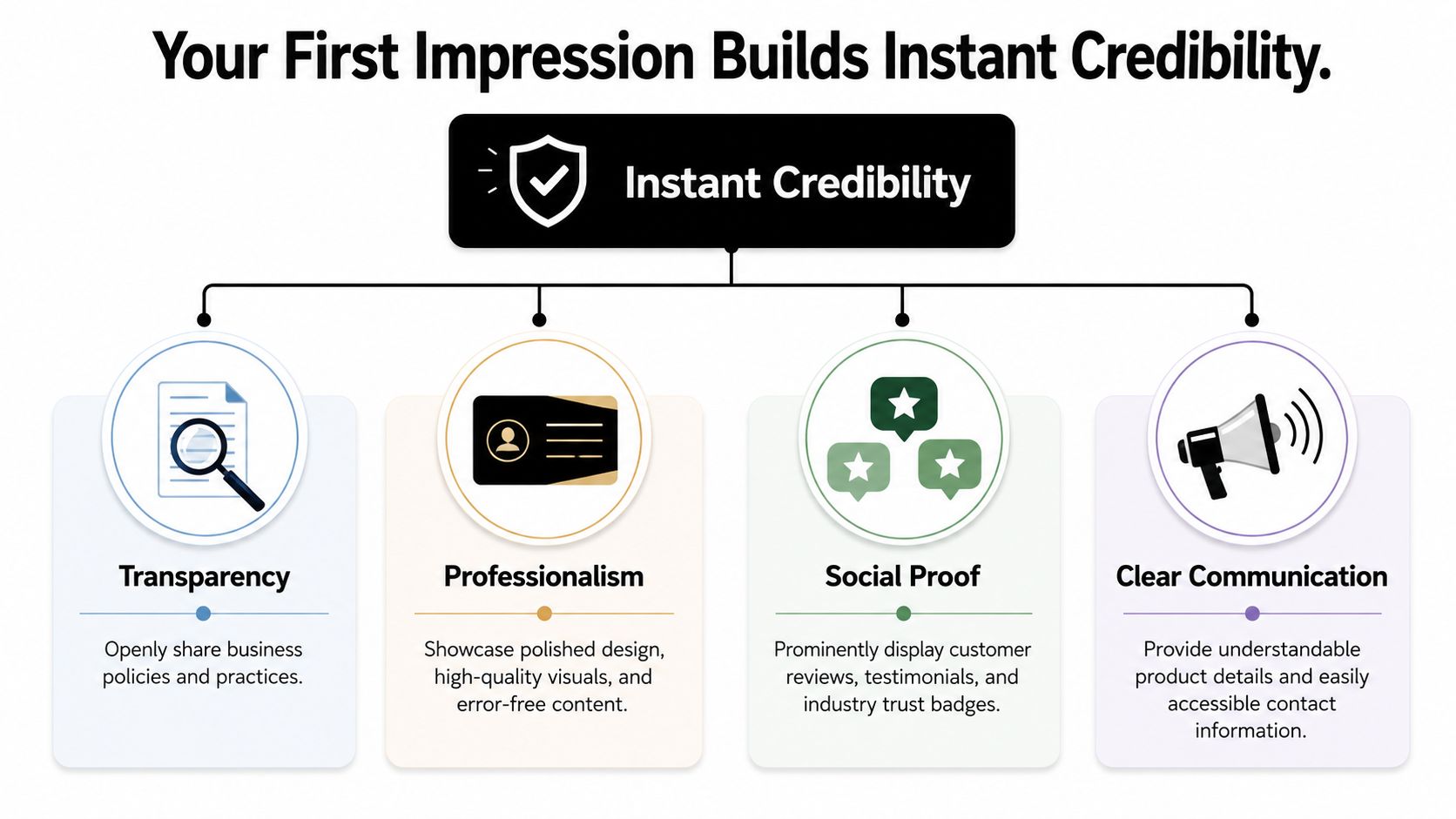
Your First Impression Builds Instant Credibility
Trust isn't a vague feeling. It's a stack of signals people read in seconds.
For a new brand, a practical high-trust onboarding sequence is: show identity up front, add social proof, demonstrate value with clear product details, and maintain consistency, as outlined in Ghost's guide to building trust with customers. The mistake most makers make is assuming people will infer expertise from the product alone. They won't. You have to show it.
Start with identity, not cleverness
A slick homepage means very little if a shopper still can't answer basic questions.
They want to know who makes this, where it comes from, what's in it, and how to reach you if something goes wrong. If you bury those answers under brand poetry, you create friction right where trust should feel easiest.
A good first-impression checklist looks like this:
- Show the maker clearly: Use a real name, a real face if you're comfortable, and a short plain-English explanation of what you make.
- State your category competence: If you sell skincare, supplements, food, or wellness products, explain your formulation choices, sourcing standards, or product philosophy in specific language.
- Make contact information easy to find: Email, contact form, and response expectations should not be hidden.
- Keep the site clean and error-free: Typos, broken links, and mismatched fonts make people wonder what else is sloppy.
Practical rule: If a first-time customer has to work to understand what you sell and who stands behind it, your trust problem starts before price ever matters.
If you're setting up a storefront, Sell on Loyaltie is one example of a marketplace where people discover and buy directly from independent brands in the US. That matters because marketplace structure can help you present products, policies, and brand details in a way that feels more consistent from the start.
Build a product page that answers doubt
The product page carries most of the trust load. That's where uncertainty either gets reduced or amplified.
A high-trust product page should include:
Clear product photos
Show the actual item from multiple angles. In food, skincare, and bath products, packaging matters because customers read labels as proof.Specific ingredients or materials
Don't just say “clean,” “natural,” or “high quality.” Name what's inside or what it's made from.Use instructions and fit guidance
Tell people how to use it, how often, what to expect, and who it's for.Visible policies
Shipping timing, returns, and support shouldn't require a scavenger hunt.
A short “About” block near the product can help too. Not a life story. Just enough context to make the item feel grounded in real people and real standards.
The strongest first impression feels calm. Nothing is exaggerated, nothing is hidden, and nothing forces the customer to guess. That's what credibility looks like online.
Let Your Customers Do the Talking with Social Proof
A blank product page feels lonely. Even if your product is excellent, an unknown brand with no reviews asks the customer to take all the risk.
That's why social proof matters so much. The Institute of Customer Service includes brand validation as a key part of trust, and Zendesk reports that 83% of consumers say they will not do business with brands they do not trust in its customer trust coverage, summarized through the Institute of Customer Service trust resource. For independent brands, that validation often comes from other customers first.
What an empty page feels like
Take soap as an example.
If someone lands on a product page and sees a name, one polished product photo, and a short description, they still don't know whether the bar arrives as expected, smells balanced, lasts well, or feels good in daily use. That page might be attractive, but it doesn't lower risk.
Now compare that to a page with three kinds of proof:
- Short written reviews that mention texture, scent, packaging, or repeat buys
- Customer photos that show the product in a real bathroom or on a real shelf
- Specific testimonials that describe why the buyer chose this maker over a mass-market option
That combination does something star ratings alone can't. It helps a new shopper picture ownership.
What strong proof looks like in practice
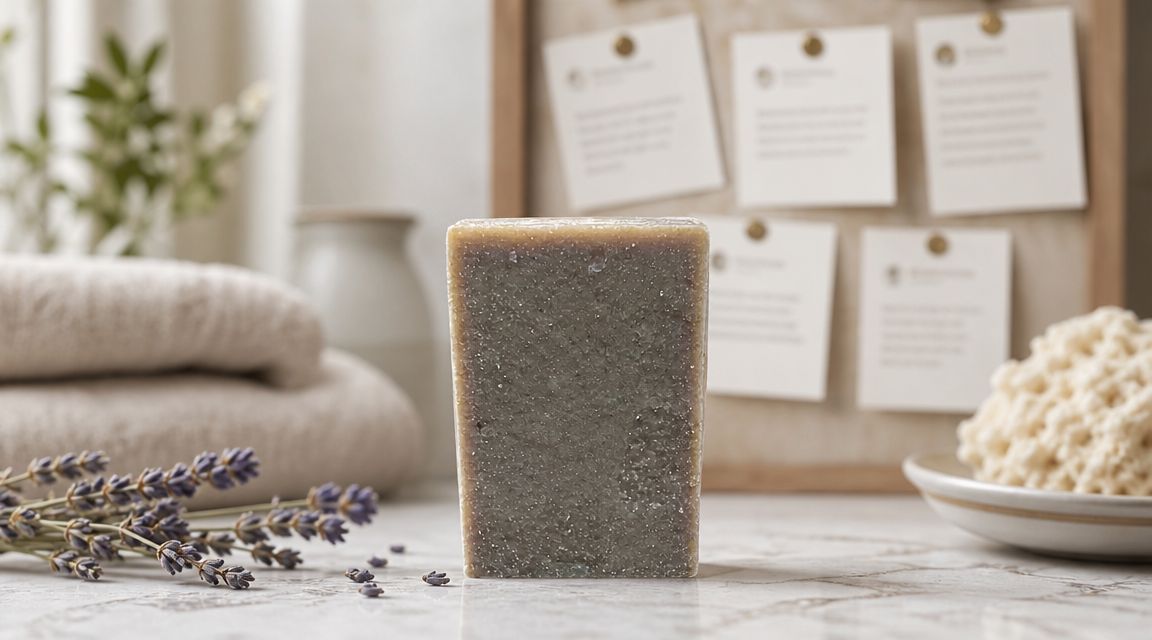
A product like Lavender Sea Salt Spa Artisan Soap – Handmade, Natural, Luxurious | Midnight Oasis Essentials by Loyaltie gives you a good example of the kind of details that help people judge fit. The catalog snapshot says it turns your shower into a mini spa with a creamy, mineral-rich cleanse that leaves skin feeling smooth and refreshed, and that it's made with coconut oil and kokum butter. That's useful because it gives the shopper something concrete to react to.
Then social proof adds the missing layer. Not “this is amazing,” but comments like:
It smelled relaxing without being too strong, and it didn't leave my skin feeling stripped.
That kind of review is believable because it's specific.
If you want a practical breakdown of effective social proof for Shopify stores, SelfServe lays out useful ways to feature reviews, customer images, and proof placement so it supports the buying decision instead of cluttering the page.
A few collection habits work better than others:
| Approach | What works | What falls flat |
|---|---|---|
| Timing | Ask after delivery or after enough time to try the product | Asking immediately after purchase |
| Prompt | Ask one simple question about their experience | Sending a long survey |
| Format | Encourage photos and a sentence about use | Asking for generic praise only |
For brands that want a structured place to publish product and seller information, Loyaltie seller resources can be part of that operating system. The point isn't the tool itself. The point is building a repeatable way to collect and display proof before every new customer hits the same wall of doubt.
Nail the Post-Purchase Experience Every Time
Trust gets tested after checkout. Before the order, customers judge your promises. After the order, they judge your operations.
Mastercard's customer trust guidance notes that it can take 4 good experiences to build trust but only 2 bad experiences to destroy it, and that consumers are willing to spend 51% more with retailers they trust in its roundup on building customer trust in business. Fulfillment is where that reality becomes painfully obvious.
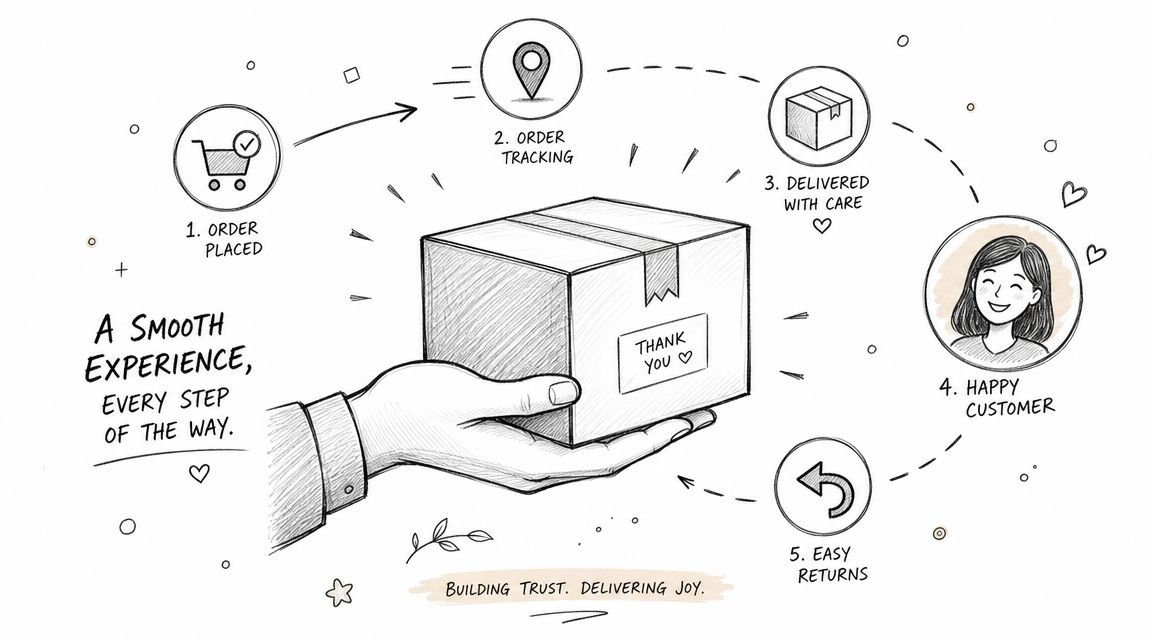
Set expectations before the customer asks
The easiest way to lose trust is to sound fast, easy, and smooth when your operation isn't there yet.
If you pack orders twice a week, say that. If a handmade item needs extra time, say that too. Customers are usually flexible when the timeline is honest. They get frustrated when the silence makes them assume something went wrong.
A dependable post-purchase flow includes:
- A clear order confirmation: Tell them what they bought and what happens next.
- Tracking updates: Send them before they have to ask.
- A realistic delivery window: Don't promise the optimistic version.
- A useful package insert: Care instructions, reorder guidance, or a simple thank-you all help.
Ship dates don't need to be impressive. They need to be believable.
A thoughtful unboxing helps, but don't confuse decoration with trust. Nice tissue paper won't rescue a late order, unclear tracking, or a leaking bottle.
For a practical look at resolving customer frustration effectively, SupportGPT has a useful framework for handling upset buyers without sounding defensive or robotic.
Treat returns like a trust tool
A hidden return policy tells customers you're hoping they won't look.
A visible, plain-language policy tells them you stand behind what you sell. That doesn't mean you need a loose policy that creates abuse. It means customers should be able to understand the rules quickly.
Good return policy language answers three things:
- What qualifies
- How to start the process
- How long it usually takes
After customers understand your process, a short visual explainer can reinforce it without adding noise.
When you handle fulfillment and returns cleanly, the customer feels safe buying again. That's the primary function of post-purchase trust.
Turn Customer Service into Your Best Marketing
A lot of makers treat support like cleanup work. Answer the email, fix the issue, move on.
That mindset leaves too much value on the table. Trust grows when people see how you respond under pressure, not just how you write a product description. Mercury's customer trust guidance puts it plainly: trust is built when businesses are transparent about policies and business practices, respond quickly and empathetically, and set realistic expectations they can meet in its article on how startups can build customer trust.
Bad support doesn't just lose one order
When support feels cold or evasive, customers don't just think, “This order was annoying.” They update their view of the whole brand.
That's why customer service can become your strongest trust signal if you handle it well.
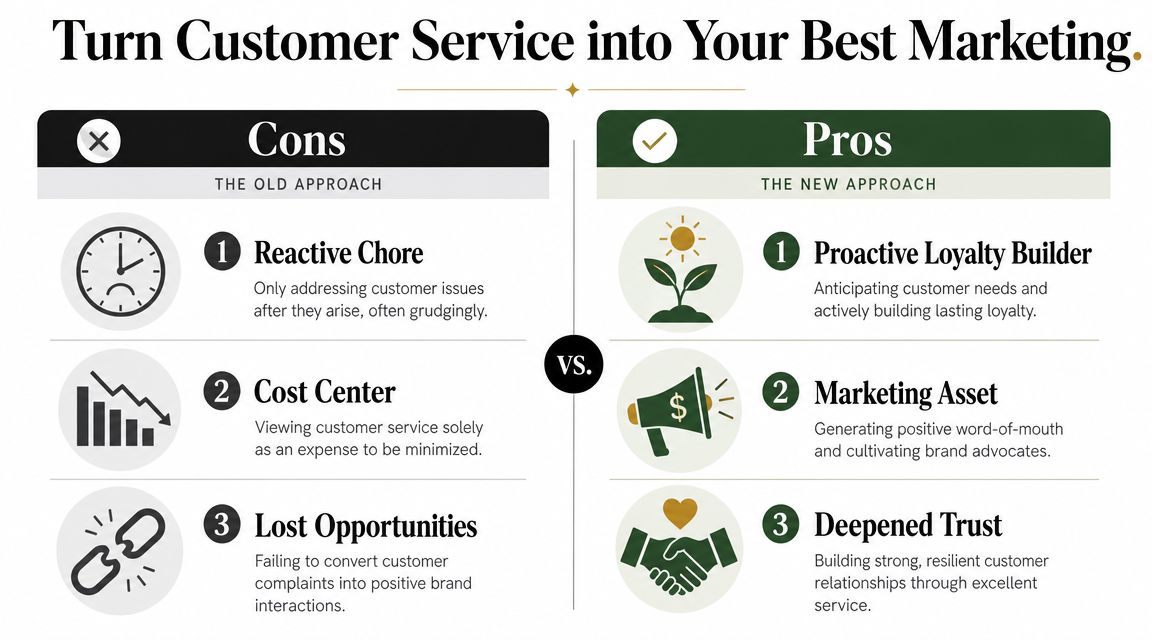
Here's the split:
| Weak support | Trust-building support |
|---|---|
| Defensive tone | Calm, direct tone |
| Vague updates | Specific next steps |
| Hidden policies | Easy-to-find policies |
| Scripted replies | Human replies with context |
If you're writing your brand story or team page, an About Us page for selling on Loyaltie is one place to think through how you present the people behind the products. That matters because support feels more trustworthy when customers already know there's a real person on the other side.
Use scripts that sound like a person
You don't need fancy copy. You need replies that reduce stress.
Here are a few examples.
Instead of this
“Your order is currently being processed. We apologize for any inconvenience.”
Try this
“Thanks for checking in. Your order is still in our packing queue, and it's expected to ship by Thursday. I'll send an update as soon as tracking is active.”
Instead of this
“We cannot guarantee that all ingredients will suit all customers.”
Try this
“I can walk you through the ingredient list and how this product is typically used, so you can decide if it's a fit for your routine.”
One useful habit: answer the actual worry first, then explain the policy.
That one change makes support feel human. It also keeps you from hiding behind policy language when a customer wants reassurance more than rules.
The brands people remember aren't always the ones with the flashiest packaging. They're often the ones that handled a delay, replacement, ingredient question, or mistake in a way that felt honest and calm.
Encourage Repeat Buys and Long-Term Loyalty
The first order gets all the attention, but repeat orders are where trust proves itself.
That's especially true for products people use regularly, like coffee, skincare, supplements, soap, pet products, and pantry staples. If someone is willing to reorder from you, or buy on a plan, they're saying they trust the product and the operation behind it.
RingCentral highlights how fragile that relationship can be. In its discussion of trust and loyalty, it cites PwC research showing 32% of consumers would stop buying from a company they trusted after a single bad experience, and notes that ongoing trust depends more on reliability and proactive communication over time in its article on building trust and strengthening customer loyalty.
Make reorder trust effortless
Repeat buying usually breaks for boring reasons.
The reminder email is vague. The reorder option is hard to edit. The customer can't tell when the next shipment will happen. Or the product changed and nobody explained why.
If you want people to stick around, keep the ongoing relationship simple:
- Send useful follow-ups: Share usage tips, reorder timing, or care guidance.
- Be clear about inventory changes: If something is out of stock or reformulated, say so early.
- Offer regular delivery with control: Let customers pause, skip, or change timing without friction.
- Keep packaging and product details consistent: Surprise is good in gifts, not in everyday essentials.
Give customers control or lose them
Here, a lot of brands get too clever. They design retention around persuasion instead of clarity.
A customer who buys coffee every month doesn't want emotional pressure. They want confidence that the bag will arrive on time, the roast profile won't shift without warning, and changes to their order won't become a support ticket.
Ongoing trust isn't built by asking for commitment. It's built by making commitment feel safe.
That applies across categories. In wellness, people want clarity around ingredients and changes. In skincare, they want consistency in texture and use. In food, they want straightforward communication when availability shifts.
Long-term loyalty comes from the same thing that drives the first sale, just repeated without drama. Keep promises. Communicate early. Make reordering easy. Give people control over their own buying rhythm.
Your Questions on Building Trust Answered
Even when the basics are solid, a few questions tend to come up again and again.
How do I ask for reviews without sounding awkward
Ask after the customer has had time to use the product, not right after purchase.
Keep the message short. Thank them for their order, ask how it went, and invite a review if they're open to it. A good prompt is specific. Ask what they noticed about scent, texture, packaging, flavor, ease of use, or how it fit into their routine.
This works better than asking for “support” or “feedback” in broad terms. You're not asking for a favor. You're asking for useful detail that helps the next customer buy with confidence.
What should I do with my first negative review
Don't panic, and don't get defensive in public.
Read the review for the actual issue. Was it shipping, product fit, damaged packaging, unclear instructions, or a mismatch between expectation and reality? Respond calmly, acknowledge the concern, and explain the next step. If it needs personal details, move the resolution to email.
A thoughtful negative-review response can build trust because it shows future shoppers how you behave when something goes wrong. Silence looks worse than a fair, direct reply.
How do I look legitimate when I'm just getting started
Legitimacy comes from visible proof, not age.
Show your identity clearly. Use clean product photography. Publish straightforward policies. Make your contact information easy to find. If you have credentials, testing information, customer feedback, or retailer mentions, show them plainly.
The key is reducing uncertainty before the customer has to ask. New brands often hide behind aesthetic branding because they think authority needs polish. What people want is evidence that you know what you're doing and will be reachable if there's a problem.
How can I tell if trust is actually improving
Start with behavior, not vanity metrics.
Look for signs like better review quality, fewer pre-purchase questions about basic legitimacy, more repeat orders, and fewer support messages caused by confusion. Read customer emails closely too. When trust is growing, the tone changes. People ask fit questions and reorder timing questions instead of “Is this real?” questions.
You can also audit your own store and support flow once a month. Check whether your product pages still answer the obvious doubts, whether policy links are easy to find, and whether your last few customer-service replies sound human and specific.
The strongest trust signal is simple: customers come back, and they recommend you without being pushed.
If you want a cleaner way to discover and buy directly from the best independent brands in the US, Loyaltie is a marketplace built around that experience. It gives shoppers a place to find better everyday products from real makers, with the kind of trust signals that make trying a new brand feel easier.