
You pack the order, add the thank-you note, tape the box, print the label, and move on to the next thing. That moment feels small, but it says a lot about your brand. The product inside reflects your standards. The shipping does too.
For independent makers, carbon neutral shipping works best when you treat it as part of product quality, not a side promise you tack on at checkout. If you make skincare, candles, coffee, supplements, pet products, or any other everyday item people reorder, the delivery experience becomes part of what customers remember. A beat-up oversized box, rushed air shipment, and vague sustainability claim can undo a lot of care. A measured, well-explained system does the opposite.
You don't need a giant ops team to do this well. You need a clean process, honest language, and a willingness to reduce what you can before you offset the rest.
Table of Contents
More Than Just a Box The Journey of Your Product
If you've ever packed an order late at night after a production day, you already know this feeling. You check the label twice, tuck everything in so it arrives safely, and hope the unboxing feels as considered as the product itself. Then a different question shows up. What happens after the package leaves your hands?
That's where carbon neutral shipping stops being abstract. It becomes part of the same care you already put into ingredients, materials, durability, and presentation. Your customer may never see the route, carrier handoff, or freight leg behind the scenes, but they can absolutely tell when a brand has thought through the whole journey.

The bigger context matters. The ICCT reports that maritime shipping accounted for nearly 3% of global human-caused CO2 emissions in 2018, with business-as-usual projections pointing to a further 16% rise by 2030 and 50% by 2050 without additional policy action, according to the ICCT maritime shipping analysis. For a solo maker, that number can feel far away. It isn't. Every parcel is connected to a much larger transport system.
Care doesn't stop at the product
The good news is that independent brands are often better positioned than larger mass-market sellers to make sensible changes. You usually have tighter product lines, more direct control over packaging, and a closer relationship with customers. That makes it easier to explain why your box is smaller, why you combine items into one shipment, or why you don't promise the fastest possible delivery on every order.
A lot of makers are already doing adjacent work without labeling it that way. If you've been studying refill systems, reusable packaging, or lower-waste packing choices, you're already thinking like a carbon-conscious shipper. Fillaree's write-up on closed-loop packaging for zero-waste soaps is a useful example because it shows how shipping and packaging decisions can reinforce the product story instead of feeling separate.
Carbon neutral shipping works when it feels like a natural extension of how you make things, not a badge added at the end.
Why this matters to customers
People who buy directly from the maker usually notice details. They care about formulation, sourcing, freshness, design, and whether the brand feels real. Shipping belongs in that same category. When you talk about lower-impact delivery in plain language, it reads as thoughtful and consistent.
That matters even more for independent brands selling everyday goods. A customer buying coffee, body care, pantry staples, or a pet item on regular delivery isn't just evaluating the thing itself. They're evaluating the system around it. Better shipping can become part of why they come back.
First Things First Measuring Your Shipping Footprint
Most carbon neutral shipping mistakes happen before a credit is ever purchased. They happen when a brand says it's neutral without first measuring what it's shipping.
A more solid approach starts with activity-based emissions accounting. Inbound Logistics describes the workflow clearly: measure emissions across each shipment leg, then reduce them before buying offsets, and base neutrality claims on freight data or a carbon-footprint tool in the Inbound Logistics guide to carbon-neutral shipping.
Start with the shipment, not the slogan
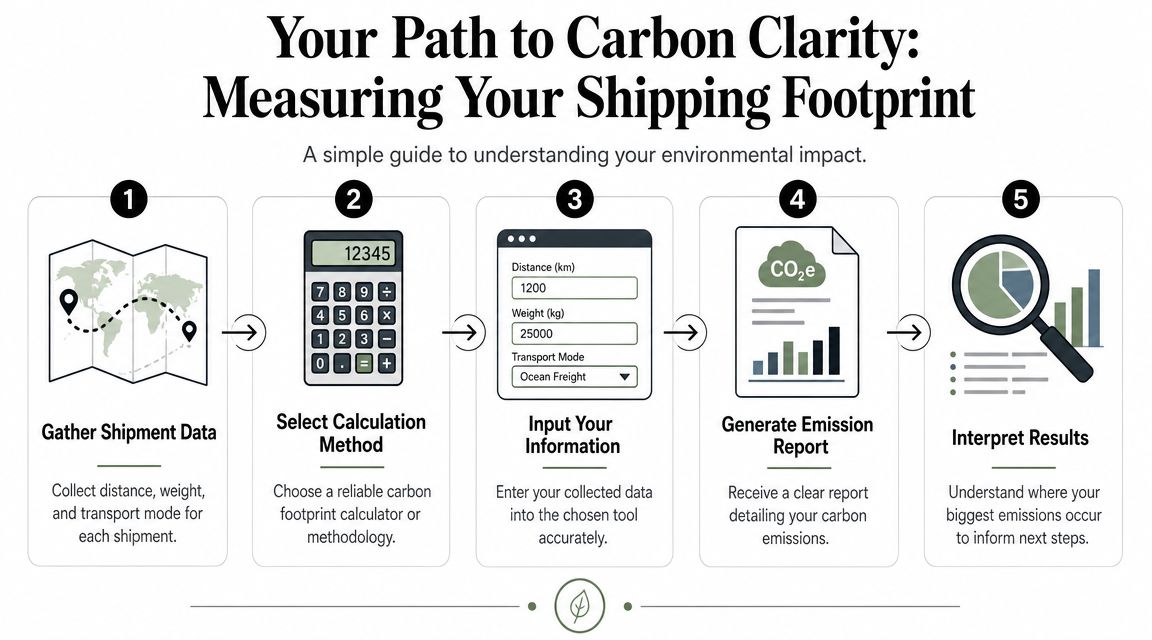
You don't need a giant spreadsheet model on day one. You need a repeatable way to capture the basic inputs that drive shipping emissions.
For most direct-to-consumer makers, these are the first things to track:
- Package weight: Product, filler, box, mailer, inserts, tape, all of it.
- Distance traveled: Where the package starts and where it ends.
- Transport mode: Ground, air, ocean, rail, or mixed carrier networks.
If you only learn one habit, make it this one: record real order data rather than guessing from averages. Once you see patterns, the practical fixes become obvious. You may find one box size is doing too much damage, one zone creates repeated air upgrades, or one product bundle adds avoidable volume.
A simple example helps. A compact item like the Protective AirPods Case, Polycarbonate PC Hard Shell, Blush Mocha Tiger Lily Floral, Wireless Charging, Carabiner | Kiarascreativedesign by Loyaltie is a good reminder that small products can still ship inefficiently if the package is oversized. The product itself is a hard polycarbonate shell designed to help protect from drops and scratches, finished in a blush mocha tiger lily floral. A maker shipping something in that size range would want to compare the actual packed weight and dimensions across a few mailer or box options before setting a default.
A simple way to track your orders
If your store platform offers carbon or shipping reporting tools, start there. If not, a manual audit still works. Pull a sample of recent orders and review them line by line.
A practical tracking sheet can include:
| What to log | Why it matters |
|---|---|
| Order date | Helps you spot seasonal shipping changes |
| Destination region | Shows where long-distance shipping is concentrated |
| Packed weight | Identifies heavy packaging or filler creep |
| Box or mailer used | Reveals which formats create excess volume |
| Carrier service level | Helps flag avoidable air or rush methods |
| Multi-item or single-item order | Shows where consolidation could help |
Practical rule: If you can't explain how you measured a shipment's emissions, you shouldn't call that shipment carbon neutral.
For a one-person brand, I like a light-touch routine. Audit a batch of orders each month, not every waking hour. The goal isn't perfect academic precision. The goal is enough clarity to make better packaging, routing, and carrier decisions.
Once you measure at the shipment level, carbon neutral shipping stops feeling fuzzy. It becomes operational. That's the point where small brands usually start making the biggest improvements.
Smart Ways to Reduce Emissions Before Offsetting
Offsets are the last step, not the first one. If your shipping system wastes space, splits orders unnecessarily, or defaults to faster transport than the order needs, buying credits on top of that just covers bad habits with nicer language.
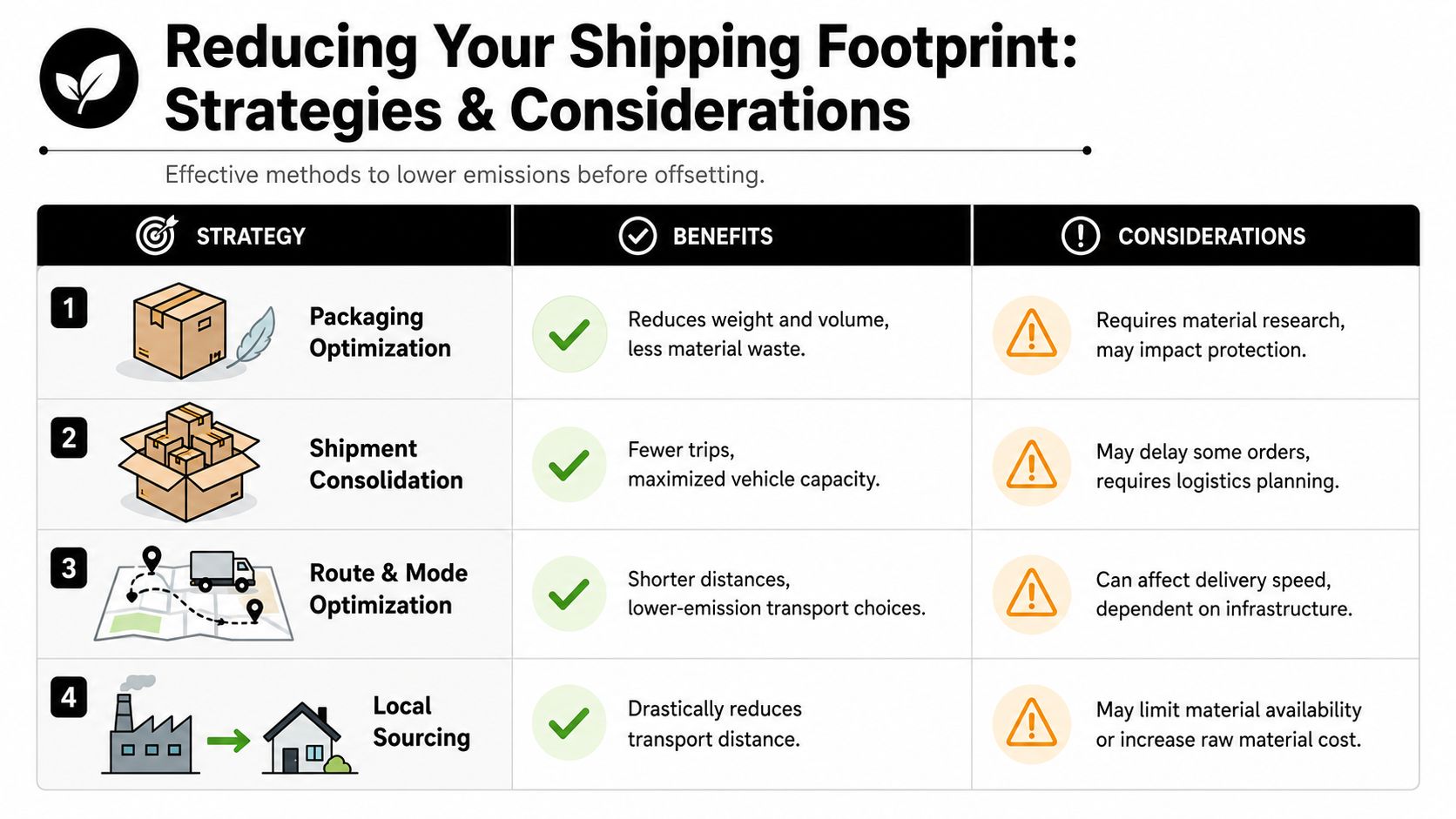
Industry guidance points to the most impactful operational controls as route optimization, load consolidation, and mode or vehicle substitution. Efficient routing software and lower-carbon transport choices reduce miles driven and fuel burn, as noted in FarEye's overview of carbon-neutral shipping operations.
The fastest wins are usually operational
Most makers don't need a dramatic overhaul. They need a handful of disciplined choices.
- Choose slower shipping when the product allows it: Ground usually makes more sense than air for durable, non-urgent goods.
- Consolidate where you can: If a customer orders multiple items, ship them together unless product integrity requires otherwise.
- Review split shipments: They often arise when inventory or packing workflows are messy.
- Tighten routing decisions: If you use a fulfillment partner, look closely at how service levels get selected.
For brands shipping food or temperature-sensitive products, the trade-off is different. Product safety can limit your options, which is why a guide on how to ship perishable food is worth reading alongside any carbon plan. Lower emissions still matter, but not at the expense of spoilage or unsafe delivery conditions.
Reduce first. Offset second.
That one line keeps the whole program honest.
A short explainer is useful here if you're training a team member or contractor on what to look for in day-to-day fulfillment.
Packaging is part of the shipping system
Right-sizing packaging is often the cheapest reduction move because it can cut waste, reduce packed weight, and improve the customer experience at the same time.
Here are the trade-offs I see most often:
- Smaller packaging saves more than material: It can also reduce unused volume and discourage overpacking.
- Lighter materials help, but not if breakage rises: A damaged shipment creates replacement emissions and customer frustration.
- Order consolidation sounds easy, but timing matters: If combining orders slows fulfillment too much, customers may feel it.
If you print inserts, product cards, or brand materials, your shipping footprint includes those choices too. Marquis Book Printing's page on sustainable printing options is a practical resource for thinking through paper and print decisions without turning your package into an overbuilt marketing kit.
The brands that do carbon neutral shipping well usually don't act like shipping is a back-office problem. They treat it like part of product design. That's why the strongest programs often feel quiet. The box is the right size. The route makes sense. The promise matches the process.
Choosing Carbon Offsets That Actually Make a Difference
This is the part where a lot of brand claims fall apart.
Offsets can play a role in carbon neutral shipping, but only after you've done the harder work of measuring and reducing. If you skip straight to buying credits, you're not running a shipping program. You're buying a story.
Why skepticism is healthy
Independent analysis highlighted by Polestar Global found that only about 12% of tracked offset projects are likely to deliver real, additional emissions reductions, while roughly 88% are not, which makes offset integrity a major blind spot for buyers evaluating claims in Polestar Global's carbon-neutral shipping discussion.
That doesn't mean every offset is useless. It means you should treat the market like any other sourcing category. Ask better questions. Read the fine print. Be wary of easy labels.
A low-friction offset purchase isn't proof of climate impact. It's only a transaction until you verify what sits behind it.
What to ask before you buy
I like to sort offset decisions into three plain-English tests.
Additionality means the project wouldn't have happened anyway. If the project was already funded or already required, your purchase may not be creating a new climate benefit.
Durability means the claimed benefit lasts. If a project removes or avoids emissions only briefly, but your shipping emissions happened already, the balance is shaky.
Independent verification means someone outside the seller reviewed the project boundaries, timing, and claims. If you can't see how the project is verified, that's a red flag.
A simple checklist helps:
| Question | Why it matters |
|---|---|
| Is the project independently verified? | Reduces the risk of self-reported claims |
| Does it clearly explain additionality? | Helps you avoid credits for activity that would've happened anyway |
| Is the timing defined? | Carbon accounting gets weak when project timing is vague |
| Are project boundaries clear? | You need to know what emissions are actually being counted |
| Can you explain it to a customer in one paragraph? | If not, it may be too murky to stand behind |
Some makers prefer to keep offsets in the background because they don't want to overclaim. I think that's often wise. You can still use offsets. Just present them as the residual part of a broader system, not the whole solution.
A good offset strengthens a real reduction program. A bad offset becomes the weak spot customers eventually question.
Making It Happen In Your Store and On The Box
Implementation gets easier once you've already decided on your measurement method, your reduction rules, and your offset criteria. At that point, carbon neutral shipping becomes a checkout and communications problem.
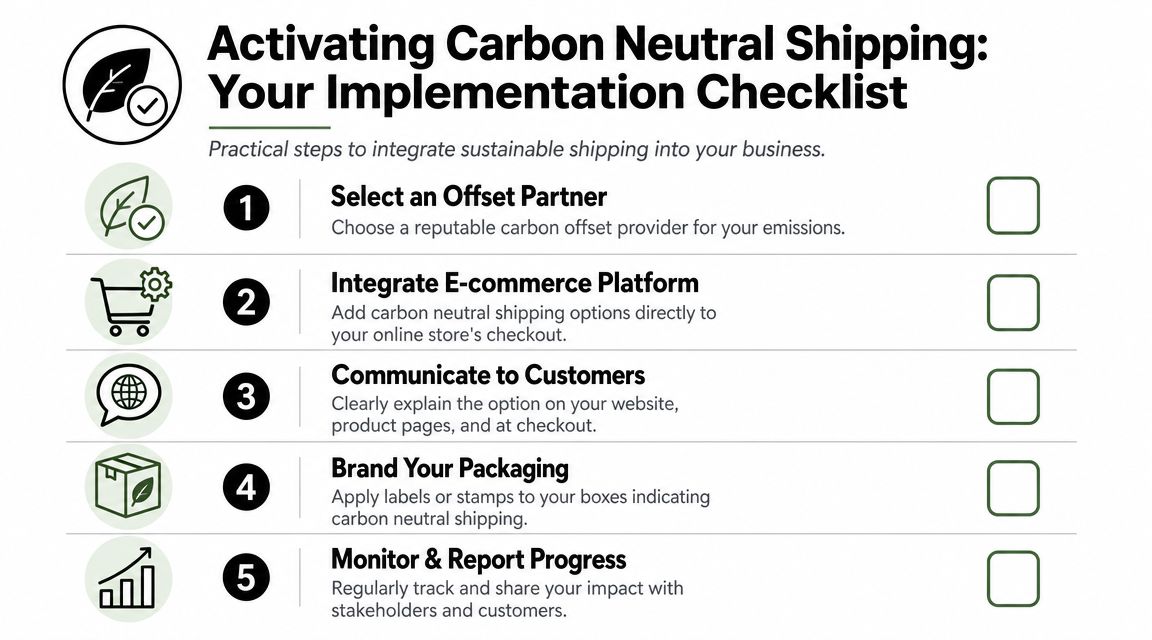
For a maker selling direct, the store setup doesn't need to be elaborate. It needs to be clear. If you run your own site, use the tools already available in your platform. If you sell through a marketplace, work within the options that marketplace gives you and explain your approach on product or policy pages where appropriate. If you're still tightening your direct sales setup, this guide on selling handmade products online is a practical place to sort out the bigger storefront decisions around presentation and operations.
Three workable ways to handle the cost
I've seen three models work for smaller brands.
Absorb the cost into product pricing.
This keeps checkout clean and avoids making climate action feel optional. It works well if your margins can handle it and your packaging system is already efficient.
Offer it as an opt-in at checkout.
This can be useful if you're testing demand or if your customers like having a choice. The downside is that it can make your own standard look undecided.
Add it as a standard part of shipping policy.
This is my preferred middle ground when the brand is ready. You explain that you measure shipments, reduce what you can, and neutralize the remaining emissions through verified credits.
If you want to see how other sectors frame packaging and service choices in a tangible way, Afida's examples of eco-friendly packaging for UK hospitality are helpful because they show how packaging decisions become visible parts of brand experience, not hidden ops details.
What customers need to see
Customers don't need a lecture. They need a few specific signals.
- At checkout: A short line explaining that shipments are measured, reduced where possible, and residual emissions are offset.
- On the package: A small printed note or sticker that points to your shipping standards page.
- After purchase: A confirmation email that explains the approach in human language.
If you sell through Loyaltie, the platform functions as a marketplace where people discover and buy directly from independent brands in the US, which can simplify how customers find maker-led products while you keep your own brand story and shipping standards consistent across channels.
One more thing matters here. Don't put a leaf icon on the box and call it done. Put a sentence customers can understand. A QR code to a plain-language shipping page is often enough.
Telling Your Story and Earning Customer Trust
Customers can tell the difference between a practiced explanation and a vague environmental claim. That's why your language matters as much as your workflow.
Recent freight data make that especially relevant. One analysis found that 2024 container shipping emissions reached 240.6 million tons of carbon, up 14% year over year, showing why transparent communication about reduction efforts matters for trust, according to Xeneta's container shipping emissions analysis.
Say what you did, not what you wish were true
Don't say you're sustainable. Say what you changed.
Don't say shipping is green. Say you measured shipment activity, cut avoidable packaging and distance where possible, and offset the remaining emissions through verified credits.
That kind of specificity makes your message more believable. It also lines up with the broader advice in this guide on how to build customer trust, especially if you're asking buyers to choose you over bigger, louder brands.
Customers trust brands that explain trade-offs plainly.
You can also acknowledge limits without weakening the message. If some product types still require protective packaging, say that. If perishable items have tighter shipping constraints, say that too. Honesty tends to land better than a polished but thin claim.
Simple copy that sounds like a person wrote it
Here are a few examples that work better than generic sustainability language.
Product page copy
We ship this order using a measured carbon neutral shipping process. That means we track shipment emissions, reduce what we can through packaging and routing choices, and offset the remainder with verified credits.
About page copy
We care about how your order arrives, not just what's inside it. Our shipping process is built to reduce waste, avoid unnecessary transport impact, and stay transparent about what we can and can't control.
Thank-you email copy
Your order is on the way. We pack shipments to keep them efficient, and we neutralize the remaining shipping emissions after measuring them against real order activity.
Good storytelling doesn't oversell the claim. It reinforces your brand standards. For independent makers, that's a distinct advantage. Carbon neutral shipping isn't just a climate line item. It's a quality signal that tells customers you thought about the full experience, from product to doorstep.
If you're building a brand around better everyday products and want more people to buy directly from the maker, Loyaltie is a marketplace where shoppers discover and buy from independent brands across the US, with a setup that helps people find thoughtful alternatives to mass-produced goods.