
You've probably done the hard part already. You made something people like, friends keep asking where they can buy it, and now you're staring at a blank product page wondering how this becomes real income instead of a nice hobby with expensive supplies.
That's the moment where a lot of makers either overcomplicate everything or rush straight to Etsy and hope for the best. A better path is simpler: get clear on who your product is for, choose the right place to sell, make your listings easy to trust, and build for repeat orders instead of one-time bursts.
Table of Contents
- From Passion Project to Paycheck
- Know who you're actually selling to
- Turn your process into a reason to buy
- Photos that reduce hesitation
- Descriptions that sound human and specific
- Price with a system, not a guess
From Passion Project to Paycheck
Selling handmade products online can feel confusing at first because the internet gives you too many answers. One person says open a marketplace shop tonight. Another says build your own site first. Someone else tells you to post every day and let social media do the work.
Most of that advice skips the part you need. You don't need more options. You need a way to decide.
That matters because handmade isn't a tiny corner of ecommerce. The global handicrafts market was valued at USD 739.95 billion in 2024 and is projected to reach USD 983.12 billion by 2030 according to Grand View Research's handicrafts market report. That tells you something important. Buyers are already comfortable paying for handmade goods when the product feels distinct, useful, and trustworthy.
Practical rule: Don't treat your product like a favor people do for you. Treat it like a better alternative to a mass-produced option.
If you make soap, coffee, candles, skincare, snacks, pet treats, or wellness products, you're not just selling a craft. You're often selling an everyday choice with more care behind it. That shifts how you should think about your shop. The goal isn't to upload listings and hope strangers appear. The goal is to build a buying experience that makes your product feel worth coming back for.
A lot of makers get stuck because they try to solve everything at once. Brand, pricing, photos, packaging, shipping, taxes, social media. It's too much if you tackle it as one giant problem.
Break it into four decisions:
- Who is this for
- Why is it better
- Where should people buy it
- How do you earn the second order
That's the playbook. Everything else supports those four decisions.
First Find Your People and Your Story
If you skip this part, your product pages end up sounding like everyone else's. Nice scent. Handmade with care. Great gift. High quality ingredients. None of that gives a buyer a reason to choose you.
In the UK, 73% of adults have purchased handmade goods, with annual sales exceeding £3 billion, based on industry coverage citing Crafts Council data in this craft industry trends article. That's a useful reminder that your audience is probably broader than you think. You do not need to appeal to everyone. You do need to be clear enough that the right people recognize themselves fast.

Know who you're actually selling to
Start with a person, not a platform.
If you sell bath and body products, “women ages 25 to 45” is too vague to help you. A better customer picture sounds like this: she reads labels, cares how a product feels on skin, wants something that looks good on the counter, and is willing to pay more when the ingredients and maker both feel real.
Write down answers to these prompts:
- What are they replacing: Are they moving away from grocery store soap, bland office coffee, generic candles, or pet products with ingredients they don't trust?
- What do they care about most: Scent, texture, ingredient transparency, gifting, local pickup, skin sensitivity, freshness, or convenience?
- What would make them hesitate: Shipping costs, messy branding, unclear ingredient lists, weak photos, vague sizing, or fear the product won't match the listing?
- What would make them reorder: Consistency, easy communication, local delivery, a scent or flavor they can't find elsewhere, or a routine they already have?
The best target customer is usually someone with a regular need, not just a taste for browsing.
That last point matters. A person who buys coffee every month, body lotion every few weeks, or dog treats on a routine is more valuable than a person who buys one gift in December and disappears.
Turn your process into a reason to buy
Your story should explain why the product is different, not just why you started making it.
A weak brand story says you've always loved creating things. That may be true, but it doesn't help a buyer make a decision. A stronger one says you make small-batch body products with straightforward ingredients because you wanted a lighter, non-greasy feel than what you kept finding in big-box options. Now the buyer understands the point of the product.
Use this simple structure:
- Problem: What were you unhappy with in the usual version of this product?
- Choice: What do you do differently in your ingredients, sourcing, or process?
- Result: What does the customer get that feels better in daily life?
Here's what works well in practice:
- Specific sensory details: smooth finish, clean rinse, walnut and toffee notes, soft floral scent, gentle lather
- Useful constraints: local pickup available, small batches, shorter ingredient lists, no middleman
- Plain language: say what it feels like, smells like, tastes like, or solves
What doesn't work is drifting into generic branding words that could fit any seller.
If a sentence could sit on ten other handmade shops with no edits, cut it.
A good story also gives you content ideas later. The way you source ingredients, package orders, test batches, or recommend use becomes material for product pages, short videos, emails, and follow-up messages. You're not inventing a brand voice from scratch every week. You're repeating the same truth in useful ways.
Crafting Product Pages That Truly Sell
A product page has one job. It needs to answer the quiet questions people ask before they buy.
What does it look like in real life? What makes it different? Will it fit my routine? Can I trust this seller? Is the price fair?
Photos that reduce hesitation
You do not need a studio. You need consistency.
Use window light, a clean background, and enough distance that your phone can focus properly. Take the same core set of photos for every product so your shop looks intentional instead of patched together over time.
A reliable shot list:
- Front view: The image that would stop a scroll.
- Angle shot: Helps show shape and packaging.
- Close-up: Texture, label details, ingredients, beans, frosting swirl, wax surface, whatever matters.
- Scale shot: Product in a hand, on a sink, beside a mug, near a common object.
- Use-case image: Soap by a dish, lotion on a vanity, coffee beside breakfast.
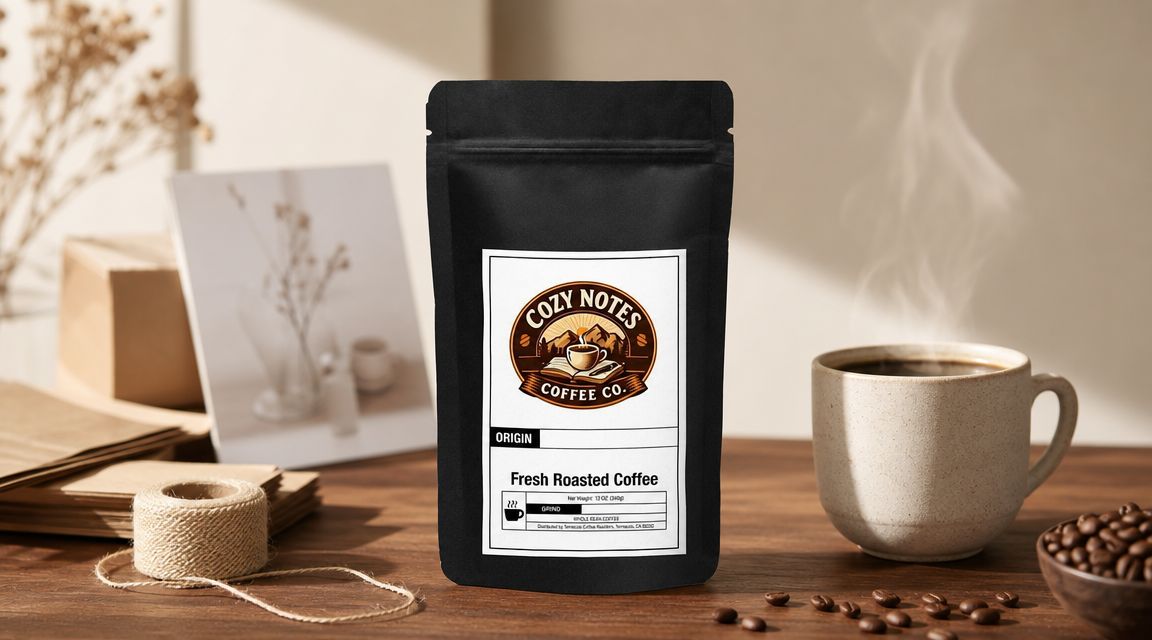
One good reference for clarity in product presentation is Light Roast Breakfast Blend Coffee, South American Beans, Smooth Morning Cup, Walnut & Toffee Notes, 12 oz | Cozy Notes Coffee Co by Loyaltie. The snapshot gives a buyer something concrete to hold onto: a bright, smooth light-roast blend crafted from South American coffees, with walnut, mild apple, raisin, and toffee notes and a clean finish.
If you run your own store, layout matters too. Product pages get stronger when images, ingredient details, reviews, and buying options feel organized instead of crammed together. If you want design ideas for that, this guide on how WordPress designers customize WooCommerce pages is useful because it shows how sellers rearrange pages around what buyers need to see first.
Descriptions that sound human and specific
Most weak descriptions either say too little or say everything in one dense block.
A strong product description usually works in layers:
- A first sentence that captures the product experience
- A short paragraph on what makes it useful
- A scannable list of practical details
- A final note that removes uncertainty
For example, if you sell soap, don't open with “handcrafted soap bar made with quality ingredients.” That sounds like every listing on the internet. Open with the feel and use case instead.
You can see the difference in a product like this handcrafted soap bar from Cottonwood Soap Company. The name itself already does useful work because it tells the buyer scent direction, the kind of cleanse, the size, and even a visual detail.
Try this framework:
Lead with the experience. Follow with the practicals. End with reassurance.
For a lotion, that might mean:
- first line on how it feels on skin
- second line on the scent profile
- then the size, key ingredients, and best-fit customer
- then storage or usage notes if needed
For food, wellness, and body products, clarity matters more than cleverness. Buyers want to know what's inside, what it's like, and whether it fits their preferences.
Price with a system, not a guess
Pricing gets emotional fast. Makers often undercharge because they compare themselves to factory-made goods or because they feel guilty asking for more.
Use a formula. It keeps you honest.
| Component | Calculation | Example |
|---|---|---|
| Materials | Add all ingredients or raw materials used per unit | Oils, fragrance, label, container |
| Labor | Your hourly rate multiplied by time per unit | 20 minutes to make, pour, wrap, and label |
| Packaging | Add mailer, filler, insert, thank-you card, tape | Box, tissue, sticker |
| Overhead | Add a share of tools, electricity, platform fees, workspace costs | A small amount per product |
| Profit | Add margin after covering the costs above | What makes the business sustainable |
Simple Handmade Product Pricing Formula
The exact math will be different for every product, but the order should stay the same. Start with what it costs you to make and pack. Then add what your time is worth. Then account for the quiet costs people forget, like labels, replacement breakage, and platform fees.
A few hard truths:
- Cheap pricing attracts the wrong comparison: People start judging you against mass retail.
- Round numbers can help: Clean prices are easier to remember and less awkward on labels.
- Repeatable products deserve room for reorders: If a product is something people buy again, don't price so low that every reorder feels like extra work with no payoff.
If someone says your price is too high, that doesn't always mean you priced it wrong. It may mean they're not your customer.
Where to Plant Your Digital Flag
Where you sell shapes the kind of business you build. It affects your margins, the customer relationship, and whether people remember your brand or only the platform they found you on.
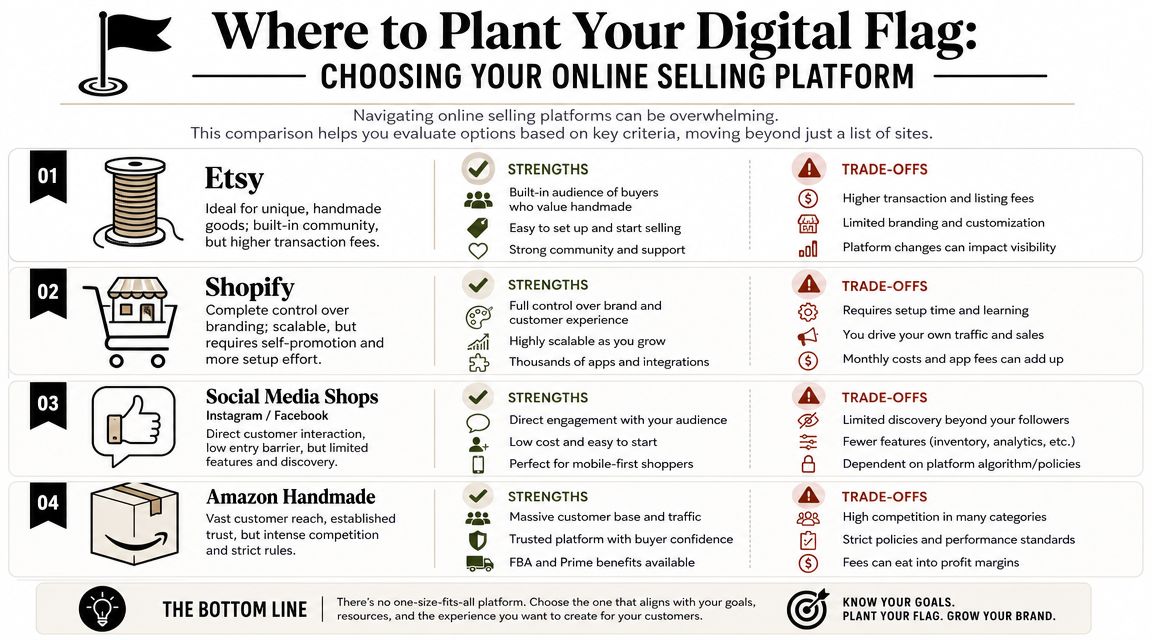
A lot of beginner advice turns this into a giant list of sites. That's not the true decision. The true decision is whether you need built-in traffic, brand control, local convenience, or stronger repeat-buyer potential.
The three paths most makers choose
A useful framing from recent platform commentary is that many guides still default to Etsy, even though local and social channels can outperform broad marketplaces for some sellers by reducing shipping friction and building community. That trade-off is discussed well in this overview of places to sell handmade online and locally.
Here's the practical version.
Big marketplace
You get search demand and fast setup. You also get crowded results, side-by-side comparison, and a store environment where buyers may remember the marketplace more than they remember you.
Social selling
You get direct conversation, local visibility, and quick testing. You also depend on posting consistently, answering messages fast, and dealing with the fact that social feeds are not clean storefronts.
Your own site or local-first marketplace
You get more control over branding, better customer continuity, and a cleaner path to reorders. You give up some built-in discovery, especially early on.
For sellers who want a local-first route, Sell on Loyaltie is one example of a marketplace where people discover and buy directly from independent brands in the US. That model fits makers whose products benefit from local trust, easier delivery, and a direct connection without a middleman.
Start where trust is easiest to create, not where the signup process is easiest.
If you're still considering Etsy, it helps to look at practical listing advice before you commit to making it your whole strategy. This resource on how to streamline Etsy product listings is useful for understanding how marketplace selling rewards clear titles, categories, and presentation.
Here's a quick visual comparison before you choose:
Pick based on the next twelve months
Don't ask, “Where can I list tonight?”
Ask these instead:
- Do I need local pickup or short-distance delivery to make the product easier to buy?
- Is this the kind of product people reorder, or mostly buy once as a gift?
- Do I want customer relationships I can carry with me if I change channels later?
- Can I realistically create my own traffic yet, or do I need borrowed demand at the start?
If you sell coffee, skincare, food, or pet products, a local-first strategy often makes more sense than people expect. Shorter delivery windows are easier. Ingredient questions get answered faster. Buyers feel more comfortable when they know who made the thing they're putting on skin or using every day.
That doesn't mean broad marketplaces are bad. It means they're not automatically the smartest first move.
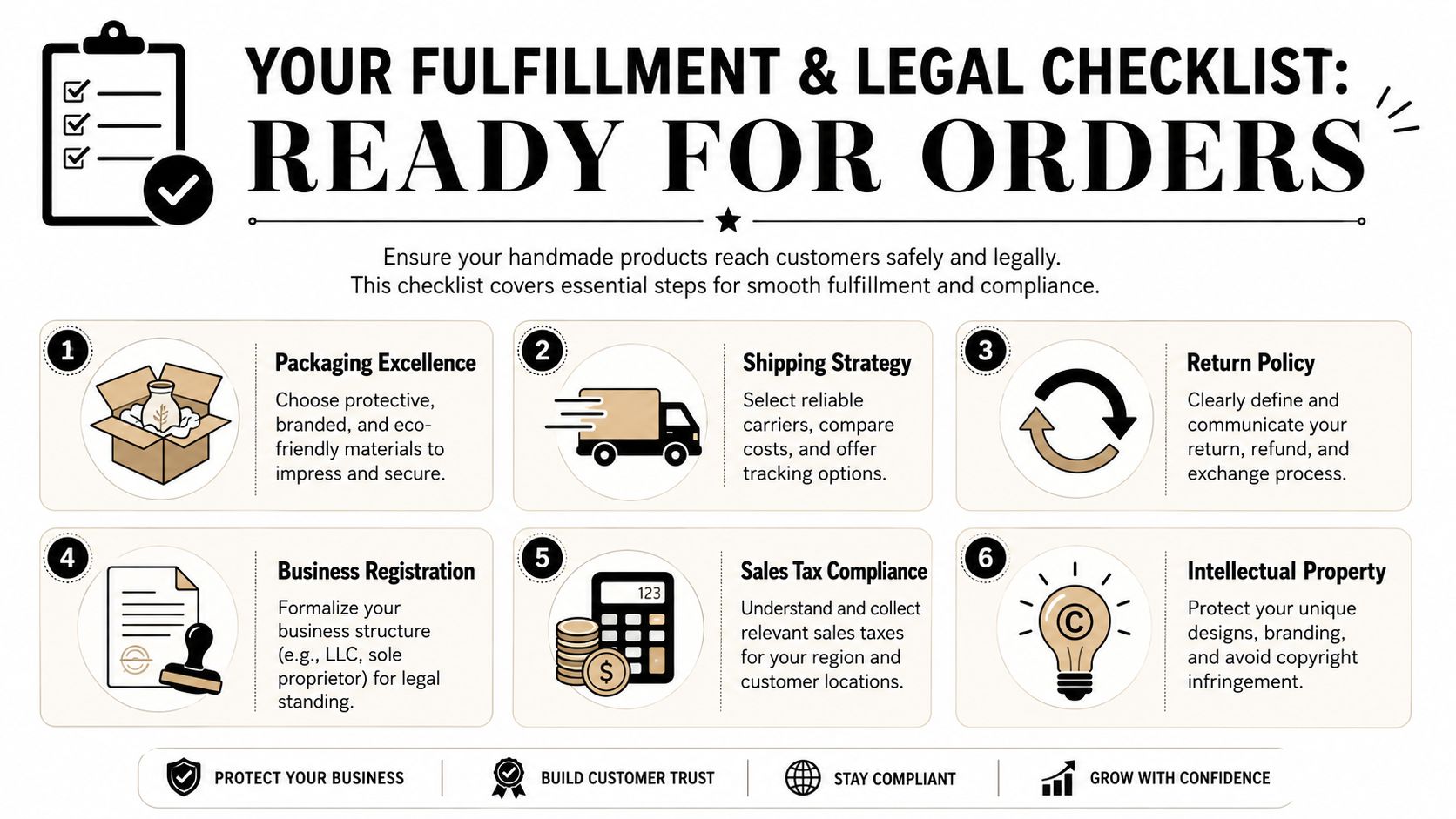
Your Fulfillment and Legal Checklist
A sale feels great right up until you realize you need boxes, labels, tape, inserts, a return policy, and a plan for what happens when something arrives damaged.
Operations don't need to be fancy. They need to be repeatable.
Fulfillment habits that save you headaches
Your first packaging goal is protection. Your second is presentation.
A pretty order that leaks, cracks, or arrives looking crushed is a bad order. Test your packaging on your own products before customers do. Put it together, shake it, leave it in a hot car if the item is temperature-sensitive, and mail a sample to a friend if needed.
A simple fulfillment checklist helps:
- Pack by product type: Fragile jars, meltable items, powders, and paper goods all need different handling.
- Keep supplies together: Mailers, labels, stickers, tissue, filler, and tape should live in one station.
- Print or write the same insert each time: Care instructions, scent notes, brewing tips, or storage guidance.
- Add one human detail: A short thank-you note or a line signed with your name is enough.
- Check the address twice: Fixing a typo after shipment is annoying and expensive.
Fast shipping matters less than reliable shipping. People forgive a reasonable timeline. They do not forgive chaos.
Returns and exchanges also need a written policy before your first problem order shows up. Keep it plain. Say what you accept, what you don't, and what happens if an order arrives damaged.
The legal basics to handle early
You don't need to become a lawyer to start. You do need to stop pretending the legal side will sort itself out.
At minimum, think through these areas:
- Business structure: Many makers start as a sole proprietor because it's simple. Some choose an LLC for separation between personal and business matters.
- Sales tax: The moment you start collecting money, you need to understand what applies in your location and where you sell.
- Product category rules: Food, cosmetics, wellness items, and children's products usually need extra care in labeling and compliance.
- Brand protection: Keep records of your product names, labels, and original designs.
If you sell through a platform, read the terms instead of clicking past them. Loyaltie seller terms and conditions are one example of the kind of document you should review carefully so you understand responsibilities, payouts, and platform rules before listing.
Keep a basic business folder from day one. Save receipts, packaging costs, ingredient invoices, label drafts, and product notes. Future-you will be grateful during tax season, dispute resolution, and product updates.
Building Loyalty Beyond the First Order
The first order proves someone was interested. The second order proves your business works.
That distinction matters most for products people use up. Soap disappears. Coffee gets brewed. Lotion runs out. Pet treats get finished. If you only think about discovery, you'll spend all your energy chasing new customers and never build any stability.
Recent guidance around handmade selling keeps pushing makers toward email, SEO, and social content, but the bigger point is simpler. This article on selling crafts online highlights a real gap in most advice: too much attention goes to the first sale, not enough to recurring revenue, trust, and retention, especially in consumable categories where local discovery and ingredient transparency matter.

Make the second order easier than the first
People reorder when you remove friction.
That can mean a reminder email when it's time to restock. It can mean a printed card in the box that tells them exactly how to buy on a plan or place the same order again. It can mean keeping your bestsellers in a steady format instead of constantly renaming everything.
Use these habits:
- Keep naming consistent: If a buyer loved a scent or blend once, they should be able to find it again fast.
- Follow up with care tips: Brewing guidance, usage notes, or storage reminders help the product perform well.
- Invite a simple reply: Ask what scent they want next, what they ran out of fastest, or which blend they liked most.
- Make reordering obvious: Put the reorder path in the package, in your post-purchase message, and on your shop pages.
Trust grows in the small details
Retention isn't built with flashy tactics. It's built with proof that you're dependable.
Ingredient clarity matters. So does consistency from batch to batch. So does answering messages like a real person. Local makers have an advantage here because buyers can connect the product to a real place and a real process.
The strongest handmade brands don't just look personal. They feel dependable enough to become part of someone's routine.
If you want a place to discover and buy directly from independent brands in the US, Loyaltie is a marketplace built around that kind of direct connection. It's useful for shoppers who want better everyday products from real makers, and for sellers who want to be found without feeling buried inside a giant mass-market catalog.