

You're standing in the baking aisle with coffee going cold at home, flipping over bag after bag that says monk fruit in big letters. Every back label starts the same way, with erythritol first. You wanted monk fruit sweetener without erythritol because you don't like the cooling taste, or it doesn't agree with you, or you want to know what you're spooning into your mug. That frustration is useful. It tells you the front of the pack is marketing, and the choice is hiding in the ingredient list, the carrier, and how strong the extract is. Dropping erythritol doesn't automatically make a product cleaner. It swaps one set of trade-offs for another, and you get better results when you choose based on how you'll use it.
Table of Contents
Check the Ingredient List Before You Buy
The ingredient list beats the product name every time. A bag can call itself monk fruit sweetener without erythritol on the front and still be mostly something else, because the name highlights the sweetener people recognize, not the ingredient that makes up most of the weight. You need the full list on the back.
Ingredients are listed by weight, so order matters, but order alone doesn't answer your question. Monk fruit appearing first doesn't prove erythritol is absent further down. The key question is simpler. Does erythritol appear anywhere among the carrier or bulking ingredients at all? If it does, you've got a blend, no matter what the front says.
That distinction matters because monk fruit is mechanically different from sugar. According to the FDA GRAS notice record for monk fruit, monk fruit extract is 100 to 250 times sweeter than sugar, and those notices cover tabletop and general purpose non-nutritive sweetening in foods. Something that sweet can't fill a spoon the way sugar does, so makers either sell it concentrated or add bulk.
Reading the Signals on the Label
| Label signal | What it tells you | What to do |
|---|---|---|
| Erythritol anywhere in the ingredient list | Product is a blend, not erythritol-free | Skip it if you want erythritol out |
| Only monk fruit extract or mogrosides listed | Monk fruit-led product with no sugar alcohol carrier | Check whether it can give sugar-like volume |
| Allulose or soluble fiber listed | Bulking carrier for volume and texture | Check browning if you bake |
| Mogroside V percentage stated | Sweetness strength is standardized | Compare the dose per serving |
| Stevia listed | May add bitterness or licorice notes | Taste a small amount in coffee before baking |
| Only monk fruit on the front, no full ingredient list | Composition cannot be verified | Skip it or ask the maker |
Start at the top row and work down. Erythritol anywhere ends the search if avoiding it is your goal. You don't need to guess at percentages or hope it's only a little. Put it back and keep looking.
A list with only monk fruit extract or mogrosides is the clearest signal you've found a monk fruit-led product. That's good news for drinks, but it raises a practical question. How will you measure something so concentrated, and what happens in a recipe that needs a cup of sugar for structure? You'll likely need drops, a tiny scoop, or your own carrier.
Allulose or soluble fiber tells you the maker solved the volume problem without erythritol. That can work well for baking, but each carrier behaves differently in heat and in your stomach. A stated mogroside V percentage is even better, because it tells you the extract strength is standardized, so you can compare dose per serving between brands instead of guessing. Stevia on the list isn't a deal breaker, but I'd taste it in coffee first, since it can push bitterness or a licorice note forward.
If you can't find a full ingredient list, you can't verify the claim. Ask the maker directly or choose a different product.
Before any bag goes in your cart, check three things every time. Read the full list, name the carrier, and look for the extract strength. Those three checks take ten seconds and save you from buying the wrong tool for your kitchen.
Why Erythritol Shows Up and How Monk Fruit Sweetens
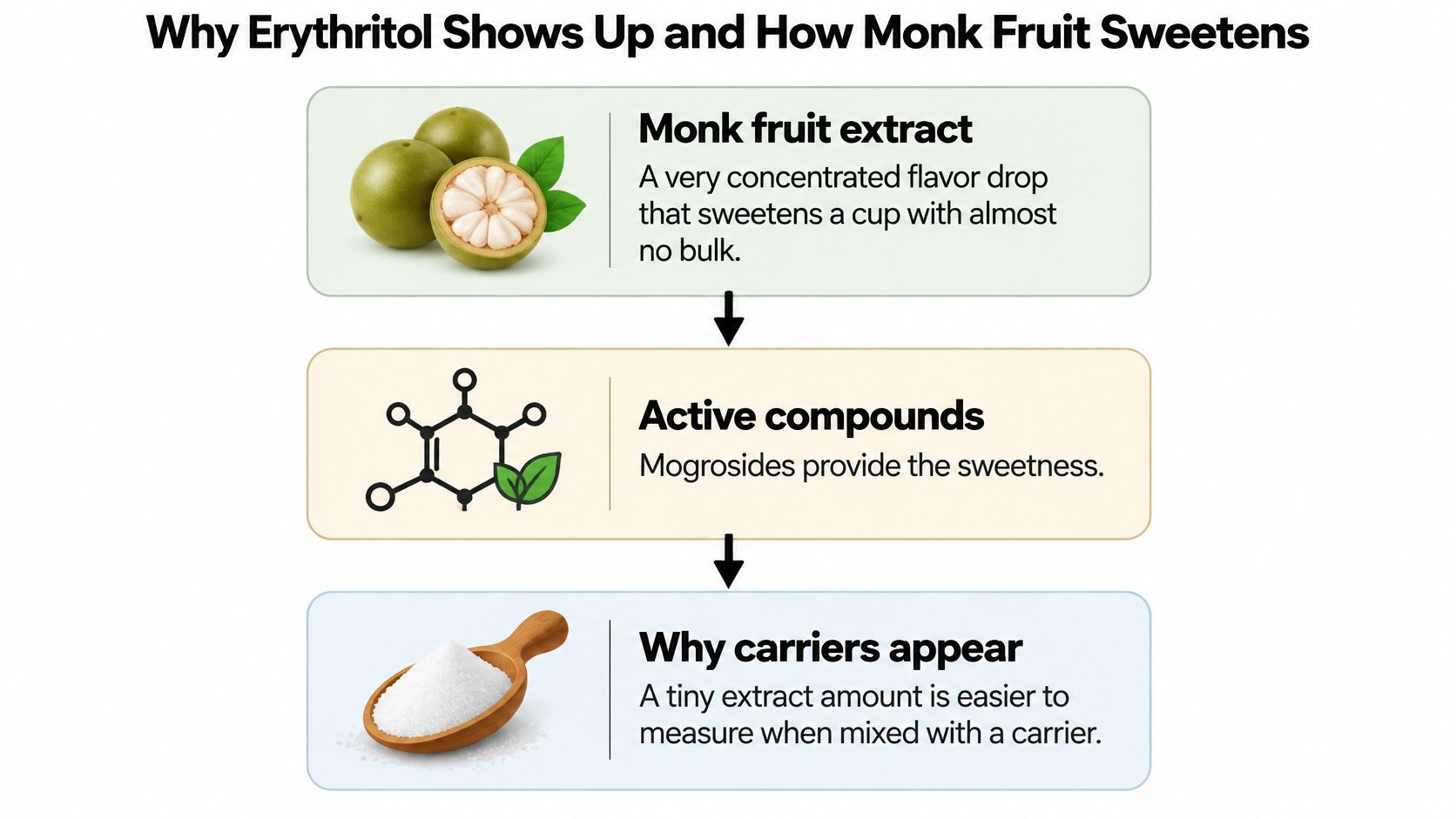
Think of monk fruit extract like a very concentrated flavor drop. A tiny amount sweetens a whole cup, but it adds almost no bulk, no body, and nothing you can cream with butter. That one fact explains almost everything confusing about these labels.
The sweetness comes from mogrosides, cucurbitane glycosides in the fruit Siraitia grosvenorii, also called luo han guo. The FDA summary on monk fruit extract describes the extract as containing mogrosides II through VI, with mogroside V as the major sweet-tasting component, and sweetness that varies with mogroside content at roughly 100 to 250 times that of sugar. You'll see those names on ingredient lists instead of the words monk fruit, and now you'll know they're the active part.
Potency isn't uniform across studies or brands. Research in the International Journal of Food Science and Technology review of monk fruit puts mogroside V at approximately 250 to 425 times that of sucrose. Different extracts contain different amounts, so two products with monk fruit on the front can sweeten very differently at the same spoonful. Serving size on the label is real information, not filler.
This diagram shows why a carrier usually joins the extract before it reaches your spoon.
What Erythritol Actually Does
Erythritol is not the source of the sweetness. Makers add it to dilute the intense extract and provide volume, so you can measure spoon for spoon like sugar without needing a scale that reads milligrams. That's why most retail bags are blends. The erythritol is doing a measuring job.
You can see that logic in finished mixes too. The Keto Coconut Macaroon Cookie Mix, Coconut Flour & Monk Fruit, Sugar-Free Low Carb Cookies, Yields 12, 1g Net Carbs | ROSETTE'S by Loyaltie uses coconut flour plus erythritol and monk fruit for a chewy center and crisp bite while staying low carb and gluten-free. It's a clear example of a blend, and the label tells you so, which is exactly the transparency you want.
Take erythritol out and something else has to do its job, or you accept a concentrated format. Drops, tiny scoops, and homemade syrups all exist because of that gap. So ask yourself before you buy. Which of your recipes needs bulk and browning, and which only needs sweetness stirred into a drink?
Erythritol-Free Alternatives Compared Side by Side
Monk fruit sweeteners without erythritol come in several formats, and each handles a different kitchen job. Use the table to compare their bulk, baking behavior, and label trade-offs.
| Option | Sweetness vs sugar | Bulk like sugar | Baking and browning | Watch for |
|---|---|---|---|---|
| Pure monk fruit extract | Highly concentrated; follow the product's serving directions | Very little | Adds sweetness, not volume or browning | Needs a separate source of bulk for most baking |
| Monk fruit plus allulose | Allulose is about 70 percent as sweet as sugar, according to the FDA's guidance on allulose; monk fruit adds sweetness | Good | Can brown and add bulk | Check the blend ratio |
| Monk fruit plus soluble fiber | Fiber adds bulk; monk fruit supplies most of the sweetness | Moderate to good | Limited browning | Digestive effects depend on the product and serving |
| Monk fruit plus stevia | Both are concentrated sweeteners; follow the product's serving directions | Depends on the carrier | Depends on the carrier | Some blends can taste bitter or linger |
| Monk fruit plus erythritol (reference only) | Formulated to measure like sugar | Good | Adds bulk; browning depends on the recipe | Contains erythritol, so it is not erythritol-free |
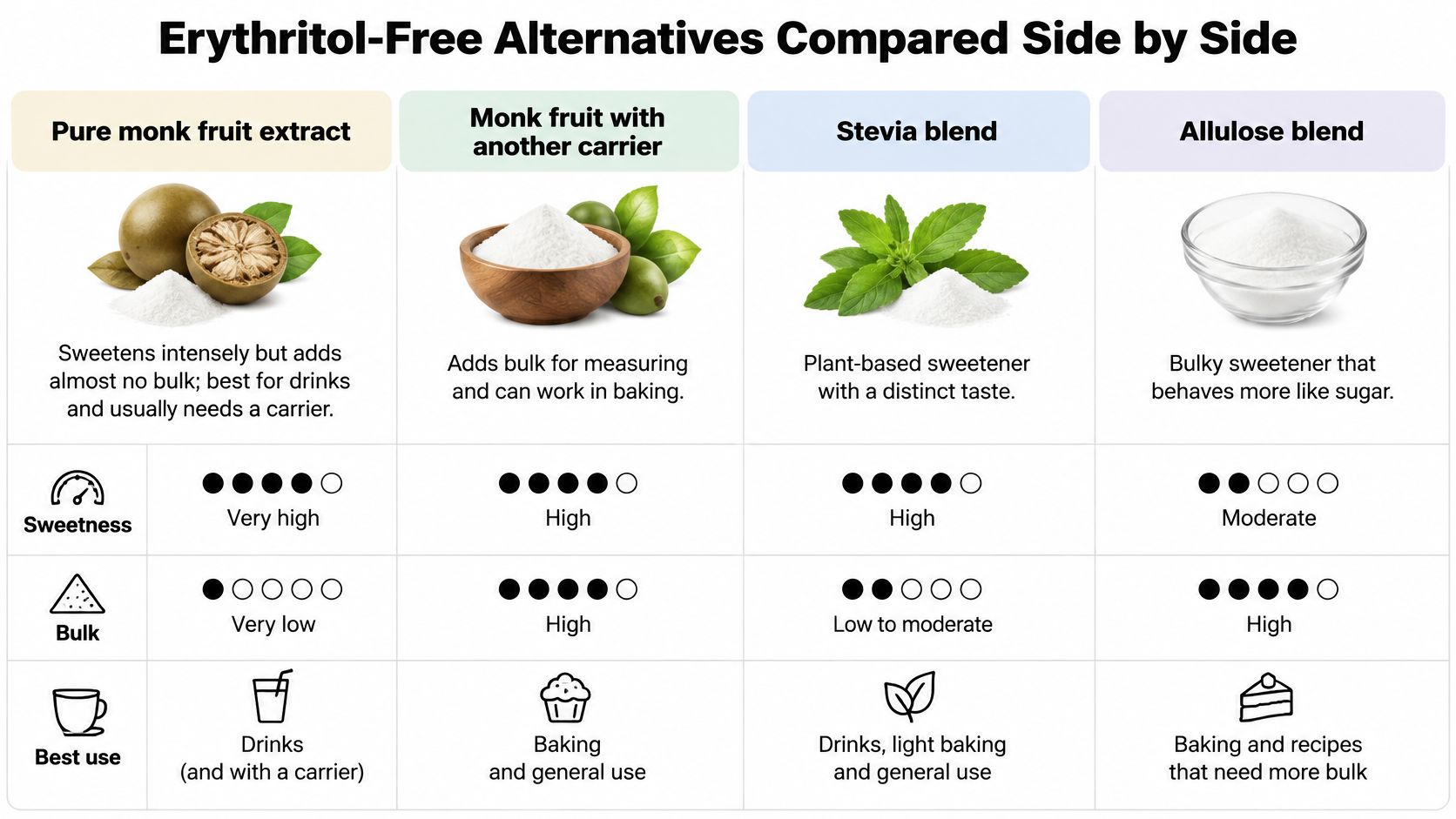
Pure monk fruit extract gives you sweetness without much bulk, so it suits drinks and small adjustments better than a cake batter that relies on sugar for structure. If you bake with it, plan for another ingredient to provide volume.
Monk fruit plus allulose is a practical option when a recipe needs bulk as well as sweetness. The FDA consumer update discusses D-allulose among sugar types metabolized differently from traditional sugars. Allulose can contribute browning, but it may make baked goods softer and darker than expected. Start with a small test batch. A chocolate hazelnut baking mix with almond flour, monk fruit, and allulose is one example of a mix built around that combination.
Monk fruit plus soluble fiber can provide measuring bulk without much browning, making it a candidate for dressings and no-bake recipes. Start with a small serving and see how the product works for you.
Monk fruit plus stevia combines two concentrated sweeteners, while the carrier determines whether the blend adds bulk. Check the ingredient list and serving directions. For another example of label reading in a sweetened product category, see Vitamin Planet's vanilla protein guide.
Watch this short video for a visual walk-through of how these sweetener choices play out in everyday use.
Honest limit: Removing erythritol does not automatically make a sweetener cleaner. It changes the formulation, so check the carrier and the full ingredient list rather than relying on the front label.
Compare products on the same practical measures: ingredients, serving directions, baking performance, and how well the format suits your recipe. A concentrated extract may work well in coffee but leave a cake short on bulk; a blend with a carrier may be easier to measure but bring its own texture or tolerance trade-offs.
How Taste and Digestion Really Differ
Taste is where you'll notice the switch first. Pure monk fruit can taste fruity and lingering, and at higher doses it can turn bitter or licorice-like at the finish. Start smaller than you think you need, stir, and wait a minute before you add more. Sweetness blooms a little late, and impatient second spoonfuls are how drinks end up cloying.
The Cooling Effect You'll Lose
Erythritol leaves a mild cooling effect on your tongue. Some people barely notice it in baked goods, but it stands out in mint drinks, lemonade, and chocolate, where coolness reads as minty even when no mint is present. Erythritol-free blends remove that sensation. In hot coffee, many people prefer the warmer, rounder taste that results. In iced drinks, you may find the sweetness tastes cleaner and less sharp.
Stevia blends deserve their own taste test. A blend that seems fine in a smoothie can taste bitter in black coffee, where there's nothing to hide behind. If you want a fun way to reset your sense of sweet and sour while you compare, these freeze-dried miracle berry pieces that turn sour flavors sweet make the contrast obvious, though they're a taste modifier, not a sweetener for baking.
What Changes in Your Gut
Sugar alcohols such as erythritol are absorbed more slowly than sugar. Many people tolerate them well, but larger amounts can still bring bloating or loose stools. Removing erythritol takes that factor off the table, which is the main digestive win of a pure extract.
The replacement carrier matters, though. Allulose can cause gas or cramping for some people in larger quantities, and soluble fiber can do the same when you jump straight to a big serving. Neither reaction means the ingredient is bad. It means dose and your own gut set the limit, so work up gradually.
Monk fruit and allulose have little effect on blood sugar for many people, but they're ingredients, not medicine. If you're managing diabetes or a digestive condition, talk with your clinician before you change your everyday sweetener. Keep the claim modest and personal. What matters is how a given product works for you at the amount you eat.
There's a regulatory backdrop worth knowing. The FDA page on high-intensity sweeteners notes the agency has not questioned notifiers' GRAS determinations for certain monk fruit extracts under the intended conditions of use in their submissions. That makes the maker's specifications important, because not every extract is identical.
I'd test this way. Pick one drink and one baked item, try each alternative in a small amount, and note taste right away and how you feel an hour later. Two honest data points from your own kitchen beat a page of label promises.
How to Make a Simple Monk Fruit Syrup at Home
A homemade syrup is the easiest way to learn how concentrated extract behaves, because you control the dose and there's no batter to ruin. You'll use it in iced tea, lemonade, coffee, and dressings, and you'll quickly find your personal sweetness level. Keep the batch small while you're learning.
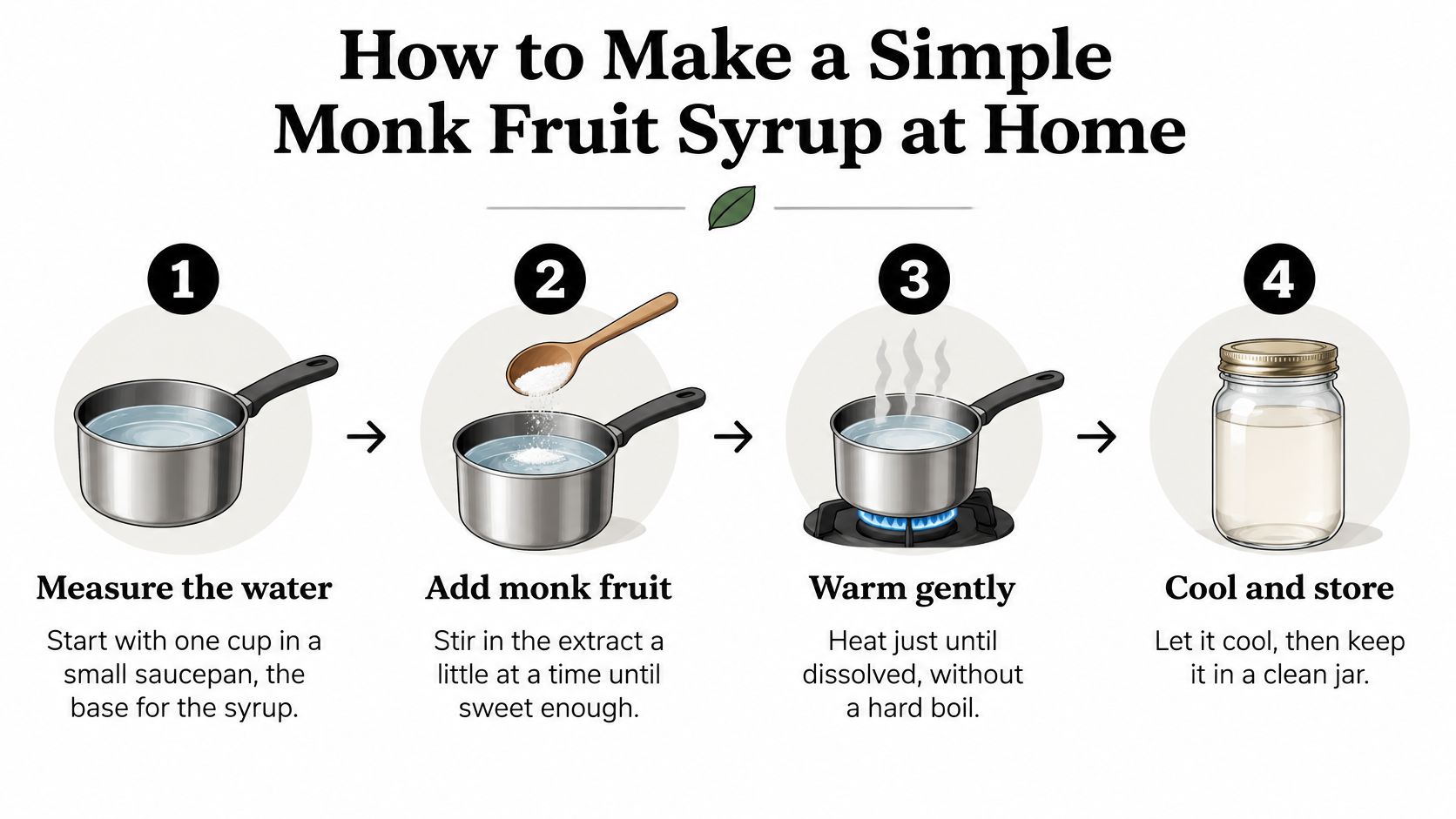
These four steps show the basic flow from saucepan to storage jar.
The Syrup, Step by Step
Measure the water. Start with one cup of water in a small saucepan. Using the same base every time makes your next batch repeatable, and repeatability is how you stop guessing. The common slip is eyeballing the water, then wondering why this batch tastes weaker.
Add the dose from your label. Use the amount printed on your specific product, measured with a small spoon or a gram scale. Extracts vary in strength, so a dose copied from a different brand can overshoot badly. Overdosing is the fastest route to that bitter, lingering finish.
Warm gently until dissolved. Heat over low to medium heat, whisking, just until the extract disappears into the water. Avoid a rolling boil, since hard boiling can change the flavor and reduce the water you measured. Under-stirring leaves gritty specks that settle in the jar.
Taste it cool, not hot. Let a spoonful cool, then taste with a clean spoon. Sweetness tastes softer when cold, and your syrup will mostly be used cold or stirred into drinks. Add a few more drops or a tiny pinch only if you need it, then whisk again.
Cool and store it clean. Let the syrup cool completely, pour it into a clean jar, and label it with the date. A labeled jar saves you from the mystery bottle problem two weeks from now. Store it in the fridge, not on the counter.
Use it within one to two weeks. Make a fresh batch if the flavor changes, turns dull, or smells off. Small, fresh batches taste better than a big jar you nurse for a month. I would rather spend five minutes remaking it than sweeten good tea with tired syrup.
Using It, and a Dry Blend for Baking
Stir the syrup into drinks a teaspoon at a time. It blends instantly into cold liquids, which is where granulated blends often lag. For a spicy contrast, compare your plain syrup with a flavored mixer like this prickly pear and jalapeño cocktail syrup for lemonade and margaritas and notice how much of the flavor work is done by fruit and heat, not sweetness alone.
For baking, remember that pure extract and syrup don't replace sugar's bulk. Keep cakes and cookies to blends built for the job, and follow those labels. If you want your own dry blend, try this method.
- Weigh both parts. Put your monk fruit extract and your allulose or fiber carrier on a gram scale in the ratio printed on the labels.
- Whisk in a dry jar. Mix thoroughly so the tiny amount of extract spreads evenly, or you'll get sweet and bland bites in the same cookie.
- Label with the date and ratio. Future you needs to know what's in that jar.
- Bake a small test batch first. Browning and texture will differ from sugar, and three test cookies tell you more than a full tray of surprises.
Practical rule: Change one variable at a time. If you swap the sweetener and the flour in the same batch, you'll never know which one changed the result.
The win here is control. You end up with a sweetener measured by your own taste, in a format that fits drinks now and a labeled blend ready for baking later.
Buy Erythritol-Free Monk Fruit From Local Makers
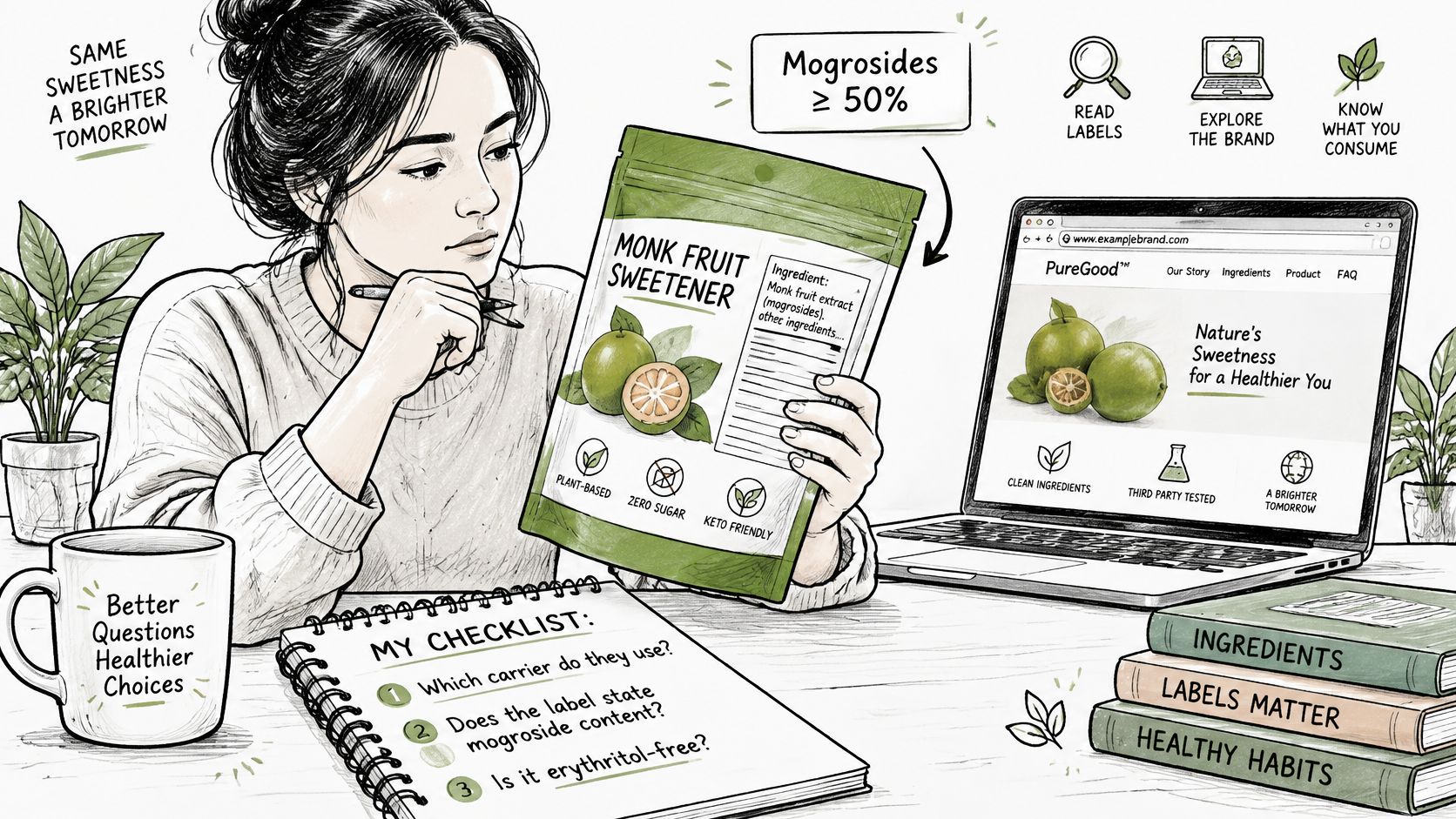
A label can say “erythritol-free” and still leave key questions unanswered. Check the ingredient list, then look for product details that explain the carrier and what the sweetener is designed to do. If the label states mogroside content, that can help you compare extract strength between products.
Three Questions Worth Asking
- Which carrier is used, and in what proportion? The carrier affects how a blend measures and behaves in recipes. It may also matter for digestion.
- What mogroside V percentage is the extract standardized to? This gives you a useful way to compare the stated strength of two extracts.
- What is the product intended for? A sweetener made for drinks may not provide the bulk or texture a baking recipe needs.
Ask the maker if the label or product page leaves those details unclear. A specific answer helps you decide whether the sweetener fits your recipes. It also lets you compare products by their ingredients and intended use, rather than by an erythritol-free claim alone.
Loyaltie is a marketplace where people discover and buy directly from independent makers, growers, and producers, so you can compare several local ingredient lists before you choose. Cookie mixes on Loyaltie cannot be returned because they are food products, for food-safety and quality reasons. Check the ingredient list before ordering.
Choose a small package when available. Try the sweetener in coffee and a familiar baked recipe, then decide whether its taste and performance suit your kitchen.
Choose the Right Erythritol-Free Sweetener for Your Kitchen
For coffee, tea, and cold drinks, start with pure monk fruit extract or a monk fruit and allulose blend at the smallest dose. Drinks forgive a lack of bulk completely, so concentrated formats shine brightest here. Drops by the sink will probably get more use than any bag in your pantry.
For baking, choose a blend that names allulose or fiber as its carrier and prints the sugar to sweetener ratio on the label. Expect browning and texture to differ from sugar, and let a small test batch teach you the timing. If predictable, sugar-like volume is your priority, an allulose blend is usually the better bet.
For sauces and dressings, pick a blend that names its carrier and taste it both warm and cold. Temperature changes how sweetness reads, and a dressing that's balanced warm can taste flat from the fridge. Your homemade syrup is often the easiest tool here, since you can add it by the teaspoon at the end.
Give yourself one action this week. Choose a product from a maker who answers your three questions, buy the smallest size, and test it in a recipe you already make. Keep a short note on your phone about taste, texture, and how you felt afterward.
A good sweetener should taste right in your coffee and your cookies, not just look right on the label. When you've found one that does both, you've found your keeper, and you can reorder with confidence.
Browse erythritol-free sweeteners, baking mixes, and everyday pantry staples from independent brands and local makers across the US, with full ingredient lists you can compare before you buy. Visit Loyaltie to buy directly from the maker, ask your carrier and mogroside questions, and start with the smallest size for your own coffee and baking test.