


You're probably here because you saw a lobster tail price and had a common reaction. The tail looked great, dinner plans started forming, then the label stopped you cold. Was that price for one tail, for a pack, or for a pound? And why does a lobster tail so often look wildly more expensive than a whole lobster?
That confusion is normal. Lobster tail pricing is one of the least shopper-friendly corners of the seafood case because sellers mix units, sizes, origins, and processing styles in ways that make side-by-side comparison hard. The good news is that once you know how to convert everything to true cost per pound, the fog lifts fast. You can tell when a fancy-looking tail is a fair buy, and when you're paying extra for packaging, vague labeling, or plain convenience.
Table of Contents
- That Moment of Lobster Tail Sticker Shock
- Why Tails Cost So Much More Than Whole Lobsters
- Start with origin
- Read size and processing carefully
That Moment of Lobster Tail Sticker Shock
Lobster tails are one of those foods that feel simple until you try to buy them. You spot a clean, neatly cut tail at the seafood counter or on a local maker's site, and the price looks high enough to make you wonder if you misread the label. A lot of people do.
Part of the problem is that lobster tails are often sold in ways that obscure the comparison. One seller lists by the tail. Another lists by weight. Another bundles multiple tails together without making the per-pound math obvious. If you're trying to judge market price lobster tail offers in real time, that setup works against you.
Practical rule: Never decide whether a lobster tail is “expensive” until you know its weight and its effective price per pound.
That one habit changes everything. It helps you compare tail to tail, tail to whole lobster, and one maker to another without relying on gut feel alone.
A fair deal also depends on what kind of product you want. Some shoppers want the easiest dinner possible. Others care more about cold-water flavor, in-shell presentation, or buying directly from the maker with no middleman. None of those priorities are wrong. They just change what “worth it” means.
Here's what usually works when you want better value:
- Check the unit first. Is the price per tail, per pack, or per pound?
- Look for the ounces. If the weight isn't easy to find, move on or ask.
- Compare like with like. Cold-water tails, warm-water tails, frozen tails, and HPP tails shouldn't be judged as if they're the same item.
- Treat convenience as a choice. Ready-to-cook seafood saves time, but time savings always shows up somewhere on the label.
Once you see lobster tails this way, the sticker shock becomes less emotional and more practical. You stop asking, “Why is this so high?” and start asking, “What exactly am I getting for this price?”
Why Tails Cost So Much More Than Whole Lobsters
You see a whole lobster at a price that feels manageable. Then you spot a pack of tails and the number jumps hard. That gap is real, and it throws people because the label makes it look like both products belong in the same price conversation.
They usually do not.

A whole lobster is a full animal. You are paying for shell, body, claws, tail, and parts that never make it onto the plate. A tail is a trimmed, high-demand portion sold after the seller has already done some of the sorting, handling, and packing. If you compare the shelf price of those two forms without adjusting for usable meat, the tail will always look inflated.
The clean way to read it is this. Whole lobster gives you a lower sticker price per pound, but a lot of that weight is not tail meat. Tails carry a much higher price per pound because the seller is charging for a smaller, premium cut with less home prep and less waste for the buyer. That is why the spread can feel extreme.
Here is the practical breakdown:
| Product form | What the buyer gets | Why the price runs the way it does |
|---|---|---|
| Whole lobster | The full animal, including shell and non-tail sections | Lower shelf price per pound, but lower yield of the specific meat many buyers want |
| Tail only | The most requested section, separated and packed | Higher price per pound because the seller has concentrated value into one cut |
| Picked lobster meat | Meat removed from the shell and ready to use | Highest labor and convenience cost in many cases |
The trade-off is not subtle. If dinner is a lobster roll, pasta, or a plated tail entrée, the tail saves time and cleanup. If value matters more than convenience, whole lobster often wins, but only if you are willing to cook it, break it down, and use more than one part of the animal.
Sellers also have to recover the value of the rest of the lobster. They cannot price the tail as if the claws, body, and shell disappear without cost. That is the part many guides mention only in passing. In practice, it is one of the main reasons tails look so expensive. You are not just buying meat by weight. You are buying the most marketable section, plus the labor to isolate it, plus packaging that turns it into an easy weeknight product.
Demand pushes the gap wider. Tail buyers are often shopping for speed, presentation, or a specific recipe. They want a portion that can go straight from thawed to broiled, grilled, or butter-poached without dealing with a live lobster or a shell pile on the table. That preference has real pricing power.
I see the same pricing pattern in other direct-to-consumer food categories. Format changes the math. A bulk product can look expensive or cheap until you compare what stage of the work has already been done for you. Nicaragua Single Origin Coffee, 100% Arabica, Sweet Low-Acid Smooth Cup, 5 lb Bulk Bag (Whole Bean or Ground) | Three Avocados by Loyaltie is a simple example of that pricing logic in another category.
The useful question is not whether tails cost more. They do. The useful question is whether the tail price makes sense once you convert it to cost per pound of the portion you plan to serve. That is how you tell the difference between a premium product and an overpriced one.
Decoding the Price Factors on the Label
Start with origin
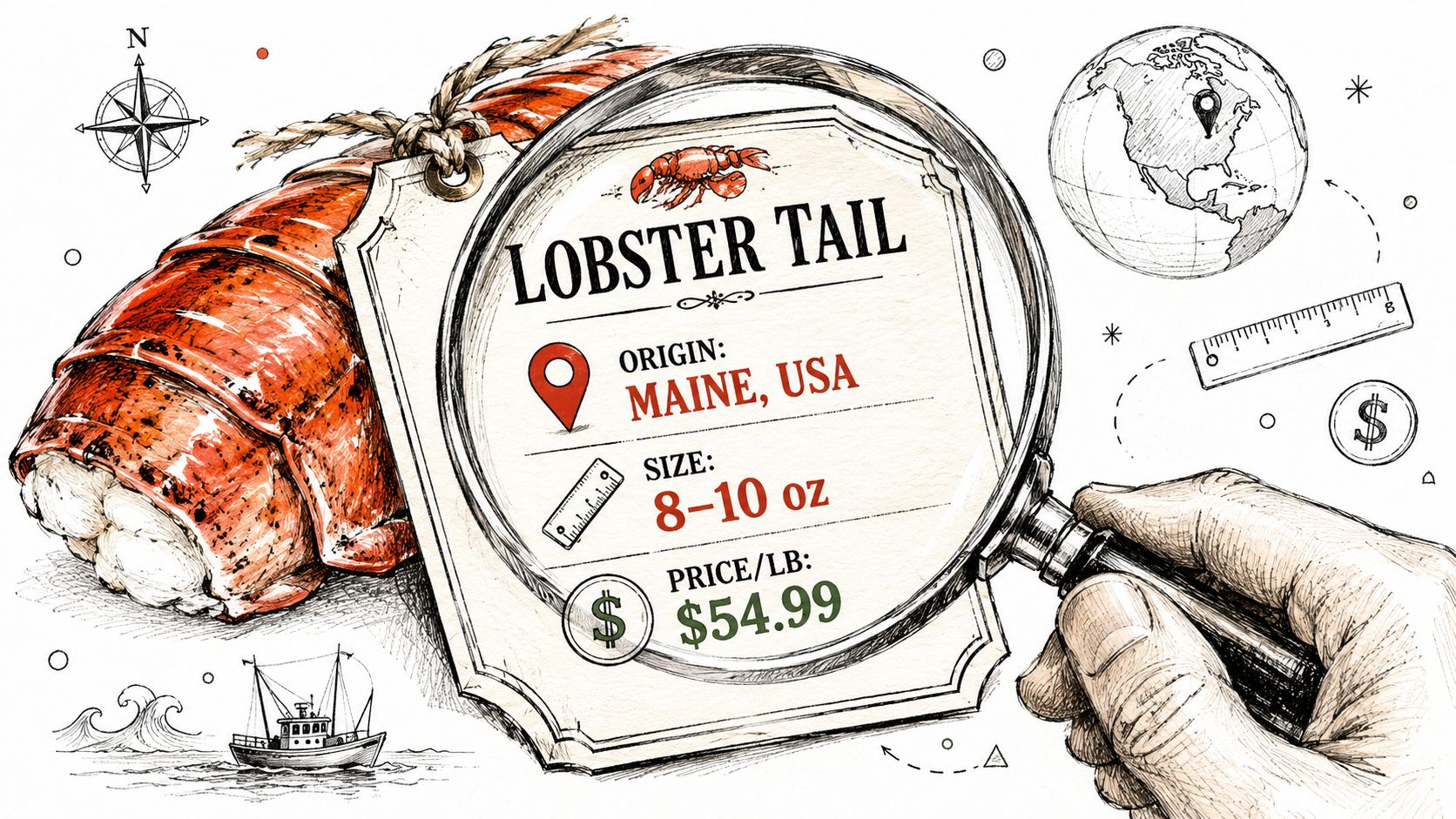
The label tells you more than most shoppers realize. The first thing I look for is origin, because it often tells you a lot about flavor, texture, and why one tail costs more than another.
Cold-water tails, especially from Maine, usually appeal to buyers who want sweet, firmer meat. Warm-water tails can still be useful for certain meals, but they're not the same product experience. If you're comparing prices across sellers without checking origin, you can end up comparing two different things and calling one “overpriced” when it's really just a different category.
Another clue is whether the tail is sold in-shell and whether it has gone through high-pressure processing, often shortened to HPP. Those details matter because they affect handling, texture expectations, and how the seller positions the product.
Read size and processing carefully
Size can throw you off fast because sellers often market tails by ounces rather than standardized per-pound pricing. A tail that looks like a bargain at first glance might be a weak value once you convert it.
Get Maine Lobster gives a clear example in its listing for 6 to 7 ounce lobster tails. It notes that in-shell, high-pressure processed lobster tails from Maine in the 7 to 8 ounce range command a higher price, and that 6 to 7 ounce tails have been observed at $29.95 for one and $24.50 each when buying 8 to 14 units, a 13.19% discount. That's useful because it shows two things at once: size matters, and bulk can change price meaningfully.
Here's how I read a label before buying:
- Origin matters first. Maine or other cold-water origin usually signals a different eating experience than warm-water tails.
- Ounce range matters more than photos. Sellers can make a smaller tail look substantial.
- Processing changes value. In-shell and HPP tails may cost more because the handling and presentation are different.
- Pack structure changes the deal. One tail at a posted price may be much worse value than a larger bundle from the same maker.
Don't let a clean product photo do the work that the label should do. Weight, origin, and processing should be easy to find.
Seasonality also matters, but not every seller passes seasonal softness through to shoppers equally. Some do. Some keep pricing fairly flat even when supply loosens. That's one reason buying directly from local makers can be useful. You can often tell more clearly whether the price reflects the actual product or just the retail setting around it.
How to Calculate the Real Cost Per Pound
Use one simple formula
A tag that says "$18 per tail" sounds manageable. Then you do the math and realize that small tail is priced like a premium steak by the pound. That gap catches shoppers all the time.
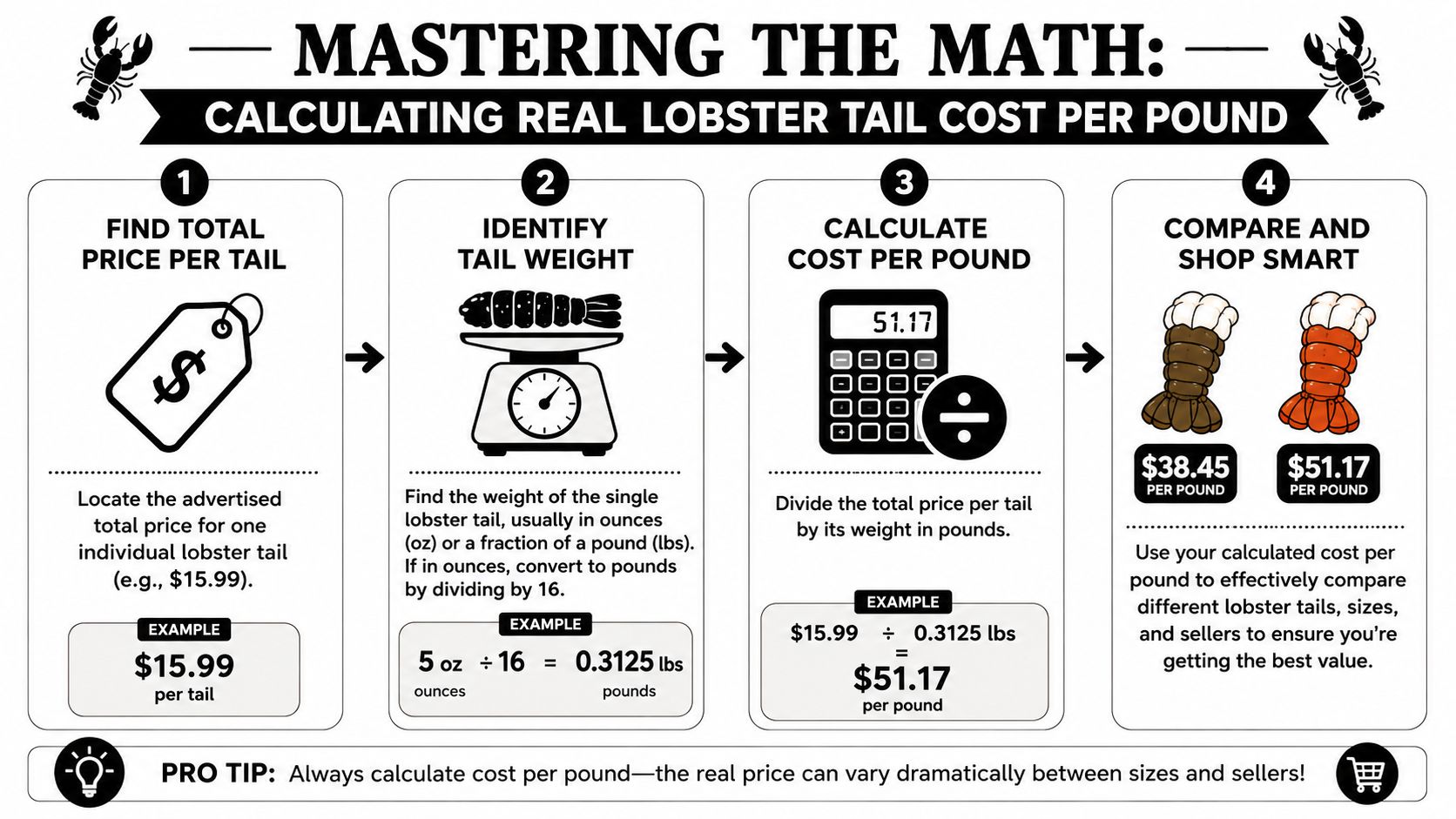
The fix is simple. Convert every tail price to a per-pound number before you decide whether it is fair.
- Find the price per tail
- Find the tail weight in ounces
- Divide the price by the ounces
- Multiply by 16 to get price per pound
Written out:
(Price per tail ÷ ounces) × 16 = effective cost per pound
I use this because lobster tails are one of the easiest seafood items to overpay for. Sellers know many buyers compare by piece count, not by weight. A five-ounce tail and an eight-ounce tail can look closer in photos than they are in value.
As noted earlier, tails often sell at a much higher per-pound number than whole lobster. That does not automatically make them overpriced. You are paying for a more processed, more convenient cut. But the only way to judge the premium is to run the numbers.
The same weight-first habit works outside seafood too. A larger package such as this smooth balanced medium roast coffee blend in a 2 lb bag makes more sense once you compare by total weight instead of sticker price.
A quick worked example
Here's a simple hypothetical example using the method, not a market claim.
| Price per tail | Tail weight | Cost per ounce | Cost per pound |
|---|---|---|---|
| $15.99 | 5 oz | $3.198 | $51.17 |
That works like this:
- Step one: take $15.99
- Step two: divide by 5 ounces
- Step three: multiply that result by 16
You end up at $51.17 per pound.
That single number gives you a much cleaner comparison point. It lets you judge whether a tail listing is expensive, or expensive for a reason.
Use it to compare:
- one larger tail against two smaller tails
- a local maker's listing against a supermarket listing
- tail-only pricing against shrimp, scallops, or whole lobster for the same dinner budget
A short video can make this feel even easier in practice:
If a seller doesn't make weight easy to find, treat that as a warning sign. Good seafood listings shouldn't require detective work.
One more buyer tip. Check whether the listed weight is per tail, per pack, or a range across multiple tails. I see shoppers miss that all the time, and it changes the math fast.
Comparing a per-tail offer to a per-pound offer in your head is how people get talked into weak deals. Write it down, use your phone calculator, and get the number. After a few tries, you'll spot an overpriced tail in seconds.
Finding Better Lobster Tails from Local Makers

Why buying direct usually gives you clearer value
Once you know how to price-check lobster tails properly, the next step is finding sellers who make the details easy to trust. That's where independent brands and local makers often stand out. Not because you're doing anyone a favor, but because buying directly usually gives you a cleaner view of what you're paying for.
The strongest direct sellers tend to be more specific. They tell you where the tails come from, how they're packed, whether they're in-shell, and how buying more changes the value. That's much more useful than a generic “market price” sign over a freezer case.
Seasonality can help too. A market note shared through this discussion of recent lobster pricing softness points out that prices often drop during summer and fall when catch increases, and that recent wholesale prices for new shell and hard shell lobsters softened with improved catch. That's the kind of timing shoppers can use. If you buy from local makers during those windows, you may find better quality at a better price than you'd expect.
What to look for before you buy
I'd use a simple checklist before ordering tails online from any maker:
- Look for exact sizing. “Large tails” isn't enough. You want ounce ranges.
- Check how they describe origin. A real seller usually knows the waters and says so clearly.
- Read the pack details. Tail count, total weight, and handling method should be visible.
- Watch for seasonal honesty. Sellers who update pricing or availability with the catch tend to be easier to trust.
A direct buy also makes the meal itself better because you can build around the seafood with the same level of care. A finishing salt, for example, is one of the easiest ways to let a good tail speak for itself. Something like fleur de sel finishing sea salt with crisp crunchy crystals and mineral flavor fits that approach well.
There's also a practical discovery angle. Loyaltie is a marketplace where people discover and buy directly from the best independent brands in the US. That kind of setup is useful when you want no middleman, clearer product pages, and a better chance of finding local makers instead of mass-produced listings dressed up with vague copy.
Better seafood shopping usually comes down to transparency. The more clearly a seller explains the product, the easier it is to decide if the asking price is fair.
For Sellers How to Price Lobster Tails on a Marketplace
Show your math and your story
If you sell lobster tails online, your price has to do two jobs at once. It has to cover your real costs, and it has to make sense to a buyer who's staring at a number without the benefit of your day-to-day context.
The broader category gives sellers a reason to stay disciplined. Vantage Market Research says the global lobster market was valued at USD 9.15 billion in 2025 and is projected to reach nearly USD 16.85 billion by 2032 at a CAGR of 10.7%. The same source notes a Producer Price Index for lobsters of 184.814 in May 2026, after 151.910 in April 2026, which signals higher processing and supply-chain pressure rather than cheaper selling ahead. Those figures are in Vantage's lobster market outlook and pricing discussion.
That means underpricing to chase volume can backfire quickly. Buyers are willing to pay when they understand what they're buying. They push back when the listing is vague.
Use your product page to make the value legible:
- State the origin clearly. Cold-water location matters to many buyers.
- Show the form. In-shell, HPP, frozen, or tail-only should be obvious.
- List weights without ambiguity. Don't make buyers guess what “large” means.
- Explain pack logic. If bulk lowers handling cost per unit, say so plainly.
Price for repeat buyers without racing downward
A marketplace listing works better when it gives shoppers options. Single-tail or smaller-pack purchases let first-time buyers test quality. Bulk packs or buy-on-a-plan arrangements give repeat customers a reason to come back without forcing you into constant discounting.
If you want help structuring those price tiers, it's worth reviewing some practical AI pricing software options that can help sellers think through margin, positioning, and offer structure. The point isn't to hand pricing over blindly. It's to pressure-test your logic before you publish it.
I'd also make sure your storefront itself supports transparency. A setup like Sell on Loyaltie gives sellers a place to present product details, pricing, and brand context in a direct-to-buyer format. That matters because lobster tails aren't impulse candy. Shoppers want enough detail to justify the spend.
The sellers who do this well don't apologize for their pricing. They explain it. They show the catch area, the sizing, the handling, and the reason one pack costs more than another. That's how you build trust and repeat orders without turning your listing into a race to the bottom.
If you want a simpler way to discover and buy directly from independent brands in the US, Loyaltie is one marketplace to check. It brings local makers, growers, and producers into one place so you can compare products more clearly, buy with less guesswork, and skip the usual middleman fog that makes good food harder to shop for.