
You've got a formula you believe in, a handful of beautiful products, and a product page that looks respectable. Then the orders arrive from three places at once, one shade sells out, a marketplace asks for documents you didn't realize you needed, and your advertising spend starts eating the margin. That messy middle is where most independent beauty lines either build a durable business or stall.
Learning how to sell beauty products online isn't mainly about finding one magical platform or posting more often. It's about making seven connected decisions well: compliance, channel selection, pricing, product-page merchandising, low-cost marketing, fulfillment, and retention analytics. Independent brands also have a quality advantage when they make that advantage visible, with clear ingredients, useful education, honest claims, and a shopping experience that feels closer to a real consultation than a generic catalog.
Table of Contents
Why Selling Beauty Online Feels Hard Right Now
Beauty is unusually unforgiving online because the buyer can't smell the product, touch the texture, test the shade, or ask you a question in the aisle. A polished ad can earn attention, but it can't compensate for a confusing product page, unclear claims, weak reviews, or a checkout experience that creates doubt.
The economics make that friction expensive. Beauty, skincare, and cosmetics stores commonly convert around 2.5% to 3.3%, while some industry roundups place beauty and personal care closer to 5.1%, as summarized by Firework's beauty ecommerce conversion guidance. In practical terms, 100 qualified visitors may produce only 2 to 5 purchases, so improving the product-detail page can matter more than buying another batch of traffic.
The first growth problem usually isn't reach. It's the gap between interest and confidence.
Build the survival stack in order
Start with compliance. If your label, claims, or market-specific documentation is weak, every sales channel becomes a liability. Then choose platforms based on margin and customer access, not popularity alone. Your own store gives you control, marketplaces provide discovery, and a local marketplace can connect you with buyers who want to buy directly from independent brands in the US.
Next, build listings that answer the questions a shopper would ask in person. Show the shade, finish, texture, ingredients, use case, and limitations. Launch marketing through organic content, carefully selected creator seeding, and email before you let paid ads become the engine.
Finally, make fulfillment and retention part of the product. Inventory accuracy, realistic delivery promises, clean returns handling, replenishment reminders, reviews, and cohort reporting determine whether growth gives you freedom or just creates more customer service. The difficulty is structural, not personal. Your job is to remove one source of uncertainty at a time.
Compliance and Labeling Essentials Before You List Anything
Don't publish a product until you can prove what it is, what's in it, who made it, and what the customer should expect. In the US, cosmetic companies are responsible for marketing safe, properly labeled products, while color additives are the main exception to the general rule that cosmetics don't need FDA premarket approval, as explained in this Congressional Research Service overview of US cosmetic regulation.
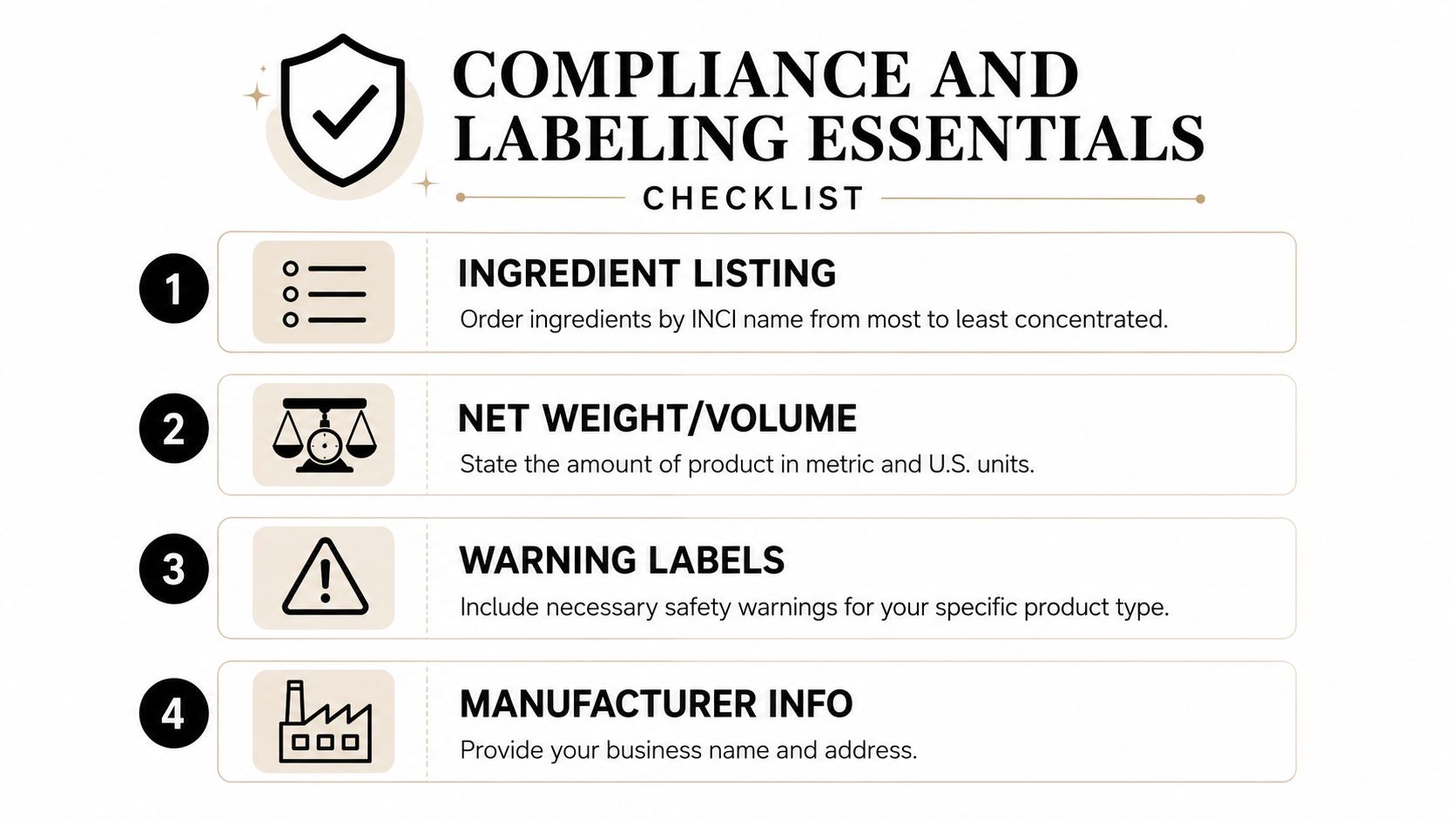
Your package should present the ingredient list using accepted INCI names and the required order, state net weight or volume, include relevant warnings, and identify the responsible business with an address. Check the requirements for your exact product type, especially if the product could be regulated as a drug because of its intended use or claims. Saying a product moisturizes skin is a cosmetic-style claim. Saying it treats acne or changes a disease process can move the product into a different regulatory category.
Make disclosure useful to shoppers
The INCI block is a legal record, but it's also a conversion asset. Put a short plain-English explanation below it, identify the ingredients that matter most to the buyer, and make your platform's allergen and ingredient filters match the actual formula. Don't hide behind vague phrases such as “clean” or “chemical-free.” Explain what the product contains and why each hero ingredient is there.
For an example of how a beauty product page can organize ingredient-led information, review this hyaluronic acid serum with DMAE, retinol, and 24K gold flakes. Treat the page as a customer education document, not just a sales pitch.
FDA also says there's no federal requirement for cosmetic firms to be licensed, and it isn't illegal to manufacture cosmetics at home, according to its small business and homemade cosmetics fact sheet. That makes your own vetting process more important if you buy from local makers. Before launch, keep these records organized:
- Stability evidence: Use third-party stability testing appropriate to the formula and packaging.
- Traceability: Add batch codes so you can identify affected units if a quality issue appears.
- Safety documentation: Keep testing records, supplier documents, and product liability insurance information ready for platforms or retail partners.
- Market files: If you sell into the EU or UK, obtain the required safety assessment and maintain the documentation for that market before listing.
Picking Your Platforms and Pricing for Real Margin
Pick a channel for a specific job. Your own Shopify store is where you control merchandising, customer data, bundles, and the brand story. Amazon offers search demand and fulfillment infrastructure, but it also places you beside established products with extensive review histories. TikTok Shop can work for demonstrations and impulse-friendly bundles, while a local marketplace such as Loyaltie connects you with a regional buyer pool and direct relationships without requiring you to build every discovery path yourself.
The fee example below is a planning model from the assumptions in this guide. It isn't a universal platform quote, so replace each line with your current contract, shipping, packaging, labor, and tax costs before making a decision.
| Channel | Avg. Fees | Net Margin on $10 Lip Oil | Best For |
|---|---|---|---|
| Shopify | 3% processing plus allocated monthly fees | Near 62% under the stated assumptions | Hero products and brand control |
| Amazon | 15% referral plus FBA pick-and-pack | Roughly 38% under the stated assumptions | Replenishment staples and search demand |
| TikTok Shop | Varies by agreement and fulfillment setup | Calculate per SKU before launch | Bundles, demos, and impulse purchases |
| Loyaltie or local marketplace | Lower fees, with constrained regional reach | Calculate with local shipping and marketplace terms | Local discovery and direct maker sales |
The model uses a $10 lip oil with $3.20 cost of goods sold. Under the stated assumptions, Shopify includes 3% payment processing and $40 in monthly fees allocated across sales, producing a margin near 62%. Amazon includes a 15% referral fee plus FBA pick-and-pack, reducing the modeled margin to roughly 38%, while increasing potential discovery and operational support. Verify current terms directly before relying on any estimate.
Set three prices, not one
Your floor price covers formula, packaging, labor, payment costs, marketplace fees, shipping support, expected replacements, and a contribution toward overhead. Your healthy list price leaves room for operations and future customer acquisition. Your promotional ceiling is the lowest price you'll use without teaching customers to wait for discounts.
Put your hero product on your own store first, where education and bundles can do more work. Use TikTok Shop for products that demonstrate quickly and bundle naturally. Put replenishment staples on Amazon only when the margin, inventory commitment, and review-building plan make sense. If you want to reach buyers looking for independent brands, sell on Loyaltie as one additional channel, not as a replacement for your direct store.
Photography and Listings That Actually Convert
Your product-detail page is the storefront window. Build it for a shopper who's holding a phone, moving quickly, and trying to answer one question: “Will this work for me?”
For skincare, use a matte background with a restrained shadow so the package looks tangible rather than cut out. Show the product texture, the dispenser, the fill level, and the amount used in a real routine. For color cosmetics, include a controlled studio swatch and a damp swatch on neutral skin, then add an in-context image that shows scale and application.
Write for the decision hiding inside the product
Lead skincare with a benefit-driven heading, then follow with an ingredient-first subhead using both the INCI name and plain language, such as niacinamide, rather than forcing shoppers to decode the formula. For makeup, place undertone, finish, and wear expectations near the top. If a shade is sheer, say so. If the finish is dewy, show it under consistent lighting.
Add a clear “who it's for” and “who it isn't for” line beside the buy box. This filters out mismatched purchases before they become returns. Beauty return estimates sit around 4.3% to 4.99% for online orders, compared with roughly 19.3% for online retail overall in 2025, according to FreeYourself's 2025 beauty return-rate analysis. Low returns don't remove the need for accurate fit guidance, because a few avoidable refunds can still damage margin and trust.
Use concise instructions, patch-test guidance, allergen notes, and a visible review block. A short creator video above the reviews can demonstrate texture and application more effectively than another polished pack shot. For a deeper framework on reducing friction across product pages and checkouts, this guida CRO per PMI italiane offers useful conversion-rate principles. You can also study the structure of Rochelle Skincare for a direct-to-buyer beauty presentation.
Launch Marketing Without a Celebrity Budget
You don't need every platform. You need a small set of channels that pass attention from one to the next.
Choose two social platforms where your exact buyer already spends time. Use a simple 3-2-1 weekly mix: three educational or behind-the-scenes posts, two product demonstrations, and one founder-led post. Demonstrate the product on real skin, explain why you chose an ingredient, show a filling or packing process, and answer the questions customers ask before buying. Reply to comments promptly after publishing, because those conversations reveal objections you can turn into future content.
Treat creator seeding like a test
Send 15 to 30 PR boxes to creators whose audiences match your niche, whether that's sensitive skin, textured hair, fragrance-free routines, or local wellness. Don't require a post. Require measurement instead. Give each creator a UTM-tagged link or a unique discount code, then compare sales, assisted visits, and customer quality rather than celebrating views alone.
Build email capture from the first order. A useful post-purchase flow includes a thank-you message, founder context, usage instructions, a review request, and a second-purchase prompt around the time the product is likely to need replacing. Offer a 10% discount code through a quiz or shade finder only when the exchange makes sense for your margin.
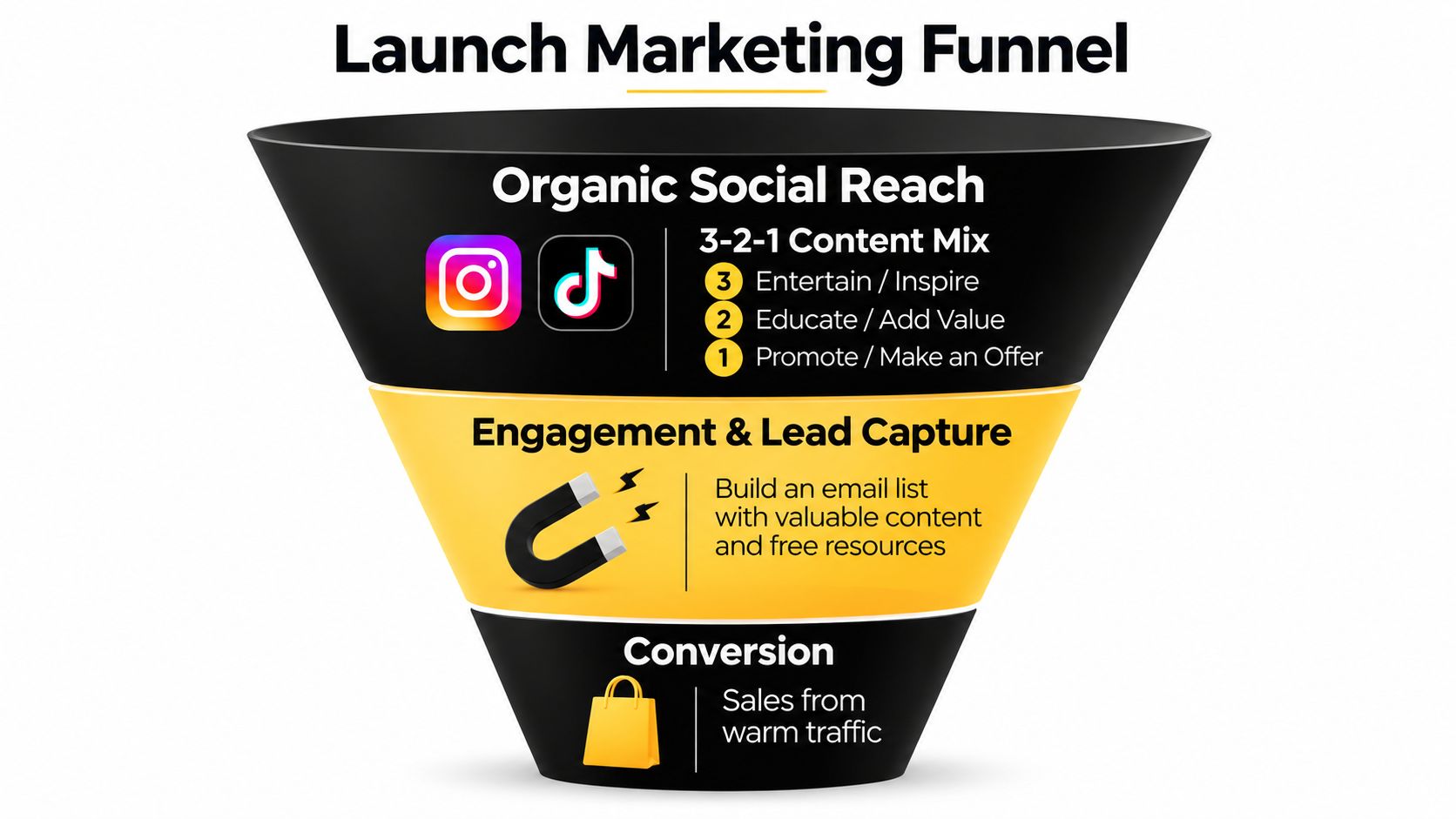
Hold paid acquisition until your product page, review collection, and attribution loop work together. The category's typical conversion range means paid traffic can magnify a weak funnel just as quickly as it can scale a strong one, so retarget cart abandoners before prospecting broadly. For direct-brand demand, consumer research found that 59% of surveyed US respondents preferred researching on brand sites and 55% wanted to buy directly from brands rather than multi-brand retailers, according to MarTech's survey coverage.
Packaging, Fulfillment, and Inventory Across Channels
Your inventory system is part of your customer experience. A shopper doesn't care whether a stockout came from your website, a local marketplace, or a creator-led drop. They only know you promised a product and couldn't deliver it.
Standardize your primary packaging around a supplier with a manageable minimum order quantity, then maintain a backup supplier for the components that can stop the whole line. One unavailable glass jar shouldn't freeze every serum order. Keep packaging specifications, lead times, approved alternatives, and reorder points in one operating document.
Create one source of truth
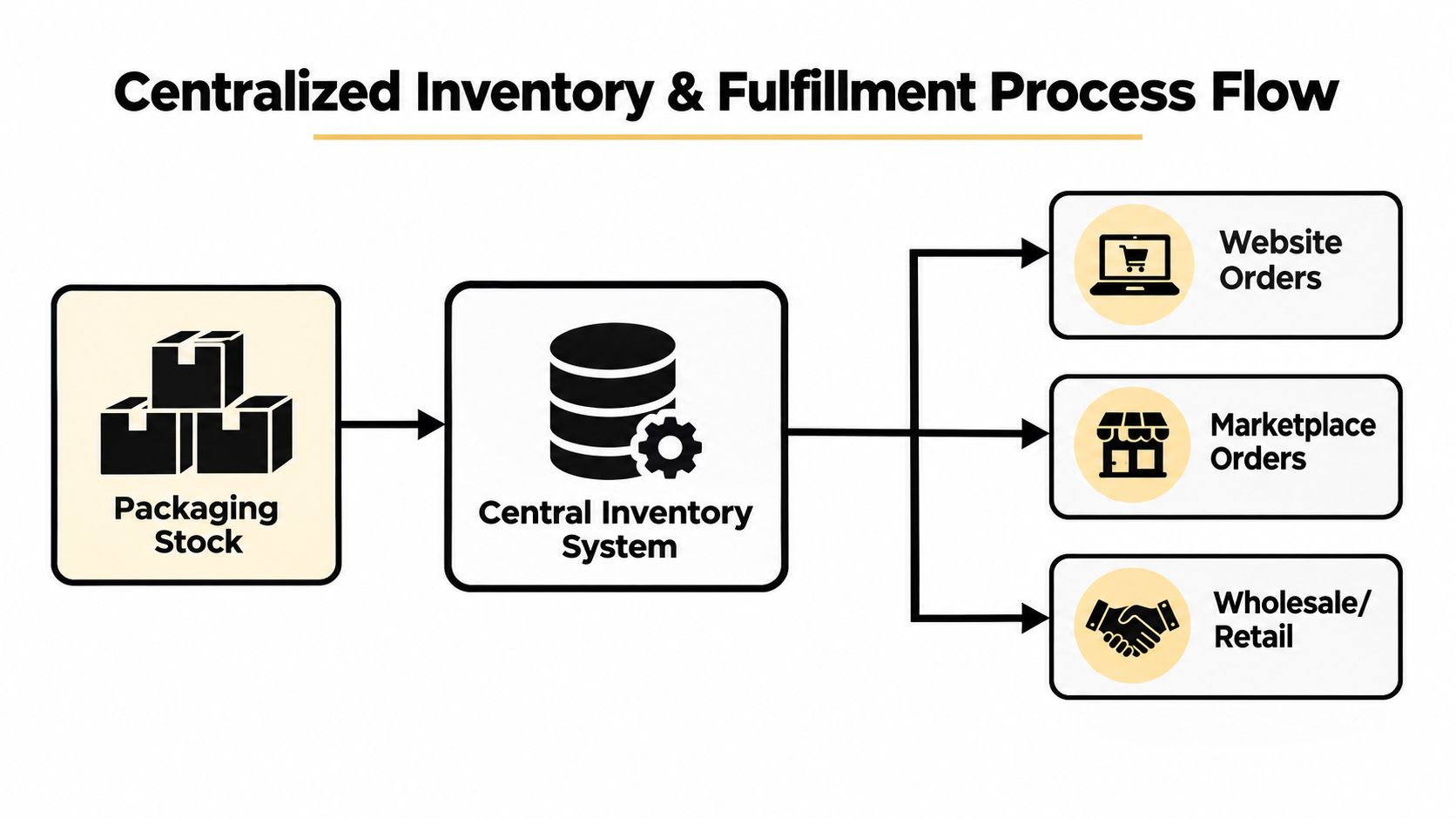
Connect your website, marketplace orders, and any local or wholesale channel to a central inventory view. Shopify, Loyaltie, or a lightweight stock dashboard can work if every sale deducts from the same available pool. If a channel can't sync reliably, reserve stock for it manually and reduce the listing quantity before you oversell.
Give every packed order a quality check. Confirm the batch code, fill level, seal integrity, label, shade, and shipping address. Leaks and under-filled units generate expensive support work because you pay for replacement product, postage, and lost confidence.
Compare two or three carriers using zone, weight, fragility, and delivery reliability. Make tracked shipping the default, publish realistic delivery promises, and write a returns policy that excludes opened cosmetics for hygiene reasons while still offering exchanges where appropriate. Review fulfillment cost per order each month, and investigate packaging whenever it rises above 12% of average order value.
For material choices and regional sourcing ideas, this guide to finding UK sustainable beauty packaging is a useful reference. The broader operational point is simple: sustainable packaging only helps if it protects the product, ships efficiently, and stays available.
Retention, Analytics, and Scaling Sustainably
Growth should create a stronger operating system, not a larger pile of urgent tasks. Track three loops from the first order: whether the buyer returns, which product sells through fastest, and which acquisition source brings customers who remain satisfied.
Your basic dashboard should include repeat-purchase rate, replenishment timing, refund reasons, review themes, product velocity, and customer value by acquisition channel. Use UTM tags, post-purchase survey links, and a simple cohort sheet. A customer who arrived through a creator may behave differently from one who found a search listing, and you need that distinction before increasing spend.
Rank the next investment by evidence
Start with retention automation. Improve welcome messages, usage education, replenishment reminders, win-back campaigns, and review requests before hiring or expanding your catalog. Then test a second marketplace once the hero product has reliable stock, clear documentation, and a product page that converts. Paid social comes after those foundations, not before them.
For a practical way to organize channel-level KPIs for retention, use a dashboard that separates acquisition source, first-order product, repeat behavior, refunds, and customer feedback.
| Lever | Capital Required | Time to Impact |
|---|---|---|
| Email and SMS automation | Low | Near term |
| Product-page and review improvements | Low to moderate | Near term |
| Second marketplace test | Moderate | Medium term |
| Paid social expansion | Moderate to high | After attribution is reliable |
| Broader catalog expansion | High | Longer term |
Use this 90-day plan to avoid random motion:
- Weeks 1 to 4: Repair product pages, usage education, reviews, email flows, and refund tracking.
- Weeks 5 to 8: Test one additional channel, one bundle, and a small creator cohort with tagged links.
- Week 12: Decide whether to scale, revise the offer, pause the channel, or fix fulfillment before adding demand.
Independent beauty brands already have meaningful online demand. Trade coverage reports that indie beauty generated about $40.0 billion in sales, grew 22.3% year over year, and generated about 70% of sales online, with indies holding 41% share in facial skincare, as reported by Loyaltie's independent beauty brand overview. The opportunity is real, but resilient growth belongs to makers who protect margin, keep promises, and make buying directly feel easier than defaulting to mass retail.
Loyaltie is a marketplace where people discover and buy directly from the best independent brands in the US, including beauty and everyday wellness products. Visit Loyaltie to explore local makers, compare ingredient-led products, and give your own customers another dependable way to find and reorder from independent brands.