
Most advice about finding the best local coffee starts with atmosphere, reviews, or a charming café story. That's backwards. A beautiful space can serve tired beans, and a bag covered in origin artwork can still tell you very little about what you're drinking.
Treat local coffee as a quality upgrade, not a charitable purchase. Look for a clear roast date, traceable sourcing, useful brewing guidance, and a flavor profile that matches your routine. Independent brands earn your attention when they make those details easy to verify. The right coffee should taste fresher, more distinct, and more intentional than a generic bag from a warehouse shelf.
Table of Contents
Why Independent Roasters Offer a Genuine Quality Upgrade
A local address is not proof of better coffee. Judge the roaster by what it can show you: a clear roast date, traceable sourcing, a stated roast profile, and guidance that helps you brew the beans properly. Those details reveal whether the business controls quality or merely repackages a familiar product.
The growing interest in specialty coffee reflects higher expectations. In 2025, 46% of US adults said they had consumed specialty coffee during the previous day, compared with 42% for traditional coffee, the first reported point at which specialty coffee surpassed traditional coffee on that basis, according to the National Coffee Association's specialty coffee report. Use that figure as context, not as a reason to order elaborate drinks. Good coffee should have a recognizable character in a simple brew.
Quality starts with what you can verify
Look for four practical signals:
- Fresh roasting: The roaster explains how recently beans are produced and shipped, reducing the chance that they have spent too long in storage.
- A defined flavor target: Notes such as bright and fruit-forward, chocolatey and rounded, or suited to milk drinks give you a useful expectation before purchase.
- Preparation guidance: Roast level, grind advice, and recommended brew methods show how the roaster expects the coffee to perform.
- Product detail: A named origin, processing method, and roast date communicate far more than a broad label such as “smooth.”
Choice is also expanding. One market analysis estimates approximately 2,200 specialty coffee roasters operating today, with a projection of more than 3,500 by 2035. These are estimates and projections from IndexBox's US coffee roaster analysis, not a guarantee that every roaster delivers excellent coffee. They do mean you can compare roast styles and sourcing standards instead of accepting one generic profile.
Practical rule: Reward the roaster that shows its work, not the label that happens to be nearby.
Convenience matters, but it cannot tell you whether a bag will taste aromatic or flat. Choose the local coffee whose information lets you judge freshness, origin, roast style, and preparation before paying. That is the quality upgrade.
Decoding Roast Dates and Freshness Indicators
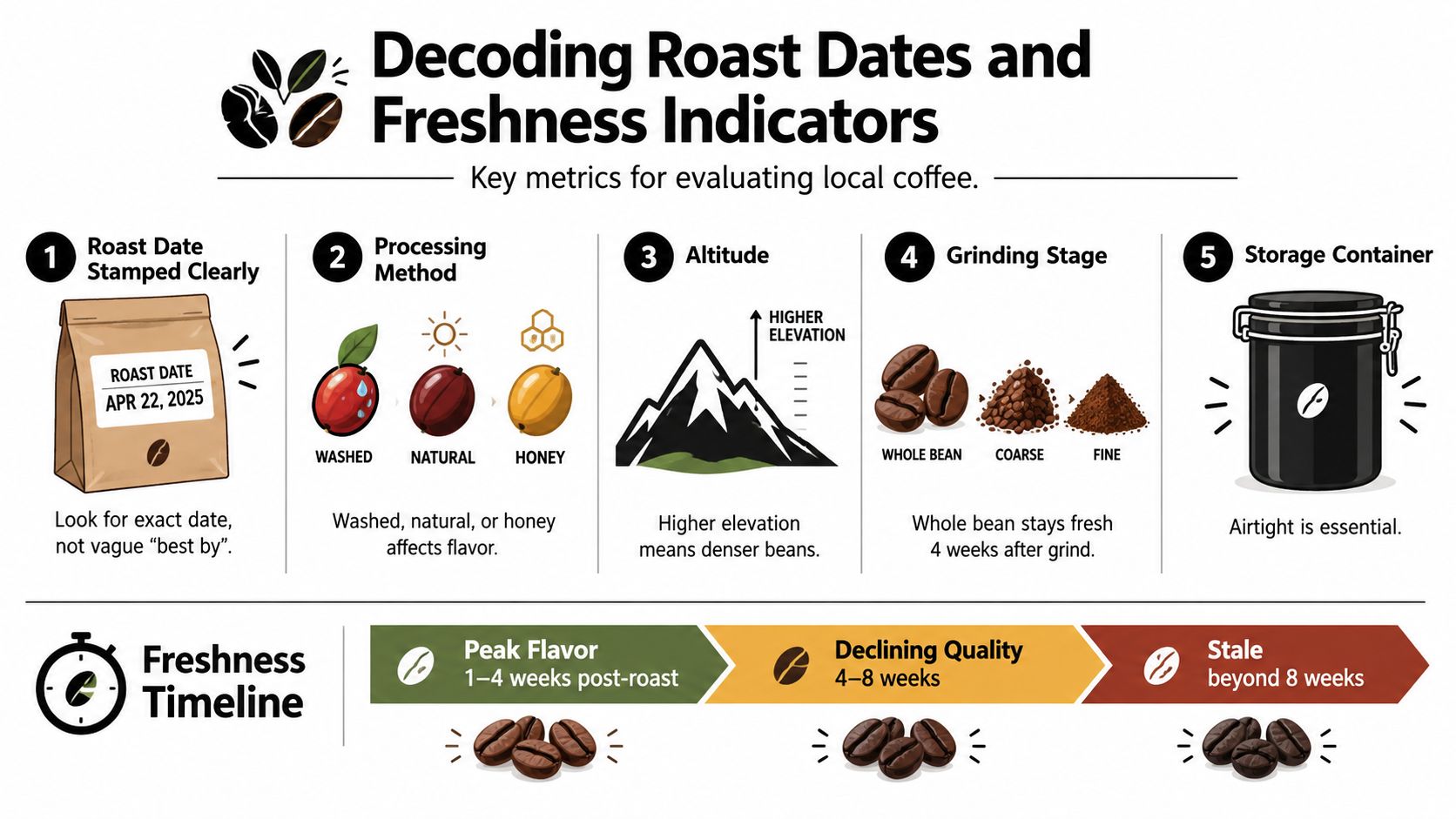
A mountain illustration, tasting note, or “crafted with care” slogan can't tell you whether the beans are fresh. The roast date is the first detail to check. A “best by” date describes a broad shelf-life window, while the roast date tells you when the flavor journey began.
Freshly roasted beans can contain roughly 1–2% trapped carbon dioxide by mass. Degassing happens fastest during the first 24–48 hours, then slows, and darker or faster roasts generally release gas more quickly, as explained by the Specialty Coffee Association's freshness guidance.
Read the bag in the right order
Find the exact roast date. If the package only gives a vague freshness promise, you're missing the most useful buying signal. A roaster that prints the date makes comparison easier.
Allow a short rest after roasting. Coffee that's too fresh can brew unevenly because escaping gas interferes with water contacting the grounds, especially during espresso preparation. Let the beans settle according to the maker's guidance rather than opening the bag immediately and judging the first cup.
Choose whole beans when you can. Grinding exposes more surface area to air and speeds flavor loss. Buy ground coffee when convenience matters, but look for a grind matched to your brewer and a package shipped promptly.
Check the package. An airtight, opaque bag with a one-way valve helps protect the beans from oxygen, light, and excess gas buildup. Store it away from heat, not above an appliance or beside a sunny window.
Storage temperature matters more than many shoppers realize. Evidence summarized by the Specialty Coffee Association indicates that a 10°C temperature increase can approximately double the degassing rate, which accelerates flavor deterioration. For a useful example of the product detail independent roasters can provide, compare the roast-to-order Bourbon Barrel Aged Guatemala coffee, where the product description gives you more context than a generic “fresh” label.
Freshness test: If you can't find the roast date, packaging information, and storage advice, you can't make a confident quality comparison.
Evaluating Sourcing Transparency and Origin Claims
Coffee origin stories are easy to make vague. “Ethically sourced,” “farm direct,” and “sustainably produced” may sound reassuring, but they don't identify the producer, importer, cooperative, or purchasing arrangement behind the bag.
Start with specificity. A strong product page might name a farm, producer group, cooperative, region, importer, processing method, or lot. It may explain how the coffee reached the roaster and why the lot tastes the way it does. You don't need a dissertation, but you do need enough information to distinguish a traceable purchase from a broad marketing theme.
Research covering 219 specialty roasters across 25 countries found that origin, terroir, and producer relationships are increasingly important ways for roasters to differentiate coffee, according to this study on coffee waves and terroir. That makes transparency useful for two reasons. It can help you understand flavor, and it can show whether the roaster has a meaningful relationship with the supply chain.
A practical transparency check
Look for these details before accepting a claim:
- Named origin: Country alone is a starting point. A region, farm, cooperative, or lot gives you a clearer trail.
- Processing method: Washed, natural, and honey processing can shape the cup differently. The method should appear alongside flavor notes, not be buried.
- Importer information: An importer name suggests the roaster can identify how the coffee entered its purchasing system.
- Producer relationship: “Direct trade” is only useful when the brand explains what that means in practice.
- Certification context: A certification can provide one kind of assurance, but it isn't a complete measure of flavor, freshness, or producer benefit.
Certification shouldn't end your evaluation. Research presented at the 2025 International Conference of Agricultural Economists found that major certifications weren't widely used in differentiated specialty-coffee markets, and certified coffees sometimes had lower average retail prices. A label alone can't tell you whether the coffee is fresher, better handled, or more directly connected to producers.
For a concrete comparison, inspect the single-origin Papua New Guinea coffee from Pops Coffee Company. Details such as origin, tasting notes, roast approach, and format give you something to assess. That's more useful than paying extra for a story you can't verify.
Mastering the Home Brew to Taste the Difference
Great beans won't rescue a careless brew. You don't need expensive equipment to evaluate local coffee, but you do need a repeatable starting point.
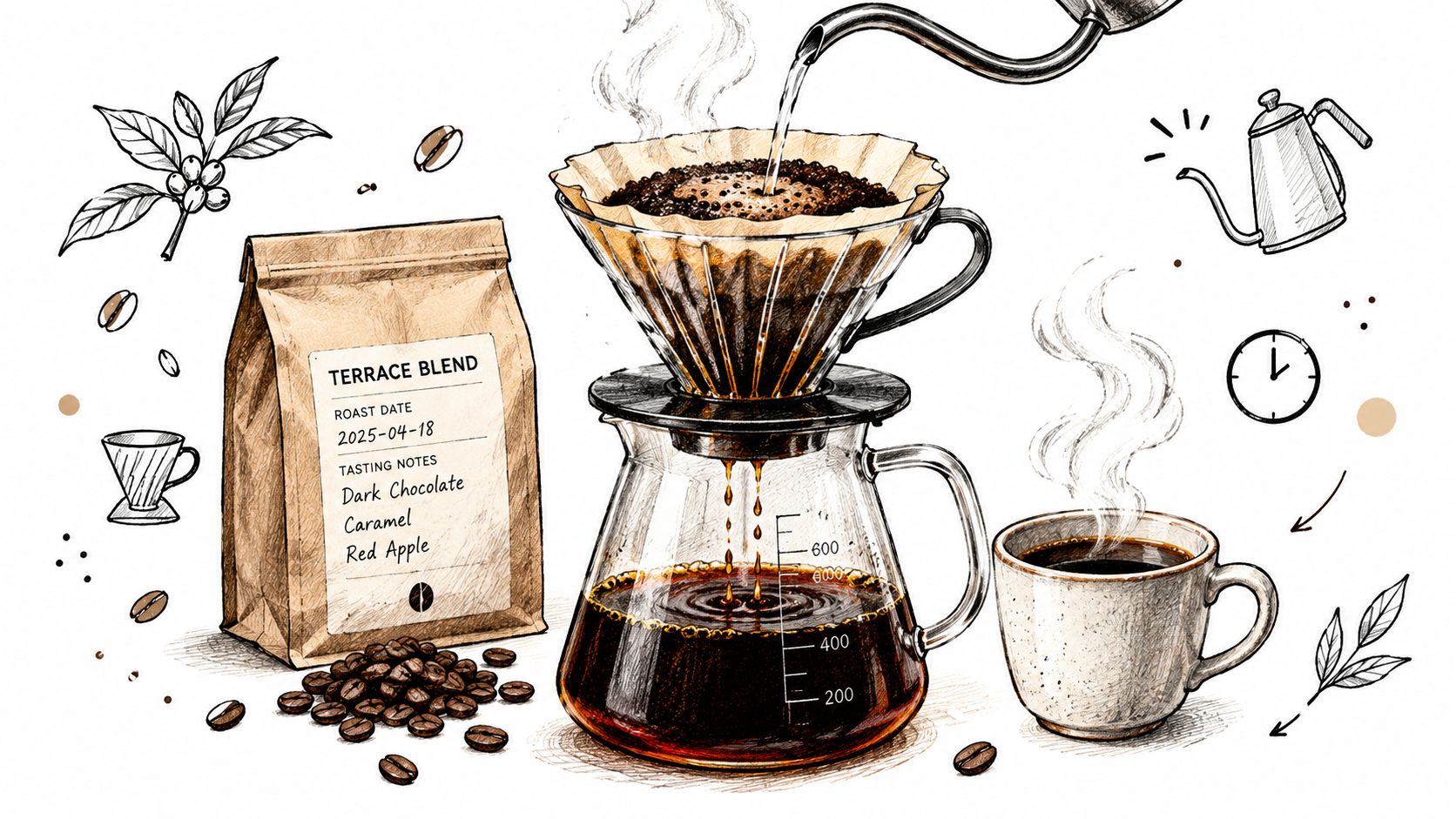
Begin with a consistent coffee-to-water ratio, grind, and water temperature. The Specialty Coffee Association's brewing research distinguishes total dissolved solids, or TDS, from extraction yield. TDS measures the concentration of soluble coffee material in the drink, while extraction yield measures the fraction of ground coffee transferred into the water. Brew ratio connects the two.
Change one variable at a time
Use this simple kitchen method:
- Start around a 1:16 coffee-to-water ratio. Keep the dose and water amount consistent while you learn the coffee.
- Taste for strength first. If the cup tastes thin but balanced, use slightly less water or a little more coffee.
- Taste for extraction next. Harsh, bitter, or drying flavors often point to excessive extraction. Try a coarser grind or shorter contact time.
- Keep the grind stable while comparing beans. A different grind can make you blame the coffee for a brewing problem.
- Record what worked. A quick note about dose, grind, time, and taste will improve your next brew faster than chasing tasting-note language.
Temperature deserves attention too. For a plain-language reference on how brewing heat affects the cup, use this coffee temperature guide before changing several settings at once.
Watch the video below for a practical visual reference, especially if you're working with a pour-over setup.
Don't judge a coffee from one chaotic cup. Brew it consistently, then ask whether the flavor is clear, balanced, and enjoyable without excessive sweetness or added syrups. Independent roasters put effort into developing a roast profile, and a controlled brew is how you notice that work.
Choosing the Right Buying Routine for Your Lifestyle
The best buying routine is the one you'll maintain. A neighborhood café gives you immediate convenience and professional preparation. Whole beans from a local roaster give you more control, and home brewing can make a thoughtfully roasted bag last across many cups instead of turning every coffee into an outing.
Choose the café when you want speed, espresso technique, or a prepared drink you can't easily reproduce. Choose beans for home when you already own a brewer, enjoy adjusting the recipe, or want the roast date and origin in your hands. Neither option wins every morning.
Compare the routine, not just the drink
| Routine | Best fit | What to evaluate |
|---|---|---|
| Café visit | You need a ready-to-drink coffee | Bean freshness, espresso quality, milk texture, and staff knowledge |
| Whole beans at home | You want control and repeatability | Roast date, grind guidance, brew method, and storage |
| Regular delivery | You want fewer emergency purchases | Flexible reorder timing, shipping speed, and freshness at dispatch |
| Mixed routine | You want convenience without giving up quality | Café visits for prepared drinks, home beans for everyday brewing |
Price matters, but “best value” isn't the same as the lowest shelf price. A local café may justify its cost through preparation and convenience, while a roaster's bag may make more sense for your daily routine. Compare the experience you're buying, then choose the format that reduces waste and keeps you drinking coffee you enjoy.
A 2025 industry analysis reported that 41% of consumers somewhat agreed and 22% strongly agreed that supporting the local community mattered more than buying from multinational brands, while specialty coffee reached 59 out of every 100 cups consumed in the US. Those figures appear in Perfect Daily Grind's analysis of local and smaller roasters. The stronger reason to switch, though, is still product quality. Community connection is a bonus, not a substitute for fresh beans and a good cup.
If you're setting up coffee for a shared workspace, a practical office tea and coffee setup guide can help you think through equipment, hot water access, and daily convenience. For home, keep the setup simpler. Pick one reliable brewer, one fresh coffee, and a recipe you can repeat.
Discovering Independent Makers on Loyaltie
Finding a good local roaster shouldn't require opening dozens of tabs and guessing which claims deserve attention. Use a short buying checklist, then compare makers on the details that affect the cup.
Your online coffee checklist
- Freshness: Is the roast date clear, and does the maker explain resting and storage?
- Traceability: Can you identify the origin, processing method, producer group, or importer?
- Format: Are whole-bean and ground options available, with guidance for espresso, pour-over, or immersion?
- Flavor fit: Do the tasting notes describe a style you'll enjoy, rather than just using impressive adjectives?
- Buying convenience: Can you order directly, reorder when needed, or choose regular delivery without a rigid commitment?
The US specialty-coffee market is already broad. One market analysis estimates approximately 2,200 specialty coffee roasters today and projects more than 3,500 by 2035, according to IndexBox's market analysis. You have enough choice to be selective.
Loyaltie is a marketplace where people discover and buy directly from independent brands in the US. You can use a maker marketplace alongside local search, café recommendations, and product pages to compare the information that matters. If you're researching local makers in a particular area, a guide such as where to shop in Jenks can help you find nearby options, while online listings make it easier to inspect product details before visiting.
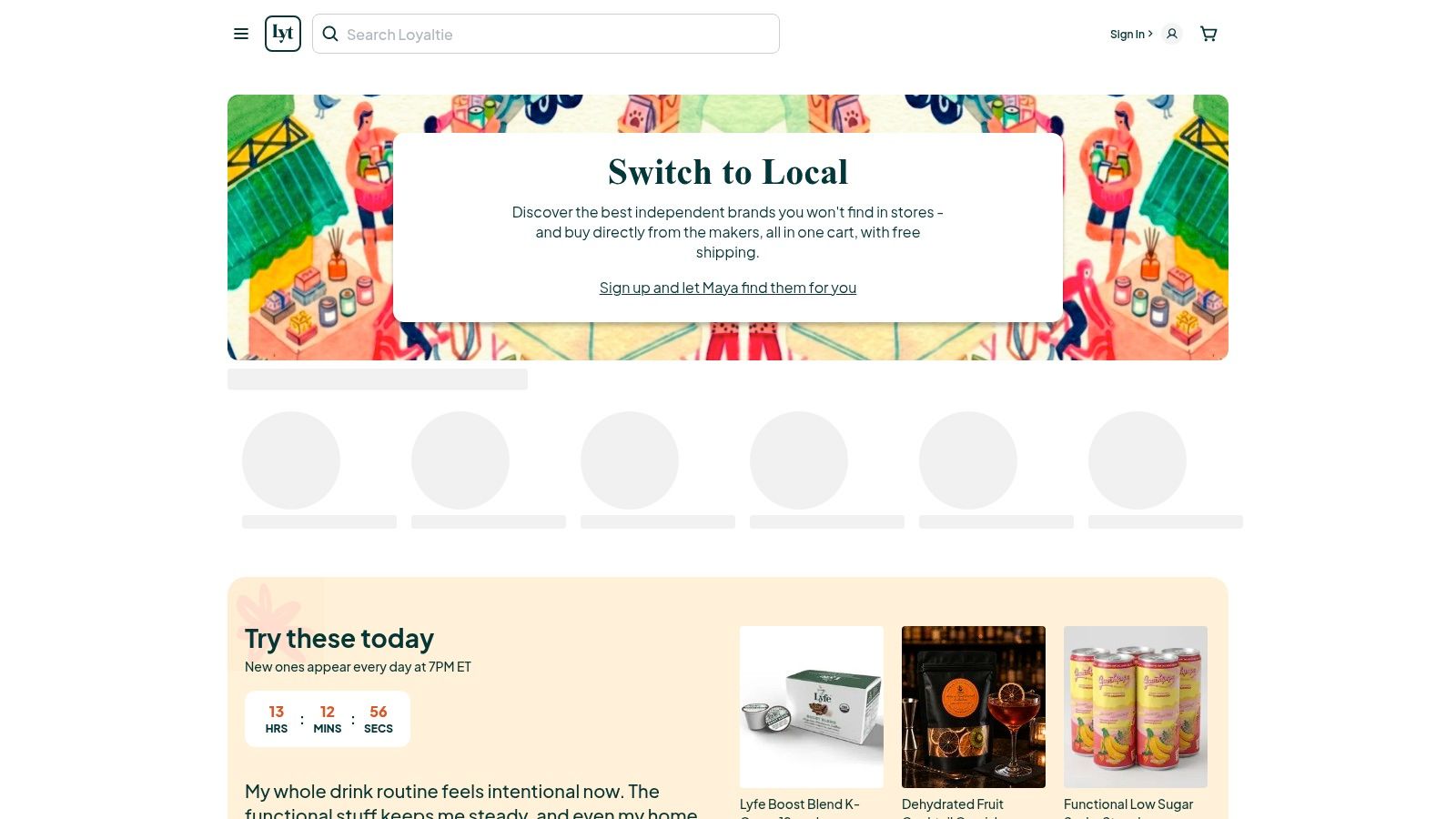
Use the Loyaltie marketplace as a practical starting point: filter your search by the kind of coffee you want, open the maker's product details, and check the roast date, origin, format, and brewing information before ordering. That process turns “shop local” into something more useful, you're choosing a better product because you can see why it deserves a place in your morning routine.
Loyaltie helps you discover and buy directly from independent coffee brands and other local makers across the US, with product details that make quality easier to compare. Visit Loyaltie to find freshly made coffee, check the details behind each product, and upgrade your everyday cup without settling for anonymous mass-market beans.