
You're halfway through dinner, the salad is washed, and you've just poured a dressing labeled 0 g carbohydrate over the top. Then you notice onion powder, garlic, or a sweetener in the ingredient list and wonder whether “zero carb” means what you thought it meant. That small moment is familiar to anyone who reads labels closely, especially when the bottle is meant for regular use rather than a single carefully measured drizzle.
A good zero carb salad dressing can still be flavorful, emulsified, and satisfying. The trick is understanding the difference between a label declaration and the exact chemistry of the bottle, then choosing or making a dressing with enough transparency that you can judge it for yourself.
Table of Contents
Why the Label Can Fool You
Dinner is on the table, the greens are dressed, and then the second glance happens. The front says 0 g carbohydrate, but the ingredient list mentions honey, garlic, onion, or mustard. I have had that moment with bottled dressings and with my own test batches, and it usually comes down to label math, not a mislabeled bottle.
Under U.S. labeling rules, 0 grams of total carbohydrate can appear on the panel when a serving contains less than 0.5 gram, and products under 1 gram may also be declared as “less than 1 gram,” as the FDA Food Labeling Guide explains. What the panel gives you is a serving-based declaration after allowed rounding. It is not a promise that every ingredient in the bottle is free of carbohydrate.
That gap matters more with dressing than with many foods because pouring is imprecise. A labeled serving can be a restrained spoonful. Real use is often a long pour over a large bowl, or a second pass after tossing. Two dressings can both earn a zero on the label and still behave differently once you use an amount that matches how you eat.
Practical rule: Read “zero carb” as a rounded serving claim, then check whether the serving size matches your habits.
The ingredient list still earns its place
Experienced label readers slow down here. Vinegar is usually not the problem. The small extras are. Garlic, onion, dairy solids, spice blends, sweeteners, and stabilizers can each bring trace carbohydrate into the mix. That does not make the dressing unusable. It tells you the front label is only one part of the story.
I use the ingredient list to judge intent as much as totals. A short formula built around oil, acid, salt, and seasonings usually reads differently from one that relies on sweetened mustard, fruit concentrates, or thicker add-ins to carry flavor. That trade-off shows up in homemade dressing too. Roasted garlic tastes innocent in a vinaigrette until you make it often, pour generously, and stop pretending those additions do not count.
The better question is not whether the bottle deserves the word zero. The better question is whether the serving, the ingredients, and your real portion line up closely enough that the label helps more than it hides.
That is also why independent makers can be worth seeking out. Smaller producers often give you a cleaner formula and clearer flavor cues, which makes the label easier to interpret than a supermarket bottle built to appeal to everyone.
What Zero Carb Means on a Nutrition Label
Serving size is the part shoppers miss most often. A dressing can look clean on the front, then drift away from your target once you pour the amount you would use on a real salad instead of the small labeled serving. I have made that mistake with both bottled vinaigrettes and homemade batches.
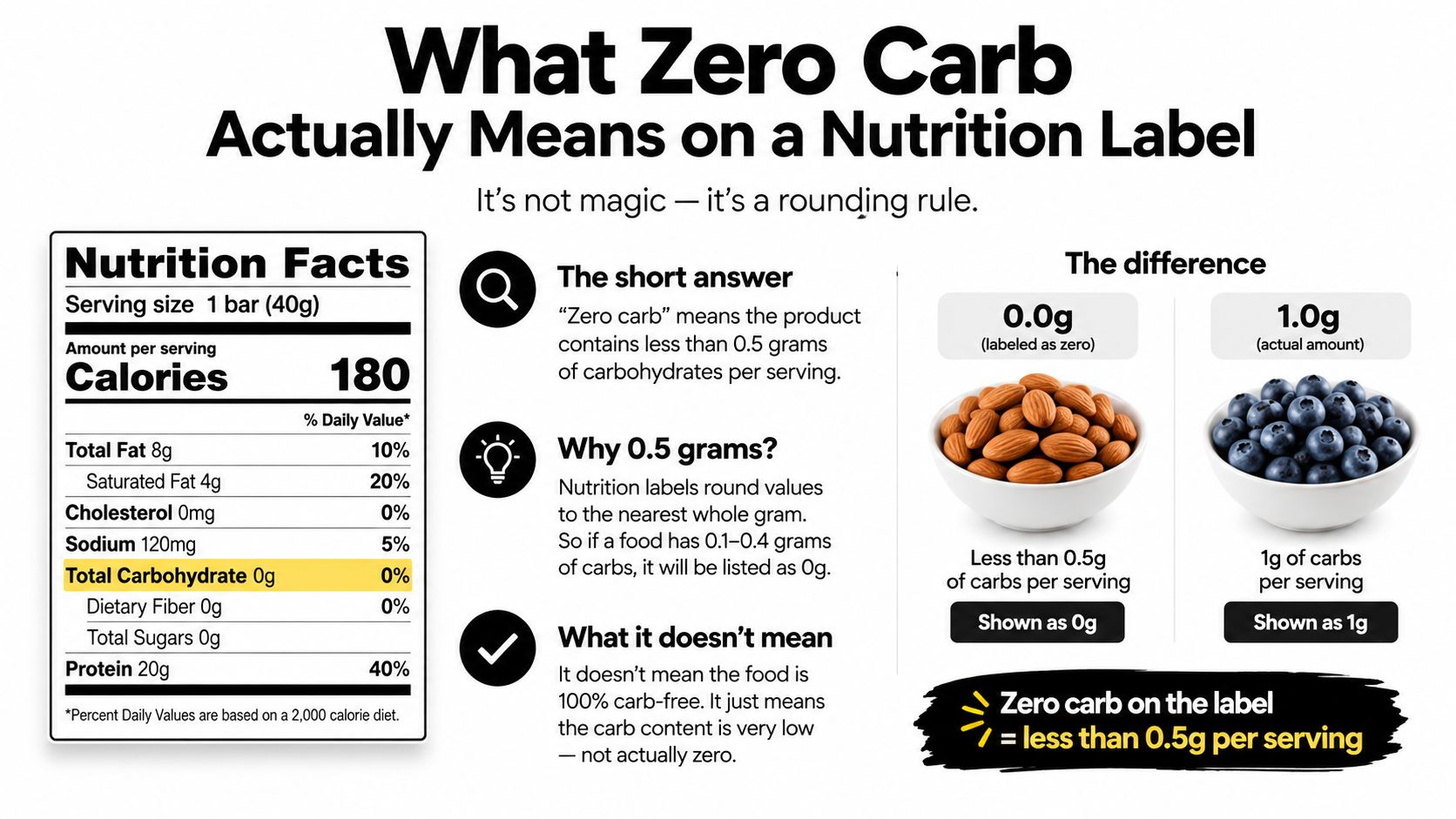
The Nutrition Facts panel still gives you useful information. You just have to read it in order. Start with serving size, then total carbohydrate, then the ingredient list. That sequence keeps you from treating a rounded claim as a full description of the bottle.
The FDA explains that total carbohydrate is calculated by subtracting protein, fat, moisture, and ash from total product weight, as described in its food-labeling guidance.pdf). That helps explain why a dressing with spices, garlic, dairy solids, or a sweetener can still land at a rounded 0 g total carbohydrate on the panel for the labeled portion. For cooks and careful shoppers, that is the useful distinction. The panel reports a regulated serving calculation, not the whole story of how the formula is built.
A label-reading comparison
| Label Element | What It Tells You | Where It Can Mislead |
|---|---|---|
| Serving size | The portion used for the Nutrition Facts calculation | Your pour may be larger |
| Total carbohydrate | The declared carbohydrate after permitted rounding | 0 g does not prove absolute absence |
| Ingredient list | Which ingredients contribute flavor, body, or stability | Tiny amounts can still contribute trace carbohydrate |
| Sweetener name | Whether sweetness comes from sugar or another ingredient | “Sugar-free” and “zero carb” are not identical claims |
| Nutrition panel | The regulated information for the labeled portion | It may not show unrounded formulation values |
This matters even more when you compare a supermarket bottle with a small-batch maker. A short formula built from oil, acid, herbs, and salt usually reads differently from one that gets body or sweetness from extras. If a maker uses a sweetener such as organic allulose and monk fruit, read it the same way you would read any other dressing. Check the serving, check the full ingredient list, and if needed ask for figures by serving and by weight.
That is how the label becomes useful. It stops being a shortcut and starts being a tool.
Building a Vinaigrette You Can Trust
The most dependable starting point is an oil-and-acid vinaigrette. Use a mild oil, a sharp vinegar or other permitted food acid, salt, dried herbs, and a little mustard if its label fits your target. Mustard helps the mixture hold together, but it also needs checking because flavored blends can contain sweeteners.
For a flexible base, begin with three parts oil to one part vinegar. Whisk the acid, salt, herbs, and mustard first, then drizzle in the oil slowly while whisking continuously. Adding the oil gradually gives the water-based acid phase time to disperse the oil instead of leaving a slick floating on top.
A small-batch method
- Start with the acid: Use vinegar or another suitable acid, then taste before adding oil. Sharpness becomes less aggressive once the oil is incorporated.
- Season before emulsifying: Salt dissolves more easily in the vinegar than in oil. Add dried oregano, thyme, black pepper, or another unsweetened spice at this stage.
- Drizzle slowly: A thin stream and steady whisking produce a more cohesive dressing than dumping everything into a jar at once.
- Adjust at the end: Too sour usually calls for more oil or a little water, not automatic sweetener. A flat dressing may need salt, herbs, or mustard.
Fresh herbs can make the flavor brighter, but they also add water and may shorten storage stability. Roasted garlic, fruit vinegar, honey-mustard, and sweet barbecue-style additions are the swaps most likely to complicate the carbohydrate calculation. If you want garlic character, use a measured amount and include it in your ingredient math rather than pretending it doesn't count.
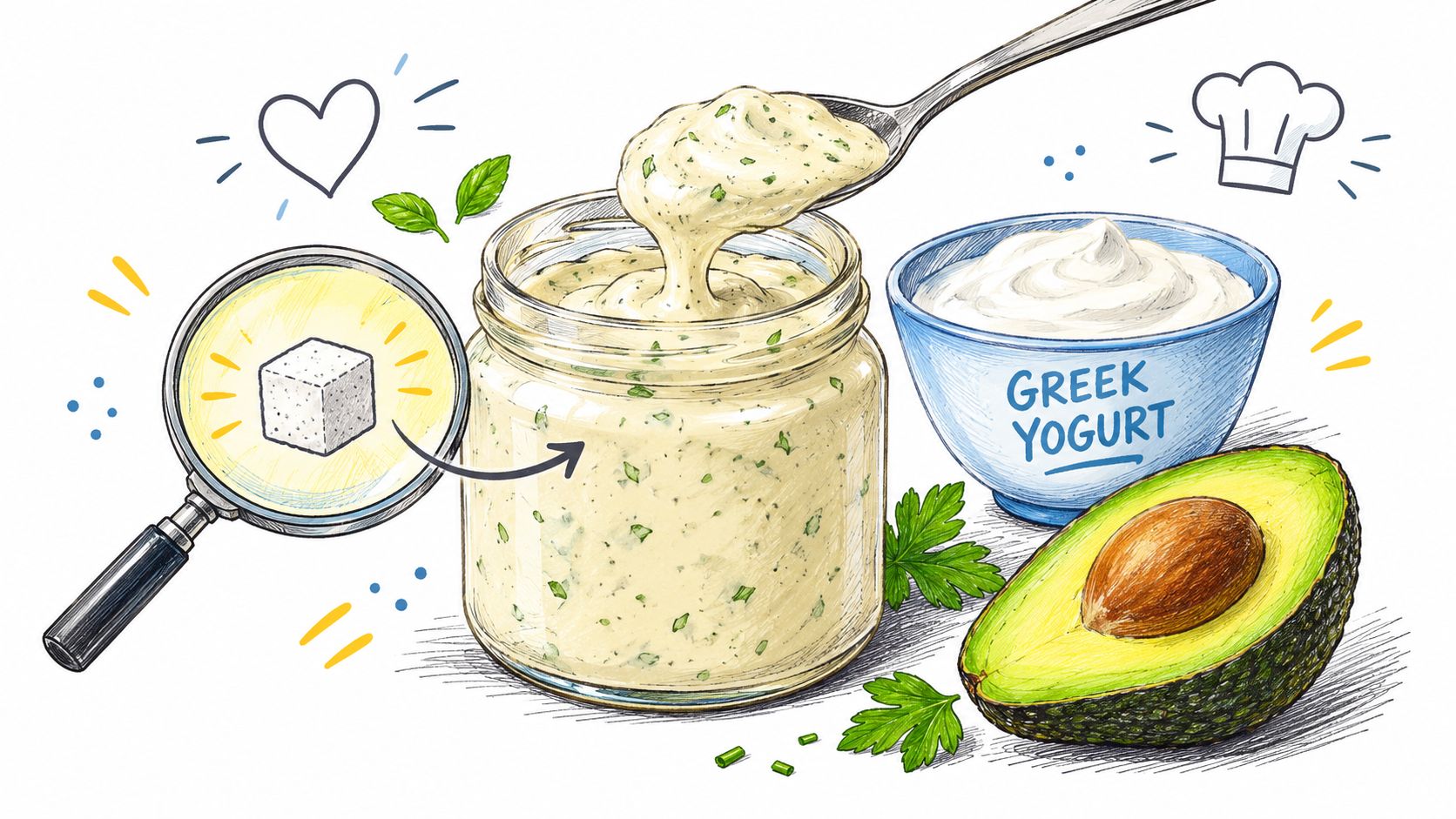
A creamy ranch-style variation can use the same acid base, then add mayonnaise, herbs, pepper, and a small amount of water to reach pourable consistency. For a flavored version, infuse the oil with dried chili, lemon zest, or herbs instead of reaching for a sweet fruit vinegar. If the dressing separates, shake it firmly or whisk in a little mustard. If it tastes bland, add salt before adding more acid.
Making a Creamy Dressing Without the Hidden Carbs
Creamy dressings create more opportunities for confusion because thickness can come from several sources. Dairy solids, sweeteners, starches, thickeners, and stabilizers may each contribute carbohydrate, even when the finished dressing tastes mostly savory. The cleanest approach is to choose a base you understand and build texture through emulsification.
An egg-yolk emulsion gives you a classic route. Whisk an egg yolk with vinegar, salt, mustard, and spices, then add oil in a very slow stream. The yolk helps disperse the oil into tiny droplets, creating a thick dressing that can be loosened with water or more vinegar.
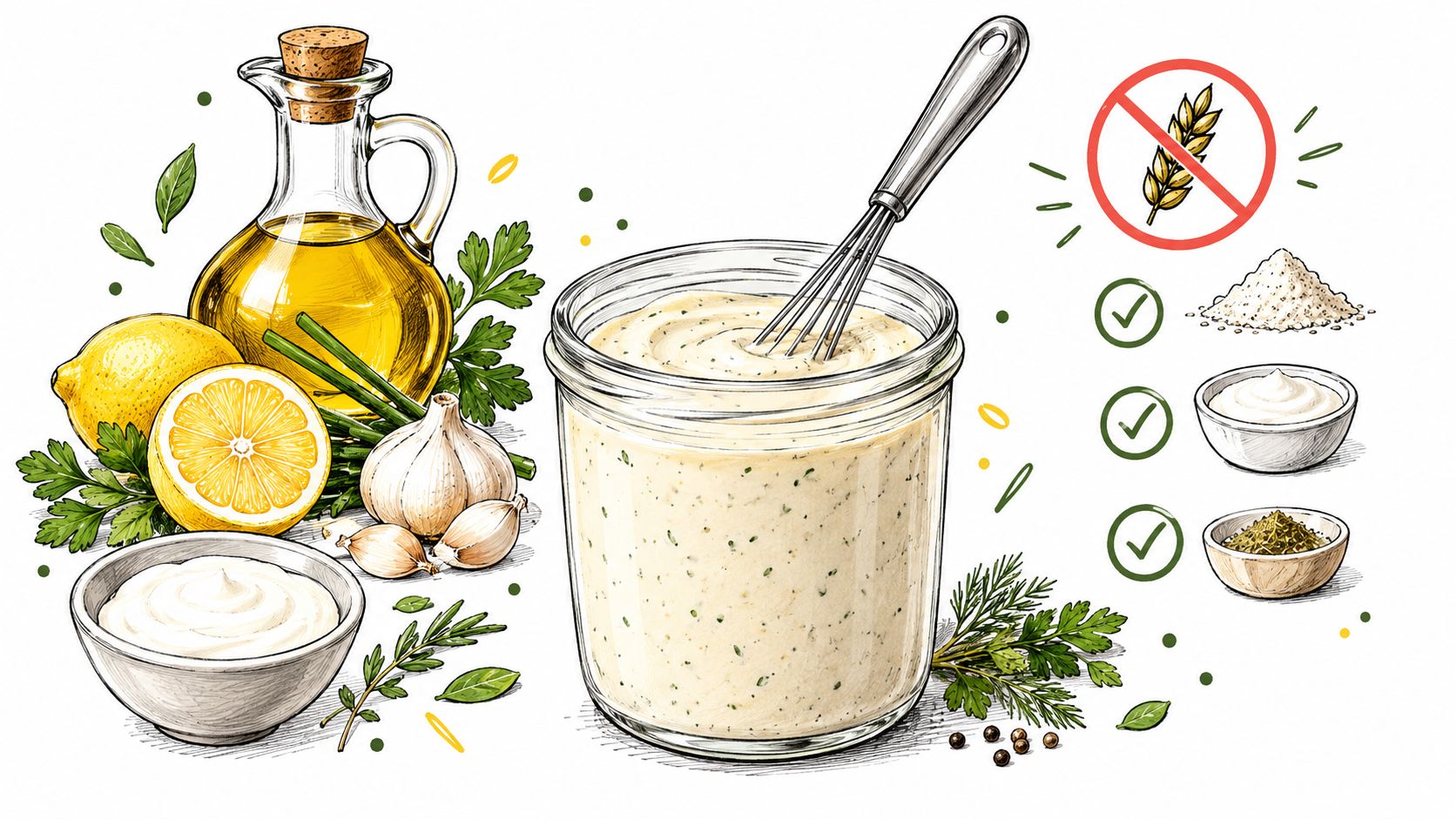
The shortcut is mayonnaise, provided you read its panel and ingredient list. Stir mayonnaise with vinegar, dried dill, parsley, garlic powder, black pepper, and water until it coats a leaf without becoming heavy. If you're avoiding eggs or want a different base, compare alternatives in this guide to replace mayonnaise in recipes, then verify the carbohydrate contribution of whichever substitute you choose.
Why creamy dressings behave differently
A vinaigrette can separate and still be perfectly usable after a shake. A thick emulsion needs closer attention because oil content, viscosity, proteins, and acidity all affect how it pours and holds in the refrigerator. The U.S. standard for “salad dressing” defines it as an emulsified semisolid product and requires at least 30 percent vegetable oil by weight, with egg-yolk-containing ingredients at a specified minimum level, according to the federal standard of identity.
That standard doesn't tell you whether a particular bottle suits your diet. It does give you useful language for separating a genuine emulsified dressing from a thin flavored sauce. A reliable creamy batch should remain cohesive after chilling, pour without a solid oil plug, and taste balanced without relying on a large sweetener dose.
Keep dairy-based versions cold and use clean utensils. For a dairy-free texture, an egg-based emulsion or a suitable commercial stabilizer may work better than adding a plant milk with an unknown carbohydrate profile. Fresh garlic and herbs improve flavor, but they also introduce extra moisture and variability, so measure them and monitor the finished jar.
A visual demonstration can help if your emulsion keeps breaking:
If the mixture breaks, stop adding oil, whisk a fresh yolk or a spoonful of the base in a clean bowl, and slowly incorporate the broken dressing. The goal isn't a restaurant-perfect texture every time. It's a repeatable emulsion whose ingredients and serving math you can explain.
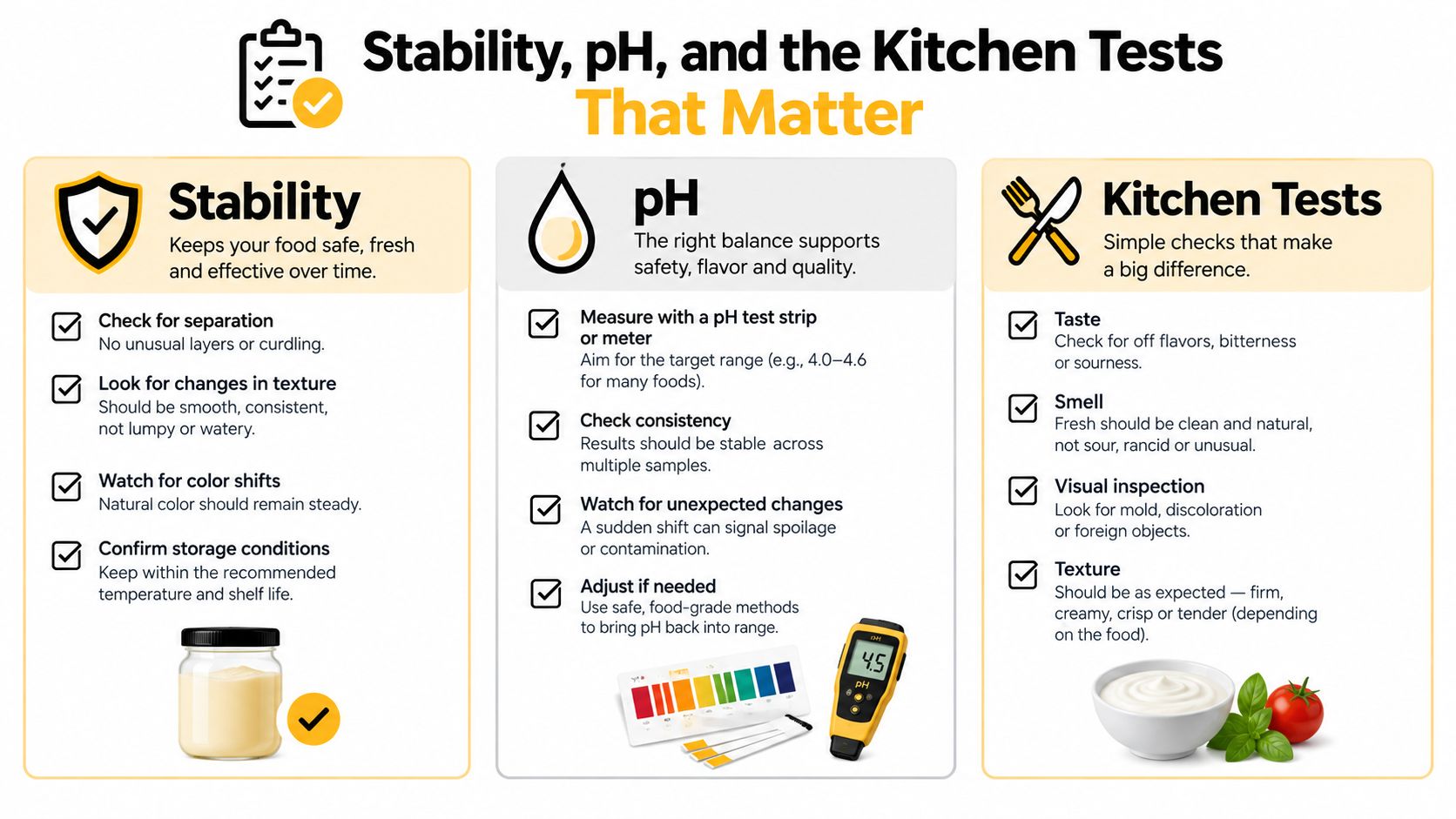
Stability, pH, and the Kitchen Tests That Matter
A dressing can look smooth and still need better controls. I treat pH and emulsion stability as separate checks because acidity doesn't guarantee that oil won't separate, and a stable-looking jar doesn't prove that the acidification is adequate.
Measure pH after every ingredient has been incorporated and the dressing has reached equilibrium. Don't infer the result from the amount of vinegar alone. Guidance for acidified foods identifies pH 4.6 or lower as the critical threshold for inhibiting growth and toxin production by Clostridium botulinum, while many acidified products are formulated to approximately pH 4.2 or lower as an additional margin, according to food-safety guidance for acidified sauces and dressings.
Compare the bottle, not just the recipe
A home batch and a commercially made dressing need the same kind of questions, even if the answers come in different forms.
| Check | Homemade batch | Maker or store bottle |
|---|---|---|
| Acidity | Measure equilibrium pH with a calibrated meter | Look for storage guidance and ask whether finished-lot pH is checked |
| Separation | Refrigerate, then inspect oiling-off and pourability | Check for oil layers, clumps, or unusual thickening |
| Ingredient change | Record every spice, herb, dairy solid, and sweetener | Compare the current ingredient list with the maker's stated formula |
| Use pattern | Label the jar with the batch date | Follow the printed date and opened-bottle instructions |
Recheck pH after refrigeration because buffering ingredients can shift acidity. Then shake or pour the dressing at defined intervals and note visible oiling-off, viscosity, and flavor. A batch that looks attractive immediately may become watery, thick, or sharply separated later.
A calibrated reading and a dated batch note tell you more than a confident-looking recipe photo.
Fresh garlic, alkaline ingredients, and protein-rich additions deserve extra caution because they can alter acidity and stability. If you're buying from a maker, ask what acid system they use, whether they test the finished lot, and how they determine the stated carbohydrate figure. A direct answer is more useful than a broad “keto-friendly” claim.
Store-Bought Versus Independent Maker Options
A supermarket bottle wins on convenience, and some are perfectly serviceable. The problem starts when the label gives you a front-panel claim without enough detail to understand the oil, sweetener, serving size, or manufacturing approach behind it.
I use a short comparison before buying:
| What to inspect | Supermarket bottle | Independent maker |
|---|---|---|
| Ingredient clarity | Often standardized across a large product line | May name the oil, vinegar, herbs, and sweetener directly |
| Serving size | Use it to calculate your real pour | Ask for figures that match how you eat it |
| Oil information | May use a broad blend description | Maker may identify the specific oil blend |
| Batch information | Printed date or lot code varies | Batch date may be easier to discuss directly |
| Questions | Usually routed through customer service | Often answered by the person making the dressing |
The point isn't that every independent product is automatically better. It's that a maker who can explain the oil, acid, emulsion method, and carbohydrate calculation gives you more information to evaluate. That transparency is a quality upgrade because you can connect the label to the actual food in the bottle.
For an example of a direct product listing, compare the details on this calamondin citrus vinaigrette made with avocado oil and apple cider vinegar. You can inspect the ingredients and flavor profile before deciding whether it fits your kitchen, rather than choosing from a vague front-label promise.
Independent food brands also need practical ways to answer shopper questions online. A chatbot for Shopify food stores can help a maker organize answers about ingredients, shipping, and product use, but the underlying information still needs to be accurate. A polished storefront can't replace a complete label or a clear answer about serving-level carbohydrate.
Finding Local Makers Worth Buying From
Local discovery makes sense here because dressing quality often depends on details a large everyday bottle hides. A maker may tell you which oil they use, whether the acid is vinegar or another food acid, how the emulsion is stabilized, and whether the nutrition figure comes from formulation calculations or finished-product testing. Those answers help you choose a better dressing because they reveal how the product was made, not because the producer needs sympathy.
The supply network is larger than a weekend market. The USDA reported $17.5 billion in farm food sales through direct marketing channels, including unprocessed and value-added products, in its 2022 Census of Agriculture summary, while direct-to-retail, institution, and intermediate-market sales reached $14.2 billion after inflation and the number of operations using those channels rose to 60,332. The USDA analysis shows that local pantry products belong to a substantial sales network.
Where to search first
Start with the places where the maker controls the product description:
- Maker-run storefronts: Look for a complete ingredient list, nutrition panel, batch information, and a way to ask about formulation.
- Food hubs and local retailers: These can bring several regional brands together, making oil blends, acidity, flavors, and serving information easier to compare.
- Farm stores and direct markets: Ask whether the dressing is made in the same region, how it should be stored, and whether the maker offers a less sweet version.
- Online marketplaces: Search by flavor, oil, and dietary need, then read the product page as carefully as you would a bottle in a shop.
USDA local-food data gives the search a useful geographic shape. 78% of farms with direct sales sold exclusively within 100 miles of the farm, while another 19% sold both within and beyond 100 miles, and the dataset recorded $9.0 billion in local food sales across more than 147,000 farms. Those figures are reported in the USDA Local Food Marketing Practices summary. Searching by region isn't a sentimental detour. It's a practical way to find products made close enough that the maker may be reachable.
Loyaltie is one marketplace where people can discover and buy directly from independent brands in the United States. That can be useful when you want the convenience of online ordering while still comparing real maker descriptions, ingredients, and product choices without treating a supermarket shelf as your only option.
Questions that separate a transparent maker
Ask what serving size supports the zero claim, whether the maker can share carbohydrate values per 100 grams or a typical salad portion, and which ingredients contribute trace carbohydrate. Also ask about pH testing, storage after opening, batch dates, and whether the dressing should be shaken before serving.
A maker doesn't need to promise absolute carbohydrate absence. In fact, a careful answer usually sounds more credible when it distinguishes 0 g carbohydrate per labeled serving from a chemically carbohydrate-free formulation. The same standard applies to homemade jars.
For storage, follow the maker's instructions rather than assuming every vinegar dressing keeps the same way. Keep homemade creamy dressings refrigerated, use clean utensils, label each jar with its preparation date, and discard a batch if you notice unexpected gas, mold, an off smell, or a texture change. A dressing that separates into oil and acid may only need shaking, but spoilage signs aren't a texture problem to troubleshoot.
When a maker is building a product range or preparing educational product pages, a listicle advertorial tool can help organize comparisons, but shoppers should still look for the primary evidence in the product listing: ingredients, serving size, nutrition panel, storage guidance, and direct answers.
Your next shopping decision can stay simple:
- Read the serving size before trusting 0 g.
- Scan for garlic, onion, dairy solids, sweeteners, and stabilizers.
- Check the oil and acid, not just the flavor name.
- Ask independent makers about tested carbohydrate, pH, batch dates, and storage.
- Choose the bottle whose maker explains the product clearly.
If you want to compare zero-carb-friendly dressings and other everyday products from independent US brands, visit Loyaltie to discover products you can buy directly from the maker. Browse the ingredients, ask better questions, and choose a dressing that fits your kitchen because its quality is clear, not because its front label is loud.