
If you're asking why shop small business, the practical answer is product quality and fit: independent brands can offer fresher, more distinctive, transparent, and personal buying experiences. In the U.S., small businesses employ about 62.3 million people, or 45.9% of private-sector workers, and generate 43.5% of GDP (SBA), but the strongest reason to buy from them is simpler: you may find something better for your everyday life.
The popular advice says to shop small because it's good for the community. That's true, but it's not the most useful starting point. You don't need to treat every purchase like a donation. You can choose an independent coffee roaster because the beans taste fresher, a local skincare maker because the ingredients make more sense, or a pet brand because its formula addresses a need generic products overlook.
The challenge has always been discovery. You may want to buy directly from the maker, but you don't want to spend an evening searching scattered websites, comparing unclear ingredient lists, or guessing whether a product will arrive on time. Marketplaces such as Loyaltie can make that search more convenient while preserving the direct connection between you and independent brands across the U.S.
Here are eight practical reasons to make independent and local makers part of your regular buying routine.
Table of Contents
1. Superior Quality You Can Actually Taste and Feel
A better product often announces itself through ordinary details. Coffee has a clearer aroma, soap rinses clean without leaving your skin feeling tight, and a wellness product gives you an ingredient list you can understand instead of a wall of vague terms.
Independent makers usually have a closer relationship with the product itself. The person choosing the beans, developing the formula, or refining the packaging is often much closer to customer feedback than a national brand team managing a large product portfolio. That proximity doesn't guarantee quality, so you should still check the label and maker information, but it gives you a useful reason to investigate.
Consider the difference between a supermarket coffee chosen for broad familiarity and a single-origin offering from an independent roaster. A product such as single-origin Papua New Guinea coffee beans from Pops Coffee Company gives you specific information about origin, tasting notes, roast method, and grind format. Those details help you decide whether the coffee matches your preferences before you buy.
Compare the product, not just the label
A practical quality check is to compare one independent product with the mass-market alternative already in your home.
- Read the production notes: Look for explanations of roasting, extraction, fermentation, curing, or formulation.
- Compare ingredients side by side: Notice whether the independent brand explains what each ingredient does and where it comes from.
- Start with one product: A single bag of coffee, bottle of face oil, or bar of soap lets you judge the experience without overcommitting.
- Ask a specific question: Makers can often explain sourcing and use more clearly than a generic customer-service page.
The useful shift is from “Is this business small?” to “Does this product show more care and clarity than the alternative?” That question turns shopping small into a quality decision.

2. Discover Products You Won't Find Anywhere Else
Mass retailers need products that suit a broad audience. Independent makers can focus on a narrower flavor preference, skin concern, pet behavior, or household routine. That focus changes how you shop: instead of choosing the most familiar option, you can look for a product built around your actual needs.
A coffee may come from a particular growing region. A pet product may address one behavior. A skincare formula may target a defined concern rather than promise to suit “all skin types.” Specificity makes discovery useful. It gives you a clearer basis for judging whether the product fits, rather than asking you to treat novelty as proof of quality.
Local shopping is already part of how many people buy. Almost half of U.S. consumers say they go out of their way to buy local brands or products, and PDG Insights found that shoppers intentionally purchased local brands in the last month across all 18 grocery and consumable categories it studied. The research also reports that most consumers define a local brand as one produced within their state. That definition can help you narrow searches, while product details still determine whether an item deserves your money.
Start with the problem you want solved
Search by the use case, not only by product category. Terms such as sensitive skin, anxious dogs, single-origin coffee, or fragrance-free laundry will surface more focused options.
Then compare the maker's reasoning with the product itself:
- Look for a clear purpose: The description should explain which need the product addresses.
- Check the range: Several closely related products can indicate experience with that specific customer problem.
- Read reviews for evidence: Prioritize comments about fit, taste, texture, durability, and repeated use.
- Check convenience before ordering: Review shipping, returns, replenishment options, and the information available before checkout.
A local maker may offer fewer familiar choices, yet that narrower range can be an advantage. It often reflects attention to a problem large-scale manufacturing does not prioritize. You are buying a more targeted option, then verifying its quality and value through the details.
3. Know Exactly What's in Your Products
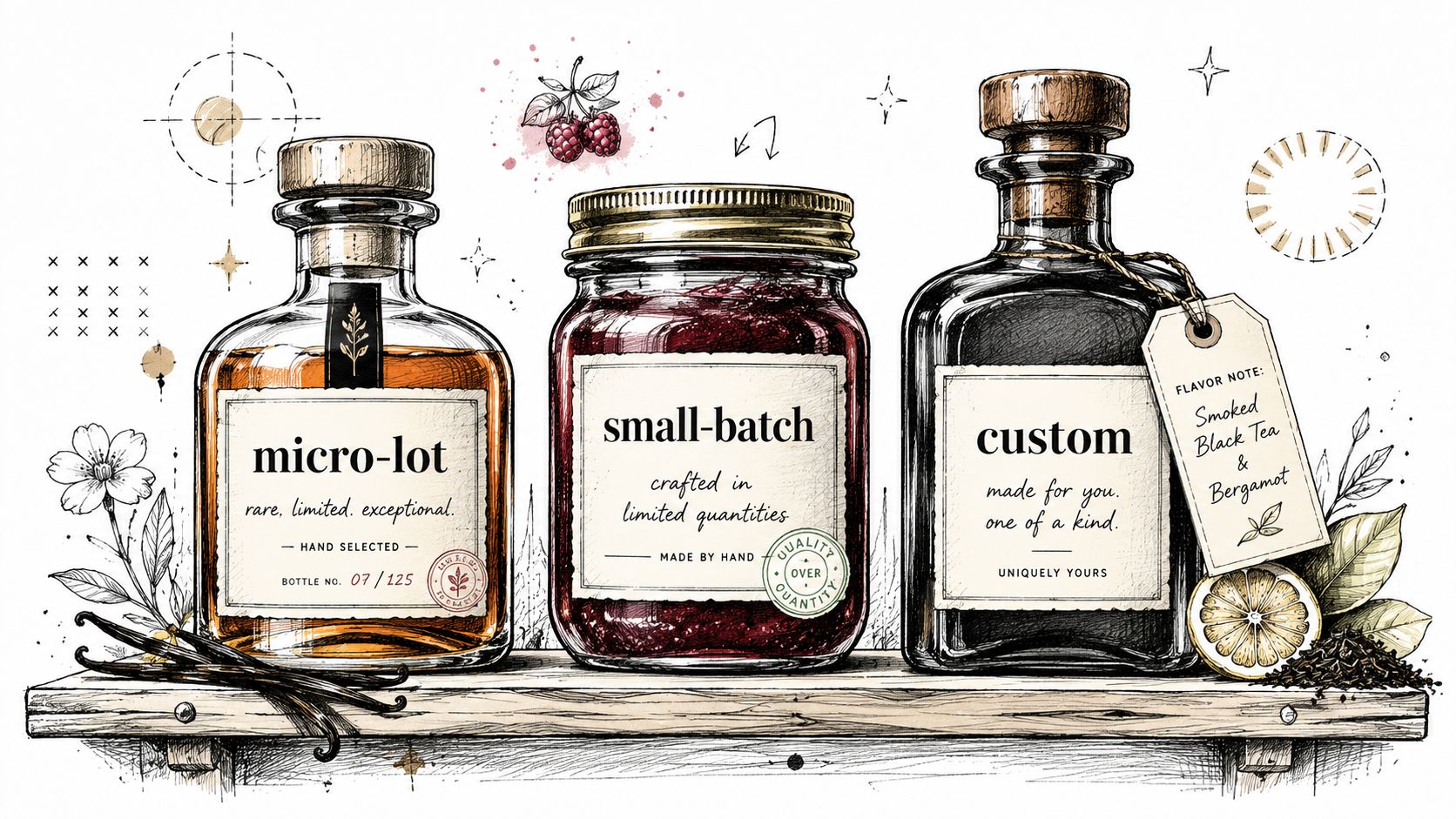
Buying directly can make product information easier to inspect, especially when an item touches your skin, enters your body, or goes into your pet's bowl. Independent brands often use product pages and maker bios to explain ingredient choices, sourcing, and production methods. Those details give you more control over the decision.
Transparency still requires scrutiny. Read the full label, look for relevant certifications or testing information, and ask about anything unclear. A direct relationship helps because the person behind the product may be able to explain a formulation more precisely than a generic retail listing.
Compare the level of detail across everyday categories. A supplement maker might identify the amount and source of each ingredient, while a vague blend makes alternatives difficult to assess. A skincare brand may list its oils and botanicals, helping you check potential sensitivities. A food producer may describe ingredients and production methods beyond what appears on a minimal package label.
Practical rule: If a maker cannot explain a key ingredient, its purpose, or its source, pause before buying.
Use a label-checking routine
Start with the product page, then verify the points that affect your choice:
- Read the full ingredient list: Look for precise names and clear quantities where relevant.
- Ask about sensitivities: Direct questions can clarify fragrance, allergens, botanicals, and supplement ingredients.
- Review testing information: If third-party testing is mentioned, check what it covers instead of treating the mention as proof of overall quality.
- Compare alternatives: Place an independent label beside your current product and note which brand explains more.
The useful comparison is not “natural” versus conventional. Check whether the maker identifies what is included, why it is there, and what has been tested. Clear answers can reveal whether the product fits your household better, while vague language gives you a reason to keep looking.
For a practical household example, inspect plant-based liquid laundry detergent from Rose of Eden Home and Scents. Its stated ingredients and scent options give you specific details to compare with your current detergent, particularly if fragrance or sensitive skin affects your choice.
4. Get Real Customer Service from People Who Actually Care
A product page cannot answer every practical question. You may need help adjusting a coffee grind, choosing between skincare options, using a supplement, or deciding whether an item suits your routine. An independent maker can often address that specific situation instead of sending a scripted reply that repeats the listing.
The value appears before and after purchase. Share your brewing method, skin type, household needs, or intended use, and the maker can point you toward a suitable option, explain how to use it, or help identify why it did not perform as expected. That guidance reduces guesswork and makes repeat purchases more reliable.
For example, Eucalyptus & Aloe Bar Soap, Shea Butter & Olive Oil, Spa-Fresh Cleanse, 4.8 oz Handmade Body Bar from Jask Beauty by Loyaltie offers concrete details to evaluate, including a crisp, cooling cleanse, a fresh eucalyptus-style aroma, and rich lather from olive oil. If you are unsure whether that combination fits your routine, asking the maker gives you better information than relying on the product name alone.
Turn questions into a buying check
Before ordering, ask one focused question about fit or use. Notice whether the reply addresses your situation with useful detail. After delivery, share feedback about texture, flavor, fit, or performance. If the result falls short, explain what happened so the maker can suggest a change in preparation, storage, application, or product selection.
This exchange also gives you a practical service test. A clear answer shows whether the brand understands its own product and can support customers after payment. A vague or delayed response may matter more than polished marketing, particularly when you expect to reorder.
The result is a better-informed purchase, not a favor to the seller. Direct guidance helps you choose the right item, use it properly, and judge its value over time. That advantage matters most for products whose performance depends on personal preferences or everyday habits.
5. Support Real Environmental and Ethical Practices
Independent branding is not proof of responsible sourcing, fair labor, or low-waste packaging. Quality buying requires evidence. Smaller makers can offer one practical advantage here: you can often ask who supplied the materials, how the product was produced, and why the business selected its packaging.
Compare the specificity of the answer with the size of the claim. A coffee roaster might explain its relationships with growers. A pet product maker could identify ingredient suppliers and describe packaging decisions. A wellness brand may explain why it chose glass, recyclable materials, or a simpler format. Those details let you assess a process rather than accept a broad “green” message.
Use a practical evidence check
Review the product page and maker biography before sending a question. Then check whether the brand can answer these points clearly:
- Packaging: Does it explain whether containers are reusable, recyclable, compostable, or reduced?
- Sourcing: Can it identify the origin of key ingredients, materials, or food inputs?
- Labor: Does it describe who makes the product and how it works with suppliers?
- Production: Are the methods concrete enough for you to understand what happens before purchase?
Sustainability is more credible when a maker explains a decision, not just a slogan.
Specific answers do not guarantee perfect practices, but they improve your ability to compare brands. Vague language, missing supplier information, or packaging claims without disposal guidance should lower your confidence. Ask what “recyclable” means in practice and whether the material can be handled through services available where you live.
Your choices after checkout also shape the result. Reuse containers when appropriate, order quantities you will use, and avoid products that do not fit your routine. A responsible label cannot compensate for waste created by an unsuitable purchase.
A short video can also show how a maker communicates its environmental and community choices.
6. Find Great Products Easier Than You Think
Better everyday products are often easier to find when discovery is organized around categories and makers, rather than scattered searches. You might otherwise visit a farmers market for food, search for a local roaster, browse skincare accounts, and ask friends about specialty pet products. That effort can work, but repeating it makes quality-focused buying harder to maintain.
Loyaltie provides one starting point. It is a marketplace where people discover and buy directly from independent brands in the U.S., bringing online convenience to products from makers, growers, and producers. Categories include coffee, wellness, skincare, food, supplements, and pet products, so comparing options does not require treating every purchase as a separate research project.
The useful feature is discovery. Product pages place the maker's story, ingredients, category, and customer feedback close together. You still have to judge whether a product suits your needs, but you can identify credible candidates faster and compare them with less searching.
Build a buying shortcut
Start with something already in your routine, such as coffee, soap, supplements, or pet care. A familiar category gives you a clear reference point for comparing ingredients, performance, scent, taste, fit, and price.
Then check the details that affect the decision:
- Location: Review where the maker operates or produces, especially if local origin matters to you.
- Maker information: Look for a clear explanation of the brand's purpose and process.
- Customer feedback: Prioritize comments about actual use, delivery, scent, taste, or fit.
- Repeat potential: Save promising brands so your next comparison begins with known options.
This approach turns convenience into a quality check. A marketplace should help you find products worth considering, not replace your judgment. If a page gives you little information about the maker or product, treat that absence as a reason to investigate further.
Convenience matters because values alone do not overcome friction. In a 2024 U.S. survey, 65% of consumers said cost, convenience, and product selection prevented them from shopping local more often, while 90% said local shopping has a positive community impact (SGB Media). The practical lesson is clear: tools that shorten discovery make independent buying easier to repeat without lowering your standards.
7. Your Money Goes Directly to the Maker, Not Middlemen
Buying from the maker gives you a clearer basis for judging a product. You can see what is offered, learn how it is produced, and direct your payment toward the business responsible for making it. Fewer retail layers may also make it easier to understand what you are paying for, from materials and production to packaging and delivery.
Price still requires scrutiny. Independent brands may choose better ingredients, produce in smaller runs, invest in careful packaging, or handle shipping costs differently from large retailers. A higher price can therefore reflect specific product choices, although it is not automatically proof of better value. Check whether those choices improve the product's performance, fit, or usefulness for you.
Value includes the buying experience. In a 2025 U.S. survey of 2,093 adults, 62% named the lowest price as a top factor, 62% named free online shipping, and 61% named good customer service. The same survey found that 23% said they were spending more at small businesses than the prior year (NerdWallet). For an independent brand, product quality, clear information, responsive service, and practical delivery terms must work together.
Judge what your payment buys
Use the product page and checkout to verify the details that affect value:
- Product concentration: Check how much you need per use. A smaller package may last longer if the formula requires less.
- Ingredient quality: Look for a complete, understandable formula and decide whether it suits your needs better than a cheaper alternative.
- Maker transparency: Review who produces the item and how clearly the business explains its process.
- Service: See whether the brand offers useful guidance before purchase and a clear way to resolve problems.
- Delivery: Add shipping fees and timing to the product price.
- Repeat use: A product you enjoy and use consistently may provide more value than a cheaper item left unused.
Broader context on direct purchasing and local commerce is available in read Food Escapes on supporting locals. The strongest case for buying direct is practical: compare the quality, information, service, and convenience attached to the price, then choose the offer that earns its place in your routine.
8. Reorder Your Favorites on Your Own Schedule
A good independent product should fit your routine, including the way you restock it. Coffee, supplements, pet food, laundry products, skincare, and candles have different usage rates, so a fixed delivery schedule can create either shortages or unwanted surplus.
Check your real consumption before selecting recurring delivery. If coffee disappears quickly while skincare lasts for months, those products need different reorder intervals. The useful feature is control, not automatic shipping.
Make repeat buying earn its place
Start with a single purchase and assess the product in normal use. Then:
- Set timing by usage: Choose an interval based on how quickly you finish it.
- Adjust as needed: Change quantity or timing when household habits shift.
- Keep options open: Use one-time orders for occasional items and recurring orders only for products you consistently want.
- Review the terms: Confirm how to pause, skip, modify, or cancel future shipments.
- Include the full cost: Check delivery fees, renewal timing, and the amount arriving in each order.
The comparison is practical. A recurring candle arrangement such as Evolve Botanica's monthly soy candle offering can suit a home that regularly uses candles, while the same schedule may be excessive for someone who burns one only occasionally. Product quality matters, but the buying format determines whether that quality remains convenient and affordable in daily life.
Specialty food and beverages can follow the same logic. The appeal described through wine club membership benefits comes from receiving selected products without rebuilding the search each time, though the actual terms depend on the seller. Before enrolling, check whether you can choose or change selections, skip a shipment, and cancel without difficulty.
A reorder plan earns its place when it reduces effort while preserving choice. Keep the products that perform well, and keep the schedule that matches how you use them.
8-Point Comparison: Why Shop Small Businesses
| Item | 🔄 Complexity | ⚡ Resources & efficiency | ⭐ Expected outcomes | Ideal use cases | 📊 Key advantages |
|---|---|---|---|---|---|
| Superior Quality You Can Actually Taste and Feel | Moderate, requires researching makers and buying direct | Higher cost per unit; smaller runs, fresher ingredients | ⭐⭐⭐⭐⭐, noticeably better taste/feel and batch consistency | When sensory quality and ingredient integrity matter (coffee, skincare, supplements) | Fresher ingredients, tighter QC, maker accountability |
| Discover Products You Won't Find Anywhere Else | Low–Moderate, browse niche catalogs; expect trial-and-error | Variable, limited inventory, seasonal availability | ⭐⭐⭐⭐, unique formulations and tailored solutions | Seeking niche or experimental products and micro-lots | Exclusive offerings, innovation, early access |
| Know Exactly What's in Your Products | Low, look for labeled sourcing and contact makers | Low–moderate, may require direct communication; fewer big‑lab reports | ⭐⭐⭐⭐, clearer ingredient understanding; fewer surprises | Allergies, sensitivities, clean‑label priorities | Full ingredient transparency, sourcing detail, direct answers |
| Get Real Customer Service from People Who Actually Care | Low, direct contact with maker/owner; personal interactions | Low time investment; response time varies with maker capacity | ⭐⭐⭐⭐, personalized support and effective issue resolution | Need usage guidance, troubleshooting, or product customization | Thoughtful responses, flexibility, relationship-driven service |
| Support Real Environmental and Ethical Practices | Moderate, verify practices and supply‑chain claims | May cost more; smaller scale but lower waste per batch | ⭐⭐⭐⭐, genuine sustainability impact when prioritized | Buyers focused on ethics, sustainability, and local impact | Transparent sourcing, sustainable packaging, community support |
| Find Great Products Easier Than You Think (Curated Marketplace) | Low, curated browsing and filters simplify discovery | Efficient, saves search time; selection varies by region | ⭐⭐⭐, faster discovery of vetted makers and products | Quickly locating local or value‑aligned independent brands | Centralized search, filters, reviews, curated curation |
| Your Money Goes Directly to the Maker, Not Middlemen | Low, direct purchases or DTC checkout | Efficient value flow, higher maker share, fewer retail markups | ⭐⭐⭐⭐, better value alignment and stronger maker sustainability | Supporting local economies or maximizing maker impact | Higher maker revenue share, transparent pricing, direct support |
| Reorder Your Favorites on Your Own Schedule | Low, set up subscription or flexible reorders | Efficient, saves time; offers discounts but needs account setup | ⭐⭐⭐⭐, consistent supply and predictable savings | Regular-use items (coffee, supplements, pet food, candles) | Convenience, discounts, skip/pause flexibility |
Make Your Next Everyday Purchase More Personal
The best answer to “why shop small business” isn't a moral lecture. It's a better buying routine. Independent brands can give you more distinctive products, clearer sourcing, direct access to the maker, and service that helps you choose well. Those advantages matter most when you apply them to something you already buy, such as coffee, soap, skincare, supplements, food, or pet products.
The wider economic picture makes the choice meaningful without making it charitable. Small businesses have created more than 70% of net new jobs since 2019, according to the U.S. Treasury, while the SBA reported that from March 2023 to March 2024 they created approximately 9 out of every 10 net new jobs and opened 1.1 million new establishments (U.S. Treasury). The Bureau of Labor Statistics also found that small businesses contributed 55% of total net job creation from 2013 to 2023 (BLS). Your purchase doesn't single-handedly create a job, but repeated consumer demand helps the businesses turning demand into local work.
You can make the process practical:
- Choose one familiar category: Start with the product you already understand.
- Compare the labels: Check ingredients, sourcing details, product purpose, and packaging against your current option.
- Read the maker story: Look for a clear explanation of who makes the product and why.
- Ask one useful question: Confirm a concern about ingredients, use, shipping, or fit.
- Try one product: Give yourself a fair test without replacing your entire routine.
- Reorder only if it earns that place: Keep the product because it tastes better, feels better, works better, or makes buying easier.
The strongest evidence that this approach works is the way shoppers describe the experience. In a 2024 survey of 1,000 U.S. adults, 78% said they were willing to pay more to help independent brands thrive, and 87% said gifts from small businesses feel more thoughtful. Respondents also associated buying small with community or belonging, satisfaction, and pride (NMI). Those emotional benefits don't replace quality, but they can reinforce a purchase that already performs well.
Food offers a familiar entry point. NielsenIQ reported that 58% of consumers said buying local produce is important to them (NielsenIQ). If you already value freshness and proximity in produce, extending that logic to coffee, skincare, wellness, and pet products is a natural next step. You're looking for products made closer to the person who understands them, with enough information to judge whether they belong in your life.
Loyaltie can help with that process as a marketplace where people discover and buy directly from the best independent brands in the U.S. Use it to reduce search time, compare makers, and keep the focus on product fit, quality, and convenient buying. Shopping local works better when it feels like a practical upgrade you'll repeat, not a sacrifice you'll abandon.
Visit Loyaltie to discover independent U.S. brands across coffee, food, wellness, skincare, supplements, pet products, and more. Start with one everyday product, compare what the maker offers, and buy directly when you find a better fit.