
You've probably had this moment: you're standing in a grocery aisle under harsh lights, staring at two nearly identical jars, two almost identical ingredient lists, and two prices that make you pause. Then, a few days later, you try the same kind of product from a local maker, and it just tastes fresher, smells cleaner, or feels more considered. That's the reason people keep asking why buy local food. It's not about guilt. It's about getting a better cart, with better products, from people you can find.
Table of Contents
A Better Cart Starts Here
A Saturday market feels different because the food carries a face with it. The cheesemaker hands you a sample, the grower tells you what's in season, and the honey label doesn't read like it was written by a committee in a distant office. Even online, the same shift happens when you buy from an independent brand and the product page names the maker, the farm, or the roaster instead of hiding behind a generic label.
That's the heart of buying local. You're not just moving money around. You're choosing products with clearer sourcing, shorter paths to your kitchen, and a stronger link to the person who made them. For food, coffee, skincare, wellness goods, and pet products, that often shows up as better freshness, cleaner ingredient lists, and fewer weird surprises.
Practical rule: if a product feels anonymous, it usually is. If you can see who made it, how it was handled, and where it came from, you're already in a better buying position.
This isn't a lecture about avoiding big-box stores forever. Shoppers mix both. The point is to know what changes when you cut the middleman, and to decide when local is the upgrade you want. Sometimes that means a jar of hot honey that tastes like honey first. Sometimes it means coffee that was roasted by a person you can message. Sometimes it just means you trust the label a little more.
What the Numbers Say About Local Food
Local food isn't some tiny side hobby. In the United States, 147,307 farms sold food through local or direct-marketing channels in 2020, and those sales generated about $9.0 billion in revenue. That's a real market, with real producers, real customers, and enough staying power to matter for everyday shoppers. The USDA also says the market grew 3% compared with 2015, which tells you people kept buying, not just talking.

How the market actually works
Direct sales don't all look the same. Some food goes straight to people through farm stores, farmers markets, and other direct-to-consumer routes. Some goes to institutions, retailers, or intermediary businesses, which means the producer is still selling locally or regionally, just through a different path. In the USDA data, $4.1 billion came from sales to institutions and intermediary businesses, $2.9 billion came from direct-to-consumer channels, and $1.9 billion came from sales to retailers. The ecosystem is wider than many realize.
The geography matters too. 78% of farms with direct sales marketed their products exclusively within 100 miles of the farm, and another 19% sold partly within and partly beyond that radius. That tells you local food is usually local, not just marketed that way. It also helps explain why you'll see more local eggs, cheese, produce, coffee, and shelf-stable goods in regional shops and online marketplaces than you might expect.
Worth paying attention to: local food is often concentrated near people, not far from them. The USDA found that 57% of farms marketing food directly were in metropolitan counties, and those farms accounted for 62% of all direct food sales.
If you want a useful adjacent read on how small producers can shape local economies, the broader effect of nearby makers shows up clearly in this piece on small distillery community effects. The product category is different, but the local-connection logic is the same.
The Power of Knowing Who Made Your Food
Buying direct changes the relationship first, then the product. When the maker's name is on the label, you can ask better questions. Where was this grown? What's in it? How was it packed? If you keep buying from the same farm, roaster, or maker, you also start to recognize the differences between batches instead of treating every purchase like a blind lottery ticket.
The FDA traceability rules make that directness more than a feel-good idea. For foods on the Food Traceability List, covered companies have to keep lot-level records with traceability lot codes and key data tied to critical tracking events like packing, transformation, receiving, and shipping. They also have to retain required records for two years, and in many cases make them available to the FDA within 24 hours when asked. Retail food establishments and restaurants must keep documentation identifying the farm source for covered food for 180 days. That's not a slogan. It's a system that rewards clear records.
What to look for on the package
If you're trying to shop smarter, start with the basics.
- Producer name: A real maker usually puts their name front and center, not just a distributor.
- Lot code or batch info: This helps connect a product to a specific production run.
- Origin details: State, farm, or facility information gives you a real sourcing signal.
- Plain-language ingredients: Shorter, clearer ingredient lists are easier to trust and easier to compare.
Direct-to-consumer channels are already a major part of the picture. In USDA data from 2020, 77% of farms with direct food sales sold through direct-to-consumer channels. On-farm stores and farmers markets accounted for $1.7 billion of that, and CSA programs added $225 million across 7,244 farms. That's a lot of human contact built into the food system.
Know your food and how it's made in this direct-buy explainer
The Honest Truths Most Local Food Guides Skip
A Saturday market can feel like the greener choice, yet the trip home still matters. USDA research finds that longer travel generally increases transport energy use and pollution when other supply-chain factors stay constant. At the same time, one full delivery van serving many customers can create less impact than numerous individual car trips. Local food works best when the route is organized, not merely short.
That distinction changes how you judge a purchase. A nearby product delivered through a consolidated drop-off may make more sense than one that sends separate cars to several farms. Distance is one part of the equation. The number of trips, refrigeration, packaging, and storage shape the result too.
Price deserves the same honesty. Some local products justify a higher cost through freshness, craftsmanship, or clearer sourcing. Others remain out of reach for many households, and food-hub survey data found that many hubs serving schools and food banks considered their prices uncompetitive. Local food can carry real affordability barriers.
A useful question is, “What am I getting for the extra cost?” A jar from a nearby maker may offer a better fit for your pantry, a clearer producer relationship, or quality you notice every time you use it. If the premium strains your budget, choosing one local item occasionally still counts. Loyaltie can help as a discovery layer, making nearby growers and makers easier to find without turning the purchase into charity.

Before buying, ask five practical questions:
- Is it seasonal? In-season food often has a stronger local case.
- How was it produced? Growing methods, packaging, and refrigeration can change the tradeoffs.
- How was it stored? Frozen, chilled, and shelf-stable products follow different paths.
- Can you identify the producer? A visible maker, direct question, or lot code gives you more context.
- How does it reach you? Consolidated pickup or regular delivery usually beats many separate trips.
Nutrition and environmental performance do not always rise together. A highly nutritious local product can still carry a heavier footprint, depending on production and transport. Judge the whole route, then choose the local upgrades that deliver value you can use.
Why Local Often Tastes Better and Feels Cleaner
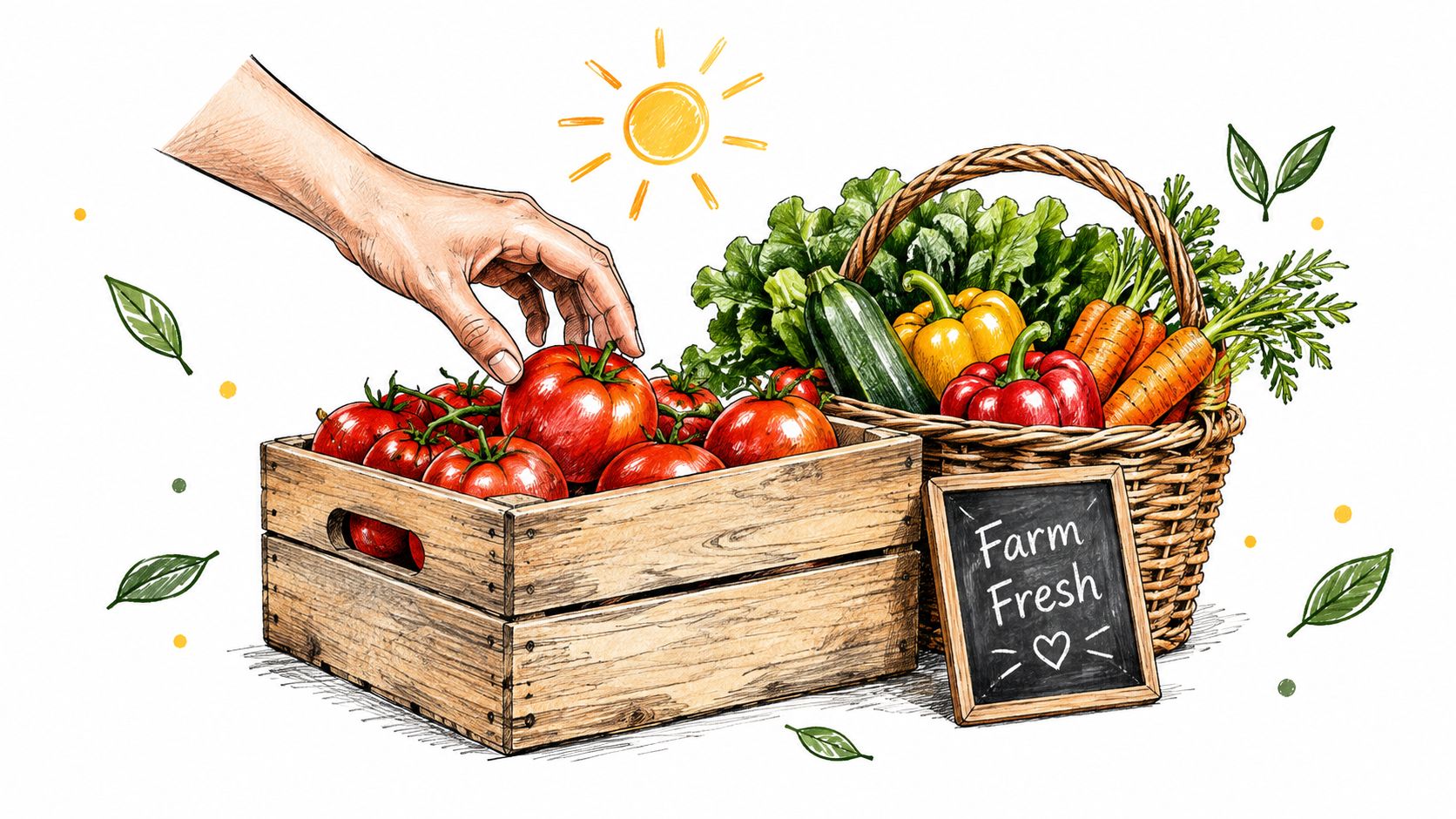
A tomato lifted from a nearby crate can change how you judge the rest of your groceries. Picked near peak ripeness, it has less time to lose flavor during transport than one selected to withstand a long journey. The same quality gap can appear in coffee, honey, granola, skincare, and wellness goods. A shorter path from maker to buyer leaves fewer opportunities for freshness, handling, and ingredient clarity to slip.
Direct-market food continues to attract shoppers because the producer is easier to identify and the route is easier to understand. The 2022 Census of Agriculture recorded $17.5 billion in food sold through direct-marketing channels, up 25% in real terms over 2017. Those figures do not prove that every local product is superior. They do show sustained interest in buying closer to the source.
Quality becomes easier to judge when you know what to look for. A recent roast date and named origin make coffee more legible than an anonymous blend. Granola with recognizable ingredients and clear sweeteners tells you more than a crowded package. Honey and syrups can show the character of their source instead of relying on decorative branding. In skincare and wellness products, a maker who explains the formula gives you better information about what you are putting on your body.
A local purchase is not automatically fresher, cleaner, or more sustainable. Refrigeration, packaging, production methods, and storage still matter. The upgrade comes from having a clearer product story and a more direct line to the person who made it.
Pressed With Purpose juices offers one example of a direct-to-buyer product page. Loyaltie works as a discovery layer, helping shoppers find nearby makers through useful product information rather than a charity appeal.
Local Makers Versus National Brands, Up Close
The biggest difference isn't that one side is heroic and the other is bad. It's structural. Independent local makers usually have a shorter chain, a clearer story, and more control over what stays in the product. National brands often win on consistency, distribution, and shelf reach. If you buy both, you already know this tension in your own cart.
Carbon 6 Brewing's take on local brewing is a useful reminder that local production changes the relationship between maker and buyer. The same thing happens in food, coffee, and skincare. Once the maker is closer, you start paying attention to freshness, ingredient choice, and who answers the email when something seems off.
| Criterion | Independent Local Maker | National Brand |
|---|---|---|
| Sourcing | Often named and more specific | Often broader and less visible |
| Ingredients | Usually easier to read and compare | More standardized and sometimes longer |
| Freshness | Often shorter time from maker to buyer | Often built for longer shelf life |
| Connection | You can often ask the maker directly | Usually routed through customer service layers |
| Buying experience | More personal, sometimes less uniform | More predictable, but less personal |
That doesn't mean local is automatically cheaper or perfect. It means you're getting a different kind of product relationship. For a quick look at a product category where this matters in real life, see this coffee example, where the product story is tied directly to the roaster.
How to Actually Find Local Food in 2026
You've decided you want the fresher eggs and the honey with a name on the jar. Now what? Finding local food in 2026 is less about hunting than it used to be, because local products now show up in places you already shop.
Farmers markets remain the easiest entry point, since the maker stands right behind the table. CSA programs suit you if you'd rather have a regular pickup from one known farm. Specialty grocers and regional food hubs fill the gap when you want more variety without giving up the local connection.
Online discovery matters just as much now, because few of us build our week around market hours anymore. Search filters on retail sites help when they're usable, and marketplaces built for direct-from-maker buying save real time. Loyaltie is one option in that space, a marketplace where you discover and buy directly from independent brands, with producer profiles and one-checkout convenience. It works like a well-organized farmers market that never closes.
Here's a vetting habit that takes about thirty seconds. Ask who made it, and look for a real producer name rather than a brand wrapper. Ask where it came from, and expect a city, state, farm, or facility you can picture. Ask how it moves, meaning pickup, delivery, shipping, and packaging that make sense for the product. A grower who answers those three questions clearly is usually one who stands behind the food.
Product pages can teach you the same thing. All-in-one grow bags for home cultivators show how good product education makes a specialty item easy to buy with confidence, and the same clarity works for food. For a direct-buy example, Coastal Microgreens presents origin and product details in a way that helps you decide fast, which is exactly what a good local listing should do.
Making Local Part of Your Weekly Routine
You don't need to rebuild your whole pantry in one weekend. Swap one category at a time, like coffee, eggs, honey, or granola. Look for producer names on shelves, try one new maker each month, and use online marketplaces when you want the convenience of regular delivery without losing the direct connection.
That's the answer to why buy local food. It's a quality move first, a trust move second, and a money-sense move when the product is worth it. Start small, keep what works, and use local buying where it clearly improves the food you bring home.
If you want a simpler way to discover independent brands without sorting through endless generic listings, visit Loyaltie. It's built to help you buy directly from the best independent brands in the US, with the kind of clarity that makes local food easier to find and easier to reorder.