
You're probably here because you've had that exact grocery-store moment. You pick up a tomato that looks perfect, slice it later, and it tastes like wet cardboard. The berries are firm but flat. The peaches are pretty, but they never quite ripen into anything memorable.
That frustration is useful. It usually means your taste buds are right, and you're ready to stop buying produce that only looks good from a distance. If you want better flavor, better texture, and a clearer sense of where your food came from, learning where to buy local produce is one of the smartest upgrades you can make in your kitchen.
Table of Contents
- Tired of Tasteless Tomatoes
- How to shop a market like you know what you're doing
- Other in-person spots worth your time
Tired of Tasteless Tomatoes
A lot of people start their local food kick with one disappointing dinner. Maybe the salad looked great on the counter, but every bite tasted dull. Maybe you paid plenty for produce that had no smell, no juice, and no personality. That's often the moment when “good enough” stops feeling good enough.
Buying local isn't mainly about doing a nice thing. It's about getting food that tastes like food again. When you buy from growers and local makers closer to home, you usually get produce that was picked for flavor and freshness, not just for how well it survives shipping, stacking, and fluorescent lighting.
There's also a reason this has become such a common shift. The USDA valued the local foods sector at $6.1 billion in 2012, describing it as a steadily growing market, which shows that more shoppers have been looking for quality and transparency in the food system for years (USDA local foods market overview via NC State Extension).
A simple test: If a tomato has no smell at room temperature, it probably won't have much flavor on the plate.
That doesn't mean every local peach will be magical or every farm stand will be perfect. It does mean you can get much closer to the source, ask better questions, and choose food based on ripeness and season instead of shelf polish.
The win is this. Once you know how to shop local produce well, you stop guessing. You begin to notice which strawberries are in season, which greens hold up well, and which growers are worth a regular stop. That's when local food stops feeling like a weekend hobby and starts feeling like the easiest way to eat better.
Your In-Person Guide to Finding Local Gems
If you want the fastest route to better produce, start in person. Farmers markets, farm stands, and U-pick spots let you see the food, talk to the grower, and notice details that don't show up on a label.
The good news is that these options are much easier to find than they used to be. The number of farmers markets in the U.S. grew by 180% between 2006 and 2014, which helped turn them into a practical, direct way to buy regional produce without a middleman (growth in U.S. farmers markets).
How to shop a market like you know what you're doing
The first thing to remember is that not every booth works the same way. Some vendors grow what they sell. Some make value-added products. Some may resell. None of that is automatically bad, but if you want produce grown nearby, ask plain questions.
Try these:
- Where is your farm located? A direct answer tells you a lot. You're not looking for a speech, just clarity.
- Did you grow this yourself? This is the cleanest way to understand whether you're buying from the grower.
- What's best this week? Good growers will steer you toward what's peaking right now.
- How was it picked or harvested? That helps you judge ripeness and shelf life.
- What are your growing practices? This matters even more if you care about organic methods or particular items you buy often.
A useful local example is Understanding Jenks market food safety, which shows the kind of vendor and safety rules some markets use. It's worth reading because it gives you a feel for how serious market organizers can be about standards.
Some of the best booths aren't the flashiest ones. They're the ones where the seller can answer simple questions without dodging.
If you want a practical way to compare local makers beyond produce, you can also browse direct-to-maker listings like Judy Makes Juices on Loyaltie, where you can see what a specialized local food seller offers without relying on a generic supermarket shelf.
Give yourself permission to do one small lap before buying. Look for bunches with some natural variation, signs that produce is in season, and pricing that makes sense for what you're seeing. If every tomato looks identical in the middle of an odd season, ask questions.
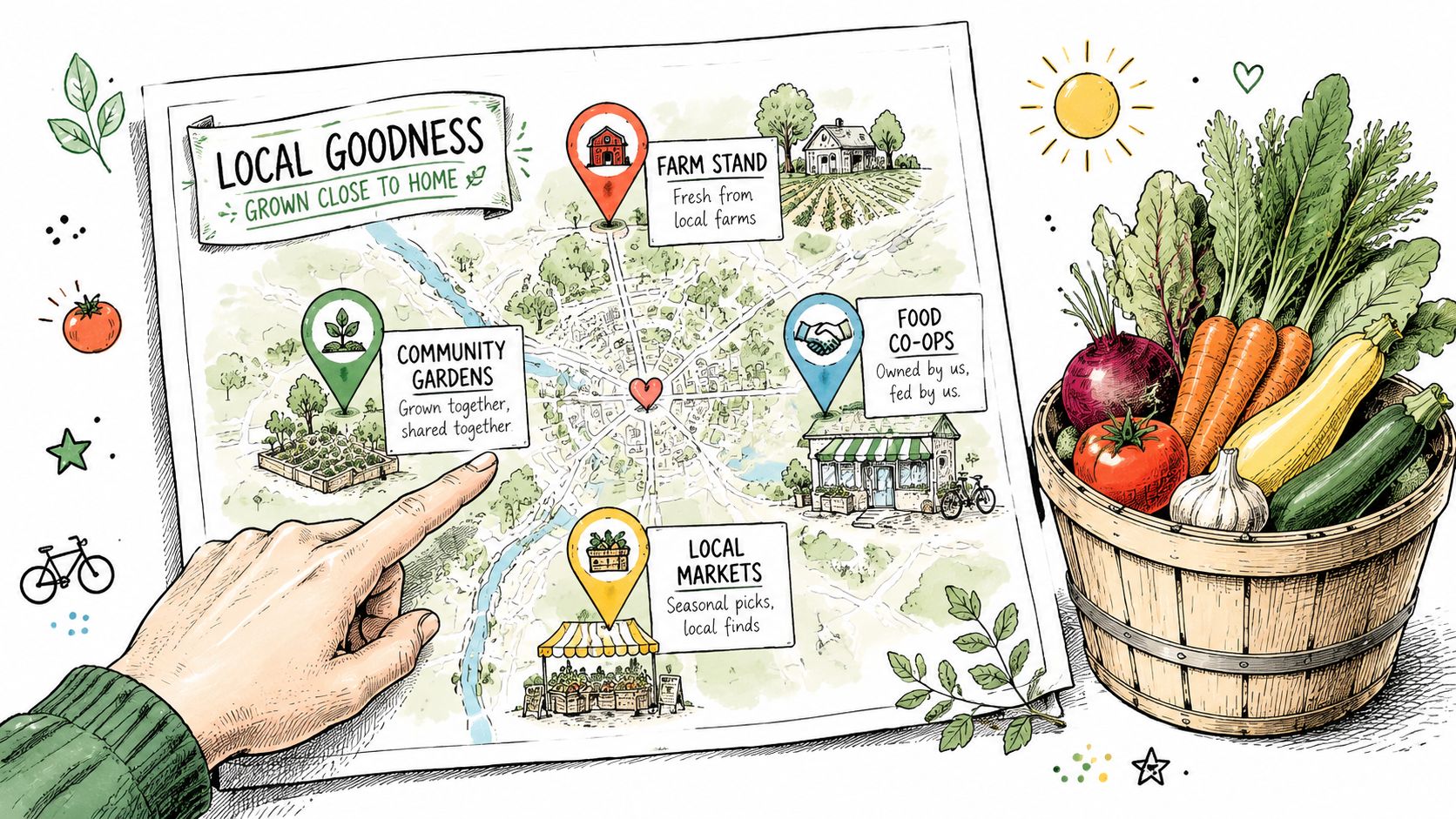
Here's a quick visual if you want a refresher on the kinds of local food sources worth checking out:
Other in-person spots worth your time
Farmers markets get all the attention, but they aren't your only option.
| Place | What it's good for | What to ask |
|---|---|---|
| On-farm store | Very direct buying, often very fresh harvests | What was picked today or yesterday? |
| Farm stand | Quick seasonal stops, often simple and convenient | Is everything here from this farm? |
| U-pick farm | Flavor, value, and a better sense of seasonality | What's at peak ripeness right now? |
U-pick spots are especially helpful if you want to understand seasonality fast. You'll see what's abundant, what's almost done, and what's still a week or two away. That kind of firsthand exposure makes you a much better shopper everywhere else.
Finding Local Produce from Your Couch
Sometimes you want local food without planning your whole Saturday around it. That's where online options make a real difference. You can still buy directly from the maker or grower, but you do it with less driving and less guesswork.
CSA versus online discovery
A CSA is the classic buy-on-a-plan model. You sign up with a farm, and you get a regular delivery or pickup of what's in season. That's great if you like cooking around the harvest and don't want to re-evaluate every week. It can also make local produce feel routine instead of occasional.
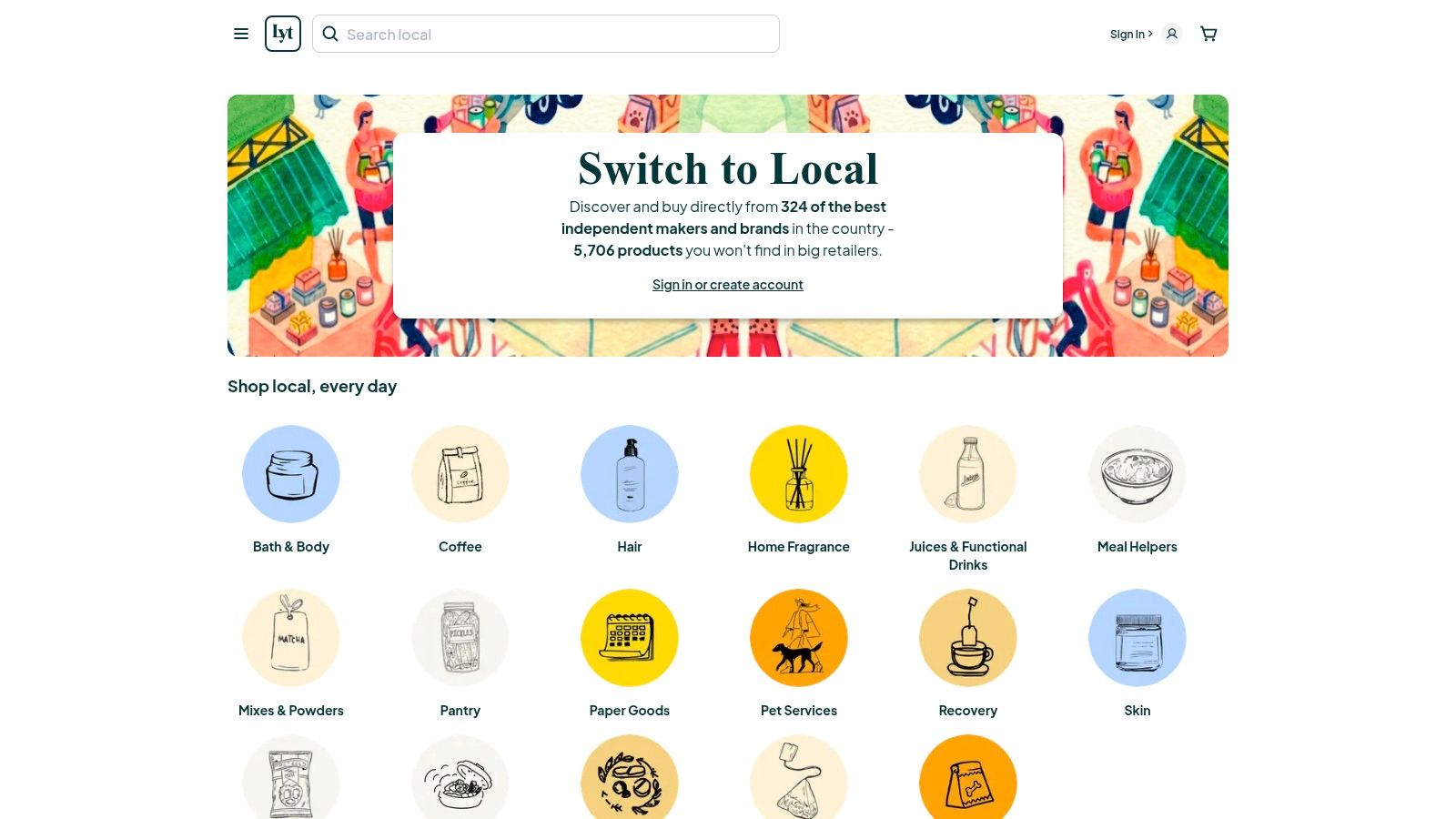
Online marketplaces work differently. Instead of committing to one farm's harvest rhythm, you browse multiple independent brands and local makers in one place, choose what fits your week, and reorder what you liked. That's useful if your household is picky, your schedule changes, or you want produce plus pantry items from real people rather than mass-produced filler.
A practical example is MYS Fresh Smoothies on Loyaltie. It shows how online local shopping can go beyond raw produce and include prepared foods from nearby makers too. Loyaltie is a marketplace where people discover and buy directly from the best independent brands in the US.
What works best for different shoppers
If you're torn between options, think about your habits more than your ideals.
- You cook often and like surprises. A CSA may fit you well because it nudges you toward whatever the farm is harvesting.
- You want choice every time. An online marketplace may suit you better because you can compare and select as needed.
- You shop for mixed dietary needs. Online discovery can be easier because you can add other local staples in the same session.
For example, a product like Gluten-Free Banana Bread Mix, Vegan & Allergen-Friendly, Moist Homemade Taste, 1 Box | Really Great Food by Loyaltie fits naturally into this kind of shopping. It lets you bake a moist, bakery-style banana bread without gluten, dairy, nuts, or soy. This vegan, OU Kosher mix is designed to taste like the “real thing,” so everyone at the table can enjoy it. That's not produce, of course, but it's the same idea: buying everyday food from independent brands instead of defaulting to anonymous shelf options.
Practical rule: If your local-food plan makes weeknight cooking harder, you won't stick with it. Choose the model that feels easy enough to repeat.
If you're wondering where to buy local produce without turning it into a project, that's the bigger point. You don't have to choose between convenience and quality anymore. You just need a system that matches the way you live.
How to Know if It Is Genuinely Local
“Local” sounds simple until you start asking what it means. Nearby town? Same county? Same state? Grown there, packed elsewhere, sold by someone else? A little skepticism proves helpful.
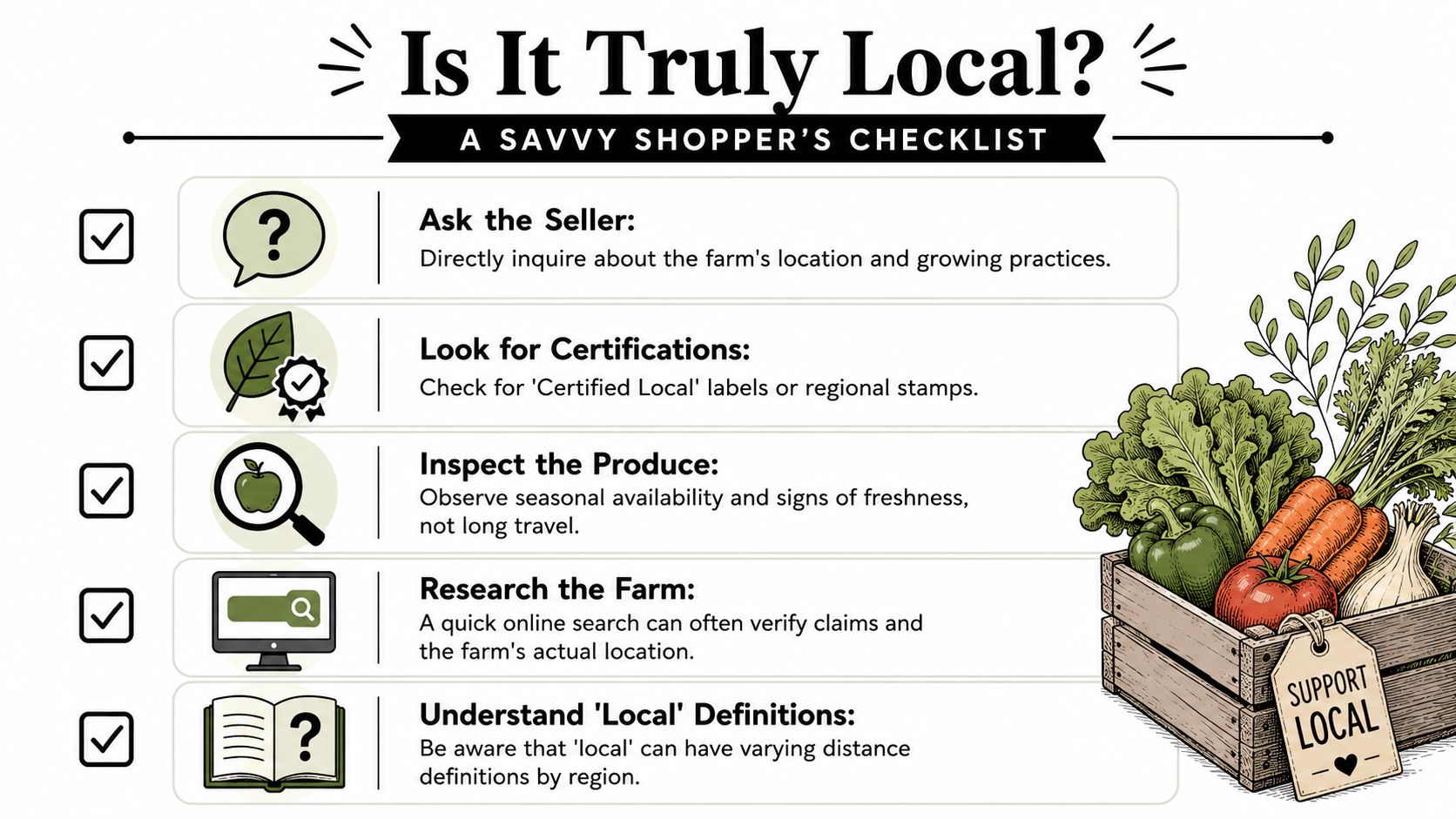
A solid buying method starts with clear expectations. The best-practice guidance for local sourcing recommends asking about growing practices and food safety, confirming details before harvest when possible, and using a trial period with new producers so both sides can adjust. It also warns buyers not to assume organic practices when they aren't clearly posted, especially for items often called the “dirty dozen” (best practices for buying and selling local).
The questions that tell you a lot fast
You don't need an interrogation script. You need a few useful questions.
- Where is this grown? Ask for the farm location in plain terms.
- What are your growing practices? Especially important when signs are vague.
- What's in season for you right now? Real growers can answer this quickly.
- Can I try a small order first? A trial run is smart, not rude.
One good way to build trust is to buy something simple first, then come back if the quality holds up. If you want another example of buying directly from a distinct local maker rather than a faceless brand, take a look at Arshot Honey on Loyaltie.
What to watch for besides labels
Labels help, but they don't tell the whole story. Seasonality matters. So does the seller's ability to explain how the food was grown and handled. Confidence without detail is a warning sign.
Use this mental checklist:
- Match the season: If the item seems out of sync with your region, ask more questions.
- Notice freshness cues: Tender greens, fragrant herbs, and ripe fruit usually speak for themselves.
- Listen to the answers: Specific, calm answers are better than marketing language.
- Start small: A test purchase tells you more than any sign ever will.
Trust grows from repeated good purchases, not from buzzwords on a chalkboard.
The Secrets of Seasonal Buying and Storing
A lot of local produce shopping advice stops at “go buy it.” That's only half the job. The harder part is buying at the right moment and getting it home without wasting it.

There's a real information gap here. The Local Shelf Life gap means buyers often get very little practical guidance on when to buy perishable local foods or how to store them, even though frozen local produce is being discussed as one way to make local supply more dependable (discussion of the Local Shelf Life gap).
Why timing matters as much as location
Seasonal buying solves two problems at once. First, it improves your odds of getting produce at its most flavorful stage. Second, it reduces the chance that you're paying for something that was harvested too early or held too long.
When a grower says, “These green beans are really good this week,” listen. That's often the cheapest buying advice you'll ever get. The same instinct helps with pantry staples too. If you care about quality, learning to spot fake olive oil is part of the same shopper mindset: ask questions, know the signs, and don't rely on pretty packaging.
Simple storage habits that save good produce
Storage doesn't need to be complicated. It just needs to be intentional.
- Leafy greens: Wash only when needed, keep them dry, and store with a towel or cloth to catch extra moisture.
- Tomatoes: Leave them out if they still need flavor and softness. Refrigeration can dull them.
- Berries: Sort out damaged fruit right away so one soft berry doesn't ruin the rest.
- Roots and sturdy vegetables: Keep them cool, dark, and separate from produce that gives off more moisture.
A smart rhythm helps too. Buy delicate items for the next day or two. Buy sturdier vegetables for later in the week. If you find yourself wasting produce often, shift part of your local shopping toward frozen, dried, canned, or shelf-stable foods from local makers. That still keeps you close to better ingredients while giving you more breathing room.
Buy tender things in small amounts. Buy sturdy things with a plan.
It Is About Better Food Not Just Good Deeds
The best reason to buy local produce is simple. It tastes better when you buy well, and buying well gets easier once you know what to look for.
You don't need to become a hobby farmer or spend every Saturday morning comparing radishes. You just need a few habits: ask where food comes from, notice what's in season, test new growers with a small purchase, and use online tools when they make life easier. That's how local food becomes practical.
There's also a wider effect that goes beyond your plate. When you spend $100 at a local business, $68 stays in the community, which shows that choosing independent brands isn't just a nice gesture. It's a meaningful economic choice too (shopping local statistics).
But the main payoff still lands in your kitchen. Better peaches. Better greens. Better honey. Better pantry staples from real makers. Less mystery, less blandness, and a lot more food that feels worth bringing home.
The next time you're deciding where to buy local produce, don't think only in terms of locations. Think in terms of standards. You're looking for flavor, clarity, convenience, and food made by people who can tell you what it is.
If you want one easy place to start, browse Loyaltie, a marketplace where people discover and buy directly from the best independent brands in the US. It's a practical way to find local makers and reorder the foods you want in your kitchen.