
You've found a coffee roaster, skincare maker, or wellness brand that feels more thoughtful than the usual mass-produced option. The ingredients look carefully chosen, the maker's story feels genuine, and you're ready to buy. Then the website asks you a string of questions that seem unrelated to what you want, or it recommends products based only on what you clicked. The experience quickly feels generic again.
Zero-party data offers a better path. Instead of guessing from your browsing, a brand asks what you like, need, and intend to buy. For independent makers, that direct exchange can turn a one-time visit into a useful, personal relationship with a local shopper.
Table of Contents
- 1. Use an interactive quiz
- 2. Create a preference center
- 3. Ask after a meaningful interaction
- 4. Store answers in a usable format
Why Your Local Shoppers Want to Share More
You're browsing for coffee made by an independent roaster. Maybe you prefer a medium roast, whole beans, and dessert-like flavor notes. Or perhaps you want a skincare product without a particular ingredient. You discover a local maker whose products look promising, but the storefront treats every shopper exactly the same.
That disconnect matters. A maker may see which product you viewed, but that doesn't tell them whether you liked the flavor, were comparing options, or were just curious. Observed behavior can suggest an interest, but it can't always explain the reason behind it.
A short question can create a much clearer conversation:
- Coffee: “Which flavors do you usually reach for?”
- Skincare: “What's your main skin concern?”
- Wellness: “What are you hoping to support?”
- Pet products: “What matters most for your pet's routine?”
- Communication: “Would you rather hear about new releases or reorder reminders?”
The shopper receives something useful in return, such as a more relevant recommendation, clearer product education, or messages that match their interests. The maker receives a preference signal the shopper chose to provide.
The practical exchange: Ask only for information that improves the customer's experience, then use it in a way the customer can notice.
That approach fits the reason many people seek independent brands in the first place. They want products that feel more considered, ingredients they can understand, and a buying experience connected to a real maker. Zero-party data helps local brands replace silent guesswork with a direct question and a useful answer.
Zero-Party Data Defined Simply
So, what is zero party data? It's information a customer intentionally and proactively shares with a brand. The customer isn't merely being observed while browsing. They're telling the business about preferences, purchase intentions, personal context, or communication choices.
Forrester Research popularized zero-party data as a distinct marketing concept in the late 2010s, defining it around information customers knowingly provide themselves. Coverage from Qualtrics on zero-party data connects the concept's rise with privacy concerns associated with the GDPR era, declining access to third-party tracking, and the need for consent-based personalization.
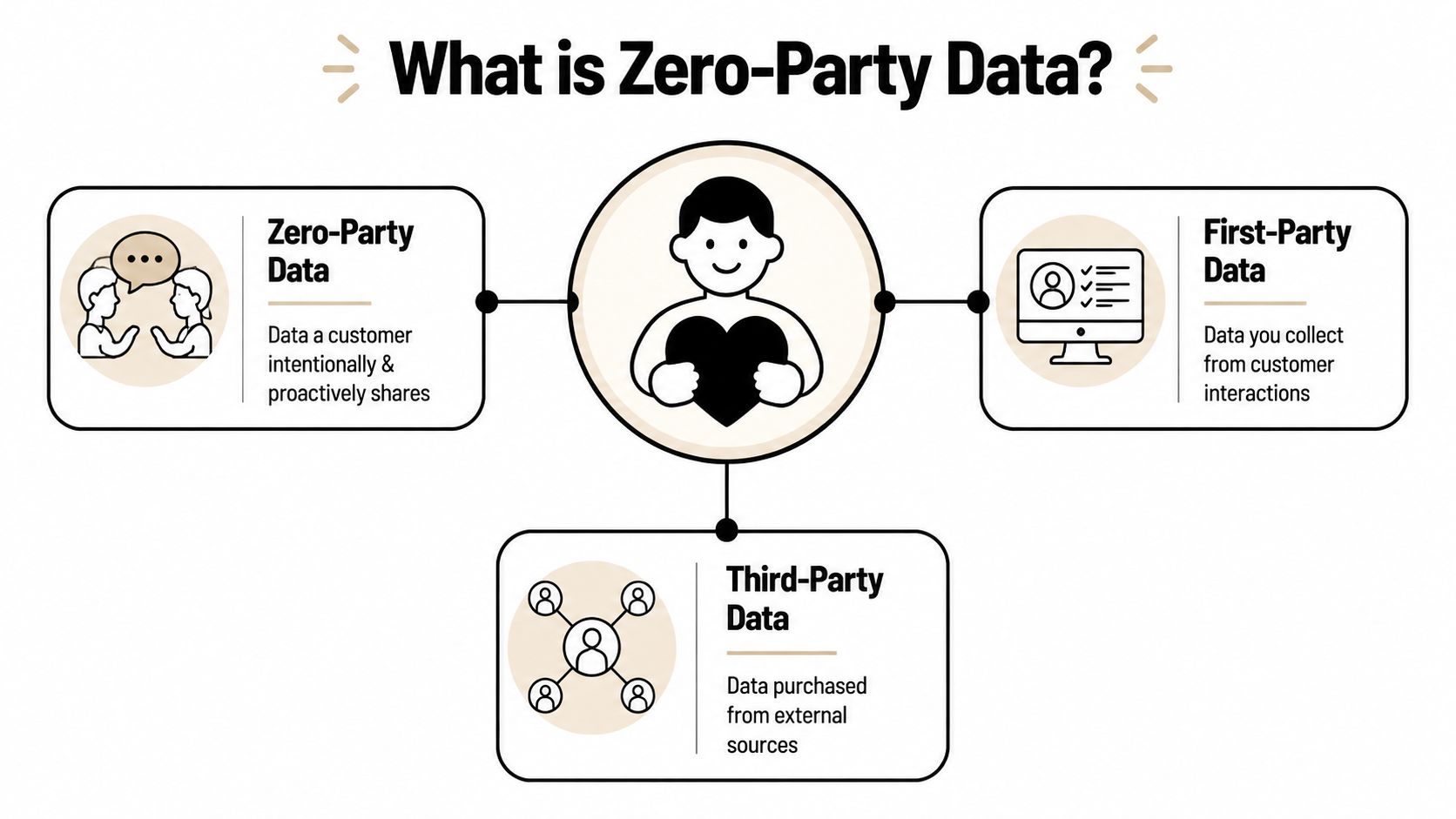
A simple analogy helps. First-party data is what a shop notices, such as a purchase or a page visit. Zero-party data is what the shopper says, such as “I prefer dark roast coffee” or “Only contact me about product launches.” Third-party data comes from outside sources rather than from the customer's direct conversation with the brand.
That distinction gives independent makers a stronger foundation for personalization. If someone tells a roaster they like mild sweetness and a heavier body, the roaster has a stated preference to work with. The brand doesn't need to interpret a trail of clicks and hope it understood the shopper correctly.
What counts as zero-party data
Common examples include:
- Preference center choices, such as categories, product interests, and communication preferences.
- Quiz responses, such as skin type, flavor profile, or wellness goals.
- Survey answers, including feedback about a recent product experience.
- Purchase intentions, such as what a shopper plans to try next.
- Personal context, when the shopper chooses to share information that helps a maker recommend appropriately.
The key isn't the form itself. It's the customer's active choice to provide the information and the maker's responsibility to explain why it's useful. A question that leads to a relevant recommendation feels like service. A long form with no visible benefit feels like work.
Zero-Party Data Versus Other Data Types
The easiest way to separate these data types is to ask one question: Who provided the information, and how did the brand obtain it?
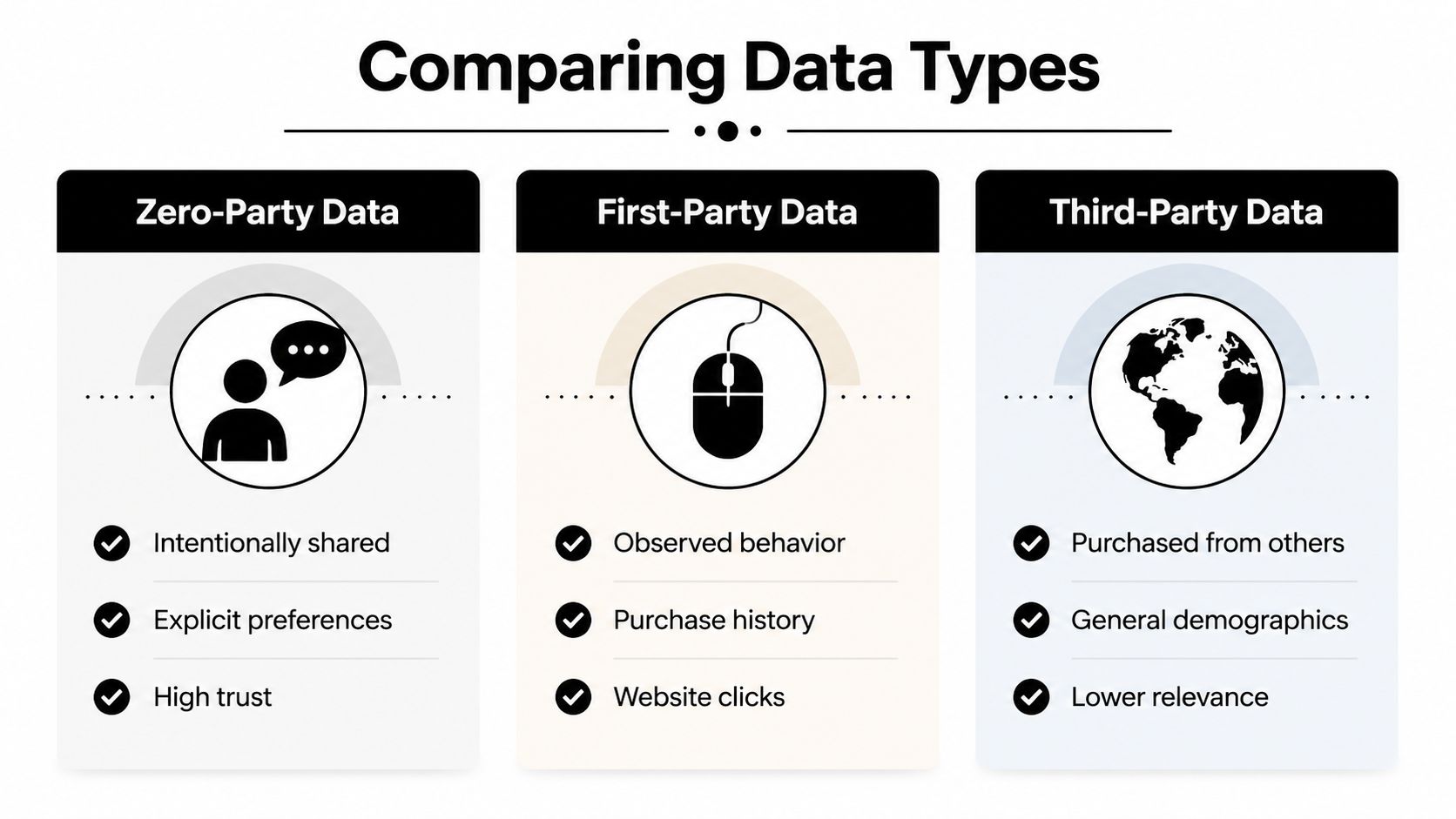
| Data type | What it means | Local shopping example |
|---|---|---|
| Zero-party data | The customer intentionally shares it | A shopper selects preferred roast strength in a coffee quiz |
| First-party data | The brand collects it from direct interactions | A maker records a product view, purchase, or account interaction |
| Third-party data | An outside provider supplies or sells it | A brand receives an external audience segment or demographic profile |
Consider a shopper looking at a flavored coffee. First-party data might show that they visited a product page and later bought coffee. It doesn't necessarily reveal whether they chose it for the roast, the flavor notes, the format, or a gift.
Zero-party data can answer that question directly. The shopper might say they prefer whole bean coffee, enjoy pumpkin-pie flavor, and want suggestions with a smooth, medium-to-heavy body. That information can guide the next recommendation without treating every click as a definitive signal.
For example, Pumpkin Spice Flavored Coffee, Indonesian Medium Roast, Pumpkin Pie Notes, 12 oz Bag, Whole Bean or Ground | Desert Hills Roastery by Loyaltie is described as an Indonesian medium roast with pumpkin-pie flavor, mild sweetness, and a smooth, medium-to-heavy body. A shopper's stated preference for those qualities gives the maker more context than a product-page visit alone.
Why the distinction matters
First-party data remains useful because it shows what people do. Zero-party data adds the customer's explanation and intention. Neither should automatically override the other.
A shopper may say they want to explore skincare, then purchase coffee instead. A customer may select a communication preference and later change their mind. Store these signals with their date and context, and let newer information replace older information when appropriate.
Privacy expectations also make transparency part of the experience. Loyaltie explains its handling of customer information in its privacy policy, while individual makers should also make their own collection and use practices easy to understand.
How to Collect Zero-Party Data from Shoppers
Good collection starts with a useful question, not a large form. Ask something the shopper can answer quickly and connect the response to a benefit they can see.
1. Use an interactive quiz
A coffee maker might ask:
- “How do you brew at home?”
- “Which flavor sounds most appealing?”
- “Do you prefer a lighter, medium, or heavier body?”
- “Would you like recommendations for your usual brewing method?”
A skincare maker could ask about skin type, texture preferences, and the customer's main concern. Keep the questions relevant to the products you offer. A quiz becomes frustrating when it feels like a personality test with no clear result.
2. Create a preference center
Let shoppers select the categories they care about and how they want to hear from you. They might choose coffee releases, wellness education, skincare restocks, or maker stories. They should also be able to update those choices without having to start over.
3. Ask after a meaningful interaction
A post-purchase survey can ask what the shopper liked, what they'd change, or what they want to try next. A conversational form can ask one question at a time, which often feels more natural than presenting a long questionnaire.
If you're improving your email signup experience, this guide to design email capture forms for retail can help you think through form structure and the information you request.
4. Store answers in a usable format
Zero-party data works best when it's structured, timestamped, and mapped to explicit user-intent fields, so personalization and CRM systems can use it promptly, as described by Andres SEO's zero-party data glossary.
That means “likes coffee” isn't enough. A useful record might include flavor family, roast preference, brewing method, format, and the date the shopper selected those choices.
Start with a few fields, explain the value, and avoid collecting details you won't use. For practical seller resources on setting up customer experiences, visit Loyaltie's seller resources.
Benefits for Independent Makers and Local Shoppers
Zero-party data creates a mutual benefit when the exchange is clear. The shopper gives a preference, intention, or communication choice. The maker uses it to make discovery easier and the next interaction more relevant.
For local shoppers, that can remove a lot of friction. Someone looking for better coffee doesn't need to open every product page to compare roast strength and flavor direction. A wellness shopper can receive information aligned with the goal they chose to share. A pet owner can focus on products that fit their pet's routine rather than sorting through an entire catalog.
Independent makers benefit from the context behind a purchase. A product order tells you what someone bought. A short answer can tell you what they're trying to solve, what they want to explore, or what nearly stopped them from buying.
Trust grows through visible follow-through
The strongest use of zero-party data is easy for a customer to recognize:
- A stated preference changes recommendations, so the shopper sees more relevant products.
- A communication choice changes messages, so the customer isn't pushed toward updates they didn't request.
- A product concern informs education, so the maker answers a real question instead of sending generic promotion.
- Feedback reaches product planning, so shoppers can see that their input has a purpose.
Consumers often welcome sharing information when they receive clear value in return. A Statista survey measured consumer trust and attitudes toward zero-party data among 1,500 U.S. working-age consumers in December 2023 and, separately, 1,885 U.K. working-age consumers in November and December 2023, as reported in Statista's research on zero-party data and consumer trust. A 2026 industry compilation also cites Salesforce research reporting that 82% of consumers are willing to share personal data for a more personalized experience, though that benchmark comes from industry research rather than a government source.
For an independent maker, the lesson isn't to ask for everything. It's to ask better questions and honor the answers. Personalization feels trustworthy when the shopper can see how their input improved the experience.
Building a Zero-Party Data Strategy on Loyaltie
A practical strategy can stay simple. Start with one customer decision you want to understand, collect the answer in a transparent way, and use it in the next relevant interaction.
Choose one useful signal
A coffee maker might begin with flavor preference. A skincare brand might start with skin concerns. A supplement seller might ask what kind of support the shopper is exploring, while a pet-products maker might ask about the animal's routine.
Write the question in plain language and explain the return. “Tell us what flavors you enjoy so we can show more relevant coffee” gives the shopper a clear reason to respond.
Connect the answer to the experience
Use the response on the product page, in email recommendations, or in a post-purchase follow-up. Don't collect a preference and then ignore it. Keep the information connected to the customer record, note when it was provided, and allow the shopper to revise it.
This is also where a unified customer view can help. Resources such as Exerta's approach to a unified view offer useful context for bringing customer signals together rather than leaving quiz answers, purchases, and feedback in separate places.
Keep the exchange fair
Zero-party data isn't just a more privacy-friendly replacement for tracking. It's a value-exchange system, and it works only when shoppers understand what they'll receive in return, as Salesforce's explanation of zero-party data emphasizes.
A marketplace where people discover and buy directly from independent brands in the US can make that exchange part of ordinary shopping. On Loyaltie, makers can present products to local shoppers while using direct customer conversations to make discovery more personal.
Begin with one quiz, one preference field, or one post-purchase question. Review the answers, remove anything you don't use, and improve the experience before adding more.
Real Examples of Zero-Party Data in Action
A local wellness maker could ask shoppers what they're hoping to support, then organize educational content around those answers. The maker shouldn't treat a quiz response as a medical diagnosis or make claims the product can't support. The useful role is helping shoppers find information and products that match the context they chose to share.
A coffee roaster could ask about roast strength, flavor preferences, brewing method, and whether the shopper prefers whole bean or ground coffee. The next visit could surface more suitable products, while a reorder message could reflect the customer's chosen communication preference.
A skincare maker might ask whether a shopper is focused on dryness, sensitivity, texture, or a simpler routine. That answer can shape product education and help the maker avoid sending irrelevant recommendations. If the shopper later changes their routine, the preference should be easy to update.
The same idea works for pet products. Ask whether the customer is shopping for daily food, treats, grooming, or enrichment, then make the path through the catalog easier. The question is small, but it gives the maker a clearer understanding of intent.
Start with curiosity, not surveillance. The best question helps a shopper make a better choice while helping the maker serve them more thoughtfully.
Try one question during your next product launch or storefront update. If the answer changes what the shopper sees, receives, or learns, you've created a meaningful exchange rather than another data collection task.
Loyaltie helps you discover and buy directly from independent brands across the US, including makers of coffee, wellness products, skincare, food, supplements, and pet goods. Visit Loyaltie to find better everyday products and connect your shopping preferences with a more personal local buying experience.