
Some months feel great. Orders come in, your packing table stays busy, and you start thinking, maybe this is finally becoming steady. Then the next month slows down, and you're back checking your phone, refreshing your storefront, and wondering who will reorder.
If you sell coffee, tea, skincare, supplements, snacks, candles, or pet products, that rhythm probably feels familiar. A lot of makers have loyal customers. Fewer have a system that turns that loyalty into something they can plan around.
That's where people get stuck on the question, what is recurring revenue? The term sounds corporate, but the idea is simple. It means creating a business where some customers don't just buy again when they remember. They buy on a plan, on a regular schedule, with clear timing and expectations.
Table of Contents
- Regular delivery for everyday essentials
- Curated boxes that feel fresh
- Member access with a simple monthly fee
- Retainers for product plus ongoing service
- Start with the two numbers that matter most
- A simple table you can use
- The other numbers to watch without overcomplicating it
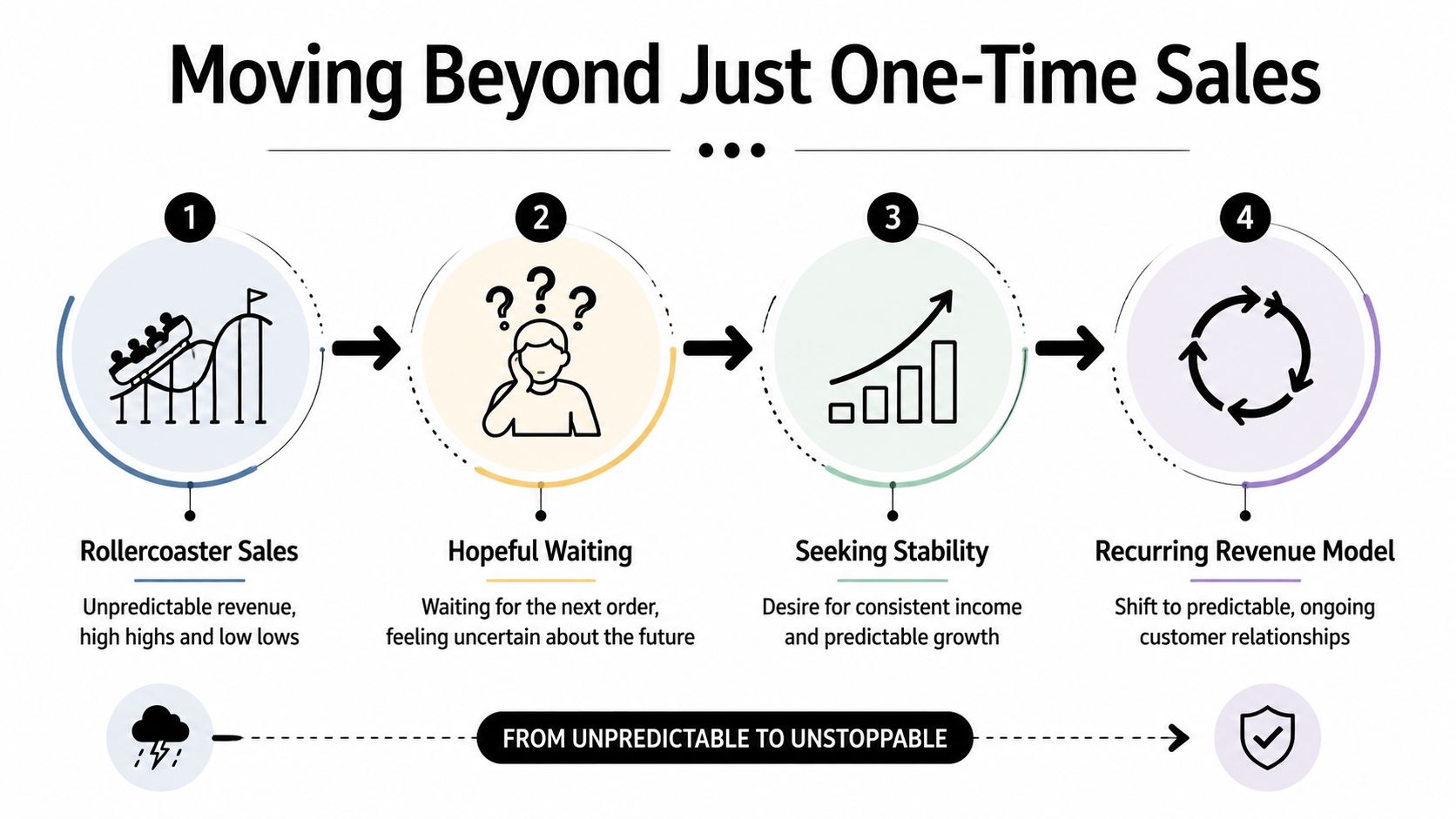
Moving Beyond Just One-Time Sales
A maker sells a bag of coffee to someone on Monday. That customer loves it and comes back three weeks later. Great sign. Then they reorder two weeks after that, skip a month, then come back again when they run out.
That customer is loyal. But that revenue is still uncertain.
A different customer buys the same coffee on a regular delivery plan. Their order is set to renew on a clear cadence, and both sides know what happens next. That changes the business from “I hope they come back” to “I can plan for a portion of next month.”
The difference most makers miss
The phrase recurring revenue is frequently misunderstood. People often use it to mean repeat business, but they're not the same thing.
A farm stand is a good example. If neighbors stop by whenever they need tomatoes or jam, the stand has repeat customers. If those same neighbors join a weekly produce box with a set delivery day, that starts to look like recurring revenue because the relationship now has structure.
Practical rule: A customer who usually comes back is not the same as a customer who has agreed to buy on a schedule.
For physical products, that distinction matters a lot. Coffee beans, protein powder, face oil, dog treats, and tea all invite reorders. But a reorder pattern alone doesn't give you the same confidence as a plan with a billing rhythm and a defined next step.
If you want a plain-English breakdown of monthly recurring revenue, that resource is helpful because it translates the term into the kind of predictable income a growing brand can track.
Why structure matters more than loyalty
The key difference between simple repeat sales and true recurring revenue is the structure. Predictability depends on contracts, auto-renewal, and a defined billing cadence, which is why strong reorder rates alone shouldn't be forecasted the same way for consumables like coffee or skincare, as explained in Investopedia's overview of recurring revenue.
That doesn't make repeat buyers less valuable. It just means you should classify them accurately.
Here's a simple way to grasp it:
- Repeat sales: Customers come back on their own. You're glad to see them, but you don't know exactly when they'll return.
- Recurring revenue: Customers buy on a plan. You know the expected timing, and that gives you a steadier base.
- Hybrid revenue: Some buyers reorder casually, while others choose regular delivery. This is common for physical goods brands.
For independent brands, that middle path is often the most realistic. You don't need every customer on a plan. You need a reliable group of customers who already love the product and want the convenience of not running out.
If you're setting this up for your own brand, Sell on Loyaltie is one option for offering products directly to buyers through a marketplace where people discover and buy directly from the best independent brands in the US.
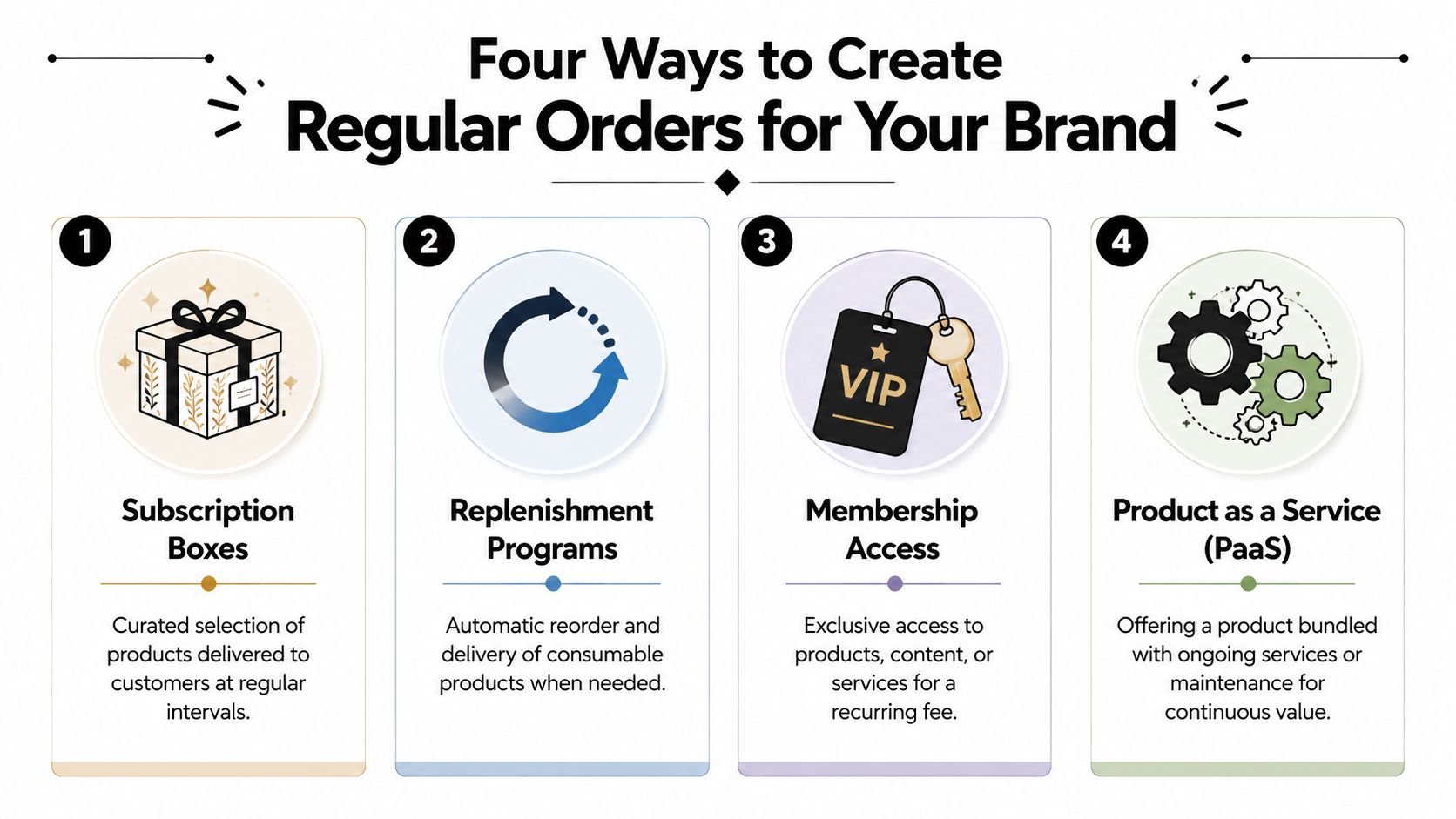
Four Ways to Create Regular Orders for Your Brand
Some products fit one format right away. Others do better when you mix a few approaches. A candle brand might offer one candle every month. A coffee roaster might offer both regular bean delivery and a member-only tasting club. A skincare line might start with one replenishment item, then add a seasonal box later.
The point isn't to copy software companies. It's to match the buying rhythm of your product.
Regular delivery for everyday essentials
This is the easiest place to start. If people use your product up and need more, a regular delivery plan makes immediate sense.
Think coffee, matcha, supplements, pet food, soap, lip balm, protein powder, tea, or body butter. These are products customers don't usually want to “discover” every time. They often want the same thing again, on time, without remembering to place a new order.
What makes this work:
- Clear replenishment timing: Your customer can tell when they'll likely run low.
- Simple product choice: One hero item often works better than a large menu.
- Practical convenience: The offer solves forgetfulness, not just price sensitivity.
A real product example is this monthly soy candle plan from Evolve Botanica on Loyaltie. Even though candles aren't consumed the same way as coffee or collagen, the idea is similar. It gives the customer a steady ritual and gives the maker a repeating order pattern.
Curated boxes that feel fresh
Some brands don't sell one staple. They sell variety.
A curated box works well when your customer likes discovery as much as convenience. Tea samplers, seasonal pantry picks, wellness assortments, bath items, or snack bundles can all fit here. The customer isn't just avoiding reordering. They're also looking forward to what's next.
This format asks more of the maker. You need to curate well, source consistently, and keep the experience from feeling repetitive. But it can build a stronger relationship because the brand becomes part of the customer's routine and taste.
A short walkthrough can help if you're comparing formats before you launch:
Member access with a simple monthly fee
Not every recurring offer has to be tied to one box on one date.
Some brands create a member club. Customers pay regularly to get access to early drops, members-only products, preferred pricing, or a standing monthly credit. This works best when your audience already wants a closer relationship with the brand.
A good member club gives people a reason to stay connected even when they don't need the exact same item every month.
This can suit makers with a broad line. A coffee company might offer first access to new roasts. A skincare brand might give members a standing refill option plus occasional extras. A pet brand might bundle reorder perks with seasonal treats.
Retainers for product plus ongoing service
This one is less talked about, but it fits plenty of physical goods businesses.
If your brand also provides an ongoing service, you can package product and service together. A floral designer might offer regular arrangements for a business lobby. A refill-focused home goods maker might pair supplies with scheduled restocking. A wellness maker might combine product shipments with guided check-ins or education.
Stripe notes that recurring revenue models aren't just for software and can come from memberships, replenishment plans, and retainers for physical goods businesses in its guide to recurring revenue models.
That's useful because it widens the conversation. You're not limited to a single “box every month” idea. You're building a repeatable relationship around the way your product is used.
How a Predictable Income Stream Changes Everything
When a portion of your orders repeats on schedule, your business starts to feel different day to day. You're still working. You're still earning every customer. But the floor under your month gets firmer.
That changes more than your spreadsheet.
What gets easier when orders repeat
The first benefit is emotional. If you know a group of customers is already set to reorder, you don't begin every month from zero. That can lower stress and help you make calmer decisions about inventory, production, and cash flow.
It also sharpens operations. When reorder patterns become steadier, you can buy materials with more confidence, prep packaging in advance, and avoid overmaking products that just sit. For food, wellness, and body care brands, that can mean less waste and fewer last-minute scrambles.
Here's what often improves:
- Inventory planning: You can estimate upcoming demand with more confidence.
- Raw material purchasing: You're less likely to buy too much in panic or too little in fear.
- Customer feedback loops: Repeat buyers tell you faster when something needs fixing.
- Brand habit: Your product becomes part of someone's normal routine.
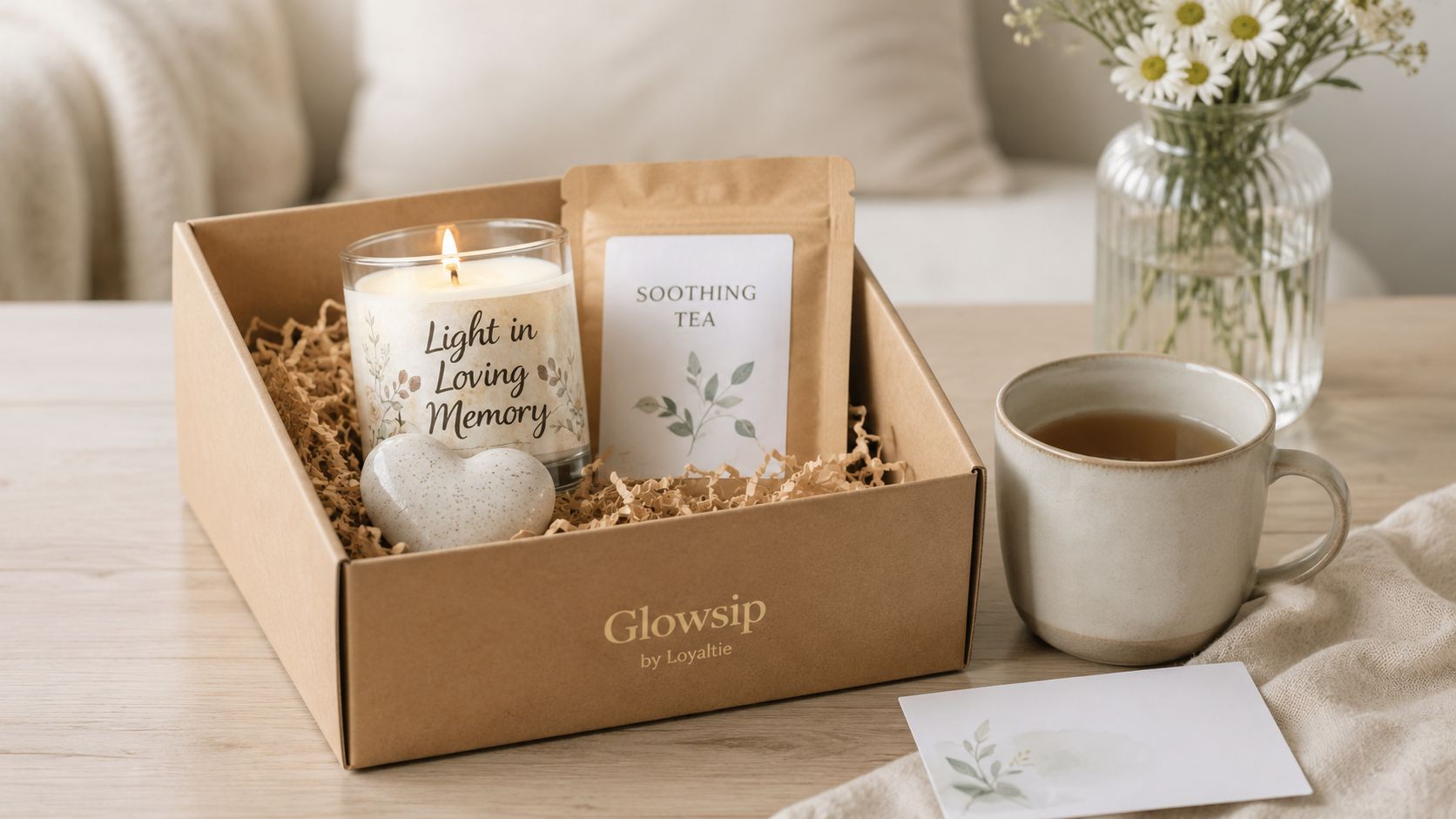
Some products are naturally better for one-time gifting than for recurring plans. For example, Sympathy Gift Box, Candle & Soothing Tea, Keepsake Comfort Gift, Bereavement Condolence Care Package, 1 Box | Glowsip by Loyaltie is described as a box that pairs a calming candle with soothing tea and a meaningful keepsake to send quiet comfort when words aren't enough. That's thoughtful product design, but it also shows why not every item should be pushed into a regular-order model.
The honest trade-offs
Recurring revenue for physical goods is powerful, but it isn't automatically better in every case. It can weaken a business if customers leave quickly, if the offer depends too much on discounting, or if fulfillment costs keep rising.
Keep the plan only if it works for both sides. The customer should feel relieved, not trapped. You should feel steadier, not squeezed.
There's also more to manage than people admit. You need consistent production, clean communication, reliable shipping, and a simple way for customers to pause, skip, or adjust. If those basics are shaky, repeat orders can create friction instead of loyalty.
That's why the strongest plans usually start small. One product. One clear cadence. One customer problem solved well.
The Simple Math to Measure Your Success
The finance language around recurring revenue can sound heavier than it is. For a maker, these numbers are just a way to answer one question. How much of next month's income is already visible?
The two terms you'll hear most are MRR and ARR. They matter because they give you a clean snapshot of the income tied to active paying customers on a regular plan.
Start with the two numbers that matter most
According to Gainsight's guide to recurring revenue, Monthly Recurring Revenue (MRR) is calculated by multiplying the number of active paying customers by the average monthly revenue per customer. The same source explains that Annual Recurring Revenue (ARR) is typically the annualized version of that figure.
Gainsight gives a simple example: 100 customers paying $10 per month generate $1,000 in MRR and $12,000 in ARR.
That's the cleanest starting point because it strips the idea down to something useful. For your brand, you can think of MRR as the repeatable base you can reasonably expect from active customers on a plan.
If you remember only one formula, remember this one: active paying customers × average monthly revenue per customer = MRR.
A simple table you can use
You don't need a huge dashboard. A small table updated regularly can tell you a lot.
| Plan Name | Price per Month | Number of Customers | Total MRR from Plan |
|---|---|---|---|
| Coffee Refill Plan | $10 | 100 | $1,000 |
That example uses the same verified numbers from Gainsight so you can see how the formula works in practice.
If you want more plain-English expert advice on predictable income, that guide is a useful companion because it helps connect the metric to real planning, not just bookkeeping.
The other numbers to watch without overcomplicating it
Once you know your MRR, there are a few other terms worth understanding. You don't need to obsess over all of them on day one.
- Churn: This is the share of customers who cancel or stop their plan over a period. You don't need advanced math to use it. If too many customers leave, your recurring program has a fit problem, a value problem, or an experience problem.
- Lifetime value: This helps you estimate the total value of a customer who stays on a plan over time. Even without exact modeling, it reminds you that a happy repeat buyer is worth more than a one-time conversion.
- Customer acquisition payback: This asks how long it takes to earn back what you spent to get the customer. If the answer feels too slow, you may need to raise prices, improve retention, or lower acquisition costs.
A practical rhythm works better than a complicated one. Review your active customers, your monthly plan revenue, and your cancellations on a regular schedule. If the customer count grows but your margins feel worse, don't ignore that. Predictable revenue only helps if it remains healthy revenue.
Your First Steps to Offering a Regular Delivery Plan
The easiest way to start is not to build a giant program. Start with one item people already reorder without much thought.
That usually means a consumable product with a clear use pattern. If customers run out, notice quickly, and buy again, you've got a candidate.
Pick the right first product
Your first plan should be boring in the best way. It should be easy to understand, easy to use up, and easy to reorder.
Good first candidates often include:
- Daily-use products: Coffee, tea, supplements, protein, soap, or skincare basics.
- Routine household items: Pet food, treats, refillable cleaners, pantry staples.
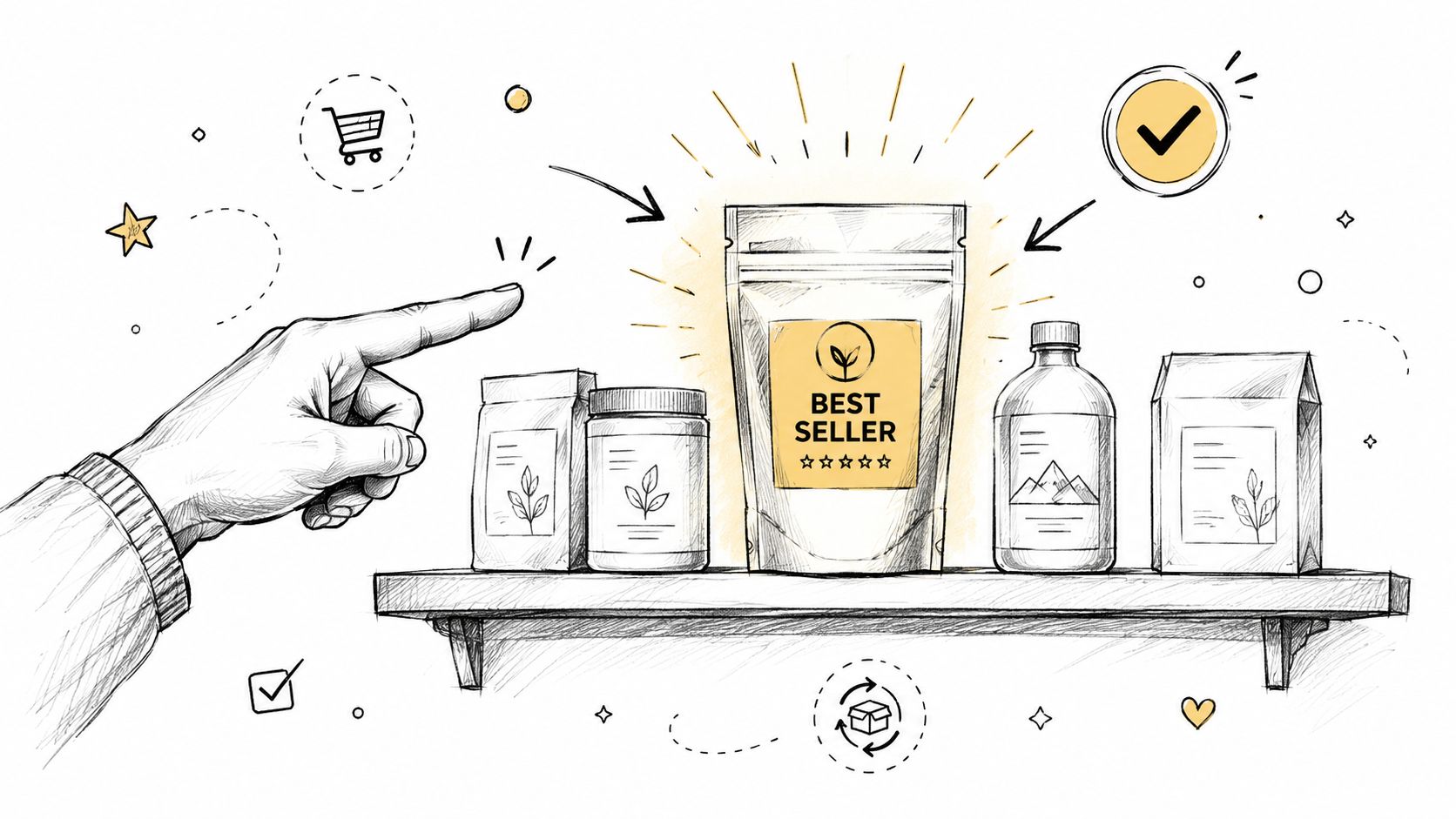
- Single bestsellers: The product people already come back for without needing education.
Poor first candidates tend to be occasional purchases, gifts, or highly seasonal products. If someone only buys it once in a while, a regular plan creates pressure instead of convenience.
Start with the item customers would be mildly annoyed to run out of. That annoyance is often where a good regular delivery offer begins.
Set terms your customers can live with
Once you pick the product, decide the rhythm. The best cadence usually follows normal product usage. Don't force people into getting too much too soon.
Keep the offer simple:
- Choose one interval first. Too many timing options can make the page harder to understand.
- Decide whether to include a small thank-you incentive. It should reward commitment without wiping out your margin.
- Make changes easy. Customers should be able to skip, pause, or adjust without sending three emails.
If you're comparing tools before launch, Suby's billing software recommendations can help you look at how different platforms handle recurring billing and customer management.
Make the buying experience easy
Most customers won't adopt a plan because the idea sounds smart. They'll adopt it because the experience feels easier than remembering to reorder.
Your product page should answer the customer's silent questions fast:
- When will this arrive?
- How often will I be charged?
- Can I change it later?
- What happens if I need to skip a shipment?
If you want practical setup help, Loyaltie seller resources include guidance for brands selling direct online. For makers who want to buy directly from the maker without a middleman retailer shaping the relationship, clarity at the product page level matters as much as the billing setup.
Keep the message customer-centered. “Never run out of your usual roast” works better than “increase recurring revenue.” “Keep your skincare routine stocked” lands better than “improve retention.” The customer is buying convenience and consistency. You're getting predictability as the result.
Common Pitfalls and How to Sidestep Them
A lot of regular-order programs stumble for simple reasons. The maker picks the wrong product, copies a pricing tactic that doesn't fit, or treats the plan like a billing feature instead of a customer relationship.
One common mistake is forcing a plan onto products people don't need often. A sympathy box, a holiday gift set, or a special-occasion item may be well loved and still be a poor fit for recurring revenue. Start with products people use up.
Another mistake is leaning too hard on discounts. A modest incentive can make sense. A deep one can train customers to stay only for the deal, which makes the whole system fragile.
Communication trips people up too. If the only message a customer gets is a charge notice, the relationship goes stale. Send useful reminders. Let people know what's shipping. Make it easy to adjust their order without embarrassment.
Watch your operations, too:
- Shipping strain: Regular deliveries only help if you can fulfill them smoothly.
- Packaging gaps: A plan increases repeat touchpoints, so damaged or messy deliveries hurt more.
- Inflexible policies: Customers stay longer when they can skip or pause instead of canceling outright.
The best recurring programs feel calm. The customer knows what's coming, the maker can prepare for it, and neither side feels boxed in.
If you're building that kind of steadier business, Loyaltie is a marketplace where people discover and buy directly from the best independent brands in the US. It's a practical way to reach shoppers who already want better everyday products from real makers, with no middleman between your brand and your customer.