
Payment processing is the behind-the-scenes flow that authorizes, secures, and settles money between a customer, a merchant, and financial institutions. It handled 3.4 trillion transactions worth $1.8 quadrillion in 2023, showing that it's far more than just accepting a card.
You feel the process in a much smaller moment. You find a local maker selling coffee, skincare, food, or pet products online, add something to your cart, and tap “pay.” Within seconds, a payment system checks whether the money is available, screens the transaction for risk, sends an approval back to the shop, and later moves the funds into the seller's account.
For an independent brand, that invisible sequence can decide whether a customer completes a purchase, whether the maker receives usable cash on time, and whether an apparently profitable order becomes expensive after fees, refunds, or disputes. Understanding it doesn't require a finance degree. You just need a clear map of who handles the money and when.
Table of Contents
- When does a payment become available to me?
- Who should I contact about a problem?
- What should I do after a decline?
- How should I respond to a chargeback?
- What should I learn first as a maker?
Introduction What Payment Processing Really Does for You
Suppose you're buying a hand-blended wellness product or a bag of coffee from an independent US brand. You want a smooth checkout, a clear receipt, and confidence that your card details won't be exposed. The maker wants the order confirmed, the money collected, and the funds available to prepare your package.
Payment processing connects those expectations. It's the system that carries payment information from checkout to the relevant financial institutions, receives an approval or decline, and coordinates what happens afterward. That can include card payments, digital wallets, bank transfers, account-to-account payments, and payouts to sellers.
The scale behind that simple tap is enormous. An industry summary says global payments processed 3.4 trillion transactions worth $1.8 quadrillion in 2023, creating a $2.4 trillion revenue pool with 7% annual growth from 2018 to 2023. The same summary reports that global digital payment volumes reached $18.7 trillion in 2025, compared with $1.7 trillion in 2014. This global payment processing industry overview helps explain why the checkout button on a local shop's website connects to such a large infrastructure layer.
Why makers should care
Payment processing affects more than whether a card works. It influences checkout trust, fraud screening, payout timing, reconciliation, refunds, and chargeback handling. A maker selling direct needs to know what happens after the customer sees “payment successful,” because that message doesn't necessarily mean the seller has already received spendable funds.
You might discover independent brands through a marketplace such as Loyaltie, where shoppers can find and buy directly from makers. Behind each order, payment systems help coordinate the buyer, seller, marketplace, banks, and risk controls.
The field is also expanding beyond familiar card rails. If you're curious about how software agents may initiate payments in newer commerce experiences, Zinc's Agent Payments Protocol offers useful background. The central idea remains simple: payment processing turns a buyer's intent into a verified transaction and an eventual transfer of funds.
How Payment Processing Works Behind the Scenes
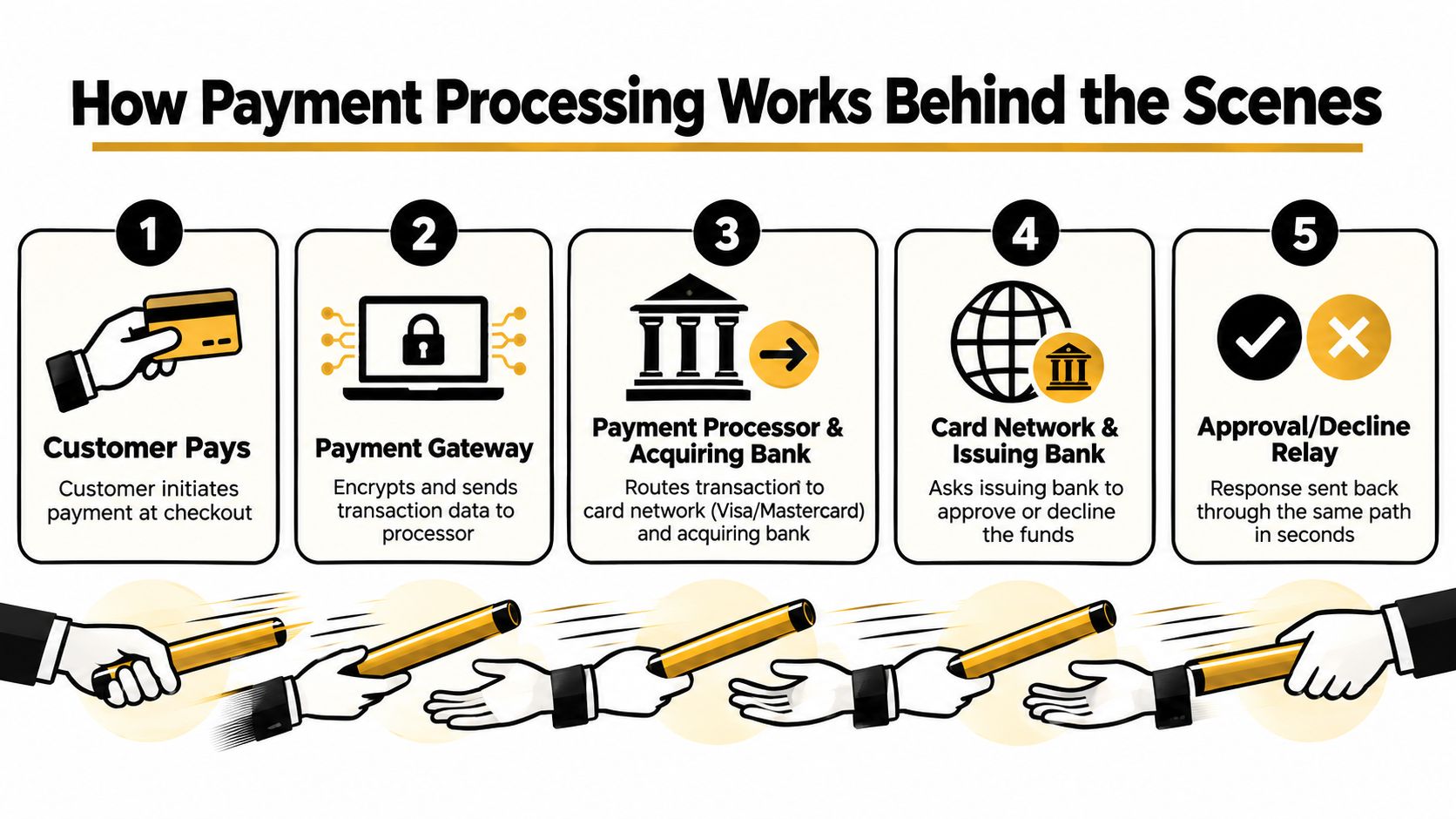
A checkout payment works like a relay race. Each participant receives the transaction information, performs a specific job, and passes the result to the next participant. The baton is payment data, protected as it moves.
The transaction's main players
The customer starts the payment. They enter card details, select a wallet, or choose another available method at checkout.
The payment gateway collects and protects the request. For an online purchase, the gateway encrypts payment information and sends it to the processor. It's similar to a secure reception desk that checks the form is complete before forwarding it.
The processor routes the transaction. The processor communicates with the relevant card network or payment rail. For a card purchase, the network carries the request between the merchant side and the customer's issuing bank.
The issuing bank decides whether to approve. The issuer checks available funds or credit, account status, and risk signals. It returns an approval or decline through the same chain.
The merchant receives the result. The checkout displays confirmation or asks the customer to try another method. A plain-language payment processor definition for Shopify can help if you want to compare the processor's role with the gateway and other payment participants.
A card transaction can also support a real purchase with a personal touch. For example, the A2 Celebration Greeting Card, 100% Recycled Paper, Blank Inside, Hand-Drawn Congrats Card, Includes Kraft Envelope | Chika Paper Studio by Loyaltie is described as a hand-drawn A2 card made from 100% recycled paper, blank inside for a personal message, and supplied with a kraft envelope.
Authorization is not settlement
This distinction causes much of the confusion around payment processing. Authorization happens in real time. It checks risk and whether funds or credit appear available. Approval means the transaction can proceed, but it isn't the same as money already landing in the merchant's bank account.
Settlement happens afterward. The approved transactions are grouped, reconciled, and transferred through the acquiring side so the merchant can receive a payout. The acquirer completes settlement and pays the merchant, while chargebacks are handled at the acquirer layer rather than by the processor alone. This explanation of merchant acquiring and payment processing lays out that operational separation.
For a visual walkthrough, this video shows how the participants connect:
Practical rule: Treat “approved,” “settled,” and “paid out” as three different milestones when you troubleshoot a transaction.
Payment Methods Your Customers Expect Today
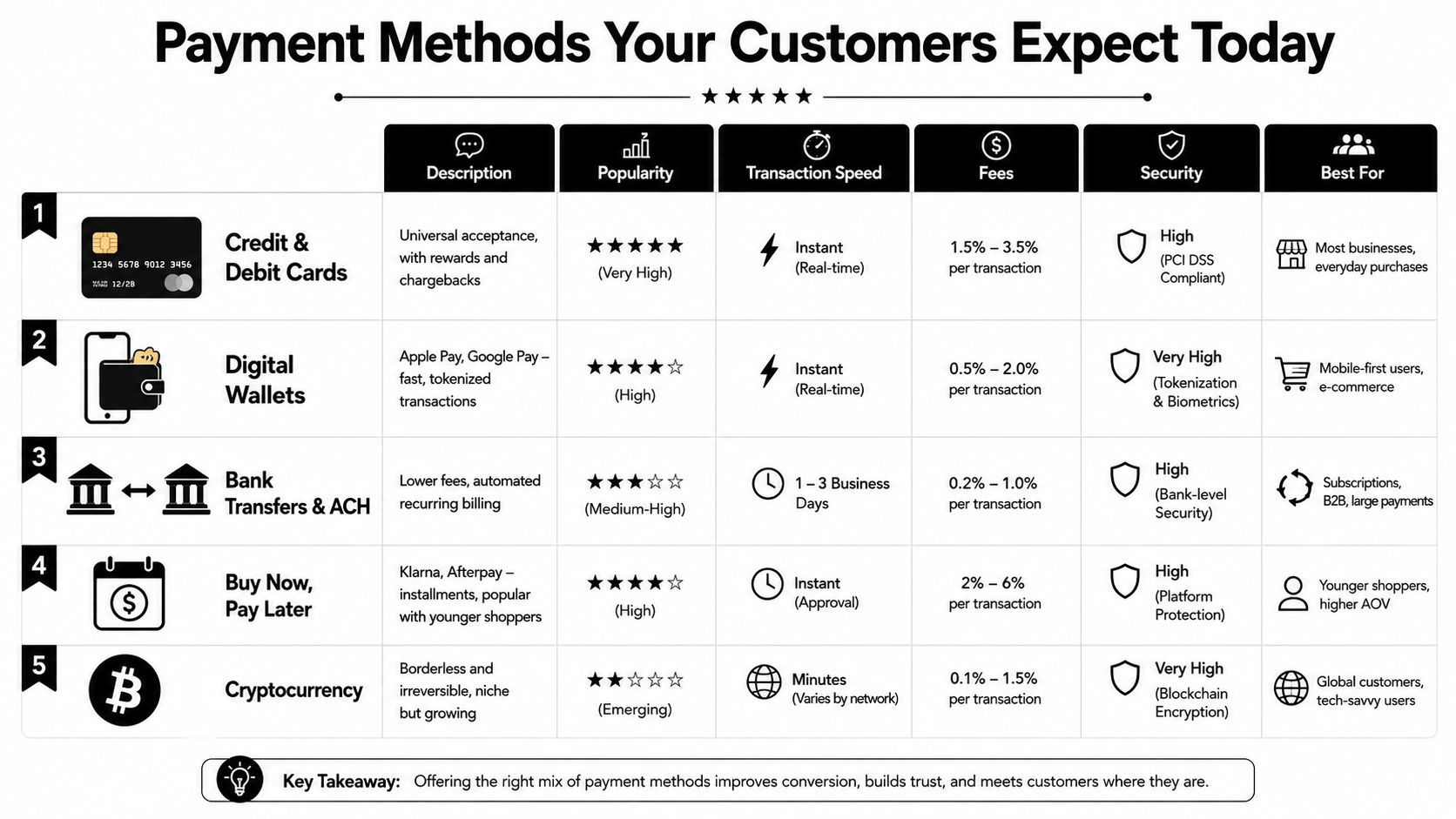
Customers don't all want to pay in the same way. A coffee buyer may use a saved wallet on a phone, while another customer prefers a debit card or a bank transfer. The right payment setup gives people familiar choices without turning checkout into a confusing menu.
Comparing the main rails
| Payment method | Customer experience | Practical consideration for makers |
|---|---|---|
| Credit and debit cards | Familiar and widely accepted | They support broad access, but can involve network fees, fraud checks, refunds, and chargebacks |
| Digital wallets | Fast checkout using saved credentials or a device | Tokenized payment details can reduce manual entry and make mobile checkout easier |
| Bank transfers and ACH | Funds move from a bank account | They may offer a different cost structure, but customers can expect a different confirmation and settlement experience |
| Buy now, pay later | The customer follows an installment flow | The provider, eligibility rules, fees, and dispute process need careful review before you add the option |
| Cryptocurrency | A digital, often borderless payment experience | It remains a niche choice for many shops and requires clear policies for volatility, refunds, and confirmation |
The mix is changing. Cash represented 46% of worldwide payments in 2025, down from 50% in 2023, while digital wallets accounted for about 30% of global point-of-sale volume, according to McKinsey's Global Payments Report. Those figures point to a broader shift in the processor's job: it must coordinate multiple rails rather than just move card transactions.
What to offer first
For most independent brands selling everyday products, start with the methods your buyers already recognize. Cards provide broad coverage. Digital wallets can make mobile checkout quicker. Bank-based options can be useful where customers already trust them, but they shouldn't replace every other method unless your audience clearly prefers them.
Keep the choice practical. A shop selling skincare, supplements, or pet products may benefit more from a clean card and wallet checkout than from adding every possible payment method. More options only help when they're easy to understand and reliably supported.
Understanding Fees and What It Actually Costs to Get Paid
A customer pays $40 for an order, but your shop may receive less after the transaction completes. Card payment costs can include interchange, network assessments, processor markup, gateway charges, monthly fees, refund handling, and dispute fees. The useful question is not only “What rate is advertised?” but “What amount reaches my account?”
The visible components
| Cost Component | Who Sets It | What It Covers |
|---|---|---|
| Interchange | The card issuer and payment system rules | A fee associated with the card transaction and the issuer's role |
| Network assessment | The card network | Use of the network that routes the transaction |
| Processor markup | The payment processor or provider | Processing, routing, risk tools, reporting, and related services |
| Gateway or platform fee | The gateway, commerce platform, or marketplace | Secure checkout connection and payment data transmission |
| Dispute fee | The processor or acquiring side | Administrative handling when a customer disputes a transaction |
For US debit cards, the Federal Reserve reported average per-transaction processing-related ACS costs, excluding issuer fraud losses, of $0.041 in 2023. The Regulation II interchange fee cap for an average covered transaction was about $0.243 to $0.245, while actual average interchange fees were $0.222 on dual-message networks and $0.241 on single-message networks. The Federal Reserve's 2023 debit card cost report includes the underlying figures and definitions.
A flat processor rate may combine several charges into one number. Interchange-plus pricing displays more of the underlying structure, though neither model suits every independent brand. Compare the total deducted, payout record, and separate charges. The headline rate is only one signpost on the seller's journey from checkout to deposit.
Failed payments and disputes
A failed payment can cost more than one abandoned checkout. The sale disappears, customer support takes time, and the buyer may not return. Depending on the provider's terms, a refund may also leave the original processing charge in place.
Chargebacks add financial and administrative pressure. A 2025 chargeback study published by Optimus.Tech reports that US merchants lose $4.61 for every $1 of fraud. Processors typically keep the original processing fee while adding a separate dispute fee. This coverage of chargeback costs explains how a disputed order can reduce both margin and available cash.
Review one actual payout statement. Match each order with its gross amount, processing deduction, refund, reserve, dispute charge, and net deposit. If you sell through a marketplace, compare its settlement report with your bank statement and store the records together in your seller resources.
A payment is profitable only after you account for what reaches your account, not what the customer sees at checkout.
Keeping Payments Safe Without the Stress
Security works best when you treat it as part of the customer experience rather than as a separate technical project. Buyers want to know that checkout is trustworthy. Sellers want fewer fraudulent orders, fewer avoidable declines, and a clear record when a legitimate transaction gets challenged.
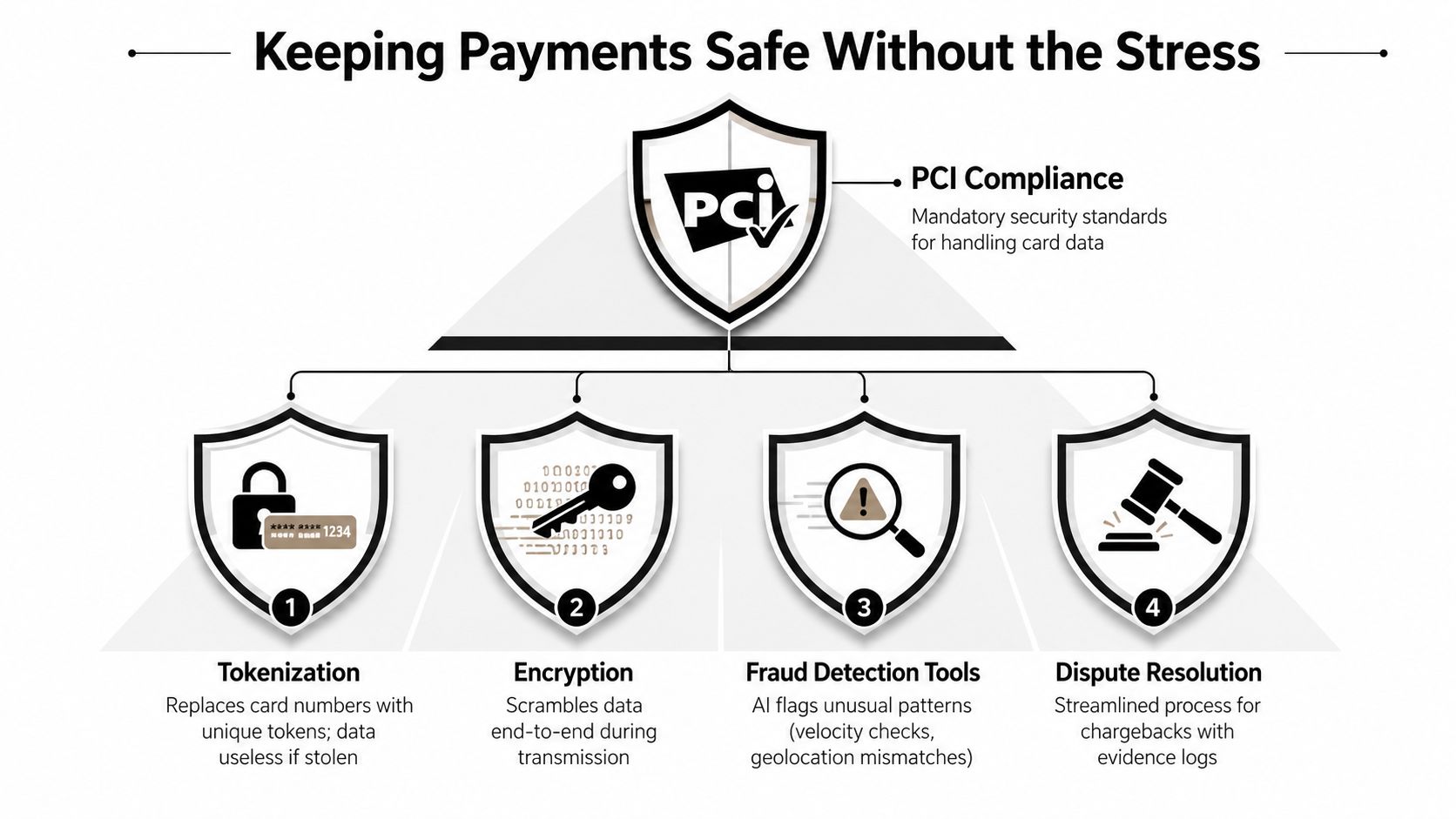
Four safeguards work together
PCI compliance refers to the security standards that apply to handling cardholder data. If your provider hosts the payment form and limits your direct access to sensitive card numbers, it can reduce the amount of card-data handling your shop performs. You still need to understand your responsibilities and complete any required validation.
Tokenization replaces a card number with a token that has limited use in the payment environment. Your system can recognize the customer or process an approved future action without storing the original number in the same way.
Encryption scrambles payment information while it travels between systems. It protects the data in transit, but it doesn't replace good account security, access controls, or careful staff practices.
Fraud detection looks for unusual combinations of signals, such as rapid attempts, mismatched locations, or unexpected purchasing behavior. The tool should help identify risk without blocking genuine customers who shop from a different device or travel.
Why controls affect the economics
Fraud isn't only a security issue. The Federal Reserve reported that overall fraud losses rose to 17.6 basis points of transaction value in 2023, while card-not-present fraud rates increased from 26.1 basis points in 2019 to 41.6 basis points in 2023, as described in its debit card cost reporting. Those figures show why online sellers need controls that balance protection with approval quality.
Use a short operational checklist:
- Protect access: Limit payment dashboard permissions to people who need them.
- Keep evidence: Save order details, delivery records, customer communications, and refund decisions.
- Review alerts: Check unusual payment attempts instead of automatically rejecting every unfamiliar order.
- Know the dispute window: Your provider's timing and evidence rules determine how quickly you need to respond.
A secure checkout should feel quiet to the buyer. The strongest safeguards usually work in the background while giving you enough information to act when something looks wrong.
Choosing and Optimizing a Payment Setup That Fits Your Shop
The right provider isn't necessarily the one with the lowest advertised rate. For an independent maker, the better question is whether the setup helps you collect money, understand deductions, reconcile orders, and resolve problems without pulling you away from production and customer care.
Start with the daily workflow
Test the customer-facing checkout on a phone. Confirm that product totals, shipping, taxes where applicable, accepted methods, and confirmation messages are easy to understand. A buyer shouldn't have to guess whether a payment failed, is pending, or completed.
Then test the seller-facing side. Can you identify an order from its payment record? Can you match the payout to the orders included in it? Can you issue a refund, export records, and find dispute evidence without contacting support for every step?
Use these criteria when comparing providers:
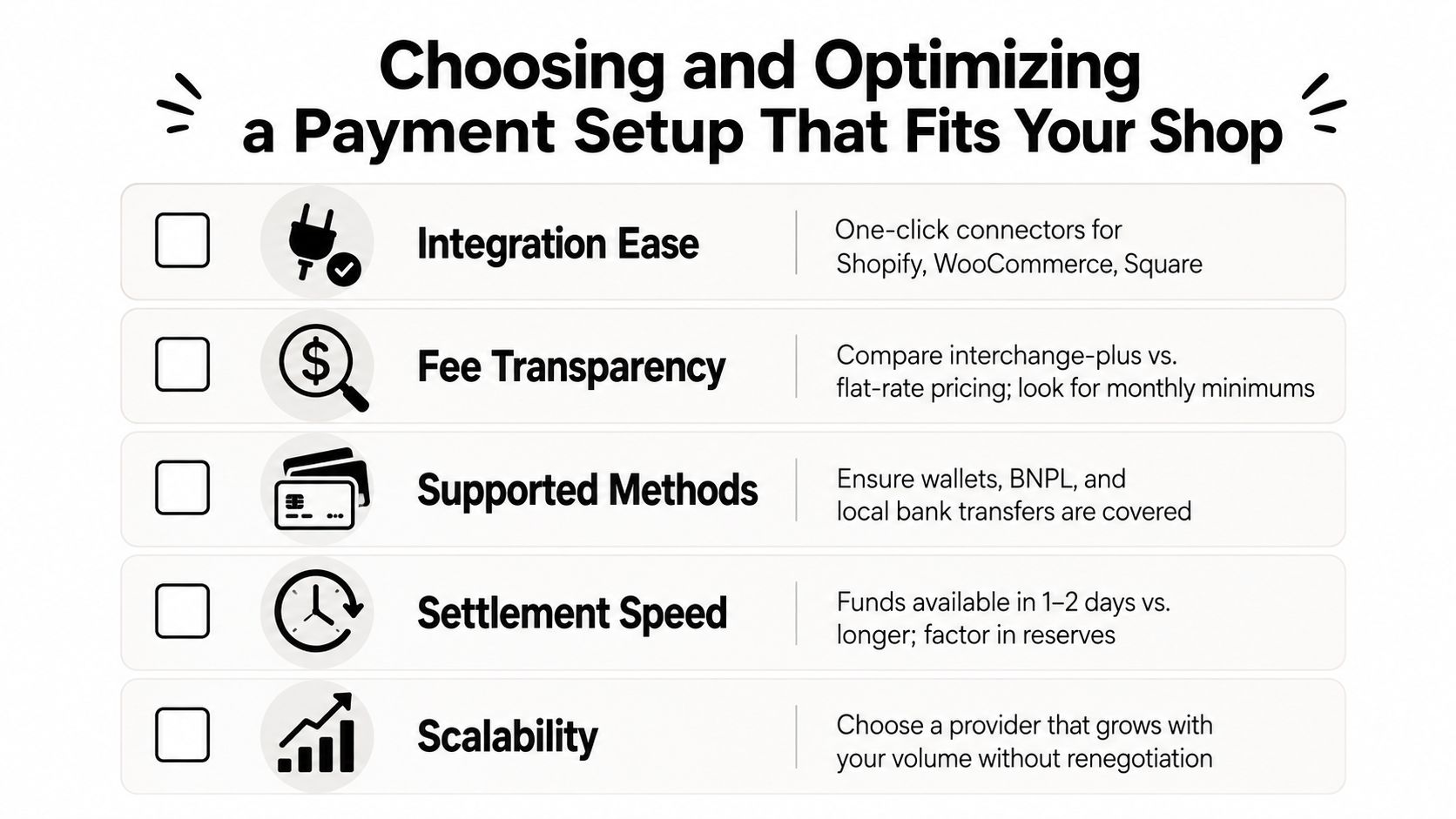
- Integration ease: Choose a connection that fits your existing store or marketplace rather than forcing a fragile custom process.
- Fee transparency: Compare the full deduction, including payment, platform, refund, and dispute charges.
- Supported methods: Offer cards and wallets first, then add other rails when your buyers and margins justify them.
- Settlement visibility: Understand when funds move from authorization to settlement and when reserves or delays can apply.
- Scalability: Check whether reporting, permissions, payouts, and support still work as your order volume and product range grow.
Loyaltie is one marketplace option where people discover and buy directly from independent brands in the US, while sellers can use its Sell on Loyaltie path to reach local buyers. For makers who want to understand dispute workflows alongside their existing provider, a resource about Stripe integration with Disputely can provide relevant context.
Improve the setup you already have
Don't change payment methods based on one abandoned cart. Look for patterns. Group failed payments by reason, review whether customers have a clear retry path, and check whether a wallet succeeds where manual card entry fails.
Set a regular reconciliation habit. Match completed orders to payouts, label refunds promptly, and keep a record of open disputes. If a payment provider can't give you usable records, the low advertised rate may not compensate for the time you spend untangling your books.
A useful test: If you can't explain yesterday's gross sales, deductions, refunds, and net payout from one report, your payment setup needs better reporting or a simpler workflow.
Common Questions About Payment Processing Answered
When does a payment become available to me?
Approval happens during checkout, but availability usually follows settlement and the provider's payout process. Check the transaction status, settlement record, payout schedule, and any reserve or review notice before assuming a delayed deposit is a failed payment.
Who should I contact about a problem?
Start with the provider that shows the transaction in your dashboard. A processor may help with routing, payment status, and technical errors. The acquiring side may handle settlement and chargebacks, while your marketplace may manage buyer communication or seller payout questions. Knowing which layer owns the issue can prevent you from sending the same question to several teams.
What should I do after a decline?
Read the decline message, but don't treat it as a final judgment on the customer. Offer a clear retry, allow another payment method, and avoid repeatedly submitting the same details. If several legitimate buyers experience the same problem, check your integration, account settings, and provider status.
How should I respond to a chargeback?
Collect the order confirmation, product description, delivery information, customer messages, and refund record. Submit only relevant evidence through the stated process and watch the deadline. A dispute isn't the same as a normal refund, so follow the acquirer or marketplace instructions rather than handling it informally.
What should I learn first as a maker?
Learn to read one transaction from checkout through payout. Once you can identify the authorization result, net settlement, fees, refunds, and disputes, payment processing stops sounding like bank jargon and becomes a manageable part of running your shop.
Loyaltie gives you a marketplace to discover and buy directly from independent brands across the US, with online convenience for everyday products made by real people. Visit Loyaltie to explore local makers or review how your own products could reach buyers through a clearer payment and selling experience.