You're probably here because you've picked up a bag of coffee, a chocolate bar, or a tea tin, noticed the Fair Trade label, and thought, “I know this is supposed to be good, but what does it mean?”
That's a fair question. The phrase gets used a lot, and it can start to feel fuzzy. Add in all the talk about buying local, buying direct, and choosing independent brands, and it's easy to blur everything together.
The simple answer is this. Fair Trade is a formal system for making global trade more balanced for farmers and workers. It's not just a feel-good phrase, and it's not the same thing as “made locally.” Once you see the difference, shopping gets a lot easier.
Table of Contents
- A price floor when markets drop
- A community fund controlled by producers
- Standards that go beyond price
That Little Label on Your Coffee Bag
You've seen it before. You're standing in the coffee aisle, comparing roast levels and tasting notes, and there it is. A small Fair Trade mark tucked near the bottom of the bag.
It looks simple, but it points to a much bigger story. That label is about the people behind the product, especially growers and workers in global supply chains where prices can swing hard and where buyers often hold most of the power.
For a lot of shoppers, the confusion starts because labels all blend together. Organic, direct trade, sustainably sourced, local, ethically made. They sound related, but they don't mean the same thing. Even packaging can add to the fog. If you've ever wondered how brands use labels to communicate product values clearly, this guide to eco-friendly bag label options is a useful side read because it shows how much information can get packed into a tiny piece of packaging.
Practical rule: A Fair Trade label is meant to signal a defined certification system, not just a brand's good intentions.
That matters most with products like coffee, cocoa, tea, and similar goods that move through long international supply chains before they reach your kitchen. A coffee product such as Single Origin Peru Coffee Pods, Medium Roast, Salted Caramel & Citrus Notes, Norandino Co-op, 12 Count can give you a concrete example of the kind of product category where Fair Trade questions often come up.
What the label is really asking you to notice
The label isn't just saying, “This tastes good.” It's asking you to consider how the product got here.
A useful way to think about it is this:
- Where was it grown or made? Global commodities often come from places far from the shelf where you buy them.
- Who had the advantage in the deal? In conventional trade, growers can end up with very little control.
- Was there an outside check? Fair Trade depends on standards and verification, not just brand storytelling.
If you've ever wanted a plain-English answer to what is Fair Trade, that's the starting point. It's a system designed to make trade fairer for the people at the beginning of the chain, not just smoother for the companies at the end.
The Simple Idea Behind Fair Trade
The heart of Fair Trade is easier to understand if you stop thinking about labels and start thinking about risk.
For many farmers, selling into the global market can feel like trying to build a stable life on shifting ground. Prices move. Costs don't wait. A harvest can be excellent and still leave a grower squeezed if the market price drops too low. Fair Trade tries to make that situation less fragile.
A trading partnership, not just a sticker
One of the clearest formal definitions says Fair Trade is a trading partnership based on dialogue, transparency, and respect, and it includes a required Fairtrade Premium. That premium is an added sum paid to producer organizations on top of the negotiated minimum price, and for commodities like coffee and cocoa it has been calculated at between 10% and 15% of the minimum price according to TDC Enabel's overview of what Fair Trade is.
That sounds technical, but the idea is simple. Fair Trade tries to give producers more stability and more say.
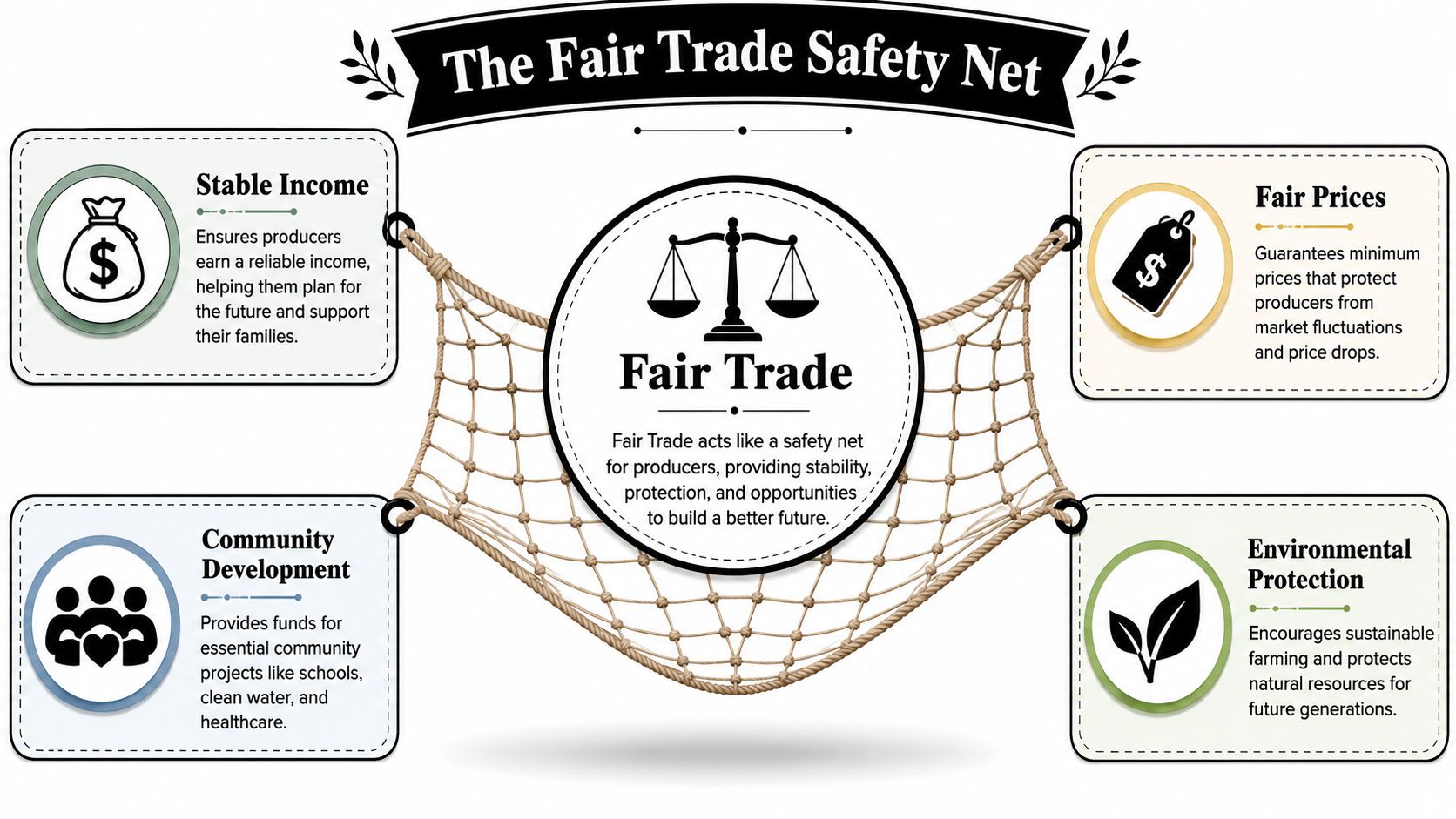
Think of it as a safety net with two layers. One layer helps protect against price crashes. The other creates room for a community to invest in things that matter over time.
If you want another coffee-specific explanation written in approachable language, Beans Without Borders on fair trade is a helpful companion read.
The extra payment that changes the story
The Fairtrade Premium is one of the parts people miss most often. It isn't the same as a tip, and it isn't an individual bonus paid directly into one person's pocket. It's a shared fund managed by the producer organization.
That distinction matters because it changes what the money can do. Instead of disappearing into a chain of markups, it can be used for community needs and longer-term decisions made by the people closest to the work.
Fair Trade makes the transaction bigger than the sale itself. It builds in a way for producers to plan ahead.
You can keep this idea in mind when you shop for coffee more generally. For example, Single Origin Nicaragua Coffee Beans, 100% Arabica, Medium Roast, Low Acidity Smooth Cup, Whole Bean, 12 oz Bag | Three Avocados by Loyaltie is described as a sweet, low-acid medium roast made from 100% Arabica beans for a balanced, fruity finish without harshness. That's a product-quality detail. Fair Trade, by contrast, speaks to the trade structure behind products in categories like this.
How Fair Trade Actually Works
Once you get the basic idea, the next question is usually, “Okay, but how does a product earn that label?”
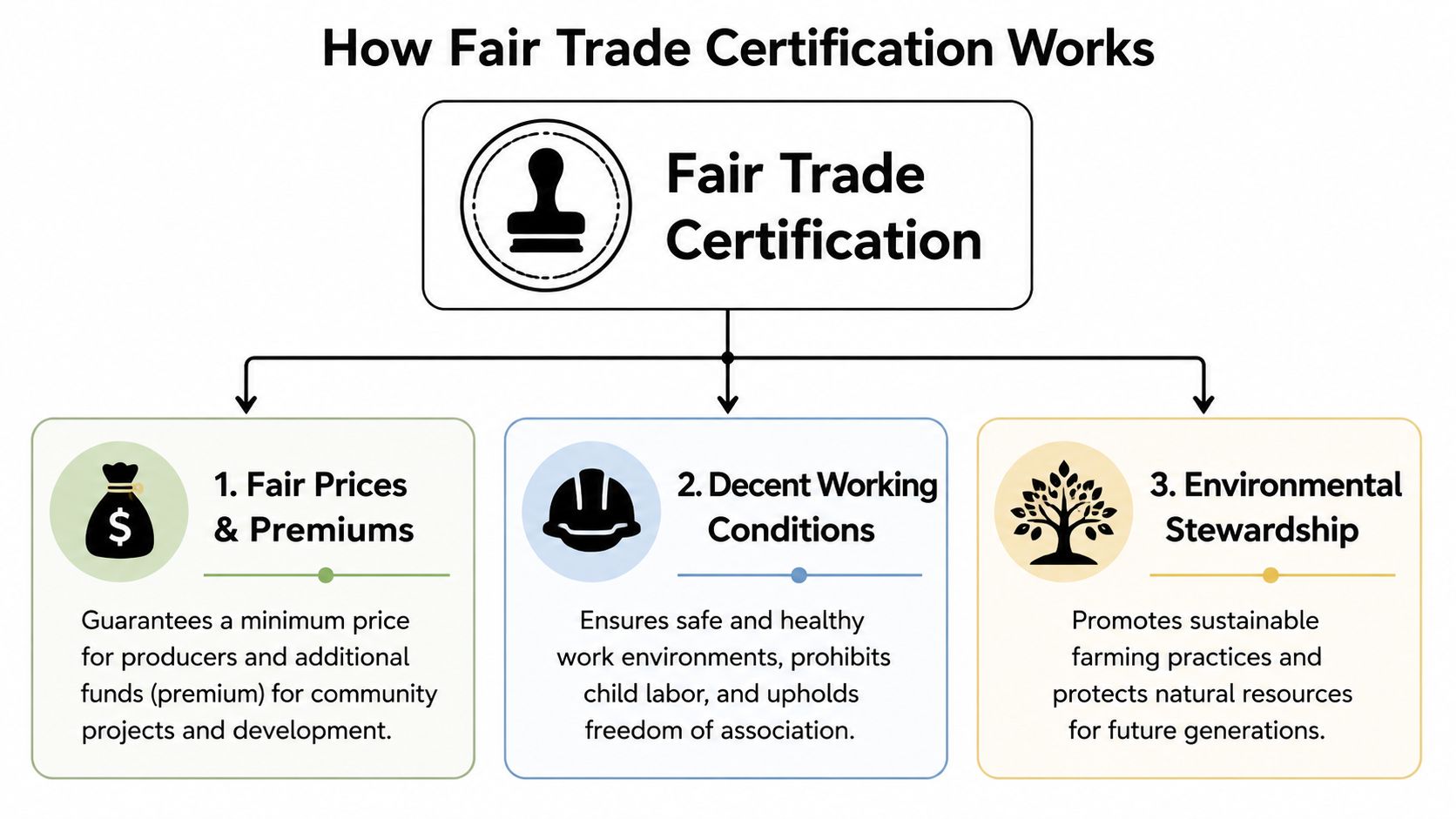
The short answer is that Fair Trade certification isn't casual. It relies on standards, audits, and a set of requirements producers have to meet. One overview notes that the system uses a compliance checklist with more than 200 specific criteria, and that it requires a guaranteed Minimum Price floor so producers don't have to sell below the cost of production when markets collapse, as summarized in Wikipedia's Fair trade entry.
A price floor when markets drop
This is the part that often clicks first. Fair Trade includes a minimum price for certain commodities. If the global market price falls below that floor, buyers still have to pay the minimum.
That doesn't make farming easy. It does make it less exposed to sudden collapse.
Here's the plain-language version:
- In a conventional sale: a producer may have to accept a very low market price just to move the crop.
- In a Fair Trade sale: the system requires a floor, so the producer isn't pushed under that line when prices dive.
- For the buyer: the label signals that the transaction followed a defined rule, not just goodwill.
A community fund controlled by producers
The second part is the Fairtrade Premium, which makes Fair Trade look less like a pricing tweak and more like a different model of trade.
The extra payment goes into a collective account. Farmers or workers decide together how to use it. That democratic piece matters because it gives producers agency, not just income.
A simple way to picture it is to compare two paths:
| Approach | What happens after the sale |
|---|---|
| Conventional buying | Most decisions stay with buyers, brands, or intermediaries |
| Fair Trade buying | Producer groups have a defined pool of funds to direct toward shared priorities |
Those priorities can include things like education, healthcare, environmental work, or improvements to production. The important point is who decides.
Worth remembering: Fair Trade is not only about paying more. It's about shifting decision-making power closer to the people doing the work.
Standards that go beyond price
Often, people underestimate the system. Fair Trade isn't only about money.
The standards also address working conditions and environmental practices. In broad terms, they include rules tied to safer workplaces, restrictions against child labor and forced labor, and environmental protections such as limits on harmful agrochemicals and support for biodiversity conservation, as reflected in the same certification overview linked above.
That means the label is trying to answer several questions at once:
- Was the producer protected from the worst price swings?
- Did the community receive a separate fund it could control?
- Did the operation meet labor and environmental standards?
If the phrase what is Fair Trade has felt vague before, this is the clearest answer. It's a monitored trade framework with a price mechanism, a community fund, and a standards system, all working together.
The Real-World Impact of Your Choice
Say you are standing in a store deciding between two bags of coffee. Both look good. Both cost a little more than the cheapest option. One has a Fair Trade label. The question is not whether one purchase changes the whole system overnight. The better question is simpler: does choosing the labeled bag send money and decision-making in a meaningfully different direction?
Research suggests it can. According to the NBER review on the economics of fair trade, retail sales of Fairtrade International products grew from €830 million in 2004 to around €7.9 billion in 2016. That kind of growth does not prove every outcome is perfect, but it does show that certified Fair Trade became large enough to influence how trade happens across many supply chains.
From niche idea to a system with reach
Scale matters because systems shape habits. If only a handful of shoppers buy certified products, brands can treat Fair Trade like a specialty corner of the market. Once sales grow into the billions, the model has enough weight to change sourcing decisions, retailer interest, and producer access to buyers.
The same NBER review points to a more concrete effect. It reports that an increase from zero to mean certification intensity was associated with a 2.2% increase in average income for farm owners, while coffee intermediaries saw a 2.6% decline in average incomes. Put plainly, some value appears to shift away from the middle of the chain and closer to the people growing the crop.
That shift is the part many shoppers miss.
A Fair Trade purchase works a bit like choosing a farmers market over a long chain of resellers. The product still travels through a market, but the rules are set up so more of the benefit reaches the people at the source. It is not identical to buying local, of course. Local often means geographic closeness. Certified Fair Trade means a verified trading structure, even when the producer is thousands of miles away.
What that can mean in everyday terms
A few extra percentage points in income can sound small on paper. On a farm or in a producer cooperative, that difference can affect whether equipment gets repaired, whether workers have more stability through a weak harvest, or whether a community can choose a longer-term improvement instead of only handling the next urgent bill.
You can see why this matters if you compare it to your local shopping habits. Buying from an independent maker near you often keeps money closer to the creator, which is one reason people value it. Buying a certified Fair Trade item aims for a similar result across borders, with outside standards checking whether the trade terms meet specific labor and pricing rules.
That is also why a handcrafted home item such as this fair trade handmade macrame plant hanger in natural cotton can matter beyond decor. The point is not just that a person made it. The point is that the product sits inside a system designed to protect the people who made it.
A similar values-first mindset shows up in independent ethical brands too. Women Listed's Kinche feature is a useful example of how shoppers often look for craftsmanship, transparency, and human connection, even outside formal certification systems.
A few takeaways stand out:
- Reach matters: Fair Trade is large enough to influence buying patterns beyond a niche audience.
- Distribution matters: The goal is to send more value upstream to growers and makers.
- Verification matters: Local and independent brands can share the same spirit, but certified Fair Trade adds a formal set of standards and outside checks.
So your purchase is not a magic vote that fixes inequality in one click. It is a practical choice about which trading rules you want to support.
Beyond Coffee Beans Fair Trade Values Close to Home
Here, many smart shoppers get tripped up.
You care about buying from local makers. You like buying directly from real people. You'd rather skip the middleman when you can. So it's natural to ask whether local buying is basically the same thing as Fair Trade.
Sometimes the values overlap. The systems do not.
Local is not automatically Fair Trade
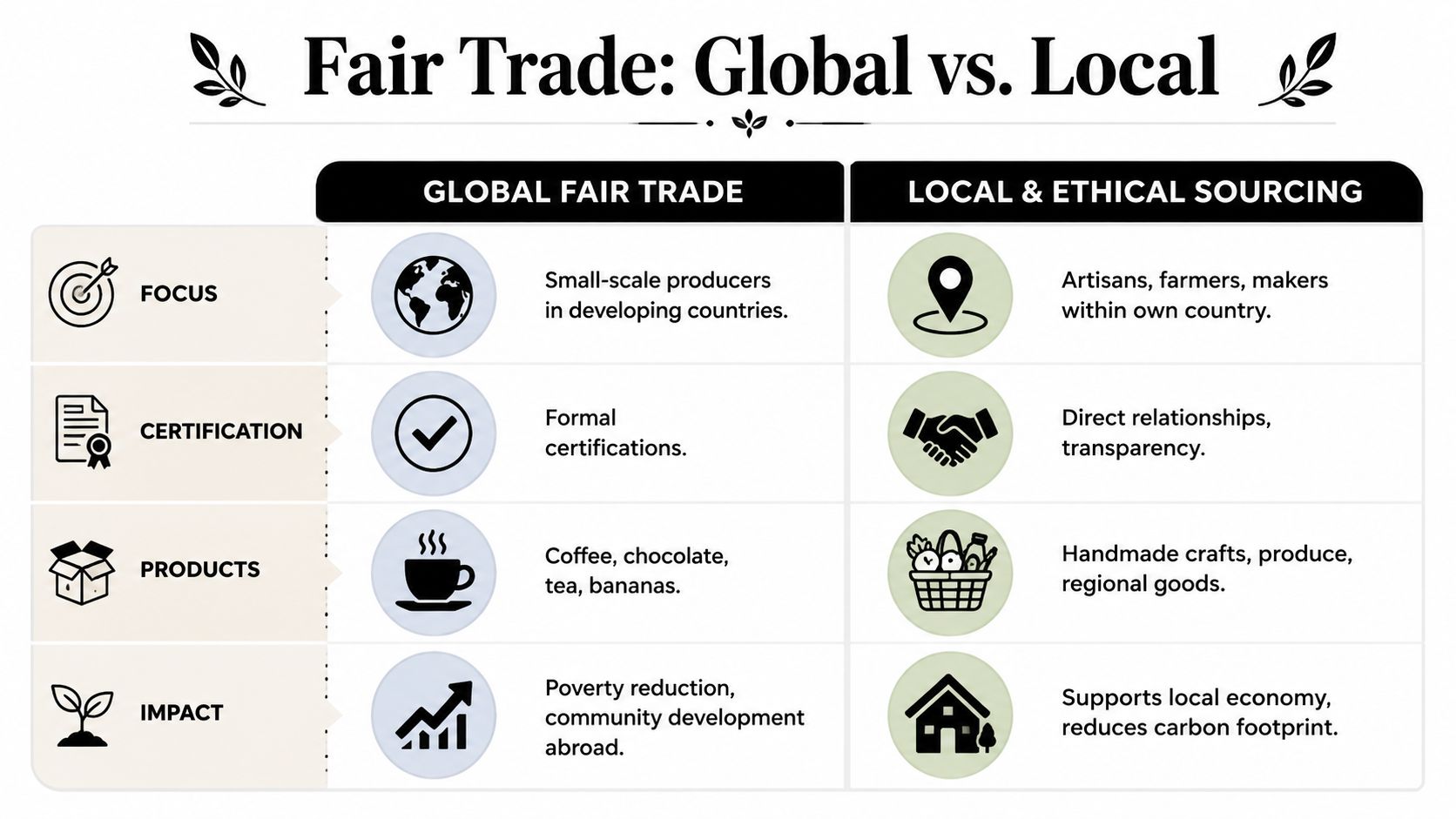
One source highlighting this confusion notes that 73% of US consumers prefer buying local, but only 12% can distinguish between “local” and “Fair Trade” standards, and that local commerce often lacks the mandatory third-party wage and labor verification that defines formal Fair Trade, according to the Royal Geographical Society resource on Fair Trade.
That's the key distinction.
A local soap maker in Oregon, a candle brand in Texas, and a ceramic studio in Vermont might all be wonderful businesses making excellent products. But unless they're part of a formal Fair Trade certification structure, “local” by itself does not tell you that an outside body verified wages, labor standards, or trade terms the way Fair Trade certification does.
Here's a quick comparison:
| If a product is... | It usually tells you... | It does not automatically tell you... |
|---|---|---|
| Local | It was made or sold near you | That it meets Fair Trade certification rules |
| Fair Trade certified | It meets a defined certification standard in a global supply chain | That it was made near you |
How Fair Trade thinking helps you buy better nearby
Even though local and Fair Trade aren't the same, the values can still travel well. When you buy directly from the maker, ask clear questions, and look for transparency, you're applying Fair Trade thinking in your own community.
That can look like this:
- Buy directly from the maker: This reduces layers between you and the person making the product.
- Look for production transparency: Good independent brands usually explain where materials come from and how products are made.
- Ask simple labor questions: If a brand works with makers or sewing partners, see whether they speak clearly about who does the work.
- Prefer clear sourcing over vague ethics language: Specific beats polished every time.
A story like Women Listed's Kinche feature can be useful here because it shows how shoppers often connect with purpose-driven brands through transparency and values, even when the context is different from formal global commodity certification.
You'll also sometimes find products that connect both worlds. For example, this Macrame Plant Hanger, Natural Cotton, Lotus Design, Fair Trade, Handmade, 36 in H x 8 in W, 1 Pack is an example of how a product offered through a US marketplace can still carry Fair Trade relevance.
If you buy local often, that's not a lesser choice. It's just a different one. The best move is knowing whether you're buying a certified global product or choosing a local product from a transparent independent maker. Both can be thoughtful purchases. They just answer different questions.
How to Be a More Conscious Shopper
You're standing in a store with two bags in your hand. One says “locally roasted.” The other carries a Fair Trade label. They can both be good choices, but they are not answering the same question. “Local” tells you where the brand is based or where the final product was prepared. “Fair Trade” points to how a globally sourced ingredient was bought within a certification system.
That distinction makes shopping much easier. You do not need to become an expert before buying coffee, chocolate, tea, bananas, or cotton products. You just need a simple way to sort what kind of product you are looking at, and what kind of proof makes sense for that category.
What to look for on global products
For globally traded goods, start with the label. Coffee beans may be roasted nearby, but the beans themselves usually traveled a long way before they reached that local roaster. In cases like that, a Fair Trade mark gives you one kind of evidence. It shows the product is tied to a formal standard, not just a broad ethical promise.
A good quick check looks like this:
- Check for a recognized Fair Trade label: This matters most for products built around global commodities such as coffee, tea, cocoa, bananas, and cotton.
- Read past the front of the package: Look for origin details, sourcing notes, or mentions of a cooperative or producer group.
- Keep quality and sourcing as separate questions: A product can be delicious or well made and still tell you very little about trade terms.
- Pause when you see the word “local”: A local brand can still use globally sourced ingredients. Local business ownership and Fair Trade certification can overlap, but they are not interchangeable.
For products made closer to home, the checklist changes. You are usually not looking for commodity certification first. You are looking for clear information about materials, production, and who made the item. A product such as this organic cotton crewneck T-shirt with GOTS and OCS certifications shows how other standards can help you judge a product when Fair Trade is not the main framework.
What to ask when you buy from local makers
Shopping from independent brands works a bit more like buying from a farm stand than reading a certification seal. You are often relying on the seller's clarity and openness.
Ask simple questions:
Who made this, where was it made, and what can this brand tell me about the materials and production?
That one habit cuts through a lot of polished marketing.
If the answers are specific, that is a good sign. If the brand stays vague and leans on words like “ethical,” “conscious,” or “crafted with care” without explaining anything, treat that as missing information, not proof.
A short video can also help if you want a quick visual overview before your next coffee order:
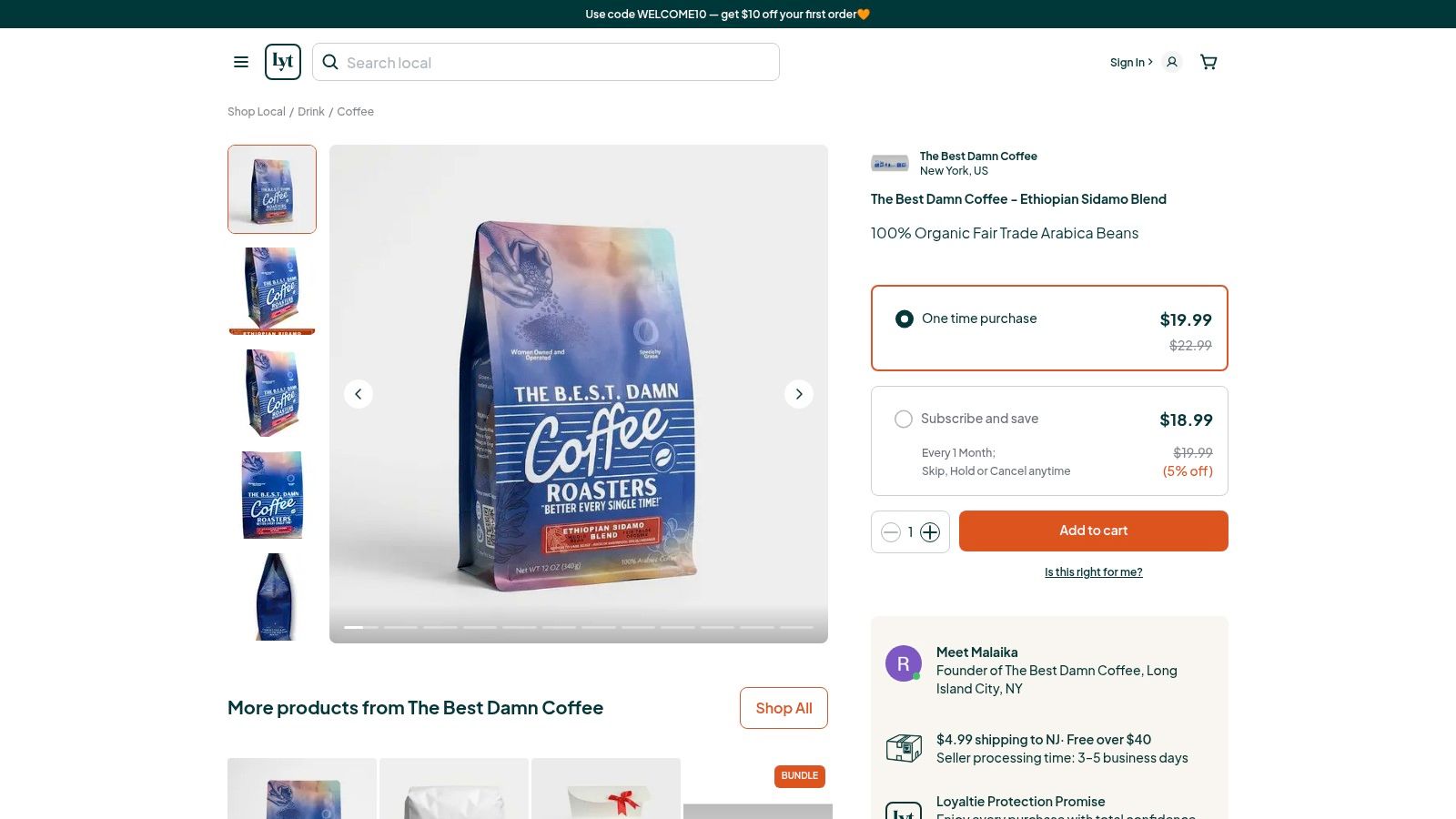
Loyaltie functions as a marketplace where shoppers can browse products from independent brands across categories like coffee, wellness, food, and home goods.
Conscious shopping gets easier once you stop trying to force every product into one ethical test. Some purchases call for certification. Others call for transparency from a smaller maker. Clarity helps you spend with more confidence, and with a better sense of where your money goes.