

As of 2026, over 93% of companies have a loyalty program, and 84% of consumers say they're more likely to stay with a brand that offers one (customer loyalty statistics from SellersCommerce). A customer loyalty program is a simple way for a business to thank repeat customers with special perks, giving them a good reason to keep coming back.
If you make something people reorder, coffee, skincare, pantry staples, supplements, pet products, cards, candles, anything people want in their everyday life, you've probably had this moment: you see a familiar name come through and think, “Oh, they came back.” That feeling matters. It means your product did its job, your brand felt human, and someone chose you again over the endless pile of mass-produced options.
The essential question isn't whether repeat customers matter. It's how to turn those repeat purchases into a relationship you can build on. For independent brands and local makers, that relationship is often the clearest advantage you have. You know your products, you know your buyers better than a giant chain ever will, and you can create rewards that feel personal instead of generic.
Table of Contents
- Punch card programs
- Points programs
- Tiered programs
- Paid membership and regular delivery perks
- Value-based and referral programs
- Do I need software to start a loyalty program
- What's the best first reward for an independent brand
- Should I offer discounts or something else
What Is a Customer Loyalty Program Anyway
A regular customer buys your Ethiopia roast every month, then grabs a limited spring blend when it drops. Another person keeps coming back for the same handmade mug and adds a matching bowl on the third order. An early skincare buyer leaves a thoughtful review, then returns when you release a new formula. A loyalty program gives those repeat actions a simple shape, so customers feel recognized instead of anonymous.
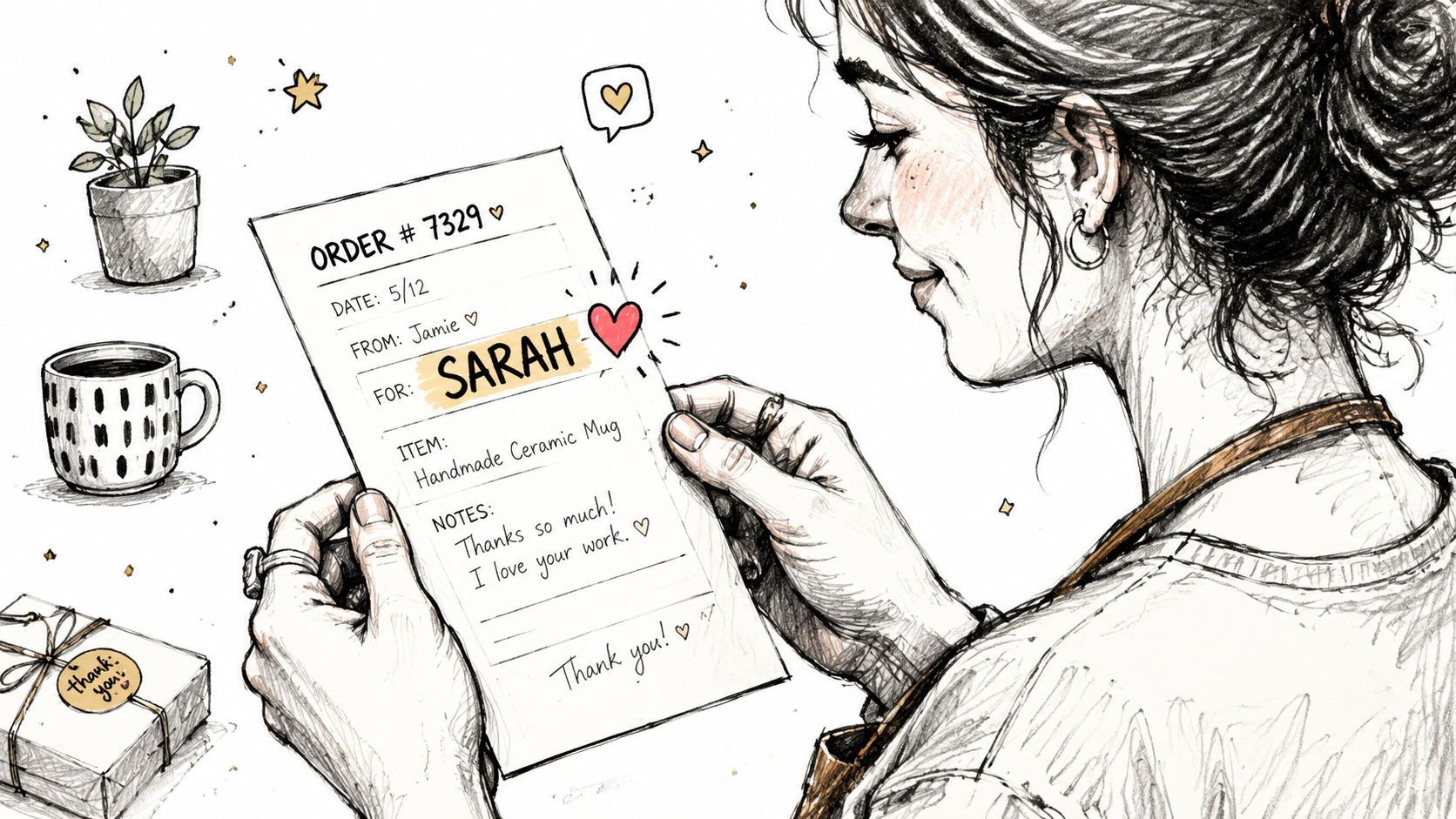
When people ask what is customer loyalty program, the clearest answer is this: it is a structured way to reward repeat buying and other valuable actions. Those actions might include referrals, reviews, event attendance, subscriptions, or returning to buy from each new release.
For an independent brand, that structure matters because small businesses usually win on trust, craft, and familiarity. You are not trying to train people to wait for random discounts. You are building a reason to come back, the same way a favorite neighborhood café remembers an order and makes the customer feel known.
A good loyalty program works like a punch card with a bigger vocabulary. Sometimes the reward is simple, such as a free item after several purchases. Sometimes it is access, like early shopping for a small batch launch. Sometimes it is recognition, like a thank-you perk for customers who keep showing up and sharing your work with friends.
Practical rule: If your loyalty idea feels cold, confusing, or copied from a giant retailer, it probably does not fit a maker-led brand.
Buyers already understand the basic idea. SellersCommerce notes that loyalty programs are common across brands, and many shoppers are more likely to stay with a business that offers one (customer loyalty statistics from SellersCommerce). For a local roaster, ceramic studio, or pantry brand, that does not mean building a giant points machine. It means using a clear, easy system that matches the personal relationship you already have with customers.
If you sell through a marketplace where shoppers can buy directly from the maker, such as a marketplace for independent brands across the US, a loyalty program can reinforce the same reason people chose you in the first place: product quality, trust, and a real connection to the person behind the brand.
Common misconceptions about loyalty programs
A lot of confusion starts here. People hear "loyalty program" and picture a complicated app, endless discount codes, or a chain-store setup with no personality.
A loyalty program can include coupons, but its purpose is to reward a relationship. The strongest programs recognize behavior that already shows fit and trust. Independent brands often have an advantage because the rewards can feel human and specific to the product, the season, or the community around the brand.
A paper punch card at a coffee stand counts. Early access to a seasonal skincare release counts. First pick of a limited ceramic batch counts too. If the system consistently rewards repeat connection, you have a loyalty program.
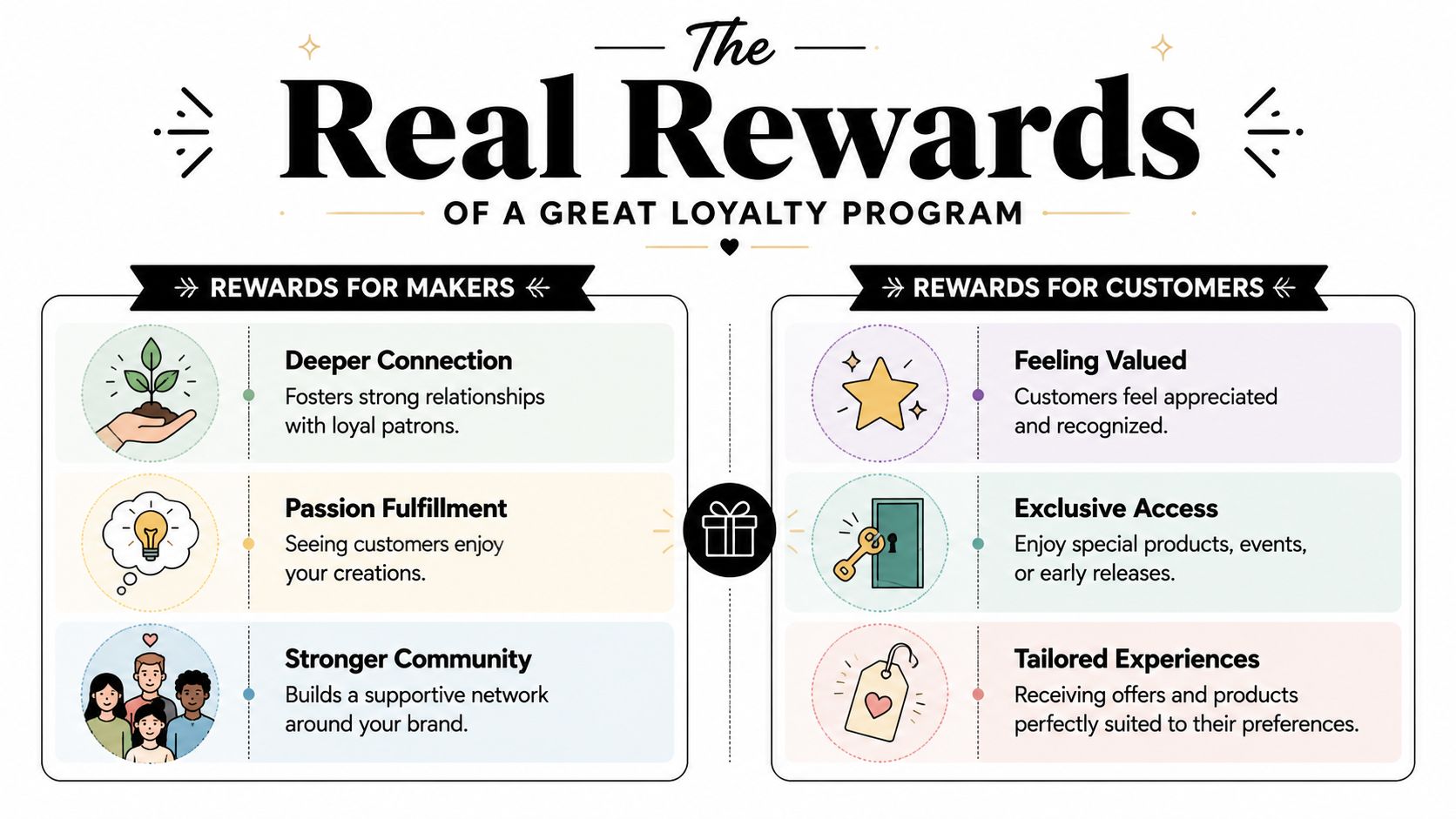
The Real Rewards of a Great Loyalty Program
A great loyalty program helps both sides. The maker gets steadier demand and stronger relationships. The customer gets more than a transaction. They get recognition.
What makers actually gain
If you roast coffee, blend tea, formulate skincare, or make pantry staples, repeat buyers change the feel of your business. They make demand less random. They give better feedback because they know your products. They're more likely to tell a friend, reorder without a huge marketing push, and try the next thing you release.
There's also a local effect that often gets overlooked. Updated 2026 data shows that independent retailers circulate $0.71 of every dollar back into their local community (independent retail statistics). A loyalty program can deepen that loop because it keeps more buying focused on local makers people already trust.
For businesses outside retail, the same retention logic still applies. If you want a practical read on how keeping existing customers affects revenue, Fitness GM's guide to boosting gym profit is useful because it breaks retention down in plain business terms.
What customers actually want
Shoppers don't only stay for savings. They stay because the relationship feels worth continuing.
That might look like:
- Early access: First chance to buy a seasonal roast, a small-batch body butter, or a new snack flavor.
- Recognition: A birthday perk, a handwritten note, or a thank-you after a certain number of orders.
- Inside access: Updates about what's coming, how it's made, or invitations to local events.
- Better fit over time: Recommendations based on what someone already buys and likes.
A customer who feels known usually needs less convincing to come back.
That matters even more now because people are actively choosing local options for everyday shopping. Seventy-five percent of consumers plan to shop more locally over the next year, and 56% currently patronize local businesses or buy locally sourced products (US Chamber coverage of local shopping trends). A loyalty program gives those shoppers a reason to keep buying directly from the local maker they already prefer.
Why this works better for independent brands
Big retailers can offer broad convenience. They usually can't offer intimacy.
An independent coffee roaster can remember who likes bright Ethiopian coffees and who always buys decaf. A local skincare maker can reward repeat buyers with access to a product testing group. A pet treat brand can invite top customers to vote on the next flavor.
That's the true reward. Not just another transaction, but a stronger reason to keep the relationship going.
Five Simple Types of Loyalty Programs You Can Start
You don't need a giant program with ten moving parts. Most independent brands do better when they start with one clear idea customers understand fast.
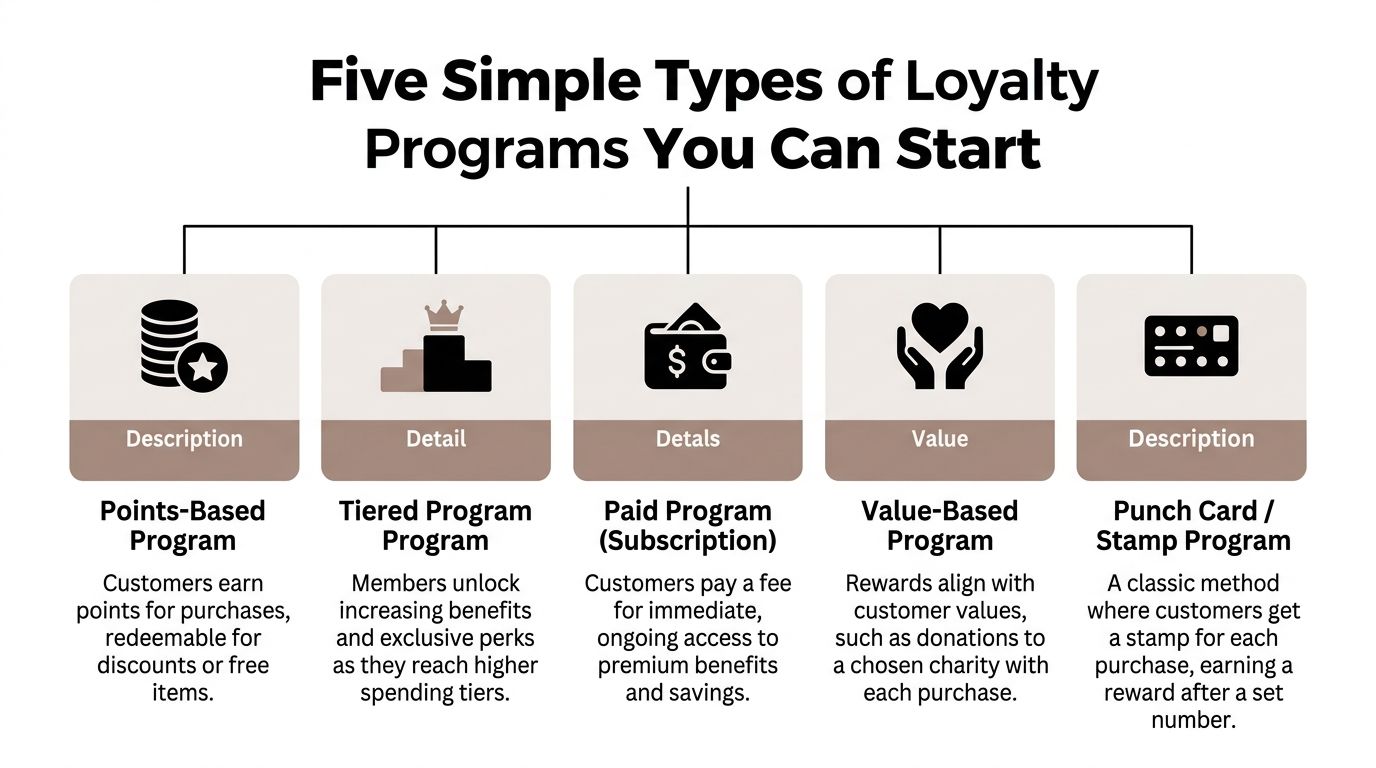
One easy way to think about it is this: every loyalty program answers the same question. “What behavior do I want to reward?” The type you choose depends on that answer.
Punch card programs
This is the simplest model. Buy a certain number of times, earn something on the next one.
A coffee cart might do “buy nine bags, get the tenth free.” A soap maker might do “five bars over time get a seasonal scent.” Customers understand this format instantly, which is a big advantage.
Points programs
Points are more flexible. Customers earn points for purchases, and sometimes for referrals, reviews, or trying a new category.
This works well if you sell a mix of products at different price points. Someone buying a bag of coffee, a tin of tea, and a mug can still feel like progress is adding up in one place.
Here's a quick comparison:
| Program type | Best for | What customers like |
|---|---|---|
| Punch card | Frequent repeat items | Easy to understand |
| Points | Mixed carts and varied products | Flexible rewards |
| Tiered | Brands with strong repeat demand | Status and progression |
| Paid membership | Customers who reorder often | Immediate ongoing perks |
| Value-based | Mission-led brands | Rewards that reflect shared values |
A visual explainer can help if you're weighing formats:
Tiered programs
Tiered loyalty works when you want to reward deeper engagement over time. The more someone buys or participates, the more access they get.
This is often stronger than a flat discount because it gives people a feeling of momentum. Bronze might get early product news. The next level might get first access. The top level might get invitation-only tastings or product drops.
Don't build tiers unless each level feels meaningfully different. Extra complexity without a clear reward just creates friction.
Paid membership and regular delivery perks
Some brands offer a paid membership or rewards for buying on a plan. This can work really well for products people reorder regularly, such as coffee, supplements, tea, pet products, or skincare basics.
Instead of saying “join and save,” think in terms of convenience and access. Maybe members get regular delivery, early access to limited runs, or a small bonus item in recurring orders.
A paper goods brand could do something similar with seasonal essentials. For example, Birthday Greeting Cards Set, 100% Recycled Paper, Hand-Drawn Designs, Last-Minute Ready, 5-Pack w/ Envelopes | Chika Paper Studio by Loyaltie is the kind of product that naturally fits reorder reminders or a simple “always have a set on hand” program. The product snapshot says it's a 5-pack of hand-drawn birthday greeting cards printed on 100% recycled paper and includes envelopes, so you're ready for every friend or coworker.
Value-based and referral programs
Some brands don't want the whole relationship to revolve around discounts. That's fair. A value-based program can reward behavior in ways that reflect the brand, like access to local events, community perks, or member voting on future releases.
Referral programs are also powerful when your buyers already talk about you. If your customers naturally recommend your coffee, face oil, dog treats, or spice blends, you can reward the introduction with a simple thank-you credit or exclusive perk.
The best type is the one you can explain in one breath. If customers need a chart to understand it, simplify it.
Loyalty Program Ideas for Independent Brands
The most memorable rewards usually aren't the biggest. They're the ones that feel specific to the brand and meaningful to the buyer.
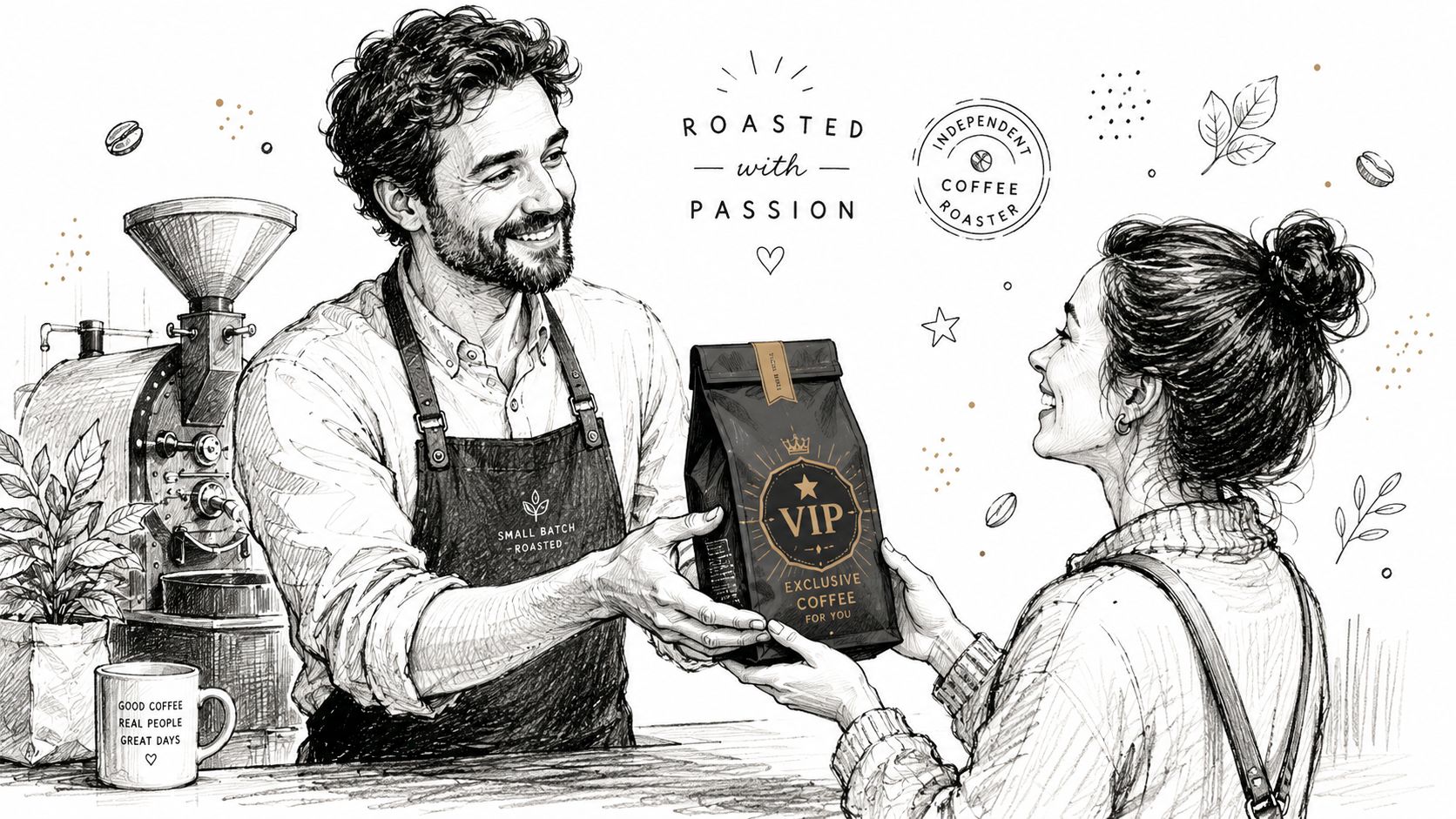
A coffee roaster has an advantage a mass retailer doesn't. You can invite people into the story of the product. A limited-run micro-lot can go to loyalty members first. Top repeat buyers can get tasting notes before launch and a short message about why this roast is special. If someone buys on a regular delivery plan, you might let them swap in a new coffee before it hits the main catalog.
A skincare maker can do the same thing differently. Instead of offering a flat discount every month, they might reward repeat buyers with first access to a new balm, a simple skin-type check-in, or a mini guide for building a routine with the products they already use. That feels closer to care than promotion.
Experiential rewards tend to land harder
Independent brands have a significant opportunity to stand out. Research shows that consumers engage far more with experiential rewards, like exclusive access or personalized events, than with material ones, because those rewards connect to identity and belonging (ScienceDirect research summary).
That finding fits what many makers already sense. People often remember the “I got invited in” feeling longer than they remember a small discount.
Here are loyalty ideas that fit that pattern:
- Coffee brands: Virtual cupping sessions, first access to rare lots, roast-day updates for top customers
- Wellness brands: Personal reorder reminders, routine-building guides, early access to seasonal blends
- Skincare brands: Sample-first launches, ingredient Q&As, “members choose the next scent” polls
- Food makers: Preview boxes, local tasting pop-ups, first dibs on holiday bundles
- Pet brands: Loyalty birthdays for pets, featured customer photos, trial access to upcoming treats
Simple ideas that still feel personal
Some of the strongest programs are almost invisible because they feel natural.
A local jam maker might include a handwritten note after a customer's third order. A tea company could offer a “choose your next sample” perk after a few repeat purchases. A candle brand might give loyalty members a 24-hour early shopping window before a seasonal drop.
If a reward sounds like something only a giant retailer would offer, skip it. If it sounds like something only your brand could offer, you're close.
The sweet spot is a reward that strengthens the reason people buy from you in the first place. If your products win on freshness, quality, ingredients, story, or direct connection with the maker, your loyalty program should reinforce that, not distract from it.
How to Know If Your Program Is Actually Working
A lot of brands launch a loyalty program, then judge it by vibes. That's risky. You don't need advanced analytics, but you do need a few simple comparisons.
The most useful starting point is this: compare the retention and spending of a control group of non-members against program members. That's a simple way smaller brands can measure incremental impact, and it also helps avoid one of the most common loyalty mistakes, which is failing to measure whether the program changed anything at all (Grant Thornton on loyalty strategy missteps).
Three questions to ask
Start with these practical checks:
Are members coming back more often
Look at whether people in the program reorder more consistently than people outside it.Are members spending more over time
You're not just looking for one bigger cart. You're looking for a stronger relationship.Are rewards getting used
If nobody redeems anything, the offer may be too confusing, too weak, or too hidden.
A simple spreadsheet can handle this. So can your ecommerce dashboard if it lets you tag members and non-members.
What to review each month
Use a short recurring review instead of overcomplicating things.
- Member versus non-member behavior: Check reorder patterns side by side.
- Reward uptake: See which perks get used and which get ignored.
- Customer feedback: Notice what people mention in emails, reviews, and DMs.
- Program friction: Watch for questions like “How do I use this?” or “When do I get the reward?”
If you want a broader framework for tracking how people interact with your brand beyond purchases, Headline's engagement strategies offer a useful companion read.
For sellers who want practical marketplace guidance, Loyaltie seller resources can also help you think through customer behavior, retention, and selling directly to local buyers without adding unnecessary complexity.
The sign your program is healthy
People should understand it quickly, use it without help, and mention it positively without being prompted.
If the program feels busy but customers don't talk about it, don't add more features. Simplify the offer, tighten the reward, and make the next step obvious.
Your Keys to a Successful Loyalty Program
The best loyalty programs are usually the easiest to explain and the easiest to feel.
Do this
- Keep the rules simple: Customers should know how to earn and how to redeem without digging.
- Make the reward feel reachable: If the finish line feels too far away, people stop paying attention.
- Reward your real advantage: Offer perks that reflect freshness, quality, access, story, or direct connection with the maker.
- Use the program to learn: Watch which rewards people respond to, then refine from there.
Not that
- Don't copy chain-store tactics blindly: Independent brands win on closeness, not scale.
- Don't make everything about discounts: Price can help, but it shouldn't be the whole relationship.
- Don't launch and forget it: Even a simple program needs occasional review.
- Don't let software drive the idea: The customer experience comes first. The tool should support it.
One more useful habit is tying loyalty back to your broader local marketing picture. If you're thinking about how repeat buying fits into overall performance, this guide on how to improve local marketing ROI gives a grounded way to connect customer behavior with business results.
If you're building a direct channel for repeat buyers, selling on Loyaltie is one factual option to consider. It's a marketplace where people discover and buy directly from independent brands in the US, which makes it relevant for makers who want loyalty to grow from product quality and direct relationships, not just paid ads.
A good loyalty program doesn't need to be flashy. It needs to make your customers feel glad they came back, and glad they chose you.
Frequently Asked Questions
Do I need software to start a loyalty program
No. You can start with a simple punch card, a tagged customer list, or a basic member spreadsheet if your volume is manageable. Software helps later, but clarity matters more than complexity.
What's the best first reward for an independent brand
Start with a reward that matches how people already buy from you. For a coffee roaster, that might be early access to a limited lot. For a skincare brand, it might be a sample with a repeat order. For a pantry brand, it might be a reorder perk that makes the next purchase easier.
Should I offer discounts or something else
Both can work, but brand-specific perks usually create a stronger connection. If you can offer access, personalization, or a useful extra that fits your product, that often feels better than a generic price cut.
If you want a simpler way to discover and buy directly from the best independent brands in the US, explore Loyaltie. It's a marketplace built around local makers, better everyday products, and the kind of direct connection that makes loyalty feel natural.