
Cold process soap making is a low-heat method where oils and lye react on their own to form soap and skin-loving glycerin, without boiling. If your regular bar leaves your skin tight, this is the kind of swap that usually feels different fast.
You've probably stood in the shower wondering why a bar that says “soap” still makes your skin feel dry. The answer often comes down to how it was made, and whether the maker kept the ingredients simple, the glycerin intact, and the process slow enough to let the bar finish properly.
Table of Contents
The Real Difference in Your Daily Lather
The first time you switch from a flat, squeaky grocery-store bar to a carefully made cold process bar, you feel the difference right away. The lather comes across richer, and the bar doesn't disappear into a thin film of residue on your skin. That's why a lot of people start looking at independent brands instead of assuming all soap behaves the same.
Cold process soap making is a deliberate method where oils and lye are mixed at controlled temperatures, then left to finish turning into soap in the mold. The method keeps the focus on the ingredients themselves, especially the oils a maker chooses and the naturally formed glycerin that stays in the finished bar. One local-style example worth looking at is goat milk face soap, because it shows how makers can shape a bar for a specific feel rather than a one-size-fits-all cleanser.
Why that feels better on skin
Commercial bars often chase speed and shelf life. Cold process bars, by contrast, are built around a slower reaction and a more intentional recipe, which is why they can feel creamier and less stripping. The method also lets makers tune the oil blend, so one bar might feel more conditioning while another leans firmer and more cleansing.
The big shift isn't fancy packaging, it's that the maker controls the ingredients from start to finish.
That control is what makes the method appealing for people who care about what they put on their skin. You're not just buying a bar, you're buying a process that gives the soap time to become itself.
Understanding the Chemistry of Saponification
At the center of cold process soap making is saponification, the reaction where triglyceride-rich oils or butters meet sodium hydroxide and become soap plus glycerin. In plain language, the fat molecules and the alkali rearrange themselves into something new, and the result is no longer an oil blend, it's a bar of soap. That reaction is what gives soap its cleaning power in the first place. A clear chemistry overview of cold process saponification explains the process in the same low-heat range makers use, about 30 to 50°C, which is roughly 80.6 to 113°F.
What the maker is actually doing
The maker weighs the oils, measures the lye carefully, and combines them so the reaction can start in a controlled way. No external boiling is needed, which matters because the batch generates its own heat as saponification moves along. That slower, gentler heat is part of why cold process bars can keep their character.
The best way to think about it is cooking, but with chemical precision. If the ratio is off, the bar can end up harsh or unstable. If the ratio is right, the lye is used up during the reaction and the final soap is built to be usable after cure.
The skill isn't in forcing the reaction, it's in getting out of the way once the recipe is balanced.
That's why makers who do this well spend so much time on formulation. They're not guessing, they're calculating.
A second detail matters here too. Glycerin stays in the bar, instead of being removed, which is one reason cold process soap often feels different on skin. That naturally formed glycerin is part of the finished bar, not an add-on.
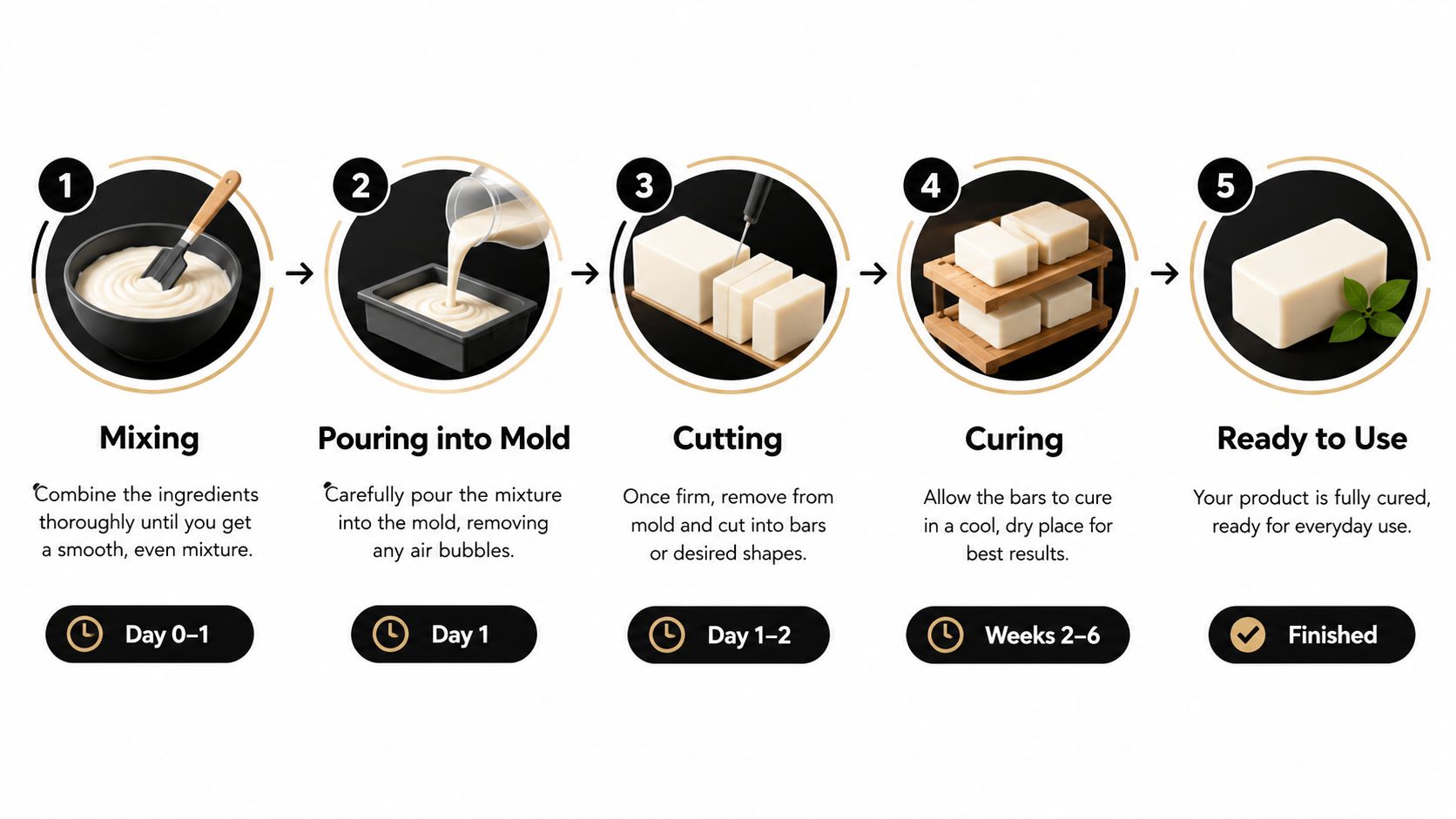
A simple visual of the timeline helps make the chemistry easier to picture.
For a bar with more body and a more refined feel, the oil blend matters just as much as the reaction itself. A good example is tallow soap bar frankincense grapefruit bentonite clay, because it shows how independent makers use oils and additives to shape texture, scent, and glide without turning the bar into a generic cleanser.
The Timeline From Liquid Batter to Cured Bar
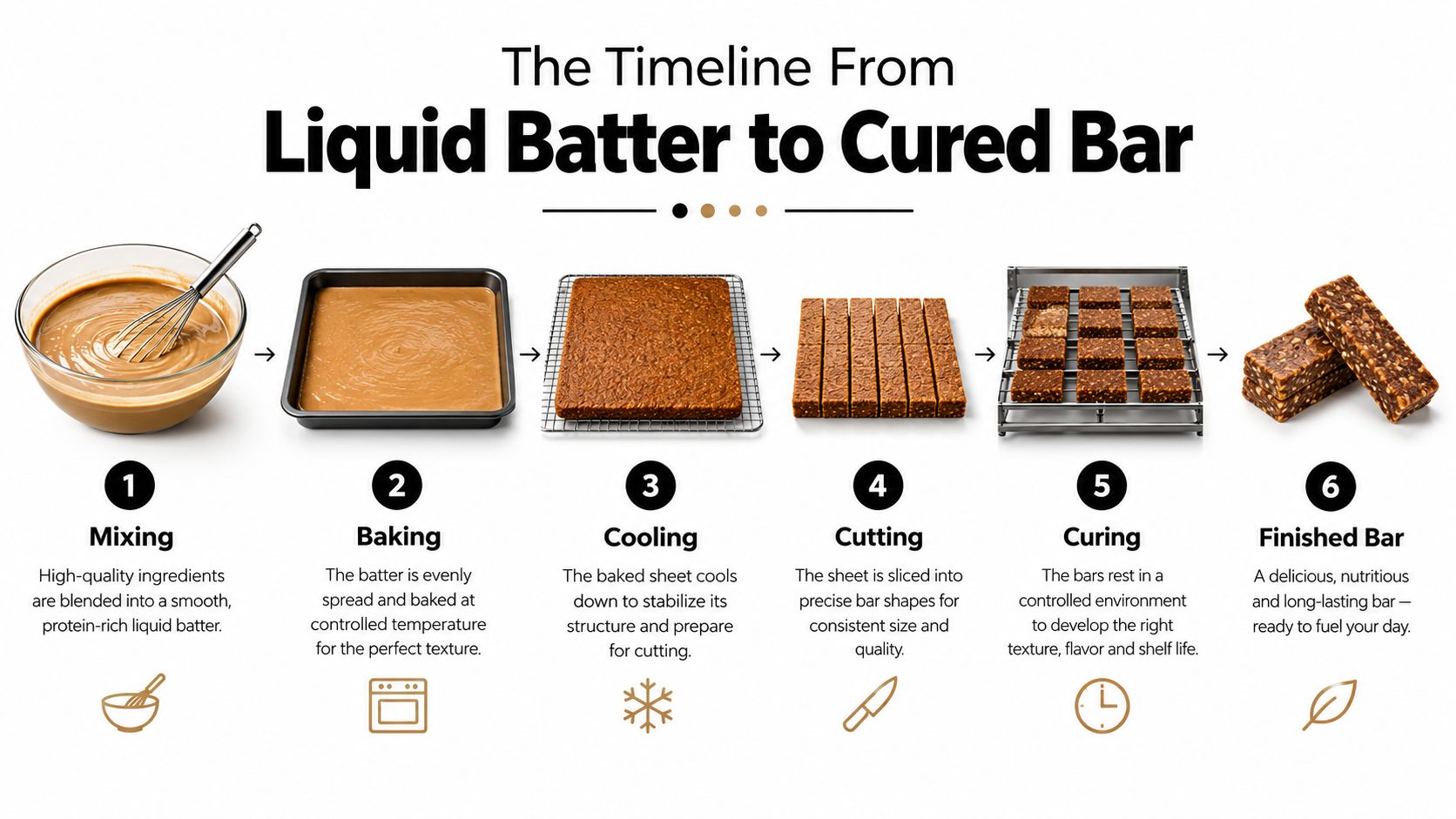
Cold process soap doesn't become a finished bar the moment it comes out of the mold. It starts as a batter, then thickens, then finishes reacting, then dries out over weeks. That waiting period is exactly why the final bar feels firmer and lasts longer in the shower. A finished bar is often expected to go through a 4 to 6 week cure before it feels settled, and fresh soap can start off with a much higher pH before that stabilizes.
Trace is the first checkpoint
Soap batter reaches trace when it thickens enough to stay mixed instead of separating. Makers often use a stick blender to get there quickly, and many recipes hit light trace in about 30 seconds to 2 minutes with active mixing. Higher temperatures, such as 110 to 130°F, can speed that up. A plain explanation of trace in soap making is useful here because trace is the point where a batter stops looking like liquid oil and starts acting like soap in formation.
What happens after the pour
Once the batter is poured, it usually sits in the mold for 24 to 48 hours while the reaction finishes. After unmolding, the bar still isn't done. Water needs time to evaporate, and that drying phase makes the soap harder, less likely to melt away too fast, and more pleasant to use.
A practical rule follows from that. If a bar feels soft, sticky, or overly fresh, it probably hasn't cured long enough. If it feels dense and dry to the touch, it's closer to the bar most makers intended you to use.
Patience isn't a branding story here, it's the part that turns a soft slab into a real bar of soap.
That's why independent makers plan ahead. They're not churning out soap and shipping it the same day. They're building inventory around the cure, which is part of the craft.
Safety Realities and Clearing Up Market Myths
Lye deserves respect, not fear. It's highly caustic, and the reaction between lye and water is strongly exothermic, which means it can heat up very fast and even erupt if handled the wrong way. One guide notes the solution can jump to 176 to 203°F almost instantly, which is why goggles, gloves, ventilation, and non-aluminum containers are standard practice. Safety guidance for beginning soap makers is clear on one point, add lye to water, never water to lye, and let the solution cool to about 100 to 110°F before combining it with oils.
The safety question is one reason some people decide cold process soap making is better left to experienced makers. It's not the mixing alone, it's the need for discipline, clean setup, and careful handling every single time. If a maker isn't precise, the batch and the workspace both become risky.
Cold process is not the same as cold pressed
A lot of shoppers get tripped up by the term cold pressed. In soap buying, that phrase can be used in market reporting as a commercial category, while cold process means the DIY or small-batch method where oils and lye are combined at moderate temperatures with no external heat after mixing. That difference matters because the label alone doesn't tell you how the soap was made or how much formulation control the maker had. A useful breakdown of cold process versus cold pressed soap clears up how often the two get blurred together.
If you're reading labels more carefully, look for specific oils, a clear cure time, and language that points to true soap rather than a vague beauty bar. That's the kind of scrutiny that helps you buy with confidence.
You'll sometimes see a product like Florida Water Cologne, Spiritual Cleansing & Refreshing Splash, 7.5 oz Bottle | Mae Del Essentials by Loyaltie, described as a citrus-floral splash for spiritual cleansing and everyday freshness. It's a different product category, but it shows how important clear product language is when you're comparing skin and body items.
Comparing Cold Process to Other Soap Methods
Cold process isn't the only way to make soap, but it's the method that gives makers the most control over the final bar. Hot process pushes the reaction faster with extra heat, while melt-and-pour skips the maker's control over the base itself. If you care about texture, ingredient choice, and the kind of bar that feels deliberate on skin, those differences matter.
Soap making methods compared
| Method | Process & Heat | Cure Time | Design Flexibility |
|---|---|---|---|
| Cold process | Oils and lye combine at moderate temperature, then finish without external heat | About 4 to 6 weeks | High, because the maker controls the oil blend, scent, and add-ins |
| Hot process | The batch is heated to speed saponification | Shorter than cold process, since the reaction is pushed faster | Moderate, but texture is often more rustic and less smooth |
| Melt-and-pour | A pre-made base is melted and poured into molds | Minimal, since the soap base is already formed | Lower, because the base limits ingredient control |
Hot process can be useful when speed matters, but the final texture often looks chunkier and more rustic. Melt-and-pour is easier for decorative shapes, but the maker starts from a finished base, which limits how much they can shape the formula itself. Cold process takes longer, but that slower pace is what gives independent brands room to fine-tune the feel.
If you want a deeper look at why label language and soap politics can confuse buyers, Skin Perfection's discussion of Dr Bronner's is a useful read. It helps frame how soap categories can get messy once marketing enters the picture.
The method a maker chooses usually tells you more than the scent on the label.
That's especially true if you're comparing bars for everyday use. The bar that gives a maker the most room to control ingredients is often the one that gives you the clearest skin feel.
Why Independent Brands Choose the Hard Way
Cold process soap making takes longer, asks for more precision, and rewards patience with a bar that feels different in use. That's why independent brands keep choosing it, even though faster methods exist. They want the control over oils, the retained glycerin, and the ability to shape a bar that cleans without feeling stripped.
The consumer upside is simple. You get a bar with a real ingredient story, a slower cure, and a texture that usually feels more intentional than a mass-produced bar. If you're looking for a place to discover and buy directly from independent brands in the US, Loyaltie gives you a way to shop that kind of product without a middleman, and that matters when you're comparing everyday skincare buys.
A good example of that direct-to-buyer model is artisan bar soap olive oil shea butter moisturizing lather clary sage amber tonka lavender seasonal bar, where the ingredient focus is part of the value, not an afterthought. That's the whole point of cold process soap when it's made well, the bar itself carries the maker's decisions from first mix to final cure.
If you want to compare more bars like this, browse Loyaltie and look for independent brands that list their ingredients clearly and sell directly to you. You'll get a better sense of how much craft sits behind a simple bar of soap, and you may find a daily routine that feels a lot better on your skin.