
You're standing at the seafood counter, looking at a row of pink fillets and wondering whether salmon will taste mild and buttery, strongly fishy, or somewhere in between. The honest answer is that salmon doesn't have one fixed flavor. Species, origin, freshness, fat, and preparation can move it from delicate and clean to rich, smoky, briny, or intensely savory.
That's useful when you're shopping. Instead of relying on a label that says “salmon,” you can look for clues that predict the experience on your plate, then choose fresh, smoked, or cured fish from a maker whose handling and sourcing are clear.
Table of Contents
Standing at the Counter and Tasting With Your Eyes
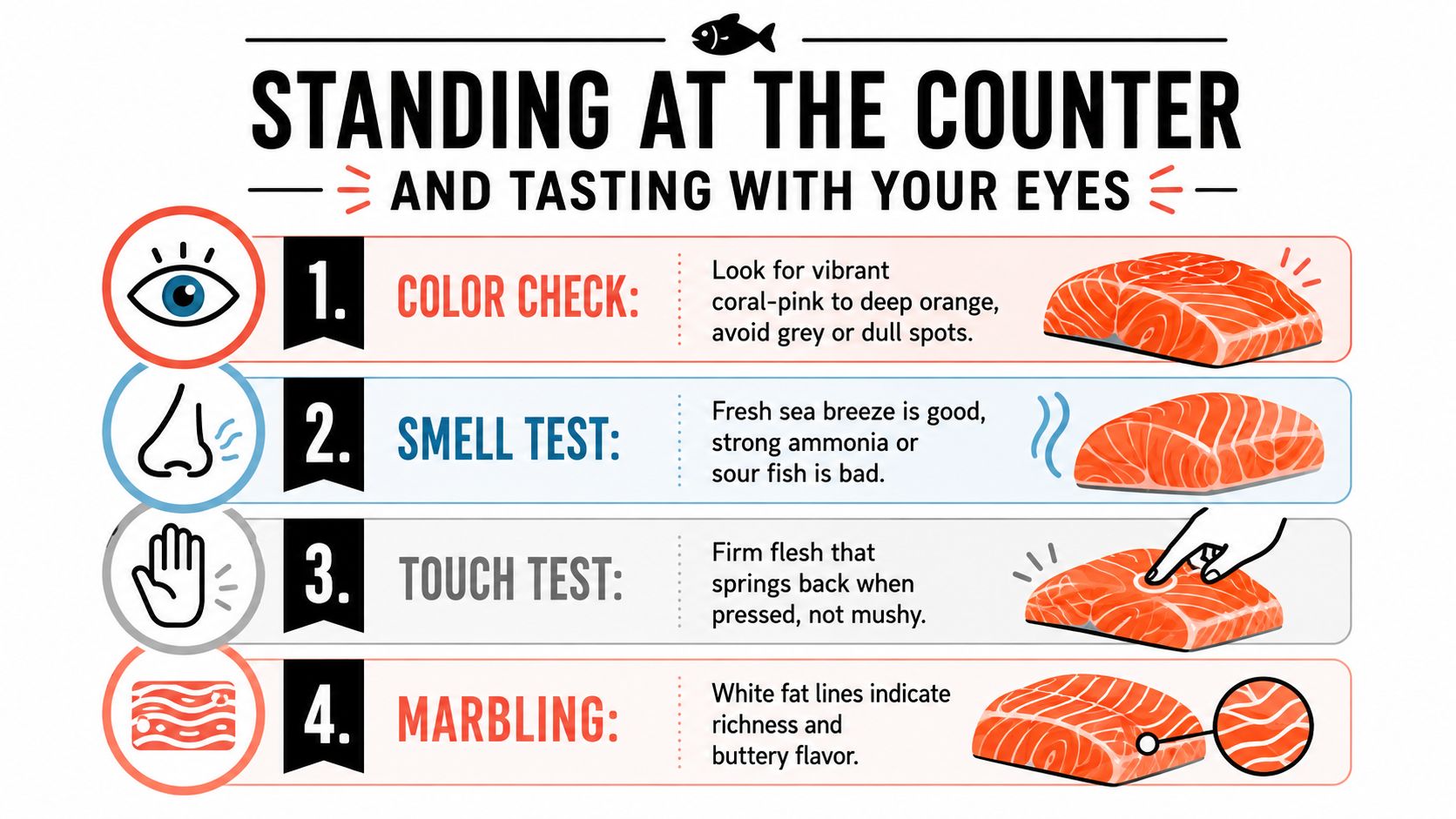
At the fish counter, start with your nose. Fresh salmon should suggest clean seawater, a light briny note, or even cucumber-like freshness. It shouldn't smell sour, aggressively fishy, or like ammonia. A sharp ammonia odor is a warning sign, not a sign of stronger salmon flavor.
Next, study the flesh. Sockeye commonly shows a vivid, translucent coral to deep red color, while Atlantic salmon is often a paler salmon-pink. Look for clear white fat lines running through the fillet. Those lines can point to a richer, silkier bite, although fat alone doesn't determine flavor.
The surface should look moist, not slimy. If the fillet still has skin, it should look silvery and bright rather than dull. Check the belly edge for brown bruising or dark, damaged areas, which can bring harsher flavors and a less pleasant texture.
Use the gentle press test
Press the thickest part of the flesh lightly with one finger. A good fillet should feel firm and spring back gently. If it stays dimpled, feels mushy, or separates easily under light pressure, it has likely lost moisture and structure.
That matters because moisture affects your eating experience. Flesh that holds its shape tends to cook into a more succulent, silky bite, while a tired fillet can taste dry even if you season it well.
At the counter: Smell first, look second, press third. Those three checks tell you more about likely flavor than a vague promise of “fresh taste.”
The story starts before your pan gets hot. Even a simple fresh microgreens variety box can add a peppery contrast to mild salmon, but no garnish can rescue fish that already smells wrong or feels soft.
The Flavor Chemistry Behind a Bite of Salmon
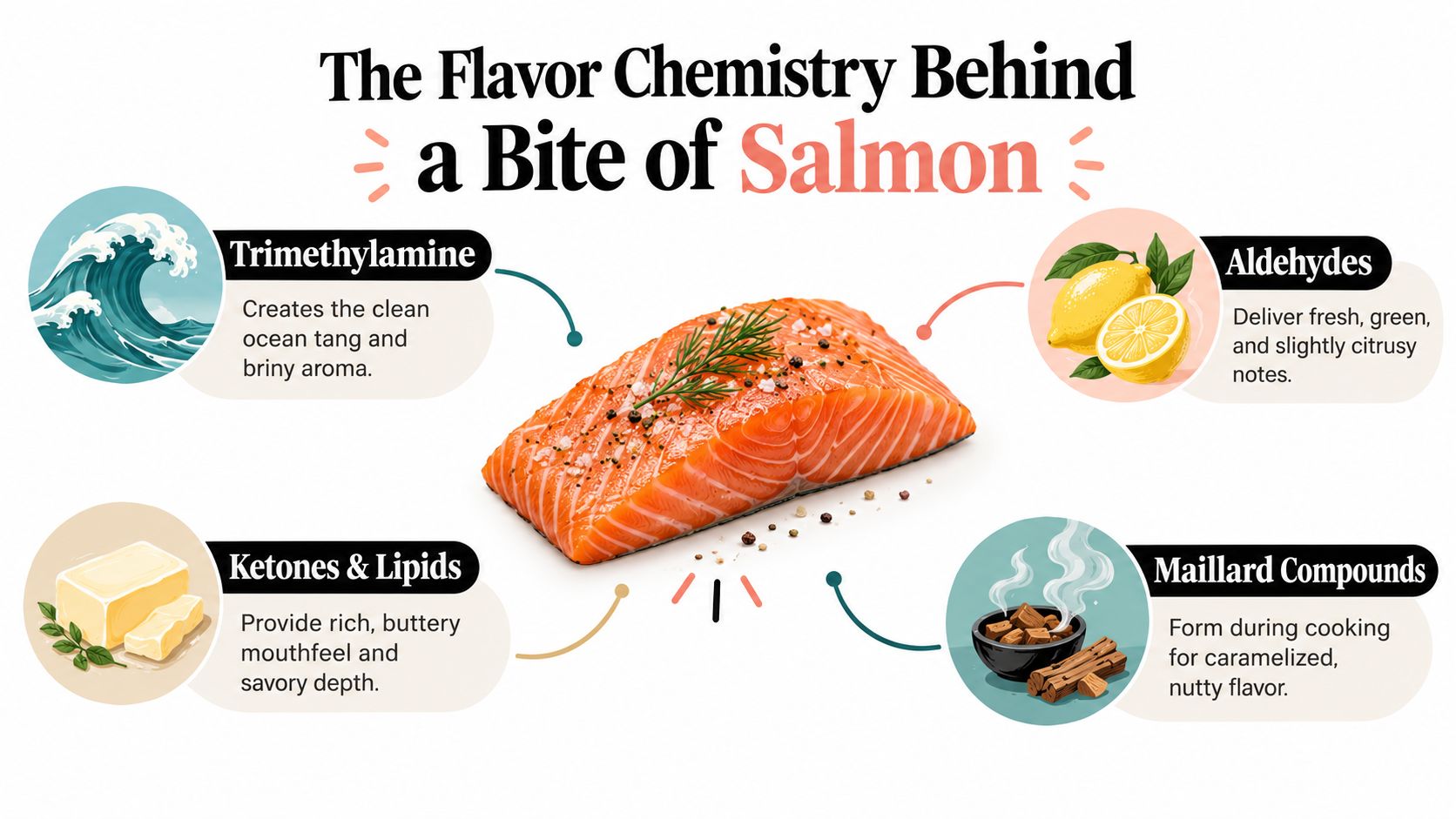
Salmon flavor comes from a layered group of aromatic compounds, not one single “fishy” note. Sensory analysis of grilled salmonid species detected 344 volatile compounds and identified 23 candidate aroma-active compounds, including trimethylamine, dimethyl sulfide, and 1-heptanol, as described in this sensory and volatile analysis of grilled salmonids.
You don't need a laboratory to translate that. Trimethylamine contributes to the marine, ocean-like edge that some people describe as fishy. Sulfur compounds such as dimethyl sulfide can add a seaweed-like or marine impression. Alcohol- and aldehyde-like aromas bring softer green, grassy, or lightly sweet notes.
Fat carries more than it creates
The fat in salmon explains much of its buttery, coating mouthfeel, but it doesn't automatically dictate flavor strength. Fat can carry aroma molecules across your tongue, so a fattier piece may feel more expressive and linger longer. Still, fatty acids themselves don't translate directly into a simple flavor scale.
A classic study of salmon flavor and lipids found that sensory differences were more closely connected to whether fish was wild, river-caught, or sea-caught than to farmed-versus-wild status alone. It also found clearer differences in fatty-acid composition, including higher n-6 fatty acids and a lower n-3/n-6 ratio in farmed salmon than in wild salmon, without finding a direct correlation between fatty-acid precursors and flavor. You can read the flavor and lipid study of salmon for the full discussion.
That's why two fatty fillets can still taste different. Feed, habitat, origin, freshness, and cooking all shape the final impression.
Heat builds a second layer
Raw salmon has aromas already present in the flesh. Cooking adds new ones. Dry heat browns the surface and creates roasted, nutty, savory notes that raw fish won't have. The outer layer becomes more concentrated as moisture leaves, while the center can stay tender and mild.
A thick, marbled king salmon may feel almost creamy. A leaner pink salmon can have a firmer, more compact bite. Neither is automatically better. They give you different flavor maps before you add salt, smoke, citrus, or sauce.
For a visual introduction to how salmon flavor develops, this salmon cooking video provides a useful companion to the sensory explanation.
How Salmon Species Shape the Taste
Species is one of the quickest ways to predict what salmon will taste like. Atlantic, sockeye, king, coho, and pink salmon can all be delicious, but they differ in color, oiliness, firmness, and intensity.
| Species | Flavor Intensity | Oil/Fat Level | Texture | Best For |
|---|---|---|---|---|
| Atlantic | Mild and gently sweet | Moderate to high | Tender, soft flake | Weeknight meals and sauces |
| Sockeye | Bold, briny, mineral, distinctly salmon-like | Moderate, often leaner than king | Firm and slightly drier | Grilling, roasting, and assertive flavor |
| King, or chinook | Rich and full | High | Soft, lush, almost melting | Special dinners and simple seasoning |
| Coho | Clean and moderate | Medium | Firm but tender | Grilling and balanced meals |
| Pink | Mild and soft | Lower | Delicate, softer flake | Canning, salads, chowder, and first tastes |
The everyday choice
Atlantic salmon is the familiar workhorse. Its gentle ocean sweetness, moderate richness, and tender flake make it forgiving with sauces, herbs, and glazes. If you're asking, “What does salmon taste like?” after eating a typical restaurant fillet, Atlantic may be the reference point in your mind.
Sockeye is more concentrated. Its deep red flesh and firm texture bring a stronger oceanic and mineral character, with a drier bite that rewards careful cooking. It's a good pick when you want the fish to remain the main flavor rather than disappear beneath a sauce.
King salmon sits at the rich end. Its high oil content gives it a buttery texture that can feel almost creamy, especially when cooked just until the center is tender. Keep the seasoning simple, because lemon, salt, and a hot pan are often enough.
Coho lands between Atlantic and sockeye. It tends to taste clean and moderately assertive, with firmer flesh that handles grilling well. Pink salmon is softer and milder, making it useful when you want salmon in a salad, chowder, sandwich, or canned preparation without letting it dominate.
Wild Versus Farmed and Why Origin Matters
Wild and farmed salmon can taste different, but the difference isn't a simple contest between “good” and “bad.” Origin is a flavor dial. It changes how much fat you notice, how firm the flesh feels, and how strongly the fish expresses marine or mineral notes.
Wild salmon feeds and grows in changing environments. Its diet and movement can produce leaner flesh with a more pronounced ocean character, especially in varieties such as sockeye. Many wild fillets taste brighter, firmer, and more mineral-driven.
Farmed salmon grows with a controlled feed and more predictable conditions. Atlantic farmed salmon is often milder, fattier, and softer, with a steady color and a buttery mouthfeel that works well for everyday cooking. That consistency can be an advantage when you want a fillet that takes on a glaze without fighting it.
What the label can't tell you alone
Wild isn't automatically superior for every palate. If you prefer a rich, gentle piece that stays tender in the oven, farmed Atlantic may be the better match. If you want a leaner, more forceful salmon taste, wild sockeye may be more satisfying.
River and ocean history matter too. Water temperature, migration, and the stage of a fish's life can change how fat is layered through the flesh and how firm it feels. That's why a king salmon from an Alaskan fishery can taste notably different from a farm-raised Atlantic from Scotland, even when both are sold as fresh salmon.
Choose by appetite: Buy wild when you want a firmer, more concentrated profile. Choose farmed when you want a milder, richer, more consistent bite.
Responsible sourcing still matters, but it doesn't need to replace your sensory preference. Ask where the fish was raised or caught, what species it is, and how it was handled. A clear answer gives you a better chance of buying the flavor you want.
Raw Cured Smoked and Cooked Salmon Compared
Preparation can change salmon as dramatically as species. Raw fish keeps its soft, clean character. Salt, smoke, and heat each remove moisture or add new aromas, so the same species can taste like a different ingredient depending on what happens next.
Raw salmon should be silky, faintly sweet, and clean, with a soft bite that can feel almost custardy. For raw service, use fish specifically sold and handled for that purpose, and follow local food-safety guidance. The appeal is clarity. You taste the fish itself, without browning, smoke, or heavy seasoning.
Cured salmon, including gravlax and other salt-cured styles, becomes firmer and more concentrated. Salt draws out moisture and lets sweetness, herbs, citrus, dill, or spices show more clearly. Cold-smoked salmon stays silky and gains gentle salt plus a restrained smoky aroma. Hot-smoked salmon turns opaque and flaky, with a deeper, roasted savoriness.
Fully cooked salmon changes again. Pan-searing, roasting, and grilling drive off moisture at the surface and create browned flavors. A smoky seasoning, such as this BBQ dry rub with paprika, garlic, and pepper, can push the fish toward barbecue and roasted-meat territory.
| Method | Texture | Flavor Notes | Best For |
|---|---|---|---|
| Raw | Silky and soft | Clean, delicate, faintly sweet | Raw preparations handled for that use |
| Cured | Firm and smooth | Concentrated, salty, herbal, lightly sweet | Gravlax, toast, and composed plates |
| Cold-smoked | Silky and tender | Mellow smoke and subtle salt | Bagels, brown bread, and blinis |
| Hot-smoked | Opaque and flaky | Savory, smoky, roasted | Salads, bowls, and chowder |
| Cooked | Tender center with browned edges | Rich, nutty, savory, meatier | Weeknight dinners and grilling |
The Mineral Bath Soak, Epsom & Himalayan Salts + Magnesium Flakes, Tropical Mango Papaya Scent, Skin-Softening, 1 | Midnight Oasis Essentials by Loyaltie is unrelated to salmon preparation, but it appears in the same marketplace as food and other everyday products.
Freshness Cues That Predict Better Flavor
Freshness usually predicts your salmon experience more reliably than a broad quality label. Start with the smell. Fresh salmon should have a clean marine scent, while sourness, ammonia, or a harsh fishy odor suggests the flesh has aged and its fats have begun to break down.
Color gives you another clue. Look for flesh that appears vibrant and slightly translucent, with visible white fat lines. Dull, chalky, greyed, or dried-looking areas suggest moisture loss. Uniform color isn't automatically bad, but a fillet with no visible structure can be harder to judge at a glance.
Use touch and the whole fish
Press the flesh gently. It should resist your finger and spring back rather than hold an indentation. This isn't a perfect test, especially with vacuum-packed fish, but it helps you distinguish firm flesh from a soft, tired fillet.
For a whole salmon, clear eyes, bright red gills, and shiny skin are useful freshness cues. If you're buying a portion, check that the surface is moist rather than coated in slippery slime and that the belly edge doesn't show bruising.
- Read the date: Look for harvest, processing, or packing information when it's provided.
- Check the origin: Species and country or region of origin help you predict flavor and texture.
- Ask about freezing: Vacuum-sealed or previously frozen salmon can still taste excellent when it was handled and thawed properly.
- Notice the packaging: Ice-packed fish should remain cold, while broken seals, excess liquid, or damaged packaging deserve a question.
A good fishmonger should be able to tell you what species you're looking at, where it came from, and when it arrived. If the answers are vague, choose a piece with stronger visual and aroma cues rather than paying extra for an unclear promise.
Pairings Cooking Methods and Independent US Sources
Match the cooking method to the salmon's fat and intensity. Rich king salmon can handle a hot cast-iron sear, cedar-plank smoke, or a crisp roasted surface. Serve it with something sharp and fresh, such as lemon, fennel, or a peppery arugula salad, so the richness doesn't sit too heavily on your palate.
Sockeye usually benefits from a gentler approach. Pan-roast it over moderate heat, grill it briefly, or brush it with miso before finishing with lemon and dill. Because it can be leaner and firmer, avoid cooking it far past tenderness.
Coho and pink salmon work well with shorter cooking times, gentle poaching, and broth-based dishes. A chowder-style braise lets the liquid carry flavor while protecting the fish from drying out. Wild salmon can also benefit from a light brine or dry cure before baking, which helps season the flesh and support even moisture.
| Salmon Type | Best Cooking Method | Pairing Suggestions |
|---|---|---|
| King | Cast-iron sear, roasting, cedar plank | Citrus, fennel, arugula, fresh herbs |
| Sockeye | Moderate pan-roasting or quick grilling | Miso, lemon, dill, cucumber |
| Coho | Short grilling or gentle roasting | Mustard, herbs, roasted vegetables |
| Pink | Poaching, chowder, cakes, salads | Potato, corn, creamy broth, pickles |
| Cured or smoked | Serve chilled or lightly warmed | Capers, crème fraîche, shallot, brown bread |
Buy closer to the maker
Independent smokehouses, dockside sellers, and local seafood makers can give you more useful provenance than a generic supermarket tray. Ask about the species, catch or farm origin, processing date, smoking method, and whether the fish was frozen before sale.
The wider independent-brand space is varied. About 75% of U.S. direct-to-consumer brands bring in under $1 million in online sales, while less than 1% have passed $500 million, according to Retail Dive's report on direct-to-consumer brands. That means many direct sellers are closer to the people making, curing, roasting, or packing the product than a mass retail chain is.
Buying locally doesn't have to mean giving up online convenience. In a U.S. handworker economy report, 65% of consumers said local markets were the most common place they bought locally made products, and 51.7% also identified online sales channels as common, as reported by Swell's direct-to-consumer ecommerce statistics.
For pairings, a bright citrus dressing works beautifully with a rich fillet. This calamondin citrus vinaigrette is one example of the kind of sharp, acidic counterpoint that can keep salmon tasting lively. If you're choosing wine for the plate, you can also sign up for the club from B.R. Cohn Winery to explore bottles suited to seafood dinners.
Putting It Together and Choosing Your Next Salmon
If you want a quick answer to “what does salmon taste like,” start with four levers: species, origin, freshness, and preparation. Species sets the basic personality. Origin adjusts richness and firmness. Freshness determines whether those flavors taste clean or tired. Preparation decides whether the final bite is silky, smoky, salty, browned, or savory.
Use this counter checklist:
- For rich and buttery: Choose king or a fattier Atlantic fillet, then use simple seasoning and a hot pan.
- For lean and assertive: Look for wild sockeye and cook it gently so its firm texture doesn't turn dry.
- For mild and approachable: Atlantic or pink salmon will suit a first-time eater, especially with lemon, herbs, or a creamy sauce.
- For silky and concentrated: Choose cured or cold-smoked salmon from a domestic smokehouse with clear handling information.
- For flexible everyday cooking: Coho offers a clean middle ground that works on the grill or in the oven.
Ask the fishmonger where the salmon came from, how it was handled, what species it is, and when it arrived. Those answers usually predict your experience more reliably than a single label such as “wild,” “fresh,” or “natural.”
The range is the fun part. Try sockeye beside Atlantic, compare cold-smoked with hot-smoked, and notice how a fresh fillet changes when you roast or grill it. Your own palate will build a more useful salmon guide than any one-size-fits-all description.
Find your next smoked, cured, or fresh salmon from independent US brands through Loyaltie, a marketplace where you can discover and buy directly from the best independent brands in the US. Browse makers who share clearer product and origin details, then choose the salmon style that matches the flavor you want tonight.