Clean beauty isn't a regulated category. It's a standard each brand sets for itself, and in the US there's no single agreed definition of what the words mean on a label. So when two bottles both say clean and each one bans a completely different list of ingredients, which of them is telling you the truth?
Neither is lying. They're answering a question nobody officially wrote the rules for.
Table of Contents
- What Clean Beauty Actually Means
- What Each Label Word Really Promises
- Why Clean Doesn't Automatically Mean Safe
- The Trade-Offs Behind Clean Swaps
- How to Check a Clean Claim Before You Buy
- What to Do If a Clean Product Irritates Your Skin
- Find Independent Makers Who Show Their Standards
What Clean Beauty Actually Means
A jar of jam labelled "natural" points you in a direction. It doesn't tell you how much sugar is inside, where the fruit grew, or whether the batch was tested for anything. The word clean on a shampoo bottle works the same way. It signals a direction, not a measured result.
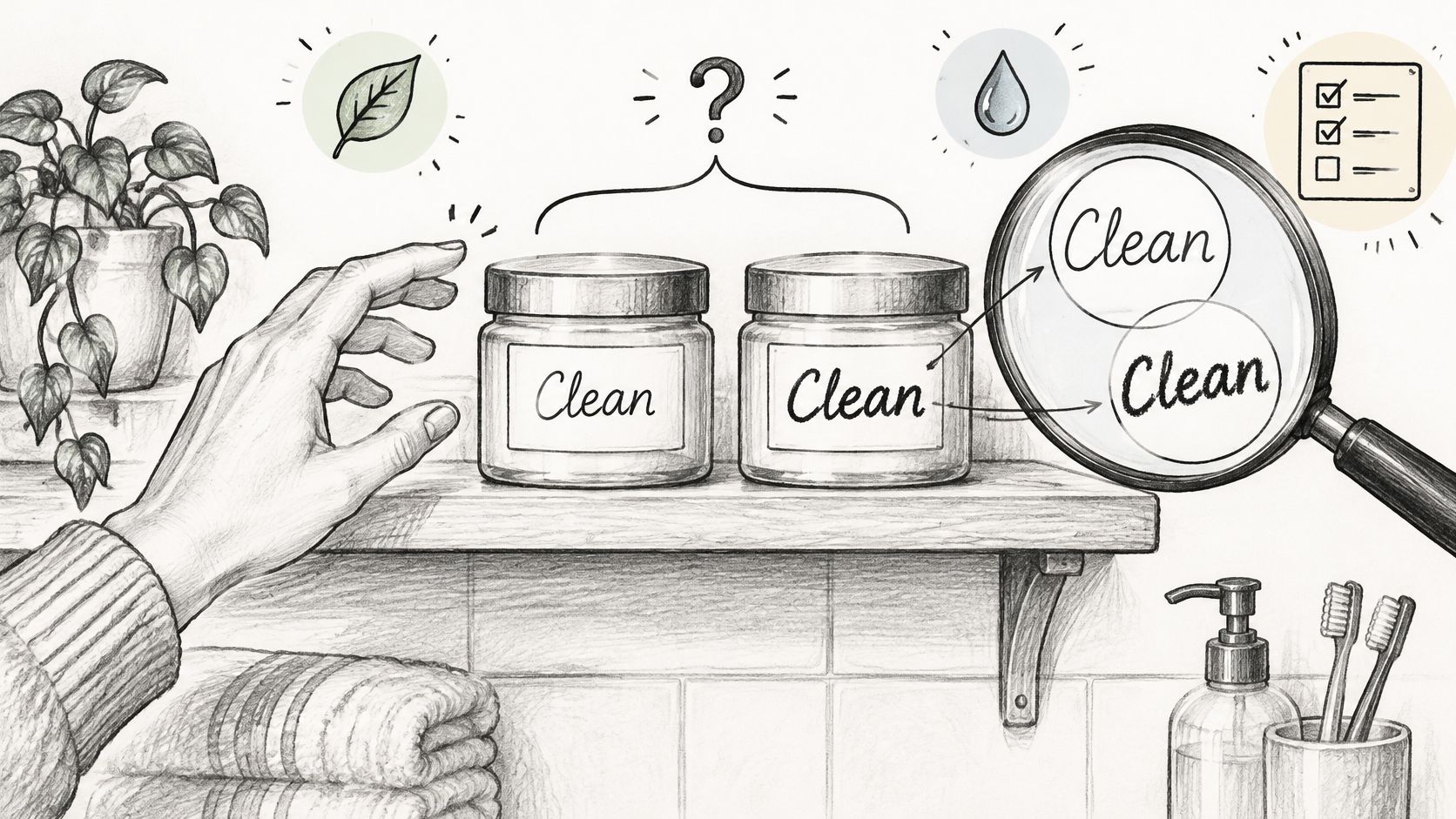
Most brands that use the word are packing in three ideas at once. Ingredient transparency, meaning you can see the whole list and get a straight answer about what each thing does. A selected list of substances the brand avoids, which changes from one maker to the next. And sometimes environmental or ethical choices, such as cruelty-free testing or packaging you can recycle.
Two makers can both print clean on the front and mean three different things by it. That's why the phrase feels slippery.
Shoppers notice the fog. In 2025, CivicScience reported that 23% of U.S. adults were very interested and 38% somewhat interested in beauty products made without potentially harmful ingredients, while 36% said they were unsure how to define clean beauty. The appetite is enormous. The shared vocabulary isn't there yet.
A working definition: clean beauty is a claim a maker makes about its own ingredient and sourcing standards. It is not a safety certification, and it is not a legal category in the US.
That distinction changes how you shop. A maker who says clean and then names the excluded ingredients, explains why each one is out, and publishes a full ingredient list is handing you something checkable. A maker who says clean and stops there is handing you a mood.
So when you see the word, don't ask whether the product is clean. Ask which standard the maker is using, and whether they'll show it to you.
What Each Label Word Really Promises
Front-of-pack words are shorthand, and shorthand drops detail. Here's a quick reference for the ones you'll meet most often, so you know what each is promising.
| Claim | What it usually suggests | US legal status | What to check |
|---|---|---|---|
| Clean | The brand's own ingredient or values standard | No legal definition | Which substances are excluded, and why |
| Natural | Ingredients from plant or mineral sources | No legal definition | Whether synthetic ingredients or fragrance still appear |
| Organic | Ingredients grown under a named certification | Depends on the certifier named | The certifier's name and what share of the product is certified |
| Free from (e.g. paraben-free) | The brand avoids one named ingredient | No standard definition | The full ingredient list, since other concerns may remain |
| Non-toxic | Suggests no harmful substances | No standard definition, not a safety guarantee | Whether the claim is narrowed and backed by evidence |
| Hypoallergenic | Less likely to cause an allergic reaction | No FDA definition or approval | Fragrance, essential oils and common allergens, plus a patch test |
| Fragrance-free | No fragrance added | No legal definition | Whether the product says 'unscented' or may include masking fragrance |
Three of those rows cause most of the confusion.
Free from describes one absence, not an overall result. Paraben-free tells you a single ingredient family is gone. It says nothing about fragrance, preservatives or anything else that might not suit your skin. Treat it as one line in a longer story.
Fragrance-free and unscented are not twins. Fragrance-free means no fragrance was added. Unscented can still contain a masking fragrance added to neutralise the smell of other ingredients, which is a real problem if fragrance is what irritates you.
Non-toxic and hypoallergenic have no standard behind them. Nobody defines how low a dose has to be, or how many people have to tolerate a formula, before a brand can print either word. They are not guarantees.
The FDA's explanation of US cosmetics law is blunt about the reason: the agency regulates cosmetics under the Federal Food, Drug, and Cosmetic Act, but it doesn't approve most cosmetic products and doesn't certify any of them as clean. The front label can't settle the question on its own.
The same word games run through oral care, which is why Mouthology's breakdown of clean toothpaste ingredients is worth reading before your next tube. And if you want to see a specific exclusion written out plainly, this fragrance-free liquid hand soap for sensitive skin states its standard up front, including no added fragrance and no masking agents.
When a word has no standard behind it, treat it as the opening of a question. Then look for the complete ingredient list and the maker's own explanation of what they leave out.
Why Clean Doesn't Automatically Mean Safe
What does the word “clean” tell you about safety? On its own, it tells you little. It is a marketing claim, not a safety rating.
Every cosmetic ingredient is a chemical, including ingredients that grow in soil. Under US law, cosmetics and most ingredients do not need premarket FDA approval, apart from certain colour additives. The company marketing a product is responsible for ensuring its safety under normal use and labelling it correctly, as the FDA's consumer safety guidance explains. A clean standard is therefore a separate set of criteria, not a substitute for those responsibilities.
Plant-derived ingredients can cause irritation, sensitisation, contamination or instability. Lavender oil may upset sensitive skin, while a botanical extract can trigger a reaction in someone who tolerates synthetic ingredients. “Chemical-free” has no useful meaning: all ingredients are chemicals.
A preservative-free toner containing water, for example, may need refrigeration and careful handling to limit spoilage. Removing a preservative changes what the maker must control; it does not automatically make the formula safer. The trade-off depends on how the product is made and tested.
A fragrance-free face cream may use a botanical extract instead of a synthetic scent and still sting reactive skin. The word “clean” cannot predict that response. More useful evidence includes a full ingredient declaration, stability testing and, for products containing water, preservative-effectiveness testing.
An unscented, fragrance-free bar offers another way to assess a claim. Activated Charcoal Soap Bar uses activated charcoal in a rich oil blend to lift excess oil and buildup while leaving skin soft rather than stripped. It is made for the face and body without added scent. Whether it suits your skin depends on the formula and your own response, not the word “clean.”
When checking a clean claim, ask what the maker can show about the formula. A complete ingredient list and relevant testing provide more useful evidence than a list of banned ingredients alone. That distinction helps you judge what a label promises, and what it leaves unanswered.
The Trade-Offs Behind Clean Swaps
Every cleaner-sounding swap solves one problem and creates another. That doesn't make the swap wrong. It makes it a decision you should be able to see.
| Swap | Why it sounds cleaner | Trade-off to weigh |
|---|---|---|
| Synthetic preservative replaced by plant-based or lower-preserved system | Fewer synthetic ingredients | Shorter shelf life, cold storage needs and higher contamination risk |
| Synthetic fragrance replaced by essential oils | Simpler, more natural-sounding ingredient list | Essential oils are common skin irritants and allergens |
| Petroleum-derived base replaced by plant oils | Plant-derived source | Land, water and crop-supply pressures, plus variable quality between batches |
| Plastic pump bottle replaced by glass jar | Avoids plastic packaging | Heavier, more likely to break in transit and a larger shipping footprint |
| Single-use tube replaced by refill pouch | Less packaging waste | Only works if you already own the container, and may be awkward for travel |
Read a sustainability claim by asking two questions. What problem does this solve, and what does it trade off? A glass jar that shatters in a delivery truck and needs replacing has a packaging story that's worse than the plastic it replaced.
The data gap is real. A 2025 ingredient-intelligence analysis of 1.25 million ingredients across 48,000 U.S. beauty products classified 24% as uncharacterized because there wasn't enough toxicological information available, and 3.7% as high hazard across human and environmental endpoints, as Vogue reported on industry clean-beauty standards. Uncharacterized doesn't mean dangerous. It means nobody has published enough to say either way, which is exactly why a "free from" list can't carry the whole argument.
A maker can be thoughtful about packaging and still use ingredients with thin published data. Both things sit in the same product.
Cruelty-free and vegan labels describe testing or sourcing rules, not formula safety. Check which certifier stands behind the claim, and whether the maker names them. If a brand claims lower environmental impact, ask for the figures. A five-piece ritual like the Natural Skincare Gift Set with a silky oil cleanser, a DMAE and hyaluronic acid serum, a matcha under-eye oil and whipped tallow lotion is a good moment to ask what each step is for, so you buy what you'll finish rather than what you'll store.
The sign of a maker who thought it through is that they name the trade-off out loud instead of hiding it behind the word natural.
How to Check a Clean Claim Before You Buy
A product page can make a clean claim sound clear while leaving the standards behind it vague. Give yourself a few minutes and check the details that let you judge the claim for yourself. In NSF's 2024 survey, 74% of 1,000 Americans considered organic ingredients important in personal-care products, while 65% sought transparent ingredient lists, according to coverage of the NSF survey.
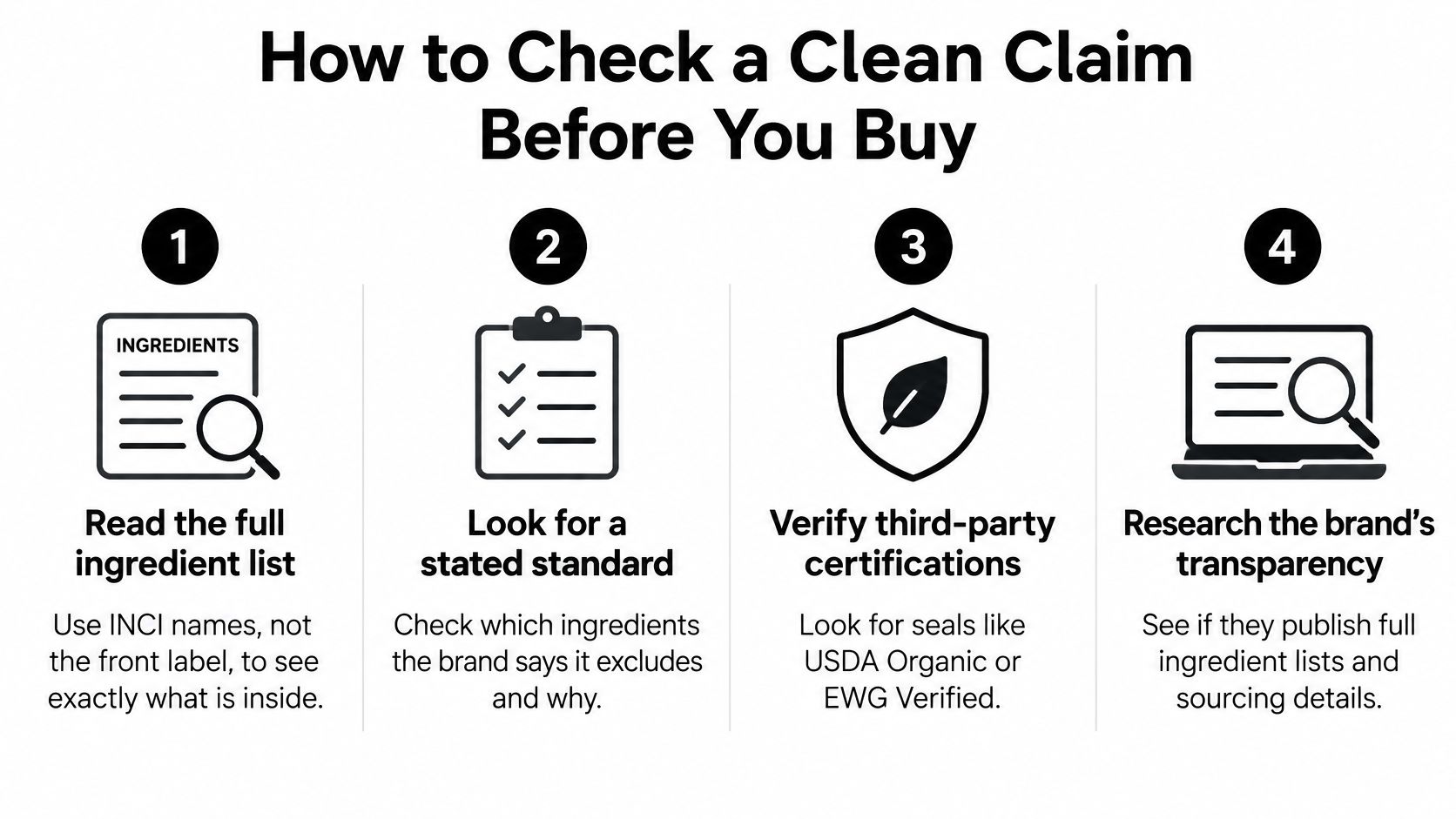
- Read the full ingredient list, not just the front label. Ingredient lists use INCI names and generally list ingredients in descending order of concentration. The front label is selected to catch your attention; the full list gives you more to assess.
- Look for a stated standard. Check whether the maker names the ingredients it excludes and explains why. That gives you specific information to evaluate. Treat an unsupported clean claim as unproven.
- Check the fragrance disclosure. “Fragrance” or “parfum” can refer to a blend rather than a single ingredient. Look for details about what the blend contains, since that gives you more information than the general term alone.
- For water-based products, look for testing evidence. Preservative-effectiveness and stability testing can help show how a formula is controlled. If a toner or cream has no preservative system or testing information, ask how its safety and stability are addressed.
- Confirm who made the product and how to contact them. A maker's name, location and working contact route let you ask about a specific ingredient before buying. If the product page provides no way to reach the maker, you have less information to work with.
- Match environmental claims to details. Look for specifics such as recycled content, refill systems, biodegradability or third-party verification. Treat an environmental claim as unproven when the maker gives no supporting detail.
- Save the label and product name. Photograph the back of the package and the batch code. If you have a reaction later, the image can help you identify the product and its ingredients.
A short video offers a walkthrough of testing a product on your skin before committing to it:
Watch the product-testing walkthrough
A hydrating serum makes a useful example. Hyaluronic Acid Facial Serum pairs hyaluronic acid with DMAE, seaweed-derived collagen and 24K gold flakes. Those ingredients alone cannot tell you whether the clean claim holds up. Check whether the full ingredient list, preservative information and maker's contact details are available.
The quick test: Can you find what the maker excludes, why it is excluded, and how the product was checked? Those details give you something concrete to evaluate. If you only know what the label says it leaves out, keep looking.
What to Do If a Clean Product Irritates Your Skin
A reaction is information, not a personal failure. Clean formulas irritate people every day, and the response should be calm and methodical.
- Stop using it. Don't push through a stinging or itchy patch to see if it settles. Continued exposure can turn a mild irritation into a longer one.
- Rinse with lukewarm water. Cool, plain water, no scrubbing, no cleansing oil on top. Then patch test anything new on a small area before you commit to your whole face, and this guide to testing skincare for irritation first covers how to place and read a patch test properly.
- Write it down. Product name, batch number, where you bought it, when symptoms started and how long they lasted. Memory blurs after a few days; notes don't.
- Contact the maker first. An independent brand should be able to tell you every ingredient, including what's inside a fragrance blend, and answer within a day or two. If you bought a gentle cleanser such as this hydrating face wash for sensitive skin, the maker can talk you through the aloe, honey and tea components directly.
- Get medical help for the serious signs. Infection, blistering, burns, or a rash that keeps spreading need a clinician, not another product.
- Know the reporting route. Under MoCRA, the responsible person named on a cosmetic's label must report a serious adverse event to the FDA within 15 business days of receiving the information, and the FDA's MoCRA overview lists outcomes such as infection, significant disfigurement, serious persistent rashes, second- or third-degree burns and significant hair loss as qualifying events.
That last point is why the label photo from earlier matters. A serious reaction gets reported faster when you can name the product and the person responsible for it.
Find Independent Makers Who Show Their Standards
A clean claim is a reason to look closer, not proof of a product's safety or quality. The useful question is whether a maker explains what the claim means for that specific product.
Choose something you already buy, such as face wash or coffee, and compare a few options side by side. Look for a clear description of the product's ingredients or materials and an explanation of any exclusions. Those details make it easier to judge what a brand's use of “clean” promises.
Independent makers can make those standards easier to understand because shoppers can buy directly from the maker. For example, the Flawless Skin Co brand page gives you a place to examine a skincare shop while considering the product's own claims. Buy directly from the maker when you want to understand how a claim applies to a particular item.
Loyaltie is a marketplace for buying directly from nearby businesses and makers, with everyday products such as coffee, skincare, snacks and pet food.
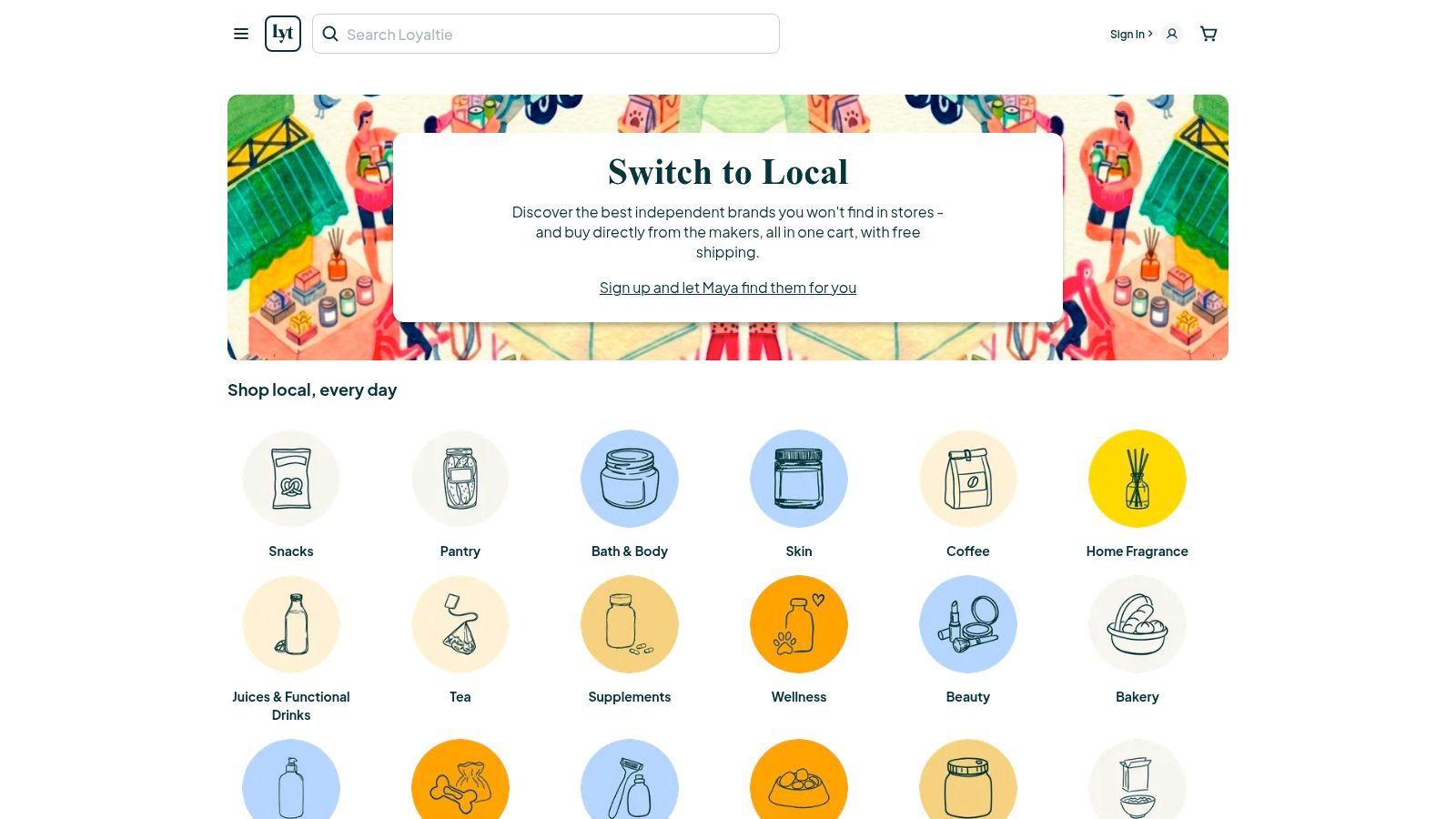
After choosing a product, keep a short note of what its label says and how your skin responds. That gives you a personal reference for future purchases, grounded in the product's details rather than the word “clean” alone.
Take one label you're unsure about and compare its specific claims with the information the maker provides. Browse Loyaltie to find products from nearby businesses and independent makers, and decide which details help you make an informed choice.