
You've probably stood in a grocery aisle wondering why a tomato that traveled through several warehouses tastes less like a tomato than the one you bought from a nearby grower. The packaging looks polished, the choices seem endless, and yet the shopping trip can feel oddly disconnected from the people and places behind your food.
Then you visit a farmers market. Someone hands you a loaf of bread, explains when it was baked, or points out which greens were picked that morning. The experience feels more personal, but the practical advantage is that: local foods can offer better freshness, clearer information, and a closer connection to the person who made or grew them.
Table of Contents
- Freshness changes the experience
- Transparency gives you more control
- The community benefit follows the quality choice
More Than a Buzzword Why Local Food Matters
A large grocery store is built for speed and scale. You grab coffee, vegetables, snacks, and pet food from shelves filled with familiar labels, but it can be difficult to know who produced them, how long they traveled, or why one product deserves your money over another.
At a local market, the difference is immediate. You might meet the grower behind a basket of peaches, the baker behind a crusty sourdough loaf, or the maker who blends a hot sauce in a nearby kitchen. You aren't just comparing labels. You're learning how the product was made and what makes it worth bringing home.
That connection often changes the way food tastes. A seasonal fruit picked closer to ripeness can feel more vibrant. Freshly roasted coffee can have a livelier aroma. A jar of honey from a nearby producer may come with a clearer sense of its source than a generic bottle assembled through a long chain of suppliers.
A better way to think about local food: You're choosing a product with a visible origin, not simply checking a box for geography.
The direct relationship also gives you more useful questions to ask. What's in the product? When was it made? How should you store it? What does the maker recommend? Those answers can make buying feel less like a guessing game and more like choosing something with intention.
The scale of direct buying shows that this isn't a niche habit. The USDA's 2020 Local Food Marketing Practices Survey recorded 147,307 U.S. farm operations using direct marketing channels, with total sales of $9.0 billion (USDA Local Food Marketing Practices Survey). People are already finding value in shorter paths between producer and customer.
For a thoughtful look at how direct sourcing can shape the dining experience, explore From McLaren Vale Cellars. The same principle applies at home: food feels different when you can trace it back to a real place and person.
What Does Local Food Actually Mean
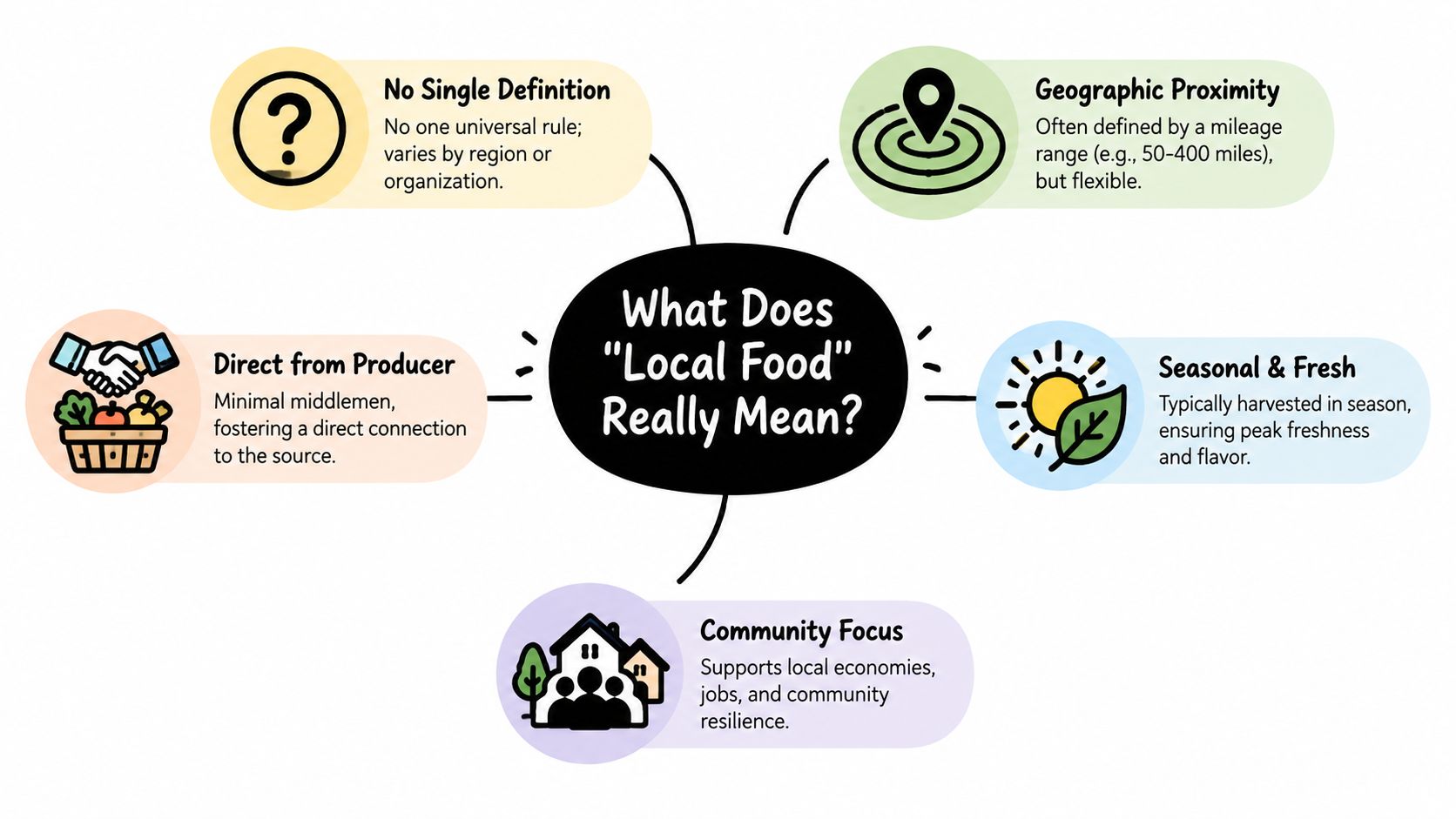
Local food doesn't have one universal definition. A product may be considered local because it was produced nearby, sold within the same state, made within a particular region, or moved through a short supply chain with few intermediaries.
The United States has a useful benchmark. The 2008 Farm Bill defined a locally or regionally produced agricultural food product as one transported less than 400 miles from its origin or produced within the same state (FAO statistics resources). That gives shoppers a practical reference point, but it doesn't settle every question.
Distance is only one part
A product's mileage matters, but so does the route it takes through the market. A grower selling directly to you has a different relationship with the customer than a product passing through aggregators, processors, distributors, and retailers before it reaches the shelf.
That's why a useful definition should consider three questions:
- Where was it produced? Look for a farm, town, state, or region rather than a vague “made in the USA” label.
- How many intermediaries handled it? Fewer middlemen can make the origin and production process easier to understand.
- Where does fulfillment happen? A local product may be grown nearby but shipped from a distant warehouse, so check how the order reaches you.
“Local” can also vary by category. Fresh produce, dairy, packaged food, coffee, skincare, and pet products may follow different sourcing and fulfillment patterns. A local label should tell you enough to understand the product's geographic scope and supply chain, rather than leaving you to assume that every local claim means the same thing.
For a related example of how production scale and direct craft affect what ends up in your glass, read why small batch breweries matter. The broader lesson is simple. Local describes both proximity and relationship.
Why Local Food Is a True Upgrade for You
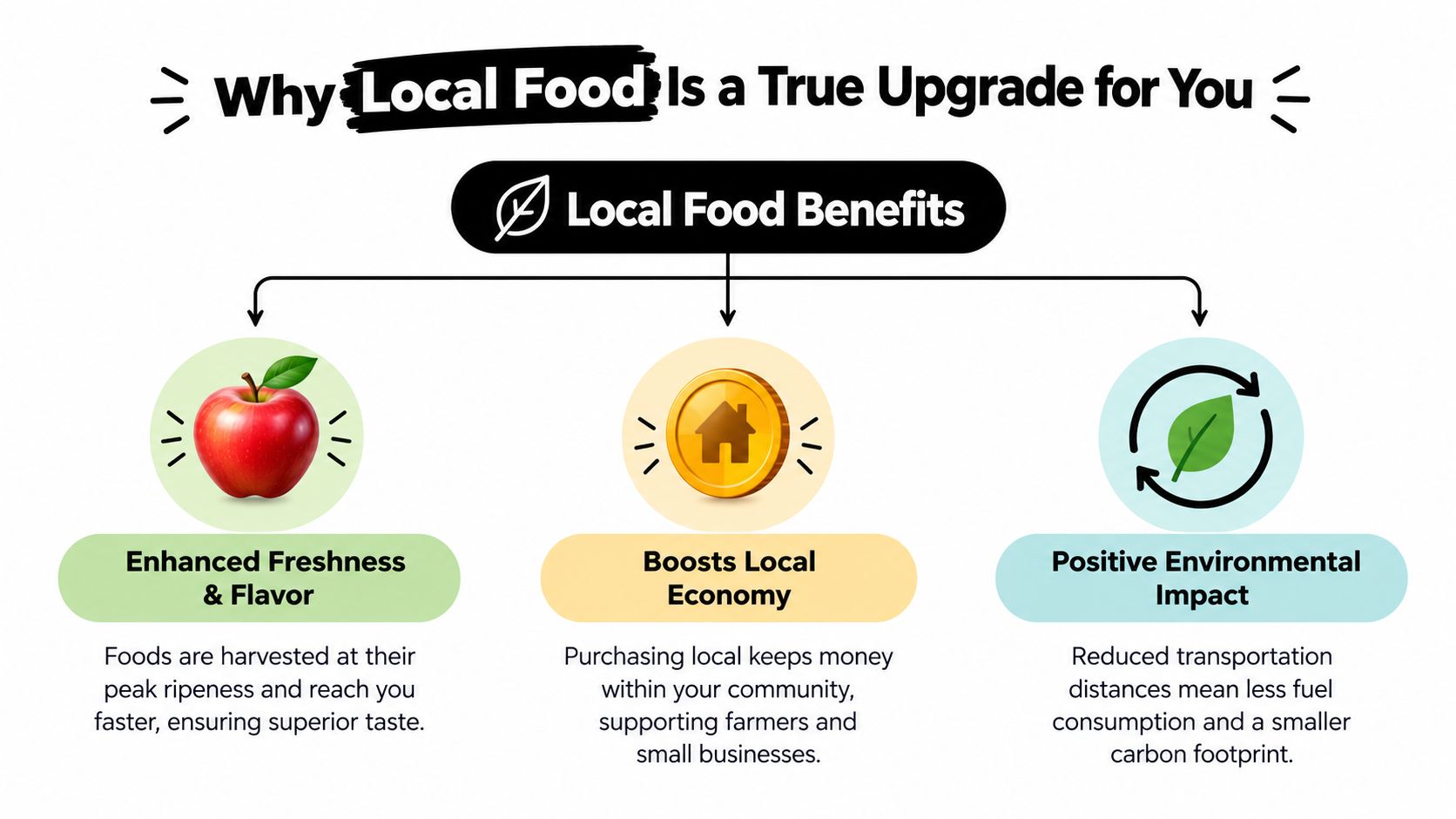
The strongest reason to buy local isn't that it makes you a more virtuous shopper. It's that the product can be better in ways you notice immediately, from the first bite to the information on the label.
Freshness changes the experience
Local produce often reaches you through a shorter path, which can help preserve the qualities you want from food. A ripe peach, crisp lettuce, or fragrant herb is more enjoyable when it still has texture, aroma, and flavor.
Seasonality adds another layer. A product harvested when it naturally performs well tends to need less explanation or processing to taste good. You can build meals around what's available, then notice how different varieties compare across the year.
The same idea applies outside the produce aisle. Freshly roasted coffee, recently baked bread, refrigerated dips, preserves, and locally made snacks can all feel more distinctive when you know when and by whom they were produced.
Transparency gives you more control
Buying directly from a maker makes it easier to ask practical questions. You can learn about ingredients, storage, preparation, sourcing, and production methods instead of relying only on broad packaging language.
That matters if you care about allergens, dietary preferences, or the quality of what you use every day. A conversation with the producer won't replace proper labeling, but it can give you context that a mass-market product rarely provides.
You may also discover products designed with more care for a specific audience. A local roaster may explain how to brew a particular bean. A producer of prepared meals may share how to reheat them. A skincare maker may describe why a particular ingredient appears in a formula.
The community benefit follows the quality choice
Local food can also strengthen the area where you live, but that's best understood as a result of buying something you want. Research on local food systems finds that sustainability depends on supply-chain design, not distance alone, and that shorter food chains can improve producer margins and keep more economic value near the place of production (research on local food systems and sustainability).
That distinction prevents overpromising. Local doesn't automatically mean lower environmental impact or better nutrition. Production methods, seasonality, storage, and distribution still matter. A nearby product can be a smart choice when its overall supply chain makes sense, while a farther product may sometimes be more efficient.
Use “local” as a starting question, not a final guarantee. Ask how the product was made, how it traveled, and whether the quality matches what you want.
You can apply that approach to everyday ordering, including fresh meal options from Loyaltie. The goal is to make a better choice for your own table, with stronger local economic circulation as a welcome result.
How to Find and Buy from Local Makers
Start with places where producers already meet customers face to face. Farmers markets, on-farm stores, food co-ops, and Community Supported Agriculture programs can help you learn what grows or gets made near you.
Begin with one familiar purchase
You don't need to redesign your entire kitchen. Pick something you already buy regularly, such as coffee, eggs, bread, honey, vegetables, or prepared meals. Compare the local option with your usual product based on freshness, ingredients, taste, producer information, and convenience.
A focused trial makes the decision easier. You can ask the maker how to store the product, whether it's seasonal, and how often it's available. If you enjoy it, add another category during your next shop.
USDA data shows that on-farm stores and farmers markets accounted for $1.7 billion, or 59%, of the $2.9 billion in direct-to-consumer sales in 2020 (USDA direct-to-consumer local food sales). These channels remain useful because they let you see the product and speak with the person behind it.
A regional example can also reveal how specific local sourcing becomes. For instance, this guide to Colorado Cultures on Illinois mushrooms shows why origin and growing conditions matter when you're evaluating a product beyond its label.
Remove the discovery problem
The weekend market isn't always practical. Work schedules, weather, transport, limited opening hours, and inconsistent availability can make regular local buying difficult even when you're motivated.
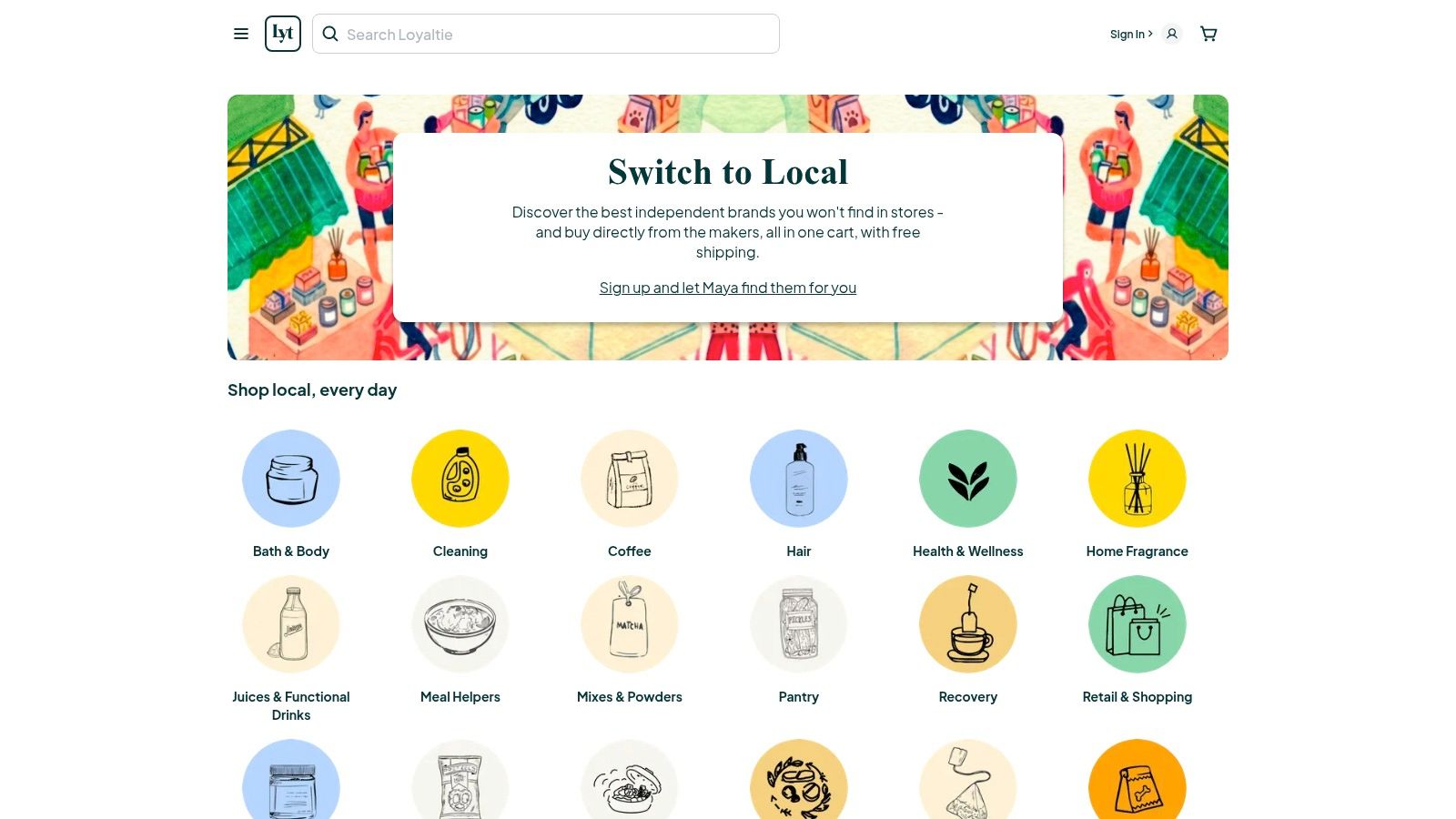
A digital marketplace can help you discover independent brands and local makers without requiring a separate search for every category. Loyaltie is one option where people can discover and buy directly from independent brands across the US, including food and beverage producers. You can use Loyaltie's meal delivery marketplace to explore prepared food options and decide whether regular delivery or a reorder fits your routine.
Before buying, check the producer's location, product details, delivery area, ingredients, and fulfillment method. A convenient checkout is useful, but clear origin information is what makes an online purchase a local one.
A short video can help you see how an online local marketplace fits into the buying process:
Make local buying repeatable
The easiest habit is one you can maintain. Save makers you trust, note seasonal windows, plan around pickup or delivery, and choose a buy-on-a-plan option only when the timing and quantity work for you.
A practical local shopping checklist looks like this:
- Verify the origin: Confirm where the product was grown, made, or packaged.
- Check the route: Find out whether you're buying directly from the maker or through several intermediaries.
- Compare overall value: Consider freshness, ingredients, flavor, and convenience, not only sticker price.
- Start with a reorder: Repeat the products that consistently make your routine better.
Everyday Products You Can Find from Local Makers
Local food reaches far beyond baskets of vegetables. Once you start looking for independent brands, everyday upgrades appear in categories you already shop.
Morning coffee is an easy first swap. Beans from a nearby roaster may give you more information about roast style, origin, and brewing, while the shorter path from roaster to kitchen can preserve the aroma you want.
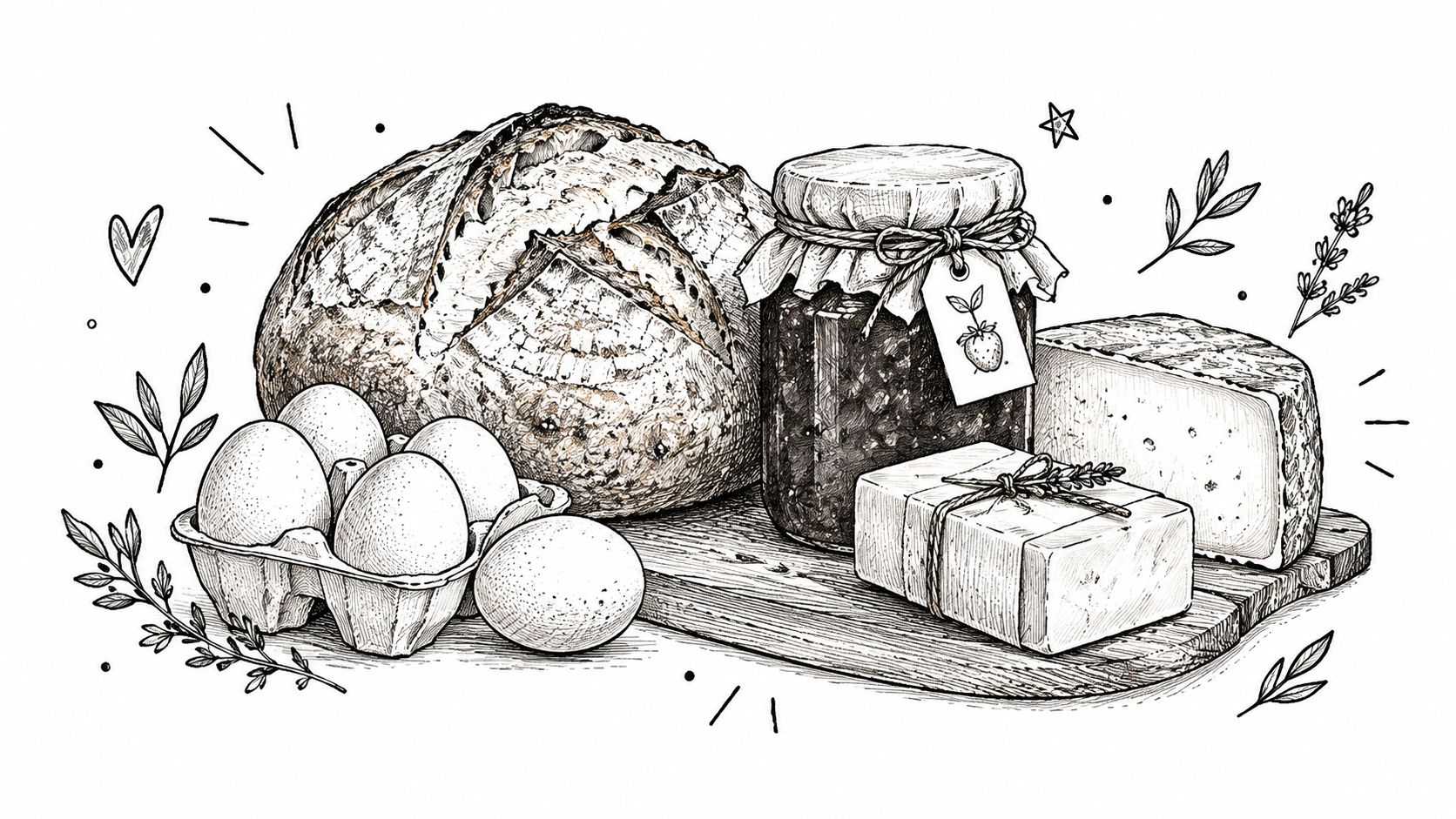
For breakfast or snacks, look for local honey, jam, hot sauce, bread, cheese, granola, pickles, and fermented foods. These products often have a clear maker identity, which makes it easier to understand ingredients and discover flavors that aren't standardized for every supermarket shelf. You can explore a local honey option through Loyaltie's honey marketplace.
Wellness products also fit the same buying logic. Independent makers may offer supplements, teas, bath products, or skincare with detailed ingredient information and a direct way to ask questions. Read the label carefully, especially for supplements, and treat transparent product details as essential rather than optional.
Your home and pets can benefit too. Look for locally produced treats, grooming products, toys, and pet food where the maker clearly explains ingredients and handling. A local product isn't automatically the right product, but direct information gives you a stronger basis for comparison.
The opportunity is broad because direct-to-consumer buying already covers many practical channels, not just farm stands. You can begin with one product that matters to you, then build a collection of independent brands around quality, trust, and usefulness.
Start Your Local Food Journey Today
Local food isn't a sacrifice you make for an abstract ideal. It's a way to find food and everyday products with better flavor, fresher character, clearer ingredients, and a real person behind the label.
Start with one purchase. Visit a farmers market, ask a producer where the product came from, or search for an independent maker who can deliver what you already need. Once you find something that improves your routine, keep it in your regular rotation.
The community impact matters, but it doesn't have to be the only reason you choose local. Buy local because the product earns its place in your home.
Loyaltie is a marketplace where you can discover and buy directly from independent brands, growers, and local makers across the US. Visit Loyaltie to find better everyday food, wellness, skincare, coffee, and pet products from real producers, then make your first local upgrade today.