

You're halfway through a weeknight stir-fry when you reach for soy sauce and remember why you stopped buying it. Maybe soy doesn't fit your diet. Maybe wheat is the problem. Or maybe you want a seasoning that adds savory depth without taking over the whole bowl. That's where coconut aminos earns a place in the pantry.
The name sounds more technical than the product really is. Coconut aminos is a fermented coconut-blossom-sap condiment, not a protein powder or meaningful amino-acid supplement. It tastes savory with a gentle sweetness, works in many of the same places as soy sauce, and often comes from independent makers whose ingredient choices and sourcing deserve a closer look.
Table of Contents
- What Makes Coconut Aminos Different
- How Coconut Aminos Are Made
- Coconut Aminos vs Soy Sauce and Other Alternatives
- Cooking and Flavor Applications
- Health and Nutrition Considerations
- Questions worth asking a maker
What Makes Coconut Aminos Different
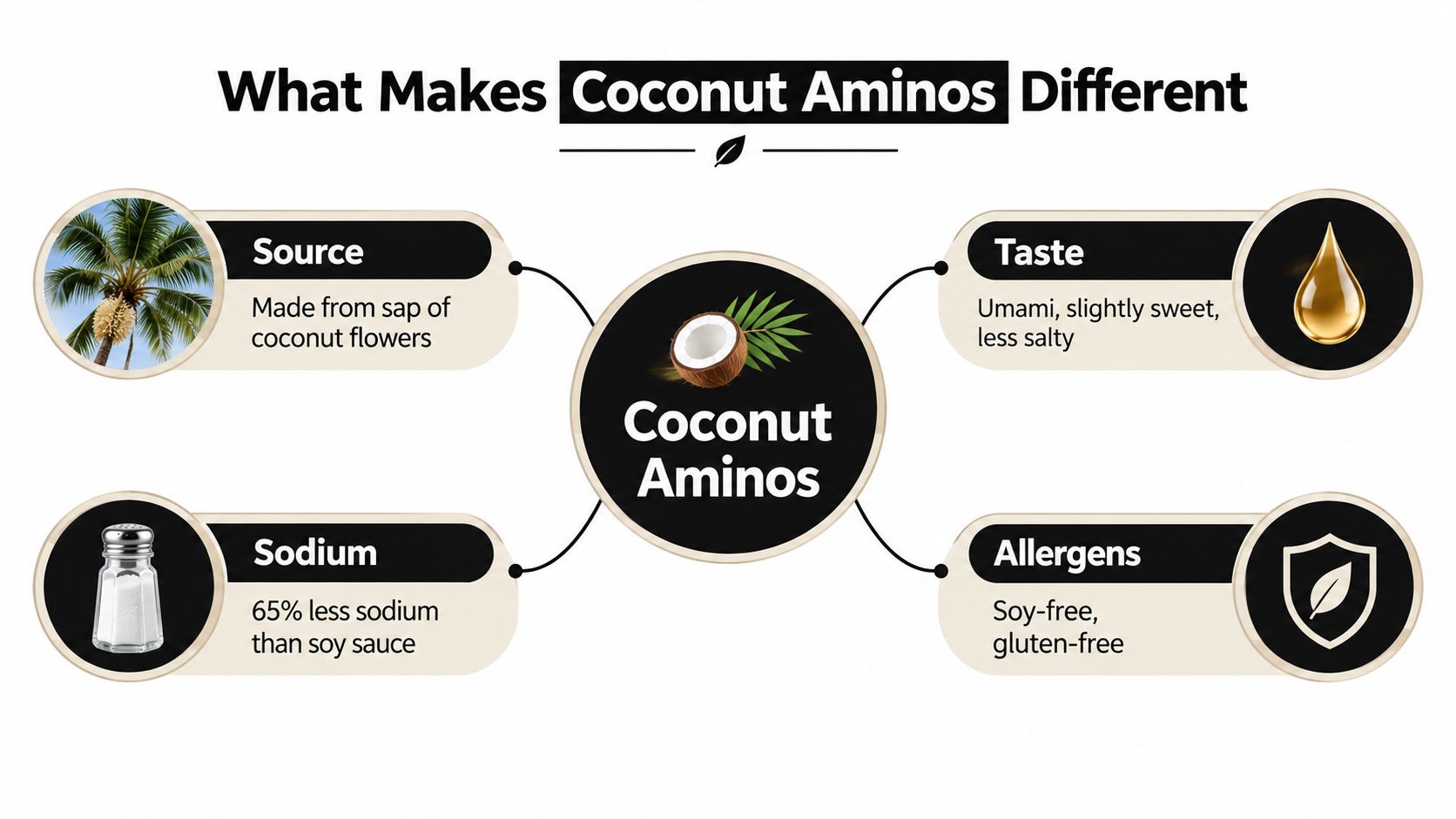
A bottle of coconut aminos can look interchangeable with soy sauce on a crowded pantry shelf, but its raw material and flavor set it apart. Coconut aminos is a seasoning condiment made from coconut blossom sap or nectar, commonly combined with salt and, depending on the recipe, vinegar or water. “Aminos” is mainly a product name here, not an indication that the condiment serves as an amino-acid supplement.
Its flavor is gentler than standard soy sauce. You get a softer savory note and mild sweetness, with less of the sharp, salt-forward impact that can dominate a finished dish. That profile works well in vegetable stir-fries, quick marinades, rice bowls, dipping sauces, and dressings where the vegetables, herbs, or aromatics should remain clear.
The choice also has a sourcing dimension. Independent makers may build their recipe around locally available coconut blossom sap, regional salt, or small-batch fermentation practices. Those decisions can change the sweetness, acidity, and concentration from one bottle to another. Reading the maker's ingredient list and product notes gives you more useful information than treating all coconut aminos as identical.
For cooks avoiding soy or wheat, coconut aminos is typically described as soy-free and gluten-free. That makes it a practical seasoning option for those dietary restrictions, while also appealing to anyone who wants a condiment based on coconut sap rather than the familiar soybean-and-wheat combination. Check the label, especially if you are managing an allergy or following a strict diet, because recipes and manufacturing practices differ.
Kitchen reality: Coconut aminos will not reproduce the taste of soy sauce. Its sweeter, rounder profile is the advantage. Use it when the seasoning should support the dish rather than supply a traditional soy flavor.
Compare bottles before buying. Some makers emphasize a concentrated sap-and-salt base, while others add vinegar or water for a different balance. That variation can help you choose a product suited to a dressing, dipping sauce, or cooked dish, and it offers a closer connection to the independent producer behind the bottle.
How Coconut Aminos Are Made
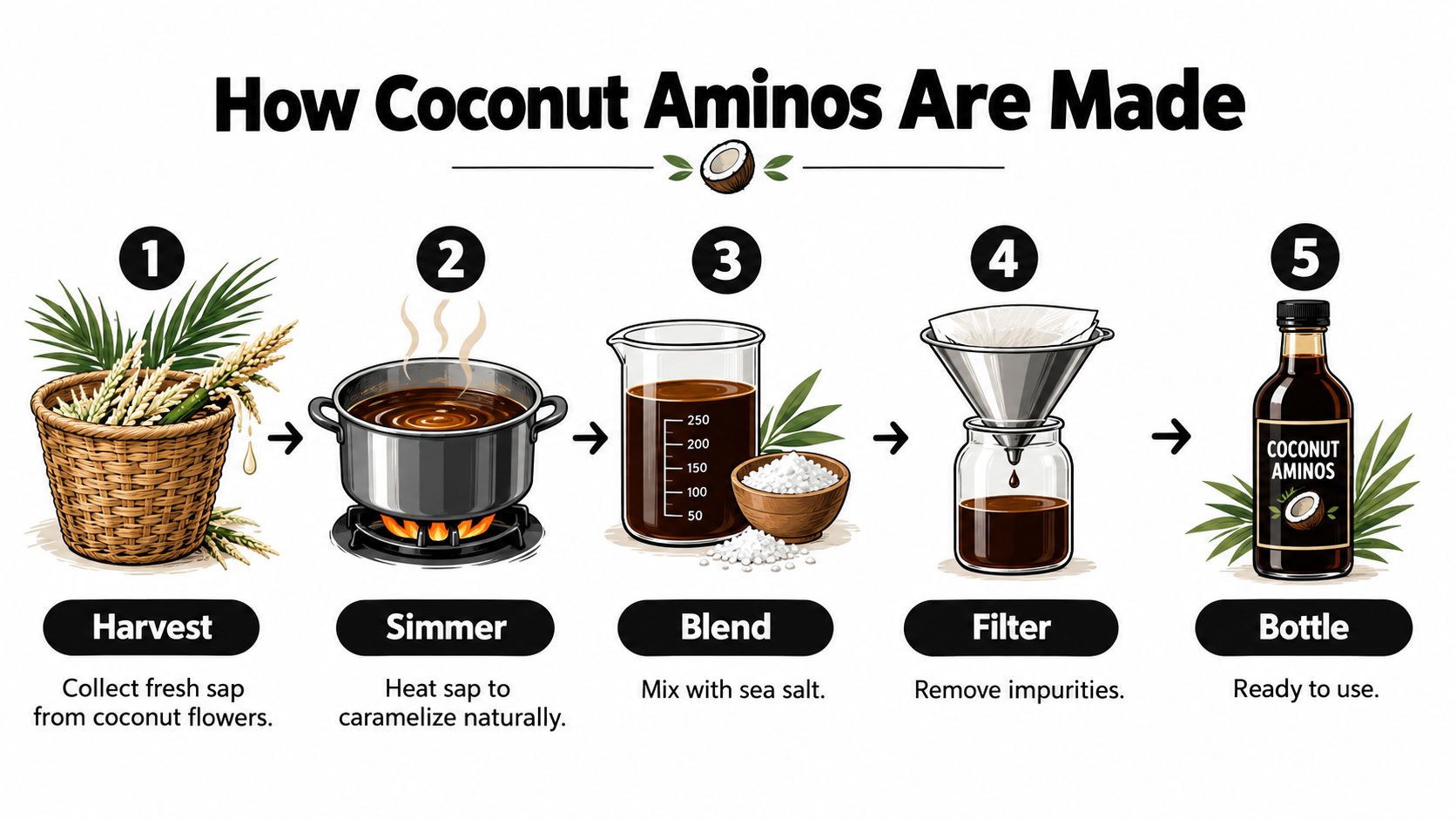
Coconut aminos starts with sap collected from the blossoms of coconut palms. That origin explains both the product's name and its flavor, but it doesn't mean the finished condiment tastes like coconut water or coconut milk. The sap provides the base, and producers transform it into a dark, pourable seasoning through processing and fermentation.
The broad production sequence looks like this:
- Sap collection: Producers gather nectar or sap from coconut flower blossoms.
- Blending: The sap is combined with salt and, depending on the recipe, vinegar or water.
- Fermentation or aging: Time helps develop a deeper savory character.
- Filtration: The liquid is clarified and prepared for packaging.
- Bottling: The finished condiment is sealed for kitchen use.
The details matter because they influence the taste in your bowl. A bottle with a stronger vinegar note may work well in a dressing, while a smoother and sweeter version may be better for a dipping sauce. Salt levels and the balance of sap, vinegar, and water also vary, so a maker's ingredient list tells you more than the front label does.
When you shop, look for a label that clearly identifies coconut blossom sap or nectar, salt, and any additional acid or liquid. You don't need a long list of ingredients to get good flavor. In fact, a short, transparent label makes it easier to understand what you're tasting and compare one maker's bottle with another.
Local sourcing can add another layer of useful information. An independent producer may explain where the sap comes from, how the sauce is fermented, and why the recipe includes a particular salt or vinegar. That kind of detail helps you choose based on flavor and process rather than vague promises.
Coconut Aminos vs Soy Sauce and Other Alternatives
The best substitute depends on what you want the condiment to do. Coconut aminos is usually gentler and slightly sweeter, soy sauce is more familiar and salt-forward, tamari brings a dense soy-based savoriness, and liquid aminos remains another soy-derived option. None is automatically better for every recipe.
A nutrition comparison needs careful label reading because serving sizes and formulas vary. Medical News Today's coconut aminos comparison notes that reported sodium can range from about 66 mg to 270 mg per listed teaspoon or tablespoon serving, depending on the brand and serving basis. A common benchmark places coconut aminos at about 90 mg of sodium per teaspoon, compared with about 280 to 300 mg for the same amount of regular soy sauce, according to Healthline's nutrition guide.
| Condiment | Sodium (mg) | Sugar (g) | Gluten-Free | Soy-Free |
|---|---|---|---|---|
| Coconut aminos | About 66 to 270, label varies | Varies by product | Typically yes | Typically yes |
| Regular soy sauce | About 280 to 300 per teaspoon benchmark | Varies by product | Not always | No |
| Tamari | Varies by product | Varies by product | Often, check label | No |
| Liquid aminos | Varies by product | Varies by product | Often, check label | No |
The table is a decision aid, not a reason to skip the bottle's nutrition panel. Lower sodium doesn't mean sodium-free, and soy-free doesn't mean suitable for every allergy or dietary need. If you're cooking for someone with a serious allergy, verify the full label and manufacturer's allergen statement.
Tamari makes sense when you want a richer, deeper soy flavor and don't need to avoid soy. Liquid aminos can provide a familiar savory punch, but it's also generally soy-based. For shoppers comparing food choices beyond their own kitchen, a guide to digital menu alternatives for restaurants can help frame the same question in another setting: which substitution preserves the experience while fitting the diner's restrictions?
For a soy-free snack direction, plant-based teriyaki jerky shows how sweet-savory seasoning can work outside a bottle, though always read the product details if avoiding soy because product descriptions and ingredients must align.
Cooking and Flavor Applications
Coconut aminos performs best when you treat it as a balanced seasoning, not a one-for-one chemical replacement for soy sauce. Start with the amount your recipe calls for, then taste before adding more salt. Because the sauce can be sweeter and less salty, you may need extra acidity, ginger, garlic, chili, or another savory ingredient to recreate the depth you expect.
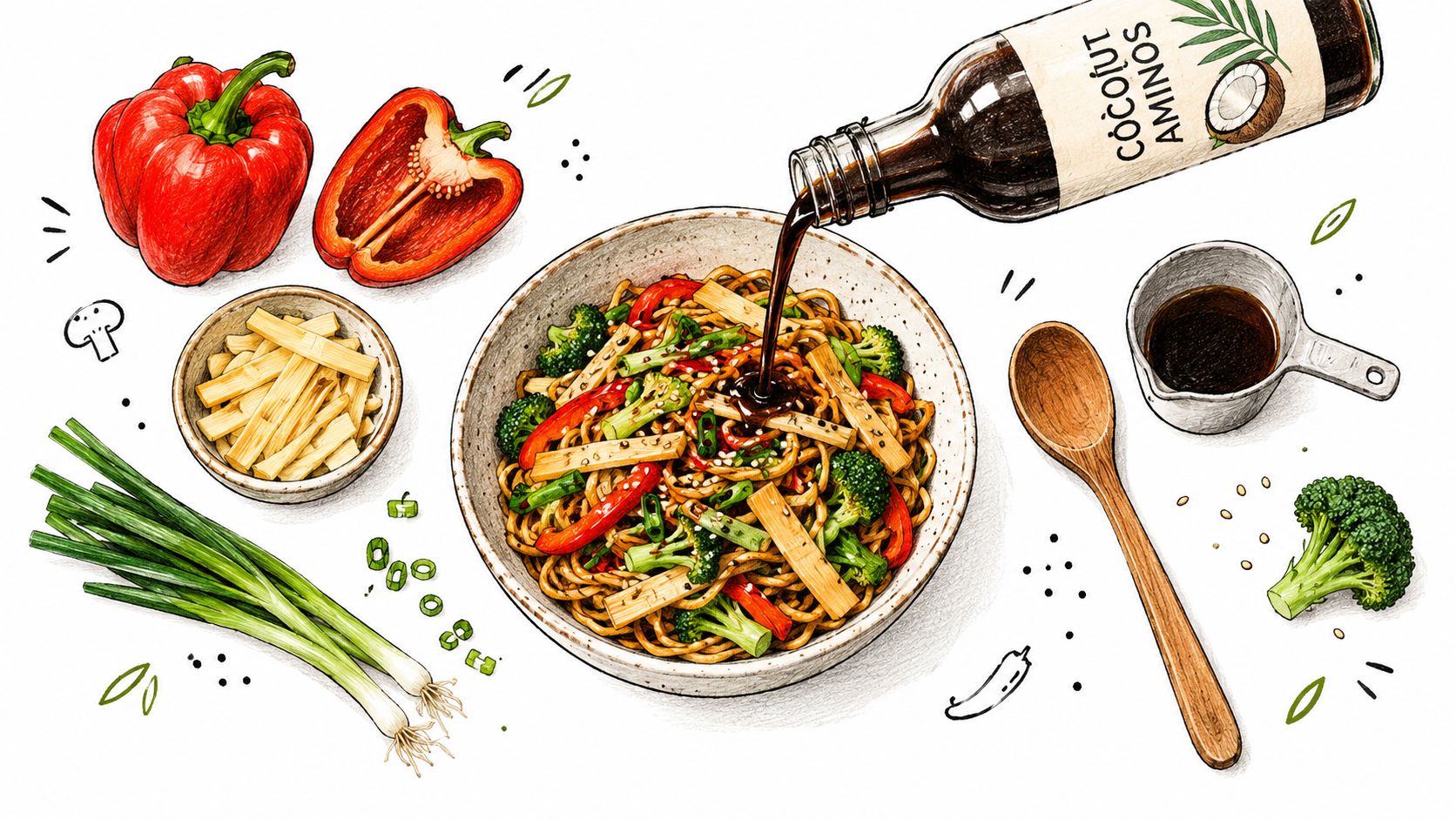
For a fast stir-fry, combine coconut aminos with grated ginger, minced garlic, lime juice, and a little toasted sesame oil. Pour it in near the end of cooking so the sauce coats the vegetables and noodles without disappearing into the pan. The mild sweetness helps browning, but high heat can also make the sauce taste concentrated, so add it gradually.
Try these uses when you want a dependable starting point:
- Rice bowls: Spoon it over warm rice, roasted vegetables, avocado, and a fried egg.
- Marinades: Mix it with citrus, garlic, oil, and herbs for chicken, fish, tofu, or mushrooms.
- Dressings: Whisk it with olive oil, vinegar, mustard, and lime for a savory salad dressing.
- Dips: Add chili, sesame oil, or grated ginger for dumplings, spring rolls, or roasted vegetables.
- Soups and stews: Stir in a small amount near the end to deepen the broth without making it taste like soy sauce.
Substitution rule: Start with equal volume, taste, then adjust salt and acid separately. Adding more coconut aminos to chase soy sauce's saltiness can make the dish sweeter than you intended.
A salt-free seasoning blend such as this garlic and onion all-purpose seasoning can help build aroma without asking the condiment to do all the work.
For a visual example of the sauce in a noodle application, watch this cooking demonstration:
Coconut aminos isn't ideal when you need the exact salty intensity of traditional soy sauce, especially in a classic dipping sauce or a dish built around soy's fermented character. In those cases, tamari or soy sauce may deliver the flavor you're after more efficiently.
Health and Nutrition Considerations
Coconut aminos can suit a thoughtful pantry, but it remains a condiment, not a health supplement. Judge it by the whole nutrition label, your dietary needs, and the amount you add. The name alone says little about how a particular bottle fits your diet.
A teaspoon can contain roughly 40 calories, 2 g of carbohydrates, about 1.7 g of sugar, and only trace protein, around 0.05 g, according to WebMD's nutrition information. The “aminos” wording should not lead you to count the sauce as a protein source. Its role is seasoning, not a meaningful protein serving.
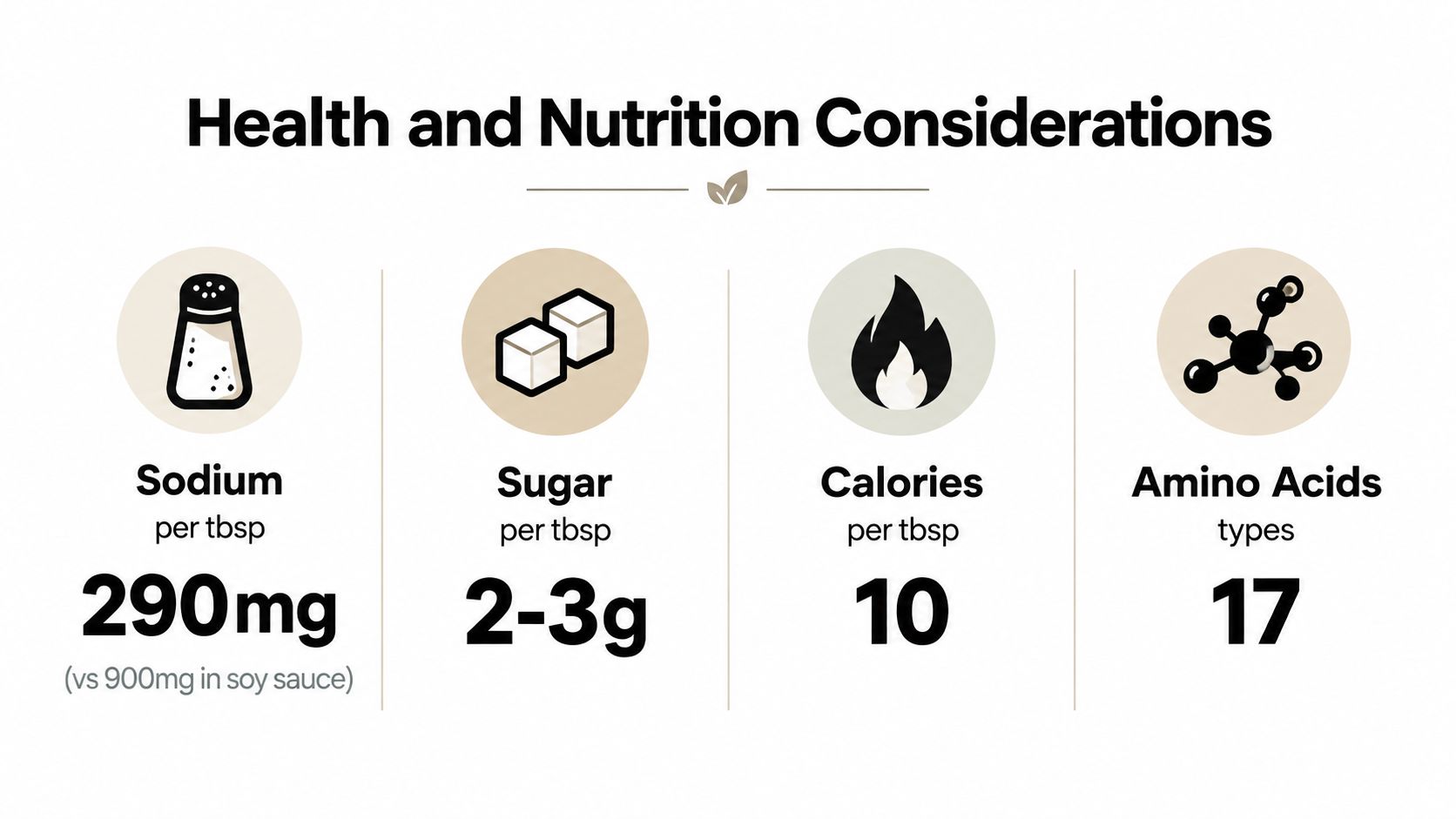
Sodium is the practical trade-off. Coconut aminos is often lower in sodium than regular soy sauce, yet formulas vary, so read the bottle rather than relying on the category. If you are limiting salt, measure each pour and account for broth, spice blends, pickles, and packaged noodles elsewhere in the meal.
The usual soy-free and gluten-free positioning can simplify meal planning, but neither label should replace verification. Recipes differ, and anyone managing an allergy or medically necessary restriction should check the manufacturer's ingredient statement and allergen information.
For pantry experiments, an organic almond and coconut flour blend belongs to another part of the kitchen. It reinforces the same useful buying habit: assess the actual ingredients and intended use, especially when an independent maker presents a broad wellness claim.
Finding Local Makers and Independent Brands
The biggest quality difference may not come from the phrase “coconut aminos” on the front. It may come from who made the bottle, how clearly they describe the ingredients, and whether they stand behind the sourcing. Independent brands and local makers often give you a closer view of those choices than a mass-produced label does.
That doesn't mean every independent product is automatically better. It means you have a better chance of finding a maker with a distinct flavor profile, a transparent process, and a reason for using a particular sap, salt, or vinegar. A quality upgrade shows up in the bottle itself. The sauce should taste balanced, pour cleanly, and work across several meals instead of sitting untouched because it's too sweet, too sharp, or too salty.
Questions worth asking a maker
- Where does the sap come from? Look for a clear explanation of the coconut blossom source and supply chain.
- What else is in the bottle? Salt, vinegar, and water can change the final flavor.
- How is the sauce processed? Fermentation or aging details help you understand its depth and acidity.
- What does the maker recommend? Specific uses often reveal whether the product is designed for marinades, dipping, cooking, or dressings.
- How is it packaged? A sealed bottle with clear storage guidance gives you confidence after purchase.
Buying directly from the maker can also make the product easier to understand. You're not choosing only from a shelf position or a polished claim. You can compare batches, ask about sourcing, and find a sauce that matches the way you cook.
Local discovery works beyond one category. Sonoma County Navigator's selection of made-local products is a useful place to explore regional makers and see how food, wellness, and household goods gain character from the people producing them.
The same approach applies to coffee, skincare, supplements, pet products, and everyday pantry staples. Look for a maker who explains the product plainly, names the ingredients, and makes something you'll want to use repeatedly. Better buying starts with better information, not a louder label.
Buying, Storing, and Using Tips
A good bottle should make dinner easier, not create another research project. Start by checking the ingredient list, the nutrition panel, the serving basis for sodium, and the allergen information. If the label says “coconut aminos” but doesn't clearly explain the base ingredients, choose a different bottle or contact the maker.
Use this quick buying filter:
- Choose the flavor you need. A sweeter bottle suits dressings and roasted vegetables. A more savory version may work better in marinades and noodle dishes.
- Check the salt level. Compare products using the same serving size, because a teaspoon and tablespoon comparison can mislead you.
- Read the full ingredient list. Look for coconut blossom sap or nectar, salt, and any vinegar or water.
- Buy a size you'll use. A bottle that fits your cooking routine is better than an oversized one that loses its place in the refrigerator.
Store coconut aminos according to the maker's instructions. Keep the cap clean, wipe the neck after pouring, and avoid leaving the bottle open beside a steaming pan. Those habits protect the flavor and prevent sticky residue from building up around the opening.
For your first meal, keep it simple. Toss cooked noodles with coconut aminos, lime juice, garlic, and sesame oil. Or brush it onto mushrooms and vegetables before roasting, then finish with scallions and toasted seeds. You can also stir it into a quick dipping sauce with ginger and chili, or add a small splash to lentils, soup, or a tomato-based stew.
Taste as you go. Coconut aminos adds savory depth and sweetness, but it won't replace every function of salt, soy sauce, vinegar, or stock. Once you understand that distinction, it becomes a flexible everyday ingredient rather than a novelty bottle.
Loyaltie helps you discover and buy directly from independent brands and local makers across the US, including food, wellness, skincare, and pantry products made with care. Visit Loyaltie to find better alternatives from real makers, with the convenience of online shopping and no middleman.