


You're staring at a gift list, trying to find something that feels personal without becoming a guessing game. The familiar basket of crackers, sweets, and jam may look generous, yet it can still miss the recipient's tastes, dietary needs, or everyday habits. Worse, a perishable box can arrive late, warm, or already past its best.
The better approach is to choose unique food gifts for the person, not merely unusual products. Think about the flavors they reach for, whether they'll eat alone or share with a group, what they can safely enjoy, and how the gift will travel. Buying directly from independent brands and local makers adds another layer of character, because the product has a clear point of view rather than a mass-produced feel.
Table of Contents
- Use a simple compatibility filter
- Build the gift around what they can enjoy
- Make the information part of the presentation
- Personalize without making the package fussy
- Choose shelf stability when shipping needs to stay simple
- Treat perishables as a food-safety decision
Introduction to Unique Food Gifts That Actually Delight
A friend who loves breakfast might appreciate fresh coffee, a bright fruit spread, or a baking mix more than a basket filled with random snacks. A host may need something easy to open and pass around. A colleague with food allergies needs clear ingredient information before the wrapping becomes exciting.
That's why the strongest unique food gifts aren't chosen for novelty alone. They combine a memorable flavor, a practical format, a thoughtful presentation, and a clear fit with the recipient. A smoky sauce set can delight someone who grills every weekend, while the same gift may sit untouched in the pantry of someone who prefers sweet, mild flavors.
Why this category keeps growing
Food gifting has become a major consumer category rather than a niche novelty. Packaged Facts estimated U.S. consumer and corporate food gifting sales at about $21 billion in 2014, roughly $18 billion in 2016, and $42 billion in the U.S. by 2024, with sales projected to grow around 5.2% annually through 2028 according to Packaged Facts reporting. The same source found that 42% of U.S. adults had purchased at least one specialty food gift for someone else during the prior year.
Those purchases often involve several recipients. Among buyers in that research, 33% bought for 3–4 people, 22% for 2 people, 23% for 1 person, and 22% for 5 or more people. Food gifts clearly serve birthdays, thank-yous, holidays, workplace gestures, hosts, households, and shared celebrations.
This guide will help you make the choice feel simple. You'll learn how to match flavor and format, check dietary compatibility, judge shelf life, protect food in transit, personalize the package, and find independent makers across the US. The aim isn't to find the strangest ingredient on the shelf. It's to give something that tastes good, arrives in good condition, and makes the recipient think, “You paid attention.”
What Makes a Food Gift Truly Unique
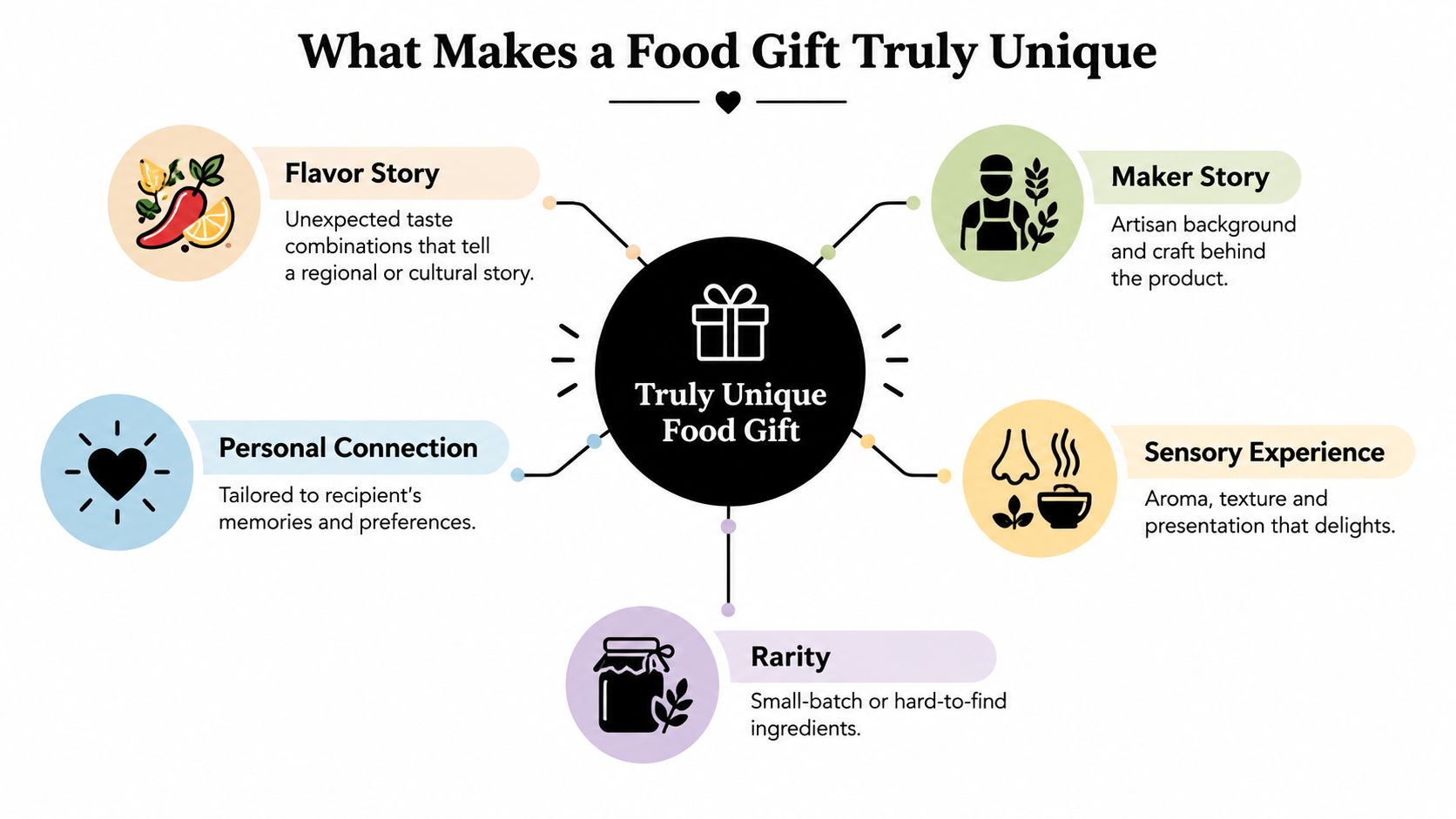
A unique food gift gives the recipient more than an unfamiliar flavor. It gives them a reason to remember the experience. The best boxes often have three layers working together: a flavor story, a maker story, and a clear sense that someone selected the contents for a particular person.
Think of a curated food gift like a playlist. One song can be excellent, but a sequence creates a mood. A coffee sampler can guide someone through different morning flavors. A mole and salsa set can turn an ordinary dinner into a tasting moment. A baking mix bundle can give a home baker a practical project rather than another decorative object.
A useful test: If every item could be swapped with a generic supermarket equivalent, the gift probably needs a stronger point of view.
Flavor and story should work together
A regional sauce, a carefully blended seasoning, or a locally made fruit preserve feels distinctive when its taste has context. You don't need an exotic ingredient for the gift to feel special. A familiar item can become more memorable through a clear origin, thoughtful recipe idea, or maker perspective.
Buying directly from the maker also helps you understand what you're giving. Independent brands can make ingredient choices, production methods, and intended uses easier to see. That transparency helps you choose with more confidence than a box assembled around filler.
Fit matters more than surprise
Novelty can create uncertainty. A very hot sauce may sound adventurous, but it won't delight someone who avoids heat. A rich chocolate assortment may be unsuitable for a recipient managing sugar intake. A basket packed with cheese and fresh fruit may create unnecessary shipping pressure when a shelf-stable pantry set would work better.
Curated compatibility becomes the better definition of uniqueness. The gift should feel distinctive while still being easy to eat, understand, store, and share.
For coffee lovers who enjoy variety or regular delivery, Cumbre Coffee's curated gift plans offer a useful example of how a familiar category can become more personal through selection and timing. You can apply the same principle to sauces, baking goods, tea, snacks, and pantry staples.
A thoughtfully selected mole and salsa gift box illustrates the idea well. Its appeal comes from variety, practical use, and dietary clarity, not from being strange for the sake of being strange.
How to Match Flavor Profiles and Formats to Your Recipient
Start with what the recipient already enjoys, then choose a format that fits how they eat. You're not trying to display your own adventurous taste. You're trying to make the recipient's next snack, breakfast, dinner, or gathering better.
Sweet gifts suit people who bake, host brunch, or enjoy an evening treat. Savory assortments work well for cooks, snackers, and households that build casual meals around crackers, spreads, and dips. Spicy or smoky gifts are more specific, so they're strongest when you already know the recipient likes heat, grilling, or bold seasoning.
Bright flavors, such as citrus, fruit, vinegar, or herbs, can make a gift feel lively without being intense. Cozy formats, including hot chocolate, tea, coffee, and baking mixes, often suit winter birthdays, thank-you gestures, and recipients who enjoy slow rituals.
A quick matching table
| Recipient Type | Flavor Direction | Best Format | Why It Works |
|---|---|---|---|
| The breakfast lover | Sweet, nutty, fruity, or warmly spiced | Coffee sampler, jam set, tea collection, or baking mix | It fits a daily ritual and gives them an easy way to try something new |
| The home cook | Savory, smoky, herbal, or gently spicy | Sauce trio, seasoning collection, or pantry box | The ingredients can move directly into meals |
| The adventurous eater | Bright, fermented, hot, or regionally inspired | Tasting set with several small formats | Variety creates discovery without committing to one large item |
| The host | Balanced sweet and savory | Shareable hamper, snack box, or board-ready assortment | Guests can open it, pass it around, and enjoy it together |
| The careful minimalist | One excellent consumable | Coffee, chocolate, olive oil, tea, or a focused pantry staple | It avoids clutter and keeps the gift easy to use |
| The baker | Warm spice, chocolate, fruit, or vanilla | Baking mix bundle with a practical kitchen helper | The gift becomes an activity, not just a package |
Choose the format before filling the box
A snack box works when the recipient likes grazing. A pantry set suits someone who cooks. A baking mix creates a clear weekend project. A shareable hamper makes more sense for a household or workplace than a single delicate confection.
Coffee can be personal without being complicated. A flavored Arabica coffee sampler gives the recipient several directions to explore, making it a stronger choice than guessing one large bag of beans.
Ask yourself three questions before buying:
- What will they eat first? Pick the item that matches their immediate habits.
- Will they enjoy it alone or with others? Use individual portions for personal rituals and larger assortments for sharing.
- How much preparation feels welcome? Choose a baking mix for someone who enjoys a project, but select ready-to-eat treats for a recipient who wants instant enjoyment.
A good gift doesn't force a new personality onto someone. It gives their existing preferences a more interesting place to go.
Choosing Gifts for Dietary Needs and Preferences Without Guesswork
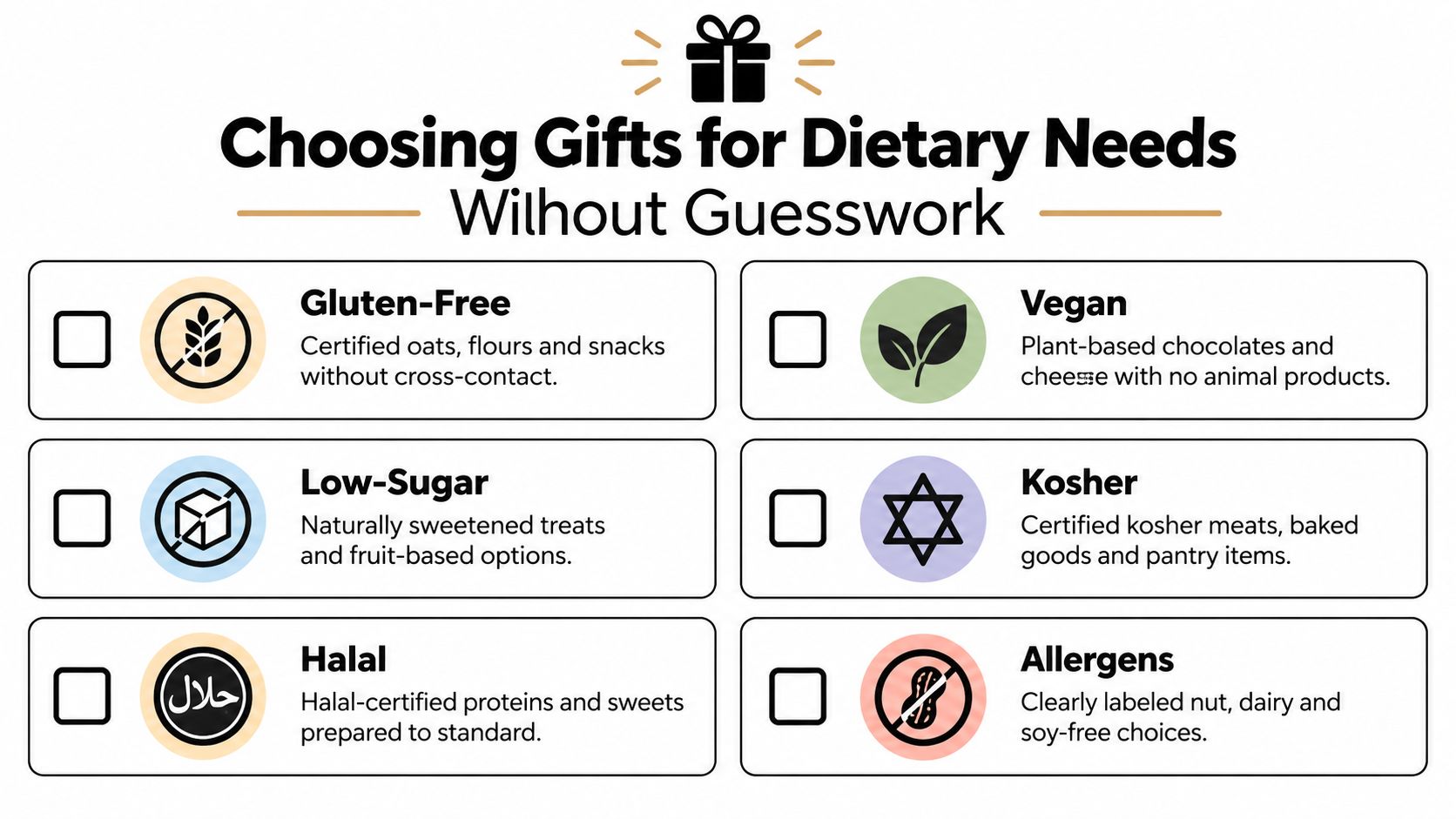
A food gift only works if the recipient can safely and comfortably eat it. Ingredient clarity matters more than an unusual flavor, especially when someone follows a gluten-free, vegan, low-sugar, kosher, or halal diet, or manages allergies.
More uniqueness can mean more uncertainty. A complex sauce, filled confection, or mixed assortment may contain ingredients that aren't obvious from the front of the package. Treat dietary information as part of the gift's thoughtfulness, not as an administrative detail.
Use a simple compatibility filter
First, identify the actual requirement. “They eat healthy” isn't specific enough. You need to know whether they avoid gluten, animal products, added sugar, particular allergens, or foods prepared outside a religious standard.
Next, read the full ingredient list. Don't rely only on a product name or a front-label phrase. Check sauces, fillings, flavorings, toppings, and inclusions such as nuts or dairy.
Then, look for certification when it matters. A recipient with a serious allergy or celiac disease may need more than a general claim. Check whether the maker explains facility practices and cross-contact controls.
Finally, ask the maker directly if anything remains unclear. A careful question about shared equipment, preparation areas, or ingredient sourcing is better than making an unsafe assumption.
Build the gift around what they can enjoy
A gluten-free baking mix can be a practical choice when the label is clear and preparation details are easy to follow. This gluten-free baking mix bundle offers several baking directions while keeping the gift centered on an activity.
For someone reducing sugar, choose a focused assortment rather than a box where every item needs investigation. A guide to sugar-free gift ideas from Rip Van can help you think in terms of clearly positioned treats and practical alternatives.
Make the information part of the presentation
Add a small note that says what you checked. You might write, “I chose this because it's labeled vegan,” or “I checked the ingredient list for wheat and nuts.” Don't promise safety beyond what the maker confirms, but do show the recipient that compatibility shaped your decision.
The best dietary-friendly gift feels abundant, not restricted. Give them appealing flavors and useful choices, not a package that looks like an apology.
Packaging Personalization Budget Shipping and Food Safety Essentials
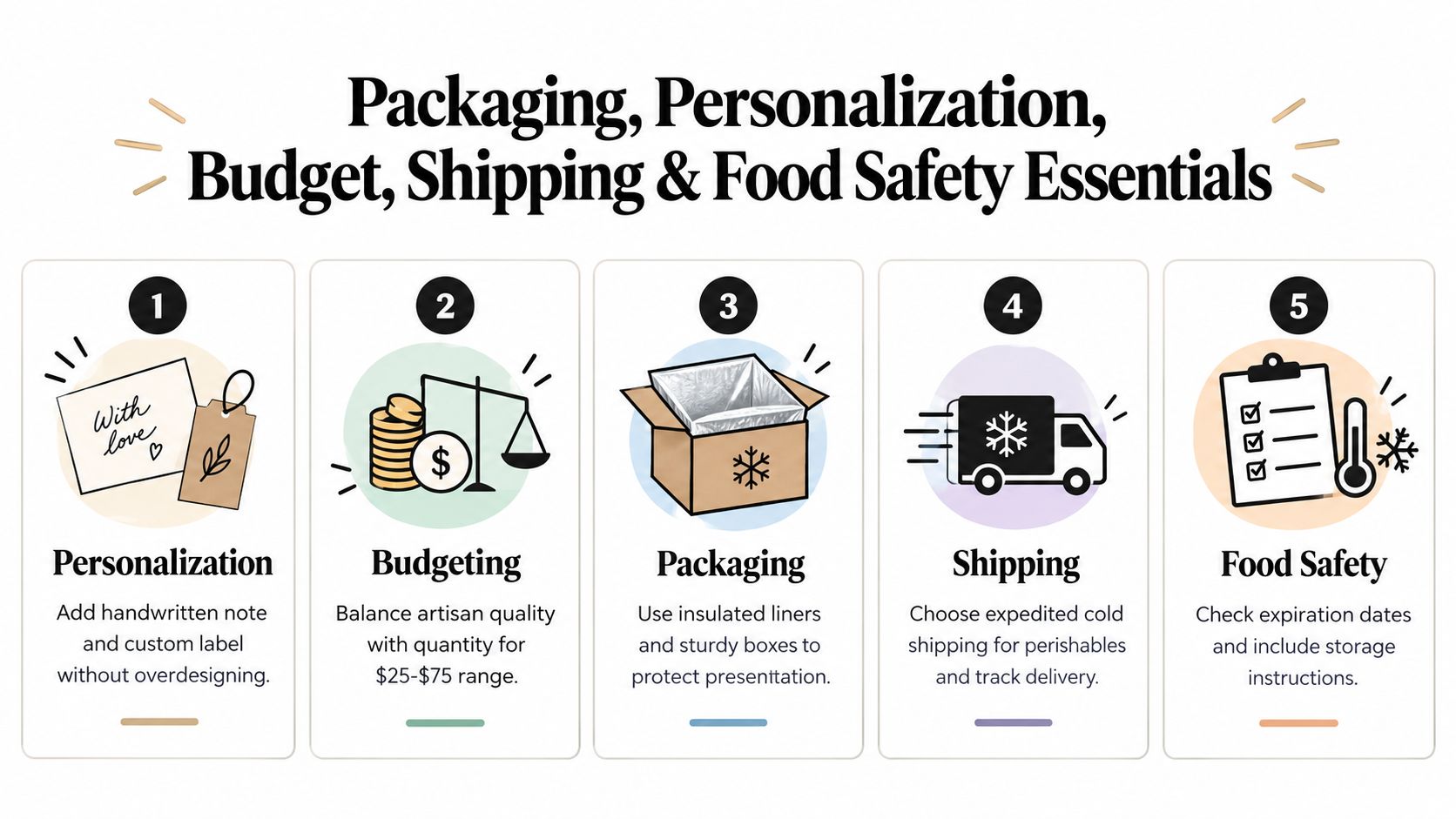
Presentation should protect the food, not bury it under decoration. A sturdy box, a thoughtful note, and a clear arrangement often feel more personal than elaborate filler that creates waste or makes the contents hard to reach.
Set your budget around the recipient and the occasion, then decide whether the gift is meant for one person or a group. The packaging guide supplied for this article references a $25–$75 range as a practical budgeting frame, but the right choice still depends on quantity, shipping, dietary requirements, and whether the box contains perishables.
Personalize without making the package fussy
Use one clear theme. A grilling box might include sauces and seasonings. A baking gift could pair a mix with a compact kitchen tool, such as a mini silicone spatula for scraping batter, frosting, or the last spoonful from a jar.
Add a handwritten note with a suggestion for the first use. “Try the citrus sauce with roasted vegetables,” or “Save this coffee for a slow Saturday morning” gives the recipient an easy starting point. If the gift is for a group, include a serving suggestion and place the items where they can be opened without unpacking the entire box.
Choose shelf stability when shipping needs to stay simple
Shelf-stable assortments can include crackers, chocolate, jams, nuts, coffee, and tea. Commercial guidance says these products typically remain unopened for 1 to 12 months, depending on the component, according to gift basket shelf-life guidance. Quality can decline before safety becomes the immediate concern, especially when nuts and coffee face heat, oxygen, or light.
Fresh fruit, baked goods, cheese, and cured meats have a much shorter usable window, often measured in days or a few weeks. That doesn't make them poor gifts. It means you need a delivery date, storage plan, and recipient who'll be available.
Treat perishables as a food-safety decision
Refrigerated or frozen gifts require temperature-controlled fulfillment, not merely quick postage. Federal food-safety guidance says these items should remain at 40°F (4°C) or below during transit and should arrive frozen, partially frozen, or at refrigerator temperature. If they arrive warmer than that, the guidance says they should be discarded. Review Michigan State University's mail-order food safety guidance before sending anything temperature-sensitive.
Use insulated packaging, frozen gel packs, or dry ice when appropriate. Ship early in the week, choose overnight or next-day delivery for suitable products, track the parcel, and tell the recipient when to expect it.
A final check keeps the experience smooth:
- Confirm dates: Check best-by information before ordering.
- Protect the contents: Select sturdy packaging and cushioning for jars and brittle treats.
- Plan storage: Tell the recipient whether items belong in a pantry, refrigerator, or freezer.
- Match the carrier service: Use expedited cold shipping for foods that need temperature control.
- Think about the occasion: A BBQ set may be ideal for a backyard host. A guide to BBQ gift sets for grillers can help you build around that use case rather than around random products.
Where to Find Independent Makers and Why Buying Direct Matters
Independent brands and local makers give you a better route to food gifts that feel specific. Look for clear ingredients, useful product descriptions, production details, and reviews that explain how people use the item. You're looking for evidence that the product has a purpose, not just attractive packaging.
Buying directly from the maker can also make the product story easier to follow. The maker may explain why a blend tastes smoky, how a baking mix performs, or which foods pair well with a sauce. That information helps you choose for the recipient rather than choosing from a generic category.
The direct market is larger than it looks
USDA's 2022 Census of Agriculture recorded $17.5 billion in producer sales through direct marketing channels, a 25% inflation-adjusted increase from 2017, according to the Economic Research Service's charts of note. Those channels included direct-to-consumer sales as well as sales to retail outlets, institutions, and intermediate markets such as food hubs.
Direct-to-consumer sales reached $3.26 billion in 2022, representing 0.6% of total US farm sales, while the average operation selling directly to consumers reported $27,981 in gross direct sales, as described by the National Sustainable Agriculture Coalition. These figures show that buying from producers online isn't a fringe shopping habit. It's part of a substantial food commerce network.
USDA also changed its data structure by separating intermediated sales into retail markets, institutions, and intermediate markets, and by adding a question about processed or value-added products sold through all marketing channels, according to the Agricultural and Applied Economics Association. That makes it easier to understand where makers and producers sell beyond a traditional farm stand.
Use Loyaltie as a discovery shortcut
Loyaltie is a marketplace where people discover and buy directly from independent brands in the US, with no middleman between the maker and the shopper. Browse by category, compare ingredients and formats, read the product details, and choose a gift that fits the recipient's real habits.
For example, a baking mix becomes more memorable when you pair it with a note about the first recipe to try. A coffee assortment can become a morning ritual. A pantry set can create a dinner theme. The product doesn't need to be obscure. It needs to be well chosen, clearly described, and made by people with a distinct approach.
For makers, the same marketplace provides a way to reach local buyers online and present products beyond a single physical location. That direct connection gives shoppers more context and gives producers a clearer place to explain what makes their food worth choosing.
Your Next Unique Food Gift Made Simple
Start with the recipient's habits. Do they bake, snack, grill, drink coffee, host gatherings, or enjoy trying sauces with dinner? That answer narrows the flavor family and makes the format easier to choose.
Next, check compatibility before you fall in love with the packaging. Review ingredients, certifications, allergen notes, and cross-contact information. If you're unsure, ask the maker rather than guessing.
Then decide whether the gift will be eaten alone or shared. A personal coffee set suits one person. A shelf-stable snack assortment, sauce trio, or board-ready box can create a social moment for a household, host, or office.
Finally, match the shipping method to the food. Ambient-stable goods offer flexibility. Perishables need a delivery plan, insulation, temperature control, and someone available to receive them.
The most memorable gift usually isn't the most exotic one. It's the one that tastes right, fits the recipient's life, arrives safely, and shows you noticed what they enjoy. Independent makers make that kind of choice easier because their products often have a clearer flavor identity and a more direct story.
Loyaltie helps you discover and buy directly from independent brands and local makers across the US, from coffee and pantry gifts to wellness and everyday goods. Visit Loyaltie to find a unique food gift that fits the person, the occasion, and the moment you want to create.