
You're standing in the pancake-syrup aisle, comparing two bottles that look almost identical. One says “original,” another says “natural,” and a third proudly announces no high fructose corn syrup. You want something that pours beautifully, tastes rich, and doesn't leave that overly sweet, processed finish. You also don't want to spend ten minutes decoding every line on the back.
A syrup without high fructose corn syrup can be a simple way to choose a more characterful pantry staple. The better bottle might come from an independent maker using maple, cane sugar, honey, fruit, or dates, rather than a mass-produced formula built mainly for low cost and long shelf stability.
You'll learn what HFCS is, how to identify it quickly, how alternatives behave in cooking, and why “HFCS-free” doesn't mean sugar-free. You'll also get a practical way to discover local makers and buy directly from the maker, so your next pour can be both delicious and more intentional.
Table of Contents
- Introduction to Syrup Without High Fructose Corn Syrup
- Why manufacturers used it
- Why you might choose another syrup
Introduction to Syrup Without High Fructose Corn Syrup
The first test is simple. Pour the syrup over pancakes, take a bite, and notice whether the sweetness tastes rounded and layered or flat and overwhelming. A good syrup should make breakfast more enjoyable, not force you to choose between familiar waffle comfort and an ingredient list you feel good about.
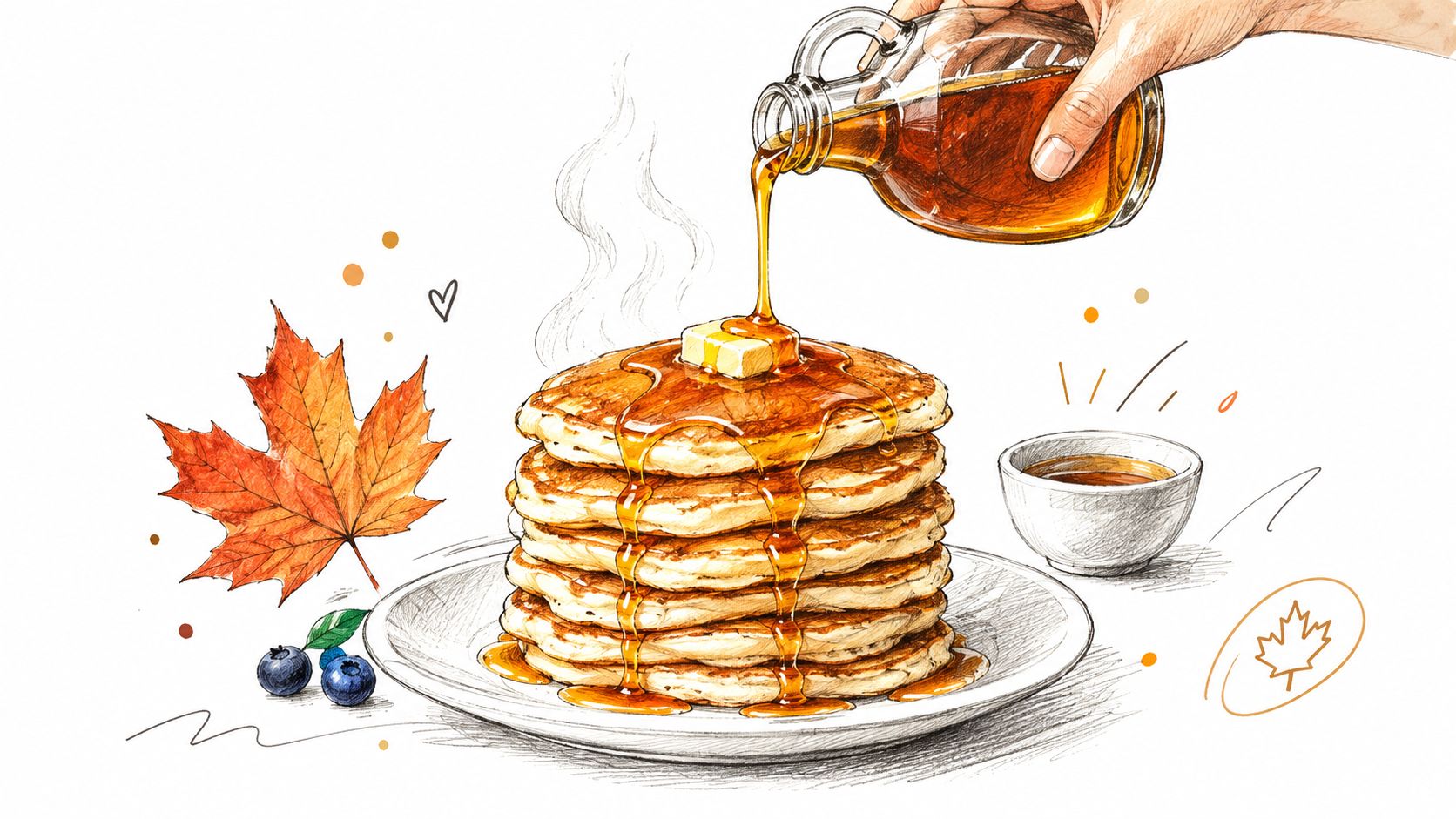
The phrase syrup without high fructose corn syrup describes a formulation choice, not a complete nutrition claim. A bottle may use pure maple, cane sugar, honey, agave, fruit, or another sweetener system. Those choices can bring more distinct flavor and a cleaner-tasting finish, but they still add sweetness and calories.
That distinction helps you shop without falling for either extreme. You don't have to treat every HFCS-free product as automatically healthy, and you don't have to assume every alternative is bland or expensive. The useful question is, what's in the bottle, how does it taste, and how will you use it?
A better pantry upgrade starts with flavor. Choose a syrup you'll enjoy using in a sensible portion, then check the label to understand what created that flavor.
Independent brands and local makers can make this search more rewarding. Instead of one standardized formula designed for broad distribution, you may find maple syrup with a recognizable harvest character, cane syrup with a buttery finish, or fruit syrup that adds brightness to yogurt and drinks. Buying directly from the maker can also make the product story easier to understand, with no middleman between you and the person or brand producing it.
By the end of this guide, you'll be able to scan a syrup label quickly, distinguish ingredient claims from nutrition facts, match a sweetener to pancakes or baking, and find independent alternatives across the US with more confidence.
What High Fructose Corn Syrup Is and Why You Might Skip It
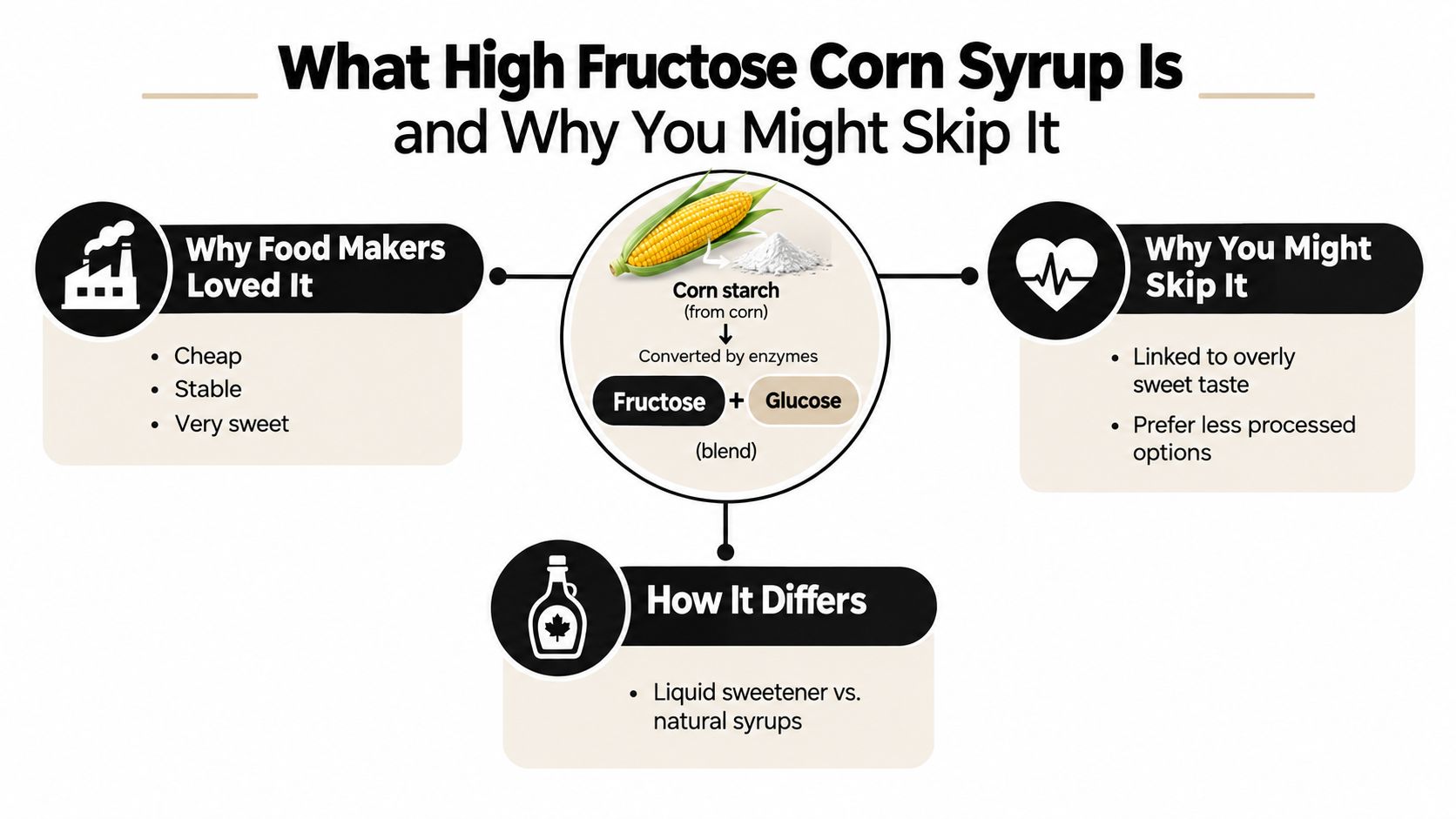
High-fructose corn syrup, or HFCS, is a liquid sweetener made from corn starch. Manufacturers break the starch down into glucose, then use enzymes to convert part of that glucose into fructose. The result is a blend of glucose, fructose, and water, with a composition selected for how the food needs to taste and behave.
Think of it as a sweetness dial built for a factory. HFCS-42 contains about 42% fructose, while HFCS-55 contains about 55% fructose, with the balance mostly glucose and water, as described in federal regulations for the ingredient (the federal specification for HFCS grades). HFCS-55 is commonly used in soft drinks, while HFCS-42 appears in products such as baked goods, canned fruits, condiments, and dairy foods (the FDA's HFCS questions and answers).
Why manufacturers used it
Food makers valued HFCS because it's liquid, stable, easy to blend, and low-cost. Those characteristics suit products that need consistent sweetness, moisture retention, and predictable processing at scale. A liquid sweetener can also be easier to pump and mix than granulated sugar in large production systems.
HFCS was commercialized in the United States in 1967. Its use expanded rapidly through the 1980s, and U.S. per-capita availability rose from less than 1% of caloric sweeteners at introduction to 42% by 2004. Availability later reached a peak of 63.7 pounds per person in 1999, then declined to 59 pounds per person in 2005, according to the historical review in the National Library of Medicine.
Why you might choose another syrup
Some shoppers prefer to avoid HFCS because they want simpler ingredient lists, less reliance on industrial sweeteners, or a different taste. That preference sits within a wider change in the U.S. sweetener supply, where demand has moved toward alternatives such as cane sugar, maple, honey, agave, and fruit-based syrups.
If you're also trying to reduce the pull of very sweet foods, practical guidance on evidence-backed steps for sugar cravings can help you think beyond one ingredient and focus on your overall eating pattern. Replacing one syrup is useful, but your portion habits and how often you reach for sweet foods matter too.
How to Spot High Fructose Corn Syrup on Labels Fast
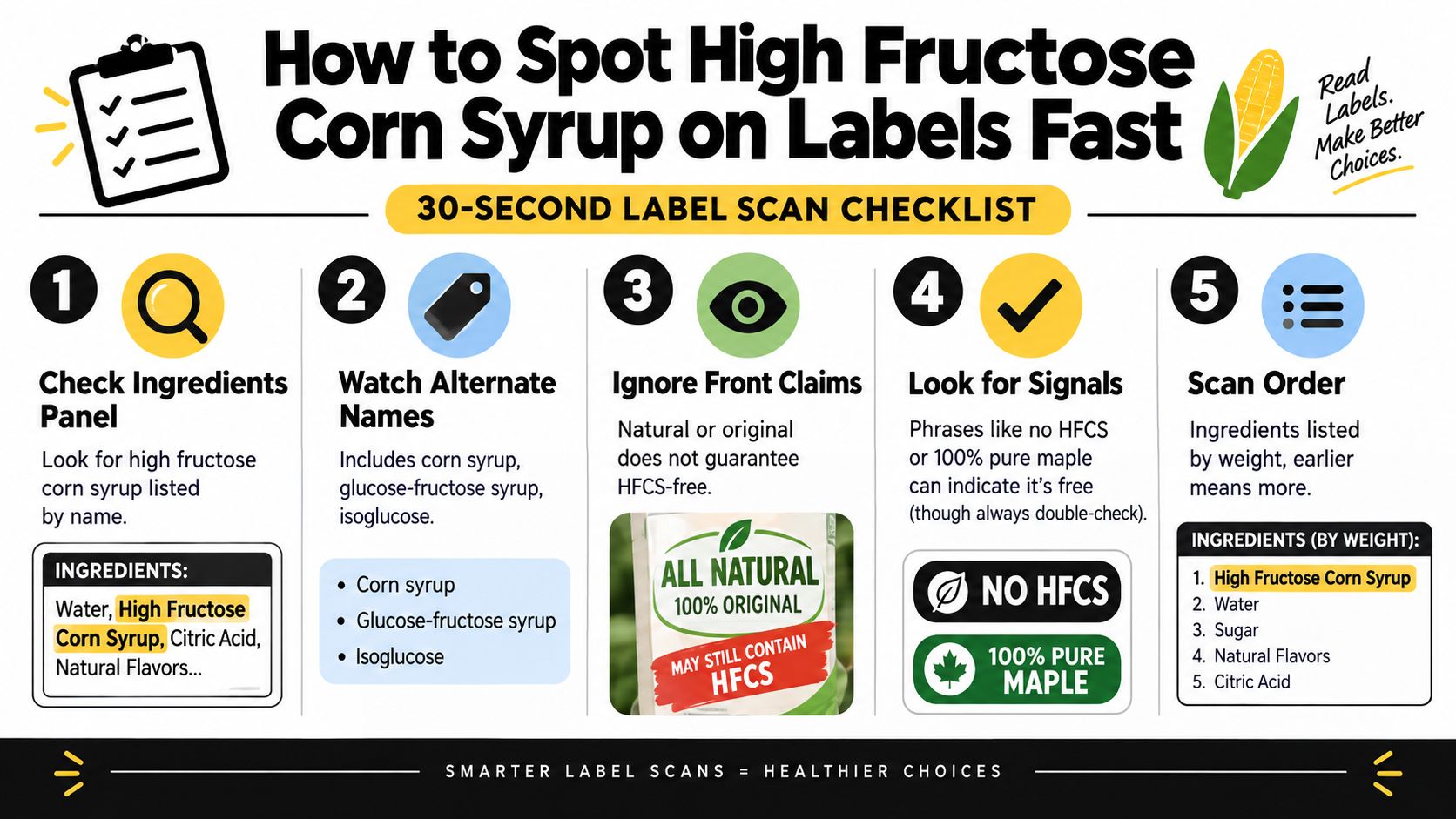
You can screen most syrup bottles in about half a minute if you read the panels in the right order. Start with the ingredients list, not the large claim on the front. The FDA classifies HFCS as a nutritive sweetener and lists regulatory names that include high fructose corn syrup, corn syrup, high fructose, high levulose corn syrup, and syrup, corn, high fructose (the FDA food-substance listing).
Use a quick label scan
Read the ingredients panel. Look specifically for “high fructose corn syrup.” A product can use a prominent front label claim while the ingredient list gives you the more precise answer.
Review related wording carefully. “Corn syrup” isn't automatically the same as HFCS, because ordinary corn syrup can be a different product. If your goal is to avoid corn-derived sweeteners broadly, flag it for closer review rather than treating every corn-syrup term as identical.
Treat “natural” as a flavor description, not proof. Words such as “original,” “country,” or “natural” don't establish that a syrup is HFCS-free.
Look for clear absence claims. Phrases such as “no high fructose corn syrup,” “free of high fructose corn syrup,” and “does not contain high fructose corn syrup” are concrete signals identified in ingredient-label research (packaging language for HFCS absence claims).
Check ingredient order. Ingredients appear by weight, so an ingredient listed earlier contributes more to the product than one listed later. A pancake-style syrup led by corn syrup is a different proposition from pure maple syrup, where maple syrup is the defining ingredient.
Practical rule: Use the ingredient list to identify the sweetener and the Nutrition Facts panel to judge the amount.
A product page should give you the same information. If an online listing only shows a front label, search for a back-label image or visit the maker's own product page before buying. You can also compare a packaged treat from an independent catalog, such as Organic Chewy Fruit Candy Bites, using the same ingredient-first habit.
This short video can reinforce the visual scan while you compare bottles online or in a store.
Tasty Alternatives to High Fructose Corn Syrup Syrups
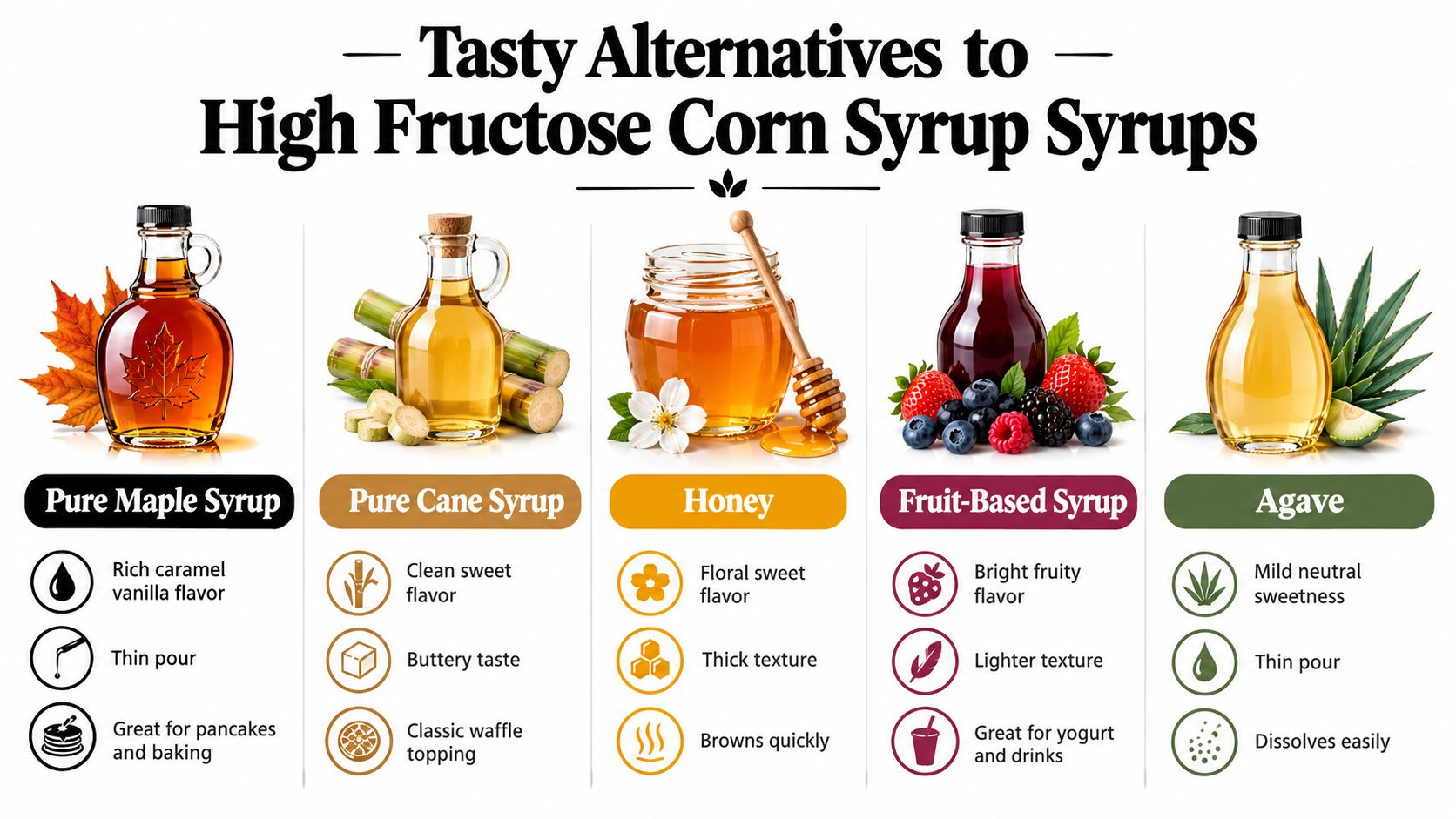
Once HFCS is off the table, the choice gets more interesting. Each alternative brings its own flavor, thickness, browning behavior, and best use. You're not replacing one clear liquid with another. You're choosing the personality of the finished dish.
Match the syrup to the food
Pure maple syrup has a deep, recognizable flavor with caramel and vanilla notes. It works naturally on pancakes and waffles, but it also adds depth to oatmeal, roasted vegetables, marinades, and baked goods. Its pour can be thinner than a heavily thickened pancake syrup, so it spreads quickly across a warm stack.
Pure cane syrup tastes clean, sweet, and gently buttery. It's a good fit for classic waffle topping, biscuits, baking, and recipes where you want sweetness without maple's distinctive woodsy character. Cane-based products can vary in intensity, so taste matters more than the front-label promise.
Honey brings floral character and a thicker texture. It browns quickly under heat, which can be useful in baking but means you'll want to watch toastier recipes closely. A local maker's wildflower honey may taste noticeably different from a mild honey, depending on the flowers available to the bees.
Fruit-based syrups bring acidity and brightness along with sweetness. Berry, peach, or other fruit-forward options work well over yogurt, ice cream, oatmeal, and drinks, especially when a dark caramel flavor would feel too heavy.
Agave is mild and neutral, with a thin texture that dissolves easily in coffee, dressings, and chilled drinks. It can be useful when you want sweetness to blend into a recipe instead of becoming the main flavor.
Why substitutions change recipes
Pure maple syrup is dominated by sucrose, not HFCS. Finished maple syrup must contain at least 66% sugar by weight, and USDA-style nutrient data show roughly 58.3 grams of sucrose per 100 grams, compared with about 1.6 grams of glucose and 0.5 grams of fructose (USDA-style maple syrup nutrient data).
That chemistry affects the way syrup behaves. Sucrose-based syrups can have different crystallization risk, browning behavior, and moisture attraction from HFCS blends. In a recipe, changing the syrup may alter texture, color, spread, and shelf stability, so an equal-volume swap isn't always a perfect match.
For cafés or home drink stations, a guide to a natural sweetener for cafés can help you compare cane-based options by how easily they blend into hot and cold drinks. If honey is more your style, raw wildflower honey offers a distinct floral direction for toast, tea, marinades, and baking.
Independent makers often give you more noticeable flavor differences than standardized bottles. That's the quality upgrade. You're choosing a syrup with character and a use in mind, not just removing one ingredient from a formula.
Nutrition and Sweetness Compared Without the Hype
HFCS-free doesn't mean sugar-free, low-sugar, or automatically healthier. It tells you what a product leaves out. It doesn't tell you how much sweetener remains, how large the serving is, or how often you use it.
Pure maple syrup is a clear example. One tablespoon contains about 12 grams of sugar and 52 calories, according to University Hospitals' maple syrup nutrition information. That can fit comfortably into an occasional breakfast, but it still counts as a concentrated sweetener.
Syrup alternatives at a glance
| Syrup Type | Primary Sugar | Sugar and Calories per Tbsp | Best For |
|---|---|---|---|
| Pure maple syrup | Mostly sucrose | About 12 grams of sugar and 52 calories | Pancakes, waffles, oatmeal, baking |
| Cane syrup | Primarily sucrose | Check the product's Nutrition Facts panel | Waffles, biscuits, baking |
| Honey | Glucose and fructose naturally present | Check the product's Nutrition Facts panel | Tea, toast, baking, marinades |
| Fruit-based syrup | Fruit sugars, depending on formulation | Check the product's Nutrition Facts panel | Yogurt, drinks, desserts |
| Agave | Fructose-rich sweetener, depending on formulation | Check the product's Nutrition Facts panel | Coffee, chilled drinks, dressings |
The table gives you the right habit: use general ingredient knowledge to understand the product, but use the actual package to compare quantities. Different brands can formulate syrups at different concentrations, so you shouldn't assume that every tablespoon carries the same amount of sugar.
Compare the pour, not just the promise
Sweetness intensity also affects portion size. A bold maple syrup may satisfy you with a smaller drizzle because its flavor is more pronounced. A mild syrup may encourage a heavier pour because the sweetness feels less noticeable. That doesn't make one universally better, but it does make taste a practical part of nutrition decisions.
Front-label claims can feel persuasive because they answer a concern quickly. Yet a “free of HFCS” statement can sit on a product that still contains substantial sugar. Check serving size, total sugars, added sugars, and ingredient order together, then decide whether the bottle fits your everyday pattern.
Where to Find Syrup Without High Fructose Corn Syrup You Will Love
You are standing in a shop, comparing two bottles that both promise a sweeter pantry choice. Start with the flavor you want, then confirm the formula. Maple brings depth, cane syrup offers a clean sweetness, honey adds floral notes, fruit syrup tastes bright, and date syrup can work in both sweet and savory foods.
Use a practical buying routine
Search by base ingredient. Try “pure maple,” “cane syrup,” “wildflower honey,” “berry syrup,” or “date syrup.” Treat the search result as a starting point, then verify the actual ingredient list.
Look for the maker. Independent brands and local producers often explain where their maple, cane, fruit, or honey comes from. That detail helps you choose for flavor and sourcing, rather than judging a bottle only by what it leaves out.
Buy directly when possible. Purchasing from the maker can make it easier to ask about ingredients, processing, harvest details, and suggested uses. You also get a clearer sense of the people and purpose behind the product.
Start with a manageable bottle. You are testing flavor and texture, so choose a size that lets you try the syrup on pancakes, in coffee, or in baking before making it a regular pantry item.
Follow the storage instructions. Some syrups need refrigeration after opening, while others have different guidance. Use the maker's directions instead of assuming every bottle should be stored like maple syrup.
HFCS use has declined structurally in the United States. USDA data record domestic use falling 0.8% in fiscal 2014/15 to 7.2 million short tons, down 19.1% from 2004/05 and 21.8% below the 2001/02 peak. Broader deliveries fell from 48.4 pounds per person in 2010 to 36.7 pounds in 2019, a 25% decline and the lowest level since 1983, according to the USDA Economic Research Service.
That change gives independent makers more room to offer distinctive flavors and ingredient choices. Exploring them turns an HFCS-free search into a quality and taste upgrade, rather than a simple ingredient swap.
A marketplace such as Loyaltie helps you discover independent brands and buy directly from makers across the US. You might find Date-Sweetened Balsamic Vinaigrette Dressing and Sweet Date Hot Sauce, where date syrup appears in a savory, spicy pantry pairing instead of a pancake topping.
For another date-syrup example, Chunky Nut Granola, Oats & Date Syrup, Pistachio + Macadamia, Great Taste Award, 300g Jar | HOMEMADE GRANOLA by Loyaltie is described as chunky clusters of oats, nuts, and seeds, lightly sweetened with date syrup and toasted in coconut oil. These kinds of marketplace discoveries show how a syrup choice can bring a different flavor identity to the whole pantry.
Choosing Your Perfect Syrup and Enjoying It More
Choose by the moment you're trying to improve. For pancakes and waffles, pick maple for a rich, recognizable finish or cane syrup for a cleaner, buttery sweetness. For baking, choose the flavor that supports the recipe and remember that changing syrup systems can affect browning and texture.
Honey suits tea, toast, and recipes where floral notes are welcome. Fruit syrup adds a bright finish to yogurt and drinks, while agave disappears neatly into coffee or a chilled dressing. If you're unsure, buy a smaller bottle and test it in one familiar dish before making a larger reorder.
The best syrup is the one you enjoy enough to use thoughtfully. Read the ingredient list for HFCS, check the total sugar and calories, and judge the pour by flavor rather than by a front-label claim alone.
Independent makers can give your pantry more variety and personality than mass-produced bottles. You're not settling for less. You're choosing a better-tasting product made with a clearer point of view, often bought directly from the maker.
Loyaltie is a marketplace where people discover and buy directly from the best independent brands in the US, including makers offering thoughtful pantry alternatives to mass-produced syrups. Visit Loyaltie to explore local food and wellness products, compare ingredient choices, and find your next favorite maker with confidence.