
You're standing in the grocery aisle after work, comparing several bags of coffee that look almost identical. The labels promise smoothness, balance, and bold flavor, but none of them tell you who roasted the beans, how recently they were made, or why one should earn a place in your morning routine.
Then you remember the little roastery across town. You found it through a neighbor's post, ordered a bag directly from the maker, and noticed the difference before you finished the first cup. The coffee tasted fresher, the product page explained the roast clearly, and your order came with a short note from the person who packed it.
That's the appeal of small business online shopping when it's done well. You're not choosing a product because you feel obligated to “support small.” You're finding coffee, skincare, food, supplements, pet products, and everyday goods made by people who pay close attention to ingredients, materials, and process.
Table of Contents
Why Shopping Local Feels Different Now
At a Saturday market, two jars of hot sauce can sit side by side, one with a bright label and the other with a handwritten batch note. The second jar may tell you which peppers went into it, who made it, and why lime or cilantro belongs in the recipe. That detail gives you a reason to investigate before you buy.
The same thing happens online with an independent skincare brand. The maker may explain why a particular oil belongs in a serum, what the product leaves out, and whether it suits dry winter skin or everyday use. You get useful context instead of a polished slogan.

The product comes with a person
That human connection changes how you judge quality. When a maker puts their name, process, and reputation close to the product, you can ask better questions. Where were the ingredients sourced? How is the coffee roasted? Does the balm match your skin's needs?
A 2026 industry summary reports that 35% of small businesses treat e-commerce as their main sales channel. It also reports that roughly 26% of US small businesses have an e-commerce website, while about 74% still do not (Worldmetrics). The market is still opening up, giving independent brands more chances to reach shoppers directly.
The same figures place online customer acquisition for small businesses with an online presence at two to three times the rate of businesses without one. US e-commerce sales reached about $1.1 trillion in the latest cited year and grew 7.5% year over year. For shoppers, that wider reach means more chances to discover products that would never have secured space on a national retailer's shelf.
That discovery still takes work. A thoughtful product page, clear ingredients, practical policies, and a seller who answers questions can turn an unfamiliar name into a purchase you feel comfortable making.
A useful shift in perspective: Ask whether the product is better suited to your life. You may end up with a jar, bottle, or balm that earns a permanent place at home.
What Small Business Online Shopping Really Means
A bag of beans from a neighborhood roaster, face oil from a local formulator, or dog treats from a producer who lists every ingredient all fit the same pattern. Small business online shopping means buying directly from independent makers, growers, and producers, without several layers of retail distribution between you and the person who made the product.
The difference becomes clear before checkout. You can ask how the coffee was roasted, see what the face oil contains, or check why a treat suits a particular pet. The seller receives a clearer signal about what customers want, while you get details that a mass-market package may not have room to explain.
Online sales also became a more practical route to customers during the pandemic. UK small and medium businesses generated 25% of their revenue online during the pandemic, compared with 19% before COVID-19, according to a global SME benchmark summarized by Mailmodo's small business ecommerce statistics guide. That shift helped independent sellers meet customers beyond the foot traffic of a local shop or weekend market.
Direct commerce is also a discovery problem
Finding the right seller can take more effort than placing the order. A maker may offer an excellent product through a site that rarely appears in search. Another may announce new stock only in a social post. You may want a local alternative and still have no simple way to compare sellers you can trust.
Marketplaces and organized storefronts reduce that friction. Product names, useful descriptions, location details, reviews, secure checkout, and mobile-friendly pages help shoppers understand what is available. They also give search systems clearer information to work with. Sellers improving this foundation can use an ecommerce technical SEO guide to make product pages easier to find and browse.
The practical reason to buy direct is product fit. You are choosing a jar, bottle, bag, or packet because its maker can explain the ingredients, materials, and purpose clearly. A smaller brand may earn your order by making something better suited to your routine, then backing it with answers instead of relying on the familiarity of a national name.
How to Find and Evaluate Local Independent Brands
Start with something you already buy. Coffee, face cleanser, dog treats, hot sauce, vitamins, or hand soap works well because you know what you like and can judge the replacement quickly.
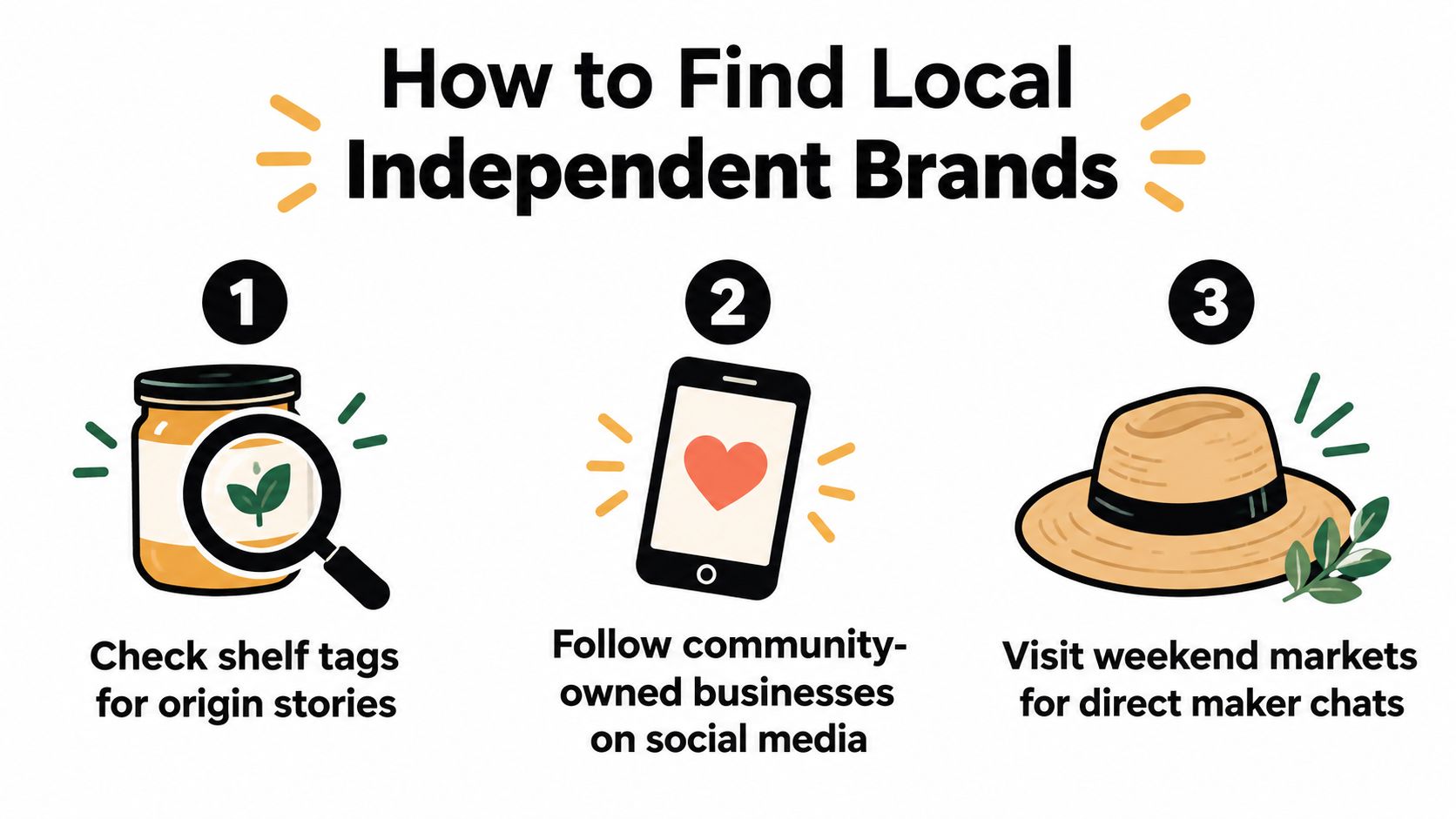
At a farmers market, read the shelf tag and ask one direct question. Who makes this, and where can I reorder it? Online, search the maker's name, product category, and town. Look for a website, a social profile, or a marketplace page with enough detail to answer the basic questions before you spend money.
A simple quality check
Use the product page as your first filter. You don't need a long brand story, but you do need useful evidence.
- Read the ingredients or materials. Recognizable ingredients should be easy to identify, and the maker should explain unusual components rather than burying them in vague language.
- Look for a clear process. A coffee roaster can describe the roast profile. A skincare maker can explain the formula's intended use. A pet-food seller can state what the product is designed to do.
- Check the practical details. Size, shelf life, care instructions, delivery timing, return terms, and contact information should be visible.
- Notice the response quality. A serious independent brand doesn't need a huge team, but it should answer reasonable questions professionally.
You can also browse Loyaltie's marketplace when you want one place to discover independent brands instead of opening dozens of separate tabs. Treat any marketplace as a starting point, then inspect the product details and seller information just as you would on an individual website.
A good test: If the seller can clearly explain what makes the product different, you're probably looking at a considered purchase rather than a generic label.
Why Direct-From-Maker Products Perform Better
A morning cup can tell the story. Freshly roasted coffee carries more aroma, while a hot sauce built around bright peppers, lime, and herbs can make plain rice taste complete. A face serum with a short, familiar ingredient list may suit your routine better than one chosen for eye-catching packaging.
Independent makers often stay close to the product from idea to finished item. That closeness leaves more room to refine texture, flavor, scent, fit, and everyday use. It also supports products designed for narrower needs, such as sensitive skin, small homes, unusual dietary preferences, or a particular kind of pet.
Better discovery changes what you buy
A useful online search should lead to a product with a clear point of view, not a hundred near-identical options. You might find a citrus-forward hot sauce, a calming body oil, a plant-based dog treat, or a coffee roast suited to the way you brew at home.
The hard part is finding those products before pricing creates doubt. A handmade item can cost more than a mass-produced alternative, and a polished website alone cannot explain whether the difference is worth paying for. Makers who show the ingredients, materials, use, and work behind an item give shoppers something firmer than a premium label.
Social content can help close that discovery gap when makers show roasting, blending, pouring, or packing instead of posting product shots alone. For a closer look at how direct-to-consumer brands build relationships through social channels, this guide to DTC brands on social media offers useful context.
Buying direct also gives a local producer a way to reach customers without relying entirely on large retailers. You gain a clearer path to products you prefer, and the maker can hear what worked, answer a question, or earn a reorder because the item delivered on its promise.
Nest reported that 75% of consumers would purchase handmade products over machine-made goods (Nest's State of the Handworker Economy report). That preference makes sense when the result feels more thoughtful, transparent, or enjoyable to use.
Making It Easy for You and Them
You find a small-batch coffee roast at the Saturday market, love it, and run out on a Wednesday morning. The maker's stall is across town, the opening hours are unclear, and a second trip may not fit the day. Local shopping feels personal, but repeat purchases should not require a small expedition.
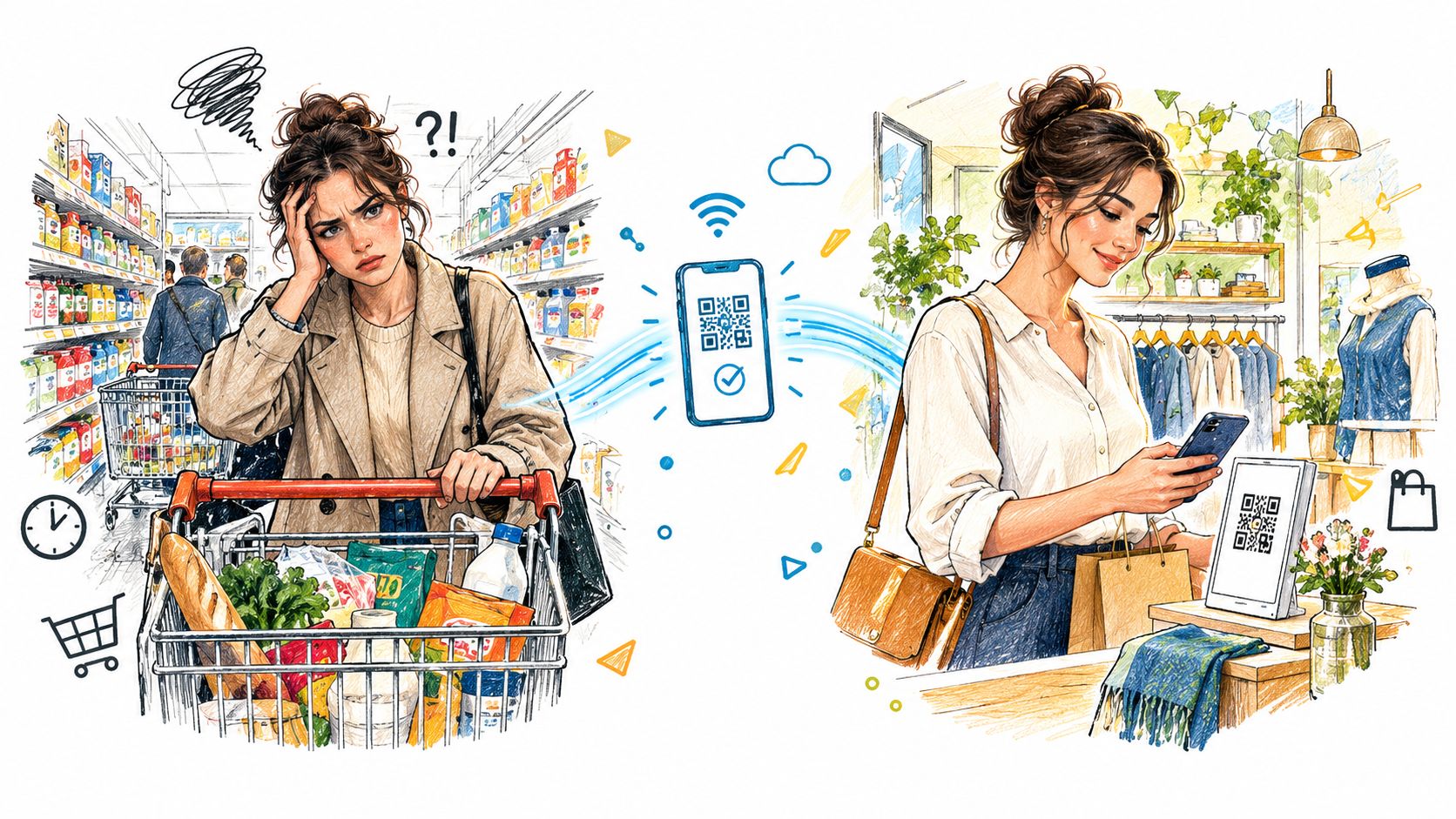
An online storefront can keep the maker's story while removing that extra running around. You can search by product, check ingredients or materials, see who made it, and order from your phone. A good local storefront shows the maker's name, the ingredients, and a delivery date on the same page where you pay.
That convenience helps sellers too. A producer can answer common questions once, explain how a product is made, and reach shoppers looking for coffee, food, wellness goods, skincare, or pet products. Instead of waiting for the right person to pass a market stall, the maker has a clear place to show why the product deserves its price.
Convenience should include confidence
A shopper may want the better-made item and still leave when checkout introduces doubt. Analysts cited in BTN.G Studio's checkout research summary report average cart abandonment of 70.19%, rising to 85.65% on mobile compared with 73.07% on desktop. The same summary lists unexpected costs at 48%, forced account creation at 24%, and unclear delivery timing at 22% among reported reasons.
A clear total, delivery estimate, guest checkout, secure payment, and plain return information answer the questions that stop an order. They also reduce the chance that a shopper mistakes a higher price for poor value merely because the storefront feels uncertain.
The physical discovery can still lead naturally to a digital reorder. A market sign, QR code, or follow-up message can bring you back to the same maker when the coffee, soap, or treats run low.
Sellers can find practical guidance in resources for selling on Loyaltie. Buyers get a storefront they can understand quickly, while makers spend less time repeating logistics and more time making products people want to buy again.
Examples of Everyday Upgrades
At the Saturday market, a shopper might stop for coffee and leave with a better plant display, a sharper hot sauce, or both. Online, the same discoveries take a little more looking. Start with an item you use often, then judge the materials, flavor, or function rather than the broad promise on the label.
A plastic plant holder from a large retailer fills a corner. A Triple Macrame Plant Hanger from Evolve Botanica turns a blank wall into a compact display for three small planters. Handwoven from natural cotton, it suits an apartment or any home where floor space is limited. The product has a clear purpose, so its difference is easy to see.
In the pantry, a Jalapeño Tomatillo Verde Hot Sauce from Maria's Sauce Co. brings a more specific flavor to the table. Fresh lime and cilantro create a bright, tangy profile alongside the jalapeño and tomatillo. A generic label gives you little to judge before opening the bottle. A product built around one clear idea gives you a more useful reason to try it, especially when the price needs explaining.
| Category | Traditional Experience | Independent Maker Upgrade |
|---|---|---|
| Coffee | A familiar bag with limited roasting context | Roast details, a clearer flavor profile, and a direct route to reorder |
| Skincare | Broad promises and hard-to-compare formulas | Recognizable ingredients, intended use, and a maker who can answer questions |
| Hot sauce | Standard heat levels and generic flavor | A distinct pepper blend with ingredients chosen for taste |
| Pet products | A wide shelf of similar treats | A focused recipe made for a specific pet preference or routine |
| Home decor | Factory-produced pieces chosen for convenience | A purposeful object, such as the natural cotton Triple Macrame Plant Hanger from Evolve Botanica |
The shopping habit stays familiar. You still need coffee, skincare, food, pet products, and useful things for home. The difference appears when a maker's focused product gives you a stronger reason to return, rather than leaving you to sort through another shelf of similar choices.
Navigating Trust and Value
“Local costs more” is an understandable concern, especially when your grocery bill and household expenses already feel tight. A direct purchase may not always be the cheapest option, but price alone doesn't tell you whether the product offers good value.
Look at what you're receiving. A jar with clear ingredients, a well-explained process, dependable delivery, and responsive service may justify its price more convincingly than a cheaper product that leaves you guessing. Direct buying can also remove some distribution layers, although every seller has different production, packaging, shipping, and operating costs.
Proof matters more than promises
Trust grows through specifics. A tomato sauce maker can show the tomatoes used and explain the cooking process. A supplement brand can provide clear product information and usage guidance. A skincare maker can explain storage, scent, texture, and who should avoid the formula.
Independent brands also need to understand the financial pressure on their customers. A 2026 Constant Contact report summarized by Forbes found that 27% of US consumers primarily shop at small businesses, up from 17% in 2025, while 49% said rising prices forced them to reduce or significantly limit spending at small businesses (Forbes). Interest doesn't automatically become an order. The product has to make sense for the buyer's budget and needs.
Value question: What will this product do better, taste better, or simplify compared with the option you already use?
Trust signals should appear before checkout, not after a problem. Look for accurate product photos, complete descriptions, contact details, delivery expectations, and a fair return policy. Platforms that add buyer protections can make trying a new maker feel less uncertain, especially when you haven't met the seller in person.
Your Next Step Toward Better Shopping
You don't need to replace every product in your home. Choose one category where quality is easy to notice. Coffee gives you flavor and freshness to compare. Skincare gives you texture and ingredient clarity. Pet treats give you a chance to observe what your animal actually enjoys. Hot sauce gives you an immediate answer at dinner.
Start with a small experiment
Write down what you dislike about your current product. Maybe the coffee tastes flat, the cleanser leaves your skin tight, the dog treats crumble in your bag, or the hot sauce brings heat without flavor. Use that frustration as your search language.
Then evaluate a few independent brands using the same questions:
- What is it made from? Can you understand the ingredients or materials?
- Who made it? Does the seller provide a name, location, and useful background?
- What happens after I click buy? Are shipping, returns, delivery timing, and payment clear?
- Would I order it again? Does the product fit a real routine rather than a moment of impulse?
The independent-brand market is broad but fragmented. PipeCandy's US direct-to-consumer analysis, reported by Retail Dive, found that about 75% of DTC brands generate less than $1 million in online sales, while fewer than 1% exceed $500 million (Retail Dive). That means discovery takes some effort, but it also means you can find products built around specific needs instead of choosing only from the largest names.
AI and search tools may make discovery more important still. In a 2026 global study cited by Fortune, half of consumers said they'd be more likely to shop locally if AI made nearby independent retailers easier to discover, while 33% said AI should prioritize small or local businesses compared with 13% for large brands (Fortune). The future of shopping won't be personal just because shoppers want a friendly story. It will feel personal when useful systems connect you with the right maker at the right moment.
Choose one product this week, read the details, and place a direct order if it fits. If it earns a permanent place in your routine, reorder it. That's how better shopping becomes practical, not performative.
Loyaltie gives you a simple place to discover and buy directly from independent brands across the US, including everyday products from local makers and producers. Visit Loyaltie to browse useful alternatives for your pantry, bathroom, home, and pet routine, then try one product that looks better made for you.