
You know the feeling. You need more coffee, your face wash is almost empty, the dog food bag is getting light, and you open a giant shopping site thinking it'll take two minutes. Then you're ten tabs deep, staring at nearly identical listings, generic brand names, and product photos that tell you nothing about who made any of it.
That's the moment a shop local marketplace starts to make sense.
Not because you're trying to be noble. Because you want better stuff, from real makers, without turning every purchase into a scavenger hunt. A good local marketplace gives you a cleaner way to find everyday products that feel more considered, more human, and often more worth bringing into your routine.
Table of Contents
- Is it always more expensive
- What counts as local versus independent
- How do shipping, returns, and regular delivery work
- I like discovering smaller brands. How can I tell whether a marketplace is well run
What Is a Shop Local Marketplace Anyway
You run out of coffee filters, need a new bar soap, and want to restock snacks for the week. A farmers market might have better options, but only if it happens to be open. A giant retail site will get the order done fast, but now you are sorting through pages of lookalike products from sellers you know nothing about. A shop local marketplace fixes that familiar trade-off. It gives you one place to browse independent brands and local makers online, with less guesswork and less hassle.
A shop local marketplace brings together many smaller sellers under one roof, the way a good neighborhood market gathers favorite vendors in one easy stop. You still shop from your phone or laptop. The difference is that the products are tied to real businesses with a story, a point of view, and a visible maker behind them.
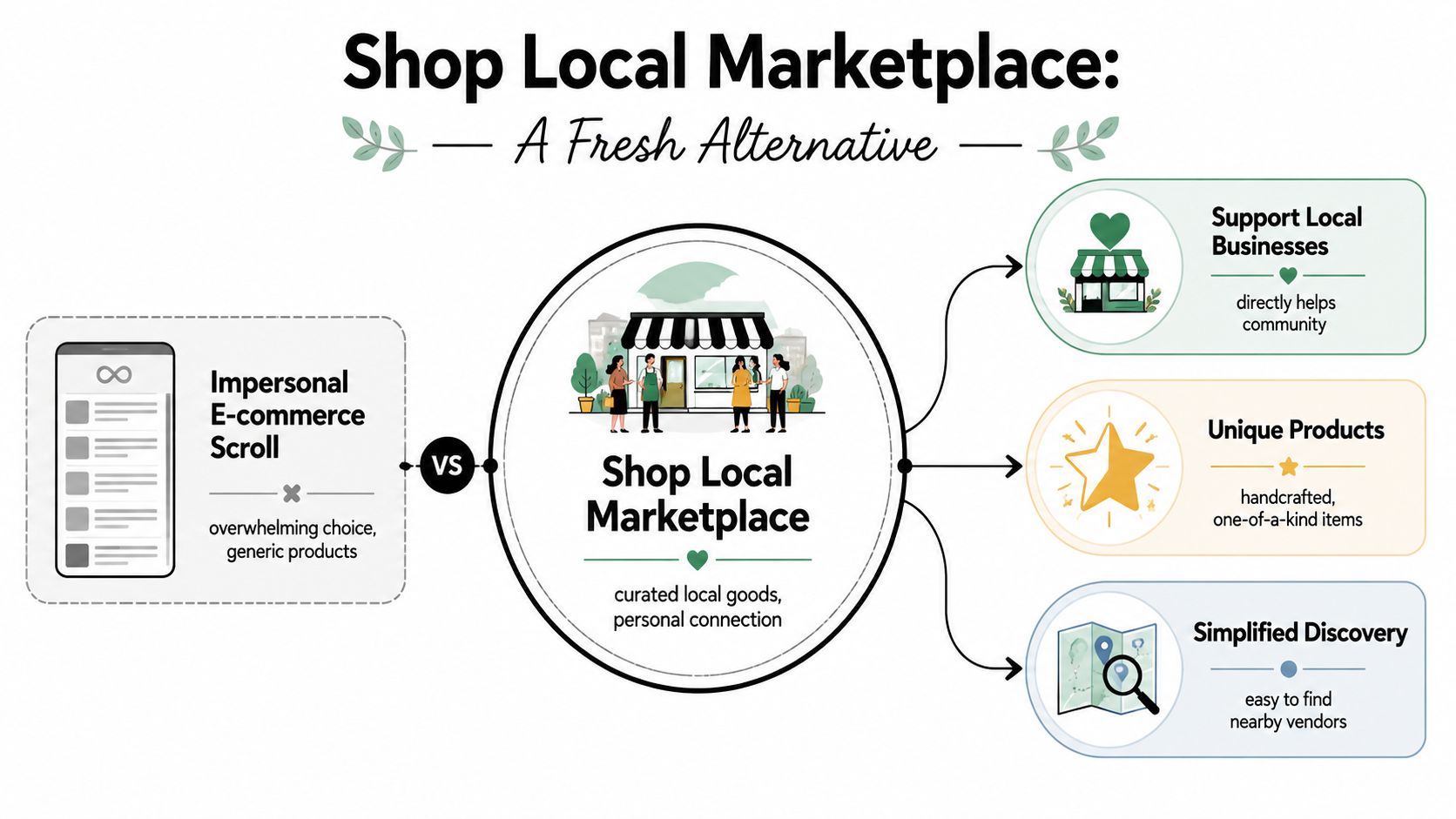
It sits between a farmers market and a giant retail site
The easiest comparison is practical.
At a farmers market, you get personality, conversation, and products that feel chosen instead of mass produced. You also have limited hours, limited inventory, and the usual question of whether the vendor you liked last time will be there again.
On a giant retail site, speed wins. Reordering is easy, but discovery often gets worse as convenience gets better. Search results can feel like standing in a cereal aisle where every box is trying to look like the same box.
A shop local marketplace combines the best parts of both. It organizes independent sellers in one place, often by category, location, or maker type, so you are not starting from scratch every time you need something ordinary.
A good marketplace cuts down the work of discovery while keeping the person behind the product visible.
It is local in spirit, not just in mileage
“Local” can confuse people. Some shoppers hear it and picture only the nearest store in their ZIP code. Online marketplaces broaden that idea. Local can also mean buying from smaller independent brands that are rooted in real communities, even if they are shipping from another city or state. What matters is that you can see who made the product, why they made it, and what makes it different from a generic alternative.
That idea lines up with current shopping habits. A 2024 survey found that many Americans are willing to spend more with smaller businesses and actively try to buy from them instead of large chains, according to local shopping research from a personal finance company.
If you want to see the model in practice, Loyaltie's marketplace for discovering and buying directly from independent brands shows how this works for everyday shopping, not only occasional gifts. The point is not charity. It is a better buying setup. You get more context than a giant retail platform usually gives, and more convenience than you would get by hunting down each maker one by one.
Find Better Versions of Your Everyday Buys
Consumers don't need another lecture about “supporting local.” They need a reason to switch toothpaste, coffee, snacks, soap, or supplements away from the same tired brands they've been half-ignoring for years.
That reason is product quality.
When you buy directly from the maker, you're often closer to the source of the decisions that shape the product. Ingredients. Scent. roast level. texture. Packaging. Why it was made that way in the first place. You can feel that difference most clearly in the things you use all the time.

Why everyday categories matter most
The true test isn't whether someone will buy a special jam once while on vacation. The test is whether local buying works for repeat categories. Coffee. Skincare. Pantry staples. Wellness products. Pet items. Things you finish and need again.
That's the unresolved question many shoppers have, and it's the one modern marketplaces are built to answer. As this discussion of local purchasing practicality puts it, the issue isn't whether local sounds good in theory. It's which categories, including coffee, skincare, and supplements, can become a default buying habit.
That's a much more useful lens. Instead of asking, “Should I shop local more?” you ask, “Which products in my life are worth upgrading?”
What better looks like in real life
Sometimes the upgrade is obvious. A coffee from a maker who cares about origin and roast profile can taste smoother and more distinct than a mass-market bag you grabbed out of habit. A skincare product from an independent brand may feel less like a copy of every other shelf item and more like something made with a clear point of view. Pet treats from a local maker often come with a shorter, easier-to-understand ingredient list.
A few signs you're looking at a stronger everyday product:
- The listing says something specific. Not vague promises. Real details about ingredients, sourcing, scent, roast, texture, or intended use.
- The product solves a real preference. Maybe you want low-acid coffee, fragrance-light skincare, or pantry staples without a lot of filler.
- You can picture reordering it. If it fits naturally into your week, it's not just a novelty purchase.
Here's a simple example. “Better” doesn't have to mean flashy. It can mean a hot honey made with real wildflower honey and chiles instead of a generic bottle with a broad “spicy sweet” label. It can mean a soap that smells like actual citrus and herbs instead of a synthetic mystery scent. It can mean a supplement brand that tells you plainly what the formula is trying to do.
Practical rule: Start with one category you use often and care about. Coffee is an easy one. So is body care.
When people get disappointed with local shopping, it's often because they treat it like a gift shop experience. They browse for interesting things, not useful things. A better approach is to rebuild a few daily purchases around products you'll enjoy using. That's where a shop local marketplace stops feeling like a nice idea and starts feeling like a smarter default.
If you want to browse those categories in one place, shop independent brands on Loyaltie gives you a sense of how everyday goods can be organized around direct buying from makers rather than mass-market labels.
The Simple Journey from Discovery to Your Doorstep
One reason people hesitate to buy from independent makers online is simple. They assume it'll be clunky. Too many separate checkouts. Too much guessing about shipping. Too much effort just to replace coffee or refill a skincare product.
A well-built marketplace removes that friction.

How shopping actually works
On the buyer side, the flow is pretty straightforward.
- You browse by what matters to you. That might be category, distance, postal code, or a specific kind of maker.
- You narrow quickly. Good filtering matters more here than on a giant marketplace because location changes delivery and pickup options.
- You place an order without chasing down a dozen separate sites.
- You reorder favorites or buy on a plan for products you go through regularly.
- You receive the order with the same basic expectation you'd have anywhere online.
That filtering step isn't just a nice extra. It's central to how local commerce works online. Buyers need to filter inventory by distance, postal code, and category, and map-based search helps with pickup planning and makes local fulfillment feel easier, as noted in Sharetribe's guide to building marketplaces for local products.
If you're a coffee drinker, this kind of discovery works especially well. A listing like Single Origin Nicaragua Coffee Beans, 100% Arabica, Medium Roast, Low Acidity Smooth Cup, Whole Bean, 12 oz Bag | Three Avocados by Loyaltie tells you something useful right away. It's a sweet, low-acid medium roast made from 100% Arabica beans for a balanced, fruity finish without harshness. That's the kind of detail that helps you decide fast.
Why the seller side matters to you
You don't need to be a seller to care how sellers use the platform.
If it's simple for makers to list products, update inventory, manage orders, and communicate clearly, your shopping experience gets better. Product pages stay current. Categories make sense. Orders move with less confusion. You spend less time wondering whether a listing is abandoned or whether anyone is behind the store.
Here's the useful mental model. You're not choosing between “charming but chaotic” and “efficient but soulless.” A modern shop local marketplace tries to combine the human side of buying directly from the maker with the smoother flow people already expect from online retail.
That's why the journey feels familiar, even when the products feel more personal.
Local Charm Meets Online Peace of Mind
A lot of people are happy to buy from independent brands right up until the moment they have a practical concern. What if the order shows up late? What if it arrives damaged? What if the product looks different from the listing? What if the seller stops responding?
Those questions matter more in food, wellness, and beauty categories because you're putting the product in your body, on your skin, or into your daily routine.
Why trust changes everything
There's a big difference between buying through a marketplace and sending money through a social account or a random standalone checkout page. In the second case, you may be relying almost entirely on the seller's responsiveness. In the first, the platform can set rules, handle payments in a structured way, and define what happens when something goes wrong.
That's why protections matter so much. Shoppers want to know what happens if an order is late, damaged, or not as described. Marketplace-level protections are becoming a core expectation, especially in categories where quality and ingredient concerns are high, as explained by the Local Business Institute's overview of shop local marketplaces.
Buy direct from the maker if you want a more personal product experience. Buy through a marketplace if you also want a clearer path when something goes wrong.
For readers who want to see how platform rules are spelled out in practice, Loyaltie's seller terms and conditions show the kind of framework that can make marketplace buying feel more grounded than a casual social media transaction.
Comparing your buying options
| Feature | Shop Local Marketplace (Loyaltie) | Giant E-commerce Site | Social Media / Direct DM |
|---|---|---|---|
| Product discovery | Curated around independent brands and local makers | Broad, often crowded search results | Depends on who you happen to follow |
| Connection to maker | Clearer sense of who made the item | Often buried behind marketplace noise | Direct, but inconsistent |
| Buying experience | Structured checkout and platform rules | Familiar and standardized | Can feel informal or fragmented |
| Trust when issues happen | Marketplace can define protections and process | Standardized platform systems | Often unclear before purchase |
| Best fit | Everyday products with personality and peace of mind | Fast, generic replenishment | One-off finds when you already trust the seller |
The key trade-off isn't local versus online anymore. It's whether you want the product quality and connection of direct buying without giving up the basic protections you expect from e-commerce.
A Practical Guide for Makers Selling on Loyaltie
A shopper runs out of coffee, soap, or dog treats and decides to try something better than the usual store brand. They are open to an independent maker, but only if the buying process feels clear and dependable. That is the opening Loyaltie gives you as a seller. You are not only competing on story. You are showing that an everyday product from a smaller brand can be easy to discover, easy to understand, and easy to reorder.
For makers, that matters. Plenty of shoppers already want alternatives to mass-produced products. The hard part is helping them find your product at the exact moment they are ready to replace a routine purchase.
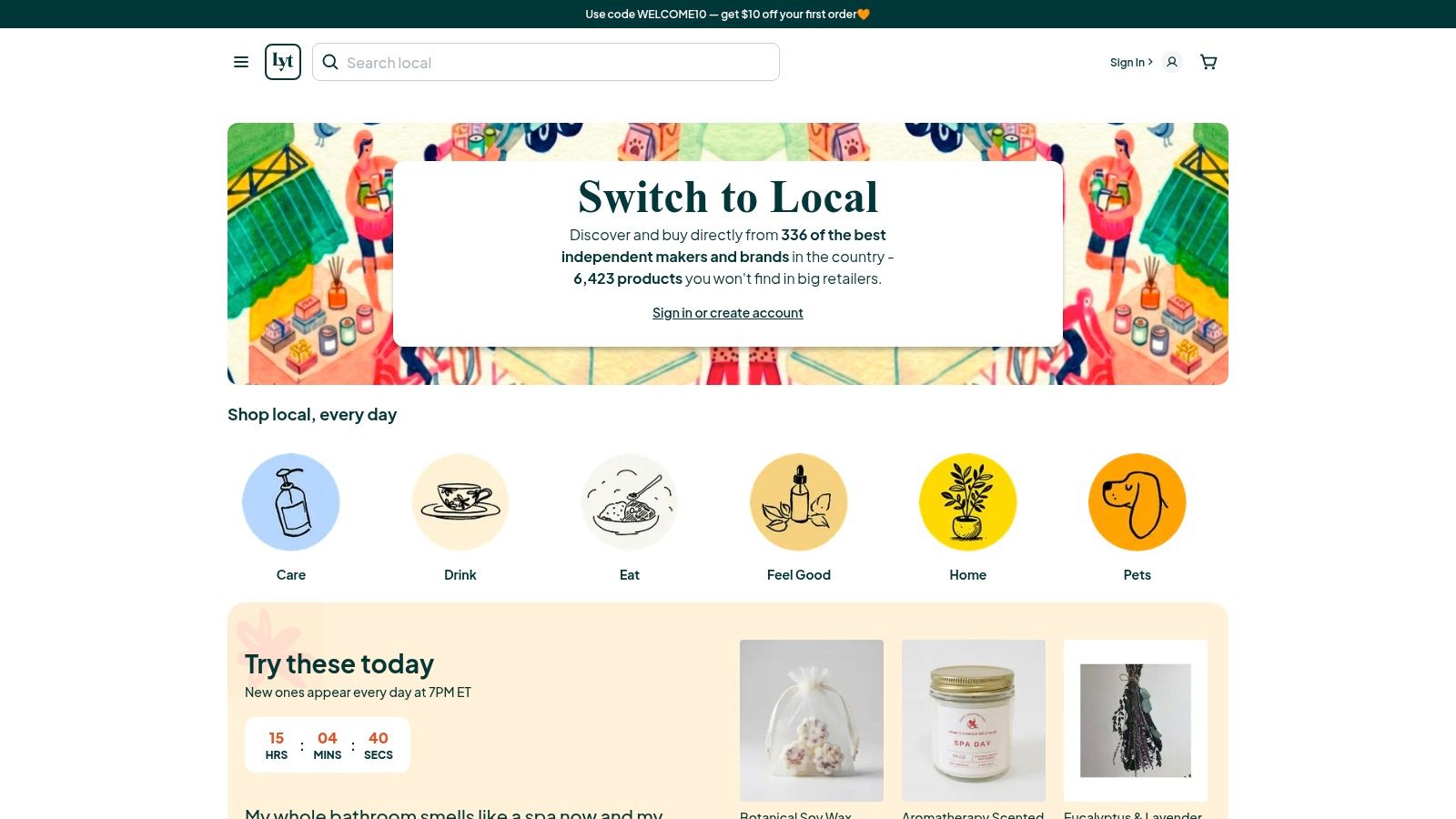
Your first setup steps
Start with the parts of your shop that answer a buyer's first silent question: “Do I understand what this is, and do I trust it enough to try it?”
- Tell a clear brand story. Keep it grounded. Say what you make, who buys it, and why it fits into a regular routine.
- Lead with strong product photos. Your first image should work like the front of a package on a shelf. Show the product clearly before you add lifestyle shots.
- Write descriptions that remove friction. Cover taste, texture, scent, ingredients, size, and how the product is used in real life.
- Choose categories carefully. A great product hidden in the wrong category has the same problem as a great item placed on the wrong store aisle.
Clarity beats polish here. A shopper comparing your product to a familiar national brand is not looking for brand theater. They are looking for enough specifics to feel safe making the switch.
How to make your shop easier to buy from
Once your storefront is live, your job shifts from being found to being chosen.
Use plain language. If you sell coffee, describe the flavor in the cup, not just the origin story. If you sell skincare, explain texture, scent, skin type, and when someone would use it. If you sell pet products, show how the item fits into a daily routine and which kind of owner will care most.
Then build for the second order, because that is where everyday products become habits.
- Make reordering simple. Repeat purchases are the ultimate test for coffee, pantry goods, supplements, and body care.
- Keep listings current. Outdated sizes, photos, or stock status create hesitation fast.
- Respond like a person. A short, direct answer can remove the last bit of doubt before checkout.
- Group products logically. Help buyers understand what goes together, whether that is a starter set, a refill pattern, or a full routine.
If you already sell elsewhere and need help connecting channels, a practical resource is ECORN's Shopify and Etsy solutions. It's useful for makers who want to understand how different storefront systems can work together without turning operations into a mess.
Treat your marketplace listing like your product's first handshake. For many buyers, this is their first encounter with your brand. If your page makes the product feel as straightforward to buy as a familiar store staple, you solve the old trade-off that used to hold independent makers back. Better quality no longer has to come with extra effort.
Common Questions About Shopping Local Online
You are usually not wondering whether local shopping is a nice idea. You are wondering whether it will fit into real life. Will it cost more, arrive on time, and be easy enough to repeat when you run out of coffee, soap, snacks, or dog treats?
Those are the right questions, because the old version of buying from independent makers often came with trade-offs. A good shop local marketplace is built to remove those trade-offs, so your everyday purchases can feel more like an upgrade than a project.
Is it always more expensive
Price and value are not the same thing.
Some local or independent products do cost more upfront. But everyday goods are not good deals if they go stale, feel disappointing, irritate your skin, or end up forgotten in a drawer. Paying less at checkout can still cost you more if you keep replacing things that never quite work.
A better way to compare is this: ask whether the product does its job well enough to earn a repeat order. For coffee, that means you look forward to the cup. For body care, it means you finish the bottle. For pantry items, it means the flavor is good enough to become your default.
What counts as local versus independent
These terms overlap, but they describe different things.
Local usually refers to distance. Independent refers to ownership. A maker can be close to you, independent, both, or neither. On a shop local marketplace, what matters to many shoppers is that you can buy from a smaller brand with a clear point of view, better product detail, and a more direct path from maker to customer.
That is part of the upgrade. You are no longer limited to whatever sits on a crowded shelf with the biggest marketing budget behind it.
How do shipping, returns, and regular delivery work
It was a common point of hesitation for many shoppers. Buying from a maker through a social post or a one-off message can feel uncertain. You may not know when the order will arrive, what shipping costs will be, or what happens if something goes wrong.
A strong marketplace clears up those questions before you pay. You can see the checkout flow, delivery timing, and return policy in one place. That lowers the risk that used to come with buying outside a big retail chain.
For products you buy again and again, reordering matters just as much as discovery. Look for options that let you buy on a plan or reorder quickly, so your favorite toothpaste, granola, or skincare does not turn into a monthly scavenger hunt.
I like discovering smaller brands. How can I tell whether a marketplace is well run
Start with the basics. Product pages should explain what the item is like in real use, not just tell a brand story. Shipping and return details should be easy to find. Reordering should be simple. Customer support should feel like a store, not a guessing game.
If a platform also invites makers to sign up as a product vendor, that can tell you something useful from the shopper side too. Clear seller standards often lead to clearer listings, better product information, and a more consistent buying experience.
The easiest way to test all this is to switch one routine purchase first. Pick something you already buy often. If the product is better and the process is just as easy, the idea of shopping local online stops feeling like extra effort.
If you want one place to start, Loyaltie is a marketplace where people discover and buy directly from independent brands in the US. It offers a straightforward way to try better everyday products from real makers while keeping the convenience of online shopping.