
You're probably here because you've stared at two coconut oil jars that look weirdly similar, then realized the labels aren't helping. One says refined. One says unrefined or virgin. One costs more. One claims purity. Neither tells you what matters when you're standing in your kitchen with a hot pan, a baking recipe, or dry skin.
Here's the short version. Unrefined coconut oil is the one you buy for flavor. Refined coconut oil is the one you buy for heat. That's the decision. Everything else is detail.
I'm also going to say the quiet part out loud. If you care what goes into your body, don't stop at “refined vs unrefined coconut oil.” Start caring where the jar came from, how clearly the maker explains it, and whether you're buying from a real person or a giant shelf brand that gives you almost no useful detail.
Table of Contents
- Reach for unrefined when flavor helps
- Reach for refined when you want the oil to disappear
- You probably don't need a huge collection
- Better detail, better choices
- No middleman usually means fewer compromises
- What this looks like in body care
Pantry Confusion Made Simple
You open the pantry, pull out your oats, maybe a skillet, maybe the ingredients for banana bread, and then you hit that annoying pause. Which jar are you supposed to use?
People get tripped up here. The labels make it sound like one option is “cleaner” and the other is somehow the compromise. That's lazy marketing. The question is simpler: Do you want coconut flavor, or do you want a neutral oil that can take more heat?
Here's a quick scan you can use:
| Attribute | Refined coconut oil | Unrefined coconut oil |
|---|---|---|
| Flavor | Neutral | Noticeable coconut aroma and taste |
| Best fit | High-heat cooking | Low-heat cooking, baking, flavor-forward uses |
| Kitchen role | Workhorse | Character ingredient |
| Beauty use | Good if you want less scent | Good if you like the natural coconut smell |
I've had this exact moment buying pantry staples from local food shops and skincare makers. Two jars, same ingredient list at a glance, but totally different results once you get home. It's a lot like choosing a scent for your home. You wouldn't buy a heavy clove candle if you wanted the room to disappear into the background. You'd choose intentionally, like with this Saffron Clove coconut wax travel tin candle. Coconut oil works the same way. Some versions announce themselves. Some stay quiet.
The simplest rule
If you want your oil to add something, buy unrefined.
If you want your oil to stay out of the way, buy refined.
Practical rule: Buy unrefined for taste. Buy refined for pan performance. Keep both only if you'll actually use both.
That's the whole decision most brands should've explained on the front label.
How Processing Shapes the Oil
The jar doesn't tell the full story. The processing does.
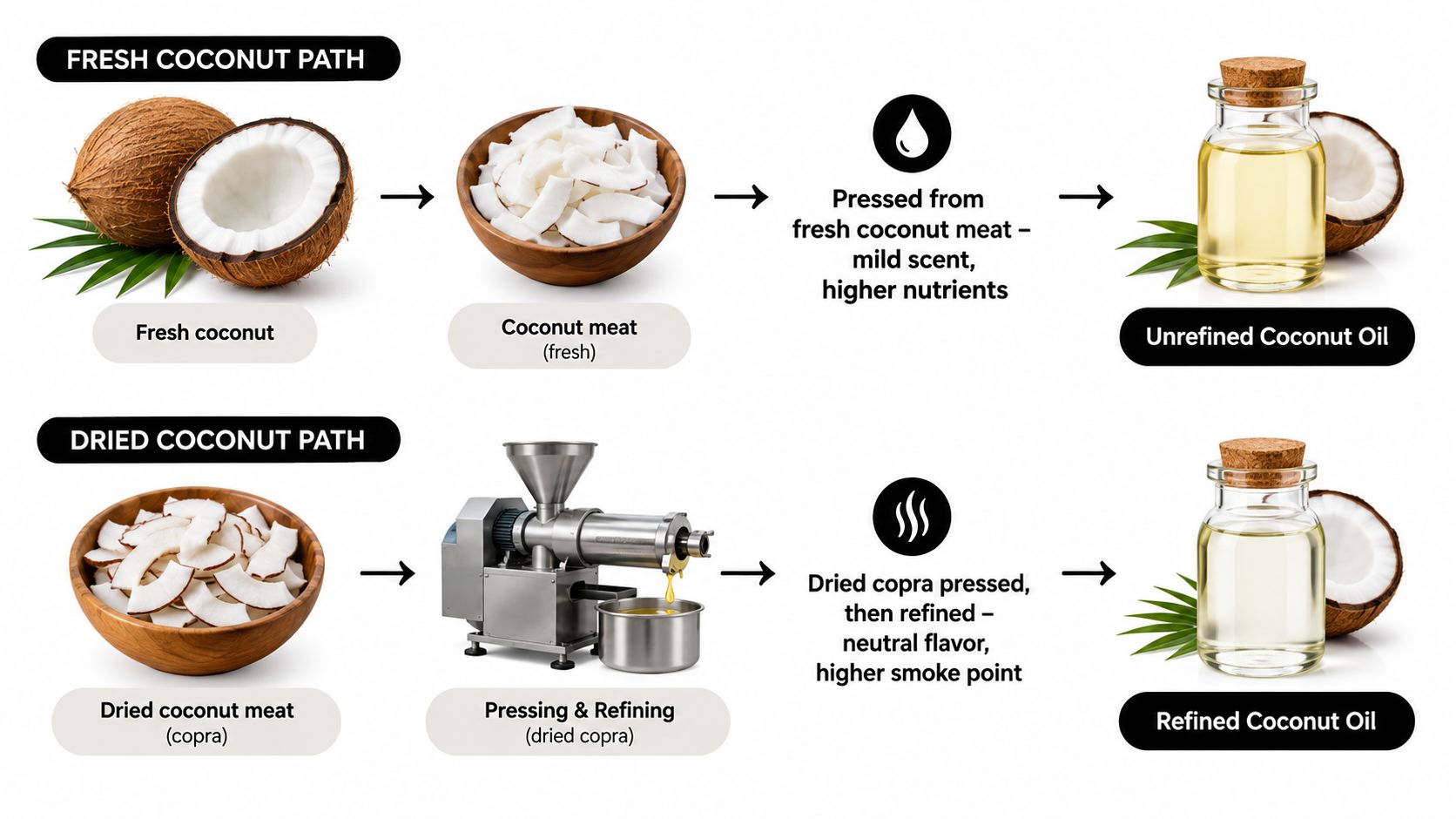
Unrefined coconut oil usually keeps more of the coconut's natural smell and taste because it goes through fewer cleanup steps. Refined coconut oil goes through more processing so the end result smells less like coconut and behaves more predictably in cooking.
What unrefined means in plain English
When a maker sells unrefined or virgin coconut oil, they're usually telling you the oil kept more of its original character. That's why it smells like coconut when you open it. That's why it leaves a stronger fingerprint in baked goods, oatmeal, granola, or body care.
That character isn't random. An official virgin coconut oil specification lists lauric acid at 45.0 to 56.0% of total fatty acids in virgin coconut oil, which gives you a sense of how distinctive coconut oil's fatty acid profile is compared with many edible oils, according to the FDA Philippines virgin coconut oil draft standard.
What refining changes in the jar
Refining strips out more of the compounds that affect smell, flavor, and cooking behavior. A technical processing document notes that refining can reduce moisture in crude coconut oil to about 0.05% under vacuum drying within 40 minutes to 1 hour, and that centrifugally refined systems can reach free fatty acids as low as 0.05% or lower, according to this UNIDO coconut processing reference.
That matters because lower moisture and lower free fatty acids usually mean a cleaner, more neutral, more stable-feeling oil in everyday use. It's not romantic. It is useful.
My take on quality
If you're buying for food you want to taste, simpler processing usually gives you the better experience.
If you're buying for utility, refined has a real job. I'm not against it. I just think a lot of shoppers buy refined by default when they'd be happier with an unrefined jar from a maker who hasn't squeezed all the personality out of it.
Heat Tolerance and Kitchen Realities
Once the stove turns on, this stops being a label debate and becomes a performance test.
Unrefined coconut oil is commonly listed at a smoke point of about 350°F (177°C), while refined coconut oil is often listed at 400 to 450°F (204 to 232°C), according to this Healthline breakdown of refined and unrefined coconut oil. That's why refined oil is the more reliable pick for hotter cooking.
Where each one works
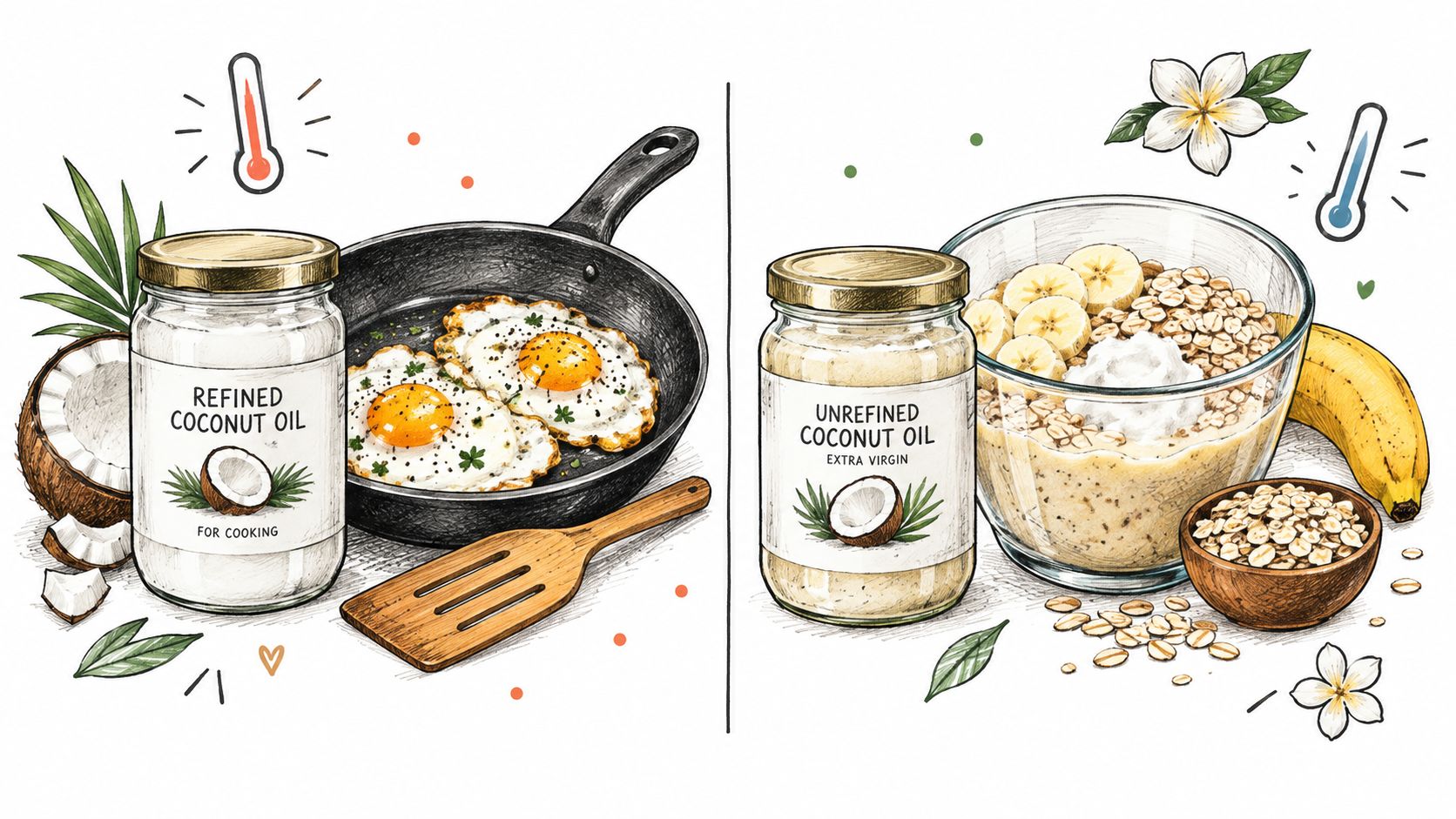
Use unrefined when you're doing gentler cooking and the coconut note helps. Think soft baking, lower-heat pan work, or recipes where a light tropical flavor doesn't feel out of place.
Use refined when the pan is going to stay hot and steady. Stir-frying, sautéing, and similar jobs are exactly where neutral flavor and better heat tolerance matter.
Don't force one jar to do every job. That's how you end up with smoke in the kitchen or coconut flavor where you didn't want it.
A broader product reference on coconut oil composition puts the smoke-point split at roughly 350°F for unrefined versus 400 to 450°F for refined, a gap of about 50 to 100°F, and ties that difference directly to kitchen use, in this coconut oil composition and attributes article. That gap is big enough to matter in a real home kitchen.
The part most guides skip
People love repeating “higher smoke point” and then moving on. But what you notice at home is consistency. Refined oil tends to be the less fussy option when you want repeatable results and no flavor interference. Unrefined oil is the better ingredient when you want identity and aroma.
If you're building a food brand or even just thinking more carefully about how oils fit into online grocery sales, the Shopstar food store startup guide is a useful read because it pushes you to think in terms of product fit, packaging, and how buyers choose pantry items. That's relevant here. Coconut oil isn't one product. It's two tools with different jobs.
Everyday Uses for Each Type
A lot of people don't need a lecture on extraction methods. They need to know which jar goes where in daily life.
Reach for unrefined when flavor helps
This is the better choice for oatmeal, granola, certain cookies, simple snack bites, and recipes where a coconut note feels welcome instead of distracting. It also makes more sense for body care if you enjoy that natural scent and want the product to feel closer to the original ingredient.
A few everyday fits:
- Morning bowl add-in: Stir a little into oats or warm grain bowls when coconut flavor makes the whole thing taste better.
- Baking with personality: Use it in banana bread, muffins, and soft baked treats where a neutral oil would feel flat.
- Simple skincare: Good in homemade balms or scrubs if you like a naturally scented base.
If you already like coconut oil in body products, something like this foaming sugar body scrub with brown sugar, jojoba, and coconut oil shows how well that richer scent profile fits shower and skin routines.
Reach for refined when you want the oil to disappear
Refined coconut oil is the quiet one. That's the point.
Use it when you want texture, richness, or cooking fat without making everything taste like coconut. It's the easier pick for eggs, vegetables, skillet meals, or baking where you want the other ingredients to lead.
Some ingredients should taste like themselves. Your oil doesn't always need to join the conversation.
You probably don't need a huge collection
If you bake and cook often, having both makes sense.
If you mostly use coconut oil for a few low-heat recipes or body care, buy one good unrefined jar from a maker you trust and stop overcomplicating it. You don't need five versions of the same pantry staple.
Quick Comparison Matrix
You're in a shop, jar in hand, trying to decide in ten seconds whether this oil belongs by the stove, in your baking cabinet, or in the bathroom. Use the matrix like a buying filter, not a chemistry lesson.
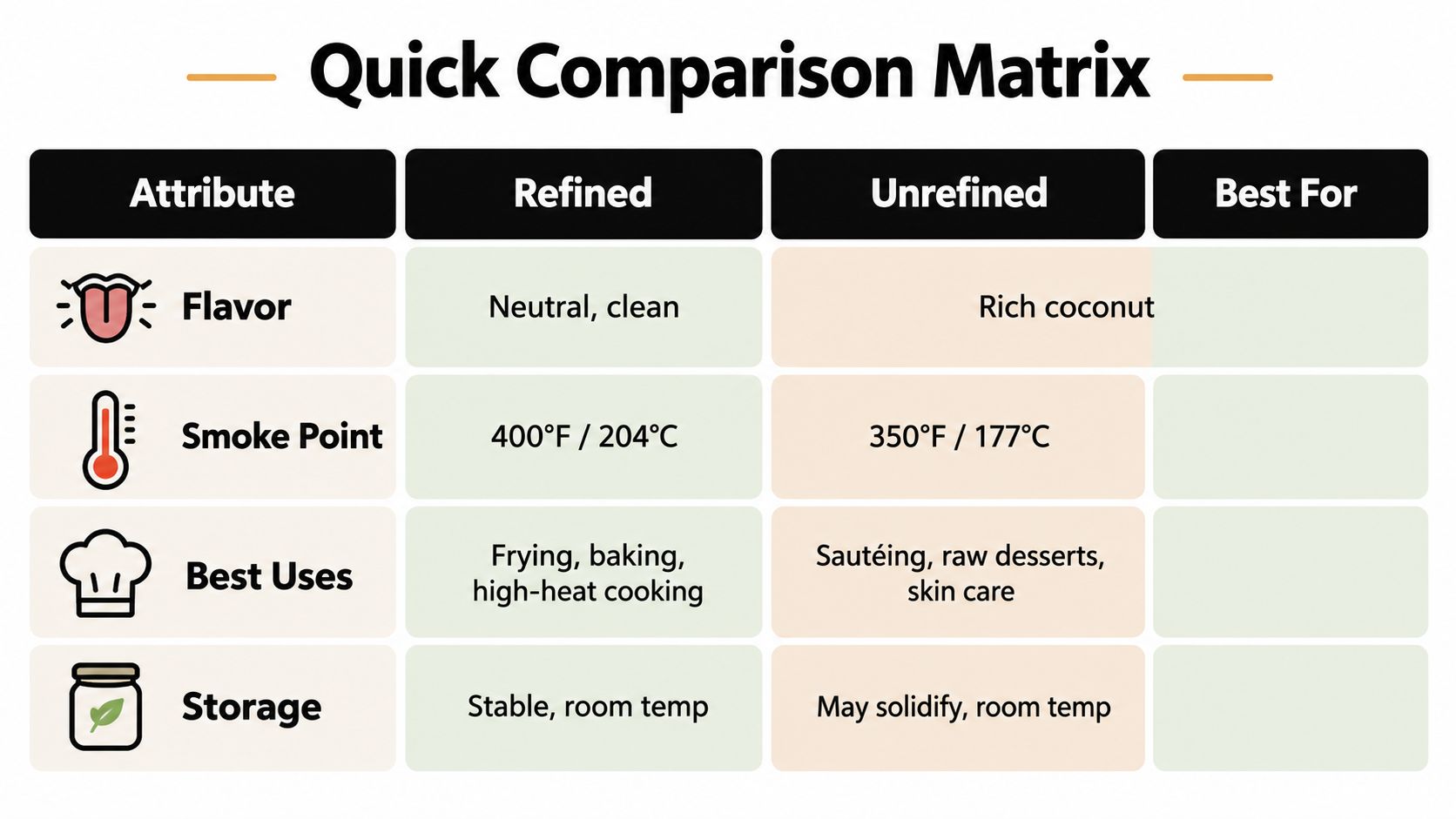
| Attribute | Refined | Unrefined | What to do with that info |
|---|---|---|---|
| Flavor impact | Stays in the background | Brings clear coconut taste and aroma | Buy unrefined if flavor is part of the point |
| High-heat fit | Better choice for hotter pans | Better choice for gentle heat or no-heat uses | Match the jar to how you actually cook |
| Best use case | Neutral baking, skillet meals, batch cooking | Oats, baking where coconut helps, body care | Pick based on your weekly habits, not label hype |
| Shelf personality | Built for convenience and broad appeal | Better for buyers who want character and ingredient clarity | If quality matters, skip generic shelf fillers |
| Best buyer | Someone who wants the oil to disappear | Someone who wants the oil to contribute | One jar is enough if you buy for your real routine |
Smoke-point figures vary by processing method and brand. For a general breakdown of refined vs. unrefined coconut oil, see Healthline's comparison: https://www.healthline.com/nutrition/refined-vs-unrefined-coconut-oil
A quick visual rundown helps too:
My buying matrix
If you only remember one row, remember this one: buy for the job, not the marketing.
- Hot pan, fast dinner, neutral result: Buy refined.
- Coconut flavor should show up: Buy unrefined.
- You want one jar from a local maker: Buy unrefined if you bake, stir it into warm foods, or use it on skin. It gives you more character for the money.
- You cook at higher heat all week: Keep refined around as the workhorse and stop expecting it to add personality.
That's the practical split. Refined handles utility. Unrefined brings flavor. If you care about what ends up in your food, the better move is to buy a well-made jar directly from a small maker who tells you exactly what you're getting.
Why Buying Local Changes the Experience
The conversation gets more interesting than grocery-aisle labels.
Mass-produced coconut oil is built to sit on a shelf, fit broad retail expectations, and offend nobody. That usually means bland branding, vague processing language, and very little help once you're trying to figure out what the jar is good for. You can still get a decent product that way, but you're buying through layers of distance.
Better detail, better choices
When you buy directly from independent brands and local makers, you usually get something better than a generic product page. You get context.
A good maker will often tell you whether the oil is refined or unrefined, whether it's meant for cooking or body care, what the texture is like, and how strong the coconut aroma is. That's the kind of detail a thoughtful buyer can use.
Look for brands that are clear about:
- Processing style: They should plainly say refined, unrefined, or virgin.
- Intended use: Cooking oil, multipurpose oil, body care ingredient, or all three.
- Storage guidance: Helpful makers tell you how the product behaves in normal home conditions.
- Scent expectations: Coconut-forward or neutral shouldn't be a mystery.
No middleman usually means fewer compromises
When there's no middleman, makers don't have to flatten everything into the same mass-market template. They can keep a stronger aroma in an unrefined jar because they're selling to people who want that. They can also explain why a refined option exists without pretending it's the “healthier” choice.
Buy the jar from someone who knows why they made it, not from a brand that treats coconut oil like another barcode.
That's why I prefer shopping from independent brands across the US when I can. Not because it feels noble. Because the product is often more honest.
What this looks like in body care
The difference shows up outside the kitchen too. Coconut oil in a direct-from-maker body product usually feels more intentional than the anonymous stuff packed into giant retail assortments. A good example is this body butter with shea butter, cocoa butter, and coconut oil. You can tell what role the coconut oil is playing instead of guessing from a vague front label.
That's the appeal of buying local. You get a better product story, a clearer use case, and a stronger chance that the jar performs the way you hoped it would.
How to Find and Reorder from Makers
Once you know which type you want, the next move is simple. Find a maker who explains their product clearly, try one jar, then set up a reorder rhythm that matches how you use it.
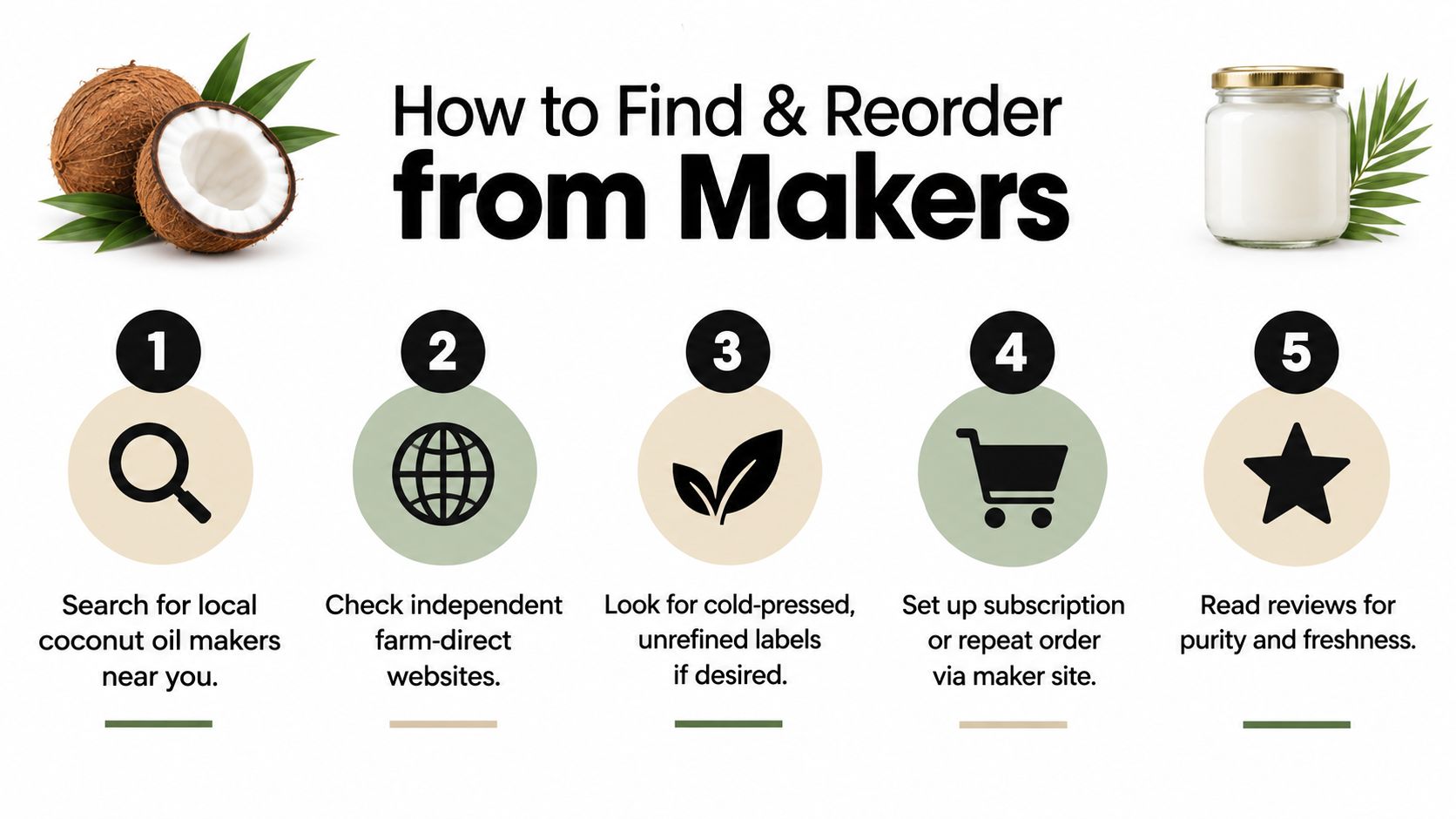
A practical buying checklist
Start with your real use
Don't browse first. Decide first. Cooking at higher heat needs refined. Flavor-forward baking or simple body care points to unrefined.
Read the product page like a skeptic
If the maker won't clearly say refined, unrefined, or virgin, move on. You shouldn't have to decode basic facts from lifestyle copy.
Check whether the maker explains scent and use
Good listings tell you if the oil is neutral or coconut-forward. They also tell you where it works best.
Buy one size first
Test it in the exact way you plan to use it. Eggs, muffins, scrub, balm, whatever your normal routine is. Don't assume a beautiful label means a better fit.
How to make reordering painless
Once you find the right jar, keep it easy:
- Use a buy-on-a-plan option if the maker offers one and you go through coconut oil steadily.
- Choose regular delivery if you use it in both cooking and skincare.
- Set a simple pantry reminder if you'd rather reorder manually.
- Stick with the same maker when the product performs well. Consistency matters more than novelty with staples.
What I'd avoid
Skip brands that lean on wellness fog and never explain function.
Also skip listings that say everything. “Great for frying, baking, smoothies, skin, hair, oil pulling, and all-purpose health.” Maybe. But if they can't tell you what it's best at, they probably aren't helping you choose carefully.
The smartest refined vs unrefined coconut oil decision is boring in the best way. You buy the jar that fits your routine, from a maker who tells the truth, and you reorder before you run out.
If you want an easier way to find products like that, Loyaltie is a marketplace where people discover and buy directly from the best independent brands in the US. It's a good place to skip the big shelves, compare products from real makers, and find coconut oil based goods that match how you cook, care for your skin, and shop.