
You're halfway through a cookie recipe when you notice the bag on your counter says raw cane sugar instead of granulated sugar. The crystals look golden, the label mentions a maker you haven't heard of, and you're left wondering whether you've found a better ingredient or a more interesting package.
Raw cane sugar is worth understanding because it sits between the sugarcane field and the refinery. Its color, crystal size, moisture, and residual molasses can change how it tastes, stores, and behaves in your kitchen. Those details also give you useful ways to compare products from independent US brands and local makers, rather than choosing by packaging alone.
You'll learn what raw cane sugar is, how it becomes crystals, why terms such as polarization and ICUMSA color matter, and which sugars work best in coffee, baking, and finishing. By the end, you'll be able to read a label with more confidence, ask a maker better questions, and store your sugar so its texture stays useful.
Table of Contents
- Introduction to Raw Cane Sugar and Why It Matters in Your Kitchen
- Why the crystals look golden
- Raw sugar isn't a health food
Introduction to Raw Cane Sugar and Why It Matters in Your Kitchen
Raw cane sugar often enters your kitchen through a small decision. You're buying coffee from an independent roaster, choosing chocolate from a local maker, or replacing a mass-produced pantry staple, and you spot a bag of golden crystals nearby. The appeal is immediate. The sugar looks less anonymous, and the maker may explain where it came from, how it was processed, or what flavor to expect.
That doesn't automatically make it a healthier sweetener. It does give you more information to work with. Raw cane sugar is an intermediate sugar product, designed to move from a mill into refining or food manufacturing rather than arrive as finished table sugar. The USDA defines raw sugar as sugar that is “not suitable for human consumption without further refinement” in its sugar glossary.
The scale behind that humble bag is enormous. The USDA Foreign Agricultural Service projected 189.26 million metric tons of world centrifugal sugar production for 2025/26, up 5% from 2024/25, after an average of 180.27 million metric tons across 2016/17 to 2025/26, as reported in its world sugar production outlook. Weather and annual crop cycles in Brazil, India, and other producing regions can shift the market, even though your kitchen use feels simple.
Kitchen perspective: The quality upgrade isn't “this sugar is magically better for you.” It's knowing what you're buying, what it contributes to a recipe, and whether the maker can explain the lot.
Buying directly from independent brands can make that information easier to find. A maker who sells without a middleman may share a clearer product description, a lot detail, or a practical recommendation for coffee and baking. You're not shopping for charity. You're looking for an ingredient with a flavor and texture that fit your kitchen.
What Raw Cane Sugar Really Is and How It Differs From Table Sugar
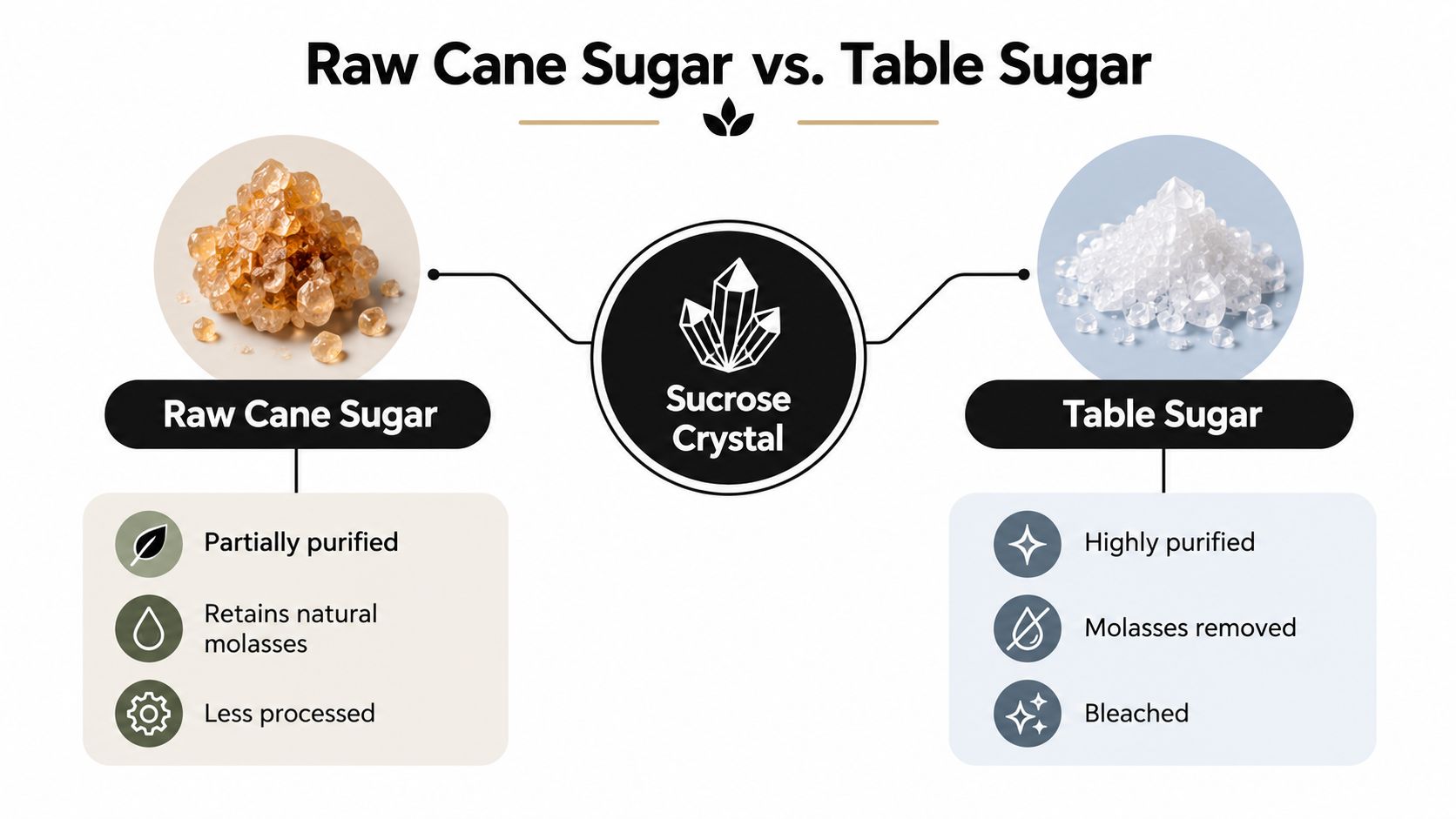
Start with the simplest distinction: raw cane sugar is partially purified sucrose crystallized from partially purified cane juice. FDA guidance cites the Codex description of raw cane sugar as “partially purified sucrose” crystallized from partially purified cane juice without further purification, while also distinguishing raw sugar as an intermediate mill product generally unsuitable for human food use in its guidance on raw sugar terminology.
Think of cane juice like juice that has been cleaned and concentrated but hasn't gone through the final polishing step. The sugar crystals have formed, yet some molasses and non-sugar compounds remain around them. Table sugar goes farther through purification so the finished crystals are much more neutral in color, flavor, and handling.
Why the crystals look golden
Commercial raw sugar commonly contains about 96–98.5% sucrose, while more specific raw cane sugar process tables report 99.1–99.6% sucrose, about 0.15% ash, 0.3–0.7% moisture, and color below 1,800 ICUMSA units, according to a World Bank technical reference. Those figures describe a product that's mostly sucrose, but not a completely purified one.
The remaining mother liquor and mineral or colored compounds create the darker appearance and light molasses character. A wash or affination step can raise purity, with washed raw sugar reported at about 99.6% sucrose in the same technical reference. More color doesn't mean the sugar is untouched, and a pale crystal doesn't necessarily mean it was made by a better process.
Raw sugar isn't a health food
“Raw” can sound like “natural,” “unprocessed,” or “better for you,” but those labels aren't interchangeable. Raw cane sugar is still primarily sugar, and its practical difference is usually flavor, color, crystal structure, and processing stage, not a meaningful nutritional advantage.
Table sugar is the finished pantry ingredient you use when you want clean sweetness and predictable dissolving. Raw cane sugar is closer to a refinery input or specialty cooking ingredient. If a package suggests direct eating, check the product's food-use status and the maker's instructions rather than assuming the word “raw” answers every safety question.
How Raw Cane Sugar Is Made From Cane Juice to Crystals
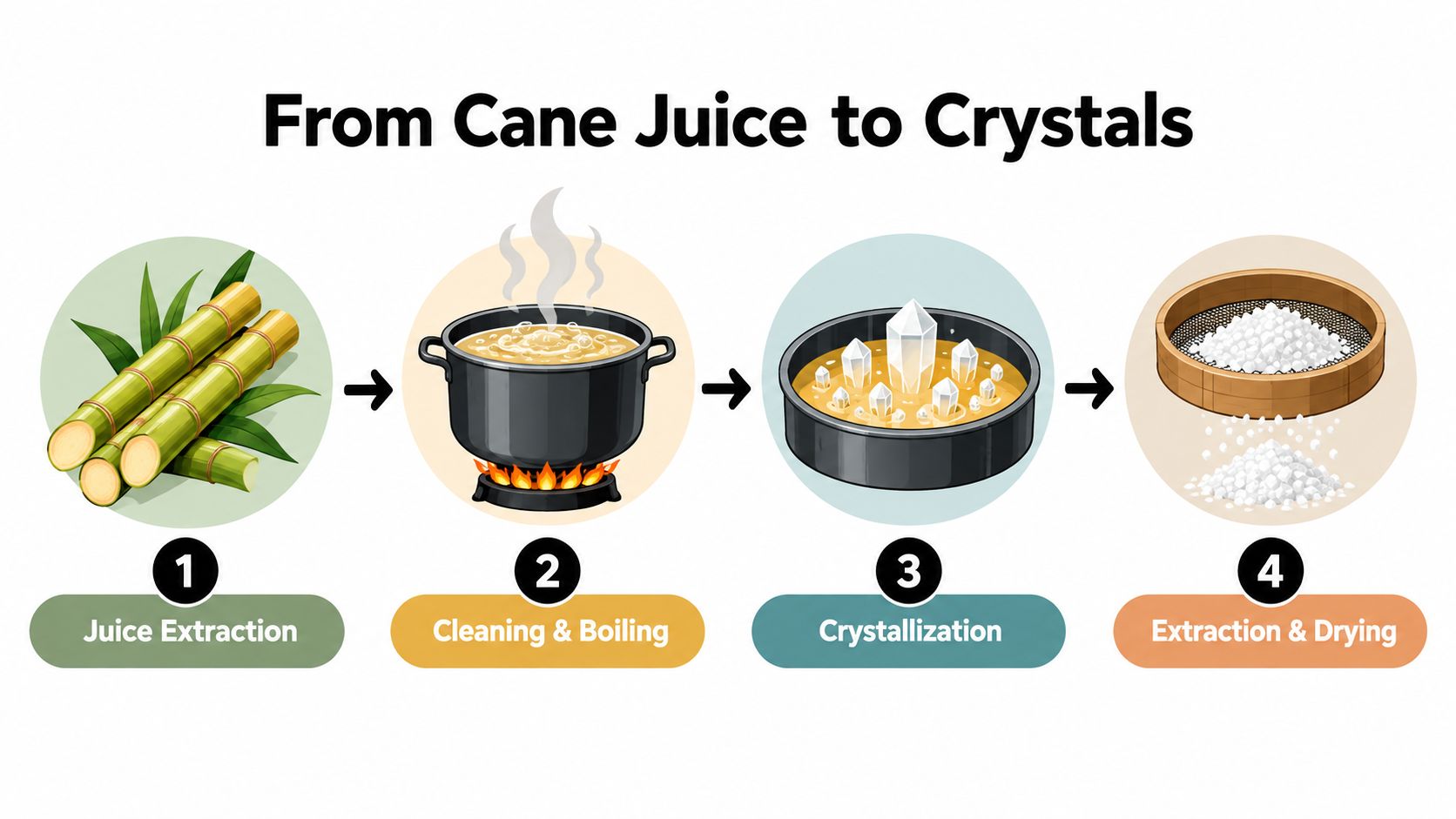
The journey begins with sugarcane juice, not with the dry crystals in your pantry. USDA and Foreign Agricultural Service material describes raw cane sugar as crystals made from cane juice after cleaning, boiling, crystallizing, and extraction, with the product not ready for direct consumption in its sugar production reference.
From liquid to crystal
Juice extraction removes the sweet liquid from harvested cane. The juice carries sucrose along with plant material, minerals, and compounds that affect its color.
Cleaning and boiling concentrate that juice. Cleaning removes unwanted material, while boiling drives off water and thickens the liquid enough for crystals to form.
Crystallization creates sucrose crystals from the concentrated juice. At this point, the crystals still have a coating of mother liquor, which contributes color and a faint molasses note.
Extraction and drying separate the crystals from the remaining syrup and reduce excess surface moisture. Centrifugal separation is the practical reason raw sugar differs from more heavily retained-molasses sugars such as muscovado.
This process explains why raw cane sugar is neither a field-fresh product nor a fully refined ingredient. It has moved through meaningful processing, but it hasn't received the repeated purification used to produce white table sugar.
Where quality changes
Two bags can both say raw cane sugar and still behave differently. Crystal size changes how quickly the sugar dissolves. Washing can raise purity. Moisture, ash, and color can vary according to the process and the market specification.
Lower moisture generally makes a lot easier to store because it reduces the tendency toward caking and fermentation. Lower ash means less mineral residue, while lower color often signals less molasses retention and more consistent refinery performance. Those are process clues, not promises that one sugar is universally superior.
For a visual walkthrough of how cane sugar is processed, watch the embedded production overview below.
If you're browsing related products from independent makers, you may also come across cane-derived ingredients outside the pantry, such as this sugarcane alcohol fragrance product. The shared plant source doesn't make the products interchangeable, but it's a useful reminder that “cane” describes an origin, not one single finished product.
Raw Cane Sugar Versus Refined Sugar Demerara and Muscovado
The right sugar depends on the job. Use refined sugar when you want sweetness without a noticeable molasses note. Choose raw cane sugar when you'd enjoy gentle caramel character and a little crystal presence. Reach for demerara when the topping matters, and muscovado when you want moisture and deeper molasses flavor.
| Sugar Type | Sucrose and Texture | Flavor and Best Use |
|---|---|---|
| Raw cane sugar | High-sucrose intermediate product, commonly around 96–98.5% sucrose, with crystals that may range from fine to coarse. | Light caramel or molasses character. Useful in coffee, tea, everyday baking, and as a finishing sprinkle when the crystals are coarse. |
| Refined white sugar | Highly purified sucrose with a clean, dry, uniform crystal texture. | Neutral sweetness. Best for delicate cakes, smooth custards, syrups, and recipes where color should stay light. |
| Demerara | A raw or lightly processed cane sugar style known for larger, crunchier crystals. | Gentle caramel flavor and a crisp finish. Good over muffins, cookies, oatmeal, and drinks that benefit from texture. |
| Muscovado | A moist sugar with substantial molasses character and a softer, stickier texture. | Deep, earthy sweetness. Works well in ginger cakes, chocolate desserts, barbecue sauces, and recipes where chewiness is welcome. |
Matching texture to the recipe
Raw cane sugar can work as a direct replacement in many casual baking applications, but crystal size matters. A coarse crystal may sit on the surface instead of dissolving into a cake batter. If you need a smoother result, pulse it briefly in a food processor and check for hard pieces before adding it.
Demerara is less useful when you need a completely smooth crumb. Its strength is the finish. Sprinkle it over a muffin or cookie before baking, and the crystals can provide a pleasant crunch that disappears if you stir them into a wet mixture.
Muscovado behaves differently because its molasses content brings more moisture and stickiness. That can make cookies softer and chewier, but it can also change how a delicate recipe spreads or sets. Treat it as a flavor and texture ingredient, not merely a brown-colored version of white sugar.
Choose by outcome: Neutral sweetness calls for refined sugar. Light caramel and visible sparkle suggest raw cane sugar or demerara. Deep molasses and softness point toward muscovado.
A local maker's product page should tell you whether the crystals are fine, medium, or coarse and whether the sugar is intended for finishing, baking, or beverages. If that detail is missing, ask before buying a large bag.
Nutritional Profile and What Raw Cane Sugar Means for Everyday Use
Raw cane sugar is overwhelmingly carbohydrate and sugar. One common nutrition listing reports 8 grams of total carbohydrate, 8 grams of sugars, 0 grams of fat, 0 grams of protein, and 0 milligrams of calcium, iron, potassium, and vitamin D per 2 teaspoon serving, according to the USDA sugar glossary PDF.
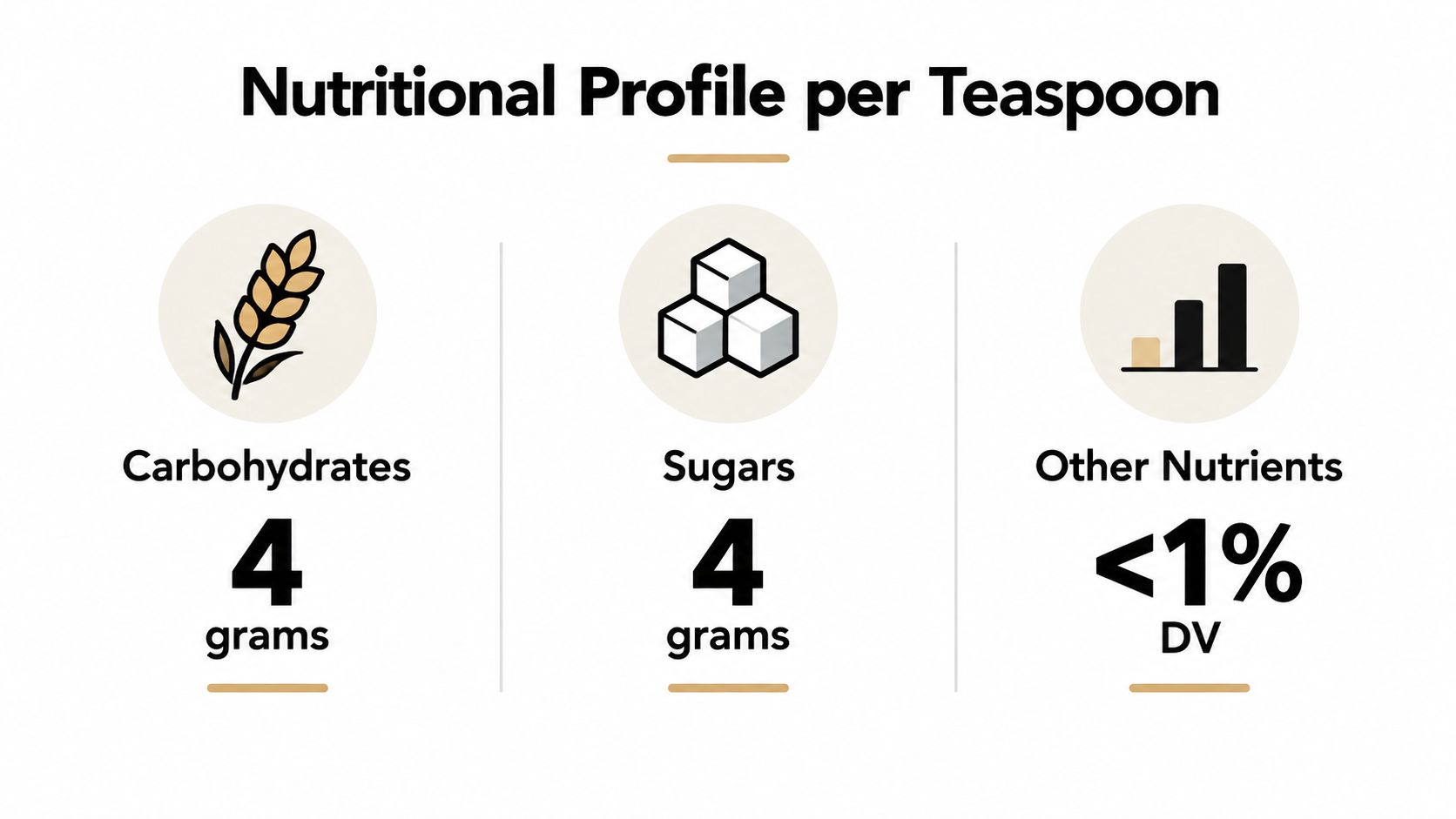
The serving shown in that listing is 2 teaspoons, while the accompanying visual presents a 1 teaspoon view of the same basic pattern, 4 grams of carbohydrates and 4 grams of sugars. The practical message is simple. The small amount of residual molasses in raw cane sugar doesn't turn it into a meaningful source of protein, fat, or micronutrients.
What “better” can honestly mean
Raw cane sugar may taste more layered than refined sugar, and an independent maker may provide clearer information about origin and handling. Those are legitimate reasons to buy it. They're different from claiming that raw cane sugar is a health food or that its calories and sugars somehow stop counting.
Use it because you like the result. A spoonful in coffee can add a light caramel note. A pinch over a crumble can give you a more interesting finish. In baking, test a recipe before making a large substitution, especially if the crystals are coarse or the sugar feels damp.
If you're adjusting a bread formula, reducing sugar can affect browning, flavor, and dough behavior. A practical guide to troubleshooting low sugar dough can help you understand those changes without treating sugar type as a simple one-for-one nutrition swap.
Keep wellness claims grounded
Raw cane sugar also appears in products connected to wellness routines, where the ingredient list and intended use matter more than a “natural” impression. For people trying to manage sweet cravings, a product such as this herbal tea blend with gymnema, moringa, and cinnamon belongs in a separate category from a sweetener.
That distinction protects your expectations. Choose raw cane sugar for taste and texture, then use it deliberately in the portions your recipes need.
How to Source Quality Raw Cane Sugar From Independent Makers
A good bag of raw cane sugar should answer more than “Is it golden?” Start with the product specification. The useful signals are polarization, ICUMSA color, moisture, ash, invert sugar, and SO₂. Together, they tell you how much sucrose the lot contains, how much color remains, how dry it is, and how much non-sugar material may affect handling.
Standards vary by market. One regional standard allows polarization from 94 to 99.0 degrees, moisture up to 1.0%, conductivity ash up to 1.0%, and ICUMSA color from 1,300 to 6,000, while commercial export products may target moisture at 0.15–0.25%, ash at 0.15–0.35%, and SO₂ at 20 parts per million or less, as summarized in this raw cane sugar specification reference. Those ranges aren't competing definitions of “good.” They show why you need to match the lot to your intended use.
Read the certificate, not just the color
Polarization is a practical purity signal. Higher polarization generally means more sucrose in the sugar, although you still need to consider moisture and other measurements.
ICUMSA color gives you a standardized way to discuss appearance. A lower color value generally means a lighter product, but darker sugar can be exactly what you want if you're looking for more molasses character.
Moisture matters during storage and transport. Lower moisture reduces the risk of caking and fermentation, especially when sugar will travel or sit in your pantry.
Ash represents mineral and non-sugar residue. Lower ash usually means less material that can complicate refining or create variation in downstream food production.
Invert sugar and SO₂ add further context. Invert sugar can affect sweetness and handling, while SO₂ helps you understand preservative or processing controls. Ask the maker to explain the result if the certificate uses unfamiliar terms.
Buying rule: Don't ask only whether a sugar is “natural.” Ask for the lot's polarization, color, moisture, ash, invert sugar, and SO₂ when your application requires consistent performance.
Why supply context matters
Raw cane sugar moves through a large, regulated global system. In 2024, WITS and Comtrade data listed Indonesia as a leading importer of raw cane sugar in solid form at $2.91 billion and 5.15 billion kilograms, China at $2.16 billion and 4.00 billion kilograms, the United States at $1.95 billion and 2.67 billion kilograms, and India at $1.67 billion and 3.19 billion kilograms, according to the World Bank WITS and Comtrade trade data. These flows connect your pantry product to refinery demand, crop timing, shipping, and import policy.
The United States still manages raw sugar imports through annual quotas. A 2025 customs bulletin set country-specific raw sugar cane allocations, showing how quota access can shape supply into refining markets, as documented by US Customs and Border Protection. For fiscal year 2025/26, USDA's April 2026 outlook estimated US cane sugar production at 4.207 million short tons, raw value, including 1.976 million short tons from Florida, which it described as a 2% increase from the prior year.
For you, that complexity creates a reason to value traceability. An independent brand that lists the origin, lot details, intended use, and storage guidance gives you more than a generic bulk label. A marketplace such as Loyaltie lets shoppers discover and buy directly from independent US brands, growers, and producers, with online ordering and seller information in one place. Treat it as a discovery route, then judge each sugar by its actual specification and fit.
Questions to send a maker
- What is the crystal size? Fine crystals dissolve quickly, while coarse crystals work better as a topping.
- What does the certificate of analysis show? Ask for polarization, ICUMSA color, moisture, ash, invert sugar, and SO₂.
- Is the sugar intended for direct food use or further refining? The word “raw” alone doesn't answer that.
- How should I store this lot? The maker should be able to explain its moisture and packaging.
- What recipes does this texture suit? A clear answer is more useful than a vague promise of versatility.
Storing and Using Raw Cane Sugar for Best Flavor and Texture
Raw cane sugar stores well when you protect it from humidity. Moisture is a major cause of caking, and higher moisture can also increase the risk of fermentation during storage. Keep the bag sealed, use a clean dry scoop, and move the sugar into an airtight container if the original packaging isn't reliably resealable.
A glass jar with a tight lid works well for a pantry. A sturdy food-safe plastic container can also protect the crystals, especially if you buy larger quantities. If you're comparing jars, lids, and pantry formats, Simply Hospitality's storage container guide offers useful ideas for choosing containers that suit your shelves and habits.
Fixing clumps without ruining the sugar
Small clumps usually come from humidity, not spoilage. Break them apart with the back of a spoon or pulse the sugar briefly in a food processor. If the sugar smells fermented, looks wet, or shows any sign of contamination, discard it rather than trying to rescue it.
Don't store the container beside a kettle, dishwasher, or steamy stovetop. Open it only when you need it, and close the lid before moving on to the next cooking step.
Put the flavor to work
Raw cane sugar shines when you can notice its light caramel character:
- Coffee and tea: Stir it into hot drinks, where the crystals dissolve and the gentle molasses note remains.
- Cookies and muffins: Use a finer crystal in the batter, or scatter coarse crystals over the top for crunch.
- Crumbles and oatmeal: Add it as a finishing layer when you want texture rather than a completely blended sweetness.
- Simple syrup: Dissolve it fully for cocktails, iced tea, and fruit-based drinks where a slightly warmer color is welcome.
- Everyday baking: Choose refined sugar instead when you need a very smooth crumb, pale color, or fast dissolving.
If you've bought a coarse product, grind only what you need. Freshly reduced crystal size makes incorporation easier without changing the whole container's texture.
Before your next purchase, check three things: the intended use, the lot specifications, and the storage instructions. Then look for independent brands and local makers who explain their ingredients clearly. If you want to try another cane-derived pantry or body-care product, this coconut oil and sugar body scrub shows how sugar can serve a completely different purpose outside baking.
Visit Loyaltie to discover independent US brands and buy directly from makers who share useful product details. Compare raw cane sugar by texture, specifications, and intended use, then choose a lot that fits the way you cook.