
Can a pretzel look safe on the ingredient list and still expose someone with celiac disease to gluten? Yes. Shared equipment, storage, frying oil, or an unexpected seasoning can introduce gluten after the dough is mixed. Shop by checking the maker's cross-contact controls as well as the ingredient list, then weigh nutrition and texture when choosing a snack.
Table of Contents
What Makes a Pretzel Gluten-Free
For a gluten-free pretzel, the ingredient list and the maker's production controls both matter. The FDA gluten-free labeling final rule sets the standard for what a gluten-free label means, including limits on ingredients derived from wheat, rye, or barley unless they have been processed to remove gluten and the finished food meets the rule's requirements.
Why Wheat-Free Isn't Enough
A pretzel made with rice, corn, potato, or tapioca flour may still contain barley malt in its ingredients or seasoning. A wheat-free claim alone tells you little about whether the finished product meets the gluten-free standard.
For someone with celiac disease, check the gluten-free label and ingredient list together. If either leaves you uncertain, ask the maker how the finished pretzels are handled.
Flours and Binders That Shape Taste and Texture
Gluten normally gives pretzel dough its stretch and chew. Without it, you're building those qualities from a blend, and each flour pulls the result in a different direction. That's why two pretzels gluten free shoppers buy in the same week can taste nothing alike.
Common Gluten-Free Flours Compared
| Flour or Starch | Flavor | Texture | Best Use |
|---|---|---|---|
| Brown rice flour | Nutty, slightly grainy | Sturdy, slightly chewy crumb | Classic knotted pretzels |
| White rice flour | Neutral and mild | Lighter, dries out quickly | Soft, pale pretzels |
| Sorghum flour | Mild and slightly sweet | Tender, close crumb | Blended doughs |
| Potato starch | Neutral | Adds chew and a glossy crust | Binder blends |
| Tapioca starch | Neutral, slightly sweet | Stretchy and chewy | Adding bite and crisp crust |
| Certified gluten-free oat flour | Toasty and oaty | Soft and moist | Flavorful, tender pretzels |
| Teff flour | Earthy, molasses-like | Dense and moist | Rich, rustic pretzels |
Brown rice flour is the one I'd reach for first if you want a sturdy, knotted pretzel with a real bite. It's nutty and holds its shape, though it can read a little grainy if it's doing all the work alone. White rice flour is milder and gives you a pale, soft pretzel, but it dries out fast and can taste flat. Teff goes the other way. It's earthy and almost molasses-like, so it's better as part of a blend than as the whole base.
Why Blends Usually Win
A blend lets each ingredient cover another one's weakness. Brown rice flour plus tapioca starch is a good example. The rice brings structure and flavor, the tapioca brings stretch and chew, and together they get closer to that wheat pretzel pull. Sorghum softens the crumb, potato starch helps the crust shine, and certified gluten-free oat flour adds moisture and a toasty flavor.
Then you need a binder, because flour alone won't hold the knot.
- Xanthan gum: Helps stop crumbling and keeps the dough workable.
- Psyllium husk: Adds elasticity, which helps when you're rolling and twisting ropes.
- Eggs: Add structure and browning, especially in soft pretzels.
Most commercial makers use blends for a reason, so a single-flour label tells you the recipe is simpler, not automatically better. If you're baking at home, gluten-free baking cookbook resources from Just Cook It can help you compare blend ratios before you waste a batch. If you're buying instead, use the ingredient list to predict texture, then pair your snack with something like this chai latte mix and gluten-free cookie mix bundle if you want a cozy break that isn't just another bag of salty twists. My rule is simple: pick the flour by the texture you want, then check the binder list to see if the dough can really deliver it.
Reading Gluten-Free Labels Without Guessing
For gluten-free pretzels, start with safety, then weigh the texture and nutrition trade-offs. Read the package in the same order each time: ingredients, gluten-free wording, certification, and cross-contact statements.
Five Checks Before You Buy
- Scan the ingredients first. Look for wheat, barley, rye, malt, and those ingredients in seasonings or flavorings. A short list is convenient, but clear ingredient names matter more.
- Read the exact claim. In the United States, the FDA allows “gluten-free” on foods containing less than 20 parts per million (ppm) of gluten. “Wheat-free” is a narrower claim; check for barley and rye, too.
- Check for certification. The Gluten-Free Certification Organization sets a limit of 10 ppm or less for certified products. A seal identifies a third-party standard, though you should still read the ingredients and allergen statements.
- Read precautionary statements. “May contain” wording can indicate possible cross-contact. A reassuring claim on the front of the package does not explain how the pretzels were made.
- Compare label details with your needs. A plain ingredient list and named certification make the claim easier to assess. If the package leaves an important detail unclear, use the maker's published information before deciding.
Gluten-Free Label Wording Decoded
| Label Wording | What It Tells You | What to Check Next |
|---|---|---|
| Gluten-free | Under the FDA rule, less than 20 ppm of gluten | Ingredient list and how the maker controls cross-contact |
| Certified gluten-free with a third-party seal | The Gluten-Free Certification Organization sets a limit of 10 ppm or less | Name of the certifier and whether the seal is current |
| Made in a dedicated gluten-free facility | The claim describes the facility's production | Check what the maker says about the product and its production controls |
| Made on shared equipment | Gluten-containing products may run on the same lines | Look for information about cleaning between batches |
| Wheat-free | No wheat is claimed, but barley or rye may still be present | Scan for barley, rye, and malt |
| May contain wheat or may contain milk | The statement flags possible cross-contact | Consider your own safety needs and the information on the package |
A useful label gives you several pieces to compare: the exact gluten-free claim, the ingredient list, any certification, and precautionary wording. No single phrase answers every safety question, so judge the whole package.
Why Gluten-Free Does Not Mean Healthy
Gluten-free solves an exclusion problem. It doesn't automatically solve a nutrition problem.
Research on gluten-free diets in a review published through PubMed Central indicates that highly processed replacements, including savory snacks, biscuits, pastries, sweets, and other packaged foods, can become prominent foods to reduce, while dietary education improved fruit, vegetable, fiber, and overall diet quality in studied participants. A pretzel can fit as an occasional snack and still be mostly refined starch and salt.
Compare two bags with the same claim. One uses brown rice flour, seeds, and moderate salt. The other uses refined starch and heavy salt. Both are gluten-free. Only one gives you much beyond crunch.
What to Check on the Nutrition Panel
- Fiber: Whole-grain gluten-free flours, seeds, and legume flours are signs of a stronger formulation.
- Sodium: Pretzels often lose points quickly in this area.
- Saturated fat, added sugar, and protein: Seasoned and coated pretzels can vary greatly here.
- Serving size: A handful and a whole bag are very different snacks.
If you have celiac disease, gluten-free is medically necessary, so safety comes first. If you prefer it, judge the pretzel like any other snack. You might rotate it with options like this plant-based jerky made from whole non-GMO soybeans when you want something savory that isn't starch-based. In the store, I'd check fiber and sodium first, then serving size, then decide.
How to Store and Serve Gluten-Free Pretzels
Soft gluten-free pretzels are best the day they're baked, but good storage can preserve their texture. Let them cool completely before sealing them. Trapped steam softens the crust.
Five Steps That Protect Texture
- Cool them fully on a rack. Wait until the pretzels are no longer warm before packing.
- Store them airtight at room temperature. For the best texture, eat soft pretzels within two to three days.
- Freeze extras. Wrap them tightly and freeze for up to about three months.
- Refresh before serving. Warm a frozen or stale pretzel in a 300°F oven for three to five minutes, until the crust crisps.
- Choose a gluten-free dip. Mustard or honey mustard works well. For cheese dip, check that its ingredients are gluten-free.
Check beer cheese: Many recipes use regular beer, which contains gluten. Use certified gluten-free beer or choose another dip.
Stale pretzels can become crumbs for coating chicken or adding salty crunch to a salad. For a snack spread, serve them with dips and other clearly labeled gluten-free foods. Keep the pretzels covered until serving so they stay fresh.
Where Gluten Sneaks In and How to Buy Safely
A gluten-free ingredient list cannot tell you whether the order for your gluten-free pretzels was made, stored, and cooked separately. For celiac disease, cross-contact during preparation or cooking can matter as much as the recipe.
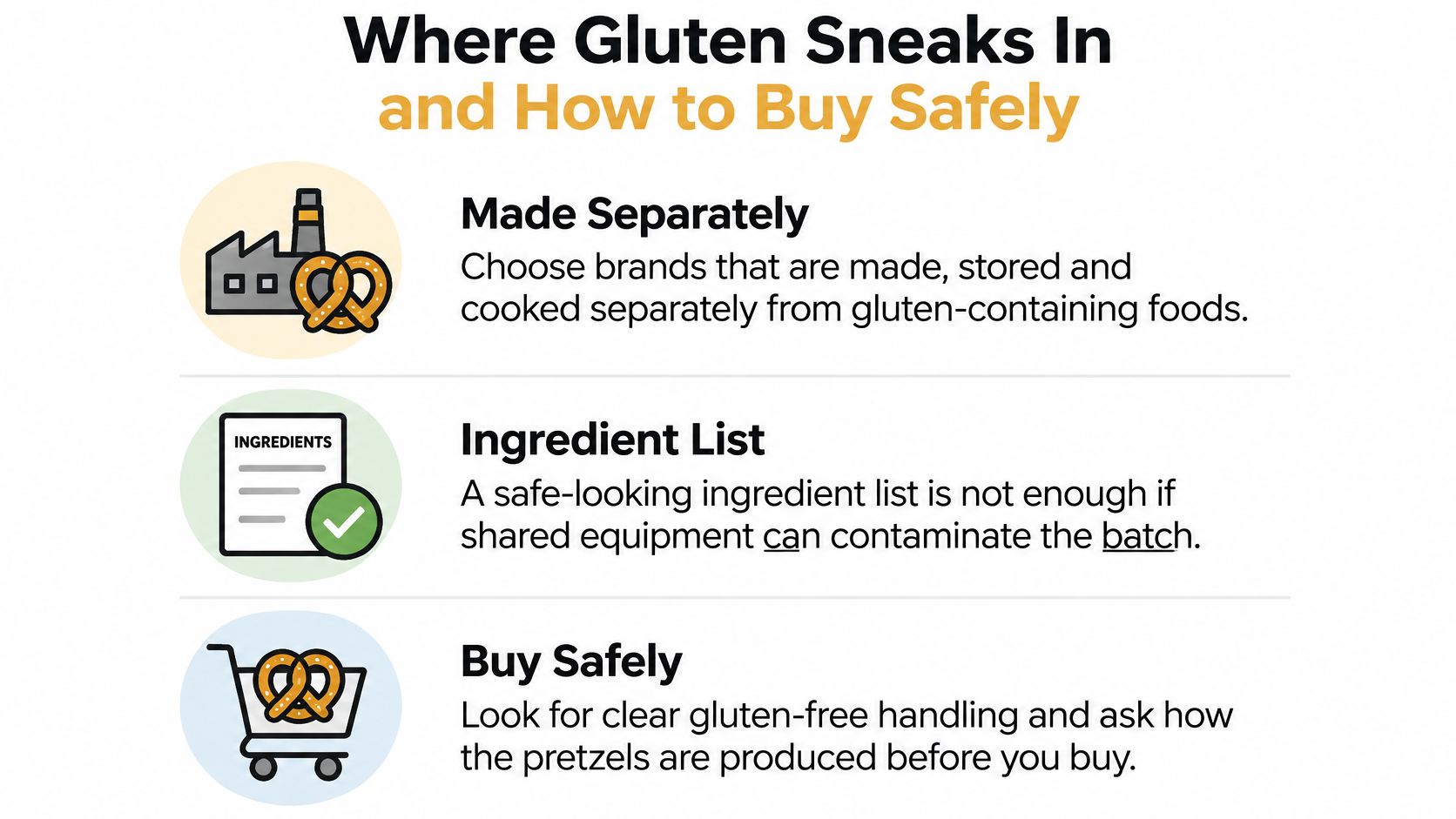
The Celiac Disease Foundation guide to sources of gluten identifies shared equipment and surfaces as possible contact points. For pretzels, shared fryer oil deserves particular attention: oil used for breaded wheat products can transfer gluten to food cooked in it.
Questions Worth Asking a Maker
- Dedicated or shared: Is the gluten-free batch made in a dedicated space, or on shared equipment?
- Cleaning method: How are surfaces and tools cleaned between batches? The Celiac Disease Foundation cross-contact handout recommends washing surfaces, boards, colanders, utensils, and dishes with soap and warm water for at least 20 seconds before use.
- Ingredients coming in: Are oats, seasonings, and add-ins certified gluten-free?
- Testing standard: Which certifier or testing standard do you follow?
Specific answers help you judge whether a maker's process fits your needs. If you have celiac disease, ask about the controls used for shared equipment and fryer oil, not just the ingredients.
Loyaltie lets shoppers discover and purchase directly from local makers, and every order is backed by Loyaltie. You can pair pretzels with garlic verde hot sauce with tomatillo and black garlic for a mild citrus heat with salty snacks. Check the sauce label, too, and choose pretzels based on their ingredients, handling, and nutrition together.