
You're probably looking at your current lineup and feeling the same tension a lot of makers feel. You want a product that isn't just nice to look at, but meaningful to buy, memorable to open, and practical to sell locally without turning your workflow into chaos.
A pregnancy announcement box fits that gap unusually well. It sits at the intersection of gifting, keepsakes, and story-driven products. It also gives you room to do what independent makers do better than factory-made kits ever will: thoughtful details, better materials, and a reveal that feels personal instead of generic.
If you sell direct, especially to nearby buyers across the US, this kind of product can pull in the same customer who already chooses local coffee, skincare, candles, pet goods, or pantry staples because they want something made by real people, with no middleman. The box is the product, but its true value is the moment inside it.
Table of Contents
- Why Your Next Product Should Be a Pregnancy Announcement Box
- Start with the reveal, not the filler
- Build the box around local maker pieces
- Photograph it like a gift, not a product pile
- Write a listing that answers buyer hesitation
- Price for quality and labor
Why Your Next Product Should Be a Pregnancy Announcement Box
Some product ideas look good on paper and stall the minute you try to sell them. A pregnancy announcement box isn't one of those. People buy it for a specific life moment, which means they already care about presentation, timing, and emotional impact before they ever compare materials or color options.
That matters because independent makers win when the buyer wants more than the cheapest version. With 78% of consumers in major markets preferring to buy from independent makers over large retail brands, and a 35% increase in searches for "local pregnancy gift box," there's a clear unmet demand for locally made options according to Happiest Baby's pregnancy announcement roundup.
The other reason this category is worth your attention is that it's still fragmented. There isn't strong standalone market reporting for pregnancy announcement boxes as a distinct product category. In practice, that means you're not stepping into a shelf that's already fully defined by big retail. You have room to shape the offer.
Practical rule: Sell the feeling of the reveal first. Sell the objects inside second.
A good box also gives you range. You can make it minimalist, rustic, modern, playful, faith-based, seasonal, or built around a local theme. If you need inspiration for what kinds of items feel giftable without becoming cluttered, Grow With Me's gift suggestions are useful for seeing how keepsake and comfort items can work together in one package.
The strongest local versions don't try to look like Amazon. They feel more considered, use better components, and tell a cleaner story. That's what gets a buyer to choose your box over a mass-produced alternative.
Designing a Memorable Unboxing Experience
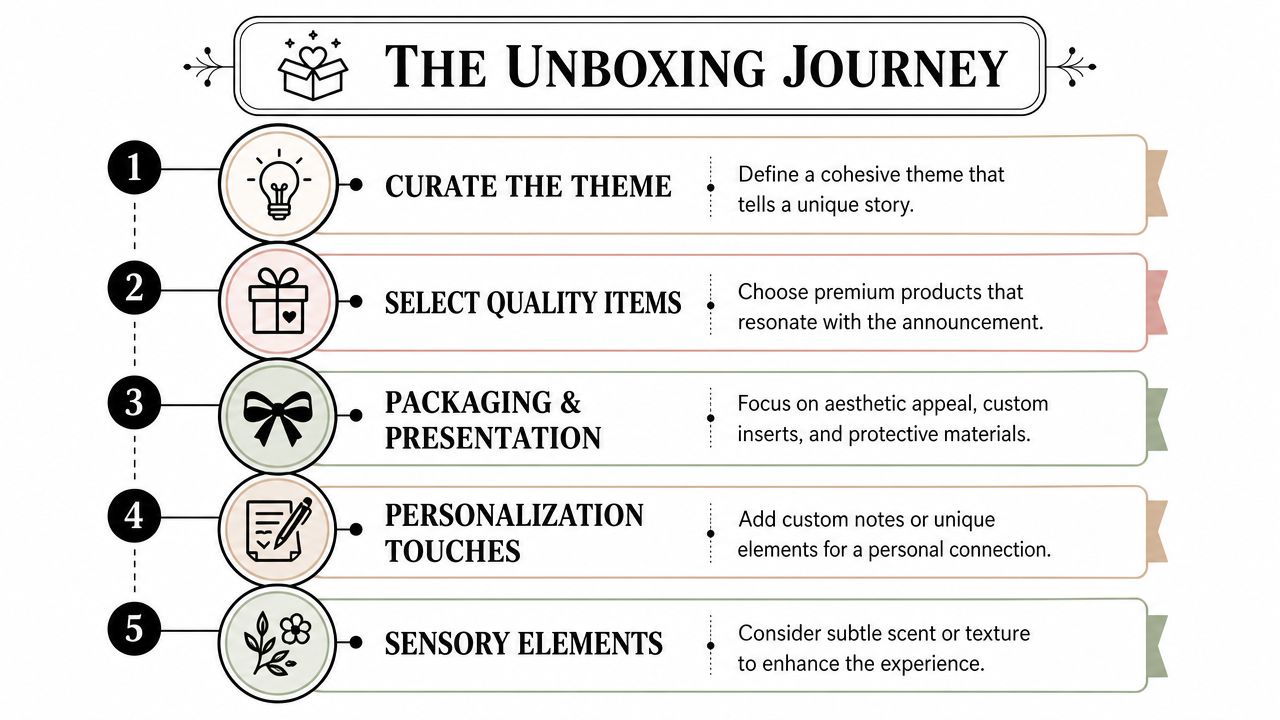
The best pregnancy announcement box doesn't feel stuffed. It feels staged. Every layer should lead the recipient toward the reveal instead of distracting from it.
Start with the reveal, not the filler
Pick the reveal item before you pick anything decorative. That might be a tiny pair of socks, a wooden disc with the due date, an ultrasound photo tucked into a sleeve, or a card with the message hidden under a scratch-off panel.
That order matters because the reveal controls the internal layout. If you start with filler products, you usually end up with a box that looks busy and opens flat.
What tends to work well:
- A focal compartment: The main message or item should sit in the center or top visual line.
- One interactive element: Industry data shows that 3D boxes with hidden compartments have a 40% higher perceived value, while scratch-off cards can raise recipient engagement by 30% in this Etsy listing reference.
- A clean sequence: Lid opens, message appears, secondary items support the story.
What usually doesn't work:
- Too many tiny loose items
- Competing messages in multiple places
- Decorative shredding that obscures the actual reveal
- A box that looks better closed than open
If the recipient has to dig around to understand the announcement, the design is working against you.
Build the box around local maker pieces
Here, local makers can create something that feels like a quality upgrade. Instead of filling the box with generic baby-themed imports, source one or two supporting items from nearby independent brands. A candle, tea blend, ceramic trinket dish, or handmade paper good can give the box texture without overcrowding it.
For candle ideas that translate well into gift sets, I like reviewing examples such as crafting memorable candle gifts. Not to copy them, but to study how scent, vessel size, and packaging influence the mood of the whole set.
You can also borrow structure from other boxed gifts sold direct by makers. A product like the Say It Your Way Box is a useful reminder that buyers respond to customizable presentation when the contents feel cohesive.
Try building around one of these themes:
- Cozy morning: tea, a candle, ultrasound sleeve, handwritten note
- New adventure: travel-style tags, baby booties, reveal card, keepsake token
- Grandparent surprise: framed message card, photo slot, sweet treat, ribbon pull
- Simple keepsake: engraved disc, scan holder, tissue wrap, storage-ready box
A strong theme gives you guardrails. You'll make faster sourcing decisions, your photos will look more consistent, and buyers will understand the box right away.
Assembling and Personalizing Each Box with Care
Assembly is where a promising idea either becomes a polished product or falls apart. A pregnancy announcement box can use beautiful materials and still feel amateur if the internal spacing is off, the message card catches on the lid, or the ribbon looks decorative but doesn't function cleanly.
Lay out the opening view first
Before you glue, tie, tuck, or label anything, open the empty box and decide exactly what the recipient sees in the first second. That first view should be calm and readable.
If you're building a more structured box, technical craft benchmarks are useful here. High-fidelity laser-cut versions often use 3mm to 5mm Baltic birch, target at least 1200 DPI for vector engraving, and need careful spacing so parts don't bind during assembly. For internal function, a 1.0mm gap for message cards helps prevent tearing, and a 0.5mm tolerance for ribbon loops helps the box open without snagging.
Common mistakes happen in simple places:
- Ribbon slots cut too tight: Inadequate ribbon clearance causes a lot of frustrating rework.
- Cards packed flush to the walls: That looks neat on the bench but catches in transit.
- Weight loaded into the lid side: The box opens awkwardly and shifts the focal point away from the reveal.
Expert guidance also recommends testing the final build under 100g of weight to confirm the structure holds. When boxes fail under that threshold, customer dissatisfaction rises.
Workshop habit: Make one “master layout” sample and photograph it from above. Use that image every time you assemble future orders so placement stays consistent.
Use filler sparingly. Crinkle paper, shredded kraft, or folded tissue should stabilize the contents, not hide them. If you need more than a small amount to keep pieces in place, the insert or compartment design probably needs work.
Add personalization without slowing yourself down
Personalization sells the box, but too many custom options can wreck your turnaround time. Offer a small menu that changes the feel of the gift without forcing you to redesign the whole build.
Good low-friction options include:
Printed name band or belly wrap
Easy to batch. Changes the presentation with minimal labor.Handwritten note card
Strong emotional payoff. Works well if you set a word limit.Engraved wooden tag or disc
Custom-engraved personalization has shown a 94% success rate when using HDPE-coated substrates in maker benchmarks, which is one reason many makers use coated materials when precision matters.Interactive message insert
UV-activated messages or scratch-off cards create a stronger reveal without changing the full box structure.
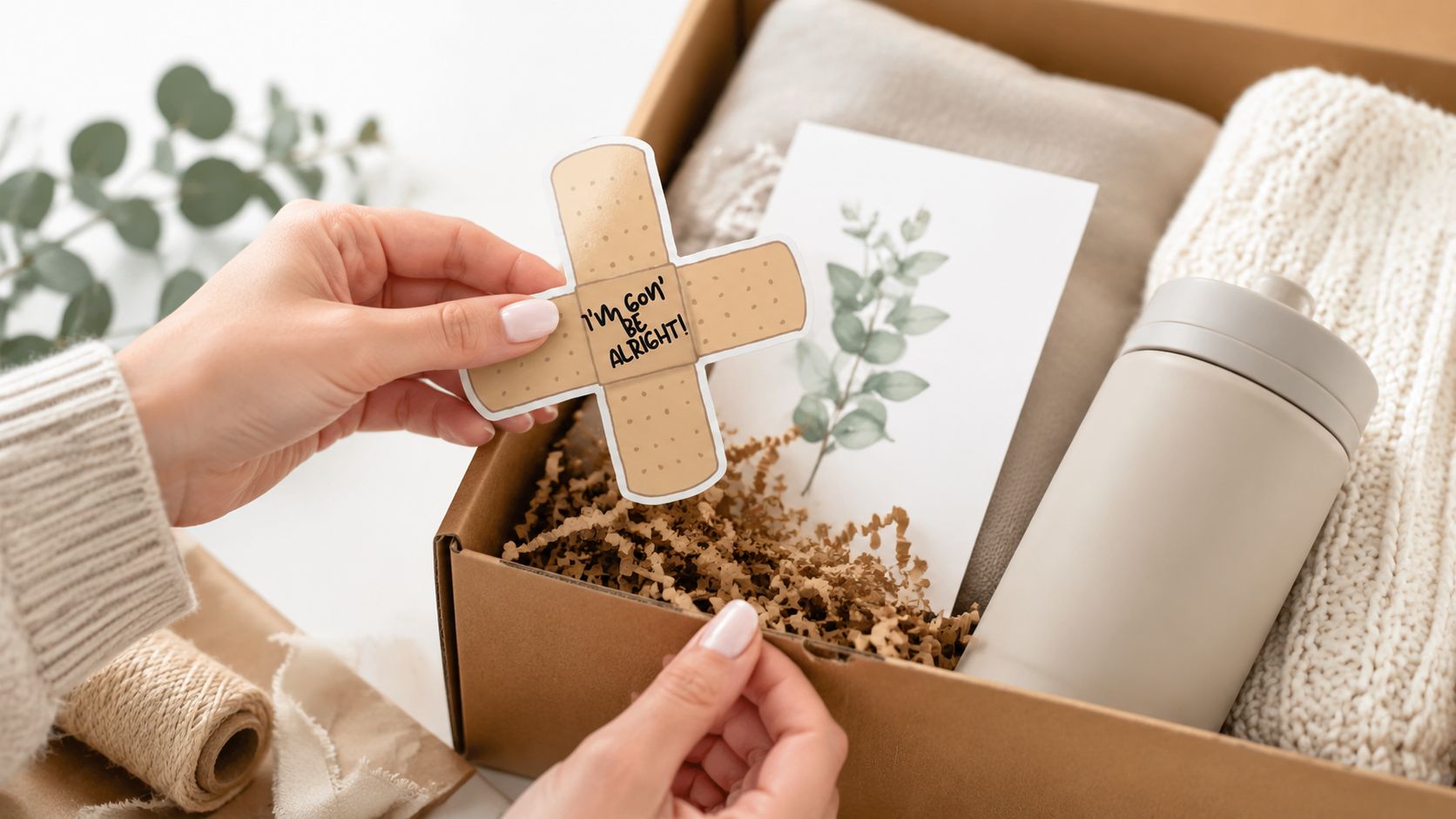
If you want a small add-in that feels personal but practical, something like the Waterproof Bandaid Sticker, Weatherproof Removable Decal, Dishwasher Safe for Water Bottles & Tumblers, 4x4 | Chika Paper Studio by Loyaltie can work for a comfort-themed bundle. The only reason to include a piece like that is fit. It should support the tone of the box, not act as random filler.
Keep your personalization workflow in one batch window each day. Print all labels together, engrave all tags together, then assemble all boxes in one run. That's how you keep custom work from eating the margin.
Photographing Pricing and Listing Your Box on Loyaltie
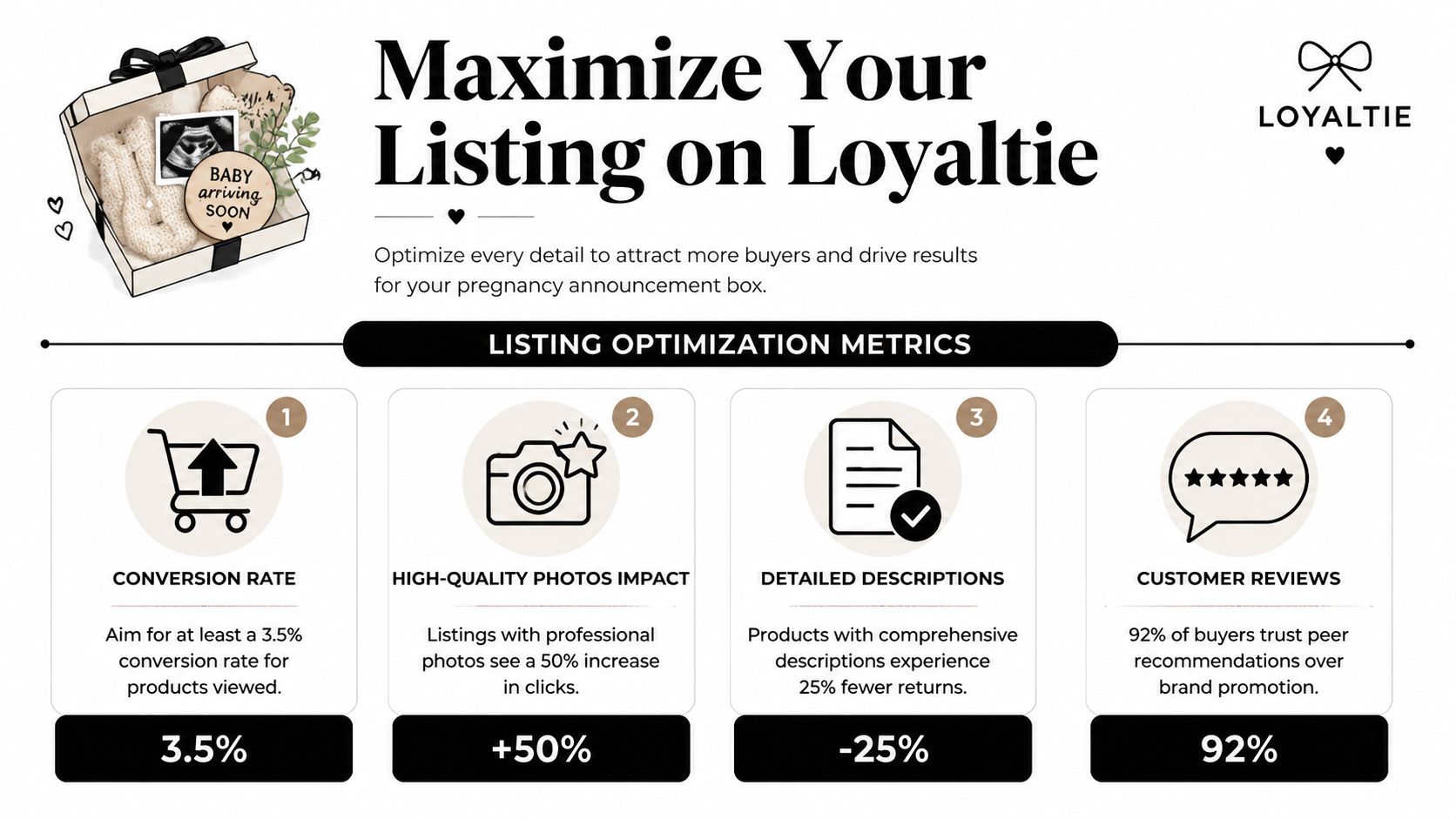
A strong pregnancy announcement box won't sell from one dim overhead photo and a vague description. Buyers need to see what opens, what's included, how it feels, and why your version is worth more than a generic kit.
Photograph it like a gift, not a product pile
Use window light. Late morning or early afternoon usually gives a clean look without the harsh shadows you get outdoors. Put the box near the light source and bounce light back with a white foam board or even a sheet of printer paper.
Your shot list should cover four things:
- Hero shot: box open, full layout visible
- Closed shot: ribbon, lid, outer finish
- Detail shot: engraved name, scratch-off card, hidden compartment, or keepsake item
- In-use shot: hands opening the box or lifting the reveal card
Keep props restrained. A linen napkin, wood table, or neutral tray can help. A whole nursery scene usually overwhelms the product.
Write a listing that answers buyer hesitation
Your description should do practical work. It should tell the buyer what's inside, who it's for, what can be personalized, how it arrives, and what the reveal moment feels like.
A simple structure works:
- First paragraph: what the box is and who buys it
- Second paragraph: exact contents and materials
- Third paragraph: personalization choices and timing
- Final lines: packaging, local pickup or shipping details, and care notes
When you're choosing where to sell, Sell on Loyaltie is one option for makers who want a marketplace where people discover and buy directly from independent brands in the US. That can matter if your product is strongest with a nearby audience and you want to emphasize local pickup, local delivery, or regional sourcing.
Don't write “perfect gift” five times. Write what the buyer gets, what the recipient experiences, and what makes your box different.
Price for quality and labor
The easiest pricing mistake is trying to beat mass-produced boxes on price. That's the wrong comparison. 68% of shoppers prefer buying from independent brands because of higher quality and personal connection, as noted earlier from the Happiest Baby reference used above. That gives you room to price around craftsmanship, not discount pressure.
Use a simple cost sheet every time.
| Cost Component | Example Cost | Your Cost |
|---|---|---|
| Box base and insert | ||
| Reveal item or keepsake | ||
| Supporting items from local makers | ||
| Tissue, filler, ribbon, sticker, card | ||
| Personalization materials | ||
| Assembly labor | ||
| Photography and listing time allocation | ||
| Packaging for shipment |
A few pricing rules keep you out of trouble:
- Count your labor accurately: If engraving, handwriting, packing, and messaging take time, include it.
- Build around your standard version: Custom upgrades should add margin, not create confusion.
- Leave room for remake risk: If a personalized component has to be redone, your price should absorb it.
If buyers compare your box to a cheap generic one, your photos and copy haven't shown enough of the difference yet. Fix that before you cut your price.
Packing and Shipping for a Perfect Arrival
You can build a beautiful pregnancy announcement box and still disappoint the buyer if it arrives scuffed, crushed, or rattling around inside a shipping carton.
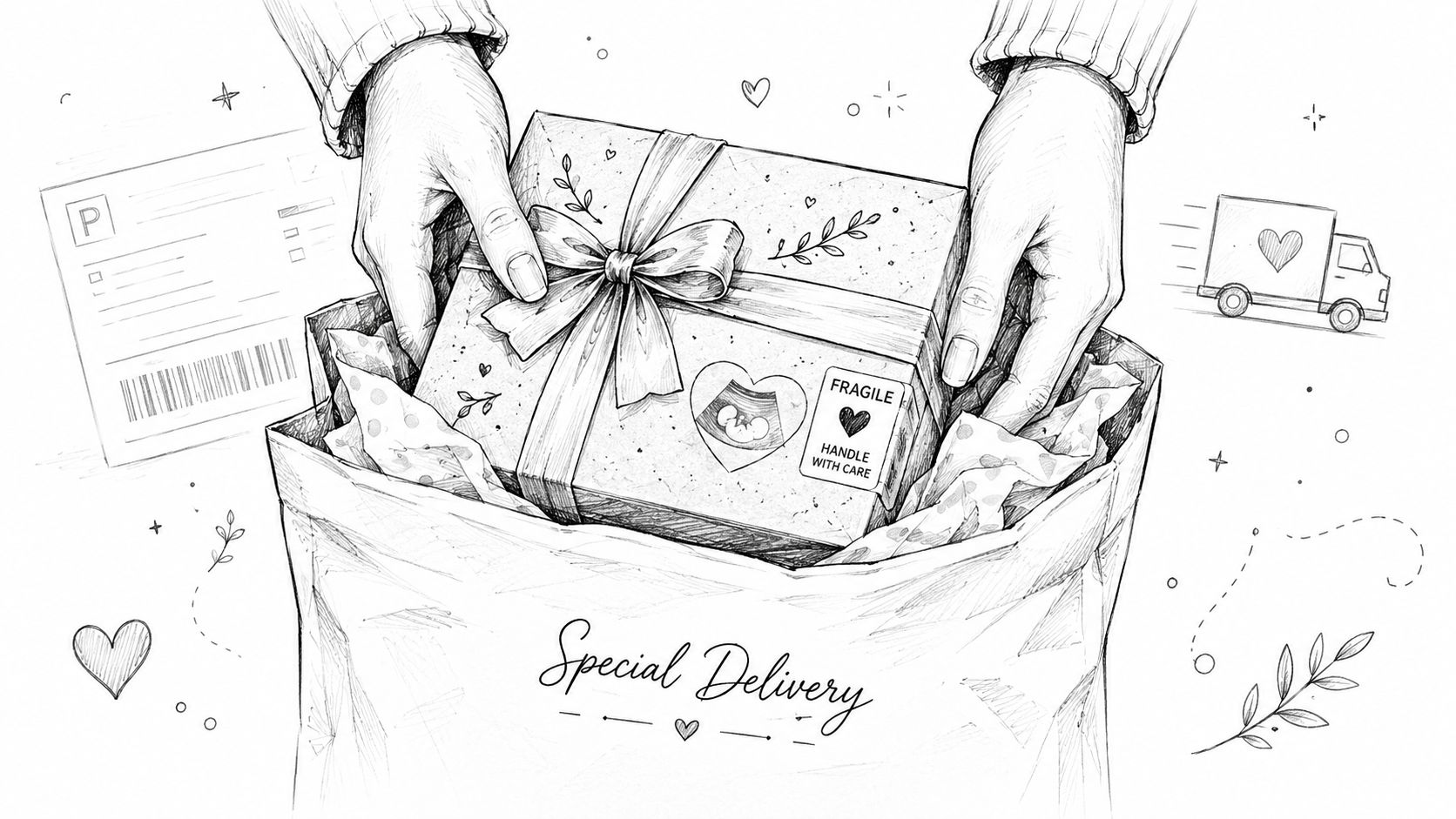
Protect the inner box from movement
Choose an outer shipping box that gives the inner gift box a little breathing room, but not enough space to slide side to side. Movement is what causes dented corners and messy interiors.
Wrap the finished gift box before it goes into the shipper. Tissue paper, a soft paper band, or a cloth ribbon can make the outer carton feel intentional once opened. Then fill the empty edges with packing material so the inner box stays centered.
Check these points before sealing:
- The lid stays shut: If the inner box can pop open in transit, add a removable band.
- Nothing shifts when shaken lightly: If you hear movement, reopen and fix it.
- Corners are buffered: Corner damage reads as carelessness, even when the inside survives.
Make the shipping box feel intentional
A shipping carton doesn't need to look fancy. It needs to feel considered. A clean thank-you card, packing slip tucked out of view, and neat wrapping do more than a pile of branded extras.
If you offer local delivery or pickup, say so clearly in your listing and messages. That option matters with time-sensitive gifts and surprise reveals. Maker-facing help from Loyaltie selling resources can help when you're setting up the practical side of fulfillment and customer communication.
The outer box is the first unboxing step. Treat it like part of the product, not an afterthought.
For long-distance orders, test one package to yourself before launching. It's the fastest way to catch crushed filler, bent cards, loose lids, and weak tape choices.
Simple Ways to Market Your New Product Locally
Most makers don't need a giant launch. They need a steady stream of nearby buyers who already value well-made products and are likely to share them with friends, doulas, family members, and local parent circles.
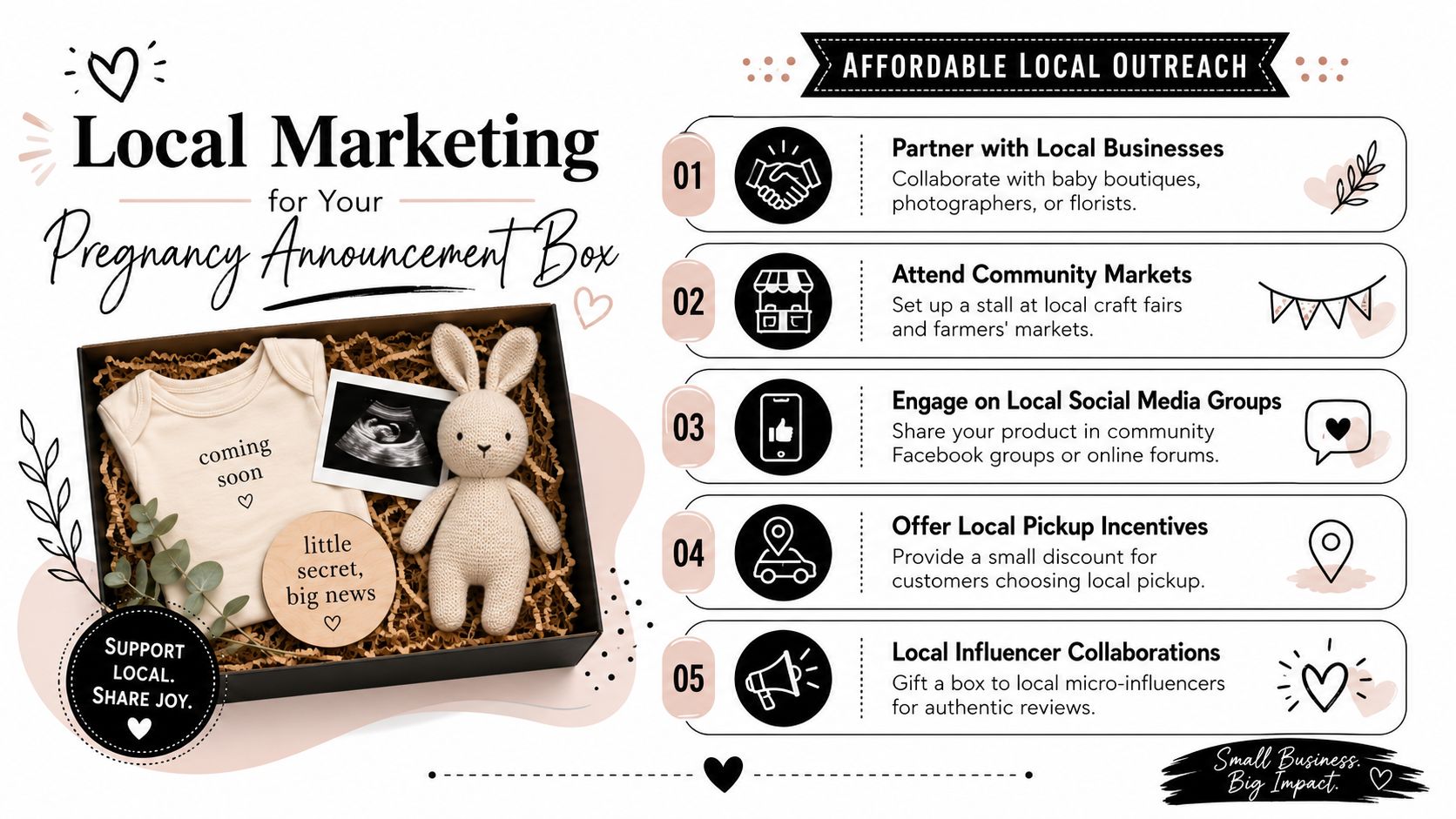
Use local proof, not broad promotion
Start with places where people already ask for recommendations. Local parenting groups, neighborhood Facebook pages, Instagram location tags, and baby-related community events usually outperform broad posting when your product has a local angle.
Good local outreach looks like this:
- Partner with nearby professionals: maternity photographers, doulas, childbirth educators, ultrasound boutiques
- Show the reveal in motion: a short video of the box opening often explains the product faster than a static grid post
- Name what's locally sourced: buyers respond when they can see the candle, paper goods, or sweets came from real makers nearby
- Offer pickup windows: convenience can close the sale when timing matters
If you want extra ideas for speaking to expecting parents without sounding pushy, marketing tips for reaching expecting parents can help you sharpen the message.
Build repeat demand from one strong first order
Pregnancy announcement boxes are often bought once by a given customer, but the buyer relationship doesn't end there. If the box arrives looking polished and thoughtful, that buyer may come back later for shower favors, new baby keepsakes, nursery details, or gifts for someone else.
That's where product quality excels at marketing. Over 74% of health-conscious consumers prioritize buying from independent brands and local growers, and 82% are willing to reorder from the same maker if the product meets their quality standards, based on this Facebook community reference. Those numbers come from a broader buying pattern, but the lesson carries over well here. First impressions matter.
A few moves help turn one order into word-of-mouth:
- Include a clean maker card: one card, not a stack
- Ask for a photo after delivery: only if the buyer seems enthusiastic
- Follow up with care, not pressure: thank them, mention related products if relevant, leave it there
People recommend local makers when the product feels easy to trust and easy to talk about.
The sellers who do best with this category usually don't market the loudest. They make a box that photographs well, arrives safely, and gives the buyer a story worth passing on.
If you want a simpler way to reach nearby shoppers, Loyaltie is a marketplace where people discover and buy directly from the best independent brands in the US. It gives makers a practical way to list products, connect with local buyers, and sell without relying only on mass-market platforms.