
You're looking for a better everyday product, but the search quickly turns into a maze. You want coffee that suits your morning routine, skincare without ingredients you avoid, or pet food that fits a real dietary need. Instead, most online stores show you the same popular items everyone else sees.
Personalized product recommendations can make that search feel more like advice from a thoughtful shopkeeper. For independent brands and local makers, the opportunity is especially useful: the right recommendation can connect you with a product that matches your preferences, values, and location, not just the item with the biggest advertising budget.
Table of Contents
- What Personalized Product Recommendations Mean
- Five approaches in plain language
- Recommendation Approaches Compared
What Personalized Product Recommendations Mean
A local marketplace can recognize that you usually buy smooth medium-roast coffee from nearby makers and prefer gentler caffeine. Instead of placing a general bestseller list in front of you, it might show one single-origin roast from a maker about 30 miles away, with flavor notes that fit your stated taste.
That suggestion is personalized because it combines signals connected to you, including previous purchases, browsing activity, product attributes, and preferences. The system ranks products according to their likely relevance for this shopper and this moment.
The underlying process is straightforward. A marketplace gathers product information and shopper interactions, then compares possible matches. For coffee, relevant details might include roast level, flavor notes, caffeine information, location, and past activity. A skincare shop can connect an interest in fragrance-free formulas with products that clearly disclose compatible ingredients. A pet marketplace can use life stage, dietary preferences, and prior purchases to narrow the choices.
Practical rule: A useful recommendation should explain its relevance. “Because you prefer low-acid coffee” gives you a reason to consider an item. “You may also like this” gives you very little.
The explanation matters even more for independent brands. Local makers often have less visibility than mass-produced alternatives, so a bestseller list tends to repeat existing popularity. A relevant recommendation can put a smaller product in front of the buyer it suits, while still leaving room to inspect the maker, ingredients, origin, and shipping distance.
For shoppers, the benefit is less scrolling and more confident discovery. For makers, it is a clearer route to the right audience. Product information remains the foundation: personalization cannot compensate for vague ingredient lists or unclear descriptions. Sellers exploring tailored e-commerce content can apply the same principle beyond product suggestions, adapting information to individual shoppers without hiding the reasons behind it.
You can encounter this experience on Loyaltie, a marketplace where people discover and buy directly from independent brands in the US. Its value depends on more than an algorithm. The marketplace also needs accurate product details, honest maker information, and recommendations that shoppers can understand and question.
A recommendation should function like a shopkeeper's explanation, not a mysterious instruction. When the reason is visible, shoppers can decide whether the match fits their tastes, health considerations, values, and location. That transparency helps independent brands build trust while giving local products a fairer chance to be found.
How the Main Recommendation Approaches Work
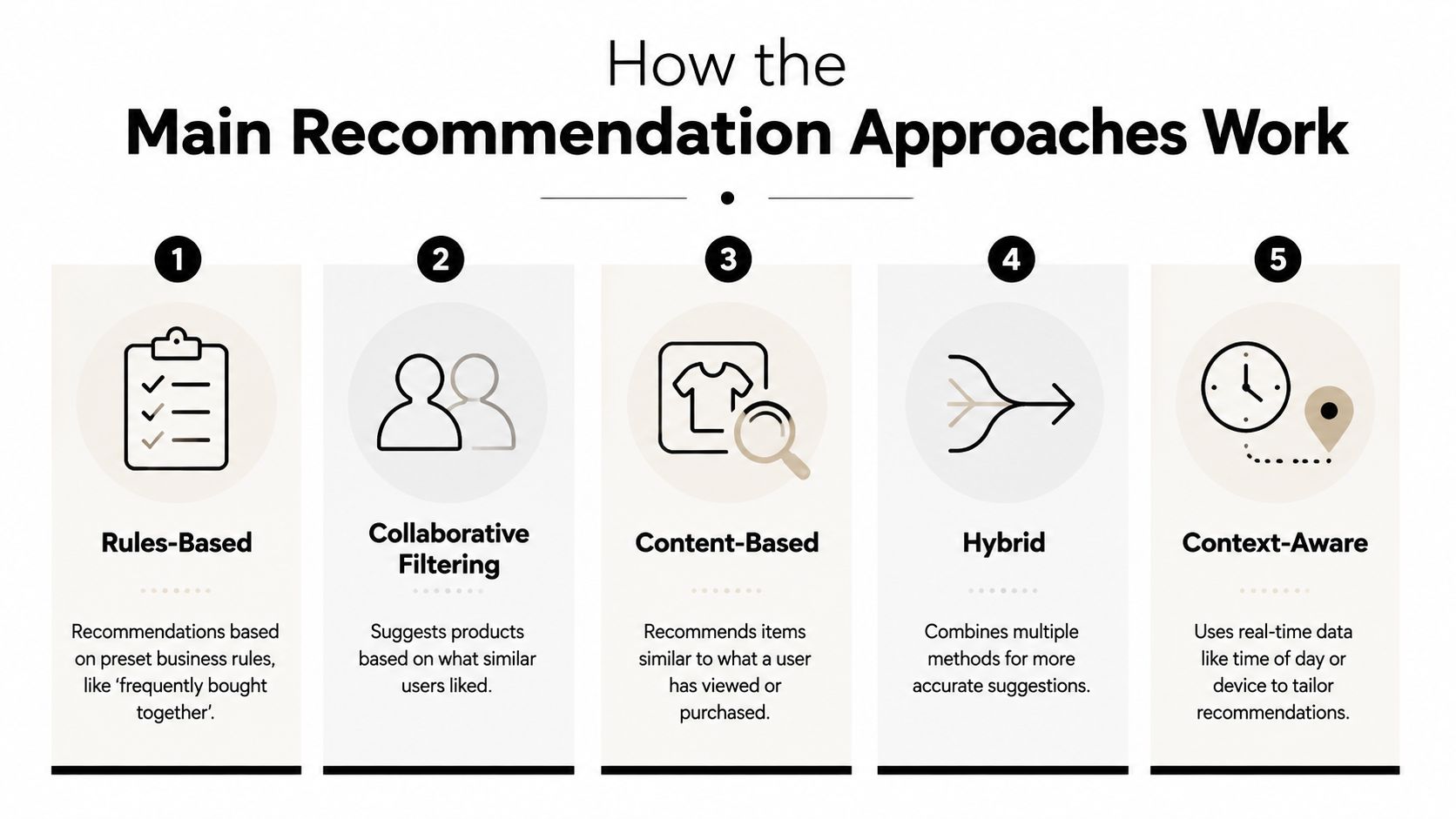
Recommendation approaches differ mainly in the evidence they use. Some rely on seller knowledge, some learn from shopper behavior, and others examine product details such as ingredients, category, or intended use.
Five approaches in plain language
Rules-based recommendations work like a knowledgeable shopkeeper with a reliable pairing list. If you buy a pour-over coffee, the system might suggest filters or a compatible grinder because the seller has created that relationship manually. This approach is easy to understand and works well when makers know their products intimately, but it can become repetitive if every shopper sees the same pairing.
Collaborative filtering asks what shoppers with similar behavior bought or liked. If people who purchased one herbal tea often explored another blend, the system may recommend that second product to you. It can uncover useful connections that sellers didn't manually identify. Its weakness is that new products and lesser-known makers have less behavioral history to draw from.
Content-based recommendations focus on product characteristics. A shopper who views fragrance-free skincare may see other products with similar ingredient or formulation details. This method is valuable for wellness, food, supplements, and pet products because clear metadata can carry a lot of meaning. It also depends on accurate listings. Missing ingredient, category, or use-case information limits the quality of the match.
Hybrid systems combine approaches. A marketplace might use product attributes to filter suitable options, then use shopper behavior to rank the most relevant ones. This gives independent brands a stronger balance between product fit and observed demand.
Context-aware recommendations add situational signals, such as location, time of day, device, current category, or seasonal intent. A nearby pantry maker may be more relevant when local availability matters. A shopper browsing calming evening products may need a different selection from someone shopping for a morning routine.
A 2018 ecommerce study found that a purchase-based collaborative filtering recommender increased views by 15.3%, conversion by 21.6%, and final conversion by 7.5%, with results moderated by product attributes and review ratings. The study on purchase-based collaborative filtering reinforces a practical lesson: ranking alone isn't enough. Product information and social proof influence whether a recommendation becomes a purchase.
Recommendation Approaches Compared
| Approach | How It Works | Best For | Data Needed |
|---|---|---|---|
| Rules-based | Uses preset relationships and seller-created pairings | Complementary products and simple bundles | Product relationships and seller rules |
| Collaborative filtering | Finds patterns among shoppers with similar behavior | Established catalogs with repeat activity | Views, purchases, ratings, and clicks |
| Content-based | Matches product attributes to shopper interests | Ingredient-sensitive and attribute-rich categories | Ingredients, descriptions, categories, and use cases |
| Hybrid | Combines behavioral and product signals | Marketplaces balancing discovery and relevance | Interaction data plus structured catalog data |
| Context-aware | Adjusts suggestions to the shopper's current situation | Local availability, seasonal needs, and changing intent | Location, time, device, category, and current activity |
Independent sellers don't need to begin with the most complex model. A carefully maintained rules-based or content-based system may serve a smaller catalog better than an opaque system trained on thin data. For a broader discussion of operating personalization across larger catalogs, Next Point Digital explains ecommerce personalization at scale.
Data Sources and Privacy Practices That Build Trust
The strongest recommendation system for an independent brand isn't the one that collects the most data. It's the one that uses relevant information shoppers understand and willingly provide.
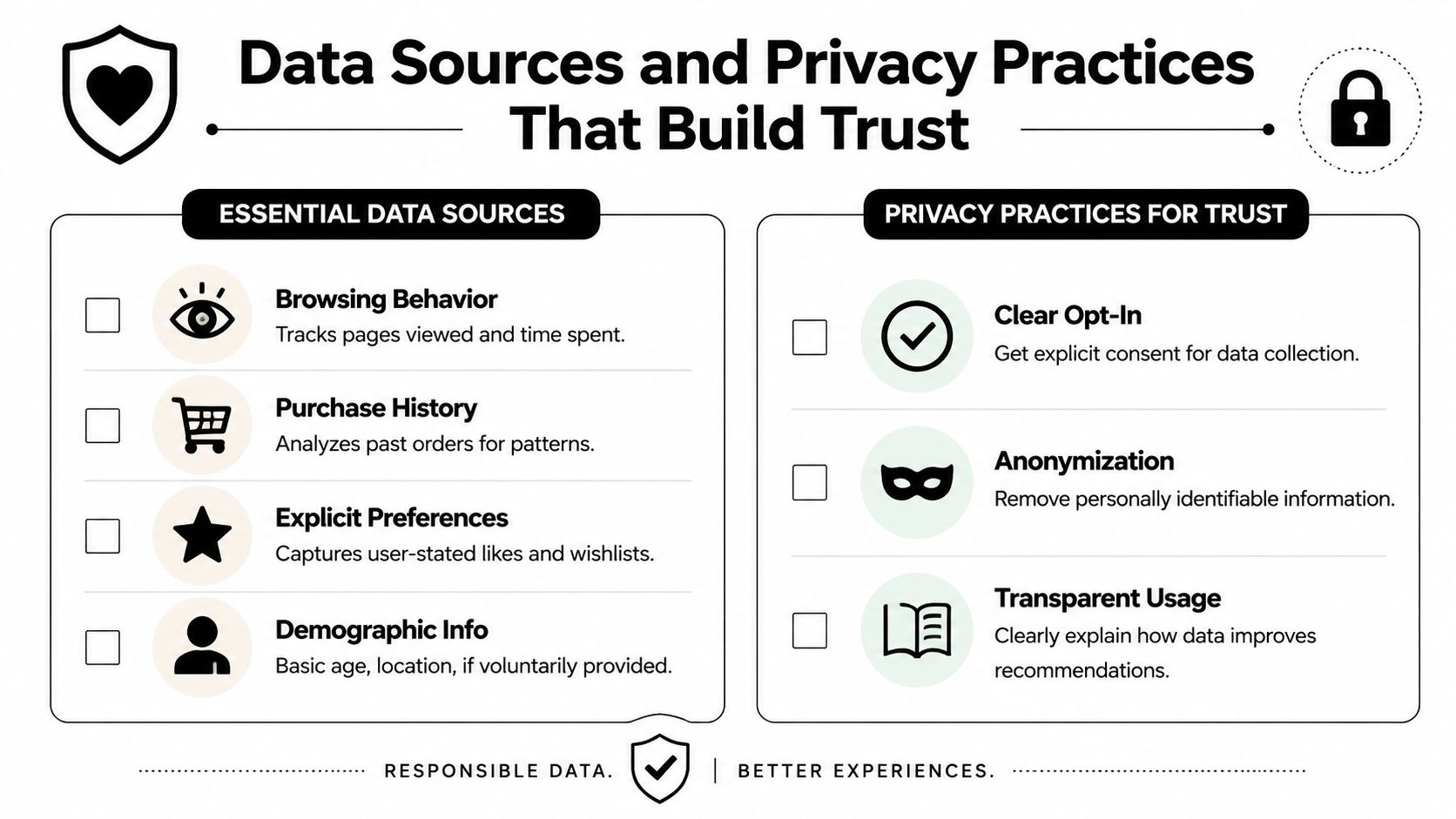
Purchase history is usually a sensible starting point. If you've bought a particular roast, moisturizer, or dog treat, a marketplace can use that behavior to suggest related options or a reorder. Browsing behavior can add context, especially when you view several products without buying. Product attributes, including ingredients, format, flavor, and intended use, help the system understand what an item is. Explicit preferences, such as “fragrance-free” or “low caffeine,” can be even more useful because they come directly from you.
A global Qualtrics study of more than 23,000 consumers found that 64% prefer companies that tailor experiences, while 53% are extremely or very concerned about privacy and only 33% trust companies to use personal information responsibly. The same consumer personalization and privacy study found the highest comfort with purchase history at 45% and website visits at 42%. Comfort was lower for financial information at 12% and social media posts at 17%.
Those differences should shape the design. You can ask for a purchase preference in a short quiz, but you shouldn't imply that a shopper must disclose sensitive information to receive useful suggestions.
Make the exchange clear
A trustworthy recommendation experience answers three questions:
- What are you collecting? Say whether the system uses purchases, viewed products, stated preferences, or location.
- Why does it help? Explain the practical value, such as filtering products by ingredients or showing makers who can serve the shopper's area.
- What control does the shopper have? Let people edit preferences, dismiss suggestions, or browse without personalization.
For independent brands, transparency can become a quality signal. A maker who explains ingredients, sourcing, production methods, and recommendation logic gives you more useful information before you buy. That makes personalization feel like guidance rather than surveillance.
Loyaltie's privacy policy provides a reference point for sellers thinking about how marketplace data practices should be communicated. The broader principle is simple: collect the least information needed, protect it carefully, and describe its use in plain language.
Implementation Pathways for Independent Sellers
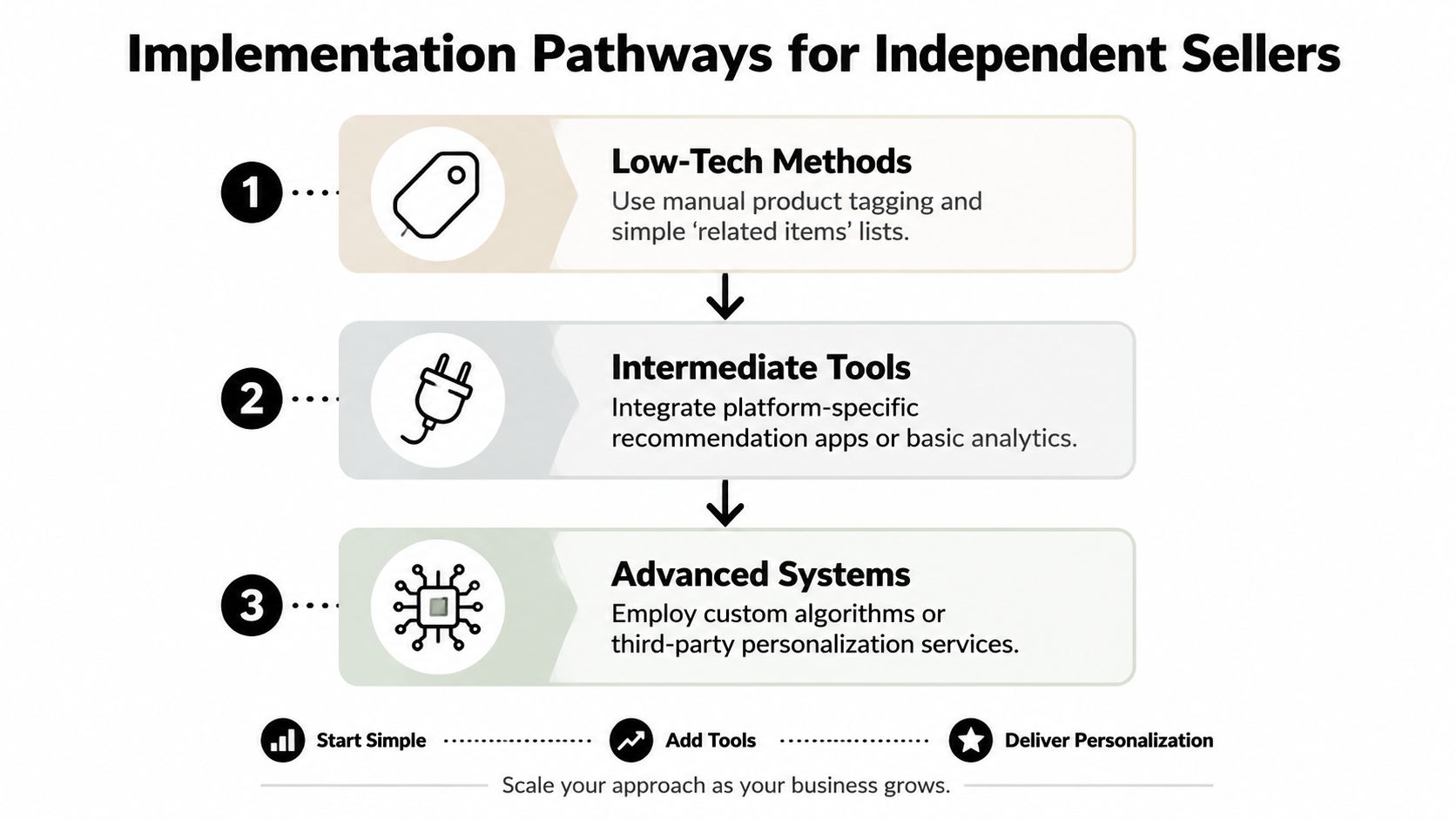
Independent makers can start without a dedicated engineering team. The right path depends on catalog size, shopper activity, product complexity, and how much control the seller needs over the experience.
Start with deliberate curation
The low-tech route is often the most credible first move. Create manual tags for roast level, dietary use, skin concern, scent profile, pet life stage, or product format. Then build related-item lists that reflect real product knowledge.
A coffee maker might connect a smooth daily roast with a lower-caffeine option. A skincare maker might group products by a clearly stated concern while warning shoppers to review the full ingredient list. A pet brand might separate products by animal type and dietary purpose rather than placing every treat in one broad collection.
Post-purchase messages can also be personal without being automated in a complicated way. Recommend a complementary product based on what the customer bought, or invite them to update preferences before the next reorder. This approach takes hands-on maintenance, but it gives the maker control over accuracy and tone.
Add marketplace tools
The intermediate route uses marketplace features, recommendation apps, basic analytics, and structured catalog fields. Sellers should standardize product names, descriptions, ingredients, categories, and use cases before expecting software to make good matches.
A platform such as Loyaltie can give independent sellers a marketplace setting for reaching local audiences while keeping product identity and maker information visible. Its seller resources are available through Loyaltie's seller resources. The seller still needs to provide the detail that makes a recommendation meaningful.
Build only when the evidence supports it
Advanced systems can combine behavioral signals, product metadata, location, inventory, and conversational search. They may use custom algorithms or a third-party personalization service, but complexity creates maintenance demands. Someone must monitor bad matches, outdated products, missing information, and recommendations that favor popularity over fit.
Use a staged test:
- Choose one journey. Start with product pages, cart suggestions, or post-purchase email.
- Define one shopper need. Focus on discovery, ingredient fit, complementary products, or reordering.
- Improve the catalog first. Fill gaps in attributes and usage information.
- Review recommendations manually. Check whether the suggestions make sense to a real shopper.
- Measure the result. Keep the approach if it helps shoppers discover and buy suitable products.
Measuring What Matters
A recommendation can attract clicks without helping shoppers choose well. It may also raise basket size by repeatedly displaying popular items, leaving independent makers with little exposure. Good measurement compares commercial usefulness with shopper relevance, not one at the expense of the other.
Large retailers often emphasize conversion and revenue per visit. Independent brands and local marketplaces need a broader view. A recommendation may succeed by introducing a shopper to a nearby maker, a product with clearly disclosed ingredients, or a category they had not considered.
| Metric | What It Tells You | Why Independent Brands Should Watch It |
|---|---|---|
| Recommendation click-through rate | Whether the suggestion attracts attention | Reveals whether the product title, image, and reason feel relevant |
| Conversion after recommendation click | Whether the suggestion supports a purchase | Separates curiosity from genuine product fit |
| Average order value | Whether the recommendation changes the basket | Shows whether complementary products make sense |
| Repeat purchase rate | Whether the first experience creates future intent | Helps makers build reliable reorder behavior |
| New-product discovery | Whether shoppers find items outside their usual pattern | Protects against showing only familiar bestsellers |
| Long-tail exposure | Whether less-visible products receive qualified attention | Gives independent makers a fairer route to discovery |
Commercial benchmarks can provide context, but they are not promises. One widely cited source reports that recommendation-related revenue can reach as much as 31% of ecommerce site revenue, while another dataset shows average order value increasing by 369% after a single interaction. Those figures appear in earlier research on ecommerce product recommendations, yet outcomes depend on the catalog, audience, product information, and placement.
For a local marketplace, novelty deserves its own measure. A familiar purchase may satisfy an immediate need. Discovering a suitable nearby maker can begin a broader relationship with the marketplace. Track first-time product views, first purchases from a maker, and later engagement with that maker's products.
A 2023 framework for personalized serendipitous recommendation reported offline AUC values rising from baselines of 0.544, 0.571, and 0.541 to 0.663, while AUUC increased from 0.121–0.131 to 0.226. In its online A/B test, the system produced a 0.54% relative increase in impressive depth, 0.8% more average user clicks, and gains of 3.23% and 1.38% in novel impressive and clicked items. The research on uplift and serendipitous recommendation supports assessing novelty and treatment effect alongside standard ranking accuracy. For independent sellers, that means asking not only whether a recommendation converts, but whether it broadens informed discovery without weakening trust.
Real-World Examples and Emerging Trends
A coffee recommendation can use roast level, caffeine preference, flavor notes, and distance from the shopper. A skincare recommendation can prioritize clearly disclosed ingredients and avoid making medical promises. A supplement suggestion should respect the shopper's stated goals while leaving room to review labels and consult appropriate professionals. A pet product recommendation can narrow choices by animal type, dietary requirements, and prior purchases.
Geography adds another layer. A 2023 PDG Insights survey found that almost half of US consumers go out of their way to buy local brands or products. Among shoppers who intentionally buy local, 20% say a product must be made within 50 miles of their city or town to qualify as local, according to the survey on local brand buying. That makes location more than a convenient filter. For some buyers, it's part of the product's identity.
Direct purchasing also represents a substantial food channel. The USDA reported that producers sold $17.5 billion of food through direct marketing channels in 2022, including unprocessed and value-added food, based on the 2022 Census of Agriculture released in February 2024. The USDA summary of direct food marketing shows why food discovery from local makers belongs in mainstream ecommerce conversations.
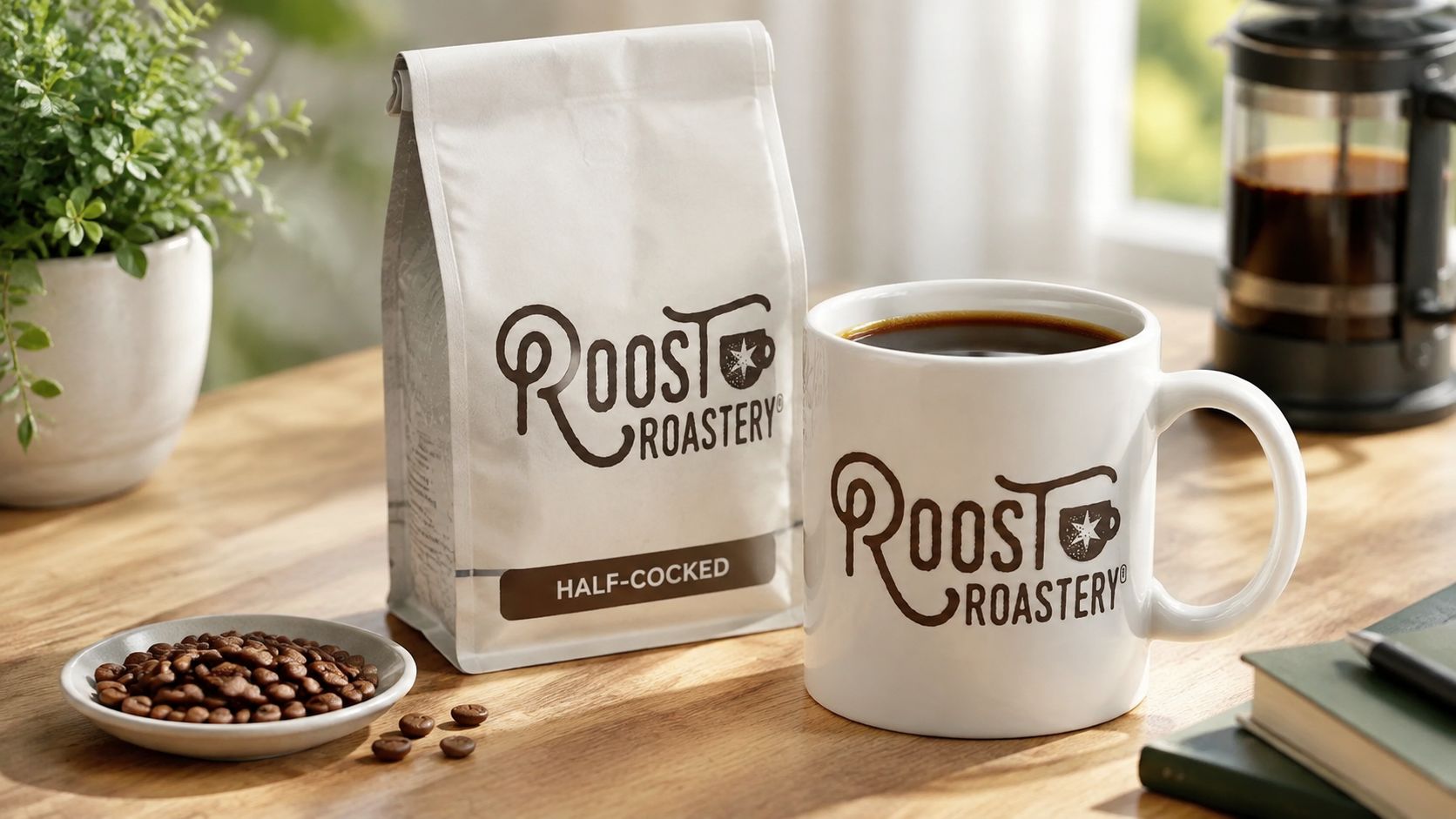
A shopper who wants full coffee flavor with less caffeine might consider HALF-COCKED coffee | Roost Roastery by Loyaltie, a 50/50 blend of caffeinated and decaf coffee available as whole bean. The recommendation is useful because it connects a specific need with a clearly described product, not because an algorithm declares it universally superior.
GenAI is changing how people discover products. A 2025 Accenture Consumer Pulse summary reported that genAI was the second most preferred source for purchase recommendations among genAI users worldwide, with users nearly twice as likely to use genAI as retailer or brand websites or apps. The finding covered 18,214 consumers in 13 markets and 13 categories, as described in the Accenture consumer recommendation trend summary.
Independent makers should prepare for questions such as, “Which locally made coffee has lower caffeine?” or “Show me skincare with ingredients I avoid less often.” Clear product attributes, maker location, sourcing details, and honest descriptions help both marketplace search and conversational recommendation systems. The same principle applies beyond ecommerce. Businesses exploring technology that matches products to individual needs can also review this overview of how digital tools boost sales with fit technology.
When Personalization Backfires and How to Avoid It
More automation doesn't always produce a better shopping experience. Recommendations can become intrusive when they remove choice, infer sensitive needs, or push a shopper toward a “healthy” option without explaining the reasoning.
A 2025 study of online grocery recommendations found that landing-page recommendations improved healthy choices and were more acceptable than prefilled baskets. The authors also warned that recommendations can lower consumer self-efficacy, meaning shoppers may feel less confident making healthy choices themselves. Precommitment helped when recommendations aligned with a shopper's stated health goal instead of making the decision for them, as discussed in the study on healthy online grocery recommendations.
That distinction matters for wellness, skincare, food, and supplements. A recommendation should guide, not pressure. It should show why a product appears, make alternatives visible, and let you adjust or dismiss the suggestion.
Use preference prompts that preserve autonomy:
- Ask about goals: “Are you looking for lower caffeine, a new flavor, or a nearby maker?”
- Show the evidence: Identify the matching ingredient, category, use case, or location.
- Keep control visible: Let shoppers change preferences and browse the full catalog.
- Avoid sensitive assumptions: Don't infer health conditions or personal circumstances from a single search.
The best personalized recommendation often feels like a useful suggestion from someone who understands your needs. It doesn't pretend to know you better than you know yourself.
Loyaltie helps you discover and buy directly from independent brands and local makers across the US, including everyday products in coffee, food, wellness, skincare, and pet categories. Visit Loyaltie to find products matched to what matters to you, from ingredient transparency and product fit to geographic proximity and a direct connection with the maker.