

You're standing in a market aisle with two jars of coconut oil in your hands. One says organic virgin unrefined, another says cold-pressed, and a third promises a “pure” product at a very different price. Online, the choices multiply, while the labels make everything sound equally wholesome.
The useful question isn't which jar has the most impressive front label. It's what each word tells you, what it leaves out, and whether the maker can show evidence behind the claim. Once you understand that, you can compare organic virgin unrefined coconut oil from independent US brands with much more confidence, instead of paying extra for polished language.
Table of Contents
Standing in Aisle and Wondering Which Jar to Trust
The hesitation usually starts with a simple mismatch. You want coconut oil for cooking, skincare, or both, but every product seems to promise a different version of “natural.” Organic, virgin, unrefined, cold-pressed, raw, and expeller-pressed sound like close relatives. They aren't interchangeable.
Start by separating the questions:
- How were the coconuts grown? That's where organic certification matters.
- How was the oil extracted? That's where virgin, unrefined, and process details matter.
- Can the maker prove what happened? That's where origin, lot information, dates, and testing matter.
A jar can answer one question clearly and leave the others vague. A product may be organic without being virgin, or virgin without giving you much information about its source. The words only become useful when you read them as separate pieces of a supply chain.
A practical rule: Pay for documented quality, not for the longest list of reassuring adjectives.
The gap is especially important with independent brands. A local maker may provide a direct answer about the coconuts' origin, extraction method, or batch testing that a large shelf brand doesn't make easy to find. That direct relationship can reveal whether you're buying a carefully handled oil or just a familiar label with attractive packaging.
By the end of this guide, you'll be able to read the jar from farm to bottle. You'll know which claims describe agriculture, which describe processing, how health evidence should shape your expectations, and how to find a better product by buying directly from a maker rather than assuming a higher price means higher quality.
What Organic, Virgin, and Unrefined Actually Mean
Think of the label as having three separate locks. Each word opens one lock, but none of them opens the whole jar.
Organic describes the agricultural system. A credible organic claim should connect the coconuts to the applicable certification requirements and a named certifier. It tells you about how the crop was produced, not automatically how the oil was extracted or how fresh it is.
Virgin describes the oil. Official standards define virgin coconut oil as oil extracted from fresh coconut kernel by mechanical or natural means, with or without heat, without chemical refining, bleaching, or deodorizing. The official standard for virgin coconut oil also allows processes such as fermentation, centrifuging, and expelling, and requires the producer to identify the process on the label.
Unrefined generally signals that the oil hasn't gone through industrial refining, bleaching, or deodorizing. In coconut oil shopping, it often overlaps with virgin, but you still want the actual extraction method and supporting details. Neither word proves a medical benefit, ethical sourcing, or superior antioxidant content.

Terms that sound similar
Cold-pressed suggests limited heat during pressing, but the phrase alone doesn't tell you the exact temperature, equipment, or whether the oil came from fresh coconut or dried copra. Raw is even less precise unless the maker defines it. Expeller-pressed describes mechanical pressing through an expeller, and the process can involve heat generated by pressure.
A useful product page might state the coconut origin, whether the method was wet or dry, whether heat was used, and how the oil was filtered and bottled. For a related example of how organic coconut oil appears in a body-care product, you can explore this organic coconut oil and vitamin E body scrub. The important habit is to read beyond the front label.
How Virgin Coconut Oil Is Actually Made
Virgin coconut oil can reach the bottle through different paths, and those paths help explain why two jars with the same front-label wording can smell, taste, and behave differently.
Wet processing
The wet method begins with fresh coconut meat. The meat is grated or otherwise prepared, then coconut milk is separated from the fiber. Producers can separate the oil from that milk through fermentation, chilling, centrifugation, or related mechanical methods. The resulting oil may retain a pronounced coconut aroma and flavor, along with minor compounds that vary according to the handling conditions.
Wet processing is sensitive to time, moisture, temperature, and separation technique. A maker who controls those variables can produce a clean, expressive oil, but “wet processed” isn't a guarantee by itself. The producer still needs to manage sanitation, residual moisture, and storage.
Dry processing
The dry method dries the coconut kernel before pressing. That dried material, often called copra, is mechanically crushed or pressed, and the oil is filtered before bottling. Dry processing can be practical at larger production scales, but the drying temperature, exposure time, and moisture level influence the final product.
A comparative study of virgin coconut oils made through chilling, centrifugation, fermentation, and direct micro-expelling found lauric acid levels of 48.40–52.84% and total phenolic content ranging from 1.16 to 12.54 milligrams of gallic-acid equivalents per gram (comparative processing study). Those differences show why unrefined isn't one standardized chemical profile.
A short visual overview can help you see how extraction choices connect to flavor, texture, and intended use.
For shoppers, the takeaway is straightforward. Ask whether the oil is wet or dry processed, whether the coconut was dried, how the maker controls moisture, and whether the batch has quality testing. Those details are more informative than treating “cold-pressed” as a universal quality grade.
What the Evidence Actually Says About Benefits and Limits
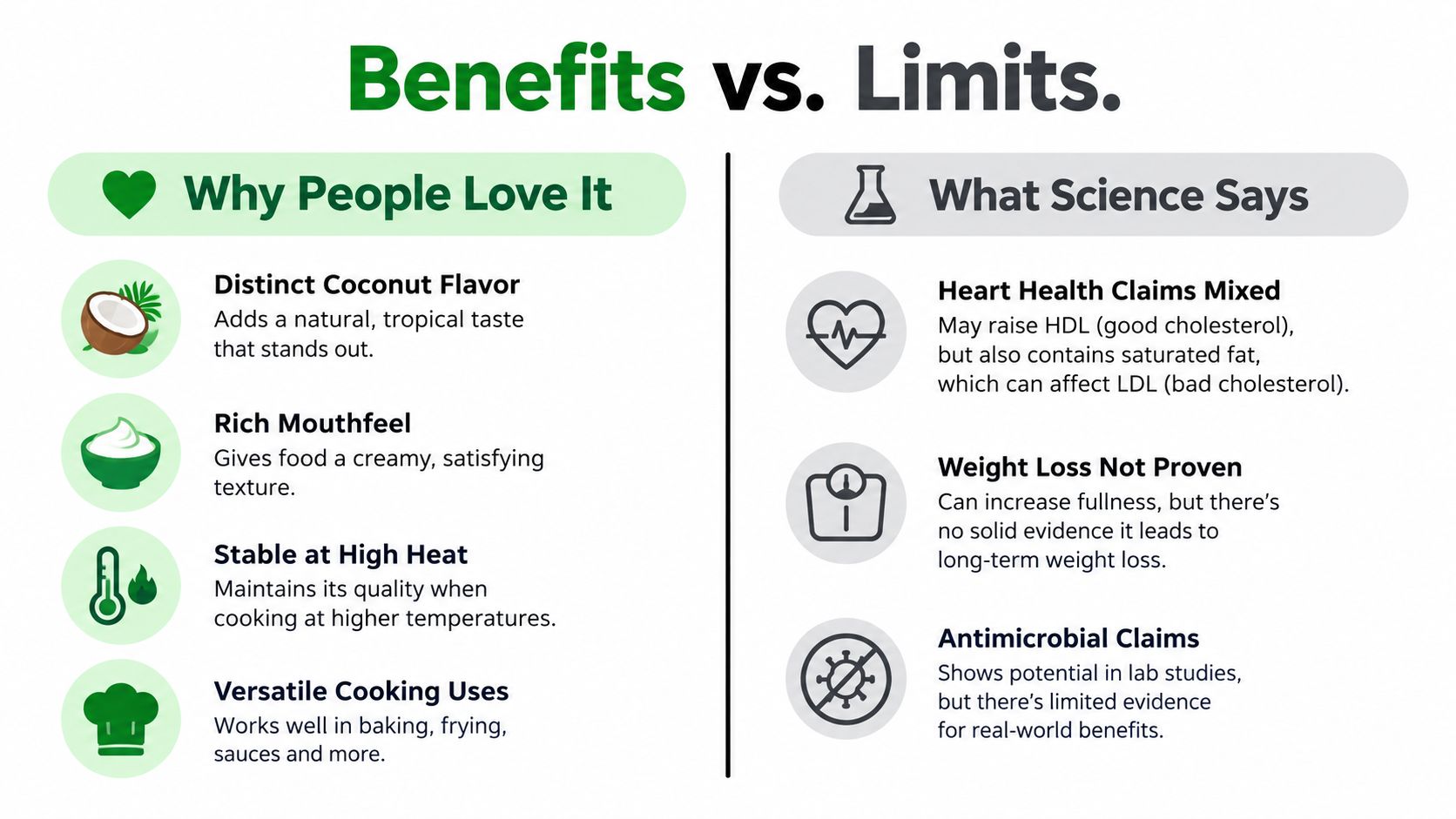
People choose organic virgin unrefined coconut oil for good sensory reasons. It has a recognizable coconut flavor, a rich mouthfeel, and a texture that works well in both food and body care. Those are legitimate product benefits, but they aren't the same as proven disease-prevention effects.
Its composition also deserves plain language. A nutrition review reports that coconut oil is approximately 99.9% fatty acids, with about 91.9% saturated fatty acids, 6.4% monounsaturated fatty acids, and 1.5% polyunsaturated fatty acids (nutrition review). Lauric acid is the dominant fatty acid, representing roughly 45–53% of the oil's fatty acids. That profile differs substantially from oils that contain larger proportions of unsaturated fats.
What cholesterol evidence means for your choice
A meta-analysis of 16 clinical trials found that, compared with non-tropical vegetable oils, coconut oil increased LDL cholesterol by an average of 10.47 mg/dL and HDL cholesterol by 4.00 mg/dL, without significant improvement in blood sugar, inflammation, body fat, or other adiposity measures (clinical evidence review).
That doesn't make coconut oil forbidden. It means organic and unrefined don't turn a highly saturated fat into a heart-health upgrade. Replacing butter may be a different dietary decision from replacing olive, canola, soybean, or another liquid unsaturated oil. Your overall eating pattern and personal health needs matter.

Use the oil because you like its flavor, texture, or practical versatility. Don't buy it expecting a shortcut for weight loss or cardiovascular protection. If you're curious about non-culinary uses, beard care tips from Aroma Warehouse offer a useful example of how people apply coconut oil topically without confusing grooming use with a medical claim.
Practical Uses in the Kitchen and Beyond
Virgin coconut oil earns its place through function. It can bring a noticeable coconut note to a curry, add richness to granola, or replace some butter in vegan baking. Its solid texture also makes it useful for body care, where you may prefer a simple ingredient with a softening feel.
Quick Use Guide
| Use | Best Choice | Why It Works |
|---|---|---|
| Curries and braises | Virgin coconut oil | Its coconut flavor complements warming spices and aromatics. |
| Granola and no-bake treats | Virgin coconut oil | It binds ingredients and firms as it cools. |
| Neutral everyday sautéing | A liquid unsaturated oil | You may prefer less flavor and a different fat profile. |
| Dry skin or rough elbows | A small amount of coconut oil | The rich texture works as a simple occlusive moisturizer. |
| Hair ends or beard grooming | A very small amount | It adds slip and reduces the need for a complex blend. |
For a five-minute granola, warm coconut oil with a little maple syrup, stir it through rolled oats, seeds, and nuts, then toast the mixture until fragrant. Let it cool fully before storing. The oil helps the clusters set, while the coconut flavor works especially well with cinnamon, cacao, or dried fruit.
For a warming curry braise, soften onion, garlic, and ginger in coconut oil, then add curry spices and vegetables or legumes. Pour in coconut milk or stock, cover, and cook until tender. If the coconut flavor would compete with the dish, choose a neutral oil instead.
Beyond food, you can use a small amount as a body moisturizer, makeup remover, shaving lubricant, or pre-shampoo hair treatment. These are practical applications, not miracle cures. Patch-test topical use, keep the product away from eyes, and remember that coconut oil can feel heavy on some skin types.
A simple hair-and-skin treatment uses a pea-sized amount warmed between your fingers. Smooth it over dry ends or elbows, leave it briefly, then wash or wipe away excess. For a richer body-care formula, compare how independent makers combine coconut oil with other plant butters in products such as this coffee-infused body butter. If you're comparing plant-based lotion ingredients, this explanation of why we use Sanoun shea butter gives useful context for how makers think about texture and sourcing.
Storage, Shelf Life, and When to Toss It
Coconut oil naturally changes texture with room temperature. It can be solid below about 76°F and liquid above it, so a cloudy, soft, or fully liquid jar in a warm kitchen isn't automatically spoiled. The phase change is normal.
Keep the lid tight and store the jar in a cool, dark cabinet away from the stove. Use a clean, dry spoon so you don't introduce water or food particles. After opening, aim to finish the jar within about 12 to 18 months, depending on the maker's date guidance and how the oil has been handled.
Trust your senses
Fresh virgin coconut oil generally has a clean coconut aroma and an appropriate flavor for its intended use. Toss it if you notice:
- A sharp smell: Soapy, sour, or crayon-like odors suggest the oil is no longer fresh.
- Visible mold: Discard the product rather than scraping the surface.
- A persistent off flavor: One unpleasant note that remains after warming or tasting is enough reason to replace it.
Coconut oil is recognized by the US Food and Drug Administration under CAS number 8001-31-8, with listed food-contact and food-use regulations including 21 CFR 175.300, 176.210, and 177.2800 (FDA food-substance listing). That regulatory listing doesn't mean every jar is organic, virgin, or nutritionally superior.
Use ordinary caution with pets. Don't feed significant amounts without appropriate veterinary guidance, especially if an animal has a fat-sensitive condition. If you have a specific dietary or medical concern, ask your healthcare provider how coconut oil fits your needs.
Reading Labels and Certifications Like a Pro
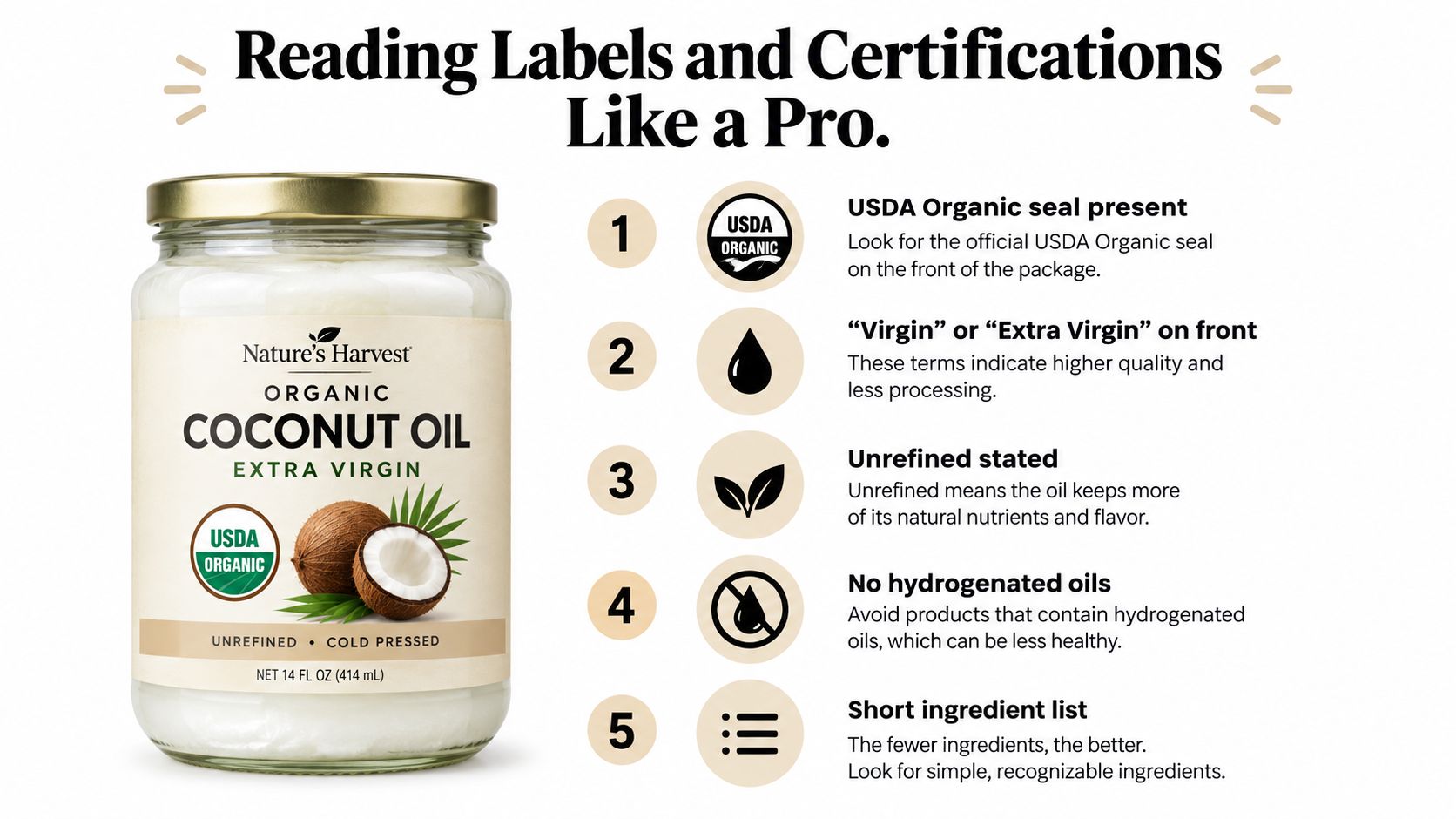
A good label lets you verify the basics without playing detective. Look for an organic seal from a recognized third-party certifier, the certifier's name, country of origin, lot or batch number, manufacturing date, best-before date, and the stated extraction method.
“Natural,” “pure,” “gourmet,” and “cold-pressed” may sound appealing, but they don't answer every quality question. A maker who explains whether the oil was wet or dry processed, how it was filtered, and how it was stored gives you more useful information than a front label crowded with vague praise.
Ask for batch-level evidence
If the jar costs more than a supermarket baseline, ask the maker for a current certificate of analysis. Useful information includes peroxide value, anisidine value, free-fatty-acid content, fatty-acid profile, and lot identification.
One study reported peroxide values of 0.21–0.57 milliequivalents of oxygen per kilogram, anisidine values of 0.16–0.19, and free fatty acids of 0.15–0.25% in tested commercial virgin coconut oils (quality-control study). Those figures are useful reference points, but a maker should explain the testing method and the batch's storage history.
Before buying, run through this short checklist:
- Certification: Is the organic certifier named?
- Origin: Does the label identify the country or region?
- Process: Does the maker state wet, dry, fermented, centrifuged, or expeller processing?
- Traceability: Is there a lot number and date information?
- Testing: Can the maker share a recent certificate of analysis?
- Ingredients: Is the jar coconut oil, without unnecessary additions?
For a broader explanation of how ingredient transparency works across product categories, this clean label ingredients guide is a helpful companion. Independent producers who answer these questions clearly give you something valuable: a basis for comparison.
Why Buying Direct From Independent Makers Changes the Jar
Buying direct changes the quality conversation because it makes questions easier to ask. An independent US maker may be able to tell you which country supplied the coconuts, whether the oil was wet or dry processed, when the batch was bottled, and which documents support the label.
That isn't a charity purchase. It's a quality upgrade when the maker provides more traceability and control. A mass-produced jar may be perfectly serviceable, but a direct relationship can reveal details that remain invisible on a crowded retail shelf. You can judge the product by its process, freshness, and documentation rather than by packaging alone.
Supply-chain context matters here. FAO reported global coconut production at approximately 65 million tonnes of coconuts in the shell in 2023, with Indonesia, the Philippines, and India the three largest producers, together accounting for nearly three-quarters of world output (FAO coconut production data). Coconut oil comes from coconut meat, so total coconut production isn't the same as oil production, but it shows why origin and producer relationships matter. A concentrated crop system makes transparent sourcing especially useful.
What to look for from a local maker
A strong product page should show the actual jar, ingredient list, origin, extraction method, and batch information. Process photos can help, but they should support specific claims rather than replace them. If the maker publishes a certificate of analysis, the lot number on the document should connect to the lot on the jar.
You can browse independent sellers through marketplaces such as Rizn Organics on Loyaltie, then compare listings using the same checklist you'd use at a co-op. Loyaltie is a marketplace where people discover and buy directly from independent US brands, so the useful advantage is the ability to evaluate maker information in one shopping environment while keeping the purchase relationship direct.
For sellers, transparency can become a real competitive edge. Publish the process, identify the coconut origin, show the manufacturing and best-before dates, explain storage, and make batch documentation easy to request. Buyers don't need grand promises. They need enough detail to understand why one jar deserves a place in their kitchen or bathroom.
Loyaltie helps you discover and buy directly from independent US brands, including makers offering traceable food, wellness, and body-care products. Visit Loyaltie to compare maker details, shop with direct relationships, and find coconut oil that earns its label claims.