
The most popular advice about organic marinara is also the least useful: look for the seal and assume you've found the better jar. Certification matters, but it doesn't tell you whether a sauce tastes lively, has a short ingredient list, or suits the way you cook. A label can answer one question and leave several others open.
I started thinking about this differently after chatting with sauce makers at a farmers market. One maker talked about tomato flavor; another explained what went into the jar and where the tomatoes came from. Those conversations made me curious about both sides of the label: what organic certification guarantees, and what you still need to taste, read, and ask for yourself. If you're also curious about how food producers approach green initiatives, that perspective can be useful context, though it answers a different question from organic certification.
Table of Contents
- What Most People Get Wrong About Organic
- What Organic Actually Means on a Marinara Jar
- Ingredients that need a closer look
What Most People Get Wrong About Organic
An organic label isn't a promise that a sauce is healthier, tastier, or more ethical in every respect. It's a regulated claim about how ingredients are produced and handled. That distinction matters because a jar can meet the organic standard and still be too salty for your taste, overly sweet, or flat beside a sauce made with ripe tomatoes and a thoughtful hand with herbs.
Organic certification is valuable, just not a shortcut for judging every part of a food. For marinara, I'd separate the decision into three questions:
- What does the label guarantee? Check the claim category and certification details instead of relying on the word “organic” alone.
- What's in the jar? Read the ingredient list and nutrition panel. Organic status doesn't tell you the sodium level or whether the recipe leans on tomato paste.
- Who made it, and what can they tell you? A producer's account of tomato sourcing and sauce-making can help you understand qualities the seal doesn't describe.
That last question is where independent makers often draw me in. Their jar may offer a more distinct tomato character or a recipe that reflects the maker's own taste. But those are qualities to assess, not automatic benefits bestowed by a label or a business size. Ask, compare, and let the sauce prove itself.
You don't need to become a certification specialist to shop well. A little label knowledge helps you tell a regulated production claim from a flavor or nutrition claim, and a few practical checks make it easier to compare jars without getting lost in marketing language. Treat the next sections as a field guide for the next time you're at the grocery shelf, a farmers market, or browsing a maker's online shop.
What Organic Actually Means on a Marinara Jar
For a U.S.-market marinara, organic is a regulated production and labeling claim, not an all-purpose promise about nutrition or flavor. Multi-ingredient products generally fall into different labeling categories, and the distinction between them is useful when two jars use similar language. USDA organic labeling rules describe the requirements, including the role of certification and the permitted claims.
| Label Claim | Minimum Organic % | USDA Seal Allowed | What It Means |
|---|---|---|---|
| Organic | 95% | Yes | At least 95% of ingredients are certified organic. The remainder must be allowed under the National List. |
| Made with organic ingredients | 70% | No | At least 70% of ingredients are certified organic, but the USDA seal can't appear on the principal display panel. |
The percentage refers to the product's ingredients, not a vague impression of how organic the recipe feels. For example, a maker might use certified organic tomatoes, herbs, onion, and garlic, but conventional tomato paste could affect whether the finished sauce qualifies for the “organic” category. That's why a quick glance at the word on the front isn't the whole check.
A product labeled “organic” must be certified, and its label identifies the USDA-accredited certifier. The certifier's name is useful because it connects the claim to an accountable certification process. USDA rules also distinguish certified products from ingredients: an uncertified business can't make an organic claim on the principal display panel or use the USDA seal, though it may identify certified organic ingredients in the information panel where permitted.
Practical rule: Read the category, look for the certifier, then check the ingredients. The front label makes a claim; the details show what that claim covers.
Marinara often has a straightforward recipe, which makes each ingredient worth noticing. Tomatoes, herbs, onion, garlic, and oil all contribute to the final sauce, and each ingredient's certified status matters to the product's label category. Once you know those basics, “organic” stops being a general compliment and becomes a specific claim you can verify.
Reading the Ingredient List Like a Sauce Maker
A sauce maker thinks about what each ingredient contributes: body, aroma, acidity, seasoning, or texture. You can use the same lens at the store. The ingredient list is ordered by weight, so the first entry tells you more about the sauce's foundation than a tomato illustration on the label.
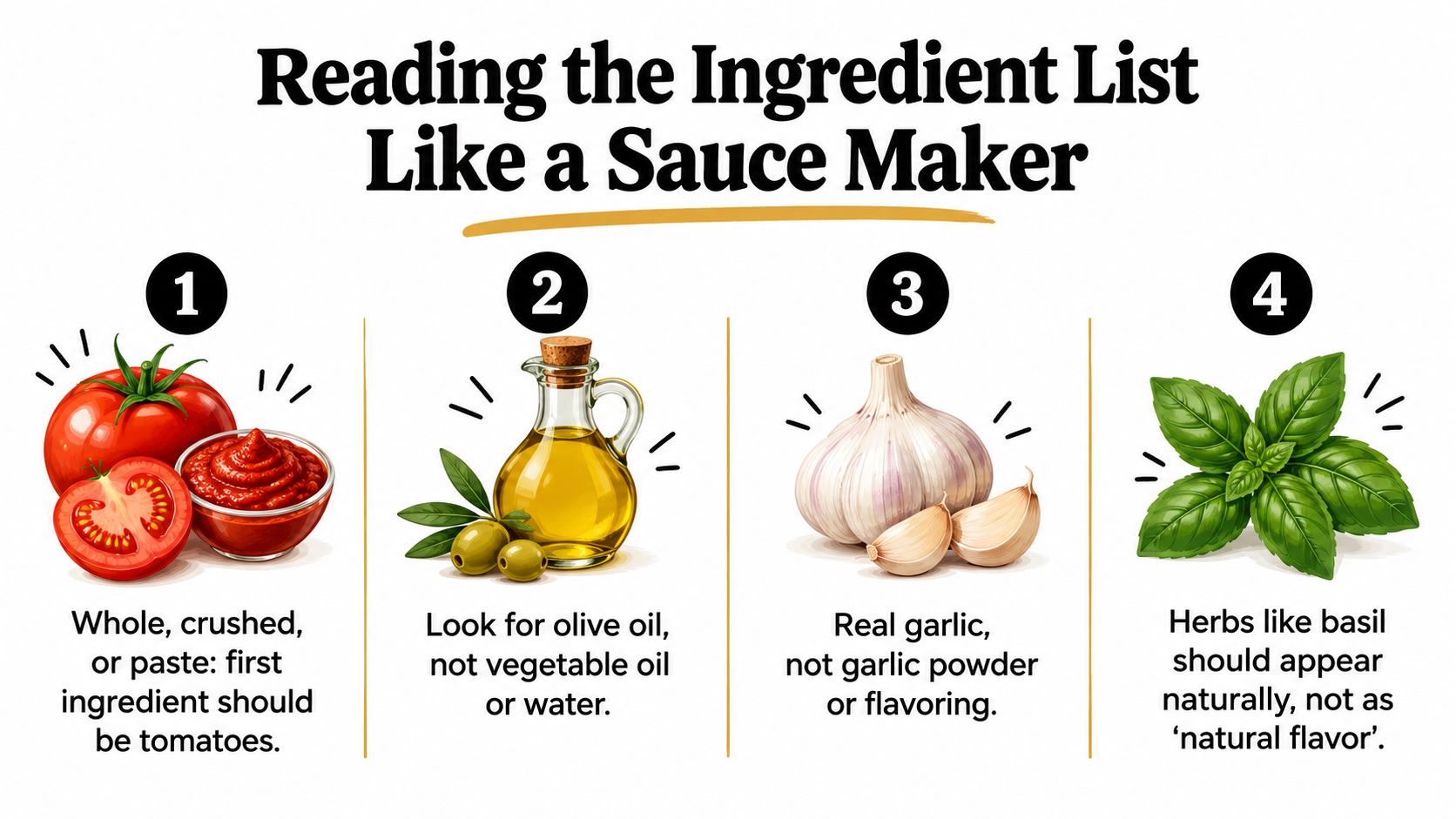
If tomatoes come first, the recipe starts with tomatoes. If tomato concentrate or paste leads the list, the sauce relies more heavily on concentrated tomato. That isn't automatically bad, but it suggests a different texture and flavor than a sauce built around whole or crushed tomatoes. Tomato paste can add depth; it can also make a sauce taste dense or one-note if the recipe doesn't balance it.
Olive oil adds richness and carries the aroma of garlic and herbs. Onion and garlic build a savory base, while basil and oregano contribute familiar herbal notes. Salt shapes flavor, and a little sugar may soften sharp acidity. It's not a universal mark of poor quality, but it's worth deciding whether you want it in the recipe.
Ingredients that need a closer look
“Natural flavors” doesn't tell you which herb or spice created the taste, while recognizable basil or oregano gives you a clearer picture of the recipe. “Italian seasoning” can be perfectly ordinary, but it's less specific than naming the herbs. If you're comparing jars for a simple tomato-forward sauce, those details can help you decide which one sounds closer to what you want.
Citric acid can adjust acidity and may have a practical role in a tomato sauce. Calcium chloride is used in some tomato products to help maintain firmness, so its presence isn't automatically a red flag in a smooth marinara. The useful question is whether an ingredient makes sense for the product and whether the overall list matches the kind of sauce you enjoy, rather than whether every jar must contain only ingredients you'd grow at home.
The best ingredient list isn't necessarily the shortest one. It's the one you understand, and whose ingredients add up to a sauce you want to eat.
Read the list as a recipe in miniature. A tomato-first sauce with olive oil, garlic, herbs, and seasoning may sound like dinner; one dominated by concentrate and vague flavoring may not. Ultimately, the label is a clue. Flavor is the point.
How Organic Marinara Compares to the Regular Stuff
Organic and conventional marinara answer different questions. The organic label concerns production and handling standards; it doesn't tell you which jar has less sodium, less added sugar, or a better texture. Compare those details on the package instead of assuming the organic option wins every category.
| What you're comparing | What organic certification tells you | What to check on the jar |
|---|---|---|
| Farming inputs | Organic rules govern production practices and restrict prohibited inputs. | Look for certification details and sourcing information. |
| Sodium | Nothing about the organic category guarantees a lower amount. | Compare sodium per serving with how much sauce you'll actually use. |
| Added sugar | Organic status doesn't determine whether sugar is added. | Read the ingredient list and nutrition panel. |
| Taste and texture | The seal doesn't rate either one. | Consider tomato form, herbs, and your own taste. |
| Traceability and packaging | Certification doesn't automatically establish local origin or packaging impacts. | Look for producer details and check what your area can recycle. |
USDA certification does mean the product follows regulated organic production and handling requirements, but claims about nutrition, taste, and environmental performance need separate evidence. A sauce can be organic and still be salty, sweet, or highly processed. A conventional sauce can taste excellent. What matters is understanding which trade-offs you're choosing.
That distinction is especially helpful when a label says “clean,” “natural,” or “preservative-free.” Those phrases don't replace organic certification, and they don't tell you everything about sodium, added sugar, or packaging. Packaging convenience, digital traceability, and farm origin are separate considerations too. A QR code might offer more details, but you'll still want to ask what those details confirm.
If you want a point of comparison, Saporia's organic tomato basil sauce is an example of a named tomato-and-basil option to assess by its ingredient list and label. And if your pantry runs toward punchier condiments as well as pasta sauces, this spicy salsa roja is a different kind of tomato-and-chile preparation, not a substitute for marinara. Comparing unlike products can still sharpen your sense of the flavors and textures you enjoy.
A Simple Checklist for the Grocery Aisle
A good aisle routine should be quick enough to use while you're holding a jar and deciding what's for dinner. Start with the label claim, then check the recipe and nutrition facts. Don't let one reassuring word do the work of the whole package.
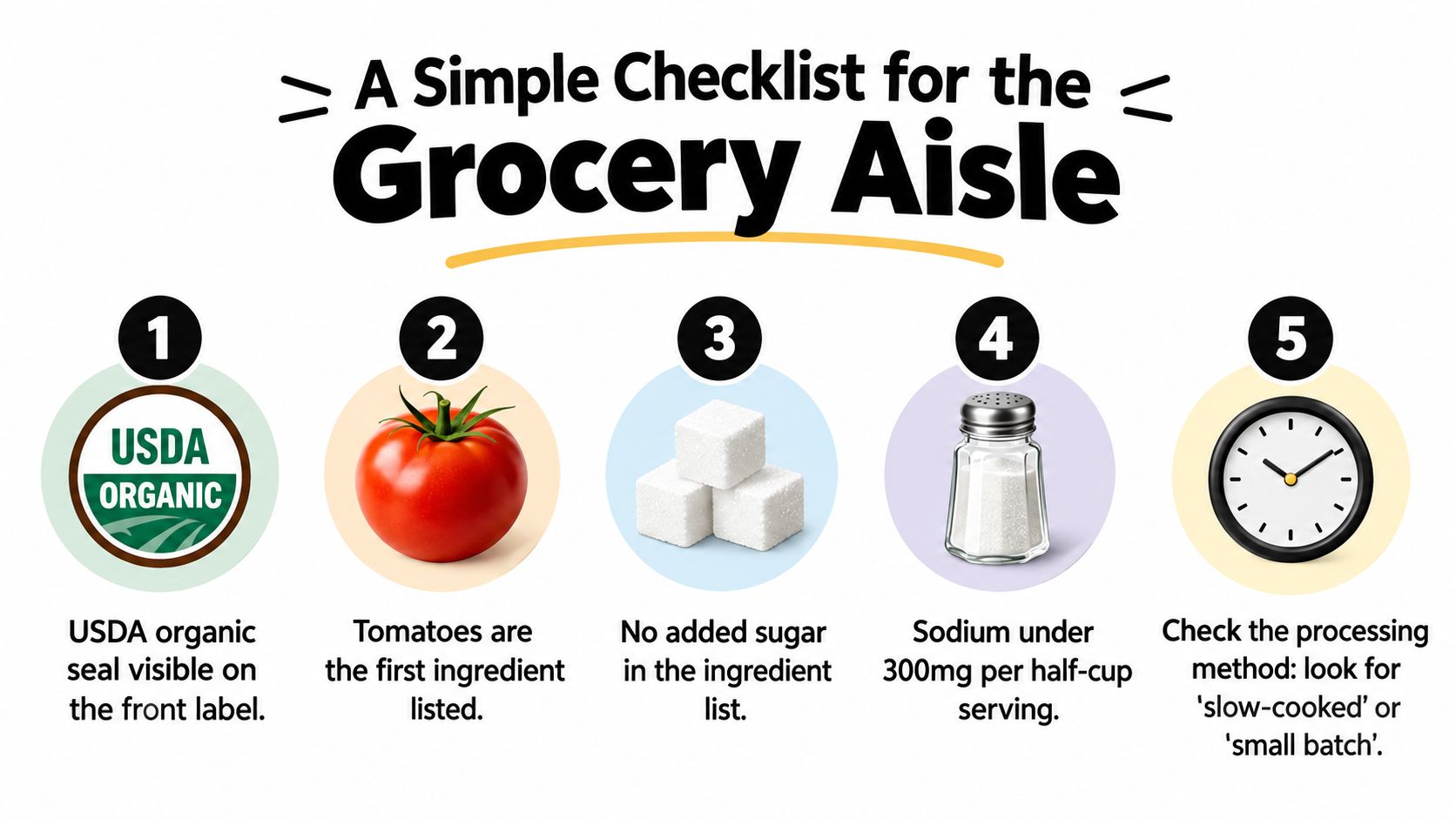
Use these checks as a guide, not a scorecard where every jar must look identical:
- Verify the claim. If the jar says “organic,” look for the USDA Organic Seal and certifier information. If it says “made with organic,” remember that it's a different category.
- Start with the ingredients. Tomatoes near the top usually signal a tomato-led recipe. Read the rest to see whether the ingredients make sense to you.
- Check added sugar. Decide whether you want it in your sauce. Its presence doesn't tell you whether the product is organic.
- Compare sodium per serving. Pick a level that fits your meals and preferences, and notice how the serving size compares with the amount you usually pour.
- Consider the package. A recyclable jar is only a practical choice if your local recycling program accepts it. “Slow-cooked” or “small batch” may describe a method, but those words aren't substitutes for checking the ingredients.
The quick mental test I use is simple: could I explain why each ingredient is in this sauce to a friend? If the answer is yes, I'm more comfortable with what I'm buying. If an ingredient or claim leaves you puzzled, look for a maker or label that gives you clearer information.
The seal, sodium, sourcing, and packaging answer separate questions. No single one makes a jar the winner, and your preferred choice may not match someone else's. At a farmers market, you can often ask a maker directly about the tomatoes and recipe, which adds a kind of context the supermarket shelf may not offer.
Why Independent Makers Often Make a Better Jar
At the farmers market, a sauce maker can describe what makes this week's jar taste the way it does. Maybe the recipe is tomato-forward, with enough garlic and basil to give it warmth without burying the fruit. That kind of conversation won't guarantee you'll love every sauce, but it gives you a chance to judge the maker's approach before you buy.
Independent makers can build their reputation on flavor and transparency. A short ingredient list, a clear explanation of tomato sourcing, and a willingness to answer your questions are useful signs. So is consistency: ask how the sauce may vary from batch to batch, and what the maker does to keep the recipe true to its style. A real person can tell you whether the sauce leans bright, mellow, chunky, or smooth in a way a generic shelf label often can't.
Questions worth asking at the stall
- Where do the tomatoes come from? The answer may change with the season, but the maker should be able to explain the sourcing.
- How is the sauce made? Ask about the basic process and what creates its texture and flavor.
- Is it certified organic? If not, the maker shouldn't present the product as organic on the principal display panel. You can still ask about farming and ingredient practices, but don't confuse those answers with certification.
There are practical trade-offs. Small batches may vary with the tomatoes available, jars may be packed by hand, and the price per ounce may be higher than a mass-produced sauce. Some makers haven't pursued formal certification, so you'll need to distinguish their account of their ingredients from a regulated organic claim.
Ask for specifics, not just a story. Clear sourcing and an honest label help you decide whether the sauce belongs in your kitchen.
I like this kind of directness even in neighboring pantry categories. For instance, Burns Canyon Spice Co's Vaquero Chile Morita Sauce is a chile sauce, not marinara, but it's the sort of distinct maker-led condiment that can show how much character a clear point of view brings to a pantry. The same principle applies to tomato sauce: buy it for what's in the jar and how it tastes, not out of obligation.
How to Find Local Marinara Worth Stocking Up On
A sauce worth stocking up on starts with a jar worth trying. At a farmers market, notice which local makers sell tomato products and which flavors sound suited to your cooking. Ask about ingredients and sourcing, then check whether you can buy the sauce between market days. An online product page deserves the same close reading as a label in your hand.
When a market visit isn't possible, use Loyaltie to look for independent makers and read their product descriptions. Loyaltie's Experiences Obremesa shop is a place to begin browsing; check the available listings for tomato products, ingredients, and ordering details. If a marinara interests you, start with a one-time purchase before choosing a buying plan or regular delivery, where offered. That keeps the shopping decision tied to a sauce you've tasted.
Treat the product description like a recipe introduction: it should help you know what to expect in the pan.
Look for the producer's location, tomato variety, harvest season, and batch date when those details are available. They offer context about origin and production, rather than proof of better flavor or organic certification. If a description leaves you unsure whether the sauce is chunky, herb-heavy, or sharply acidic, ask the maker before ordering. “Local” helps you identify where a product comes from; the recipe still has to suit your kitchen.
Exploring a maker's range can also clarify their approach to flavor. Maria's Sauce Co's Jalapeño Tomatillo Verde Hot Sauce offers bright, tangy verde flavor and a smooth medium kick, with lime and cilantro for tacos, eggs, and marinades. It belongs to a different sauce category, but its ingredient choices illustrate the distinct character you can look for in a maker's tomato products.
Before filling the pantry, try a couple of independent tomato sauces side by side with plain pasta or bread. Keep the accompaniments simple. Notice texture, herbs, acidity, and seasoning, then save the product details for the jar you prefer so reordering is straightforward.
Putting It All Together
When you're choosing organic marinara sauce, ask three questions: What does the certification mean? What's in the jar? Who made it? Certification tells you about regulated production and labeling. The ingredients and nutrition panel help you judge the recipe and serving context. The maker may be able to explain details that don't fit on a label.
Organic is a meaningful claim, but it isn't a guarantee of superior flavor, lower sodium, or a better nutritional profile. The jar that suits you best may combine a verified organic category, ingredients you recognize, nutrition details that work for your meals, and a producer willing to answer questions about the recipe. You can also care about packaging and origin without treating them as automatic parts of organic certification.
Then let your palate have a vote. Taste the sauce with the food you cook, whether that's pasta, meatballs, or a simple slice of bread. If wine is part of the meal, a guide to finding your perfect wine match can help you think about how acidity, herbs, and tomato flavor meet in the glass and on the plate.
Choose one independent maker's marinara, compare it with your usual jar, and pay attention to what changes. A thoughtful sauce doesn't need a grand claim to win you over. It just needs to taste like something you're glad to have in the kitchen.
Explore Loyaltie, a marketplace where you can discover and buy directly from independent brands and local makers across the US. Browse maker-led pantry products, read what producers share about their goods, and find a marinara worth bringing to your table.