

You bring out crackers, sliced cucumbers, warm pita, and a bowl of dip that disappears before anyone touches the main dish. The dairy-based spread may have started as the familiar choice, but the chickpea hummus, smoky bean dip, or bright roasted pepper puree often gets the most questions. “What's in this?” is a much better response than polite nibbling.
That's the appeal of non dairy dips when they're made well. They aren't just replacements for sour cream, cream cheese, or queso. They can be richer in flavor, more specific about their ingredients, and better suited to the way you eat. Independent brands and local makers are pushing the category toward dips with recognizable bases, careful seasoning, and textures that hold up beyond the first bite.
Table of Contents
The New Center of the Snack Board
At a recent gathering, the most popular bowl wasn't the one labeled “dairy-free.” It was just the one closest to the vegetables. A guest dragged a carrot through smoky red pepper dip, another scooped hummus onto pita, and someone used the cashew-based spread as a sandwich filling before the board had made it halfway around the room.
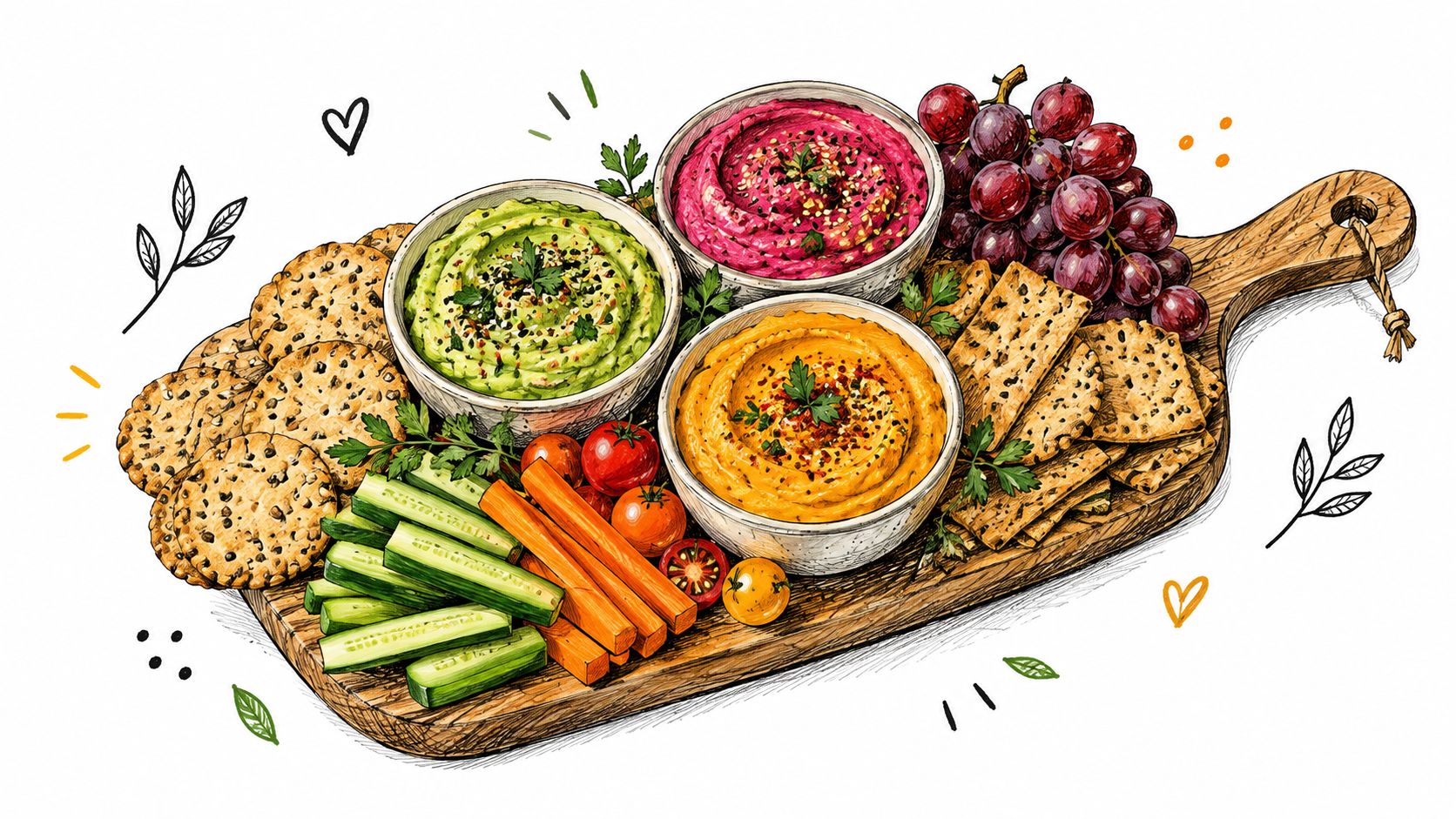
That shift matters. Non dairy dips have moved from a niche dietary option into a category with its own flavor logic. Hummus, guacamole, salsa, nut-based spreads, and vegetable dips don't need to imitate dairy to earn space on the table. They offer different strengths, from lemony brightness to roasted depth and chile heat.
Why the category feels more interesting now
Available industry estimates put North America at approximately 38.2% of the global plant-based dips and spreads category by 2025, with an estimated value of $1.83 billion. Those figures come from the Flavor Flash report on dips and sauces, and they point to a broad category rather than one narrow substitute.
Within that segment, hummus was estimated to hold 28.5% of category share, ahead of guacamole at 19.8%, salsa and vegetable dips at 18.6%, nut-based spreads at 13.4%, and vegetable-based dips at 11.9%, according to the same report. The numbers help explain why shopping for a non dairy dip now means choosing among several base systems, not just finding a product without milk.
Independent makers are especially good at making those differences visible. One maker might spotlight chickpeas, tahini, lemon, and garlic. Another might build a dip around roasted vegetables and regional peppers. A third may focus on a creamy seed base for shoppers avoiding nuts. You can taste the point of view because the product doesn't have to flatten itself into a generic supermarket flavor.
A useful shopping shift: Don't ask only whether a dip replaces dairy. Ask what the dip is made to do, and whether its base and seasoning make that job delicious.
That's why a direct-to-maker marketplace can be useful when you're looking beyond everyday grocery options. You might begin with a three-jar salsa variety set, then look for a hummus, ranch-style dip, or vegetable spread with a different texture and use case. The upgrade isn't about being virtuous. It's about buying food with a clearer identity.
The Four Base Families Worth Knowing
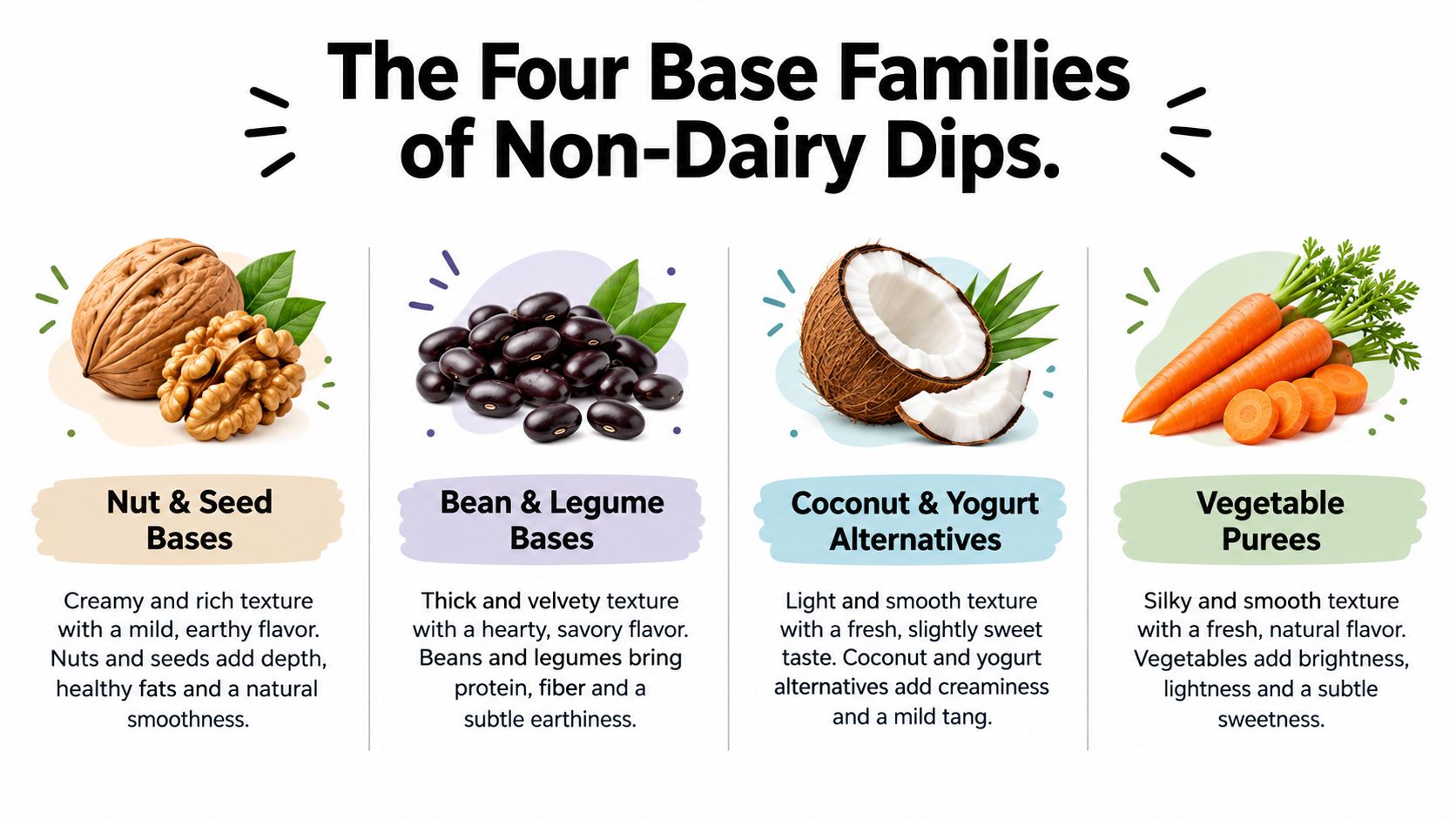
The fastest way to understand a non dairy dip is to start with its base. The base determines much of the flavor, body, richness, and nutritional profile before the maker adds herbs, spices, acid, or heat.
Nut and seed bases
Cashews, almonds, tahini, sunflower seeds, and other nuts or seeds create richness because they bring natural fat and solids. A well-blended cashew cream can feel close to a soft cheese spread, while tahini gives hummus its distinctive sesame depth and a slightly savory bitterness.
These dips often feel smooth and luxurious, but that doesn't make them suitable for everyone. A nut or seed base is a major allergen and nutrition decision, so read the ingredient list rather than assuming that “plant-based” means broadly allergy-friendly. The ingredients can also make these products more expensive to produce than a simple vegetable puree.
Bean and legume bases
Chickpeas, white beans, black beans, and lentils provide structure, fiber, and, depending on the recipe, meaningful protein. Hummus is the classic example. Its traditional foundation is cooked chickpeas blended with tahini, garlic, lemon juice, and salt.
Bean dips can taste earthy, hearty, and filling. Their texture may be dense or slightly grainy if the solids aren't blended thoroughly, but a maker can balance that with oil, tahini, liquid, or careful processing. Black bean dip usually brings a savory, smoky quality, while white bean dip offers a milder canvas for garlic, herbs, or roasted vegetables.
Coconut and yogurt alternatives
Coconut-based dips offer lubrication and a soft, creamy mouthfeel. A coconut yogurt tzatziki-style dip can carry cucumber, dill, garlic, and acid beautifully, especially when the goal is a cool, refreshing finish.
The trade-off is that coconut can bring its own flavor, and a yogurt alternative may be thinner or more tang-forward than a traditional cultured dairy base. These products work well when you want a ranch-like or tzatziki-like experience, but check the nutrition panel and serving details because “dairy-free” doesn't describe the amount of fat, sodium, or protein.
Vegetable purees
Roasted red peppers, carrots, squash, cauliflower, eggplant, and sweet potatoes can become vivid, naturally flavored dips. Vegetable purees tend to taste bright and specific, with roasting adding sweetness and char.
They may need oil, seeds, nuts, starches, or other ingredients to become thick and satisfying. A vegetable puree is excellent as a spread or finishing sauce, but it may not provide the same protein or staying power as a legume-based dip.
| Base Family | Flavor Profile | Texture Contribution | Typical Examples |
|---|---|---|---|
| Nut and seed bases | Rich, savory, sometimes slightly bitter | Smooth, dense, creamy | Cashew cream, tahini dip, almond spread |
| Bean and legume bases | Earthy, hearty, adaptable | Thick, substantial, scoopable | Hummus, white bean dip, black bean dip |
| Coconut and yogurt alternatives | Cool, tangy, gently sweet or coconut-forward | Soft, creamy, spoonable | Coconut yogurt tzatziki, dairy-free ranch |
| Vegetable purees | Bright, roasted, sweet, smoky, or fresh | Light to medium body | Red pepper puree, carrot dip, eggplant spread |
Matching the Dip to the Moment
A good dip choice starts with the food around it. The same product can feel perfect on a warm pita and oddly heavy beside delicate cucumber slices, so choose by texture and flavor before you choose by dietary claim.
For a hearty snack board
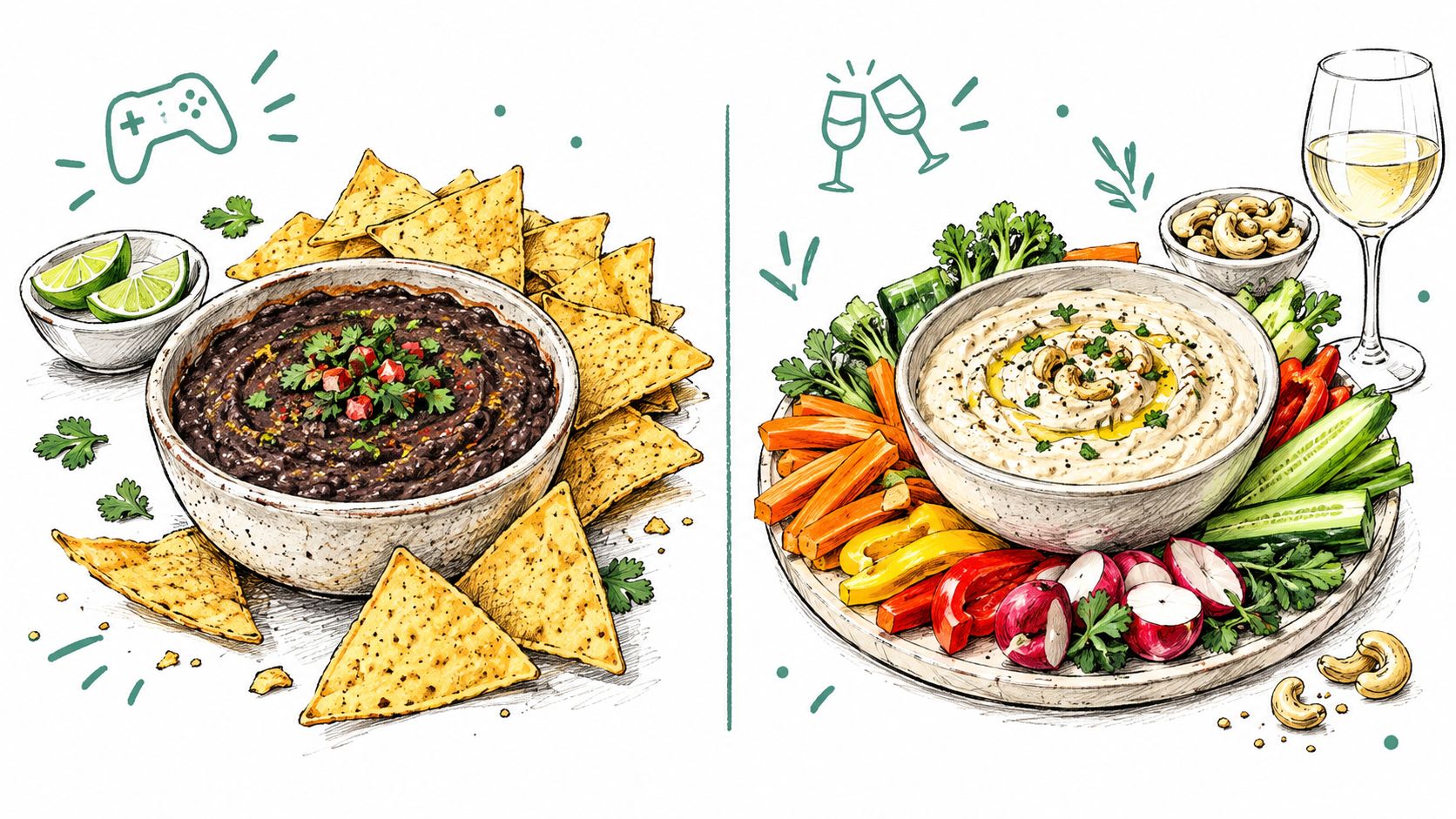
Bean and legume dips are dependable when the board includes tortilla chips, toasted bread, olives, or roasted vegetables. Smoky black bean dip can stand up to chile, lime, and crunchy corn chips, while hummus works with cucumbers, carrots, pita, and grapes because its savory base is flexible.
Nut and seed dips suit crackers and toasted sourdough when you want a richer spread. A cashew cream with garlic or herbs can replace a soft cheese texture, but it's not automatically the right choice for guests avoiding tree nuts or seeds.
For cool, fresh foods
Coconut yogurt alternatives make sense with crudités, cucumber, radishes, and leafy salads. A ranch-style dip needs enough body to cling to a vegetable, while a tzatziki-style version benefits from cucumber, herbs, and a clean acidic finish.
If you're building a summer board, a chipotle ranch seasoning blend can help you think in terms of flavor direction. Use smoky heat with beans or roasted vegetables, and reserve gentler herb-forward profiles for delicate produce.
For dinner, not just dipping
Vegetable purees are often the most useful at dinner. Spoon roasted red pepper dip beside grilled vegetables, spread carrot puree onto a sandwich, or use a bright eggplant dip as a sauce for grains and roasted potatoes.
The common mismatch is treating every dip as a complete nutritional solution. A low-protein vegetable puree can add flavor and color without carrying the same protein or fiber contribution as a legume-based dip. If the dip is the main part of a snack, pair it with foods that add substance rather than expecting the label “plant-based” to answer every nutrition question.
| If you're serving | Start with | Why it fits |
|---|---|---|
| Tortilla chips | Black bean or smoky vegetable dip | Strong flavors and thicker texture hold up |
| Raw vegetables | Hummus or coconut yogurt dip | Creaminess balances crisp, watery produce |
| Toast or sandwiches | Cashew, almond, or white bean spread | Dense body spreads easily |
| Roasted vegetables | Red pepper, eggplant, or tahini dip | Acid and spice brighten savory foods |
| A filling snack | Hummus or another legume dip | Beans can contribute fiber and protein |
The right question is simple: Do you need a dip for crunch, creaminess, freshness, or meal-building? Once you know that, the base family becomes much easier to choose.
How Non Dairy Dips Are Actually Made
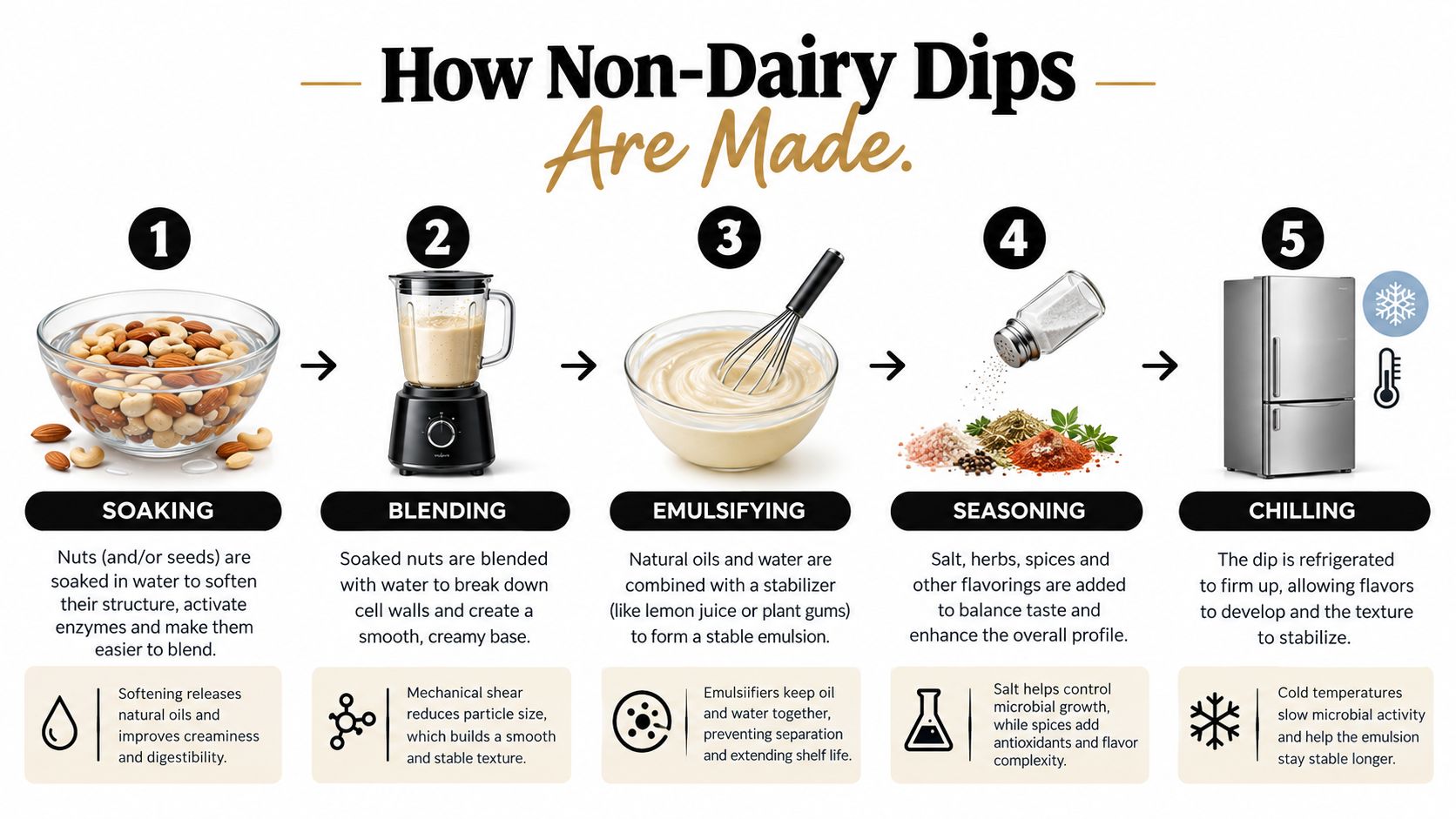
A finished dip may look effortless in its container, but texture and safety depend on a sequence of decisions. Makers soak or cook the base, blend it until the solids break down, add oil or liquid gradually, season it, and then control how it's packaged and stored.
Texture starts before the blender
Soaking can soften nuts, seeds, and legumes, making them easier to blend into a smooth base. Blending controls whether the result feels silky, rustic, or grainy, while shear and solids concentration determine how the dip behaves on a chip or spoon.
Oil and water naturally want to separate, so makers may use emulsification, starches, gums, or finely milled solids to keep the mixture cohesive. Those ingredients aren't automatically a sign of poor quality. In a dip, a stabilizer may prevent weeping and preserve the texture you bought it for.
Acid does more than create a lively flavor. Lemon juice, vinegar, or another acidifier can change protein behavior and influence microbial control. Too much acid may create excessive sourness or a grainier texture, so flavor and structure have to be developed together.
Why shelf stability requires validation
For U.S. shelf-stable sale, pH and water activity are separate controls. FDA defines an acidified food as a low-acid formulation, such as one based on legumes, nuts, seeds, or vegetables, with added acid that produces a finished equilibrium pH of 4.6 or below while water activity remains above 0.85. The pH threshold helps limit growth of Clostridium botulinum, as described in the FDA guidance on acidified and low-acid canned foods.
Equilibrium pH means the maker needs to test the product after its ingredients have settled into their final state. Water activity, written as a_w, measures how much unbound water is available for microbial growth. One value can't be inferred from the other, and neither should be guessed from an ingredient specification.
For makers: Changing the tahini, bean solids, puree size, oil level, package size, or filling temperature can change the finished process. A materially different formula or package needs its own validation.
Refrigerated dips still need documented pathogen controls and a defined cold-chain limit. Shelf life, filling, packaging, and temperature-abuse testing are part of responsible product development, not behind-the-scenes trivia.
Reading the Label Like a Maker Would
“Dairy-free,” “vegan,” and “plant-based” answer different questions, and none of them tells you everything you need to know.
Dairy-free generally tells you that milk ingredients aren't part of the product's intended formulation. It doesn't tell you whether the dip contains sesame, tree nuts, peanuts, soy, or another allergen. Vegan addresses animal-derived ingredients more broadly, but it still doesn't guarantee that the product is safe for a particular allergy. Plant-based can be even less specific because it describes a general ingredient direction rather than naming the base.
The FDA proposed guidance encouraging clearer identification of the plant source in alternatives to dairy and other animal-derived foods. That supports a practical conclusion for shoppers: broad claims alone may not provide enough information for people with allergies or specific dietary needs. Look for the named base, the full ingredient list, and the cross-contact statement.
A quick label check
- Find the base: Look for chickpeas, white beans, almonds, cashews, sesame, sunflower seeds, coconut, soy, or a named vegetable.
- Check allergens: A dip can be dairy-free and still contain sesame, tree nuts, peanuts, or soy. Read the allergen declaration and any facility or cross-contact statement.
- Compare nutrition: Legume-based dips may contribute protein and fiber, while oil-forward nut, seed, or coconut formulas can be richer and more energy-dense.
- Scan sodium: A product can look wholesome while relying heavily on salt for flavor. Compare sodium per serving across similar dips.
- Understand the date: A guide to decoding best-by dates can help you distinguish a quality date from a safety instruction, while the maker's storage guidance still matters.
The label test: “Non-dairy” describes what's missing. The ingredient list tells you what you're actually eating.
Texture also belongs on your checklist. A smooth dip may rely on nuts, oil, or a carefully managed emulsion. A thicker bean dip may feel substantial because of its solids. Starches and gums can help prevent separation, but you'll want to judge the finished product by taste and mouthfeel rather than treating any single ingredient as an automatic red flag.
For a product page or farmers market conversation, the most useful details are the base ingredient, allergen status, protein, fiber, saturated fat, sodium, storage requirement, and intended use. That information lets you choose a dip for your needs instead of letting a front-label claim make the decision.
Local Makers Raising the Bar
The most memorable dips usually begin with a person who has a clear answer to “Why this base?” A chickpea-and-tahini maker may focus on the balance between lemon, garlic, sesame, and salt. A vegetable-forward producer may roast peppers or eggplant until the flavor is deep enough to need very little else.
That approach has history behind it. Hummus isn't a modern invention created to imitate dairy. The word comes from the Arabic word for chickpea, and the fuller name, hummus bi-tahini, means “chickpeas with tahini.” The earliest known written recipe resembling modern hummus appears in a 13th-century Cairo cookbook, while some historical accounts connect the recognizable chickpea-and-tahini style with 18th-century Damascus, as described by Britannica's history of hummus.
What independent production can change
A Midwest maker working with cashews might focus on blending and seasoning until the dip feels creamy without burying the nut's flavor. A coconut yogurt producer may build a clean-label ranch-style line around cultured tang, cucumber, dill, and garlic. A regional vegetable maker may change a roasted pepper dip with the harvest rather than forcing every batch to taste exactly the same.
These examples aren't promises that every local product will be better. They show where independent makers can compete: flavor clarity, freshness, ingredient transparency, and a recognizable point of view. A maker can explain why a dip contains oil, how it should be stored, what creates its tang, and which foods suit it best.
Judge the product, not the story
Buying directly doesn't mean lowering your standards. Ask whether the ingredients are clear, the allergen information is complete, the storage instructions make sense, and the texture matches the intended use. A beautiful origin story can't rescue a watery dip or an overly salty one.
The reward is a product that feels more connected to its ingredients. You may find a smoky bean spread that makes ordinary tortilla chips exciting, or a lemony hummus that turns raw vegetables into something you actually want to eat. That's a quality upgrade you can taste, not a charitable purchase.
Finding and Buying Direct From the Maker
Start with the kind of dip you want, not a vague search for “dairy-free.” Look for a hummus maker if you want a chickpea-and-tahini staple, a roasted vegetable producer for something bright and smoky, or a seed-based line if nuts are a concern.
A practical buying path
- Browse by product and place: Search for independent brands and local makers across the US, then narrow by the flavors and base families you enjoy.
- Read the maker profile: Check the ingredient base, allergen information, storage needs, production style, and suggested uses.
- Make a first order: Choose one familiar style and one less familiar style, such as hummus alongside a vegetable puree.
- Test the dip in real life: Try it with vegetables, crackers, sandwiches, roasted potatoes, or a grain bowl. A versatile dip earns its space quickly.
- Reorder what works: Set up regular delivery or buy on a plan when you've found a product you use often, then try another maker when you want a change.
Buying directly can also teach you how other food categories work. The same curiosity applies when you meet the makers behind direct-to-consumer wine, because the producer's choices often explain more than a generic shelf label.
On Loyaltie, shoppers can discover products from independent US brands and buy directly from the maker, with orders backed by the marketplace. You can also browse sauces and related products, including McCabe Family Sauces, when you're building a pantry around bold, direct-from-the-producer flavors.
Find your next hummus, bean spread, ranch-style dip, or roasted vegetable puree through Loyaltie, a marketplace where you can discover and buy directly from independent brands in the US. Read each maker's ingredients and allergen details, order a dip that fits the way you eat, and set up a regular delivery for the one you can't stop reaching for.