
You're probably staring at a tab full of supplement pages right now, trying to sort the useful stuff from the glossy nonsense. One bottle says calm focus, another says immune support, and a third looks trustworthy only because the photos are nice. If you want natural supplements online without the guessing game, the fix is simple, read like a detective and buy from makers who show their work.
Table of Contents
- Read the supplement facts panel first
- Watch for proprietary blends and missing context
- Don't skip the safety basics
- Third-party testing is the trust filter that matters
- Ask where the ingredients come from
- Use the red-flag test
- Why direct-to-maker often beats mass retail
- Where to look without wasting time
- Use search terms that point to makers, not resellers
- Check the checkout before you type in payment details
- Read the return policy before you buy
- Keep the final step simple
- Talk to a health care provider if the product affects your situation
- Store it the right way
- Track what you actually notice
- Are natural supplements safer just because they're natural
- How do I know whether a supplement is actually useful
- Should I trust a product if it says FDA approved
- What's the fastest way to spot a bad product page
- Is buying direct from the maker worth the extra effort
Your Guide to Buying Natural Supplements Online
The first move is to slow down. Online supplement shopping gets messy fast because the same product category can include serious formulators, copycat brands, and products that lean more on marketing than on evidence.
Start with what you actually need
Buy for a clear reason, not a vibe. If you want help with a nutrient gap, a specific discomfort, or a routine you'll keep, that's a better starting point than scrolling until a label looks convincing.
A grounded study of online health-supplement shopping found that buyers care about effectiveness, safety, convenience, fair purchase, and online security together, so your own filter should do the same. If a product doesn't make sense on those five points, keep moving.
Practical rule: if you can't explain why you'd take it in one sentence, you probably don't need it yet.
Favor makers that show their process
Independent brands often do a better job here because they're closer to the ingredients, the bottling, and the customer questions. You're not just buying a product, you're buying the maker's ability to answer for it.
That's where clean sourcing, clear dosage, and plain-language ingredient pages matter. If you also buy other wellness staples online, a useful comparison is understanding organic tea certifications, because the same habit applies, look for proof, not poetry.
How to Read a Supplement Label Like an Expert
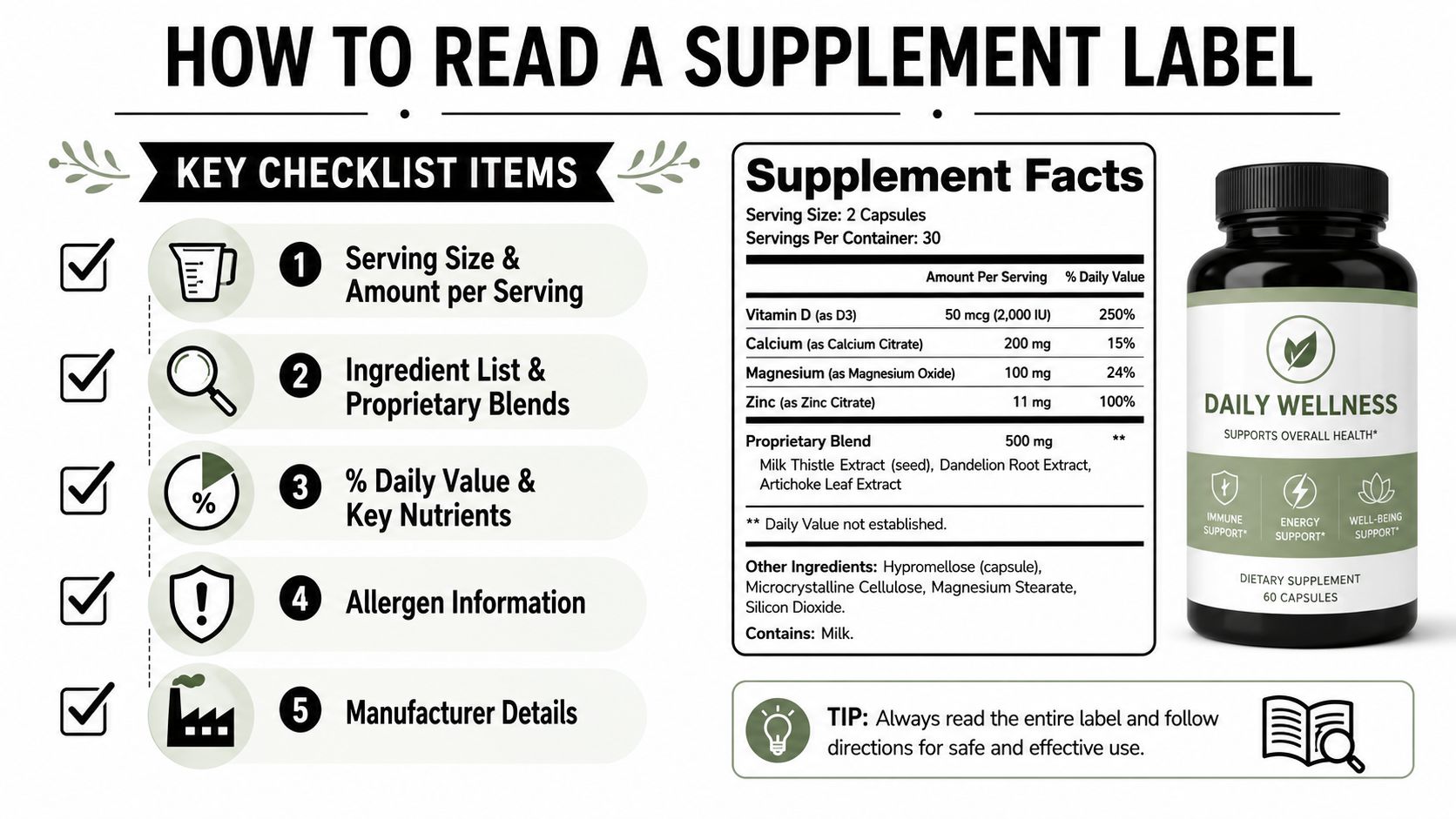
A label tells you whether a supplement is worth a second look or an easy pass. Good makers use that space to show exactly what is inside, how much you get, and who stands behind the formula.
Read the supplement facts panel first
Start with Serving Size and Amount per Serving. If the serving looks tiny, vague, or hard to compare with similar products, stop and check whether the dose is useful or just dressed up to look impressive.
Then move to the ingredient list. Active ingredients should be clear, and other ingredients should make sense too. Fillers, coatings, and capsule materials are not always a problem, but you should know they are there before you buy.
If you are comparing a single-ingredient powder like organic ashwagandha root powder for stress support, this part of the label should be simple and direct. You should be able to see what the product is, what form it comes in, and whether the stated serving lines up with your own use case.
Watch for proprietary blends and missing context
A proprietary blend can hide the exact amount of each ingredient, which makes it harder to judge whether the formula is meaningful or just crowded. If a maker will not tell you what each ingredient contributes, that is not transparency, it is a dodge.
Check % Daily Value when it is listed. That matters most for vitamins and minerals, where you want to know whether the product is useful or just decorative.
Do not treat a long ingredient list as proof of quality. A shorter formula with clear amounts is often easier to trust than a crowded blend with no numbers.
Don't skip the safety basics
Look for allergen information, directions for use, and the manufacturer's name or contact details. For a product like Parasite Cleanse Capsules, Black Walnut & Wormwood Herbal Blend, Digestive Detox Support, 60 Vegan Capsules (30 Ser | Life Gardening Tools by Loyaltie, the practical questions stay basic. What is in it, how is it dosed, and does the brand explain the formula without hype?
The same habit applies across product categories, including prenatal products. If you want a useful comparison point, see how to choose tested prenatal vitamins, because the label still needs to tell you what you are getting.
The regulator's role matters here. FDA's role generally begins after a supplement enters the marketplace, and manufacturers are responsible for truthful, non-misleading labels, so the label is your first real quality checkpoint, not a stamp of approval.
Verifying Quality and Safety Beyond the Label
A clean label helps. It does not prove the product is worth buying.
Third-party testing is the trust filter that matters
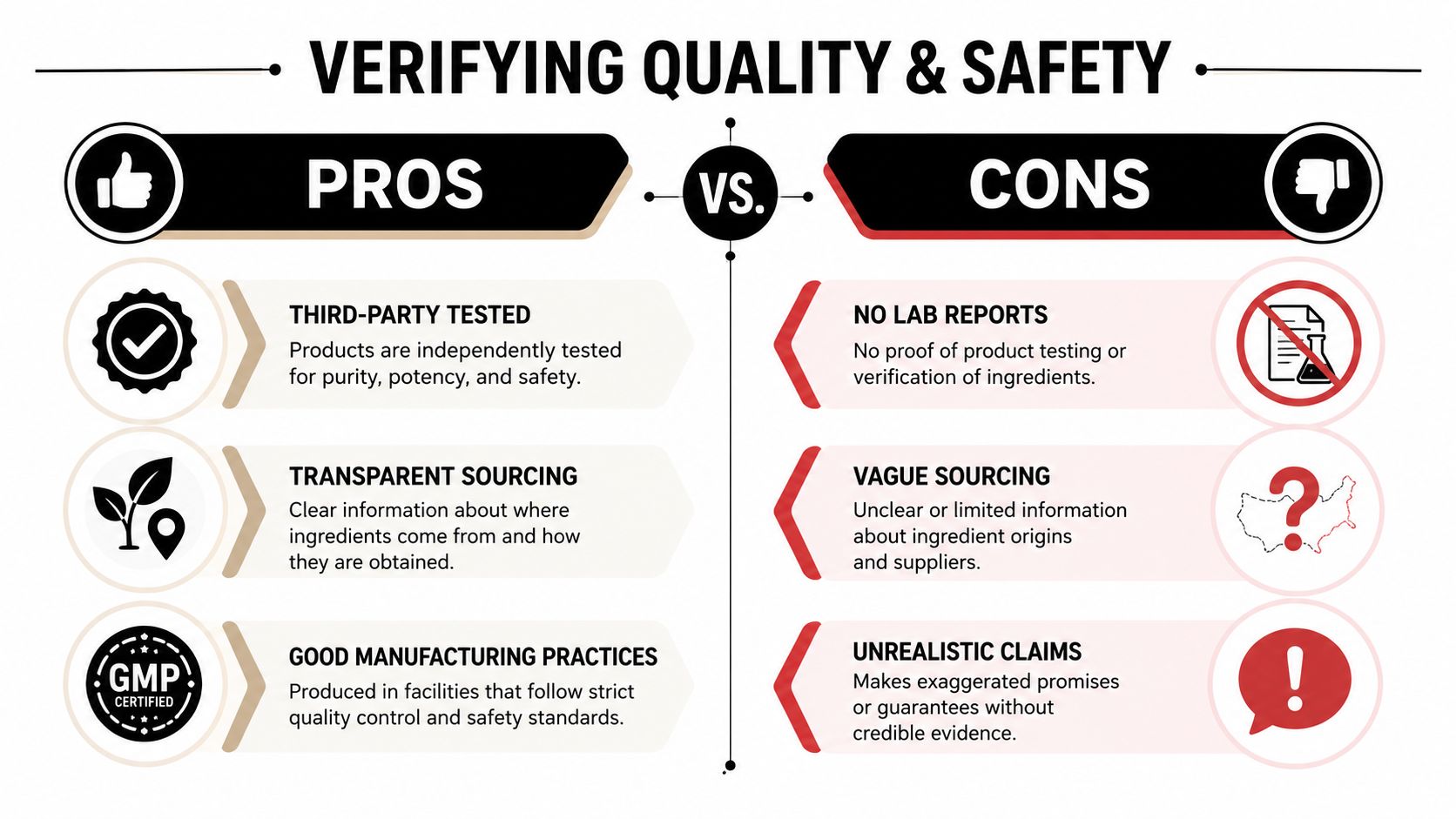
If a brand says its product was tested by USP or NSF International, that is a real sign the company put its formula through outside checks. Harvard Health notes that voluntary third-party verification is one of the best ways to reduce risk, and that matters because supplement labels can be wrong in both directions, less than claimed or more than claimed.
Harvard also notes that the FDA has withdrawn over 140 products adulterated with undisclosed pharmaceutical ingredients, especially in sexual performance, weight loss, and athletic performance categories. That is not a minor corner case. It is proof that bad actors sell into this market, and it is exactly why you should ask for proof before you trust a label.
Ask where the ingredients come from
A maker worth your money should be able to explain sourcing in plain English. Country of origin, extraction method, and whether the raw material is standardized are all fair questions, and a transparent brand will answer them without acting defensive.
The NIH Office of Dietary Supplements is blunt about something shoppers forget, “natural” does not always mean safe. It gives examples such as comfrey and kava, and it advises people to talk with a health care provider before using supplements with prescribed medicines or for a condition.
Independent brands separate themselves from generic mass-market listings with product pages that explain sourcing, show testing, and name the maker. Such transparency builds trust more effectively than hiding behind vague wellness language. A good example is Digestive Liver Support Capsules with Bee Pollen, Royal Jelly, Propolis, Calm Metabolism, and Energy Support, because it gives you a concrete formula to inspect instead of a blurry promise.
Use the red-flag test
If a page promises miracle results, hides contact details, or talks around the actual ingredients, walk away. If it sounds like a drug claim, that is another problem, because dietary supplements cannot legally claim to treat, diagnose, prevent, mitigate, or cure disease.
For a useful example of what shoppers often want to verify before buying, see how to choose tested prenatal vitamins. The same logic applies across categories. Make the maker show proof, not just confidence.
Finding and Buying From Independent Makers
Big marketplaces are convenient, but convenience isn't the same thing as confidence. When you buy direct from independent makers, you usually get a cleaner line of sight from sourcing to bottling, and that makes the whole purchase easier to evaluate.
Why direct-to-maker often beats mass retail
Independent brands have more to lose when they're sloppy. Their name is on the label, their customer emails land in their inbox, and their repeat buyers remember whether the product worked and whether support was useful.
That direct connection matters because it usually means better answers. You're less likely to get a stock response and more likely to get a real explanation of why the formula exists, what's inside it, and how the maker wants you to use it.
Where to look without wasting time
Start with local makers, direct brand sites, and marketplaces that are built for discovery rather than sheer volume. Look for product pages with clear ingredient panels, maker contact info, and enough detail to compare one formula against another without decoding marketing language.
A marketplace like Loyaltie is built for that kind of shopping, where people discover and buy directly from the best independent brands in the US. A catalog example like Shilajit Resin, Altai Mountain Mineral Pitch, Fulvic Humic Acid, Energy Vitality Support, 25g Jar shows the kind of product presentation you want to inspect closely, named ingredients, stated format, and a direct path back to the maker.
Good sign: the brand answers ingredient questions before you have to chase them down.
Use search terms that point to makers, not resellers
Search for the ingredient plus the maker, the region, or the product type you care about. If a listing looks generic, recycled, or oddly detached from the actual brand, that's usually a clue you're looking at a reseller, not the source.

Your Secure Online Purchase Checklist
The product can be solid and the checkout can still be sloppy. Don't ignore the boring parts, because the boring parts are where a lot of bad experiences start.
Check the checkout before you type in payment details
The URL should use HTTPS, and the checkout should feel normal, not rushed or cluttered. If the page looks broken, the payment flow is strange, or the brand asks for information it doesn't need, stop and leave.
Shipping matters just as much. If you're buying something heat-sensitive or time-sensitive, you want a brand that says how it packs, ships, and handles delays. That's part of the five checks buyers care about, convenience and online security are not separate from product quality.
Read the return policy before you buy
A fair return policy tells you the maker expects to stand behind the product. If the policy is hidden, vague, or full of exceptions, that's a warning sign, not a minor detail.
Also look for basic order confirmation and tracking. A reputable brand doesn't make you wonder whether your package exists.
Keep the final step simple
Buy only after you've compared the ingredient page, the quality proof, and the checkout terms. If you still feel uneasy, that feeling is usually useful, not irrational.
A good checkout process doesn't just protect your card, it tells you the brand knows how to treat customers after the sale.
Your Post-Purchase Plan for Safety and Success
Buying the product is only half the job. Once it arrives, the smart move is to treat it like part of a real routine, not a magic trick in a bottle.
Talk to a health care provider if the product affects your situation
If you take medications, have an existing condition, or are unsure whether the supplement fits your needs, ask a clinician before you start. That advice matters more when the product is meant to affect digestion, energy, sleep, mood, or nutrient intake.
If you want a blunt reminder about why that caution matters, read can excess supplements harm you. More isn't automatically better, and stacking multiple products can create problems you didn't intend.
Store it the right way
Keep supplements out of sunlight, away from humidity, and closed tightly. Heat and moisture can wreck potency, and once a product degrades, you're not getting the same formula you paid for.
Track what you actually notice
Use the product consistently if the label tells you to, then pay attention to how you feel over time. Note digestion, sleep, energy, skin, or whatever the product claims to support, and stop if something feels off.
The NIH also advises asking specific questions about benefits, risks, dose, timing, and duration before buying, and that's a good mindset after purchase too. The point isn't to chase more products, it's to find the ones that fit your life without causing headaches.
Common Questions About Buying Supplements Online
Are natural supplements safer just because they're natural
No. The NIH is explicit that “natural” does not always mean safe, and that's exactly why ingredient transparency matters. Some plant-based ingredients can still cause harm, especially when the dose is unclear or the product is mixed with other supplements.
How do I know whether a supplement is actually useful
Start with the use case, not the label language. Australia's 2024 evidence review found moderate certainty that some supplements help specific conditions, while other supplement-condition pairs showed little or no benefit or still had unknown effects, so the right question is always, “What is this for, and what's the evidence level for that use?”
Should I trust a product if it says FDA approved
Not unless you're talking about something the FDA approves as a drug. Dietary supplements are different, and FDA's role generally begins after the product is already on the market, which is why the brand's own testing, labeling, and honesty matter so much.
What's the fastest way to spot a bad product page
Look for vague claims, missing manufacturer details, and no sign of third-party verification. If the page sounds like it's trying to push an outcome instead of explain a formula, treat that as a warning.
Is buying direct from the maker worth the extra effort
Usually, yes, because you're getting a clearer trail back to the source. That doesn't mean every independent brand is perfect, but it does mean you're better positioned to judge quality, ask questions, and buy from a maker that stands behind the product.
If you want a cleaner way to shop, start with the makers who show their ingredients, testing, and checkout terms without making you dig. Loyaltie is built to help you discover and buy directly from independent brands in the US, which makes the whole process simpler, calmer, and a lot more trustworthy.