
You're staring at three tabs, six bags, and a freezer section that all promise the same thing, your pet will thrive if you just pick the right one. That's the trap. The first mistake almost everyone makes is trusting the front of the bag before they've checked whether the food is complete, safe, and a good fit for their house.
Natural pet food online is crowded because the category is big, not because the claims are clear. The natural pet food market is already a multibillion-dollar global category, with one estimate putting it at USD 15.28 billion in 2025 and projecting USD 23.05 billion by 2035 at a 4.2% CAGR (Future Market Insights). That growth is real, but it also means more labels, more DTC brands, and more slick pages that blur the line between good marketing and good food.
If you want to buy with confidence, stop thinking like a browser and start thinking like a verifier. You're balancing three things every time you order, your pet's health, your budget, and your time. Get those three in the right order, and the whole process gets easier fast.
Table of Contents
- Why Buying Natural Pet Food Online Feels So Confusing
- What Natural Actually Means and How to Read the Label
- The formats at a glance
Why Buying Natural Pet Food Online Feels So Confusing
You're on your couch, laptop open, and every bag says natural, clean, or limited ingredient. One brand has pastel packaging, another has a farm story, and a third says it's “better than kibble” without telling you much else. The mistake is thinking those words sort themselves out once you zoom in on the photos.
The problem is that “natural” doesn't do much work by itself. Online, you lose the shelf context you'd get in a store, so the food that looks wholesome can be the one with the weakest details. A bag can look calm and responsible while hiding the key question, is this food complete, safe, and suited to how you feed?
A good way to shop is to keep your eyes on the three trade-offs that matter most. Your pet needs the right nutrition and texture. Your budget needs the food to make sense over time, not just at checkout. Your time matters because some formats are easy to store and serve, while others turn your kitchen into a tiny processing plant.
Practical rule: if the product page won't clearly tell you what's in the food, who makes it, and whether it's nutritionally complete, stop giving the copy benefit of the doubt.
That's also why direct-from-maker shopping has gotten more relevant. A marketplace like Loyaltie makes it easier to find independent brands without the usual maze of reseller listings and generic marketplace clutter. If you're buying natural pet food online, the game is not finding the prettiest bag, it's finding the maker who tells the truth plainly.
What Natural Actually Means and How to Read the Label
“Natural” sounds specific, but on pet food pages it often isn't. I treat it as a starting signal, not a conclusion. Organic usually means ingredients were produced under organic rules. Natural often points to ingredients that are closer to their original state, but that alone does not tell you whether the recipe is balanced. Holistic is mostly branding language, and human-grade only matters if the brand can show it in a credible way.
The label itself gives you better clues than the front panel. Start with the ingredient list order, because ingredients are listed by weight before cooking. Then check the AAFCO nutritional adequacy statement, because that tells you whether the food is complete and balanced for a life stage. After that, look at the guaranteed analysis and the phrase formulated to meet versus feeding trial. Those are not the same thing, and I'd rather see clear adequacy language than a vague wellness pitch.
A short ingredient list is not automatically better. A simple recipe can still be missing key nutrients, and a longer one can be perfectly sensible if it's doing real nutritional work. The same goes for by-products. People hear the term and assume junk, but it's a broad category, and what matters is whether the brand is transparent about the source and the overall formulation.
Here's a quick comparison that keeps the marketing noise out of the way.
| Claim on the Bag | What It Really Means | How to Verify It |
|---|---|---|
| Natural | The formula is presented as closer to whole ingredients, but that doesn't prove balance | Read the ingredient panel and the adequacy statement |
| Organic | Ingredients were produced under organic standards where applicable | Check for certified organic wording on the product page |
| Holistic | Branding language, not a nutrition standard | Ignore it unless the rest of the label is strong |
| Human-grade | The maker is claiming ingredients or processing comparable to human food standards | Look for a plain explanation from the maker |
| Limited ingredient | Fewer ingredients, not automatically better food | Check whether the recipe still covers nutrients well |
If you want a second opinion on the label side, how to pick natural dog food is useful because it pushes you toward reading the actual formula instead of worshipping the packaging. I'd use that mindset even more for cats, since cat food pages can hide a lot behind “graceful” branding.
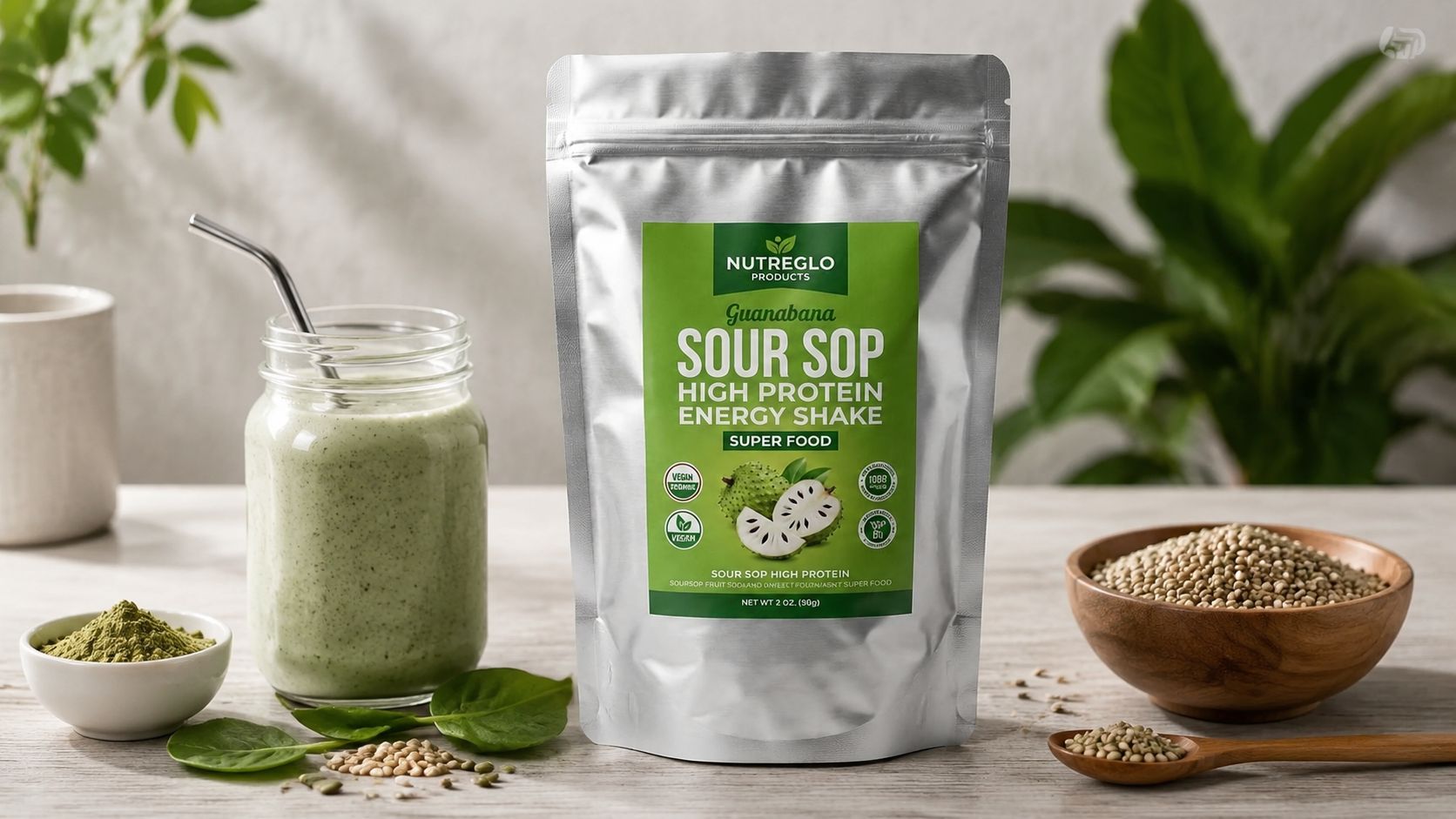
And if you're the kind of person who wants the same directness in a shake as in a bowl, Plant-Based Superfood Protein Powder, Flax & Hemp Protein, Energy Shake Blend, Soursop Leaf Extract, 1 lb (Not Bitt | Life Gardening Tools by Loyaltie is the same kind of no-nonsense product page, a clean, raw plant-based blend built around flax and hemp protein with wheatgrass, sea moss, and soursop leaf extract.
Kibble, Wet, Raw, and Freeze-Dried Compared Directly
Format matters more than people admit. A food can be well made and still be a poor fit for your routine if it spoils too quickly, costs too much to ship, or makes feeding feel like a chore. For online buyers, the key question is which format you can use consistently without wrecking freshness or your schedule.
The online channel already drives a lot of this category. Analysts at Mordor Intelligence project strong growth in the online pet food market, and they also note that U.S. pet food e-commerce is expected to take a larger share of total sales over time. That puts your decision in a shipping-box world, not just a shelf world.
The formats at a glance
| Format | Best for | Main trade-off |
|---|---|---|
| Kibble | Convenience and easy storage | Usually the least exciting texture and moisture profile |
| Wet food | Picky eaters and hydration support | Heavier shipments and open-can storage |
| Raw | People who want minimal processing and can handle handling carefully | Cold-chain risk and more prep |
| Freeze-dried | Lightweight storage with a raw-style pitch | Price and rehydration steps |
Kibble usually wins when you want simplicity. It stores well, ships easily, and does not demand much from your freezer. Wet food makes sense for pets that need more moisture or refuse dry food, but once you open it, you are on the clock. Raw and freeze-dried are where buyers get pulled into the biggest gap between expectation and reality.
Raw is not a lifestyle badge. It is a handling decision.
That line matters because raw can fit some homes and be a mess in others. A senior cat with a sensitive stomach may do better on a carefully chosen wet food than on a fashionable raw formula. A big, hungry dog who inhales meals may be fine on kibble or a balanced wet option, while someone who likes prep and portioning may enjoy the control raw gives them.
For a quick third-party take on how cats and dogs can get fed in mixed-household homes, the sitter's guide to pet food is handy because it reminds you that feeding decisions have practical household consequences, not just ingredient-list consequences. If you want the same no-nonsense mindset in another product category, the unscented paw butter from Loyaltie is the kind of page that rewards reading the details instead of trusting the label at face value.
Safety Signals Every Online Buyer Should Check First
I get blunt. If a product page is vague on safety, I skip it. A bag can look clean and still be a lousy buy if the maker won't say who manufactures it, how it's labeled for adequacy, or how they handle problems when something goes wrong.
Start with the AAFCO nutritional adequacy statement. You want to know whether the food is meant to be complete and balanced for a specific life stage, or whether it's a supplemental or DIY-style food. Then check the maker's recall history through the FDA's recall resources, because a brand that handles issues directly is better than one that hopes you won't notice.
My first-pass safety checklist
- AAFCO statement: look for a clear complete and balanced claim.
- Manufacturer transparency: find the address, the contact info, and the actual company name.
- Recall history: check whether the brand has a pattern you're comfortable with.
- Packaging on arrival: inspect for leaks, swelling, torn seals, or thawing.
- Customer feedback: look for repeated comments about freshness, not just “my dog loved it.”
Fresh, raw, and gently cooked foods need extra attention because shipping and temperature control matter more. If a chilled box arrives warm, if a frozen pack has clearly thawed, or if the seal is compromised, don't talk yourself into it. Tossing a bad shipment is annoying, but feeding questionable food is worse.
The product page also needs to tell you where the food is made, not just where it's packaged. Country of origin and country of packaging are not the same thing, and brands know shoppers often conflate the two. If the company gets slippery here, I assume the rest of the page is doing the same thing.
Keep the box until you've inspected every pack. Once the packaging is gone, so is most of your proof if you need to report a problem.
The other thing I'd check is whether the maker gives you a real way to reach them. If a brand sells online but disappears the moment you ask about a damaged box or a questionable seal, that's not a seller I'd trust with raw, fresh, or refrigerated food.
If you want a small practical reference point for pet care products that are built to be used and reused without unnecessary fuss, Unscented Paw Munchkin Butter, 8 oz is the kind of straightforward listing I like, because the details are clear and the page doesn't try to confuse the issue.
How to Buy Natural Pet Food Online Without Rolling the Dice
The easiest way to get burned is to buy from a seller you don't understand. A polished store can still be a reseller with no real relationship to the product, while a quieter site can be the actual maker with better control over freshness and inventory. I'd rather buy directly from the maker whenever possible, because no middleman usually means fewer surprises.
The U.S. organic and natural pet food market was valued at USD 8.75 billion in 2025 and is projected to reach USD 17.03 billion by 2034 at a 7.68% CAGR (IMARC Group). That growth tells you more buyers want better food, but it also means more sellers are rushing in with mixed quality.
What I ask before the first order
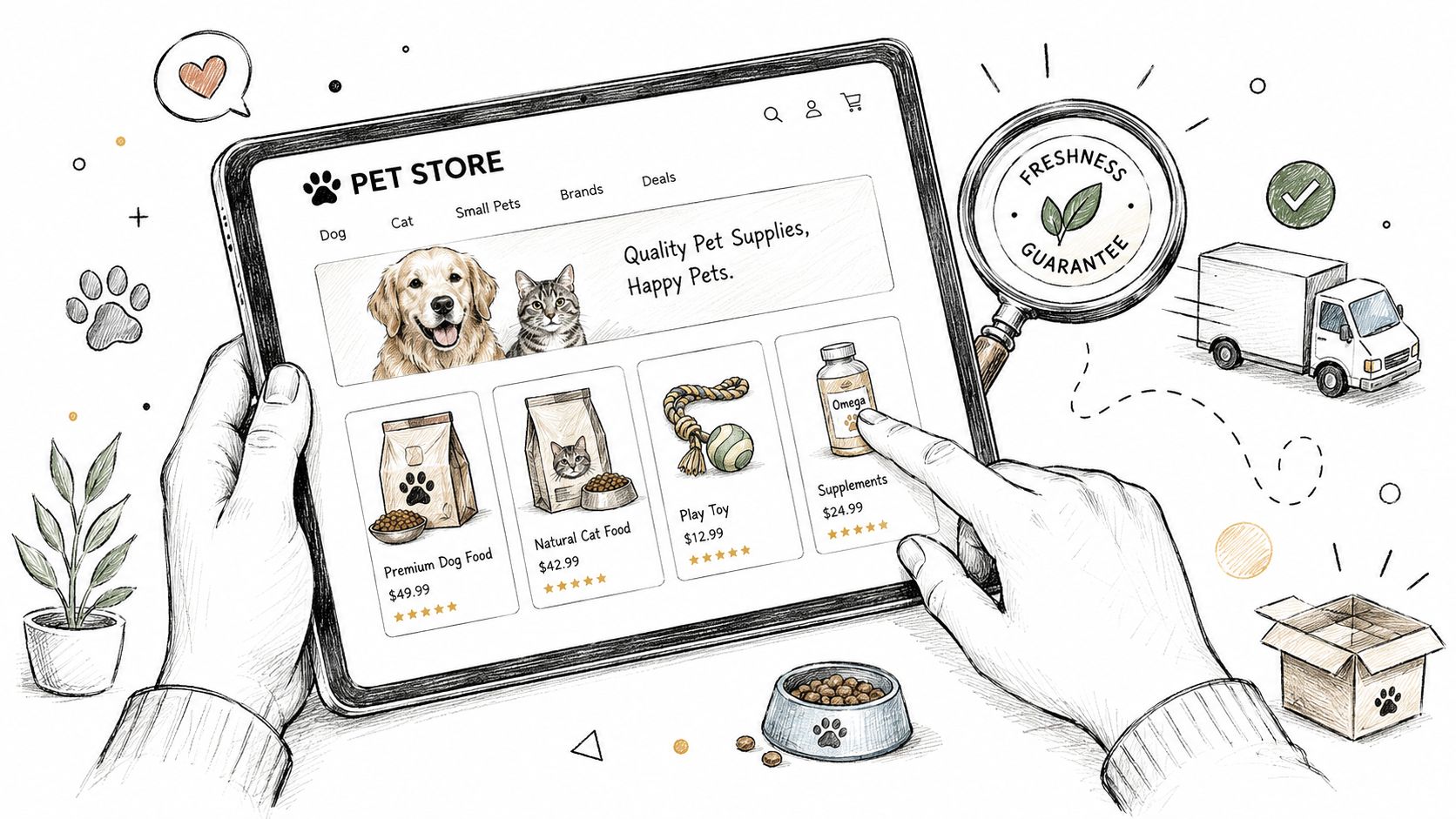
I check whether the seller says if they're the manufacturer or just the retailer. Then I look for shipping details, temperature guidance, and what happens if an order arrives damaged. If the page makes me hunt for the basics, I assume customer service will be just as sloppy.
Customer reviews need a different reading style than you'd use for a sweater or a lamp. Look for repeated comments about freshness, seal integrity, smell, and packaging condition, not just whether a pet licked the bowl clean. Enthusiasm is nice, but consistency is better.
Where the seller sits matters
- Direct brand site: usually best for freshness, product knowledge, and buying directly from the maker.
- Large e-commerce marketplace: fine for convenience, but you need to be more careful about resellers.
- Curated local marketplace: often a better balance because you get discovery without losing transparency.
That last category is where I think a marketplace like Loyaltie makes the most sense. It's a place where people discover and buy directly from the best independent brands in the US, which helps when you want to find real makers instead of generic listings pretending to be local.
If you're planning bigger bags or frozen orders, storage should be part of the checkout decision, not an afterthought. A 30-pound bag can be smart for a multi-pet house, but in a small apartment it can become a stale, awkward mess if you don't have airtight storage ready.
Why Local Makers Are Usually the Better Buy for Natural Pet Food
Buying directly from independent local makers is usually the smarter move for natural pet food. Smaller batches tend to turn over faster, which usually means fresher inventory. You also get clearer answers about ingredients, sourcing, and what happens if a box shows up wrong.
That matters because pet food is a trust purchase. Real makers usually know their own formulas, know when a batch changed, and can tell you why a texture looks different or whether a cold pack did its job. If something looks off, there's an actual person attached to the product, not a dead-end help desk script.
A marketplace built around direct discovery cuts down on the usual clutter, and it makes it easier to see who is making the food. That's why Loyaltie works as a place to discover and buy directly from independent brands, without getting buried in anonymous listings. You are dealing with makers who have to stand behind what they sell, and that usually makes the conversation about quality a lot more honest.

What I look for in a new maker
I want a product page that tells me the protein source, the life-stage adequacy, and how it ships. I also want to see whether the brand is clear about whether a recipe is complete and balanced or meant for rotational feeding. If they stay vague there, I pass.
Direct-to-buyer brands make this easier to check because the details tend to sit right on the page instead of being buried behind retailer noise. That is the same kind of clarity I want from any food I'm trusting with my pet's bowl. For a direct example of how a maker can keep product and logistics aligned, the Goobr zero-waste pet food model shows how much cleaner the whole experience can feel when the brand controls the process.
For treats, I like seeing the same directness. Roscoe Stella's All Natural Cookies & Treats has that straightforward maker-to-buyer setup, which is exactly what I want when I'm judging whether a smaller brand is worth a second look.
Why local can also mean safer
Local does not automatically mean better, but it often shortens the supply chain. That helps with frozen and refrigerated foods, where transit time matters and fewer handoffs usually means fewer chances for something to go wrong. It also makes returns and replacements simpler, which matters more than people admit until a shipment arrives damaged.
If you are serious about buying natural pet food online, favor makers who can tell you where the food comes from, how it is handled, and who to contact if the box shows up wrong. That is the baseline. If they cannot do that, the cute branding is doing too much work.
Transitioning, Cost, and Storage So You Actually Stick With It
People switch foods too fast and then blame the new bag when the issue was the transition. Give your pet a few days to adjust unless your vet tells you otherwise. A simple approach is to mix the new food in gradually, watch stool quality, and slow down if the bowl change is too abrupt.
Storage is where good intentions die. Kibble needs an airtight bin and a cool, dry spot. Frozen orders need freezer space and a plan for partial thawing. Resealable bags are helpful, but they're not magic, and if you leave them half-zipped on the counter, the food will tell on you later.
A simple routine that actually works
- Start small: order a size you can finish without pushing storage limits.
- Portion early: split bulk orders into meal-sized amounts if that saves time later.
- Label the container: note protein and open date so you don't guess.
- Reorder before you're low: give yourself enough time to avoid emergency buys.
- Watch the stash: if the food smells stale, looks off, or has obvious freezer damage, don't keep pushing it.
I also think a regular delivery rhythm works best when it matches your real feeding pace, not some idealized plan. A local maker can often be easier to reorder from because you're not trying to game a giant marketplace every month. You buy, you receive, you feed, you reorder, done.
Cost gets simpler when you think in terms of habit, not fantasy. A food that looks inexpensive but gets wasted because it's awkward to store is not a good deal. A food that costs more but gets used consistently can be the smarter buy because it fits your life.
The cheapest bag on the page is rarely the cheapest food in the house.
That's the truth I'd keep in mind. If you know your storage limits, your pet's eating speed, and how often you're willing to reorder, you'll avoid half the bad purchases people make with natural pet food online.
Common Questions About Natural Pet Food
Is natural pet food always better? No, only if the recipe is nutritionally complete, safe, and right for your pet. A polished label means nothing if the formula is imbalanced or handled badly.
Should senior pets always eat natural food? No. Senior pets need food that fits their digestion, teeth, and health profile. Sometimes that means a well-made natural formula, sometimes it means a different texture or a simpler diet that is easier to tolerate.
What if my delivery arrives warm or damaged? Don't feed it. Take photos of the box, the seals, and the product condition right away, then contact the seller before you throw anything away. If the packaging is compromised, the food is too risky to trust.
Is a local marketplace safer than a giant site? It is usually easier to trust, not automatically safer. You get more transparency, direct contact with the maker, and less reseller confusion. That setup works better for natural pet food, especially when freshness and handling matter.
If you want a cleaner way to buy from independent brands without sorting through endless guesswork, visit Loyaltie and look for the makers who spell out what's in the bag, how it ships, and who stands behind it. You'll spend less time decoding marketing and more time feeding food you can trust.