
You're standing in the aisle, phone in one hand and a bottle in the other, trying to decide whether the thing you're about to buy is worth putting in your body. The label says natural, the claims sound nice, and the ingredient list feels like a small puzzle. That's exactly where local wellness products start making sense, because they give you a closer look at who made the product, what went into it, and whether the result is a real upgrade or just better branding.
What makes this category interesting now is that wellness isn't a side hobby anymore. The global wellness economy reached $6.8 trillion in 2024 and has doubled since 2013, according to the Global Wellness Institute, with wellness making up 6.12% of global GDP and projected to approach $9.8 trillion by 2029 (Global Wellness Institute). In the U.S., consumers are spending heavily, and many are shifting toward proof, not just vibes, when they shop for supplements, skincare, food, and everyday self-care (McKinsey).
That's why buying from independent, local makers is less about sentiment and more about getting clearer sourcing, fresher products, and a direct line to the person who made them. If you want a place to discover those makers without wandering through endless big-box listings, Loyaltie is built around that idea.
Table of Contents
- Why Local Wellness Products Are Getting Harder to Ignore
- The categories most people buy
- What “local” means in practice
- Quality you can taste, smell, or feel
- Transparency you can actually inspect
- Sustainability that's built in, not bolted on
- Community impact that comes from buying better
- Lead with the facts buyers search for
- Price with transparency
- Use your story without making it the whole pitch
- Make response time part of the trust signal
Why Local Wellness Products Are Getting Harder to Ignore
You've probably had the same moment in a supplement aisle or on a product page, where two bottles look almost identical and one costs more for reasons you can't quite decode. One promises calm, one promises energy, and both are wrapped in leafy design and soft colors. The difference usually isn't the marketing. It's whether you can tell who made it, where the ingredients came from, and what the product is trying to do.
That's where local wellness products start feeling less like a niche and more like common sense. When you buy from independent brands, you're often getting a product made by someone who can tell you why the formula exists, how fresh it is, and what the maker cared about when they built it. That matters for categories you use every day, like coffee, skincare, pantry wellness, supplements, and pet care, because those are the products where quality shows up in routine, not in a one-time splurge.
Practical rule: if a product is supposed to live in your kitchen, bathroom, or medicine cabinet, you should be able to explain it in plain language after reading the label once.
The buying mood has changed too. McKinsey reports that about 50% of U.S. consumers now call wellness a top priority in daily life, up from 42% in 2020, and that many shoppers now care more about clinical effectiveness than about natural branding alone (McKinsey). That's good news for independent makers, because it rewards products with real substance instead of just a clean-looking package.
The simple takeaway is this. Local doesn't mean sentimental, and it doesn't mean rough around the edges. It often means more clarity, more accountability, and a better shot at finding something you'll reorder. If that's the kind of shopping you want, the rest of this guide will help you spot it fast.
What Counts as a Local Wellness Product
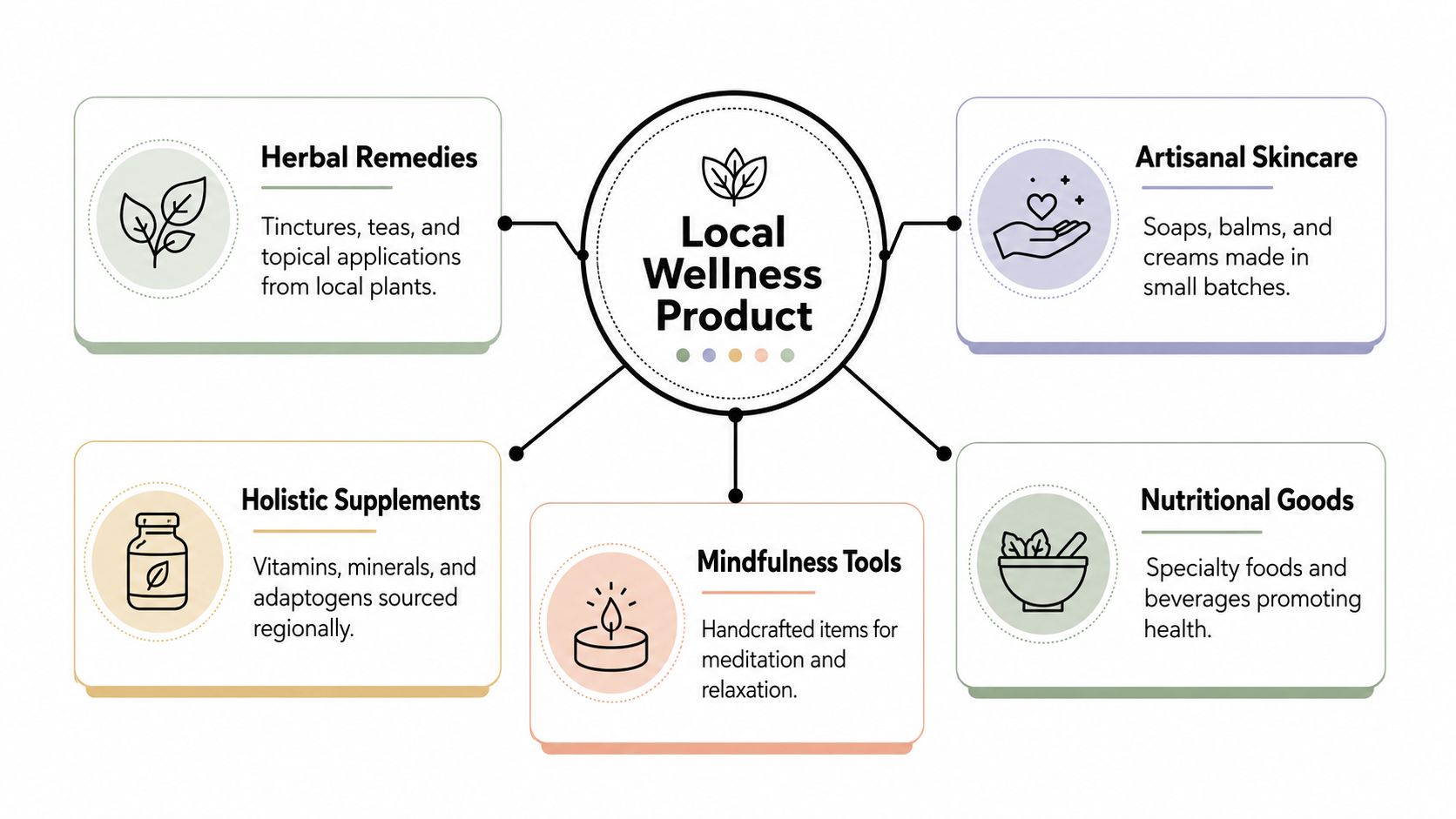
A local wellness product is any everyday health or self-care item made by an independent producer and sold in the U.S., often close to where you live, though “local” can also mean regional or direct-from-maker rather than neighborhood-only. A simple way to sort the category is to ask whether the item is meant to support energy, recovery, skin, digestion, daily routines, or pet wellness, and whether you can identify the maker behind it. If both are true, it fits here.
The categories most people buy
Start with categories, not buzzwords. Cold-pressed juice and functional shots, vitamins and adaptogens, soaps and balms, pantry goods like bone broth or fermented foods, and even pet wellness products all belong in the mix. One clear example is the Cold-Pressed Immunity Shot, Ginger & Turmeric, No Added Sugar, 2.5 oz Wellness Shot (Choose Flavor) | JudyMakesJuices by Loyaltie, which is described as a small bottle with cold-pressed ginger and turmeric, plus citrus and spice, and no added sugar.
That kind of product tells you how this category works. You are not only buying a flavor. You are buying a specific format, a specific ingredient profile, and a maker's point of view about what should go into a functional drink.
What “local” means in practice
Local does not always mean a farmers market stall down the block. It can mean a regional maker, a small-batch producer, or an independent brand shipping directly from somewhere else in the U.S. The key difference is that you are buying directly from the maker or through a marketplace that keeps that relationship visible, instead of moving through layers of middlemen that blur the story.
A useful working definition is this. If you can identify the maker, understand the category, and see how the product fits into daily wellness, you are looking at the right kind of product.
Loyaltie fits into that discovery layer by bringing independent U.S. brands into one place, so you are not left searching through giant marketplaces that mix everything together. That makes the category easier to understand, and easier to shop with confidence.
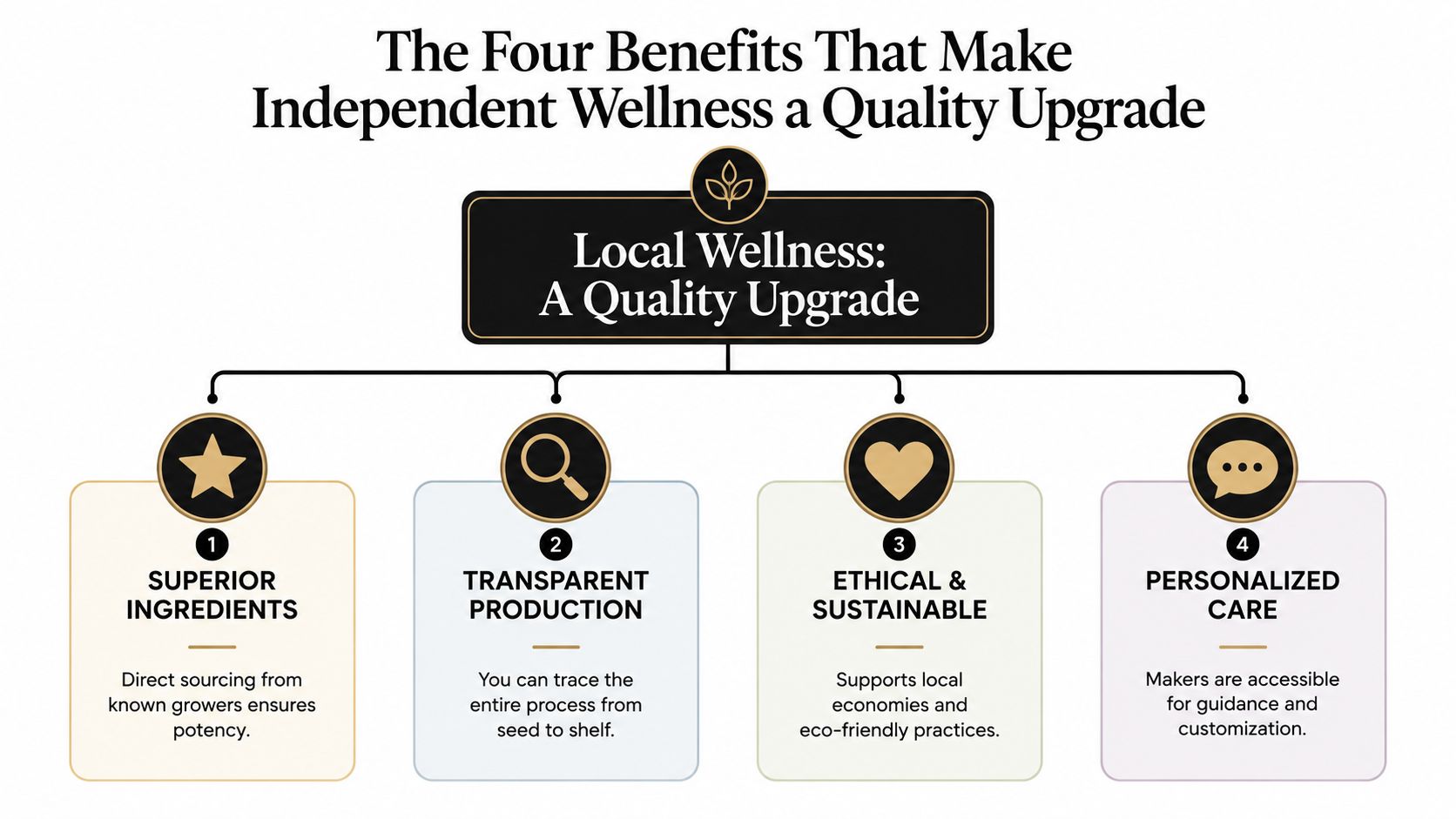
The Four Benefits That Make Independent Wellness a Quality Upgrade
The reason people keep coming back to independent wellness isn't just that it feels more personal. It's that the product often gives you more to work with. You can see the logic of the formula, the sourcing is easier to trace, and the person making it usually has to stand behind it in a very direct way.
Quality you can taste, smell, or feel
Freshness matters most in products you use often. A maker working in smaller batches can adjust a formula, rotate ingredients, or refine a recipe without waiting on a giant production calendar. That usually shows up in products like juices, balms, teas, and supplements where the ingredient experience is the whole point.
For you, the shopper question is simple. Does this feel alive, fresh, and intentionally made, or does it feel like something pumped out to hit a shelf date?
Transparency you can actually inspect
Independent makers are often easier to question, and that's a strength. They tend to publish ingredient decks, dosage information, and sourcing details because they have to earn trust one product at a time. For wellness products, that matters more than polished lifestyle copy.
The shopper question here is, can I see the whole formula and understand why each part is there? If the answer is yes, you're already ahead of the average mass-market label.
Sustainability that's built in, not bolted on
Shorter supply chains usually mean less shipping complexity, and regional sourcing can make it easier for makers to choose packaging that makes sense for the product instead of just the cheapest path to shelf. That doesn't magically make every local product sustainable, but it does make thoughtful choices more possible.
The question to ask is, does this product reduce unnecessary steps, or does it just talk about green values on the package?
Community impact that comes from buying better
Money spent with a local maker usually stays closer to home, where it can support jobs, equipment, and the next production run. That's not charity. It's how a healthier product ecosystem gets built. The buyer gets a clearer product, and the maker gets enough traction to keep improving.
So the last question is, am I buying from a company that I can come back to next month and trust again? That's the test of a quality upgrade.
A Two-Minute Buying Checklist for Any Wellness Product
A good label should let you make a fast decision without guessing. If you can't tell what a product is for, what's inside it, and who made it, that is usually your cue to put it back or keep scrolling. You do not need to become a formulator to shop well, but you do need a repeatable method.
The quick screen
Start with the ingredient list and read it out loud. If the list is crowded with things you cannot identify, or if the active ingredient is buried behind vague language, slow down. For supplements, check the dosage, not just the front-of-package promise, and look for whether the maker gives you enough information to understand what a serving contains.
Then scan for signs of third-party testing or clear quality standards. SQF says dietary-supplement and wellness brands should have documented specifications for raw materials and finished products that cover microbiological, chemical, and physical limits, along with purity, strength, composition, adulterant limits, labeling, packaging, and storage conditions (SQF). That is the kind of behind-the-scenes rigor you want a maker to be able to point to, even if the customer-facing language stays simple.
Useful shortcut: if the maker cannot explain the product in one clear paragraph, the label probably cannot do it either.
Check the manufacturing location and look for freshness cues like a production date or a clear batch reference. Then review the claim language. FDA says a general wellness product is intended only to maintain or promote a healthy lifestyle and stays low risk, which affects how far the claims can go (FDA). Finally, make sure the maker has real contact info, not just a generic storefront name.
| Checkpoint | What to Look For | Red Flag |
|---|---|---|
| Ingredient list | Clear, specific ingredients | Vague blends or jargon-heavy labels |
| Active dose | Amount per serving is visible | Hidden dosages or proprietary blends |
| Quality signals | Testing, certifications, specs | No quality language at all |
| Freshness | Batch, lot, or production details | No clue when it was made |
| Claim language | Wellness language, not disease claims | Claims that sound medical |
| Maker contact | Real person, site, or support path | No way to reach the maker |
A listing like Prebiotic Natural Deodorant Stick, Blue Agave, Inulin, Kaolin Clay, Sensitive Skin, Odor Control, Jasmine Lemon, 50g shows how this works in practice. The point is not whether every detail is flashy. It is whether the product gives you enough concrete information to decide if it fits your skin, your routine, and your standards.
If you are comparing product pages across different shops, the same checklist still applies. The product name should match the ingredient story, the claims should stay in wellness territory, and the maker should leave a trail you can follow if you have a question later. That is why local discovery tools matter too, including resources like local stores with hydroxyapatite toothpaste, which help shoppers move from one category into a broader search for independent makers.
Where to Actually Find Local Wellness Products
Finding the right product is easier once you know which shopping channel matches your habits. Some people like to talk to a maker in person. Others want the convenience of buying online, but still want a direct relationship with the brand. The channel matters because it changes what you can inspect before you buy.
How the main channels compare
| Channel | Discovery | Trust Signals | Convenience | Direct from Maker |
|---|---|---|---|---|
| Farmers markets and food halls | Great for browsing nearby goods | Strong if you can ask questions in person | Limited by schedule and location | Often direct |
| Independent retail and apothecaries | Good for curated local assortments | Staff can help, labels are visible | Easy if you already shop there | Sometimes direct |
| Brand websites | Best when you already know the maker | Strong if the site is detailed | High once you know the brand | Direct |
| Marketplaces like Loyaltie | Strong for discovering new makers in one place | Depends on listing quality and order backing | Convenient for online shopping | Direct, without the usual middle layer |
If you want to learn how nearby shoppers find specific product types, a resource like local stores with hydroxyapatite toothpaste can be useful because it shows how local discovery often starts with one category and then expands into other wellness goods.
Picking the right route
Use the channel that fits the category. For food and drinks, local markets can be the fastest way to taste and compare. For skincare and supplements, independent retailers and brand sites often give you more label detail. For broad discovery across categories, a marketplace can save time because it puts multiple makers in the same place.
Loyaltie's shop page for wellness products is one example of that marketplace model in action, where you can browse independent offerings without losing the direct connection to the maker. That's the sweet spot for shoppers who want convenience without giving up transparency.
A simple buying flow
- Choose the category. Decide whether you need coffee, skincare, supplements, or another routine product.
- Choose the channel. Pick the place that gives you the clearest trust signals.
- Run the checklist. Use the quick screen from the previous section before you buy.
That sequence keeps the hunt simple. You're not trying to shop everything everywhere. You're just matching the product to the channel that reveals the most.
Why Natural Alone Is Not Enough to Trust
A lot of wellness shopping goes off the rails because the word natural sounds reassuring. It isn't useless, but it also isn't a quality guarantee. A label can lean hard on nature language and still leave you guessing about the dose, the safety testing, or what the product does.
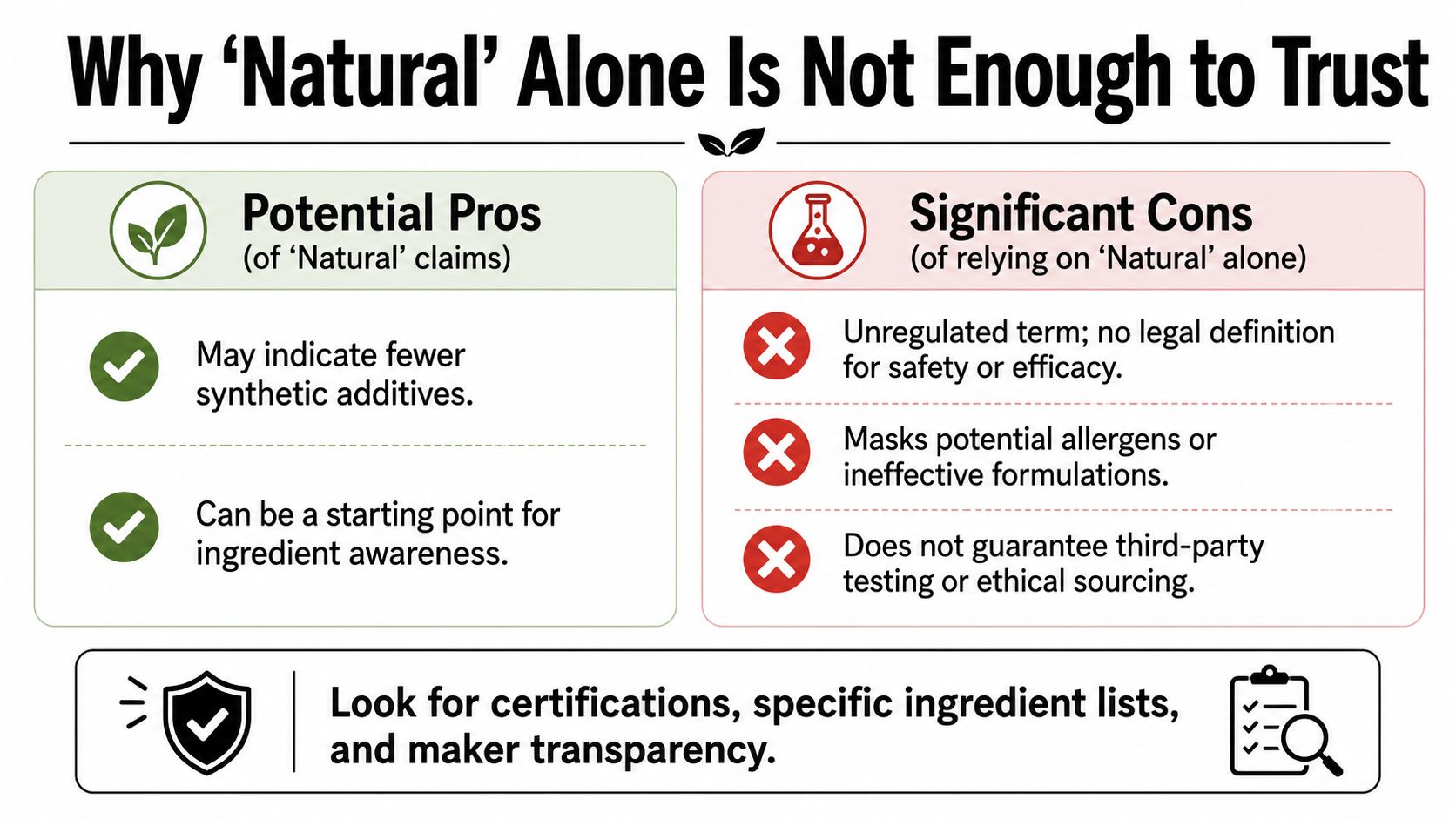
McKinsey's research is a good reality check here. It found that roughly half of U.S. and U.K. consumers prioritize clinical effectiveness as a top purchasing factor, while only about 20% prioritize natural or clean ingredients in the same way (McKinsey). That doesn't mean ingredients don't matter. It means shoppers want proof, not just a comforting story.
What to ask instead
Start with the benefit. What, exactly, is this product meant to do? Then look for the dosage or formula detail that supports that claim. If the answer is vague, the product is leaning on mood instead of evidence.
Next, ask what standards govern the product. FDA's general wellness product category exists for low-risk items that are meant to support a healthy lifestyle, but once a label starts sounding like diagnosis or treatment, the compliance burden changes (FDA). That's why careful wording matters so much in wellness.
Why this matters for specific products
The same filter helps when you're buying for pets. A product like cat gut health treats may sound appealing on its face, but the important question is whether the maker explains the formula, the use case, and the quality signals clearly enough for you to trust it. That's true for cats, and it's true for humans.
Natural can be a starting point. It should never be the finish line.
How Local Wellness Makers Can Stand Out to Buyers
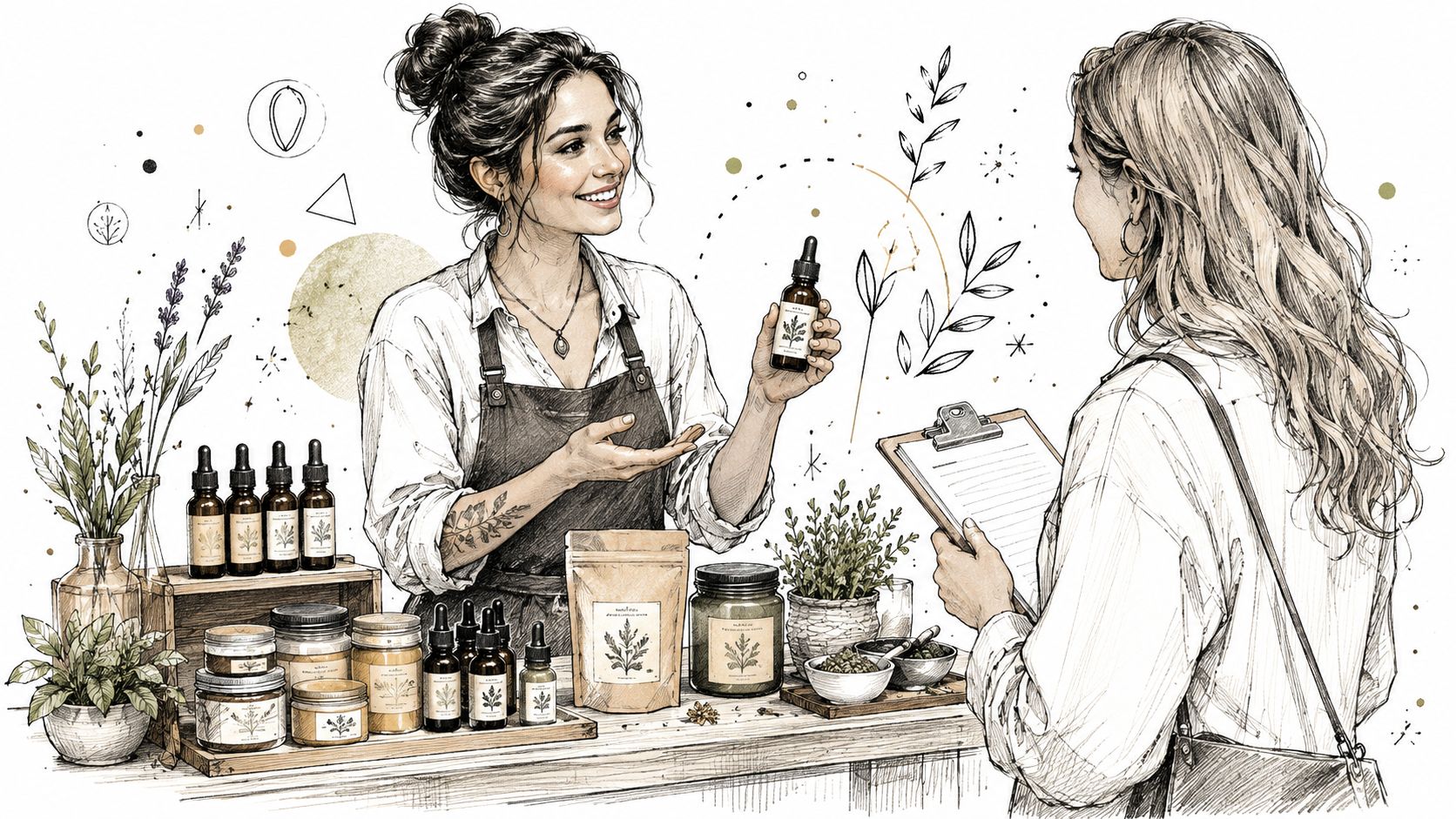
If you make wellness products, the fastest way to get overlooked is to lead with pretty photos and hope buyers do the decoding for you. People shopping this category want proof, clarity, and a clean way to compare your product to the next one. Give them that, and you make the decision easier.
Lead with the facts buyers search for
Your listing should open with the details that matter most, like sourcing region, freshness window, dosage, certifications, and how the product is meant to be used. Don't bury that under a lifestyle paragraph. Buyers who care about wellness are comparing labels, not just mood.
A useful model is to make the first two lines answer, what is it, who is it for, and why should someone trust it?
Price with transparency
Show the cost in a way that helps people compare. Per-serving and per-ounce pricing make more sense than a single headline number, especially for food, drinks, supplements, and body care. If someone can't tell whether your format is worth it, they'll move on.
That same clarity helps with regular delivery and reorder behavior, because people buy again when they can remember what they paid for and why they liked it.
Use your story without making it the whole pitch
A short maker story can build trust, but it shouldn't replace product detail. One paragraph is enough if it explains why the formula exists and what problem you were solving. Anything longer starts to feel like filler.
Buyers don't need a memoir. They need a reason to believe the product works and a way to contact the person behind it.
Make response time part of the trust signal
If shoppers ask a question, answer quickly and directly. That matters more than polished branding. It tells people there's a real human on the other side who can help them choose.
For sellers trying to grow local demand, the CPG retail growth marketing list is a useful reminder that discovery works better when product pages and outreach are built around specific buyer questions, not generic hype. Loyaltie's Sell on Loyaltie path follows that same logic, because it handles checkout and buyer flow while you focus on making and listing the product.
Your Next Steps Toward Better Local Wellness Shopping
The simplest way to think about local wellness products is this. They're a quality upgrade when they give you fresher ingredients, clearer sourcing, and a direct line to the maker who stands behind the formula. That's true whether you're buying a supplement, a skincare product, a juice shot, or a pantry staple.
You now have the three things that make shopping easier. You know what counts as local, you've got a quick checklist, and you know which claims deserve more skepticism. That's enough to make better calls without turning every purchase into homework.
For shoppers, the next move is to browse independent brands in one place and compare the details that matter. For makers, the next move is to show those details plainly so buyers can trust what they're getting. A stronger wellness market starts when both sides make the product easier to understand.
If you want a simpler way to find independent wellness makers, browse Loyaltie and compare products by the details that matter, like ingredients, sourcing, and direct-from-maker trust. It's a practical way to discover local brands across wellness categories and buy without the usual middleman.