
You're standing in front of a wall of tubs, bottles, powders, and capsules. Every label promises cleaner energy, better recovery, sharper focus, or a healthier gut. The ingredients look familiar, the packaging looks convincing, and somehow you're still no closer to knowing what belongs in your basket.
That's where a good local supplement shop earns its floor space. It shouldn't be a warehouse with music and aggressive upselling. It should act as a quality filter, narrowing the shelf to products someone has examined, questioned, and chosen to carry. The best shops help you find independent brands and local makers you'd probably miss online, then give you a real person to ask when the label gets murky.
The catch is that not every shop does this well. You need to know how to spot the difference.
Table of Contents
Why Walk Into a Supplement Shop at All
A local supplement shop is useful when it reduces guesswork. If the staff points you toward the product with the brightest label, you haven't gained much over a big-box aisle. If they can explain why one magnesium product is easier to compare, where a brand's testing information lives, and which ingredients might not fit your routine, the visit has practical value.
Start by treating the shop as a curated research shortcut. A serious retailer has already made decisions about which suppliers to contact, which labels to reject, which testing documents to request, and which brands deserve another order. You still need to check the evidence, but you don't have to begin with every supplement on the internet.
That matters because physical retail remains a major part of the category. One industry estimate places the U.S. nutritional supplements market at $112.6 billion in 2024, with brick-and-mortar stores holding 58.2% of the market that year, according to Grand View Research's U.S. nutritional supplements market analysis. A shop can't win by pretending online shopping doesn't exist. It wins by offering judgment, context, and a smaller set of products worth examining.
Use the visit as a three-step filter
Ask what the shop refuses to stock. A retailer with standards should be able to discuss ingredients, formulations, or brands it has rejected. “We only carry what sells” tells you the shop is optimizing for turnover, not necessarily quality.
Ask how staff compare similar products. You want an explanation based on dose, form, testing, and intended use. You don't need a dramatic promise. You need someone who can tell you why two products with the same front-label ingredient aren't equivalent.
Ask what happens after the sale. Good advice includes follow-up. Staff should be willing to discuss whether a product fits your routine, whether you should stop using it if you experience a problem, and where to report concerns.
Practical rule: If a shop can't explain why a product is on the shelf, don't assume the shelf has done the vetting for you.
The right store saves research time, introduces you to independent brands, and gives you a conversation that a search result can't provide. The rest comes down to learning how to read the evidence yourself.
How Local Supplement Shops Got Here
The specialty supplement model has been around longer than the current flood of wellness packaging suggests. The Vitamin Shoppe opened its first New York City store in 1977, then expanded into mail-order catalog sales by 1981, according to the company's documented history. That early shift from one physical location to multiple buying channels is familiar today, but it shows that supplement retail has always depended on more than a storefront.
By 1998, the company's annual sales had reached $132 million, the same history records. The lesson for an independent shop isn't that every retailer should chase national scale. It's that a focused category can grow when shoppers return for replenishment, trust the selection, and believe the person behind the counter understands the products.
Earlier specialty stores often served people who wanted targeted help with training, nutrition, or natural wellness. Over time, supplement retail became more approachable, moving beyond a narrow bodybuilding audience and into everyday routines involving energy, sleep, digestion, recovery, and general nutrition. The strongest independent shops kept the useful part of that specialist model, conversation and product knowledge, while leaving behind the intimidating atmosphere.
Why the shop model still works
The shelf has become more complicated, not less. Brands now compete on ingredient forms, sourcing stories, testing seals, branded raw materials, and elaborate claims. A retailer that narrows those choices can make the buying decision easier, provided it shows how the narrowing happened.
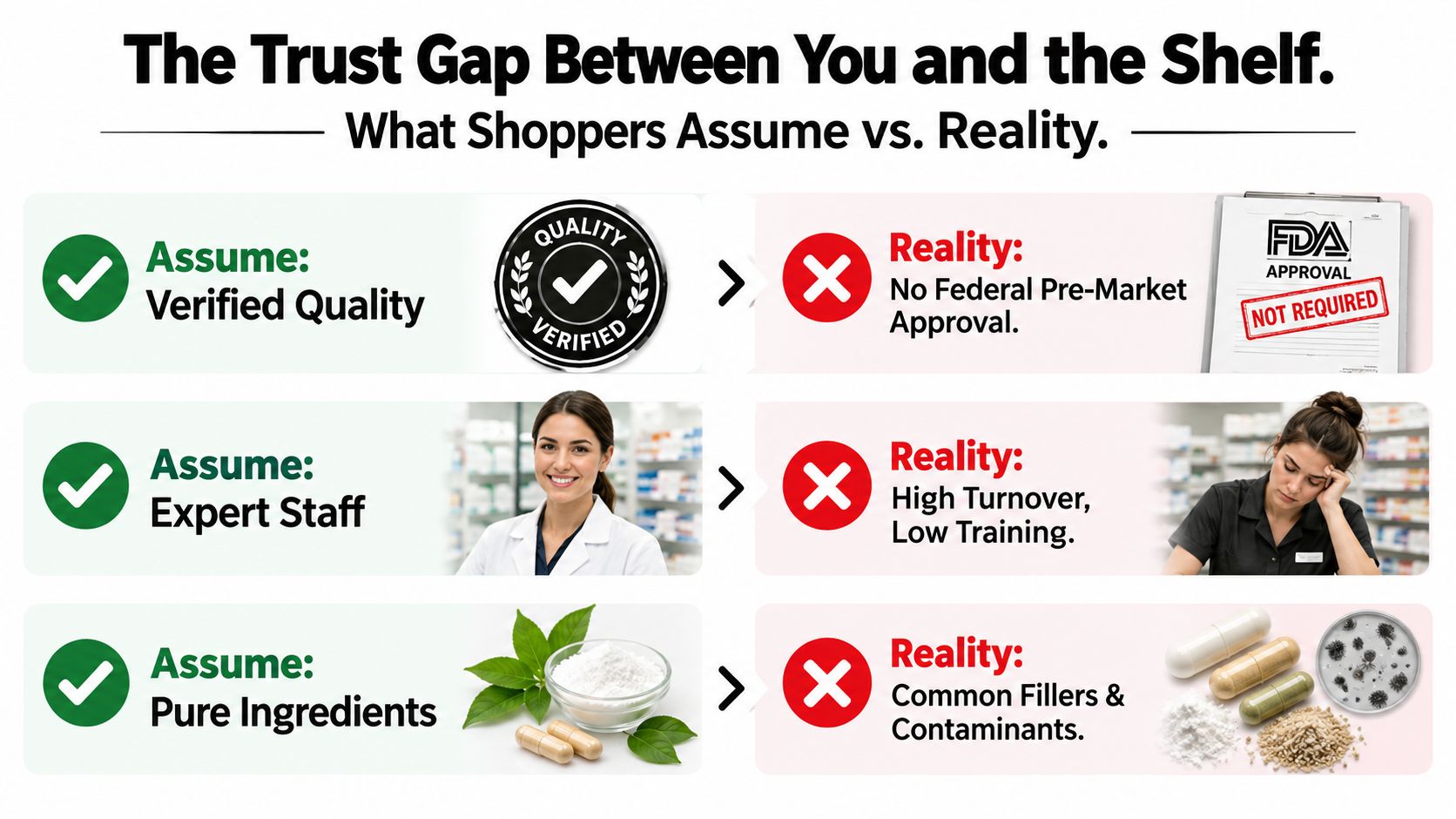
The expectation for verification has also moved closer to the point of sale. NSF reports that 97% of Americans believe retailers should inspect supplement manufacturing facilities, while nearly 85% expect retailers to test supplements for safety. Yet only 32% believe retailers do this, creating a clear gap between what shoppers expect and what they think stores deliver, as outlined in NSF's industry brief on supplement trust.
That gap is the opening for local shops. A retailer doesn't need an enormous assortment. It needs a defensible one, with staff who can explain supplier checks, certificates, and product differences without hiding behind marketing language.
The Trust Gap Between You and the Shelf
Most shoppers make a reasonable assumption: if a product is displayed in a specialist store, someone at that store has checked it carefully. Sometimes that's true. Sometimes the store has accepted a distributor's catalog and placed the fastest-moving products near the register.
Manufacturing standards and product-level verification aren't identical. A supplier may operate under good manufacturing practices, while a shopper still needs to know whether the finished product matches its label, whether the relevant batch has documentation, and whether the brand has a process for handling changes. Retailers that review supplier records, certificates of analysis, and independent testing create a stronger chain of evidence than retailers that rely on packaging alone.
The trust gap is visible in consumer expectations. 62% of consumers say independent certification would increase their trust, and 61% want products made in GMP-inspected facilities, according to the NSF brief linked above. Those figures don't prove that every certified product is right for you. They do show why a shop should be ready to explain what its verification process means.
Read the shelf for signs of effort
Look for evidence that someone has maintained the assortment rather than merely filled it.
- Testing information: The brand should make it reasonably clear what was tested, by whom, and whether the documentation relates to a specific batch.
- Current packaging: Damaged seals, faded labels, dust, or products sitting beyond their useful date suggest weak inventory control.
- Transparent formulas: A label that hides every amount inside a proprietary blend gives you less information than a label listing each active ingredient and its dose.
- Staff fluency: Ask a simple question about the difference between two similar products. A good answer should mention formulation, dose, or testing, not just the louder claim.
- Supplier accountability: The shop should know who supplies the product and how it handles a reformulation or quality concern.
The questions you ask matter more than the confidence of the answer. Try these:
- Who tests this finished product?
- Can I see the certificate of analysis for this batch?
- Does the batch number on this bottle match the certificate?
- What changed in the latest reformulation?
- Which ingredients or brands does this shop exclude, and why?
You may also want a focused guide when the product carries a higher personal-stakes claim. For example, shoppers comparing prenatal products can use this resource on how to verify prenatal supplement claims before relying on a retailer's recommendation.
A retailer won't always have every document at the counter. That's acceptable if the staff can tell you how to obtain it and follows up. Evasion is the problem, especially when a shop presents itself as an expert.
Reading Labels Like Someone Who Actually Knows
The front of the container is advertising. The Supplement Facts panel is evidence.
Start with the serving size. A product may look inexpensive or concentrated until you notice that its suggested serving requires several capsules or scoops. Then check the amount of each active ingredient per serving, not the amount of the entire blend. Finally, read the “other ingredients” line. You'll find capsule materials, flavors, sweeteners, flow agents, and fillers there, the kind the front label leaves out.
A magnesium glycinate product should tell you how much magnesium it provides and identify the form clearly. A generic magnesium product that lists several forms without meaningful amounts is harder to evaluate. Magnesium oxide isn't automatically useless, but it shouldn't be presented as interchangeable with every other form just because both labels say “magnesium.”
Seals, certificates, and hidden doses
Third-party marks can be helpful when you know what they represent. NSF Certified for Sport, USP, and Informed Sport are recognizable examples of verification programs, but the mark should be traceable. Look for the certifier's searchable directory, confirm that the exact product appears there, and check whether the packaging and product name match.
A certificate of analysis should identify the product, the tested batch, the testing laboratory, the test date, and the results or specifications being assessed. A generic PDF with no batch reference is less useful than a document tied to the bottle in your hand. If a brand publishes certificates, check whether the documents are current and whether the batch number is easy to match.
For a broader refresher on serving sizes and label math, this guide to reading nutrition labels for macros is useful. Supplement labels require a different panel, but the same discipline applies: ignore the loud promise until you understand the quantity.
| Signal on the Label | What It Actually Means | Trust Level |
|---|---|---|
| Clearly listed active doses | You can compare the formula instead of guessing | Strong |
| Batch-linked certificate of analysis | Testing documentation connects to a specific product run | Strong |
| Recognized third-party certification with a searchable listing | An outside program has assessed the product under its own standard | Strong, verify the listing |
| Proprietary blend with no individual amounts | You can't tell how much of each active ingredient you're getting | Weak |
| Vague herb ratio or “complex” language | The formula may conceal the actual composition | Weak |
| Long filler list dominated by rice flour or similar agents | The product contains added inactive material that may not be necessary for your use | Question closely |
| Front label built around dramatic claims | Marketing is doing more work than the facts panel | Low until verified |
A useful shortcut takes less than a minute. Find the serving size, identify the active dose, scan the other ingredients, locate a verifiable testing mark, and search for the batch certificate. If any of those steps ends in a vague answer, put the product back and compare another one. You can also browse a maker's own storefront, such as The Functionallyfe, while checking whether its product pages provide enough information to support a fair comparison.
Finding the Right Shop Near You
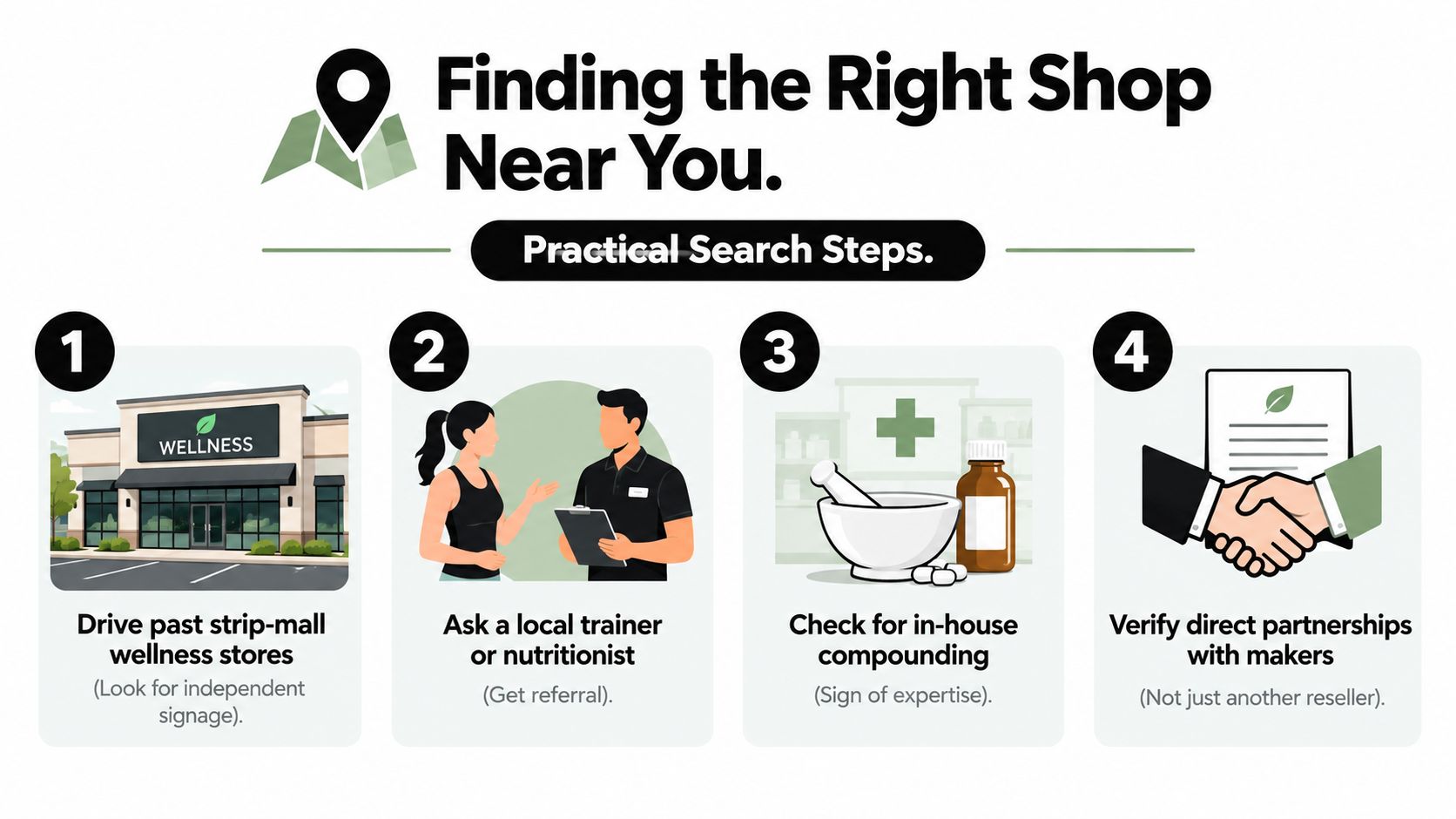
Search broadly first, then vet narrowly. “Vitamin store near me” will return chains, pharmacies, gyms, and shops with a single shelf of products. Try more specific searches such as “independent supplement shop,” “natural wellness store,” “third-party tested supplements,” or “local herbal shop” combined with your neighborhood.
Old-fashioned discovery still works. Ask a trainer, dietitian, physical therapist, or running-club organizer which shop they trust, then ask what they personally buy there. Walk through co-op grocery stores and independent markets, where local makers often leave samples, cards, or wholesale lists. A recommendation is only a lead, not proof, so use it to start your own check.
Vet the shop before you drive
Open the shop's Google Maps profile, then inspect its website and social accounts. You're looking for staff picks with explanations, maker spotlights, product education, and signs that the team knows what it carries. A feed filled only with discounts and posed product shots tells you less than a simple post explaining why one ingredient form replaced another.
Yelp can help you identify independent retailers, but read reviews for substance. “Friendly staff” is pleasant. “They showed me the batch documentation and explained why they didn't recommend the stronger blend” is useful.
Instagram geotags are especially good for finding local makers who may sell through a shop before they show up in general search results. Look for store-branded products, branded tote bags, local events, and direct relationships with the makers behind the products. Those signs suggest the shop is part of a local product network rather than another anonymous reseller.
A yoga studio with a supplement shelf can be convenient, but it isn't automatically a specialist retailer. A dedicated shop should have enough range and staff attention to compare products, answer questions, and explain its standards.
A shop is worth the trip when its selection feels edited, its staff can explain the edit, and its products have evidence behind them.
Use this five-point check before you go:
- Independent identity: The store has a clear local presence rather than generic chain branding.
- Visible expertise: Staff recommendations include reasons, not just product names.
- Verified brands: The shop carries products with accessible testing or certification information.
- Direct relationships: The team can identify the makers or suppliers behind its core products.
- Useful follow-up: The store has a clear return process and responds to product questions.
If you're comparing cannabidiol products, don't rely on a shelf label alone. Use a guide that helps you compare CBD products for safety and bring those questions into the shop. For another example of an independent range to inspect, you can review RSL Herbal Blends as part of the same label-first process.
When Buying Direct From the Maker Makes Sense
A good local shop gives you curation and conversation. Buying directly from the maker can add a shorter trust chain.
Independent brands often have closer contact with their production partners and customers. That can make it easier to ask about sourcing, packaging changes, batch documentation, and the reason a formula contains a particular ingredient. You may also find a narrower product line, which is helpful when a maker has built its identity around doing a few things carefully rather than copying every category on the shelf.
The farmer's market comparison is useful here. A grocery store may offer convenience and broad selection. At a farmer's market, you can ask who grew the product, when it was harvested, and how it was handled. Buying direct from an independent supplement maker creates a similar opportunity to ask better questions, though the product still needs the same label and testing scrutiny.
The trade-offs are real
Buying direct isn't automatically better. You may lose face-to-face advice, wait for delivery, or encounter minimum order requirements. A maker may know its formula inside out but have less ability to compare it with competing products. A local shop can be the better choice when you need help choosing between forms, when you want the product immediately, or when you value a conversation before purchasing.
Direct buying makes the most sense when the maker offers:
- Accessible documentation: Current batch information and a clear way to request supporting records.
- Responsive communication: A real answer to questions about ingredients, testing, and reformulation.
- Straightforward policies: Returns, damaged deliveries, and product concerns are explained before checkout.
- A focused formula: The product has a clear purpose instead of a kitchen-sink ingredient list.
- A sensible refill path: You can reorder without being pushed into a larger purchase than you need.
A direct-to-consumer marketplace can combine some of the shop's curation with the convenience of online buying. Loyaltie is one marketplace where shoppers discover and buy directly from independent brands in the United States, including wellness makers such as Thryve Systems. You should still evaluate each product on its own evidence. A marketplace can improve discovery, but it doesn't replace your judgment.
The strongest approach is flexible. Use a local shop when expertise and immediate comparison matter. Buy directly when the maker is transparent, responsive, and clear about what you're getting.
A Simple Buy-Direct Playbook
Your next reorder shouldn't begin with the biggest tub or the most expensive-looking label. Run the same checks every time, whether you found the product at a neighborhood retailer, through a maker's website, or on a marketplace.
Four checks before checkout
First, confirm the certificate. Find the maker's current certificate of analysis and check that it identifies the product and batch you're considering. If the COA is older than 18 months, pass. A dated document may still describe a legitimate product, but it doesn't give you current evidence for a new purchase.
Second, cross-check third-party verification. Search the product in the relevant directory for USP, NSF, or Labdoor where applicable. If the brand is missing, ask why. Absence isn't automatic proof of a problem, but a transparent maker should be able to explain its testing choices without becoming defensive.
Third, compare the per-serving price. Don't compare bottle prices when one bottle contains fewer servings or requires more capsules per day. If direct pricing undercuts retail by less than 10%, factor in the advice you received at the shop. A useful conversation has value, especially when it helped you avoid the wrong form or an unnecessary purchase.
Fourth, place a small first order. Check the return policy before buying. If returns are final-sale, stick to a single bottle. That keeps a disappointing formula from turning into a drawer full of expensive capsules.
For readers evaluating a botanical option, Herbal Metabolic Support Supplement, Organic Botanical Blend, Appetite & Craving Control, Capsules, 30-Day Supply | Sea Moss Me Now by Loyaltie is described as an organic herbal blend designed to support appetite, cravings, and steady energy as part of a healthy routine. Treat that description as a starting point for checking the full label, testing information, and fit with your needs, not as a substitute for those checks.
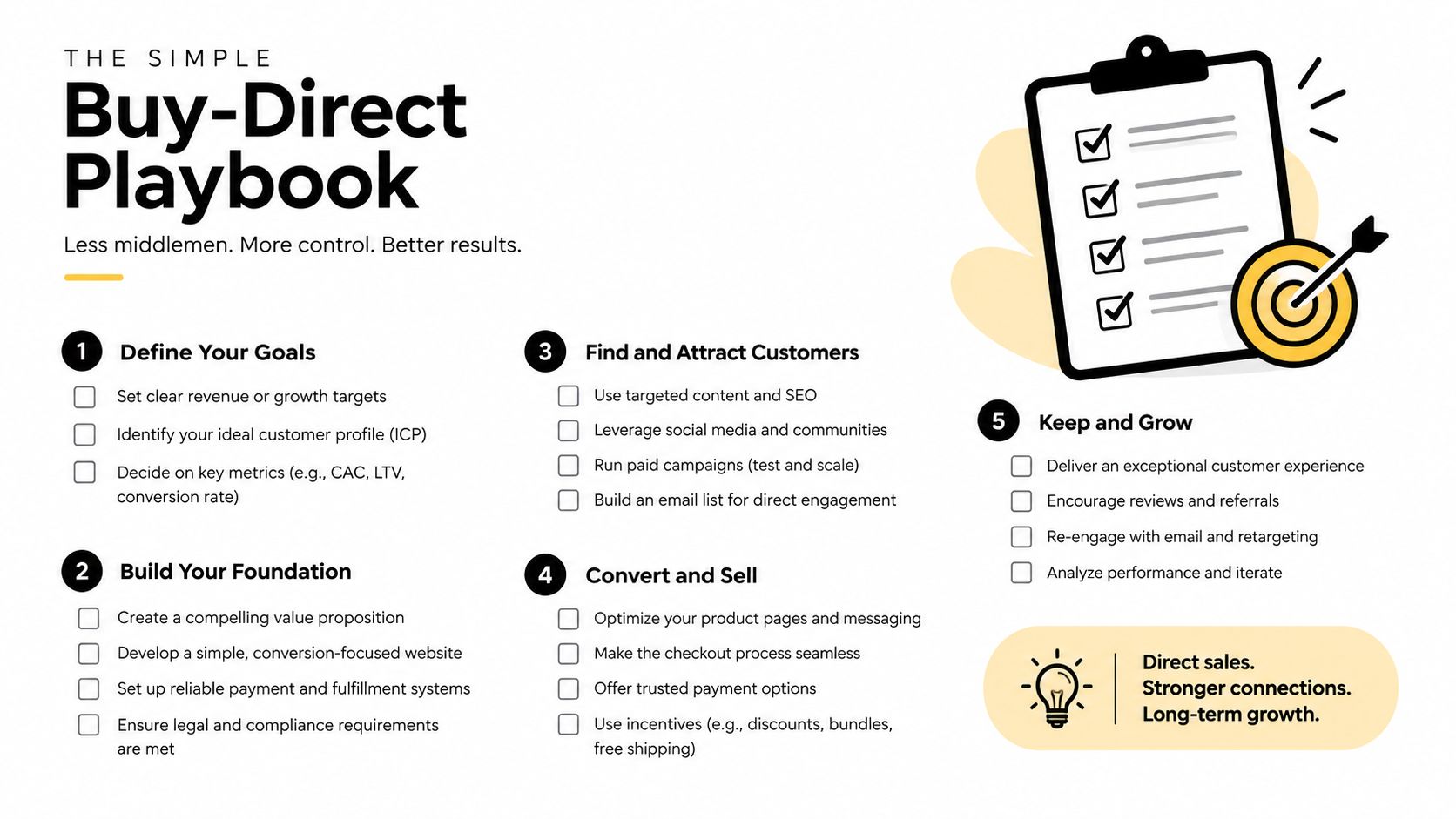
The point isn't to find the cheapest tub. It's to remove guesswork from every refill. A vetted local maker, a careful shop, or a transparent online storefront can all help, but only when you keep asking the same basic question: what evidence connects this label to the product in my hand?
Loyaltie gives you a way to discover and buy directly from independent brands across the US, including makers in wellness and everyday product categories. Visit Loyaltie to find products from real makers, then use the label and testing checks in this guide before your next purchase.