You open your delivery app, type in what sounds good, and somehow end up staring at the same burgers, bowls, and chain spots again. The photos blur together. The bundle deals start nudging you toward food you didn't even want. You close the app feeling bored, then reopen it because dinner still has to happen.
That loop gets old fast.
A better option is often overlooked. A local food delivery service can mean baked goods from a neighborhood maker, coffee roasted nearby, pantry staples prepared by a real person in your area, or meals that feel like someone cared when they made them. It's less like scrolling a giant vending machine and more like finding the people in your community who make food worth looking forward to.
Table of Contents
- What belongs in this category
- This is already a mainstream shopping habit
- What makes it different from the big platforms
- Comparing Local Delivery Models
- Marketplace platforms for discovery
- Regular delivery plans for the things you always reorder
- Buying on the maker's own website
- Local pickup hubs as the middle ground
- The unhealthy food trap is real
- Better food usually starts with better incentives
- You regain some control
- Start with specific search terms
- Use a shortlist, not endless scrolling
- Try one marketplace that centers independent brands
- Look beyond your city for ideas
- A simple first move
Why Your Next Meal Should Come from a Local Maker
A lot of people hit the same point. You want convenience, but you don't want another forgettable meal that tastes like it was built for an algorithm instead of a person. That's usually when local delivery starts to make sense.

When app fatigue turns into better taste
Think about the last time something delivered actually surprised you in a good way. Maybe it was bread that still felt fresh, soup that tasted homemade, or muffins that didn't feel factory-designed. That's the shift. You stop shopping for “whatever's available” and start looking for food made by people with a point of view.
A local maker gives you more than proximity. You get recipes with personality, ingredients chosen on purpose, and a stronger sense of where your food came from. That's why local delivery doesn't feel like settling. It feels like upgrading.
If you want a simple example, browse something like Blueberry Muffins from Kimskreations. It captures the appeal in one click. You're not ordering from a giant menu engineered to keep you scrolling. You're buying directly from the maker.
You don't have to become a food detective. You just have to stop assuming the big apps show you the best local options.
More shoppers already think this way
This isn't some tiny niche. 70% of Gen Z and 69% of Millennials in the U.S. are willing to shop locally more often, according to Finance & Commerce coverage of the survey findings.
That matters because it shows local makers aren't an afterthought. More people want direct access to independent brands because the products often feel more distinct, more personal, and better than mass-produced alternatives.
A good local food delivery service meets you right where you are. You still get convenience. You still get delivery. You just stop treating convenience as a reason to accept bland choices.
What Is a Local Food Delivery Service Anyway
The easiest way to think about it is this. A local food delivery service is like a farmer's market brought to your door.
It's not just nearby takeout listed on a giant app. It's a more direct path between you and the person who grows, bakes, blends, roasts, or prepares what you're buying. Sometimes that means ready-to-eat meals. Sometimes it means coffee beans, bakery boxes, tea, produce, sauces, broths, snack packs, or pantry items you reorder because they're that good.
What belongs in this category
Some shoppers get tripped up here because they hear “food delivery” and think only of restaurant meals. Local delivery is wider than that.
It can include:
- Fresh prepared food: Meals, soups, salads, breads, and baked goods from neighborhood kitchens and makers.
- Pantry favorites: Honey, spice blends, sauces, gluten-free mixes, jams, and snacks you keep around all week.
- Drink staples: Coffee from a nearby roaster, tea blends, juices, or smoothie packs dropped at your door.
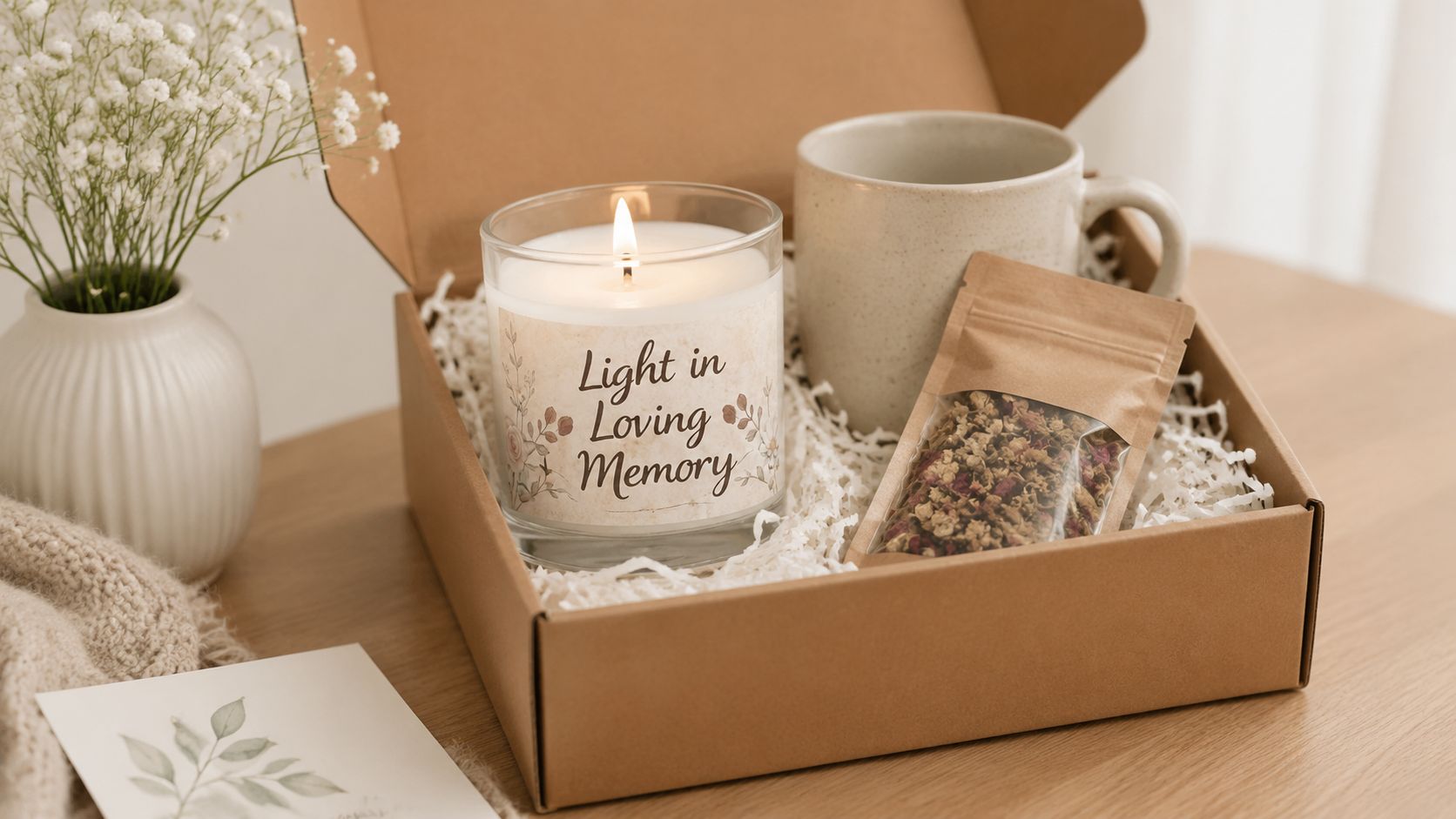
- Comfort and care items: Food-adjacent gifts that people send during hard moments, like Sympathy Gift Box, Candle & Soothing Tea, Keepsake Comfort Gift, Bereavement Condolence Care Package, 1 Box | Glowsip by Loyaltie, which pairs a calming candle with soothing tea and a keepsake for someone who needs quiet comfort.
That last category matters because local delivery isn't only about dinner. It's also about getting thoughtful, useful goods from real makers without a middleman.
This is already a mainstream shopping habit
If buying direct sounds like a hobby for only very tuned-in shoppers, the retail picture says otherwise. American shoppers spent an estimated $3.73 trillion at local stores in 2024, representing 51.3% of all retail sales, according to Capital One Shopping's local shopping statistics.
So the mental model needs an update. Buying directly from independent brands isn't fringe behavior. It's part of how people already shop across the U.S.
Quick test: If you'd rather buy coffee from the roaster than from a random shelf, or bread from the baker than from a giant frozen supply chain, you already understand the appeal.
What makes it different from the big platforms
Big apps are built around endless choice, quick comparison, and convenience at scale. Local delivery is built around connection, curation, and food that has a maker behind it.
That difference changes how you shop. You're less likely to bounce between generic listings and more likely to find products you remember. The goal isn't just speed. It's getting something you want again.
Four Ways You Can Buy Directly from Makers
Not every shopper wants the same setup. Some people want one checkout with several makers. Others want to reorder a favorite coffee or stock the freezer in one shot. A local food delivery service can fit all of those habits.
Comparing Local Delivery Models
| Model | Best For | What to Expect |
|---|---|---|
| Marketplace platforms | Shoppers who want discovery and convenience together | You can browse multiple independent brands in one place and compare options without hopping across lots of sites |
| Regular delivery plans | People who keep running out of the same staples | You pick favorites once, then set a schedule for coffee, baked goods, pantry items, or prepared foods |
| Brand-owned websites | Buyers who already know exactly who they love | You buy directly from the maker with the closest connection to their full catalog and story |
| Local pickup hubs | Anyone who wants flexibility without waiting at home | You order ahead, then collect from a shared community pickup point or designated location |
Marketplace platforms for discovery
This model works well if you're still figuring out your taste. Maybe you want local granola, soup, baked treats, and coffee, but you don't want to search all over the internet to piece it together.
A marketplace can help you discover and buy directly from the maker while keeping the shopping process simple. If you want to see that model in action, My S Fresh Smoothies on Loyaltie is one example of how shoppers can find a maker without going through a giant delivery app.
This route is often the least stressful for beginners because it combines browsing with a cleaner path to checkout.
Regular delivery plans for the things you always reorder
Some foods aren't impulse buys. They're routine buys. Coffee, breakfast items, smoothie packs, broth, and pantry basics usually fall into that category.
A regular delivery plan makes sense when you've already found something you trust. Instead of remembering to reorder after you run out, you set the rhythm ahead of time. That's especially useful if your mornings are chaotic or if you want fewer last-minute grocery gaps.
Practical rule: Put only true staples on a plan. If you're still “trying it out,” buy it manually first.
Buying on the maker's own website
This is the closest version of buying straight from the source. You go to the maker's own site, read their ingredients, understand their style, and place the order there.
The upside is clarity. You get the most direct relationship and usually the clearest sense of what the maker specializes in. The tradeoff is that discovery takes more work because you're often finding each brand one by one.
This model is ideal when you already know what you want. It's less ideal when you're browsing broadly and feeling undecided.
Local pickup hubs as the middle ground
Not everyone needs home drop-off every time. Some shoppers like the convenience of ordering ahead but prefer to pick up on their own schedule.
A local pickup hub can split the difference. You still buy from real local makers, but instead of waiting for delivery, you collect your order from a pickup point. That can work well for bread, produce boxes, and larger pantry orders.
Here's a quick way to choose:
- Want variety fast: Use a marketplace.
- Have staple favorites: Put them on a regular delivery rhythm.
- Know the exact maker you trust: Buy on their own site.
- Prefer control over timing: Choose pickup.
No single model is “right.” The right one is the one that fits how you eat.
The Real Benefits of Skipping the Big Apps
The biggest reason to skip the giant delivery apps isn't ideology. It's that they often steer you toward food that doesn't line up with how you want to feel.
The unhealthy food trap is real
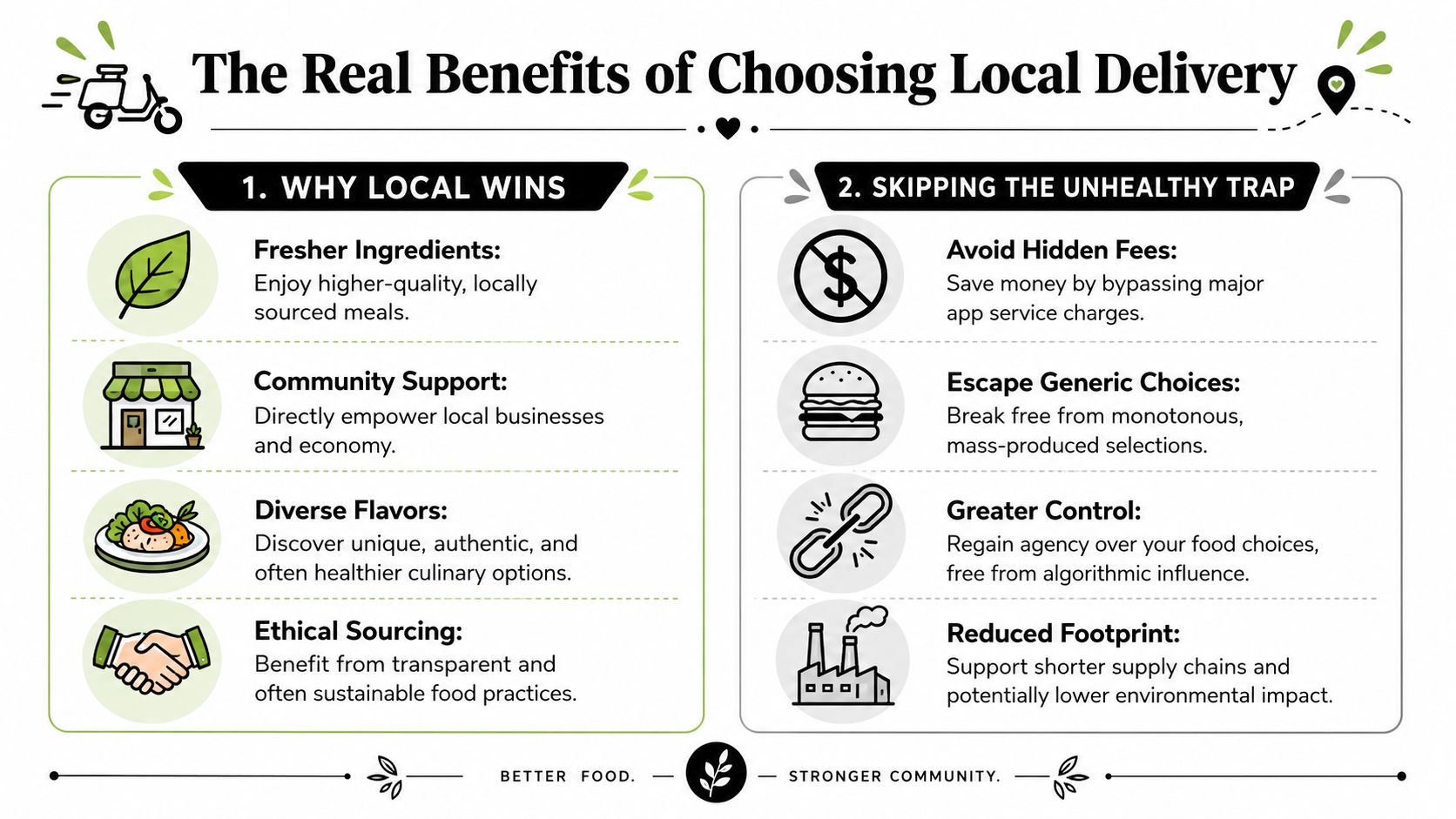
Research shows that meal delivery applications predominantly promote unhealthy fast foods through value bundles and high visibility, and local delivery services are emerging as better alternatives by supporting healthier, locally sourced meals, as discussed in this PMC research article on meal delivery apps and healthier local alternatives.
If that matches your own experience, you're not imagining it. The app isn't neutral. It often highlights what gets clicks fast. That can leave you choosing between the same oversized combo meals again and again, even when what you wanted was something fresher and lighter.
When you buy directly from makers, the decision feels different. You're not fighting a feed designed to push the most visible bundle. You're choosing from a person's actual menu or product line.
Big apps sell convenience first. Direct-from-maker shopping often gives you taste, ingredients, and context at the same time.
Better food usually starts with better incentives
A local maker has a different reason to earn your reorder. They want you to remember the product, not just the speed of the drop-off. That changes the kind of food you encounter.
You're more likely to find seasonal specials, careful ingredient choices, and products with narrower focus. A soup maker can focus on soup. A baker can focus on what they bake well. A local coffee roaster can focus on freshness and roast profile instead of trying to be everything to everyone.
If you're curious how restaurants present food choices more clearly outside the usual app setup, this guide to digital menus for restaurants gives a useful look at how menu design affects what people notice and order.
You regain some control
A lot of shoppers don't realize how much friction disappears once they stop depending on one giant app for every craving. You can slow down just enough to choose food with intention.
That doesn't mean every local option is perfect. It means the shopping environment changes in your favor. You get closer to the source, you see more personality in the products, and you break out of the repetitive menu loop that so many delivery users fall into.
How to Find and Choose the Best Local Options
Finding a good local food delivery service is easier when you stop searching for “delivery” in the broadest possible way and start searching by maker type. The goal is to find people, not platforms.

Start with specific search terms
Instead of searching for “food delivery near me,” try narrower phrases like these:
- By product type: “local coffee roaster delivery [your city]”
- By dietary need: “gluten-free bakery delivery [your city]”
- By routine purchase: “prepared meals delivered by local maker [your city]”
- By pantry item: “hot honey local delivery [your city]”
Those searches tend to surface direct sellers, curated directories, and smaller marketplaces. They also cut down on giant app results.
Use a shortlist, not endless scrolling
Once you find a few options, don't keep browsing forever. Make a shortlist of three and compare them using the same criteria each time.
Here's a simple checklist:
- Delivery area: Does the maker deliver to your neighborhood, or only certain zones?
- Product focus: Are they known for one thing done well, or is the menu too broad to tell?
- Ingredient clarity: Can you tell what's in the product and how it's made?
- Ordering rhythm: Can you reorder easily or buy on a plan if you end up loving it?
- Packaging and handling: Does the food seem packed in a way that matches what you're ordering?
92% of U.S. consumers trust local businesses more than big brands, according to this cited survey summary. That trust usually comes from details you can see. Clear ingredients. A real maker story. A product list that feels focused instead of generic.
Smart filter: If a seller tries to offer every type of food to every type of buyer, keep looking. The strongest local makers usually have a clear specialty.
Try one marketplace that centers independent brands
If you want one place to start, Loyaltie is a marketplace where people discover and buy directly from the best independent brands in the US. That's useful when you want direct-from-maker shopping without doing all the digging yourself.
A practical way to use a marketplace like that is to search for one product you already buy, then compare it against what your usual app or grocery chain offers. You're not trying to rebuild your entire routine overnight. You're testing whether direct access gives you a better option.
A good example is a specialty pantry item or comfort food staple you can judge easily after one order.
Look beyond your city for ideas
Sometimes the best way to sharpen your eye is to see how independent dining scenes are discussed elsewhere. If you like studying what makes a food destination feel distinct, this piece on how to plan unique Manchester dining experiences is a helpful reminder that memorable food usually comes from places and people with a point of view.
That same mindset works at home. You're looking for makers with identity, not just convenience.
Here's a useful visual if you want a quick reset on how local shopping works in practice:
A simple first move
Pick one category this week. Coffee. Bread. Smoothies. Soup. Snacks. Then replace just that one recurring purchase with a local maker option.
That's enough to teach you a lot. You'll notice taste first. Then packaging. Then how much easier it feels to buy from someone whose product line makes sense.
Making Local Delivery a Part of Your Routine
The easiest way to make local delivery stick is to stop treating it like a special occasion. It works better when it becomes part of the way you already shop.
The broader delivery world is huge and concentrated. The U.S. food delivery market was valued at USD 130.28 billion in 2026, and DoorDash captured 67% of sales, according to Market Data Forecast's U.S. food delivery market report. Choosing local delivery is a practical alternative when you want something more personal than the dominant app experience.
Build a simple weekly rhythm
You don't need a complicated system. Just sort your purchases into three buckets.
- Meals for busy days: Keep one or two dependable local prepared food options in mind for nights when cooking won't happen.
- Staples worth reordering: Put coffee, bread, smoothie packs, or pantry favorites on a regular delivery rhythm if you buy them repeatedly.
- Occasional treats: Save room for the fun finds that make local shopping enjoyable, not just efficient.
If meal prep support is what you need most, you can also look at Nourish Meal Delivery as one example of a direct local option to compare with your usual app habits.
Think in value, not just sticker price
People often hesitate because local delivery can feel less familiar. But familiarity and value aren't the same thing. A better-tasting loaf, a cleaner ingredient list, or a meal you finish can be worth more than a cheap add-on that leaves you underwhelmed.
Packaging matters too, especially with hot meals. If you're curious why some delivered food holds up better than others, this article on solving hot food delivery packaging challenges is useful background. It helps explain why thoughtful packaging can change the whole eating experience by the time dinner reaches your door.
Start small and repeat what works. One good local reorder does more for your routine than ten random app orders.
The point isn't to swear off every major platform forever. It's to give more of your food budget to options that feel worth repeating. Once you find two or three local makers you trust, delivery gets easier, not harder.
If you want a clean place to start, Loyaltie makes it simple to discover and buy directly from independent brands across the US, without the usual giant-app shuffle. Start with one swap this week, see what arrives, and let your next reorder come from a real maker.