
You're standing in the supermarket meat department with a package of vacuum-sealed steaks in your hand. It looks perfectly fine, but the label tells you almost nothing about the people who raised the animal, how it was finished, or whether the farm is anywhere near you. You put it in the basket because dinner is tonight, then wonder whether there's a better way to buy beef next time.
There is, but buying from local farmers that sell beef isn't a matter of finding a name and clicking "order." You're dealing with a real farm, a limited supply, a processor's schedule, freezer space, and a person who has to answer your questions. The best direct purchases work because both sides treat them as an ongoing relationship, not an anonymous retail transaction.
Table of Contents
Finding Your First Local Beef Connection
The first time I looked for local beef, I made the classic mistake of searching too broadly. I found farms that sold beef, farms that sold shares, farms that delivered meat, and several pages that used local language while saying very little about where the cattle came from. After half an hour, I had more tabs open and no dinner plan.
Start with one practical question: Can I speak with the person who raises or sources this beef? That question quickly separates a transparent local operation from a brand that only repackages commodity meat. Look for a farm name, a real location, current ordering information, processing details, and a clear way to contact someone.
The United States has a large base of family-scale cattle producers. The USDA's 2022 Census of Agriculture cattle summary counted 534,633 farms specializing in beef, excluding feedlots, representing 28% of all U.S. farms. It also recorded 930,680 cattle operations, with an average beef cow herd of about 47 head. You're not looking for an impossible-to-find niche. You're looking for a trustworthy producer within that broad network.
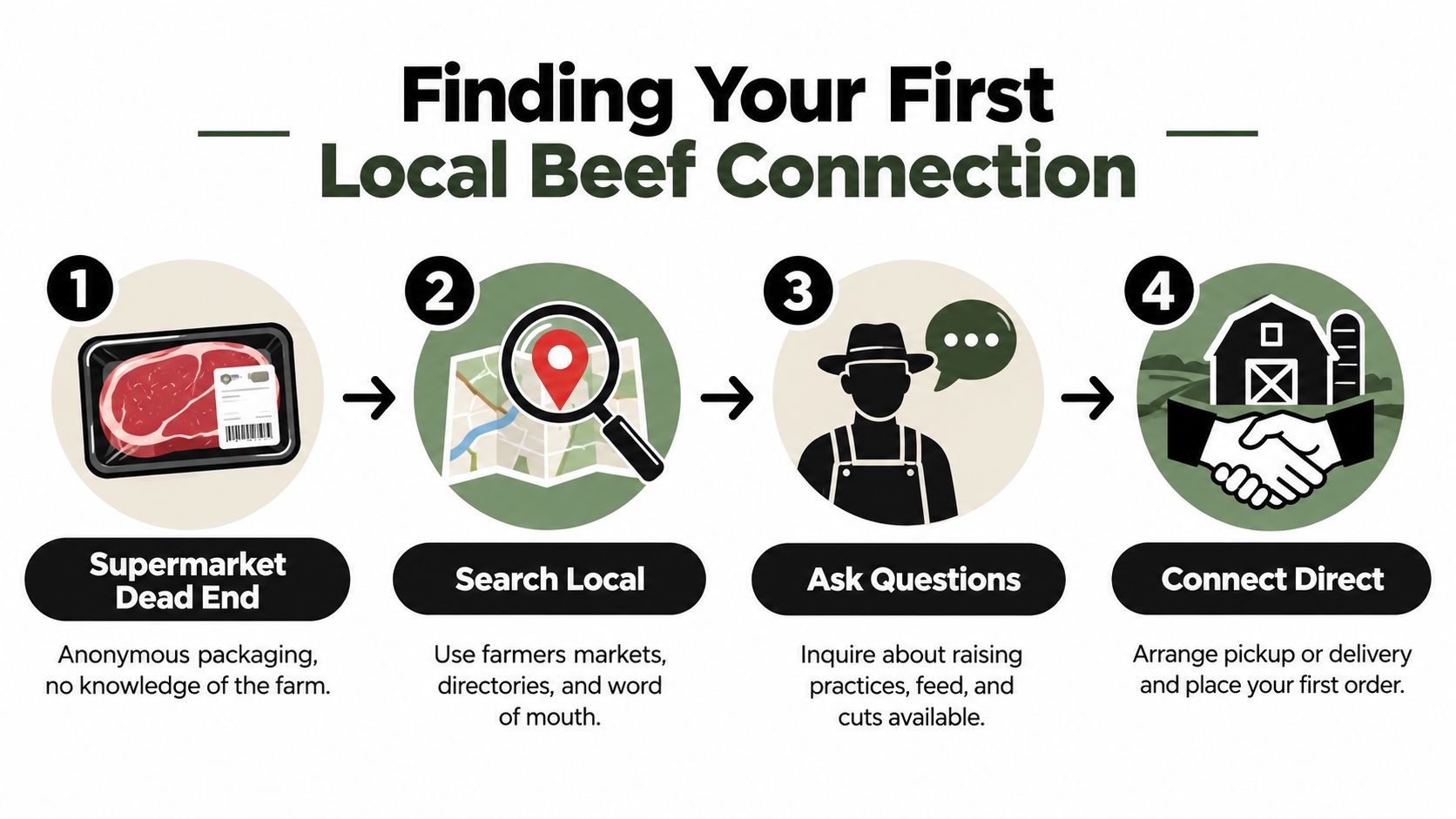
Four useful ways to search
Online directories can give you a starting list, especially if you search by state, county, or delivery area. Read the producer's own page rather than relying on a directory description. You want to know whether they sell individual cuts, quarters, halves, or whole animals.
Farmers markets are better for conversation. A producer who brings beef, eggs, or other farm products may not have every cut available at the stall, but they can explain the next processing date and how orders work. If you're setting up a booth yourself, MODERN LYFE's guide to attracting more buyers with MODERN LYFE offers practical ideas for making a farm stand easier to notice and easier to shop.
Community networks often produce the most useful recommendations. Ask in a neighborhood group or local food community who has bought from a particular farm recently. Don't ask only whether the beef tasted good. Ask whether the farmer communicated clearly, whether pickup was organized, and whether the order matched what buyers expected.
Direct marketplaces can help when you want to discover independent brands and producers across the US without starting from a blank search page. They're useful for comparing product formats and finding sellers who already provide online ordering.
Choose one reliable first connection, not five untested ones. Buy a manageable order, ask thoughtful questions, and see whether the practical side works for your household. The right farmer is not just the closest one. It is the person whose answers, ordering process, and beef fit the way you typically cook.
Understanding What Those Labels Actually Mean
A front label can point you in the right direction, but it can't make the buying decision for you. Grass-fed, grass-finished, pasture-raised, organic, and natural don't automatically describe the same production system, and a familiar phrase may leave important details unanswered.
Start with the exact claim. Under USDA guidance for the grass-fed claim, the animal's diet must come from forage for its entire life after weaning. Milk before weaning is the exception. Forage may include grass, legumes, Brassica, browse, or cereal grain crops while they're still in the vegetative, pre-grain stage. The animal can't be fed grain or grain byproducts and must have continuous access to pasture during the growing season.
That definition gives you something concrete to ask about. “Was this animal grass-finished?” is often more useful than just asking whether it was raised on pasture. You can also ask whether the producer raises the cattle from birth, sources them from another farm, or buys animals with a less complete history.
Ask beyond the front label
The phrase pasture-raised may tell you that an animal had access to pasture, but it doesn't answer how often it grazed there, what else it ate, or how it was finished. Organic involves certification and production requirements, but it doesn't mean the beef automatically followed the same diet as grass-fed beef. Natural is also not a complete description of feed, finishing, or farm management.
Cornell Cooperative Extension highlights an important practical wrinkle. Although USDA defines grass-fed around a lifetime forage diet with no grain or grain byproducts, the term can still be used in ways that include some grain, so shoppers should ask for specifics beyond the label. The Cornell guide to meat claims and definitions is useful reading before you contact a farm.
Ask questions that produce an actual answer:
- Feed: What did the cattle eat after weaning?
- Finishing: Were they finished on pasture, or did they receive grain?
- Source: Were the animals raised on this farm from birth?
- Verification: Is the claim certified, documented, or based on the producer's own description?
- Taste expectations: How does the finishing method affect marbling, flavor, and the cuts you'll receive?
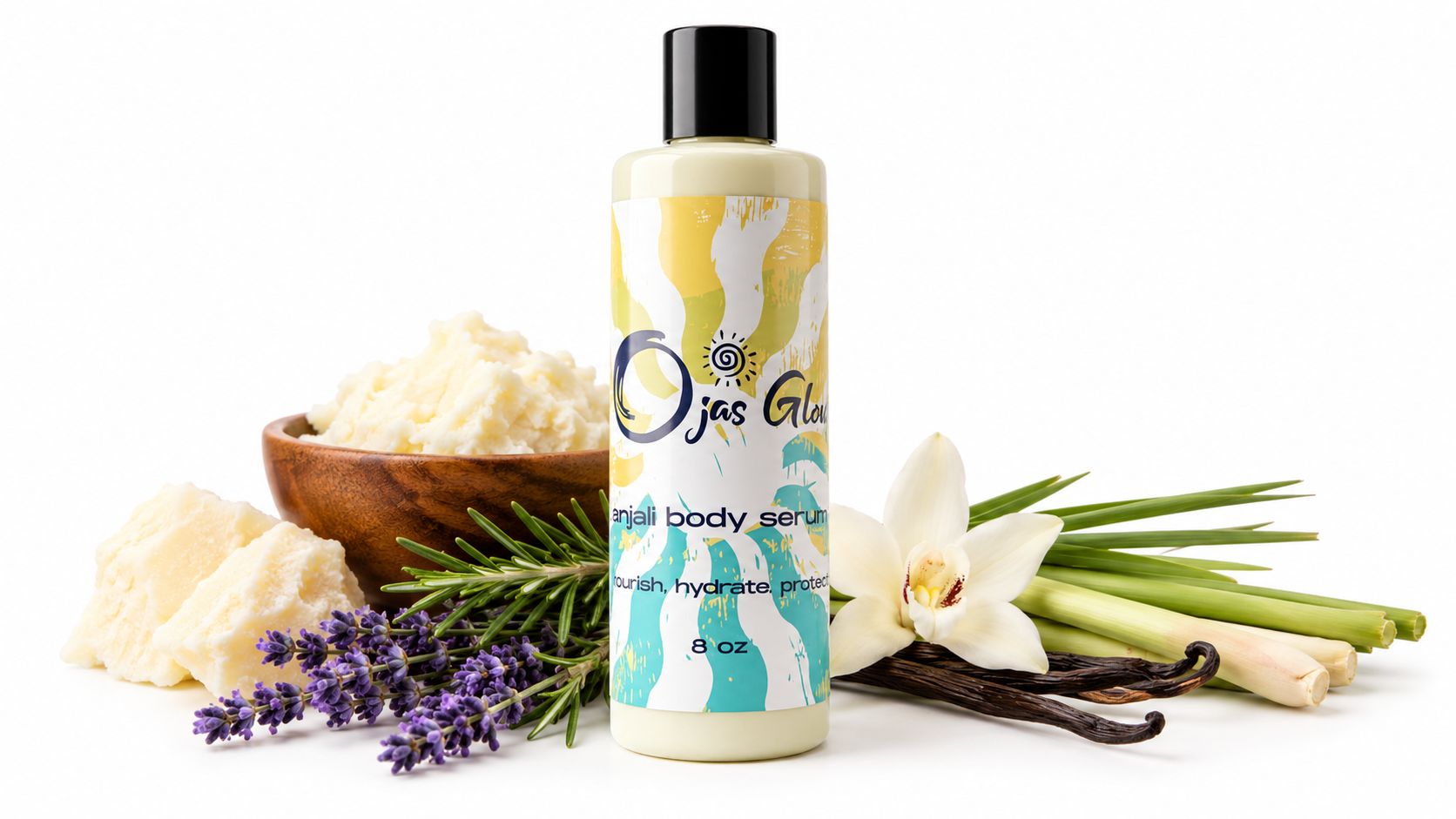
Beef isn't the only place where ingredients and production details matter. If you're interested in using more of the animal, the Tallow Body Serum, Grass-Fed Beef Tallow & Organic Oils, Deep Hydration for Dry Skin, Lavender Rosemary Vanilla Lemongrass | Ojas Glow by Loyaltie is described as a tallow-based body serum made with grass-fed beef tallow and organic mango butter. The point is the same: read the specific ingredients and production language instead of relying on a broad front-of-package impression.
A good farmer won't be offended by precise questions. Clear answers are part of the product.
Choosing Whole, Half, or Quarter Cuts
Buying direct changes the question from “Which steak should I grab?” to “How much of an animal can my household use?” That sounds obvious until you're looking at a cut sheet and realizing you've never thought seriously about how many roasts your freezer can absorb.
A whole beef share offers the widest control over the cut distribution, but it demands the most freezer capacity, cooking flexibility, and coordination. A half gives you variety without requiring you to carry the entire animal yourself. A quarter can be the least intimidating entry point, especially if you're cooking for fewer people or want to test the process before making a larger commitment.
The exact cost and space depend on the producer, region, processing fees, packaging, and whether you're charged by hanging weight, take-home weight, or individual cut. Since those terms vary, treat any fixed internet estimate with suspicion and ask the farmer for a written explanation of what the quoted amount includes.
| Purchase Format | Estimated Cost Range | Freezer Space Needed | Best For |
|---|---|---|---|
| Whole beef | Varies by farm, processor, and pricing method | Substantial dedicated freezer capacity | Large households, shared purchases, and people who cook broadly across the animal |
| Half beef | Varies by farm, processor, and pricing method | Dedicated freezer space with room for mixed cuts | Families wanting variety without managing a whole animal |
| Quarter beef | Varies by farm, processor, and pricing method | Smaller dedicated freezer area, confirmed with the farmer | Couples, smaller households, and first-time buyers |
| Individual cuts | Varies by cut, packaging, and seller | Ordinary freezer space, depending on order size | Buyers who want to learn the producer before committing to a share |
Match the order to your actual meals
Don't choose a share based on the fantasy version of your cooking life. Choose it based on what you already make. If you cook burgers, chili, tacos, and meat sauce every week, ask how much ground beef the order is likely to include and whether you can request a different cut balance. If you rarely make roasts, don't let an impressive list of slow-cooking cuts persuade you that you'll suddenly become a roast enthusiast.
Portioned cuts are common among direct sellers. A Kansas survey found that more than 62% of surveyed producers used portioned cuts rather than whole carcasses, while 69.8% raised only beef and generally produced 1 to 20 head per year. The same survey found 43.9% sold all their beef directly to consumers, while 29.3% sold less than 20% through direct channels. These figures, reported in the Kansas beef producer survey, describe a market where many sellers are working with limited volume and customized customer orders.
Before you place an order, ask for the cut sheet and take a realistic look at your freezer. Leave room for awkwardly shaped packages, label everything by category, and don't stack steaks so tightly that you can't find them later. I've learned that the most expensive cut is the one you forget exists until freezer burn has turned it into a historical artifact.
For a smaller ready-to-eat comparison, a beef jerky bundle with spicy Mexican-inspired flavors illustrates the difference between buying selected portions and committing to a share. It's a packaged option, not a substitute for planning a freezer order, but the contrast helps clarify what convenience means in each format.
Questions to Ask Before You Buy
A producer's answer matters, but the specificity of the answer matters just as much. “We raise good beef” is pleasant to hear and nearly useless for planning. You need details about inspection, feed, packaging, timing, and what happens after you send payment.
Start with food safety and legal status. Ask whether the animal is processed at a USDA-inspected facility or a state-inspected plant, and ask what that means for retail sale, sharing, delivery, and your intended use. Don't assume that “local” means the same thing everywhere. The processor's status can affect how the meat is sold and labeled.
Then ask about the animal itself:
- Finishing method: Was the cattle grass-finished, grain-finished, or managed through another feeding program?
- Animal history: Did the farmer raise it, or was it sourced from elsewhere?
- Quality expectations: Can the producer guarantee a particular quality grade, or are results variable?
- Cut options: Will ground beef arrive in bulk, or in individually wrapped packages?
- Packaging: Is the beef vacuum sealed, paper wrapped, frozen, labeled, and dated?
- Order timing: When will the animal be processed, and when will your order be ready?
- Pickup: Is there a farm pickup window, a market handoff, or delivery?
- Payment: Is a deposit required, and when is the balance due?
Use labels as conversation starters
Cornell Cooperative Extension notes that grass-fed can be used in ways that include cattle fed some grain, even though USDA's definition centers on forage throughout life after weaning. That's why “Is it grass-fed?” is only the first question. Follow it with, “What did the animal eat during finishing?”
The same approach works for terms such as pasture-raised, organic, natural, and regenerative. Ask the producer to describe the practice in plain language. A trustworthy answer may include nuance, limitations, or a distinction between what the farm controls and what the processor handles.
You can also ask what happens when a requested cut isn't available. Will the farmer substitute something similar, contact you first, or leave the choice to the processor? Those details prevent the awkward moment when you expected steaks and received a freezer full of unfamiliar packages.
If you're planning a simple meal after pickup, keep your pantry in the same direct-buying spirit. A carne asada seasoning from Rise Spice LLC can be considered separately from the beef order, but the useful habit is the same: check what you're buying, how it's made, and whether it suits the meal you intend to cook.
Logistics and Food Safety Basics
The farm may be nearby, but the order still needs a plan. Before pickup, clear freezer space, bring an insulated container or cooler, and confirm the collection window. Frozen beef shouldn't spend a casual afternoon warming in the back seat while you run errands.
Ask the producer whether the meat will be frozen when you receive it, how it's packaged, and whether pickup requires immediate transport home. Vacuum-sealed packages are usually easy to organize, while paper-wrapped packages need careful labeling and stacking. Either way, separate steaks, ground beef, and slow-cooking cuts so you can find what you need without excavating the entire freezer.
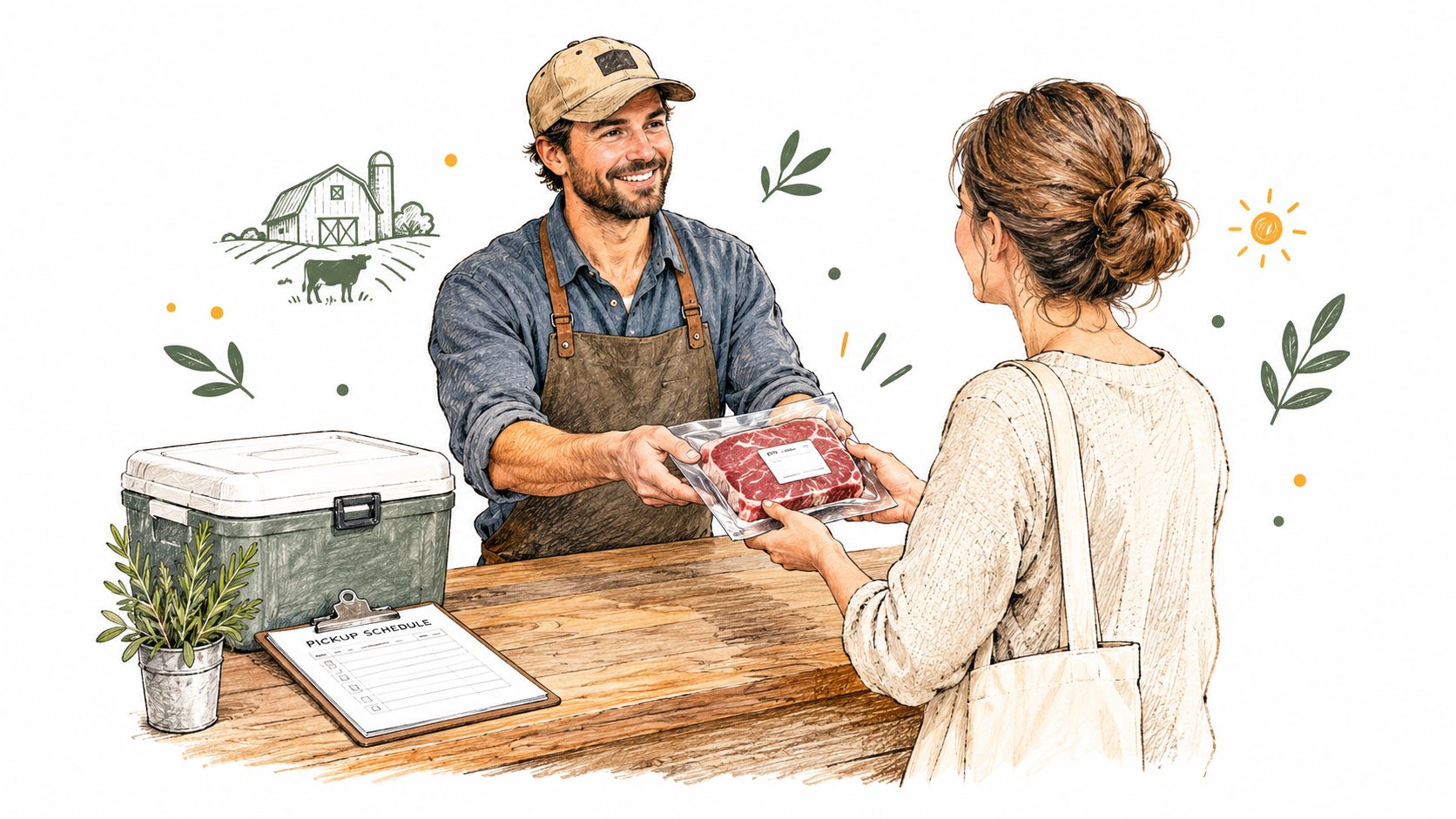
Plan the handoff, not just the purchase
Direct beef selling requires producers to handle many jobs that a grocery store normally absorbs. Extension guidance describes farmers acting as retailers, covering advertising, packaging, storage, customer communication, compliance, and liability. The University of Nebraska range beef guidance also warns that underestimating labor and legal overhead can turn direct sales into substituted labor rather than new profit.
That reality affects you as the buyer. A farmer may not offer flexible delivery, instant replies, or unlimited custom changes. You'll have a smoother experience if you confirm the details before the processing date rather than trying to renegotiate at pickup.
Use this short checklist:
- Freezer ready: Make room before you leave home.
- Transport ready: Bring an insulated container and go directly home.
- Order checked: Compare the packages with the agreed cut list.
- Labels readable: Confirm cut names and dates before stacking.
- Questions answered: Ask about thawing, storage, and any damaged packaging.
- Payment complete: Keep confirmation of the order and final balance.
For thawing, use the refrigerator rather than leaving meat on the counter. If a package leaks, smells unusual, or arrives warmer than expected, stop and contact the producer or processor instead of guessing. Good logistics are not fussy extras. They protect the food, your money, and the relationship.
Building a Relationship That Lasts
The first order tells you whether the beef fits your kitchen. The second order tells you whether the relationship works.
Local supply is seasonal and limited, so your favorite steak may not be available every time you ask. A producer may have individual cuts one week and only share orders tied to a future processing date another time. That isn't necessarily poor service. It's part of buying from a farm rather than a national distribution system.

Reliability works both ways
USDA-linked research recorded about 729,046 U.S. farm operations with at least one beef cow in inventory in 2017, roughly one-third of all U.S. farms. The same research notes that 43.9% of participating Kansas beef producers sold all their beef directly to consumers, while 69.8% produced only 1 to 20 head per year. Those figures from the USDA-linked local food marketing research help explain why direct sellers depend on repeat customers and clear communication.
You can make yourself a valuable customer without becoming demanding. Reply when the farmer asks for a cut preference, collect on time, give useful feedback, and understand that a special request may not be possible for every animal. Ask whether text, email, or a market visit is the preferred contact method, then use it.
A repeat buyer also gets better at the practical side. You learn which cuts your household uses, how much ground beef disappears during a busy month, and which roasts are worth making space for. The farmer learns what you actually want, rather than guessing from a generic order.
For broader farm-gate buying, Farm & Country Insurance's liability tips provide useful context on why producers need clear product handling and customer communication. Those systems may feel invisible when they work, but they're part of what makes direct purchasing dependable.
A marketplace can also make discovery, ordering, and reordering easier while keeping the producer visible. If you later explore other animal-based products, the Body Tallow Cream made with grass-fed beef tallow is an example of a separate product category built around a clearly described ingredient base.
The practical payoff is simple. You stop treating local beef as a one-time experiment and start buying from a producer whose standards, timing, and ordering process you understand.
Your Next Steps Toward Better Beef
Local beef is harder to compare than supermarket beef because each producer may differ on inspection status, finishing method, cut format, order size, and pricing structure. USDA notes that local and regional food data comes through many channels, which is one reason buyers can struggle to compare offers directly. The USDA local and regional food market information reflects that varied environment, including a 2026 USDA grass-fed beef report that sampled 84 producers.
You don't need to solve every comparison problem before buying. Use a staged approach.
Start with discovery
Within the next two days, choose one route: a farmers market, an online directory, a community recommendation, or a marketplace. Find two or three producers and send the same short message to each. Ask what they currently offer, how the beef was finished, where it was processed, and whether they sell individual cuts or shares.
The replies will tell you a lot. A clear answer with practical details is more useful than a polished page full of broad claims.
Make a manageable first purchase
If individual cuts are available, start there. If the farmer sells only shares, a quarter may be a more sensible introduction than a half or whole order, provided you have the freezer space and understand the cut distribution. Keep notes on what your household cooks. Don't judge the entire system by whether you enjoy one unfamiliar roast.
Your second action within two days is simple: measure the available freezer space and write down the beef meals your household already eats. That list is more useful than an aspirational meal plan.
Become a regular
After the first order, ask when the next availability is expected and how the producer prefers customers to reserve beef. Reorder according to your actual use, not the excitement of a full freezer. Over time, you'll learn which labels deserve follow-up, which cuts earn their space, and whether this producer is someone you want to buy from again.
The better alternative to anonymous meat isn't blind loyalty to every local seller. It's informed direct buying. Find a farmer you can talk to, ask questions that produce useful answers, plan the freezer and pickup, then let trust build through ordinary, reliable transactions.
Loyaltie is a marketplace where people discover and buy directly from independent brands and local producers across the US, including food and everyday products made by real people. Visit Loyaltie to find direct-buy options that fit the way you shop, cook, and reorder.