
You pour the first cup, take a sip, and wonder where the flavor went. The coffee smells fine in the bag, but the brew tastes flat, bitter, or oddly thin compared with what you remember from your favorite café.
That doesn't always mean your grinder or brewer is the problem. Roast date, packaging, storage, and the distance between roastery and kitchen can change what reaches your cup. Local coffee beans can be a quality upgrade, but only when you know how to recognize genuinely fresh, well-labeled coffee instead of trusting a vague “locally roasted” claim.
Table of Contents
Why Local Coffee Beans Taste Different
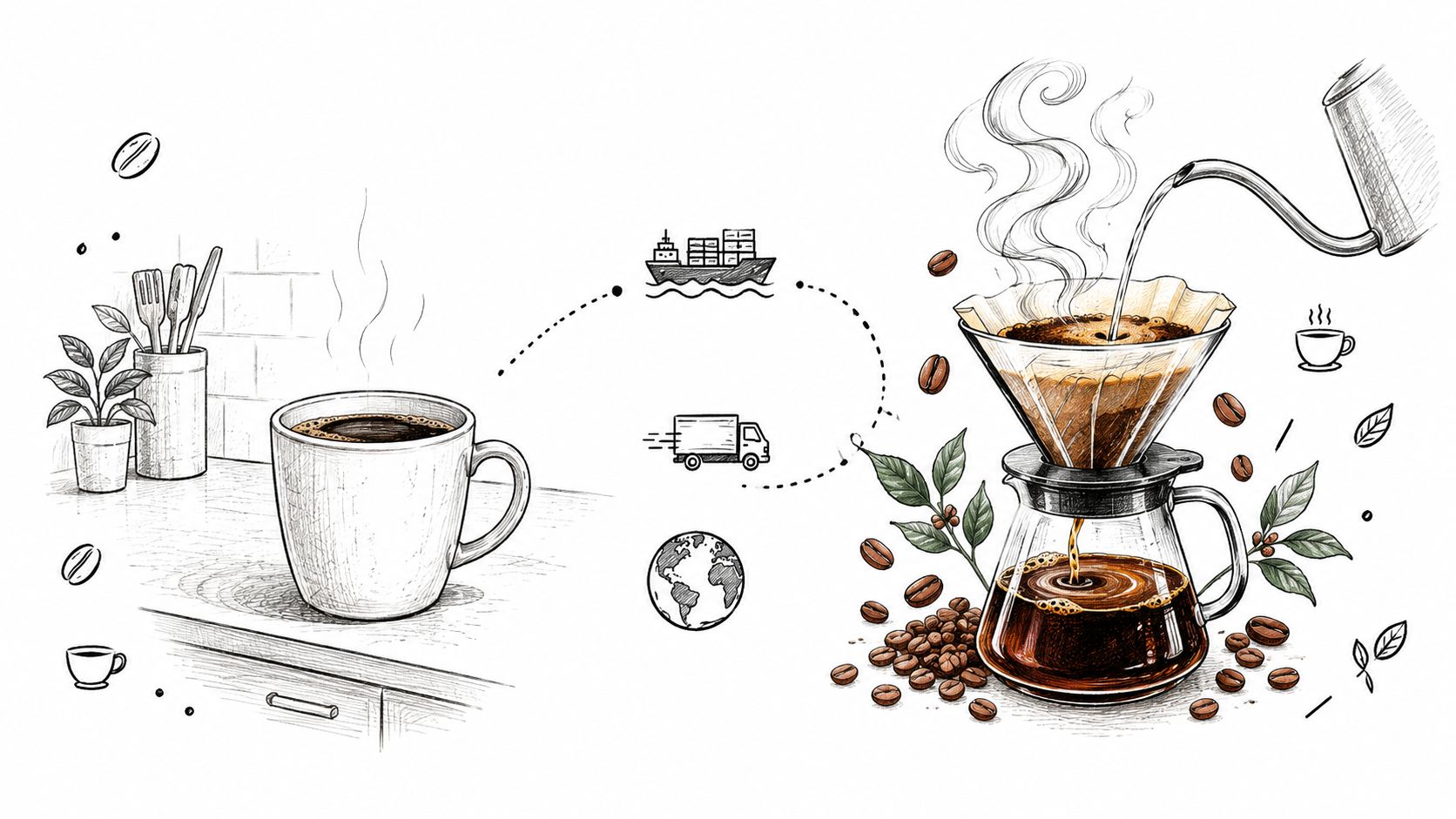
The difference often shows up in a familiar morning routine. You open an old bag from a supermarket shelf, measure the same amount you always use, and brew it the same way. The result is drinkable, but the aroma disappears quickly and the flavor feels hollow. A bag from an independent local maker may taste brighter, sweeter, or more defined, not because “local” is magic, but because the beans may have spent less time moving through warehouses and retail shelves before reaching you.
Coffee is a globally traded agricultural commodity, so even a local roaster usually works with green beans connected to international growing and shipping networks. The International Coffee Organization's historical coffee trade data covers production and trade records beginning in 1965, with modern monthly records extending back to October 1963. That history is a useful reminder that “local coffee” describes the roasting, selling, and buying relationship, not necessarily the farm's location.
Freshness is a handling question
Roasting changes the chemical makeup of coffee. In a controlled Arabica study, increasing roast temperature and time changed compounds associated with aroma and flavor, including guaiacol, 4-ethylguaiacol, and furfural, as documented in this study of roast conditions and coffee composition. That's why a roast profile matters more than a simple light, medium, or dark label.
A nearby roaster can offer a shorter path from roast to brew, but proximity alone doesn't guarantee a better cup. A local bag can still disappoint if it has been sitting in poor packaging, ground too early, or stored beside heat and sunlight. Look for a visible roast date, a sealed high-barrier bag, and enough information to match the coffee to your brewing method.
For a low-risk introduction to different origins, you might compare a single-origin coffee sample pack rather than committing to a large bag before you know what you enjoy.
The Real Quality Upgrade Behind Buying Local
Buying directly from an independent roaster is valuable because it can give you better information and more control, not because the business is small. You can see when the coffee was roasted, ask how it was processed, and choose a product that fits your grinder and brewing routine. Those details affect the finished drink more than a warm brand story printed on the front of a bag.
The strongest local coffee purchase connects three things:
- Freshness: The time between roasting, shipping, opening, and brewing stays manageable.
- Traceability: The seller identifies the region, farm, cooperative, or producer behind the green coffee.
- Communication: You can ask a real maker what changed between batches and how they recommend brewing it.
Independent roasters often work with smaller production runs, which can help inventory move more quickly. That doesn't mean every batch is automatically fresher than coffee from a national brand. It means you have a better chance of checking the relevant evidence instead of relying on a distant best-by date.
What direct buying lets you verify
A direct relationship also separates two ideas that shoppers often blend together. Local economic impact means your purchase supports the roastery, café, or maker near you. Producer impact concerns the farmers and workers who grew and processed the coffee overseas. Those aren't the same thing.
A 2025 review estimated that approximately 44% of smallholder coffee farmers globally lived below the poverty line, even during a period of rising world prices, because international price changes don't always reach farm gates evenly. The review is summarized in this traceability and coffee value-chain research. A local roaster may offer more transparency, but “local” by itself doesn't prove that farmers received equitable compensation.
Practical rule: Treat traceability as something to verify, not a synonym for ethical sourcing.
Look for a named farm or cooperative, producing region, harvest information, processing method, and an explanation of the roaster's relationship with the supplier. Those specifics help you judge the coffee as a product and understand what your money can and can't demonstrate.
How to Read Coffee Labels Like a Pro
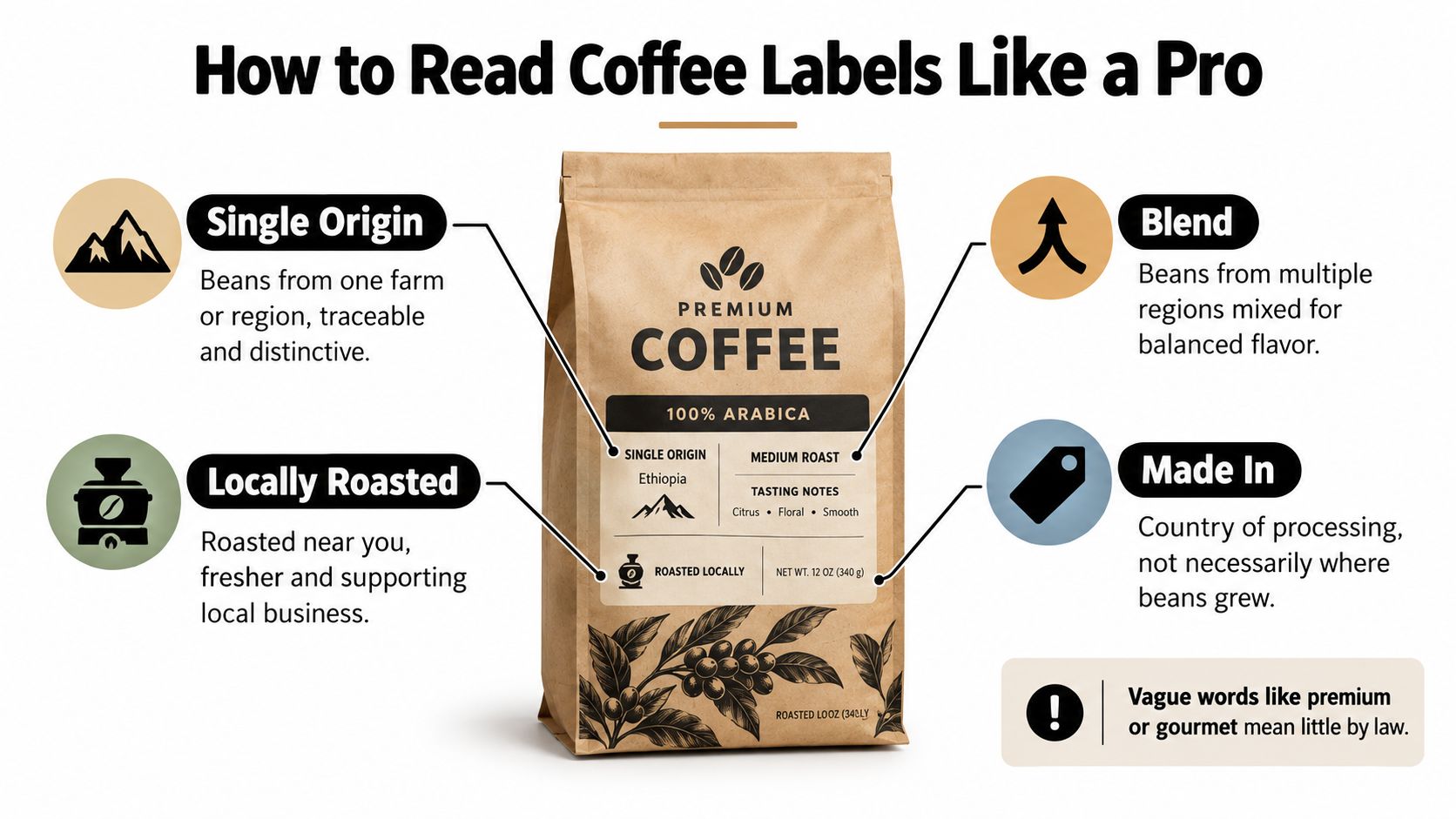
A coffee bag can tell you a lot, but only if you separate useful details from broad marketing language. Start by identifying where the coffee was roasted, then identify where the beans were grown. Those locations may be thousands of miles apart.
Decode the front of the bag
Use these terms as starting points, not proof of quality:
- Single origin: Usually identifies coffee from one country, region, farm, or defined producing area. Ask how narrowly the term is being used.
- Blend: Combines beans from multiple origins. A blend isn't inferior. It may be designed for a consistent flavor or a particular brewing style.
- Locally roasted: Describes where roasting happened. It doesn't tell you where the coffee was grown.
- Made in USA: Usually refers to processing or manufacturing location, not necessarily agricultural origin. Most coffee products use imported green beans.
The National Coffee Association's coffee labeling guide explains the distinctions among origin claims, blends, single-origin products, and “Made in USA” statements. It also discusses labeling requirements such as the principal display panel, ingredients, allergens where applicable, and conditional Nutrition Facts requirements for products such as ready-to-drink coffee.
Find the details that improve your decision
Turn the bag over and look for information that helps you predict the cup:
- Roast date: This is more useful than a best-by date because it tells you when the flavor clock started.
- Origin: Look for a country, region, farm, or cooperative rather than only a continent.
- Processing method: Washed, natural, and honey processing can point toward different flavor characteristics.
- Roast profile: Notes about roast degree, development, or recommended brewing can help you avoid a mismatch.
- Packaging: A resealable, high-barrier bag is a better sign than a simple folded top.
A label doesn't need to answer every question, but a maker should be able to answer reasonable follow-ups. If you're considering a single-origin Papua New Guinea coffee, check whether the product page gives enough detail about the roast and format for your setup.
Matching Freshness Windows to Your Brewing Routine
Freshness isn't a race to buy the newest possible roast. Coffee releases carbon dioxide after roasting, and that gas can interfere with extraction, especially when you're brewing espresso. The right purchase depends on how quickly you use the bag and how you prepare it.
| Brewing routine | What to look for | Main trade-off |
|---|---|---|
| Espresso | Beans with some time to degas, plus a roast date | Very fresh beans may produce unstable shots |
| Pour-over | A clear roast date and an active aroma | Very old beans may taste muted |
| Batch brewing | A size you can finish while the flavor remains lively | Large bags can lose aroma before the last brew |
The Specialty Coffee Association describes whole-bean coffee as reasonably fresh for roughly three weeks after roasting when carbon-dioxide degassing is used as a guide, while ground coffee may remain fresh for only about an hour after grinding because more surface area is exposed. The SCA's guidance on fresh coffee supports a simple habit: buy whole beans when possible and grind shortly before brewing.
Buy for your household, not your idealized routine
If you brew one cup most mornings, a smaller bag may deliver a better experience than a large discount bag that sits open for weeks. If several people drink coffee every day, a larger format may work, provided the packaging seals well and you don't leave it near the stove.
A specialty-coffee consumer study found that 23% of consumers specifically mentioned freshness as a purchase concern, while preferences varied between the most recently roasted beans and coffee that would remain enjoyable over several weeks. The study of specialty-coffee purchasing concerns shows why a single freshness rule doesn't fit every home.
For a practical starting point, buy only what you expect to use within the next week or two. Treat that as a buying guide, not a safety deadline. Properly stored coffee can remain safe while losing the aroma and flavor you paid for.
Finding and Buying From Local Roasters
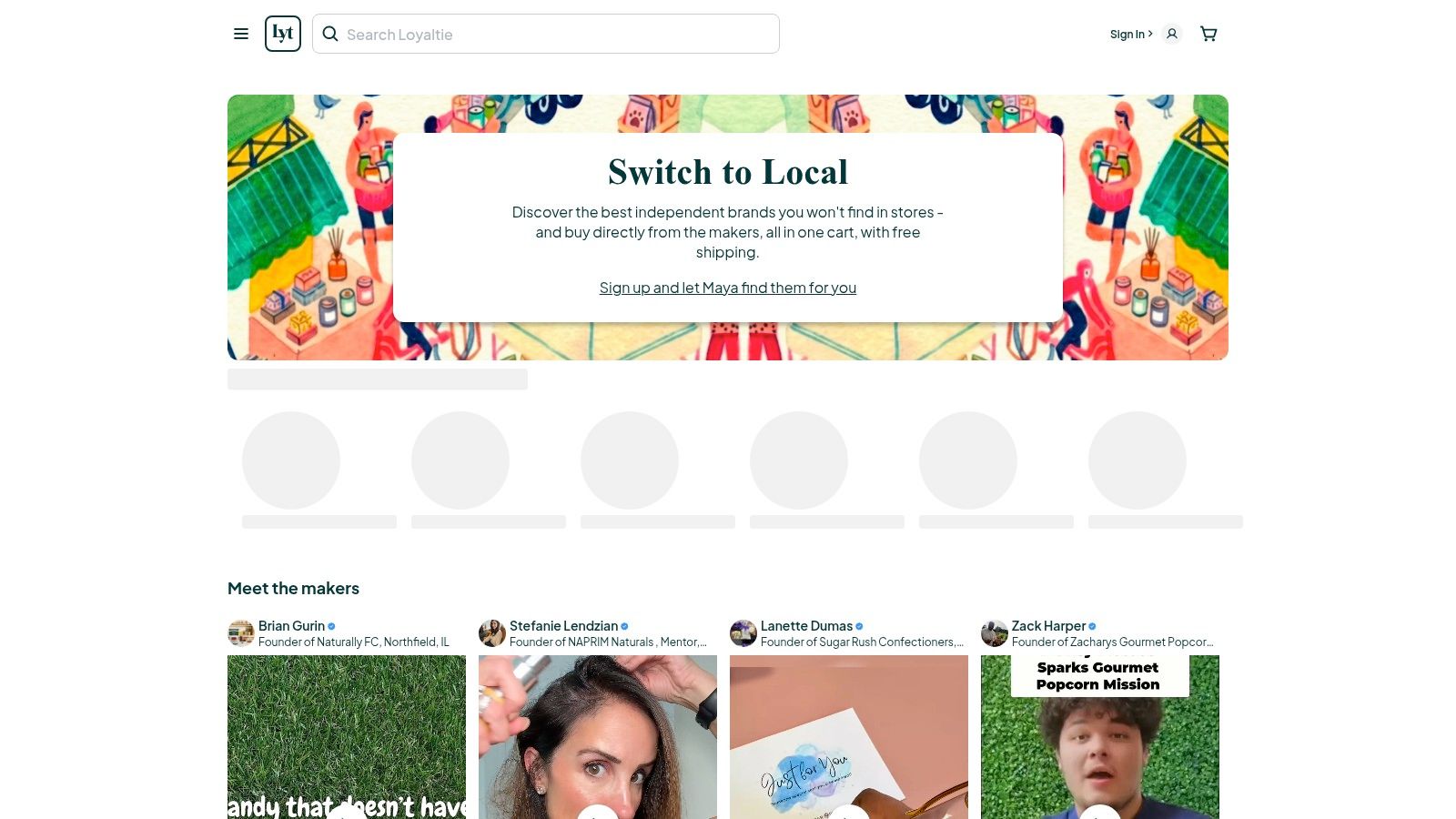
Start with the product information, not the brand story. Search for independent roasters near you, visit a local café that sells its own beans, or use a local marketplace where makers list their products for direct purchase. The useful comparison is between bags, not between slogans.
Compare the information on each listing
Open several product pages and check whether they disclose the details that affect your cup:
- Roast date: A clear date is more useful than “freshly roasted.”
- Origin detail: Country is a start. Farm, cooperative, or region gives you more context.
- Flavor notes: Use them as a guide, not a promise. Look for notes that match your preferences.
- Format: Whole bean is usually the better choice if you own a grinder.
- Packaging: Look for resealable, oxygen-resistant packaging.
- Delivery or pickup timing: A nearby roaster may offer pickup, local delivery, or shipping. Compare the expected arrival with the roast date.
A marketplace such as this local roaster listing can make it easier to compare independent makers without visiting every roastery separately. You're still responsible for judging the bag, but a clear product page reduces the guesswork.
Ask questions before you reorder
A good maker should be able to tell you whether a coffee suits espresso, pour-over, or batch brewing. Ask when the next roast is planned, how the coffee is packaged, and whether the listed flavor notes describe the current batch or a general product profile.
Direct purchasing also supports traceability. One specialty-coffee study found that 35% of respondents purchased directly from producers, linking direct purchasing with a clearer ability to validate who made the coffee and how it was produced. The research on direct purchasing and traceability doesn't mean every direct sale guarantees better sourcing. It does show why named producers, processing details, and clear supply-chain explanations are useful.
Once you find a coffee you like, note the roast, grind, brew method, and how long the bag stayed enjoyable. For makers building a direct audience, clear product descriptions matter too. This resource on strategic captions for coffee brands can help sellers explain flavor and sourcing without falling back on empty claims.
Storing and Grinding Beans for Peak Flavor
The best local coffee beans can still taste disappointing if you store them badly. Roasted coffee is porous, and oxygen and moisture can carry aroma away. A sealed bag on a cool, dark cupboard shelf will usually outperform an open container beside a kettle or sunny window.
Use the right container
A storage study comparing airtight canisters, clipped bags, taped original bags, and screw-cap packaging found that the integrated screw-cap package preserved freshness best. Clips, tape, and transferring beans to a container led to faster aroma loss, according to the study of roasted coffee packaging and storage.
Use this short checklist:
- Keep beans whole: Grind immediately before brewing whenever possible.
- Seal quickly: Close the original resealable bag after every use.
- Block heat and light: Choose a cool, dark cupboard away from the oven.
- Limit moisture: Don't store coffee near steam or a damp countertop.
- Buy manageable amounts: Choose a bag you can finish while its aroma is still lively.
The National Coffee Association's guidance gives opened whole-bean coffee a peak-quality window of about one to three weeks at room temperature in an airtight container, while ground coffee generally keeps peak quality for about one to two weeks under the same conditions. Those are quality windows, not food-safety deadlines, as explained in this coffee freshness guidance.
Grinding is the final quality decision. Pre-ground coffee is convenient, but the larger exposed surface area speeds the loss of aroma and carbon dioxide. If you buy ground coffee, choose a grind made close to dispatch and store it especially carefully. If you own a grinder, whole beans give you more control over the time between grinding and brewing.
Loyaltie is a marketplace where you can discover and buy directly from independent brands in the US, including local makers offering coffee and other everyday products. Visit Loyaltie to compare local coffee beans, check the details on each listing, and choose a better bag based on roast date, origin, packaging, and your actual brewing routine.