You're halfway through mixing a cake, your phone's covered in flour, and you're staring at a recipe wondering if there's any way to make it work for someone who can't eat wheat. Good news. You don't need to abandon baking. You just need a different bag, and a little know-how about what's inside it.
Table of Contents
Why You Probably Asked That Question
Maybe you're standing in the baking aisle holding three different bags, none of which say wheat flour, and thinking, is there a gluten free flour that won't turn this into a brick? Maybe a friend, your kid, or you have just been told to stop eating gluten. Or maybe you tried a swap once, got a crumbly, gummy mess, and you're not keen to repeat it.
You're not alone in that moment, and it isn't just about preferences. The National Institute of Diabetes and Digestive and Kidney Diseases estimates about 1% of people worldwide have celiac disease and approximately 2 million people in the United States are affected, according to its overview of celiac disease and its prevalence. For those people, strict, lifelong gluten avoidance is how the condition is managed, so flour isn't a casual choice.
The short answer you came for
Yes, gluten-free flour is real, and it isn't one sad substitute. It's a whole category made by milling grains, seeds, nuts, and roots that naturally contain no wheat, barley, or rye gluten. Rice, corn, sorghum, buckwheat, millet, quinoa, almond, coconut, and tapioca flours all count.
The catch is where most quick guides stop too soon. An ingredient can start out gluten-free and still pick up gluten during harvesting, milling, storage, or packaging. That's why the bag matters as much as the ingredient, especially when you're baking for someone with a medical need.
If you're baking for comfort, a failed loaf is annoying. If you're baking for someone with celiac disease, a contaminated bag is a health problem. That's the difference that shapes every choice that follows.
You'll also hear people talk about gluten-free flour like it's automatically healthier. It isn't. It's safer for the right person, which is different. Some options bring more protein and fiber to your bake, others are mostly starch, and knowing which is which helps you feed people well, not just avoid one protein.
That's where independent brands and local makers come into this story in a practical way. When you buy directly from the maker, you can ask who milled it, what else runs on that equipment, and what a blend was built to do. You can't ask a warehouse shelf those questions, and the answers change how your cake turns out.
What Gluten Free Flour Actually Is
Think of gluten as the stretchy net in wheat dough. When you knead wheat flour with water, that protein network traps air, gives bread its chew, and helps cake crumbs hold together. Take wheat, barley, and rye out, and you lose that net. Gluten-free flours start from ingredients that never had it.
That mental model helps. You're not buying wheat flour with something removed. You're buying a different powder with different starch, protein, fat, and thirst for liquid, so it'll behave differently in your bowl.
This visual sorts the grains you avoid from the options you reach for.

The rule behind the label
In the United States, the FDA defines a voluntary gluten-free claim as requiring fewer than 20 parts per million (ppm) of gluten, and describes that level as the lowest that can be reliably detected and one tolerated by people with celiac disease, under the FDA's guidance on gluten and food labeling. That rule took effect on August 5, 2014, which gave shoppers a consistent benchmark instead of marketing language. It's a concentration limit too, not a set amount per serving.
What does 20 ppm mean in your kitchen? Not much you can see or taste. You can't spot it, and you can't wash it off flour. Prevention during growing, milling, and packing is what keeps a finished product under the line.
- Naturally gluten-free ingredient: The raw material, like rice or almonds, contains no gluten to begin with.
- Labeled gluten-free product: The finished bag meets the under 20 ppm standard and was made under controls that limit contact with gluten.
- Wheat-free: A different claim. A product could be wheat-free and still contain barley or rye.
Those three ideas get mixed up constantly. If you keep them separate, labels get much easier to read.
Why blends exist
Because no single gluten-free flour brings starch, protein, fat, and moisture in the same balance as wheat, makers combine them. A starch like tapioca or potato often teams up with a grain or nut flour to improve structure and texture. That's not a marketing trick. It's how you rebuild the job gluten used to do, using several ingredients instead of one.
The Main Types Worth Knowing
You don't need a pantry full of powders. You need to match flour to job. Once you know what each one brings, shopping gets simpler, and so does swapping.
Rice flour is your neutral base. White rice flour tastes mild and works well in cakes and cookies when it's finely milled, while brown rice flour feels a bit heartier. On its own it can bake up dry or gritty, which is why it's happiest in a blend. If you want ideas beyond baking, top rice flour recipes for home cooks gives you a good sense of its range in everyday cooking.
Nut, fruit, and legume options
Almond flour adds fat, moisture, and a gentle nutty sweetness. It's lovely in cakes, muffins, and cookies where tenderness matters more than a tall rise. It won't give you a chewy sandwich loaf on its own, and it's off the table for nut allergies.
Coconut flour is the thirsty one. It absorbs substantially more liquid than other flours, so a little goes a long way and recipes built for it look different from wheat recipes. Use it where a recipe expects it, not as a straight swap, or you'll get a dry, dense crumb.
Chickpea and other legume flours bring stronger flavor and more protein. They shine in savory flatbreads, batters, and blends where you want staying power. You'll see chickpea flour used creatively in products like this chai latte and gluten-free cookie mix bundle made with chickpea flour, which shows it's not only for savory cooking.
Oat flour tastes familiar and cozy in muffins and pancakes. Oats need extra care though, because they can be exposed to wheat, rye, or barley in the field and during processing. If you're baking for celiac safety, look for oats specifically labeled gluten-free.
Sorghum, buckwheat, millet, and quinoa flours give you whole-grain character. Sorghum is mild and slightly sweet, buckwheat is earthy and full-bodied, and both help breads and pancakes feel substantial. They're often the backbone of better blends.
Nutrition varies a lot across this list. Recent research summarized in a study comparing the nutritional profiles of gluten-free flours found amaranth and chickpea had the highest fiber levels among tested options, while ready-to-use mixes showed very low average fiber. Gluten-free describes safety for a specific need, not a nutrition promise.
Gluten Free Flour Types at a Glance
| Flour | Flavor | Best For | Watch Out For |
|---|---|---|---|
| Rice | Mild, neutral | Cakes, cookies, blends | Dry or gritty alone |
| Almond | Nutty, rich | Cakes, muffins, cookies | Nut allergy, dense crumb |
| Coconut | Light coconut | Recipes built for it | Absorbs lots of liquid |
| Chickpea | Earthy, savory | Flatbreads, batters | Strong taste in sweets |
| Sorghum | Mild, slightly sweet | Breads, pancakes, blends | Can feel grainy if overused |
| Oat | Warm, familiar | Muffins, pancakes | Must be labeled gluten-free |
Independent US makers often specialize in one or two of these, so you get a finer grind and clearer guidance on use. That focus helps beyond flour too. For a pantry example with a different job, Habanero Salt-Free All-Purpose Seasoning Blend, Garlic & Onion, Everyday No-Sodium Flavor, Net Weight 2.25 ozShaker Bott | DSLW Seasonings by Loyaltie is described as bringing big, savory flavor without sodium, with a bold spicy garlic-and-onion taste that works on chicken and vegetables. Knowing exactly what a product is for makes it easier to use well.
Smart Substitution and Baking Tips
Your first instinct will be to swap wheat flour cup for cup with one gluten-free flour. Resist it. A blend is usually more dependable for everyday baking because it balances starch for lightness with protein or fat for structure and moisture.
Start with recipes written for gluten-free baking, not converted wheat recipes, while you're learning. You'll build a feel for batters that look wetter, doughs that don't knead the same way, and crumbs that set as they cool.
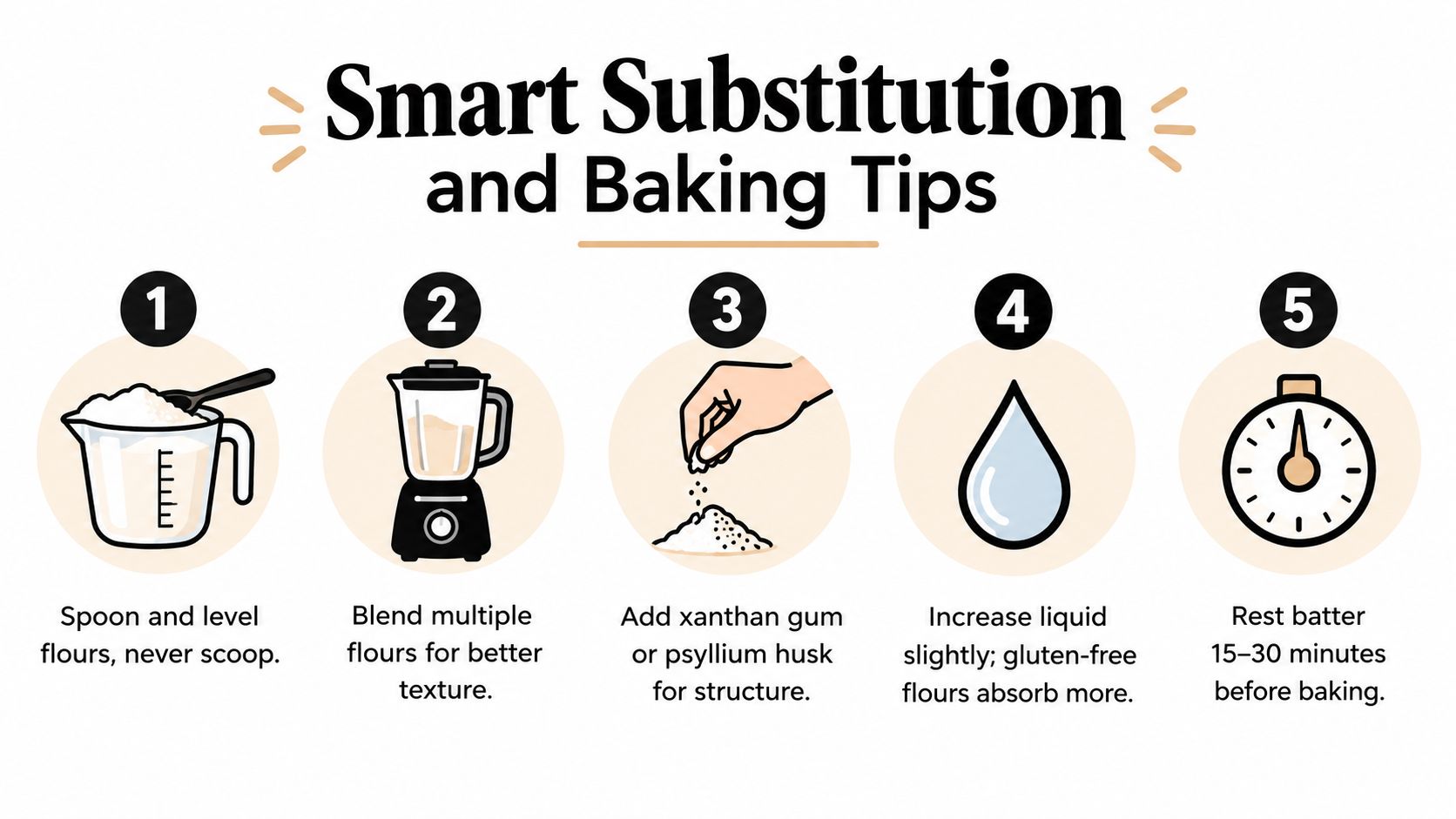
These five habits cover most of what trips people up early on.
Practical moves that save a bake
- Spoon and level, don't scoop: Packing the cup adds extra flour and dries everything out. A scale is even better once a recipe gives weights.
- Check for a binder: Look for a blend whose maker says whether it includes xanthan gum, or plan to add a binder your recipe calls for, such as psyllium husk for breads.
- Mind the liquid: Coconut flour drinks up moisture, almond flour adds it back through fat, and rice flour sits in between. Don't swap them for each other without adjusting.
- Rest your batter: A short rest lets flours hydrate, which reduces grittiness and helps cakes and pancakes hold together.
- Match blend to bake: A cake blend and a bread blend aren't interchangeable. Buy for the job in front of you.
Kitchen note: If your first gluten-free cake crumbles when you slice it warm, wait. Many gluten-free crumbs firm up as they cool, and cutting early makes a good bake look like a failure.
For cookies and quick breads, you have the most room to experiment. For yeasted loaves, follow a tested formula closely, because structure is harder to build without gluten. For sauces and thickening, rice flour, tapioca, and corn based options are forgiving and familiar.
Mixes can be a smart shortcut while you learn, especially when the maker has already balanced the flour, binder, and liquid needs for you. A product like this grain-free lemon lavender cake mix made with almond flour shows how a focused mix takes the guesswork out of one specific bake. Bake it as directed first, then start tweaking.
Storing flour so it stays fresh
Keep flour in an airtight container in a cool, dry spot, away from strong smells. Nut flours and whole-grain flours carry more natural oils, so they go stale faster than refined starches. If your kitchen runs warm, the fridge or freezer protects them, and you can bring them back to room temperature before baking.
How to Read Labels and Avoid Cross Contact
Here's the assumption worth challenging. A flour made from a naturally gluten-free crop isn't automatically safe for someone with celiac disease. Safety depends on what happened between the field and your pantry.
Harvesting, transport, milling, storage, and packaging can all introduce gluten. The Celiac Disease Foundation advises choosing naturally gluten-free grains and flours that have been tested and contain less than 20 ppm gluten, in its guide to gluten-free foods and grains. That word tested is doing real work in that sentence.
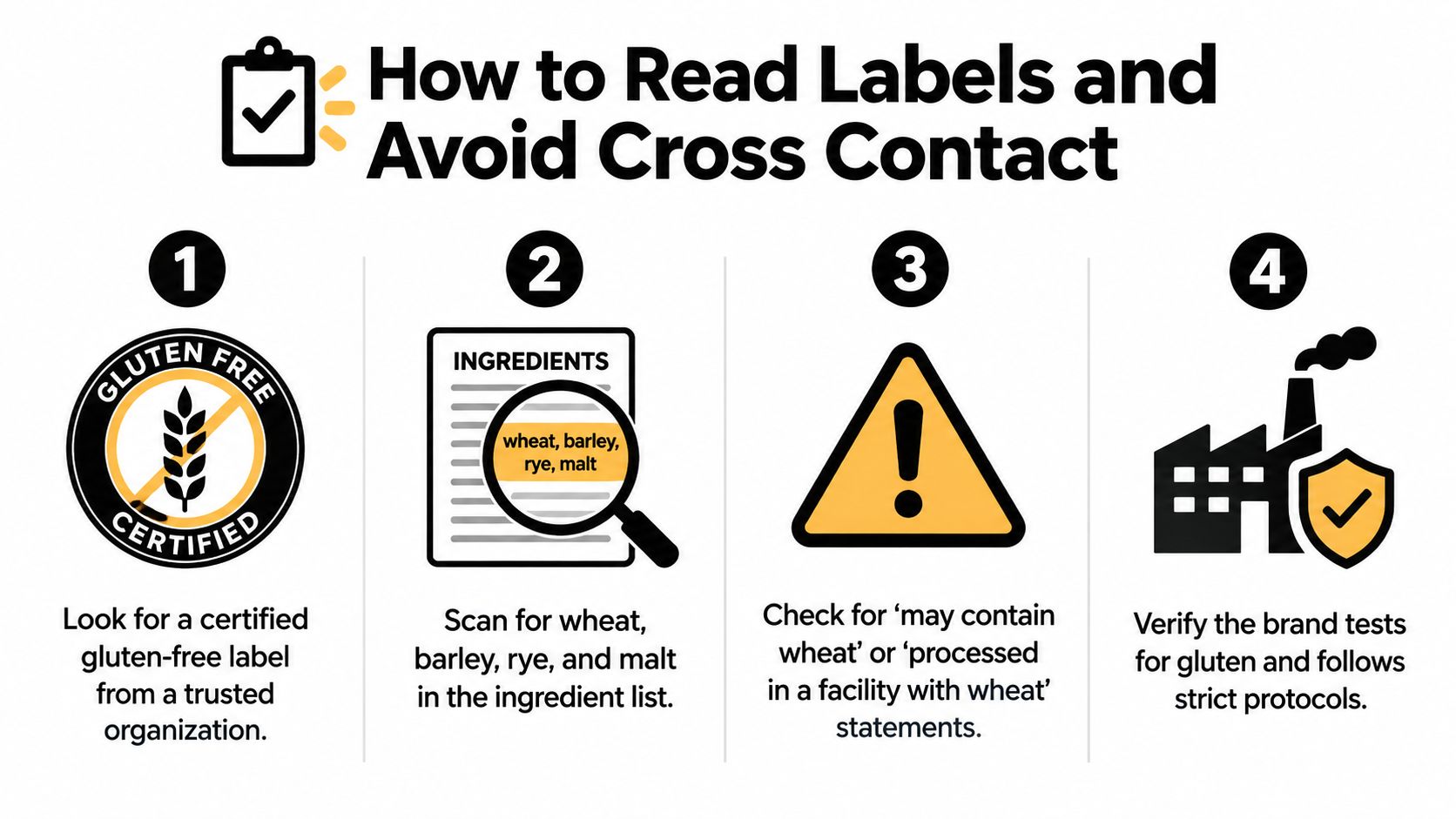
This checklist turns that advice into a quick habit at the shelf.
What to look for on the bag
Start with the claim itself. Under FDA rules summarized in the agency's questions and answers on the gluten-free labeling final rule, grains, legumes, and seeds can be naturally gluten-free but still face cross-contact risks. A regulated gluten-free label on the finished product tells you more than an ingredient list alone.
Then scan ingredients for wheat, barley, rye, and malt, and read any allergen or shared-facility statement. Wording like may contain or made in a facility with wheat doesn't carry one universal legal meaning across every market, so treat it as a prompt to ask, not a final answer. Certification marks and clear manufacturer contact details give you a next step when you're unsure.
Oats deserve their own pause, as covered earlier. A gluten-free claim on oat products should be backed by documented controls, not just the fact that oats themselves don't contain wheat gluten. If a maker can't explain their controls, that's information too.
This short video walk-through is a helpful refresher before your next shop.
Keeping your own kitchen safe
Cross contact can happen at home just as easily. Use clean scoops, store gluten-free flour sealed and separate from wheat flour, and don't bake both in a flour-dusted space at the same time if you're cooking for someone highly sensitive. For broader habits around shared tools and surfaces, this kitchen cross contamination advice is a practical place to build a routine.
Asking a maker about dedicated equipment, cleaning steps, supplier paperwork, and batch handling isn't rude. Good makers expect those questions, and their answers help you decide before you reorder.
Where to Buy Gluten Free Flour You Can Trust
Big grocery chains are convenient, and you'll find decent all-purpose blends there. Warehouse clubs can be good value if you bake a lot and already know a blend works for you. The trade-off is anonymity. If a bag fails you, or you need to know about shared sifters and storage, there's nobody to ask.
Online marketplaces that carry many brands widen your choice, but they can also bury the details you need. Ingredient lists get copied, facility statements go missing, and the person who formulated the blend is nowhere in the chain. For a medically driven purchase, that distance matters.
FDA testing should reassure you without making you careless. In a 2024 sampling assignment described in the verified record, the FDA tested 702 samples from more than 250 products labeled gluten-free and found over 99.5% complied with the less than 20 ppm requirement. High compliance is great news, and the small fraction that didn't comply is exactly why your label habits still count.
Why buying direct works better here
When you buy from local makers and independent brands with no middleman, the person who chose the grains is often close to the person answering your email. You can ask what a blend is built for, whether equipment is segregated, and how lots are traced. Those answers turn a hopeful purchase into an informed one, and they make reordering calmer.
That's the role of Loyaltie, a marketplace where people discover and buy directly from the best independent brands in the US, while every order is backed by the platform. You get online convenience without losing the direct line to the maker.
A quick look at how that marketplace presents independent food makers.

If mixes help you start, look for ones built on a flour with a clear job and ingredient story. This gluten-free banana cinnamon sugar cookie mix made with real banana flour is one example of a focused product where the base flour is front and center. Read it the same way you'd read any flour bag, check the statements, and ask the maker anything that isn't clear.
- Buying on a plan: If you bake weekly, regular delivery or an easy reorder keeps your proven blend in stock.
- Buying single bags first: Test small before you commit, especially with nut and legume flours.
Common Questions Before You Start Baking
Can gluten-free bread rise? Yes, with a bread-specific blend, the right binder, and a tested recipe. Expect a wetter dough and a different crumb, not a failure.
Is almond flour healthier than wheat flour? It's different, not automatically better. It brings fat and moisture, while other options bring fiber or protein. Choose by goal and allergy needs.
Do I need xanthan gum every time? Not always. Some blends include a binder, and some bakes hold together without one. Check your bag and recipe first.
How do I stop flour going stale? Seal it airtight, keep it cool, and refrigerate nut and whole-grain flours in warm kitchens.
Ready to bake with flour you can ask questions about? Visit Loyaltie to discover independent US makers selling gluten-free flours, blends, and mixes directly, with clear ingredients and real people behind every product. Pick one blend built for your next bake, try it as directed, and reorder the one that earns a spot in your pantry.