
You're probably seeing a version of this already. Orders come in, people clearly like what you make, and then you check the details and realize a lot of carts contain just one bag of coffee, one serum, one candle, one supplement, one pet treat.
That's not a demand problem. It's usually a basket-building problem.
For independent brands with a tight product line, increasing average order value isn't about acting like a giant retailer. You don't need a warehouse full of filler products or constant discounts. You need a better way to help the right customer buy a little more of what fits their routine, tastes, or needs. When you sell coffee, wellness, skincare, food, supplements, or pet products made with care, the strongest lever is often better guidance, better pairing, and better timing.
Table of Contents
Why Your Average Order Value Matters
You don't build a healthy maker business by squeezing more traffic out of every week. You build it by making each order more worthwhile for both you and the customer.
Average order value, or AOV, is the average amount a customer spends each time they buy. If customers predominantly buy one item and leave, your margins get squeezed by packaging, shipping, and fulfillment effort. If more customers buy a small set, refill, or better-size option, your store gets steadier without changing what makes your products good.
Small orders create hidden pressure
A lot of makers focus on getting the first sale, which makes sense. But small one-item orders can create a cycle where you're always chasing the next buyer instead of getting more from the demand you already earned.
That matters even more now because shoppers are already showing they'll place larger orders when the offer is right. As of November 2024, global ecommerce AOV reached about $144.52, up 8.7% year over year, according to Oberlo's AOV data. That doesn't mean your store should chase that exact number. It means customers are open to buying more in one transaction when brands make the decision easy.
If you want a quick refresher on the metric itself, this guide on how to increase average order value gives a useful baseline before you start changing offers.
Practical rule: AOV is not a finance-only metric. For a maker, it's a measure of how well your shop turns interest into a fuller routine, kit, or reorder.
What stronger baskets change for a maker
When AOV goes up, a few things usually get easier at once.
- Margins hold up better. A two-item cart usually carries shipping and fulfillment costs better than a one-item cart.
- Your best products pull harder. A hero product can introduce a second item instead of doing all the work alone.
- You get room to keep quality high. Better baskets can support stronger ingredients, better sourcing, and more thoughtful packaging.
- Growth feels less frantic. You're not depending only on fresh traffic every month.
Makers with focused lines have an advantage here. You thoroughly understand your products. You know which candle scent pairs with which room, which skincare step should come first, and which coffee belongs in a morning routine versus an after-dinner cup. That product knowledge is exactly what helps customers buy more confidently.
If you're working through your store setup or offer structure, the seller education library at Loyaltie resources is a practical place to organize the basics before you test new basket-building tactics.
The Quickest Win A Smart Free Shipping Threshold
If you only change one thing first, make it your free shipping threshold.
This works because it gives customers a clear, immediate reason to add one more item. It feels like a reward, not a hard sell. For coffee, that might mean adding a second bag. For skincare, it might mean adding a cleanser to a serum order. For supplements, it might mean adding a travel size or companion formula.
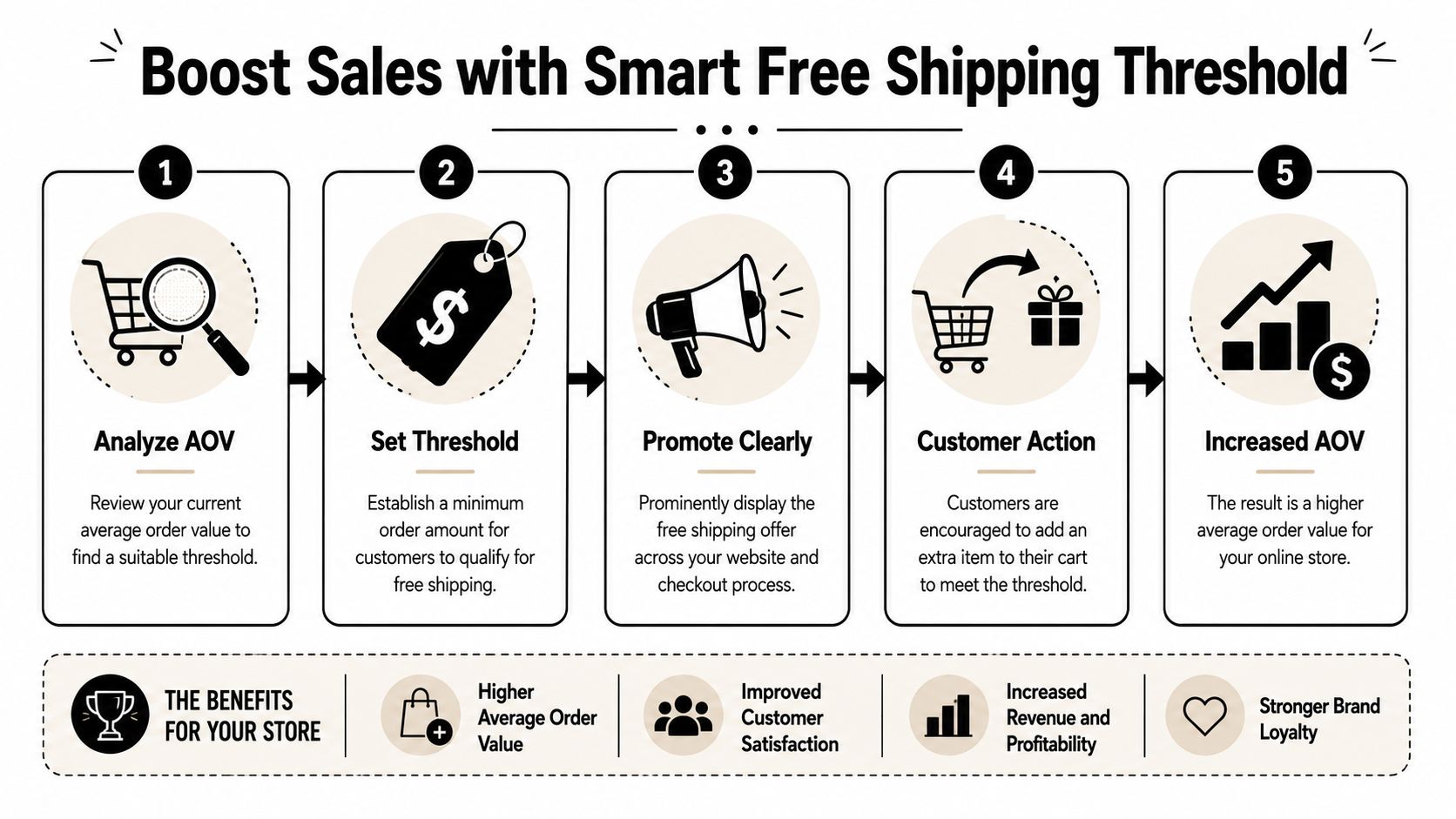
Here's the visual logic in one place:
Set the number with simple math
The strongest starting point is not guessing. It's setting the threshold just above what people already spend.
According to Rebuy's AOV guidance, setting a free shipping threshold 10 to 20% above your current AOV can increase AOV by 15 to 30%. The same source notes that a real-time progress bar at checkout can drive 22% more add-ons than a static message. It also warns against pushing the threshold too high, because that can trigger cart abandonment.
A simple example:
- Find your current AOV. Let's say it's $50.
- Set your threshold above that. A good first test is $55 to $60.
- Check your likely add-on products. Think lip balm, small-batch snack, second coffee bag, toner, or pet topper.
- Make sure the extra spend feels reachable. Customers should feel close, not far away.
What doesn't work is setting a number that feels random or punishing. If someone has $48 in the cart and free shipping starts at $80, most won't hunt for enough extra items to bridge the gap.
Here's a short demo worth watching before you build the message on your cart page:
Make the reward visible
This tactic falls apart when customers can't see it early enough.
Use these prompts across the shopping path:
- On product pages: “Add one more item to qualify for free shipping.”
- In cart: Show exactly how much is left to qualify for it.
- Near relevant add-ons: Suggest items that naturally close the gap.
- At checkout: Keep the progress message visible and specific.
When the customer can see the reward getting closer, they're more likely to finish the basket instead of debating whether shipping is worth it.
For limited-inventory makers, this method is especially useful because you don't need dozens of products. You just need a few logical add-ons and a threshold that respects how your customers already buy.
Create Irresistible Product Bundles and Kits
Big retailers bundle to move volume. Makers should bundle to remove uncertainty.
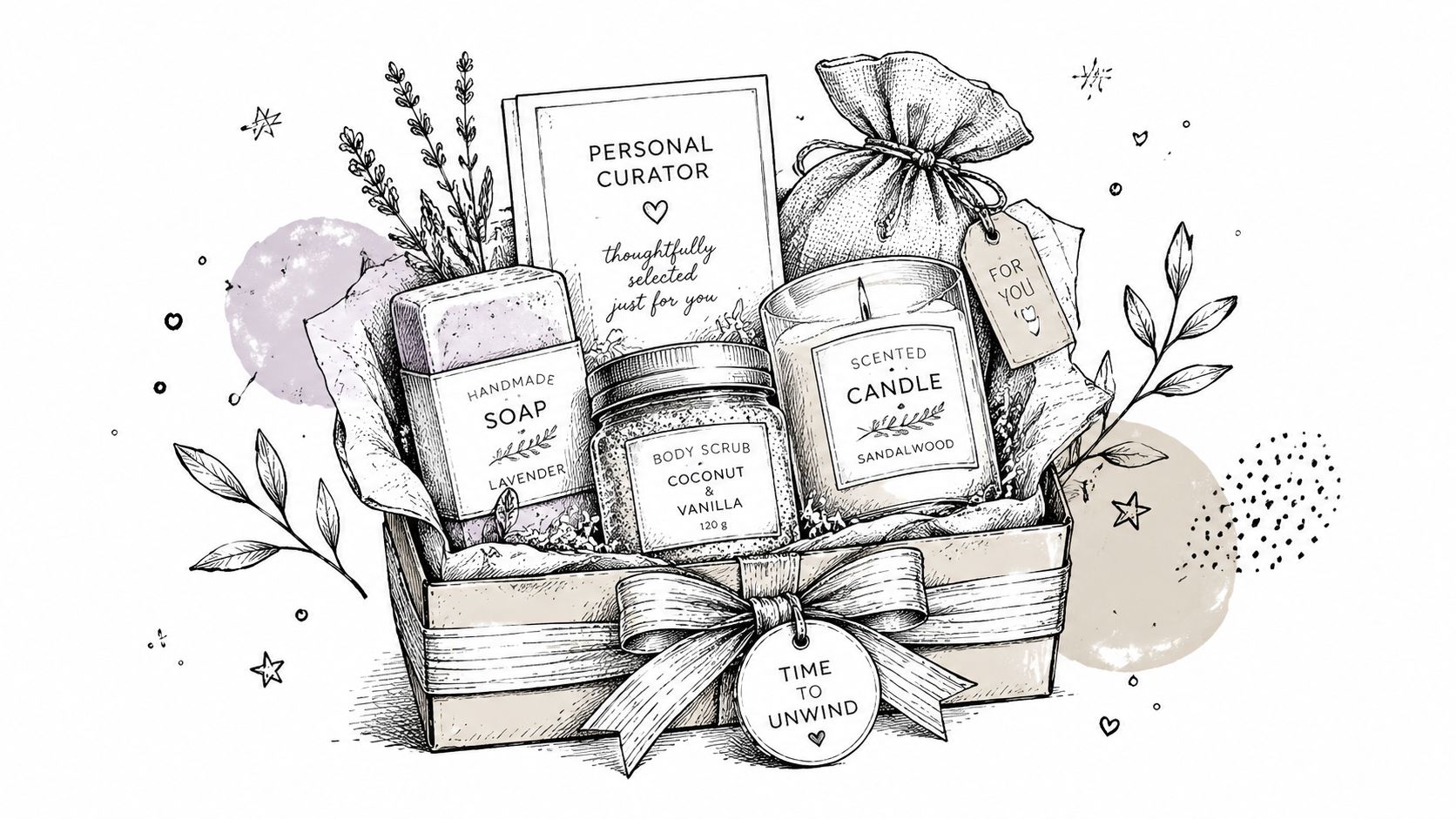
A good bundle says, “Here's the right place to start.” That's a better experience for a first-time buyer and a cleaner way to raise order value without turning your brand into a discount table.
Curate around a real use case
The strongest bundles are built around moments, routines, or goals.
A coffee brand might pair a signature roast with a seasonal flavor and a simple companion item. If you sell something like Cozy Notes Coffee Co. Pecan Pie Flavored Coffee, the next question isn't “What else can we throw in?” It's “What completes the cozy order?” Maybe that's a second roast for weekday drinking, or a snack pairing, or a mug that makes the order feel giftable.
A home care brand can do the same thing with practical sets instead of one-off products. This Rose of Eden Home and Scents detergent and dishwasher bundle works because the products belong in the same household routine.
What works better than random bundles
Bundling gets stronger when it feels curated, not assembled for clearance.
According to Daasity's AOV analysis, “buy two get one free” structures outperform a flat 20% off by 9% in AOV lift for CPG and wellness categories. That's useful because it points toward quantity structures and guided sets, not blanket markdowns.
Try shaping bundles in a few different ways:
| Bundle type | Best use | Example |
|---|---|---|
| Starter kit | First-time buyers | Cleanser, serum, moisturizer |
| Routine pair | Everyday replenishment | Morning coffee plus decaf evening blend |
| Gift set | Seasonal or host gifting | Candle, room spray, match jar |
| Problem-solver set | Practical value | Pet shampoo plus coat conditioner |
What usually fails is pairing unrelated products just to inflate the cart. Customers can tell when a bundle is doing extra work for you but not for them.
A better rule is simple:
- Lead with a hero item
- Add only complements
- Name the use case clearly
- Make the choice easier, not bigger
That's how a focused catalog starts to feel more complete without becoming cluttered.
Guide Customers with Gentle Upsells and Cross-Sells
Upselling gets a bad reputation because people confuse it with pressure.
Done well, it's guidance. You're helping the customer choose the version that fits better or lasts longer. Cross-selling does the same thing with related products. The customer doesn't feel pushed. They feel understood.
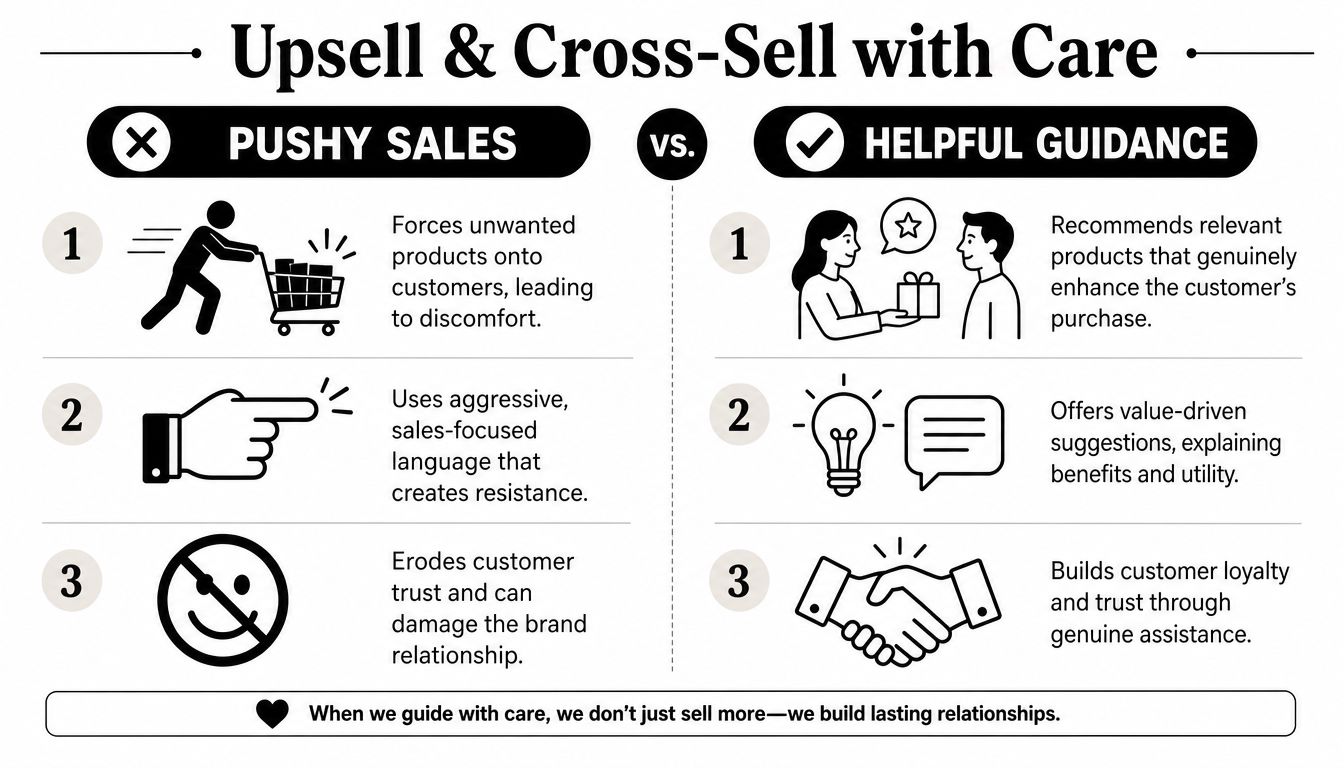
Helpful guidance beats pressure
Say a customer is considering a smaller coffee bag. A gentle upsell isn't “Spend more now.” It's “If this is your daily brew, the larger bag gives you better value per cup and fewer reorders.”
Say someone is buying a facial oil. A useful cross-sell might be a cleanser or balm that helps them get better results from the product they already want.
This is the difference:
- Pushy selling adds unrelated items
- Helpful selling improves the original purchase
- Weak cross-sells look generic
- Strong cross-sells match the customer's intent
The best upsell answers a real customer question before they have to ask it.
Teach the why behind the suggestion
This matters even more in categories where shoppers care about ingredients, benefits, and product quality.
According to Zip's AOV research, personalized recommendations tied to ingredient transparency and health benefits can increase AOV by 22% among health-focused buyers, compared with 8% for generic cross-sells. That gap is huge for brands selling skincare, supplements, coffee, and wellness goods to thoughtful shoppers.
So instead of saying:
- “You may also like this”
Try saying:
- For skincare: “Pairs well with your cleanser because it supports the same barrier-focused routine.”
- For supplements: “Often chosen with this formula by shoppers looking for a simpler daily stack.”
- For coffee: “A smoother second option if you want one bag for mornings and one for guests.”
- For pet products: “Useful if your dog has dry skin and you're already buying the wash.”
What doesn't work is dropping generic “frequently bought together” widgets everywhere and hoping the algorithm figures it out. If your line is focused, your advantage is judgment. Use your product knowledge to explain why the suggestion belongs.
Build Loyalty with Regular Deliveries and Simple Perks
The easiest sale is often the next one from someone who already trusts your product.
For consumables and routine products, increasing average order value often comes from making repeat buying feel easier and more natural. Coffee, supplements, candles, skincare staples, pantry items, and pet goods all fit this pattern. People don't want a complicated commitment. They want an easy way to keep favorites coming.
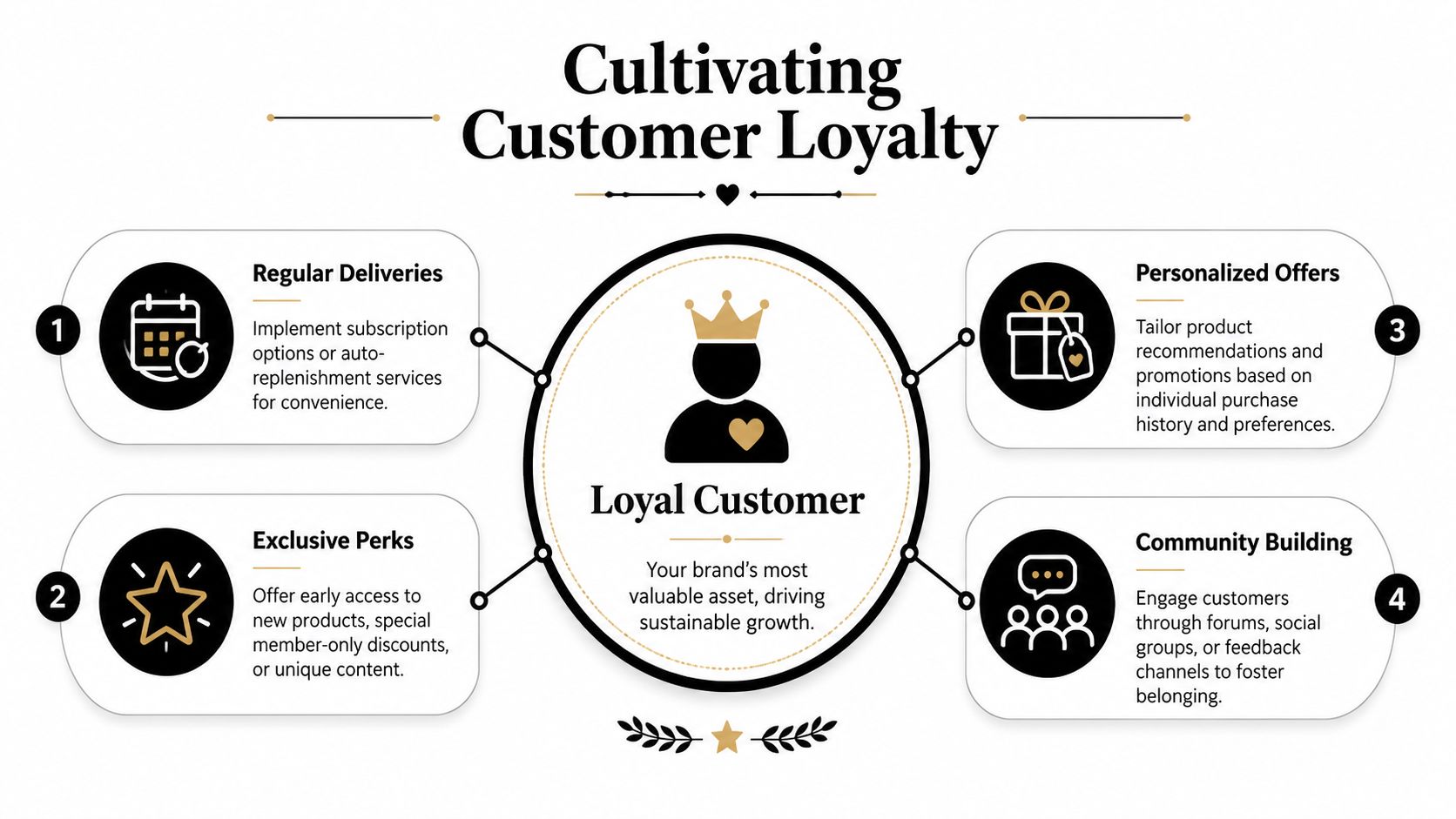
Make reordering easier
Frame it as convenience. “Buy on a plan.” “Regular delivery.” “Never run out.”
That language matches how people want to shop. HubSpot's shopping trends data found that only 17% of consumers prefer purchasing products on a subscription basis, while 63% prefer buying whenever the need arises. For makers, that means rigid language can create friction even when the reorder option itself is useful.
The audience is there, especially for independent brands. OnDeck's local shopping statistics report that Millennials make 158 purchases from independent businesses annually, 25% more than any other generation, and spend an average of $19,173 locally each year. For everyday goods, they're a strong fit for regular delivery offers that remove hassle.
A listing like Evolve Botanica's monthly ritual candle plan shows how a maker can package convenience around a repeat-use product. The idea isn't pressure. It's rhythm.
Use perks that feel personal
You don't need a complicated points system to make customers come back with larger baskets. Small perks often work better when they match your brand voice.
Try a few of these:
- Third-order surprise: Add a sample, mini, or scent preview once someone has ordered a few times.
- Early access: Let repeat buyers shop a seasonal release first.
- Routine reminder: Send a friendly reorder email based on how the product is typically used.
- Bundle upgrade: Offer returning customers an easier path into a larger set.
A short handwritten note can still matter if it feels genuine. So can a thoughtful insert that explains how to combine two products for better results.
Loyalty grows when the customer feels known, not managed.
Putting It All Together for Your Brand
The most effective approach to increasing average order value is usually quieter than people expect.
You don't need constant promotions. You need a store that helps customers buy in a way that feels natural. One extra item to reach free shipping. One well-built kit for a first order. One larger size that makes sense. One regular delivery option that saves them from running out.
Start with one lever
For most makers, the cleanest order is:
- Set a smart free shipping threshold
- Build one clear bundle around a hero product
- Add one educational upsell or cross-sell message
- Create a low-friction reorder path
Then watch what customers do. If people keep adding the same second item, make that pairing more visible. If one bundle gets attention but doesn't convert, the naming or the combination may be off. If regular delivery interest is low, the issue may be the framing, not the offer.
Keep the brand feel intact
However, many independent brands hesitate. They worry that selling more per order will make the brand feel less personal.
It doesn't have to. The strongest AOV tactics for a focused line are usually the ones that respect the customer's intent. Better pairings. Better explanation. Better packaging. If you sell food or giftable products, even the presentation can support larger orders. This piece on how to transform your hospitality business with packaging is worth a look if you want ideas for making orders feel more complete without leaning on discounts.
A marketplace like Loyaltie gives you one practical route to do that online. It's a place where people discover and buy directly from the best independent brands in the US, which matters when your products sell on quality, story, and trust rather than mass-market pricing.
If you want a better way to reach shoppers who care about quality and want to buy directly from the maker, explore Loyaltie. It's a marketplace where people discover independent brands across the US in coffee, wellness, skincare, food, supplements, pet products, and more, with no middleman between you and the customer.