
You know the moment. You're standing in the bathroom or under the kitchen sink, holding a tube or bottle and wondering if it's for a cut, a mouth sore, a whitening tray, or something you should leave alone. Hydrogen peroxide gel sits in that awkward middle ground between everyday care and specialized treatment, which is exactly why it helps to understand what the gel is doing before you use it.
The good news is that the chemistry is simple once you strip away the jargon. The gel format exists to keep peroxide where you put it, whether that's on a tooth, a small skin area, or a surface that needs controlled contact instead of a quick rinse. And because peroxide shows up in both consumer care and industrial production, the same basic ingredient can mean very different things depending on concentration, texture, and intended use (hydrogen peroxide's history and industrial scaling).
Table of Contents
What Hydrogen Peroxide Gel Is
A lot of people first meet peroxide as the brown-bottle liquid under the sink. The gel version feels different the moment you squeeze it out, thicker, steadier, and less likely to run off before it has time to work. That thicker body is not just cosmetic, it changes how the ingredient behaves on skin, teeth, or a surface.
Why the gel format matters
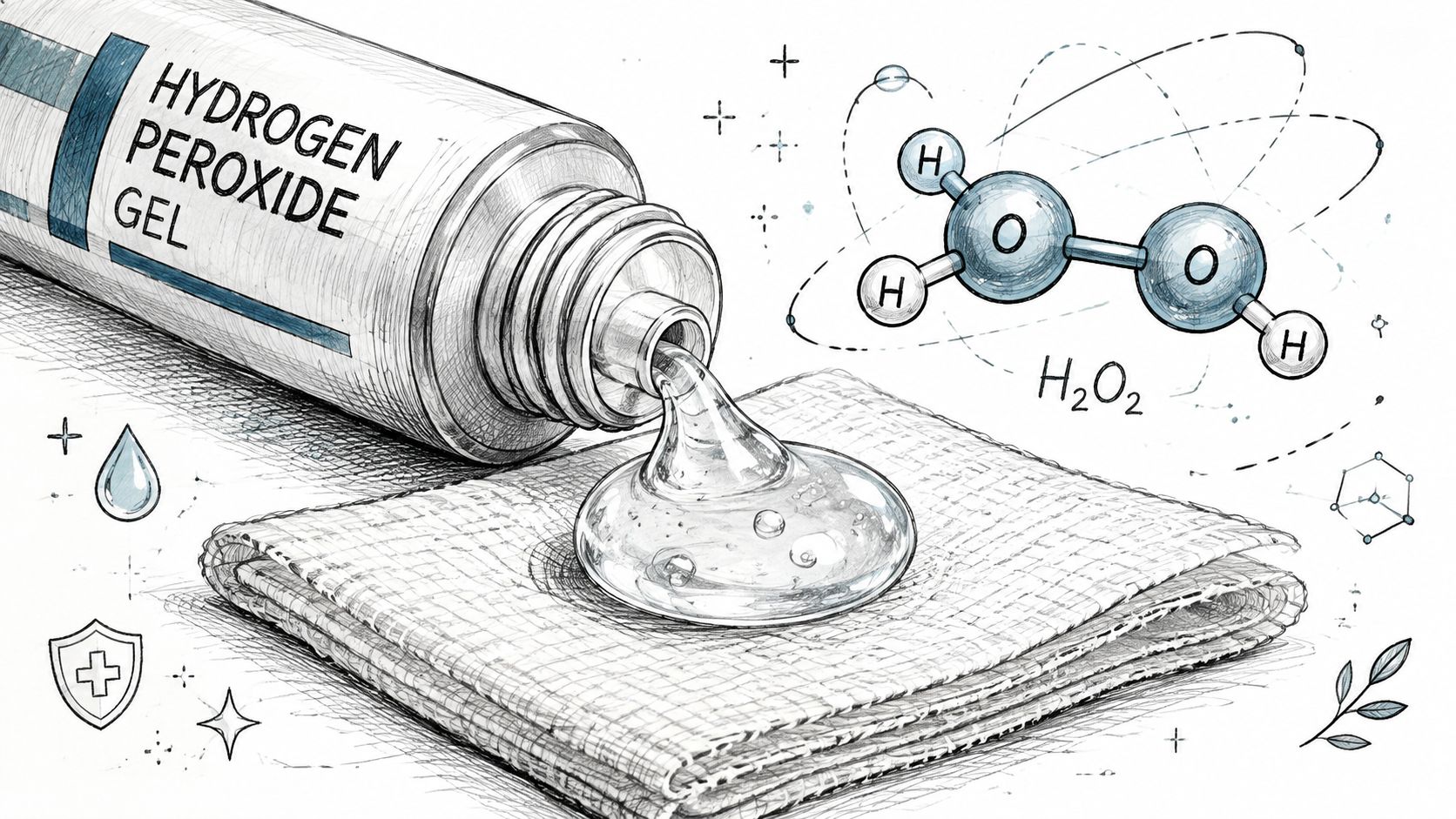
Liquid peroxide behaves like a quick rinse. Gel behaves more like a slow-release layer that stays where you put it. That extra cling keeps the oxidizing action in contact with the target instead of running off a tooth surface, sliding down skin, or disappearing too quickly on a fabric patch.
That staying power comes from the formula, not from the peroxide alone. A gel base with tuned viscosity helps the product hold its shape, spread more predictably, and break down less quickly while it sits on the target area (dosing and gel viscosity details). In plain terms, the thickener is doing real work, especially in products meant to stay in one spot.
Practical rule: if you want peroxide to act in one place rather than spread everywhere, the gel form is usually the better tool.
That difference also helps explain why OTC and professional gels are not the same buying decision. Mass-market products often focus on broad convenience and familiar packaging, while smaller independent makers are more likely to spell out the base, the peroxide strength, and the intended use in plain language. If you are comparing options, look for that ingredient transparency first, then compare how the product is meant to be used.
A good example is a simple, clearly labeled bleach booster or cleaning aid that uses peroxide chemistry in a powder or gel system, such as this oxygen bleach powder from Loyaltie. The formula style may differ from a medical gel, but the buying principle is the same, clear ingredients and a stated purpose make it easier to choose the right product for the job.
For people comparing cleaning and stain care products, stain removal with hydrogen peroxide gels is usually less about a flashy label and more about whether the gel stays put long enough to do controlled work.
Where the format started
The chemistry has a long runway. Hydrogen peroxide was first described in the early nineteenth century by French chemist Louis Jacques Thénard, and later industrial production made peroxide much easier to standardize for consumer and professional formulas (historical overview). That shift mattered because it turned a laboratory substance into a widely used ingredient that could be made with more consistent purity.
That history helps explain why gel products feel ordinary now. What began as a laboratory chemical eventually became a controlled delivery format for oral care, disinfection, and treatment products. The gel is a practical way to handle an old molecule with more precision.
Concentrations and Formulations That Matter
A peroxide gel can look simple on the shelf, then behave very differently once it touches skin, teeth, or fabric. The label concentration is the first thing to read because it tells you whether you are holding a gentle daily-use product or a formula meant for supervised use. With peroxide gels, strength is not just about speed, it is also about tissue tolerance, stability, and where the product can be used safely.
Read the percentage before anything else
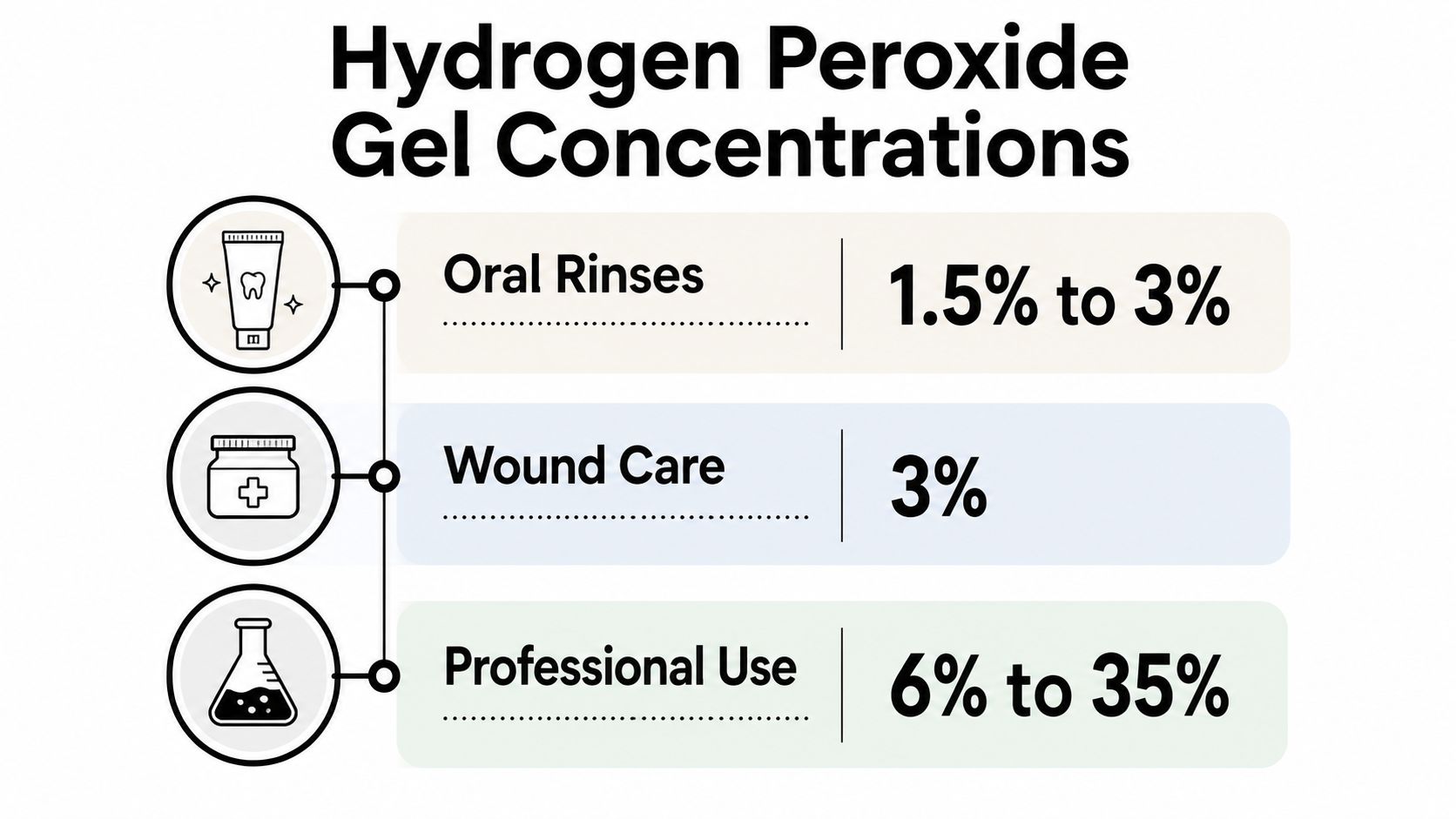
For oral-care and whitening products, a professional dental gel may contain 1.5% to 3.5% w/w H2O2, while an OTC oral debriding gel is commonly 1.5% topical gel. Whitening systems can run higher, including 7.5%, 15%, or more depending on the use case and regulatory class. For simple cleansing uses, medicinal peroxide is commonly in the 1% to 5% range, and domestic solutions are usually 3% to 6% (DermNet NZ concentration guidance).
The pattern is easy to remember. Lower strengths are used where tissue is delicate or the task is basic cleaning. Higher strengths are reserved for more focused whitening or supervised applications.
Why pH, stabilizers, and texture matter
A peroxide gel is not just peroxide plus thickener. Formulators also manage pH, trace metals, and stabilizers so the product does not decompose early or become harsh in use. One oral-care SDS describes a gel at pH 5.8 to 6.5, and commercial peroxide guidance notes stabilizers such as phosphoric or mineral acid, pyrophosphate salts, and stannate to slow metal-catalyzed breakdown (formulation and stability notes).
That matters because peroxide breaks down faster at less acidic conditions and in the presence of transition metals. The formulation work is a balance of water, gelling agents, acidification, and inhibitors so the active stays usable on the shelf and during application. If two gels look similar but behave differently, this is usually why.
Buying tip: for a home-use gel, the label should make the use case obvious, the concentration clear, and the packaging compatible with an oxidizer that can degrade if poorly stored.
If you are comparing peroxide products for the home, the same reading habit helps with cleaning formulas too. A home disinfection checklist makes it easier to sort out where peroxide belongs and where it does not.
For a non-peroxide example of ingredient transparency and material choice, calendula herbal salve in a simple jar shows the same buying principle in a different category. The formula is easy to identify, and the packaging tells you something about how the product is meant to be handled.
Common Uses From Wound Care to Whitening
Hydrogen peroxide gel shows up in several very different jobs, and that is where people often get mixed up. A mouth product, a skin product, and a whitening gel can all use the same active ingredient while behaving differently because of concentration, thickness, and contact time. The label alone does not tell the full story, which is why ingredient transparency matters so much when you compare an OTC option with a professional formula from an independent maker.
A quick comparison
| Use Case | Typical Concentration | Why Gel Works Well |
|---|---|---|
| Minor skin cleansing | 1% to 5% | Clings to a small area instead of running off |
| Oral debriding or mouth irritation | 1.5% | Stays localized in the mouth longer than a rinse |
| Whitening systems | 7.5% or 15% and higher | Holds contact with enamel for targeted oxidation |
| Professional dental tray use | 1.5% to 3.5% w/w | Controlled delivery under supervision |
Wound care and minor skin cleaning
For everyday home use, low-strength peroxide gels are used on small, superficial concerns, not deep wounds. Cleveland Clinic says hydrogen peroxide gel or cleanser is used to prevent and treat skin infections from minor cuts, scrapes, or burns, and WebMD notes it is used on skin or in the mouth to clean irritated areas and reduce infection risk (Cleveland Clinic guidance, WebMD topical use and caution). The gel texture helps because it stays where you place it instead of spreading across healthy tissue.
Oral care and whitening
Dentistry is where peroxide gel became commercially important. The 1961 “walking bleach” technique used a peroxide-based approach for bleaching non-vital teeth, later modifications used 30 to 35% H2O2 to boost whitening, and in the late 1980s dentists began offering tray-and-gel whitening with carbamide peroxide, which helped launch at-home whitening (clinical history). That history explains why whitening gels feel like a separate category, even though the chemistry is still peroxide-driven.
If you want a closer look at stain-focused tooth care, this guide on stain removal with hydrogen peroxide gels is useful context for how whitening gels interact with enamel and chromogens. It also helps separate a whitening gel from a simple cleaning product, because one is meant to stay in place long enough to act on stains while the other is usually used for brief localized contact.
Simple distinction: low-strength gels are for cleansing or debriding, while whitening gels are designed to stay in contact with enamel long enough to change stain molecules.
Household and DIY uses
Hydrogen peroxide gel can also be useful anywhere controlled contact matters on a surface, but the gel is not a universal cleaner. For stain-oriented work, people often pair different peroxide-based products with fabric or surface treatments rather than relying on one all-purpose formula. If a product runs immediately, it usually wastes active ingredient and gives uneven results.
That is one reason some buyers compare peroxide options with laundry boosters and stain treatments from smaller makers that spell out the formula clearly. For example, an ingredient-forward product such as Oxygen Bleach Powder stain booster from Loyaltie shows the same buying habit in a different category, where the ingredient list and intended use are easy to see.
Safety Realities Most Labels Do Not Emphasize
A bottle or tube marked OTC can feel harmless, but peroxide does not become gentle just because it is sold without a prescription. Route, concentration, and tissue condition matter more than the label category, and that is where many buyers overestimate safety. A gel can be the right texture for controlled contact, yet still be too irritating for the wrong tissue or the wrong use.
Who should be cautious
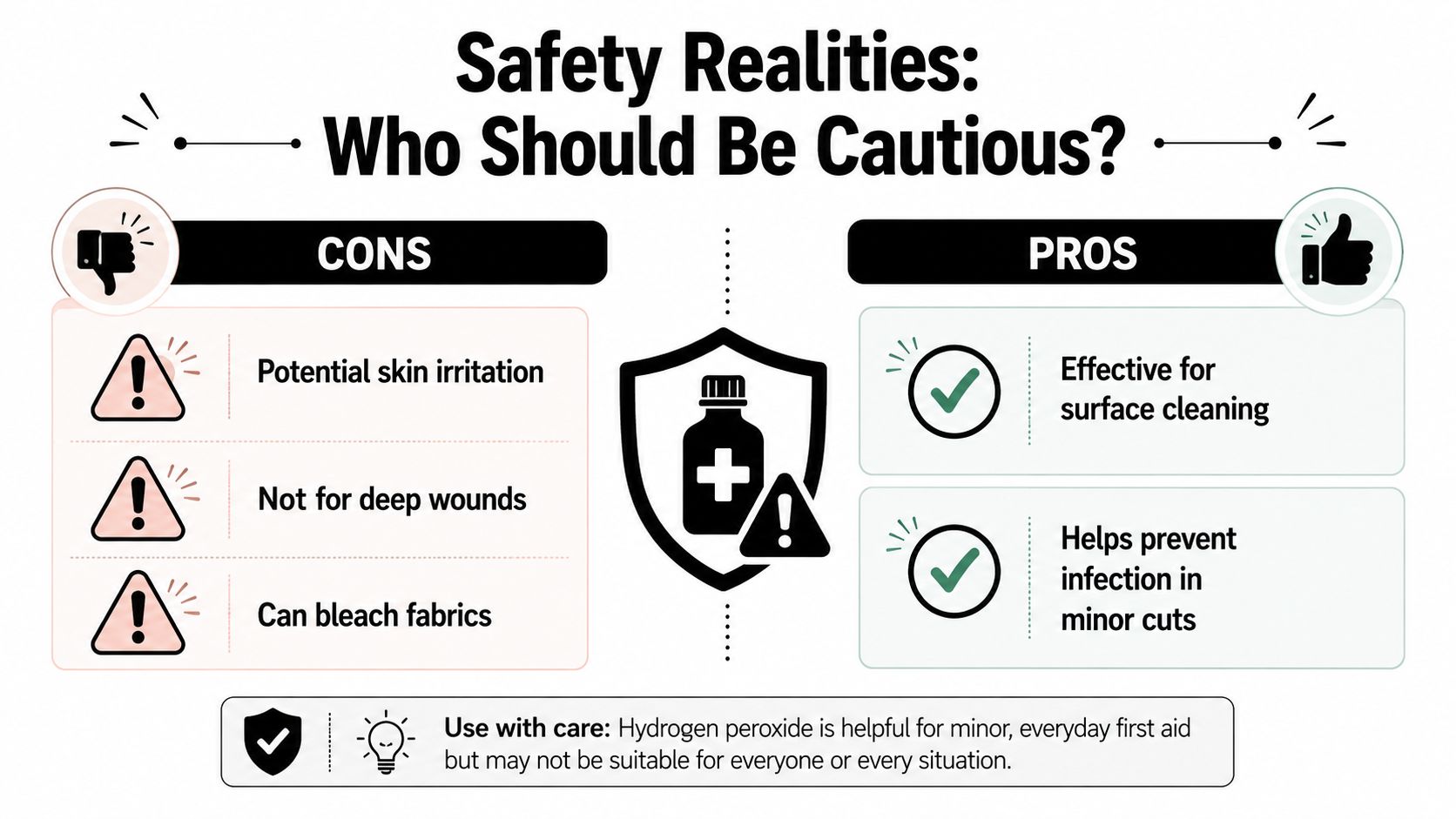
Mayo Clinic's topical guidance notes that hydrogen peroxide can irritate tissue, cause burning, dryness, tooth sensitivity, and gingival inflammation, and it cautions against use on damaged or diseased tissue (Mayo Clinic topical reference). That warning often gets buried in product marketing, even though it is one of the most important parts of the story.
The practical takeaway is straightforward.
- Avoid damaged tissue: if skin or gums are already inflamed, the gel can sting and keep the irritation going.
- Do not treat deep wounds casually: peroxide is for minor surface cleaning, not every break in the skin.
- Do not swallow it: peroxide is meant for topical use only, and ingestion is a safety problem.
Cosmetic whitening is not the same as treatment
Whitening gels are often sold with a beauty-first tone, but they are still chemical treatments. Supervised oral care and cosmetic whitening do not sit in the same bucket, because the former is controlled for concentration, wear time, and tissue tolerance. If you have fillings, crowns, veneers, or gum problems, whitening can leave color mismatches or add irritation, so a dentist should weigh in before you start.
A skin balm can make a better fit when the goal is soothing care rather than oxidation. A product such as Calendula Herbal Salve, Calendula Flowers, Olive Oil, Soothing Skin Relief, Vitamin E, Beeswax, 4 oz Jar | Mooneys Apothecary and Such LLC by Loyaltie shows the kind of ingredient-transparent, non-peroxide option some people prefer for skin-focused use.
Good rule: if the tissue is already angry, raw, or compromised, peroxide usually is not the thing to calm it down.
Independent makers also tend to make the safety trade-offs easier to see. A small-batch product with a clear ingredient list, such as Oxygen Bleach Powder stain booster from Loyaltie, can be easier to evaluate than a mass-market formula with vague front-label claims. That matters because peroxide products work best when the buyer can tell what the product is for, what is inside it, and what kind of contact it is meant to have.
There is also a reason the literature still asks for better long-term safety data on bleaching products. That does not mean peroxide gels are unusable, it means you should treat them as purposeful tools, not harmless cosmetics.
Storage, Handling, and Disposal Done Right
Peroxide gels can lose effectiveness faster than many buyers expect, especially if they're exposed to heat, light, or contamination. The chemistry is unforgiving here. Small handling mistakes can change how much active ingredient remains by the time you use the tube.
Store it like an oxidizer, not like lotion
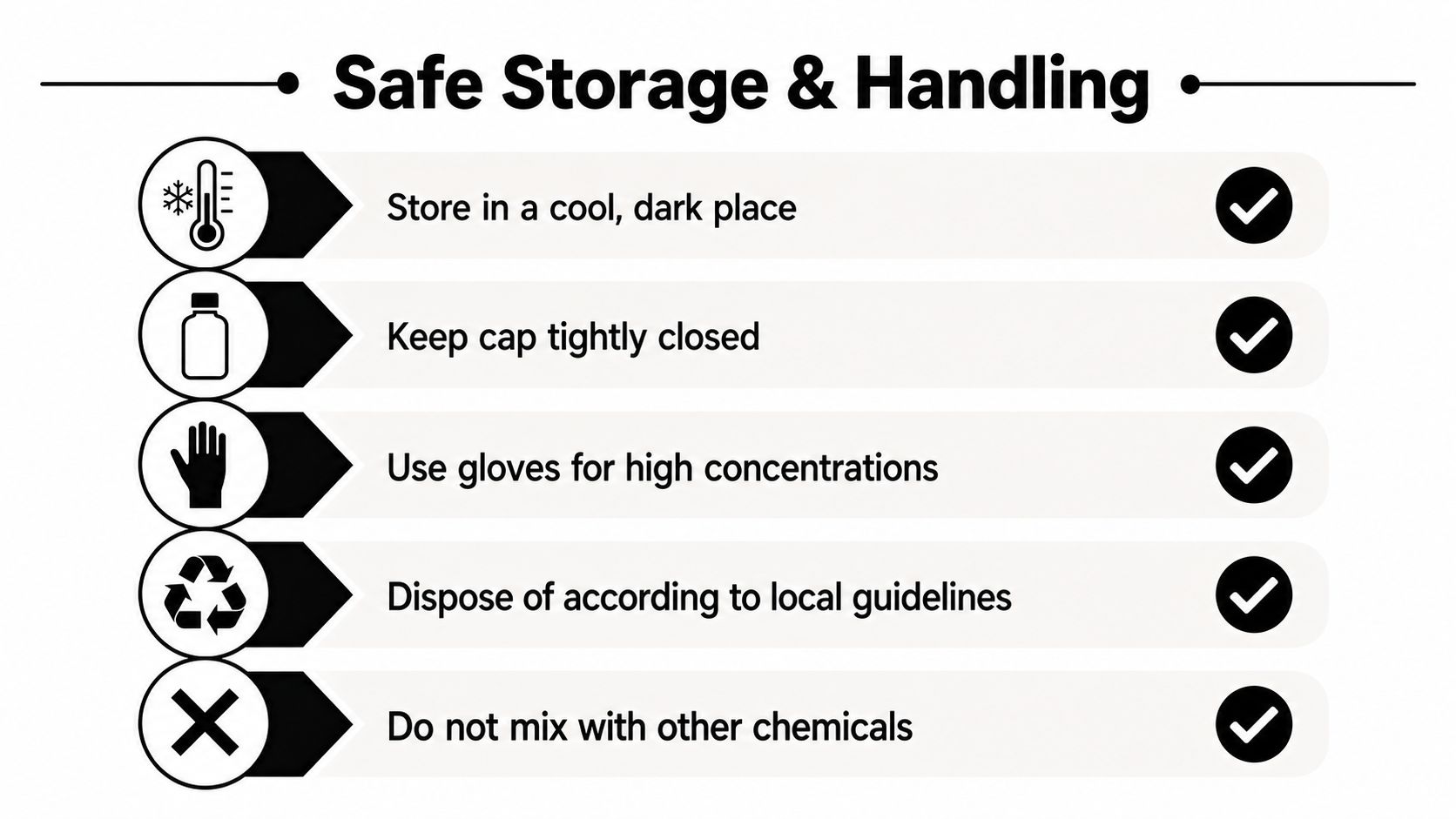
The most important habit is simple, keep the cap tightly closed and store the gel in a cool, dark place. Light and heat speed decomposition, and trace metals make it worse. That is why commercial guidance emphasizes stabilizers and low impurity control, and why peroxide is often supplied in carefully managed aqueous form.
If you are handling a stronger formulation, gloves make sense, especially when you are transferring product or working around a sink. The gel's thickness helps limit run-off, but it does not remove the need for basic chemical care.
What to do with leftovers
Do not mix peroxide gel with other chemicals, especially cleaners, and do not improvise disposal if your local rules say otherwise. If a product is formulated to release oxygen by decomposition, keep it away from substances or conditions that speed that reaction. That applies in storage, and it applies when you are deciding what to pour or not pour down a drain.
For a household cleaner that uses a refill mindset and careful dilution, Bathroom Cleaner Concentrate Refill, Scented Blend, Soap Scum, Hard Water Cleaning, Makes 16 oz Spray | Cielo Puro by Loyaltie is a useful example of how makers can build products around measured use instead of waste.
Handle it like this: open only when you are ready to use it, wipe the nozzle clean, close it right away, and keep the package away from metal contamination.
That kind of care is not fussy. It is how you keep a peroxide gel effective until the last squeeze.
Why Independent Brands Often Make Better Gel
Mass-market peroxide products are built for broad shelf appeal, which usually means generic formulas, vague labeling, and fewer answers when you want to know why one tube behaves differently from another. Independent brands can take a different route. They tend to be more transparent about ingredients, clearer about intended use, and more willing to make formulation choices that reflect the actual product job instead of just hitting a low price point.
Better labels make better decisions possible
If you're choosing a hydrogen peroxide gel for home care, the label should tell you concentration, use case, stabilizers if relevant, and whether the product is for oral use, skin, or another purpose. Independent makers are often more willing to explain why a product uses a certain gelling agent, why the pH sits where it does, or why the packaging is chosen for oxidizer stability. That kind of detail matters because peroxide is sensitive chemistry, not a generic base.
Buying directly from the maker also cuts out a lot of middlemen. That usually means you can ask better questions and get a better answer about ingredients, storage, and intended use. It also makes it easier to compare formulas across independent brands instead of guessing from one-size-fits-all marketing.
Why Loyaltie fits this category
Loyaltie is a marketplace where people discover and buy directly from the best independent brands in the US. In practical terms, that gives you a place to compare local makers and US-based producers without having to sort through the usual mass retail noise. For peroxide-adjacent wellness products and everyday care items, that direct access helps you choose based on ingredients and construction, not just packaging.
A better tube or jar often starts with a maker who understands the chemistry, not just the category. That's especially true for oxidizers, where stability, pH, and packaging are part of the product's real quality.
Why this matters: if two products look similar but one maker can explain the formula and the other can't, the clearer answer usually wins.
Independent brands also tend to have a more human relationship with their products. You're buying from someone who has to stand behind the formula, not from a faceless line item in a warehouse system. For peroxide gels, that accountability often shows up in cleaner communication and better ingredient discipline.
Your Practical Buying and Formulation Checklist
Before you buy a hydrogen peroxide gel, ask a few blunt questions. What's the intended use. What's the concentration. Is the gel meant for skin, mouth, or whitening. If the product can't answer those clearly, keep looking.
A quick buyer checklist
- Confirm the concentration: lower strengths suit everyday cleansing, while whitening formulas belong in a different category.
- Match the route of use: oral, topical, and cosmetic whitening products are not interchangeable.
- Look for stabilizer and pH clues: peroxide that stays stable needs controlled chemistry, not vague filler ingredients.
- Check the packaging: opaque, compatible packaging matters because peroxide degrades with heat, light, and contamination.
- Avoid mixed-purpose claims: if a product promises everything, it probably isn't focused enough for any one task.
For makers, the same logic applies in reverse. Label the product accurately, state the use case clearly, and don't hide the active concentration. If the gel is for oral care, the user should know whether it's meant for debriding, whitening, or supervised tray use. If it's for cleaning, the consumer should know it's not a general-purpose skin treatment.
The cleanest peroxide formulas are the ones that respect boundaries. They tell you what they're for, how strong they are, and what kind of contact they're designed to make. That's the kind of honesty that makes buying easier and using safer.
If you want a simpler way to discover well-made everyday products from real makers, visit Loyaltie and browse independent brands that sell directly to you. It's a practical way to find better-formulated wellness and home-care items, including products where ingredient transparency matters.