
You've probably done this before. You open your product page, stare at the empty description box, and think, “I know this product is good. Why is it so hard to explain it in a few lines?”
That feeling is normal, especially if you make food, skincare, coffee, supplements, or pet products. You spend your time refining formulas, choosing ingredients, testing textures, dialing in flavor, and packing orders. Writing copy can feel like the last annoying step before publish.
But your product description is often the moment when a curious shopper decides whether your product feels worth trying. For independent brands, that page has to do more than fill space. It has to explain what the product is, why it fits someone's life, and why it's a better choice than the generic version sitting on a big retail shelf.
Table of Contents
- Build a real buyer, not a vague audience
- Ask these questions before drafting
- Turn research into usable writing material
Your Product Description Is a Conversation
A weak description usually sounds like a label. It names the product, tosses in a few features, and stops there. That works if people already know your brand and already trust what you make. Most of the time, they don't.
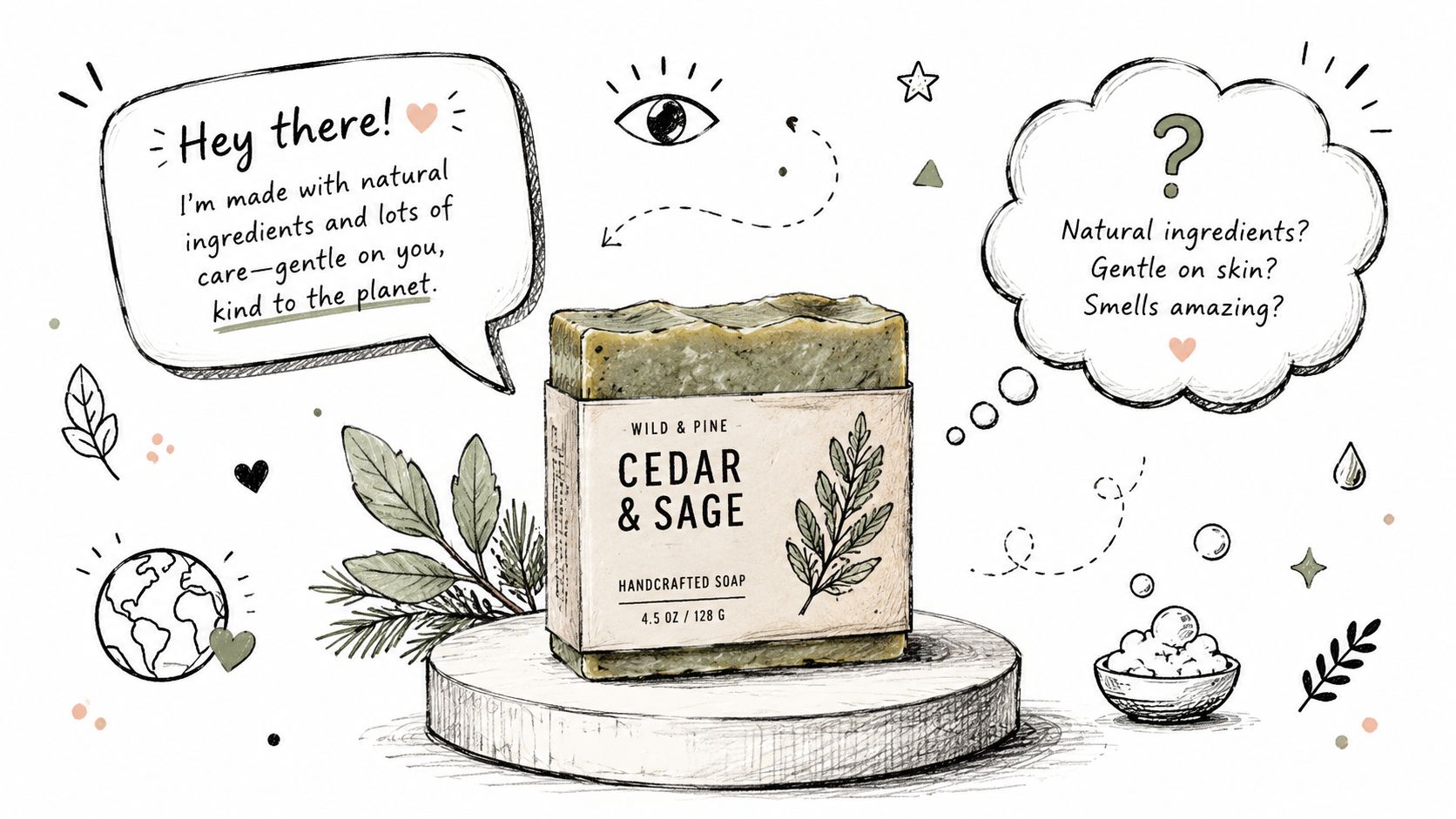
A strong description feels more like the start of a conversation. It answers the questions a customer would ask if they picked up your product at a market table or asked you about it in person. What does it do. Who is it for. What makes it different. Why should they trust it.
According to Smart Insights on product content and buying decisions, 87% of customers rate the inclusion of product content as critical when making a buying decision. That's why this isn't just a writing exercise. It's part of the product itself.
What shoppers are really looking for
When someone lands on a product page, they're usually trying to reduce uncertainty. They want enough clarity to decide, “Yes, this is for me,” or “No, this isn't quite right.”
That matters even more for independent brands. You don't have the built-in familiarity of a mass-market label. Your words help bridge that gap.
Practical rule: Write the description the way you'd answer a first-time customer who's interested but cautious.
For a soap, that might mean scent, skin feel, ingredients, and who it suits. For coffee, it might mean flavor direction, roast style, and what kind of daily drinker will like it. For pet products, it might mean size, material, intended use, and any obvious fit limitations.
What works and what falls flat
What works:
- Specific language: “Bright citrus scent with a creamy lather” is more helpful than “amazing quality soap.”
- Real-world context: Tell people when and why they'd use it.
- Confidence-building detail: Ingredient callouts, texture, compatibility, and care notes all help.
What doesn't:
- Generic praise: “Best,” “high quality,” and “must-have” say almost nothing on their own.
- Brand-first rambling: Long intros about your mission before the product itself.
- Missing basics: If a shopper can't tell what they're buying in seconds, the page is making them work too hard.
Your description doesn't need to sound polished in a corporate way. It needs to sound clear, grounded, and useful.
First Find Your Person Then Find Your Words
Most bad product descriptions start too early. The writer opens a blank page before getting clear on who the product is for.
If you want to know how to write product descriptions that connect, start with the buyer, not the wording. Mailchimp recommends gathering audience details such as age, gender, location, interests, and buying behaviors before writing, as explained in Mailchimp's guide to product descriptions. That sounds like marketing language, but it's practical.
Build a real buyer, not a vague audience
Don't write for “everyone who likes natural products.” That audience is too broad to guide your copy.
Write for one recognizable type of customer:
- The busy parent looking for a pantry staple that works for mixed dietary needs
- The skincare shopper who reads ingredient labels before buying
- The coffee drinker who wants variety without committing to a full bag
- The dog owner trying to replace a flimsy toy with something better suited to their pet
When you know the person, you start using better words. You stop describing the product in a vacuum and start describing what matters to them.
Ask these questions before drafting
Use a rough note, spreadsheet, or product brief. You don't need a fancy system. You do need answers.
Who is this for
Write one sentence that identifies the best-fit buyer.What problem are they trying to solve
Be concrete. Dry skin. Bland coffee routine. Hard-to-find allergen-friendly pantry option. A grooming product that feels less harsh.What would make them hesitate
They may wonder about scent strength, ingredients, taste, skin feel, serving size, safety, or whether the product fits their routine.What language would they use
Customers often search with simple phrases, not brand language. “Gentle face scrub” beats internal jargon every time.
If you're still guessing at customer language, your reviews, messages, and order questions usually tell you more than your brainstorm does.
Turn research into usable writing material
Once you've got the buyer in focus, pull out three things:
- Top desired outcome
- Top concern
- Top detail that builds trust
That trio often becomes the spine of the description.
If you're setting up your store and need a place to put that work into practice, sell on Loyaltie gives independent brands a way to list products in a marketplace where people discover and buy directly from the maker.
A good description sounds personal because it is. Not personal in the diary sense. Personal in the sense that it feels written for someone, not at everyone.
A Simple Framework for Descriptions That Work
Blank-page paralysis usually disappears when you stop trying to write “a product description” and start filling a structure.
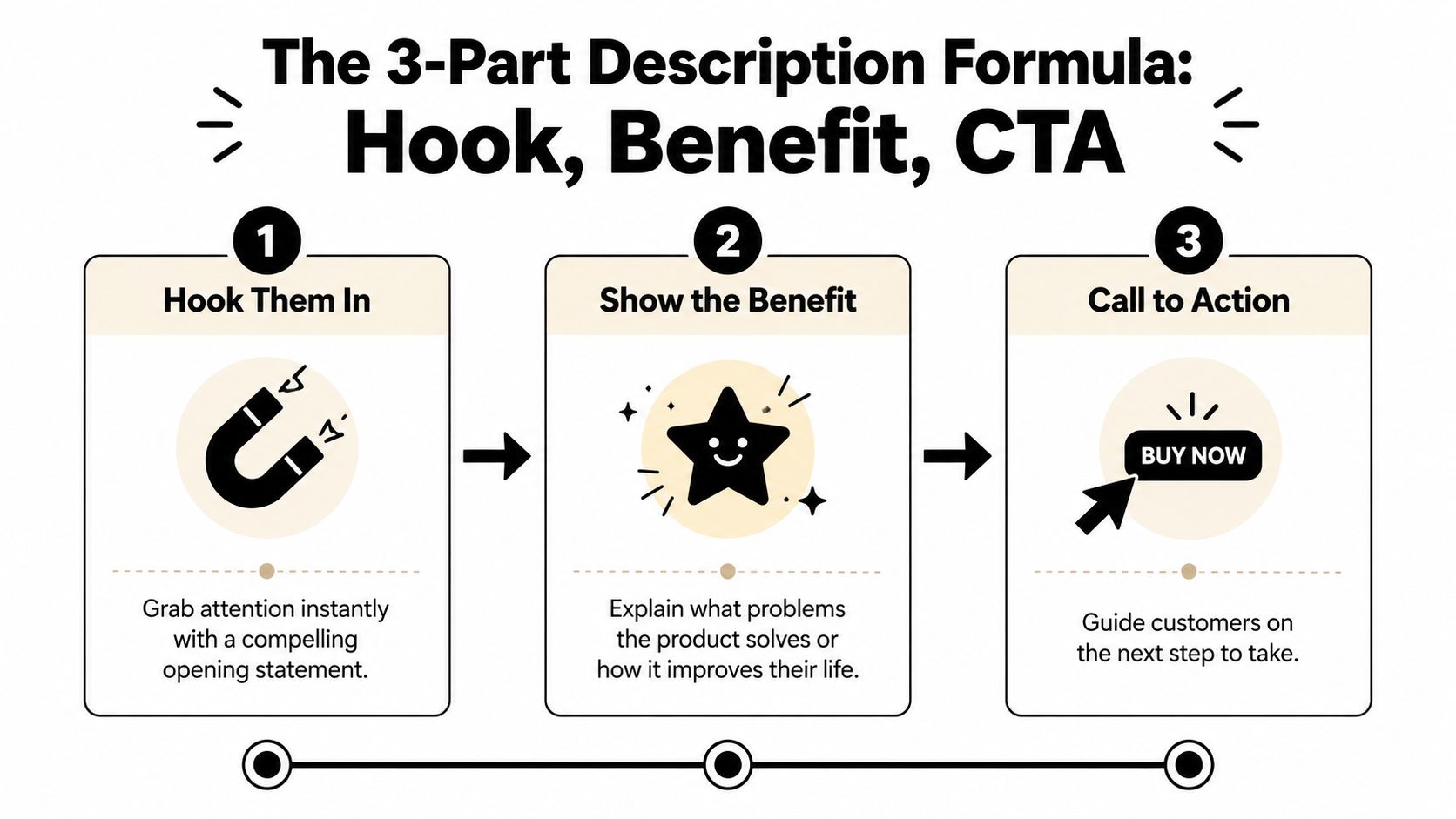
The simplest one I've found for CPG-style products is this: Hook, Details, Feeling. It's easy to repeat across food, beauty, wellness, and pet categories without making every page sound identical.
Start with the buyer's first question
A high-performing workflow starts before drafting. You define the target persona, identify user goals, and map the objections the description needs to answer, as outlined in ProductLed's product-description workflow. That sounds structured because it should be.
Before you write the first line, ask: what does this buyer need to know first to keep reading?
For most products, it's one of these:
- what this product helps them do
- what makes it distinct
- whether it fits their preferences or routine
A good opening doesn't warm up. It lands the point fast.
Use the Hook Details and Feeling structure
The first part is the Hook. Give the main benefit in plain language.
Then come the Details. Trust gets built through these. Include ingredients, scent notes, flavor direction, size, texture, use case, or compatibility details.
Close with Feeling. Help the customer picture the experience of using the product in daily life. Not in a dramatic way. Just enough to make the product feel real.
Here's the structure in a practical template:
| Component | What to Write | Example (for a coffee blend) |
|---|---|---|
| Hook | Lead with the clearest benefit or fit | A balanced everyday coffee with a smooth, familiar cup |
| Details | Add scannable facts that reduce uncertainty | Notes of chocolate and toasted nuts. Roasted for dependable morning brewing. |
| Feeling | Show the role it plays in real life | Easy to reach for when you want a steady, comforting cup before the day starts. |
A lot of launch teams use a similar logic when turning product attributes into buyer-facing copy. If you want another practical lens on how product information gets shaped for marketplace visibility, Full Circle Agency's launch insights are worth reviewing.
After you have the structure, you can layer in media that supports the story. A short explainer can help if the product needs more context.
A simple fill-in version looks like this:
Hook
This is for people who want ___ without ___.Details
Made with ___. Includes ___. Best for ___. Good to know: ___.Feeling
Fits easily into ___ and helps make ___ feel a little better.
Don't let the “Feeling” line drift into fluff. Keep it tied to the product experience, not brand poetry.
That framework works because it respects how people shop. They want the point first, the facts second, and a reason to care all the way through.
Make Your Description Easy to Read and Find
A solid description can still underperform if it's hard to scan. Consequently, many makers lose people. The copy may be good, but the presentation makes it feel like work.
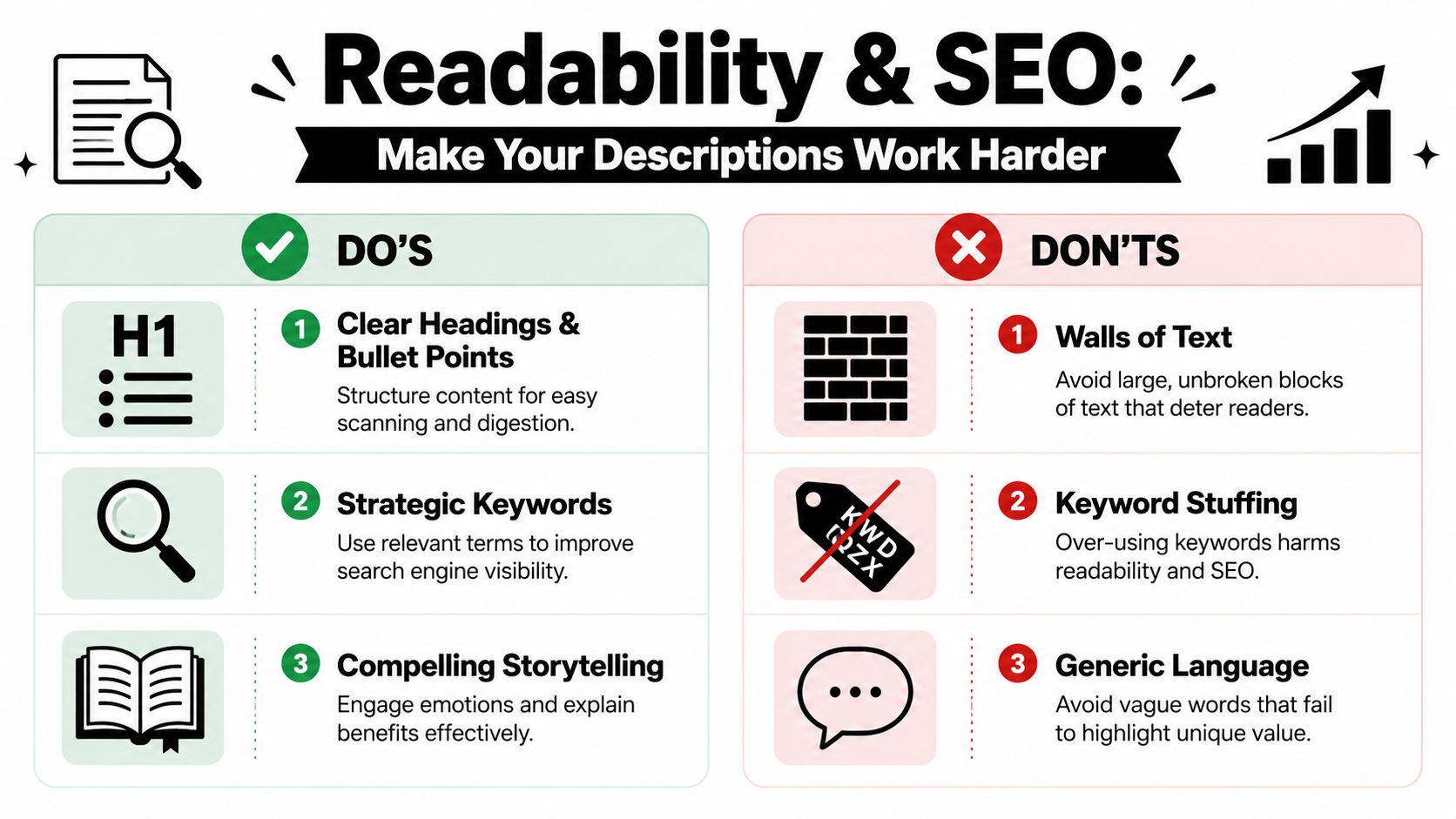
For structure and readability, guidance from InMotion Hosting on product descriptions recommends keeping descriptions short, scannable, and benefit-led, using short sentences, bullet points, and bolding for key value claims. That lines up with what happens on product pages. Most shoppers scan first, then read more closely if the page earns their attention.
Format for scanners not devoted readers
If your description looks dense on mobile, shorten it. If the key point is buried in the middle, move it up.
A clean format usually includes:
- A sharp opening: One or two sentences that state the benefit
- A compact detail block: Ingredients, dimensions, scent, flavor, use case, or care
- Visual emphasis: Bold only the words that help someone scan faster
- Breathing room: Short paragraphs and enough white space
This isn't about dumbing anything down. It's about respecting the way people browse.
Write for search the same way people shop
SEO gets overcomplicated. For most independent brands, it's simpler than it sounds. Use the words your customer would type when trying to find a product like yours.
That means:
- Name the actual product clearly
- Include category language naturally
- Use ingredient or use-case terms people care about
- Avoid stuffing the same phrase over and over
If you sell a turmeric body scrub, the useful terms might be turmeric, exfoliating sugar scrub, face and body polish, or dark spot care. If you sell coffee, the useful terms might be single-origin coffee, sampler, or flavor discovery pack.
Marketplace sellers can learn a lot from Amazon listing optimization techniques, especially around clarity in titles, features, and searchable phrasing. Even if you're selling direct, the lesson holds. Clear language gets found more easily than clever language.
For more practical selling guidance, Loyaltie seller resources collect information relevant to independent brands that want to improve listings and storefront basics.
The best SEO line is often the line that sounds the most natural when a customer says it out loud.
The trade-off is simple. If you chase keywords too hard, the copy sounds robotic. If you ignore search language entirely, fewer of the right people find the page. The sweet spot is writing in customer language with enough structure that both humans and search systems understand what you sell.
Examples for Food Beauty Wellness and Pet Products
Advice gets clearer when you can see the shift from weak copy to useful copy. The biggest improvement usually comes from answering comparison questions and practical fit questions, not from adding more adjectives.
Nielsen Norman Group emphasizes that product descriptions should help with comparison, and that shoppers need concrete specs like size, ingredients, and use cases before they trust a purchase, as noted in NN Group's guidance on product descriptions.
Food example
Before
A delicious banana bread mix made with quality ingredients. Great taste and easy to make.
After
Bake a banana bread that fits mixed dietary needs without turning dessert into a compromise. This mix is gluten-free, vegan, and allergen-friendly, with a moist homemade-style result that works for everyday baking or sharing at the table.
Why it's better
- It names the fit: mixed dietary needs
- It adds useful detail: gluten-free, vegan, allergen-friendly
- It helps comparison: customers can quickly tell how it differs from a standard mix
For food, don't skip practicals like allergens, ingredient expectations, flavor direction, and serving context.
Beauty example
A generic scrub description often says something like this:
Before
An amazing exfoliating scrub that leaves your skin feeling soft and refreshed.
After
This scrub is made for people who want exfoliation without a harsh, stripped feel. A product like Turmeric Kojic Acid Exfoliating Sugar Scrub Brightening Face Body Polish Dark Spot Care Jar should quickly tell the shopper where it can be used, what kind of exfoliation to expect, and which ingredients they'll care about first.
That second version doesn't invent claims. It does something more useful. It frames the buyer's concern and points to the details they need next.
Wellness example
Before
A daily wellness product made with thoughtful ingredients.
After
Built for a daily routine, with ingredient information and use guidance that help shoppers decide whether it fits their goals. If the product has a strong taste, a preferred time of use, or ingredient sensitivities to note, say that early.
Wellness buyers often compare products closely. They want clarity, not mystery. Tell them what they need to know to rule the product in or out.
Clear boundaries build trust. If a product isn't for everyone, say who it's best suited for.
Pet product example
Before
A fun pet product your dog will love.
After
Designed for a specific kind of use, with size and compatibility details that help you decide if it suits your pet. Include material notes, intended activity, and any obvious limitations so the buyer isn't left guessing.
Pet product copy improves fast when you stop assuming “cute” is enough. Owners want to know whether the product fits their animal's size, behavior, and routine.
Across all four categories, the strongest product pages feel grounded. They combine benefit, specifics, and honest fit. That's how product descriptions start sounding less like filler and more like someone knowledgeable helping you choose well.
Your Pre-Publish Checklist
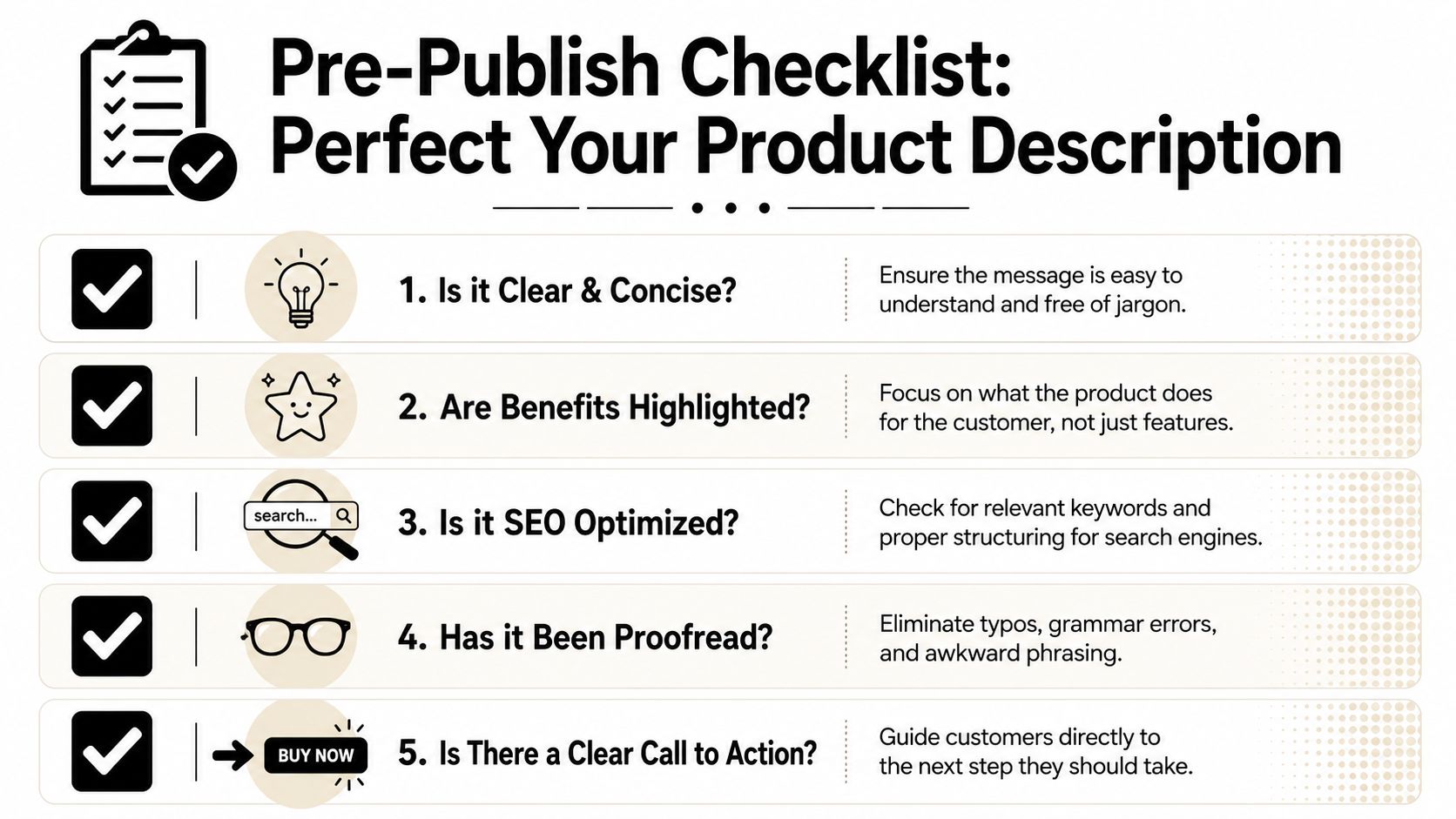
Before you publish, step away from the draft for a few minutes and come back like a first-time shopper. That final pass catches most of the issues that undermine conversion.
A quick final pass before you publish
Use this checklist:
Lead with the point
The first lines should tell the shopper what the product is for and why it matters.Check for scannability
Break long text into short paragraphs or bullets. Bold only the phrases that help with quick reading.Answer obvious objections
Add the missing detail a careful buyer would ask about. Ingredients, size, scent, use case, or compatibility.Read it out loud
If it sounds stiff, trim it. Good ecommerce copy usually sounds like a clear spoken explanation.Make the next step obvious
The page should support action, whether that's buying once, choosing a size, or planning a reorder.
A product like the Single Origin Coffee Sampler, Brazil Colombia Ethiopia, Flavor Discovery Pack, 6 x 2oz Bags (12oz Total) | Cozy Notes Coffee Co by Loyaltie is a good reminder of how specific details help. The snapshot tells you that it includes 6 x 2oz packs and features origins like Brazil and Ethiopia, which gives a shopper something concrete to evaluate without committing to full bags.
One more habit helps over time. Test one change at a time. Rewrite the first paragraph, or reorganize the bullets, then watch what questions customers ask and which version feels clearer. You don't need a complicated testing setup to learn. You just need consistency.
If you're building product pages for an independent brand, Loyaltie is a marketplace where people discover and buy directly from the best independent brands in the US. It gives makers a place to present products clearly, help shoppers buy with confidence, and sell without a middleman.