
The most popular advice about how to support small business is also the least useful: “Just buy local, even if it costs more.” You shouldn't have to accept weaker convenience, confusing checkout, or a large price gap to find something made by an independent brand. The better approach is to find products that earn a place in your routine because they're fresher, more thoughtful, and more enjoyable to use.
That shift matters. You can discover coffee, skincare, wellness products, food, pet goods, and everyday essentials made by people who care about the details, then buy directly from the maker without turning your shopping habits into a moral exercise. The right tools make local discovery feel less like a scavenger hunt and more like clicking “add to cart.”
Table of Contents
Why Supporting Small Business Is Actually a Quality Upgrade
The assumption that independent brands mean “pay more, wait longer, and settle for less” is backwards. In many product categories, the independent alternative gives you a clearer look at what you're buying, who made it, and why the formula or material was chosen.
A local coffee roaster can make sourcing and roast style part of the product story. An independent skincare maker can explain why a formula uses particular oils, extracts, or skin-friendly ingredients. A pet-product brand may build its range around the needs of animals its founders live with. That direct connection doesn't guarantee quality, but it gives you a much better basis for judging it.
Look for care you can verify
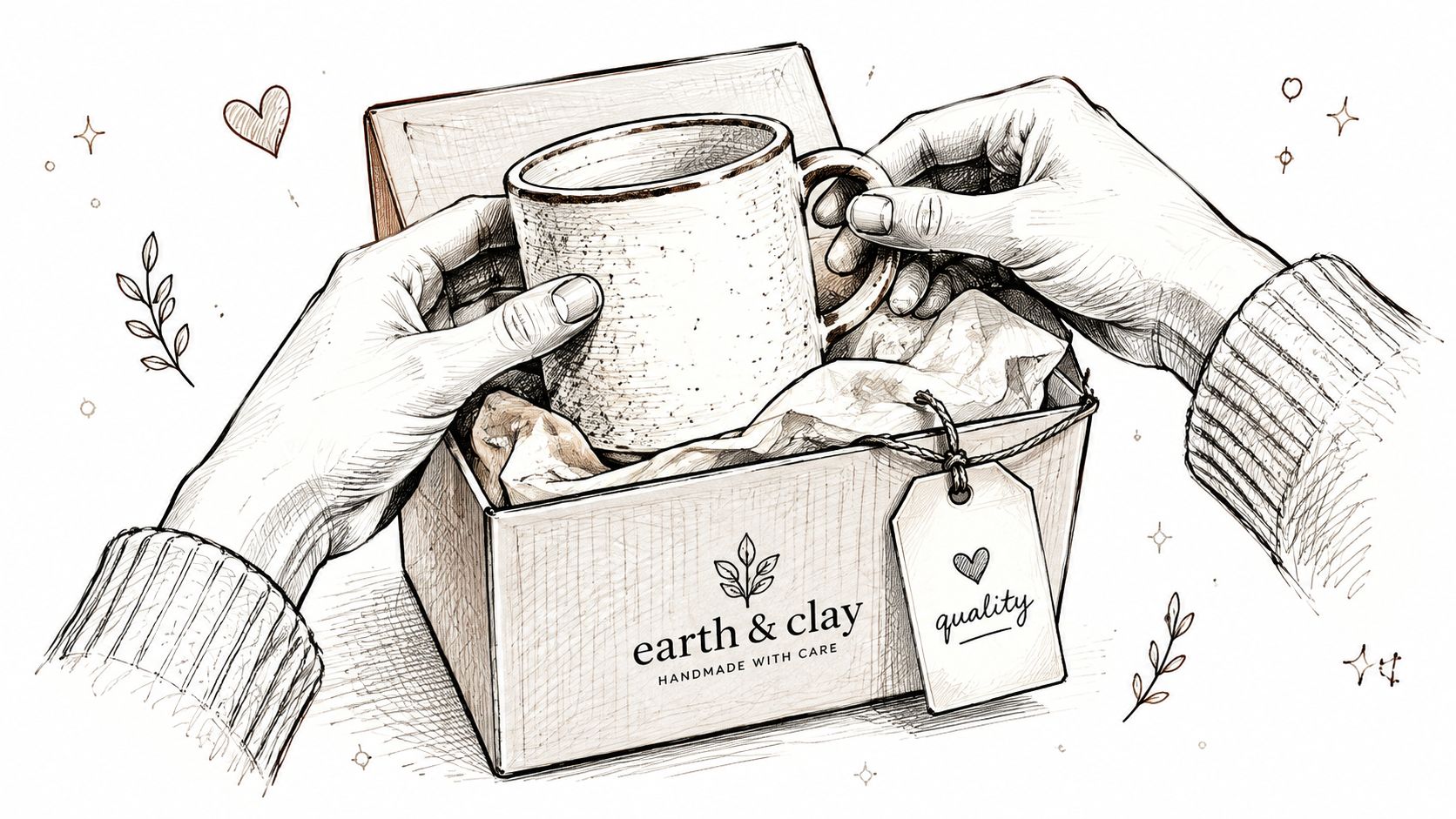
Mass-produced products often need to work across enormous retail systems. Independent brands can build around a narrower point of view, whether that means a carefully developed supplement, a small-run food product, or a cleaner household formula. The advantage for you is specificity. You can compare the ingredients, materials, origin details, and maker's process instead of relying only on polished shelf packaging.
Buying directly from the maker also removes some distance between the person producing the item and the person using it. With no middleman, your questions can reach someone who understands the product rather than passing through several layers of merchandising and customer service. That can make it easier to ask about allergens, sourcing, intended use, or how to reorder.
Practical rule: Don't buy independent just because the label says “local.” Buy it because the product details give you a convincing reason to choose it.
Convenience is a design problem
You don't need to visit a weekend market for every purchase. Online storefronts, direct ordering, saved preferences, and regular delivery can make independent products fit the rhythm of your life. The smart version of local shopping keeps the human connection while removing unnecessary search and checkout friction.
That's why the strongest independent brands feel like a quality upgrade, not a donation. You're choosing a coffee you look forward to brewing, skincare with an ingredient list you understand, or pet products that solve a real household problem. Community impact is meaningful, but the purchase has to work for you first.
Finding Independent Brands You Will Actually Love
Discovery is usually harder than intention. You may already want better coffee or a more transparent supplement, but search results tend to push the brands with the largest advertising budgets. Use a repeatable process instead of waiting for the perfect recommendation to appear.
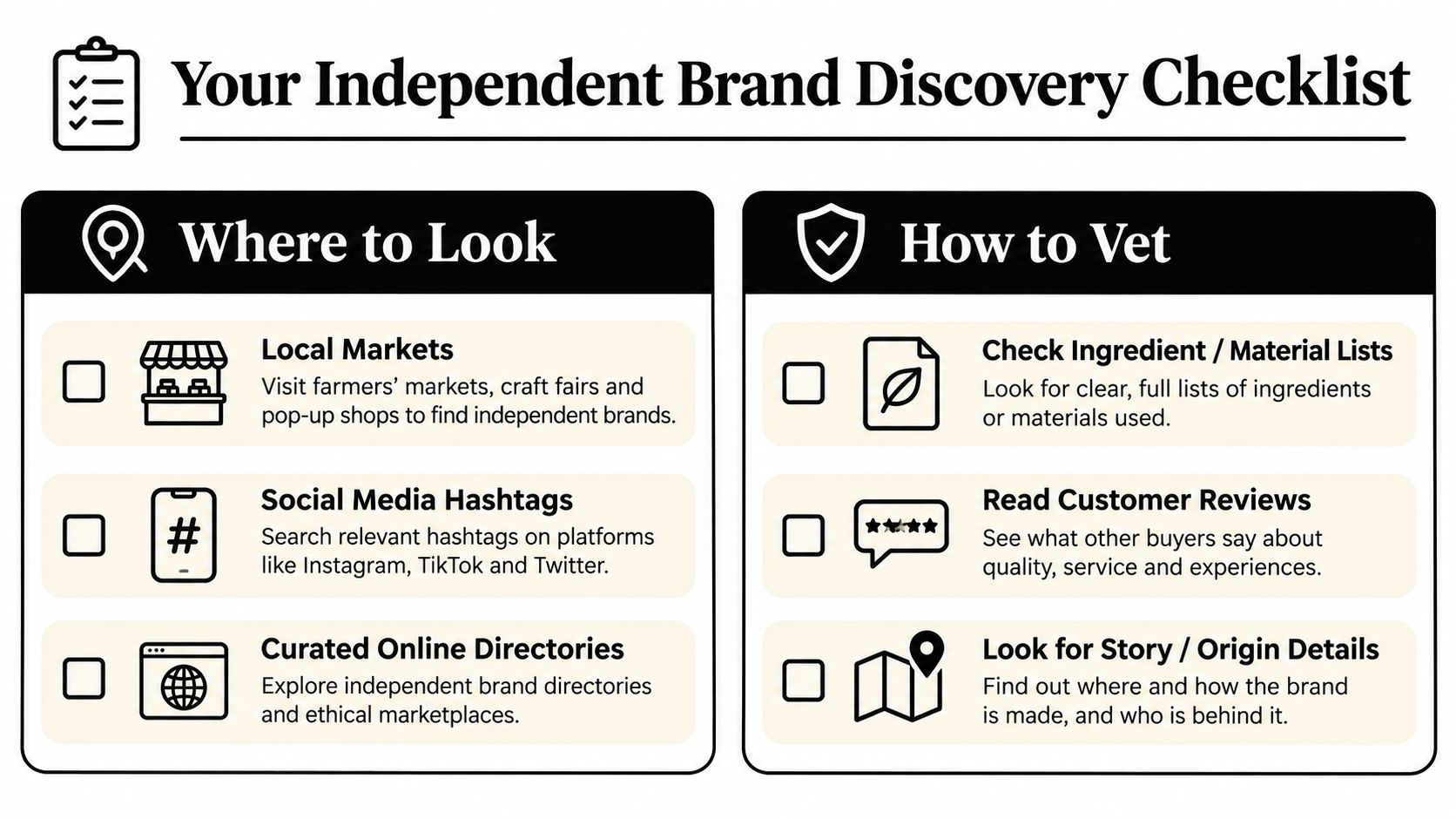
Start with the category, then add a point of view. Search for phrases such as “independent coffee roaster,” “local dog treats,” “direct-to-maker skincare,” or “small-batch wellness brand” alongside your city or state. On social platforms, follow local markets, makers, growers, and neighborhood businesses, then explore the accounts and tags they interact with. Recommendations become more useful when you search for the product and the place together.
Use curated discovery instead of endless scrolling
A marketplace can shorten the first stage of the process by putting independent brands in one searchable environment. Loyaltie is one option for discovering and buying directly from independent brands in the US, including makers, growers, and producers.
Local directories and community groups help too, especially when recommendations include useful context. A post that says “try this brand” is less valuable than one that explains what the person bought, how they used it, and what made it different. Ask for recommendations by need, not just by category. “Which local coffee works well for pour-over?” will produce better answers than “Who sells coffee?”
Vet the product, not just the story
Before buying, check:
- The full ingredient or material list: Look for information that helps you decide whether the product suits your needs.
- The maker's origin details: A clear explanation of where the product comes from and who makes it is more useful than vague lifestyle language.
- Customer reviews: Prioritize reviews that describe use, texture, flavor, fit, scent, or results rather than generic praise.
- The business identity: Check whether the brand communicates directly, answers questions clearly, and shows a consistent relationship with its products.
Be cautious when a supposedly independent label offers no meaningful product information or appears identical to a widely distributed corporate range. “Local” should describe a real connection to the maker, not just a marketing mood.
Everyday Products That Are Better From Local Makers
The biggest quality gains usually appear in products you use repeatedly. Coffee, skincare, supplements, food, cleaning products, and pet goods give you enough experience to notice differences in freshness, ingredients, performance, and packaging.
Use this table as a starting point, not a rule. Independent brands vary widely, so compare the actual product in front of you with the alternative on the shelf.
| Product Category | Mass-Produced Typical | Independent Brand Advantage |
|---|---|---|
| Coffee | Broad blends designed for scale and consistent distribution | More visible sourcing, roast choices, and fresher-feeling product stories |
| Skincare | Long ingredient lists and broad positioning for a large audience | Clearer formulation choices and a more focused approach to specific routines |
| Supplements | Standardized branding that can make products difficult to distinguish | More direct explanations of ingredients, intended use, and formulation purpose |
| Food | Extended distribution and packaging built for large retail systems | Direct connection to the producer, distinctive flavors, and more local context |
| Pet products | Generic formulas and wide-market positioning | Products shaped around specific pets, ingredients, or maker experience |
| Home care | A standard formula optimized for mass distribution | More transparent product details and alternatives such as this plant-based all-purpose cleaner from Rose of Eden Home & Scents |
The comparison that matters most is not “local versus national.” It's what do you get for the effort and money? Read the ingredient list, check the size, consider how often you'll use the product, and decide whether the maker offers information or service that helps you make a confident choice.
For coffee, look for sourcing and roast information. For skincare and supplements, look for a complete ingredient list and clear usage guidance. For food and pet products, pay attention to ingredients, handling details, and the maker's explanation of the product's intended role. You're looking for evidence, not just a charming origin story.
Independent products can cost more in some categories, but a higher price isn't automatically better value. A product earns its place when you enjoy using it, understand what's inside, and don't need to replace it quickly because it failed to meet your needs.
Promoting the Brands You Love Without Being Awkward
The easiest promotion is specific and honest. Don't write a dramatic endorsement for every purchase. Tell one person why a product worked for you, show it in use, or leave a review that gives the maker information another buyer can use.
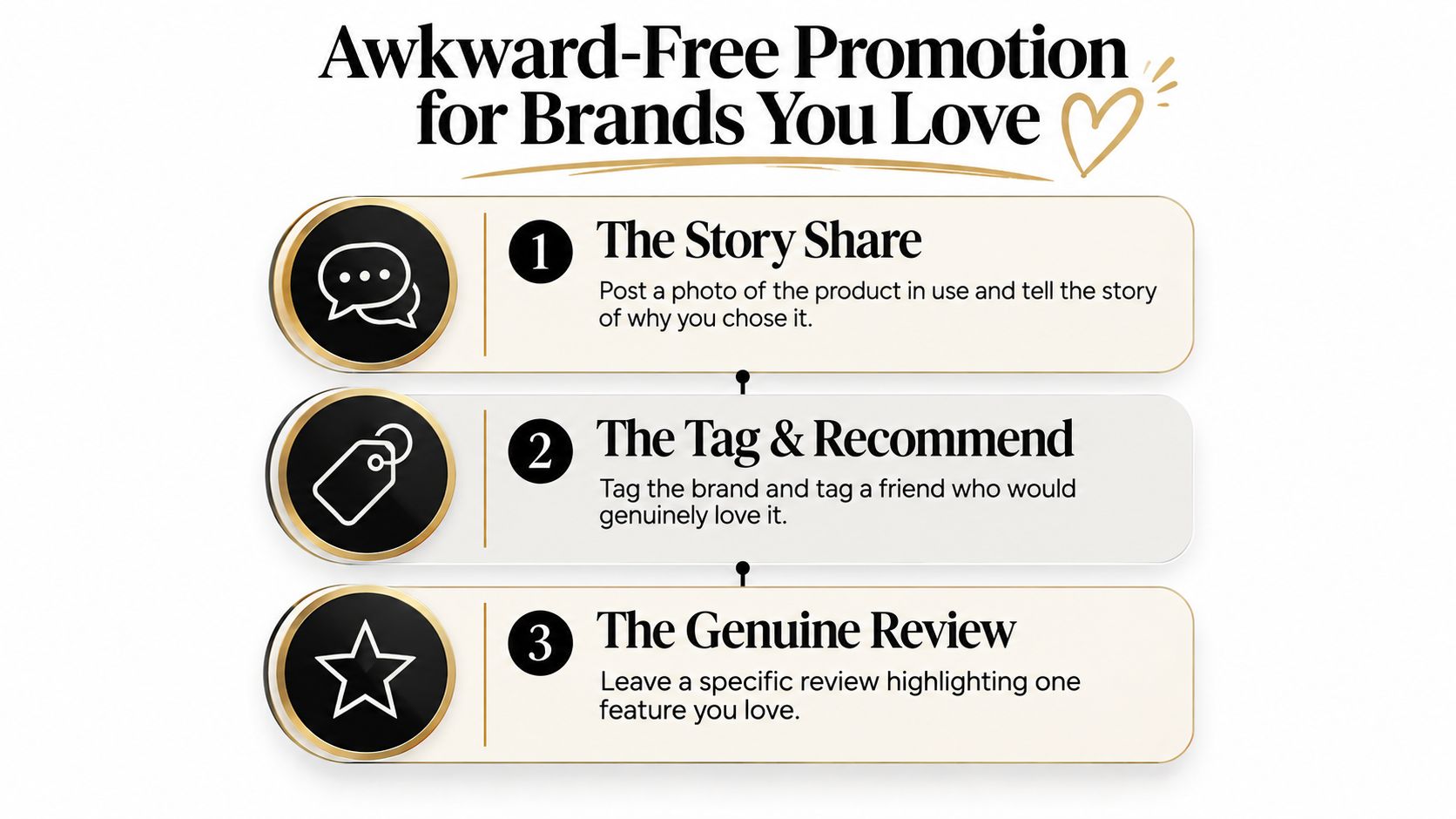
Try these natural formats:
- The story share: “I found this coffee from a local roaster and liked it because the flavor held up well in my morning pour-over.”
- The useful recommendation: “If you're looking for a hand-drawn card that doesn't feel generic, you might like A2 Celebration Greeting Card, 100% Recycled Paper, Blank Inside, Hand-Drawn Congrats Card, Includes Kraft Envelope | Chika Paper Studio by Loyaltie.”
- The genuine review: “I liked the blank inside because I could write a personal message, and the card arrived with a kraft envelope.”
- The direct thank-you: “I've been using your product regularly, and the ingredient information made it easier to choose. I wanted you to know that detail mattered.”
Tag the brand when the platform makes that natural, but don't turn every post into an advertisement. A photo of the product in your actual kitchen, bathroom, office, or pet routine carries more credibility than a polished sales pitch.
Place your review where future buyers will see it, and mention one concrete feature. Flavor, texture, scent, packaging, fit, ease of use, or customer communication gives the maker something useful and helps another shopper decide.
You can also recommend a maker in a group conversation when the product solves the exact problem someone described. That approach feels generous because it's relevant, not because you're trying to manufacture enthusiasm.
The Economic Impact of Your Purchasing Choices
Your purchase does more than complete a transaction. It helps a maker keep producing, pay suppliers, serve customers, and build a business connected to its community. Supporting an independent brand can also deliver better quality and a more personal experience, without requiring you to accept a higher price or a harder ordering process.
The scale is larger than many shoppers realize. SMEs account for about 90% of businesses worldwide, around 70% of employment, and roughly 50% of global GDP, according to the international and industry estimates summarized by BizReport's small-business overview. In the United States, small businesses represent 99.9% of businesses and employ 45.9% of American workers, or 61.6 million people, as reported in the cited small-business statistics overview.
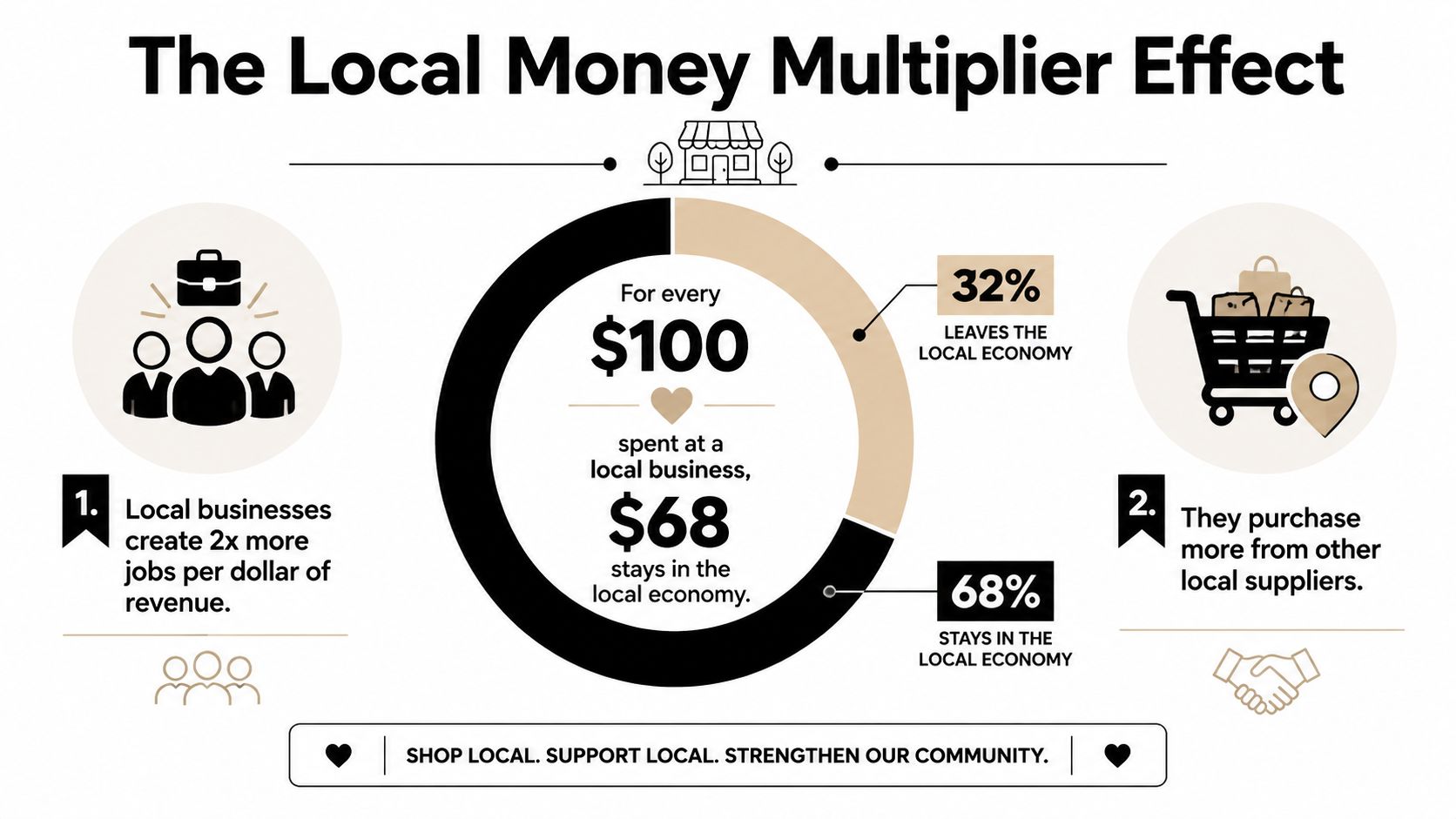
A 2019 survey by the American Independent Business Alliance found that 91% of Americans shop at a small business at least once a week. It also estimated that each dollar spent at one kept 67 cents in the local community and created an additional 50 cents of local economic impact, as summarized in the research on local-business purchasing and community impact.
Make the impact practical
Good intentions do not overcome a difficult buying experience. Shoppers compare price, shipping, search effort, and convenience, so supporting local businesses works best when independent brands make purchasing as easy as clicking “add to cart” at a major retailer.
The opportunity extends to everyday food purchases. USDA data recorded $9 billion in local edible food commodities sold directly in 2020, with 77% of farms with direct sales selling directly to consumers. The same USDA local-foods summary reported that on-farm stores and farmers markets represented $1.7 billion, or 59% of direct-to-consumer revenue.
Producers sold $17.5 billion in food through direct marketing channels in the 2022 Census of Agriculture, including unprocessed and processed value-added food, according to USDA's direct-marketing data. If you run a café, restaurant, or hospitality business, these proven tactics for hospitality operators can help turn local demand into a clearer, easier customer experience. Choose brands that make quality, pricing, delivery, and reordering straightforward, and buying local becomes a practical upgrade rather than an act of charity.
Building Lasting Relationships With Independent Makers
A one-time order becomes part of your routine when the product improves it. Try a local coffee, decide it belongs in your weekday mornings, and set a reminder to reorder before the bag runs out. Find a skincare product that suits your routine, then choose a buying schedule that matches how quickly you use it. The relationship grows through usefulness.
Regular delivery works best when you leave room to adjust. Small makers may produce in cycles, so follow their availability and timing guidance. Their production rhythm can add appeal when product details, ordering, and reordering remain clear. That clarity keeps the experience convenient without asking an independent brand to copy mass retail.
Give feedback makers can use
“Loved it” is kind, but it gives a maker little direction. A useful note names what you bought, how you used it, and which detail made a difference. For example: “The cleaner handled kitchen residue without leaving a strong scent, so I've started using it for my weekly wipe-down.”
Contact the brand through its preferred channel, follow product updates, and attend local maker events when you want a more personal connection. If a problem comes up, describe it directly and give the maker a chance to respond. Independent brands can improve only when customers explain what happened.
For makers seeking more local buyers online, Loyaltie's seller resources provide guidance for presenting products and building direct relationships through a marketplace. As a shopper, you benefit when product information, ordering, and follow-up are easy to understand.
Keep the routine simple. Choose one category, find a maker whose product you would happily buy again, and build from there. Reorder what works, recommend it when it fits someone else's needs, and let quality carry the conversation.
Loyaltie is a marketplace for discovering and buying directly from independent brands across the US. It combines online convenience with a more personal connection to the people behind products in categories such as coffee, food, wellness, skincare, and pet products. Visit Loyaltie to find an everyday alternative you will be glad to reorder.