You're probably here because you found something great online from a maker you've never bought from before. Maybe it's a coffee sampler from a roaster in another state, a skincare product with an ingredient list that makes sense, or pet treats that look better than half the snacks in your own pantry. You want the product. You also want to know whether clicking “buy” is smart.
That hesitation is healthy.
Online shopping fraud isn't a niche problem anymore. McAfee says e-commerce fraud was valued at $44.3 billion in 2024 and is projected to grow 141% to $107 billion by 2029 (McAfee online shopping safety guidance). You don't need to panic. You do need standards.
The good news is that learning how to shop safely online doesn't mean giving up on independent brands or sticking to giant retail platforms forever. It means knowing how to check the basics fast, verify the maker behind the product, and pay in ways that protect you if something goes sideways. Once you know that, you can buy directly from the maker with a lot more confidence and find better everyday products without the usual anxiety.
Table of Contents
The Thrill of the Find and the Fear of the Click
You find a product that instantly feels more interesting than anything on a mass-market site. The packaging looks thoughtful. The ingredients look cleaner. The product descriptions sound like a real person wrote them. Then the doubt creeps in. Is this an actual maker, or a polished scam?
That question gets sharper when you're buying the kinds of things people reorder often. Coffee. Supplements. Skincare. Pantry goods. Pet products. These are exactly the categories where discovering independent brands can feel like a quality upgrade, because you're getting closer to the people who make the thing. They're also the categories where a bad purchase can become more annoying than a one-off mistake if your account or payment details get exposed.
Practical rule: Curiosity is good. Blind trust is not.
The internet has trained people to think “safe” means “buy from a huge retailer.” I think that's lazy advice. A better rule is this: buy from whoever passes your checks. Sometimes that's a major store. Sometimes it's a local maker with a simple site, clear policies, and a real identity you can verify in five minutes.
There's also a scale issue. The Global Cyber Alliance noted that more than 2.7 billion people worldwide were expected to shop online in 2024 (Global Cyber Alliance shopping safety overview). When that many people shop online, scammers follow the traffic. That doesn't make independent sellers risky by default. It means you should stop judging trust by brand size alone.
The smart mindset shift
Safe shopping isn't about becoming suspicious of every unfamiliar brand. It's about getting good at quick verification.
Let's put it this way:
- Big retailer, weak habits: still risky if you click through phishing emails, reuse passwords, or pay over public Wi-Fi.
- Independent maker, strong signals: often perfectly reasonable if the site is secure, the seller is real, and the payment method protects you.
If you love finding better products from real people, that's good instinct. Keep it. Just pair it with a process.
Build Your Digital Shopping Armor
You do not need a giant retailer to shop safely. You need a setup that does not hand easy wins to scammers the moment you click "buy" on a small maker's site.
Lock down your connection first
Start with the environment around you. A thoughtful ceramicist, candle maker, or local coffee roaster can run a perfectly honest shop, and your purchase can still go sideways if you check out on a sketchy network with weak account security.
Use a private connection for purchases. Home Wi-Fi is fine if you trust it. Cellular data is often better than public Wi-Fi. Coffee shops, airports, hotels, and coworking guest networks are bad places to enter card details, passwords, or one-time login codes.
If you travel often or work from the road, use a VPN on networks you do not control. It adds a layer of privacy and cuts down needless exposure. If you want a practical explanation of why shared networks create extra risk, read this guide on China internet privacy risks. The lesson applies anywhere. Unknown networks deserve caution.
Treat every shopping login like a real account
Small-brand shopping gets risky when people treat store accounts as disposable. That is a mistake. Your login still ties to your email, your order history, your saved address, and sometimes your payment details.
Use this standard:
- Give each store its own password. One breach should not compromise your email, bank, and every other shop you use.
- Turn on two-factor authentication when a store offers it. It blocks a lot of account takeover attempts.
- Save payment information sparingly. Keep it off sites you only use once or twice.
- Check how the business handles your data before you buy. Clear policies are a good sign, especially with newer marketplaces. For a plain-language example, read the Loyaltie privacy policy for sellers and marketplace use.
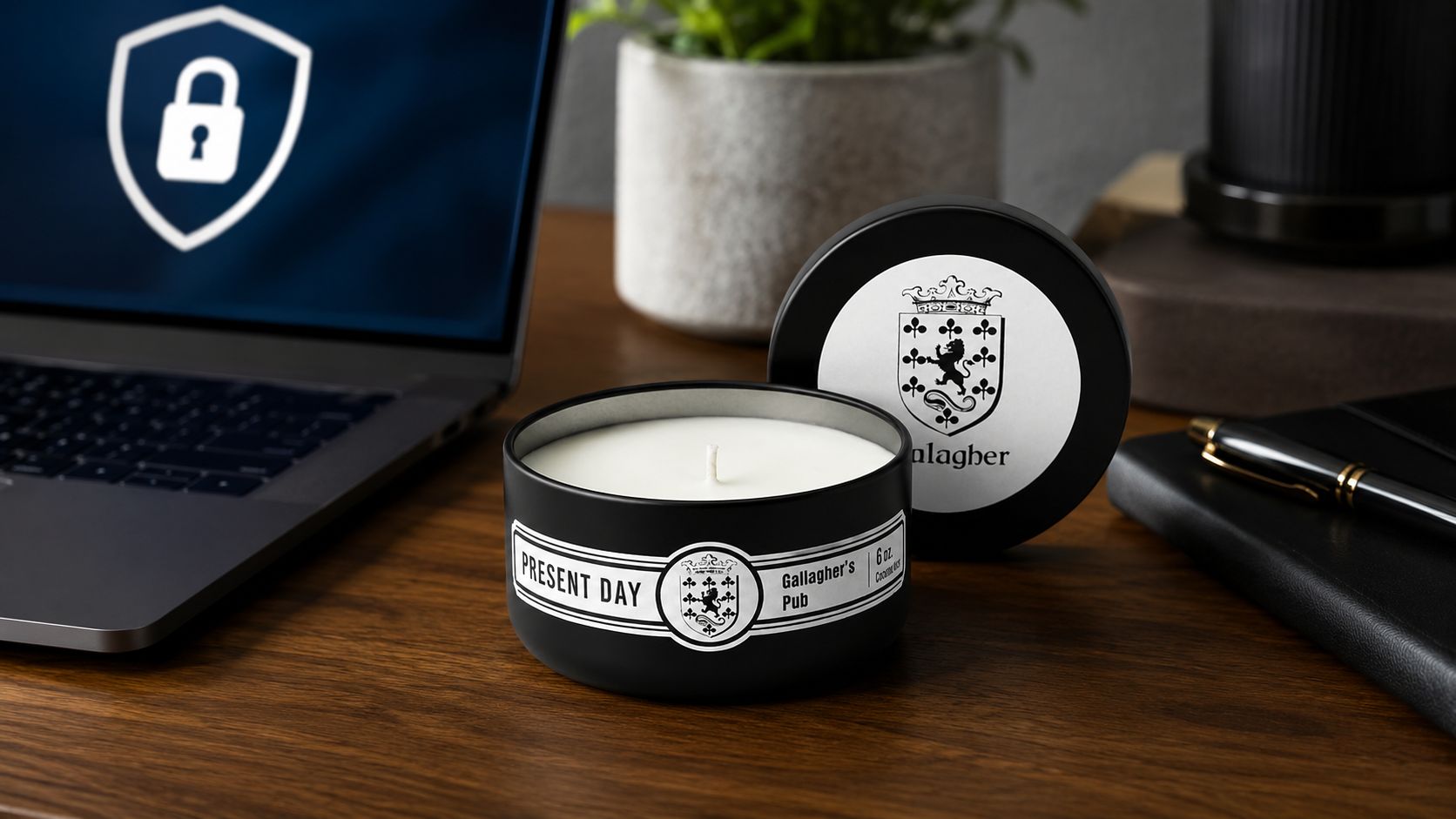
A good product find is still worth pursuing. Scented Candle in Gift Tin, Coconut Wax Blend, Whiskey & Tobacco + Leather, Cozy Masculine Scent, 6 oz | Present Day Goods by Loyaltie is a straightforward example of the kind of independent-brand product people want to buy online. Warm scent profile, clear description, easy gift appeal. Keep enjoying those finds. Just make sure your own device, connection, and login habits are not the weakest part of the transaction.
Your first protection layer is your setup. Get that right before you judge the store.
How to Spot a Fake Storefront in 60 Seconds
Many were taught one shortcut: look for the padlock. That advice is incomplete now.
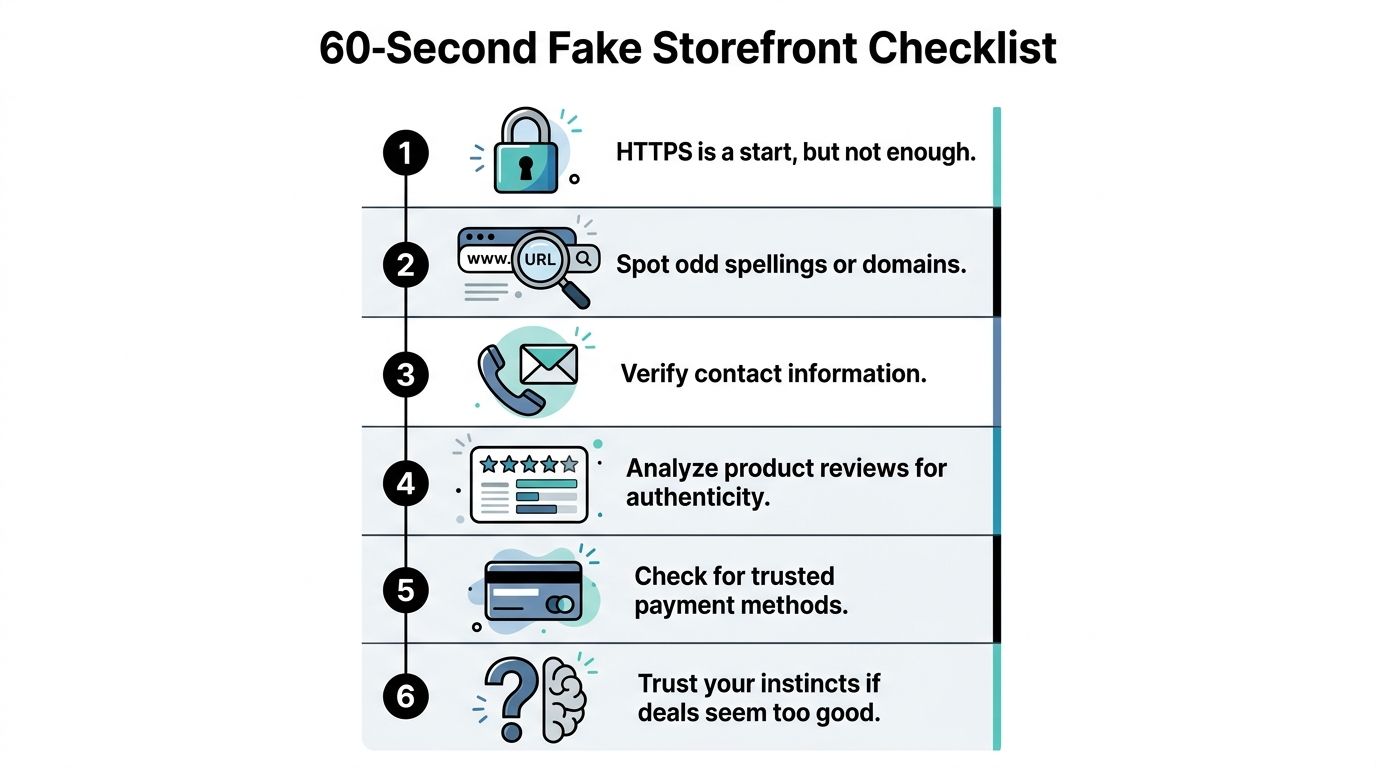
Start with the padlock, then move past it
The technical benchmark most security guidance uses is a valid TLS or SSL connection, shown by https:// and the padlock icon. But that signal is necessary, not sufficient, because scam sites can still imitate legitimate stores (Aura guide to safe online shopping).
That means this is the right order of operations:
| Check | What it tells you | What it does not tell you |
|---|---|---|
| HTTPS and padlock | Your connection is encrypted | The seller is honest |
| Clean domain name | The URL looks intentional and consistent | The store will fulfill orders |
| Contact details and policies | Someone made an effort to be accountable | Their service will be good |
| Reviews beyond the site | Other people can verify the buying experience | Every single review is authentic |
A fake storefront often gets the first line right and fumbles the rest.
Here's a useful comparison. A scam site can have a sleek homepage, copied product photos, and a secure connection. Then you notice the domain spelling is slightly off, the “About” page says almost nothing, the return policy is vague, and the only contact option is a generic form. That's enough for me to leave.
A fast red-flag scan
Use this checklist before you type a card number:
- Weird URL choices: Misspellings, extra words, odd hyphens, or a domain that doesn't match the brand name.
- Deals that break common sense: If every item looks underpriced in a way that feels absurd, trust that feeling.
- Thin business identity: No physical address, no real email, no phone, no named team, no usable return terms.
- Recycled-looking product pages: Generic descriptions, inconsistent sizing info, or images that feel lifted from somewhere else.
- Payment pressure: If the store pushes bank transfer or other hard-to-reverse methods, back out.
Here's a practical example from the product side. A page for Single Origin Coffee Sampler, Brazil Colombia Ethiopia, Flavor Discovery Pack, 6 x 2oz Bags (12oz Total) | Cozy Notes Coffee Co by Loyaltie gives you concrete details: six 2 oz packs, origins including Brazil and Ethiopia, and a clear idea of what the sampler is for. Clear specifics are a good sign. Vagueness is not.
If you buy higher-ticket products online too, this is why category-specific guides can help. For example, when people shop refurbished phones, they need to verify seller reputation and device condition, not just page design. This guide on where to buy refurbished iPhones UK shows the same principle in a different category.
A marketplace resource library can also help you pressure-test your instincts. The Loyaltie seller resources page is one example of the kind of background material that helps you understand how legitimate sellers present policies and business information.
Watch this, then come back to your browser with sharper eyes.
Verify the Maker Not Just the Website
This is the part most safety guides undersell. A site can look polished, secure, and completely legitimate on the surface. The seller can still be the problem.
Cyber.gc.ca makes the point cleanly: HTTPS only means the connection is encrypted. It does not prove the merchant is trustworthy, and a better check includes the seller's physical address, contact details, terms, return policy, and reviews across platforms (Cyber.gc.ca online shopping safety guidance).

Look for evidence of a real business
When you buy directly from the maker, you should be able to trace the product back to real people.
Check for these signs:
- An About page with substance: Not vague branding language. Real background, location, or why the product exists.
- Usable contact information: An email tied to the brand domain is better than a form with no other details.
- Clear policies: Shipping, returns, and what happens if something arrives damaged.
- Activity outside the storefront: Social profiles, customer comments, maker photos, product process, event appearances, or wholesale mentions.
A secure website tells you the checkout is encrypted. A real business tells you who will answer when something goes wrong.
I'm not saying every independent brand needs a documentary-quality origin story. I am saying you should expect enough evidence that a real person or team stands behind the product. If that trail is missing, keep your wallet closed.
A structured evaluation is helpful. If you want a broader framework for checking who you're dealing with, this step-by-step vendor diligence process is worth borrowing from. It's written for vendor checks, but the logic works for shoppers too. Verify identity. Verify contact details. Verify consistency.
Why marketplace vetting can help
Sometimes the easiest way to reduce risk is not to start from a random search result at all. A marketplace can do part of the filtering for you, especially when it's focused on helping people discover and buy directly from independent brands in the US.
That matters because the best direct-from-the-maker shopping experiences usually feel human. You can tell who made the product, where it came from, and how to reach them. You're not hunting through a maze of generic listings trying to guess which seller is real.
If you're buying body care, pantry goods, coffee, candles, or wellness products from unfamiliar names, that extra layer of seller visibility matters more than flashy site design. I trust a plain store with a visible maker, coherent policies, and outside signals of legitimacy far more than a glossy mystery brand.
Pay Smarter with Built-In Buyer Protection
A safe checkout matters just as much as a legit-looking maker site. You can do the research, pick a product you want, and still create a mess for yourself by paying the wrong way.
Don't hand unfamiliar sellers the kind of payment that is hard to dispute.
Choose payment methods that give you options
For a first purchase from an independent maker or local brand, use a credit card if you can. It gives you a cleaner path if the order never ships, arrives damaged, or turns out nothing like the listing.
Use this order of preference:
- Credit card first for any new or lightly vetted seller.
- Virtual card next if your bank offers one and you want to limit exposure.
- Debit card only when you already trust the merchant and know your bank's dispute rules.
- Skip direct bank transfers, payment apps, and wire-style payments for unfamiliar shops. Those options can be much harder to reverse.
One rule keeps you out of trouble. The harder a payment is to dispute, the more confidence you should demand before you click buy.
Read the boring policy page before you pay
Independent brands often have smaller teams, slower fulfillment windows, and tighter return rules than giant retailers. That is not a red flag by itself. Hidden or confusing policies are.
Check four things before you place the order:
- What can be returned
- How fast you need to report a problem
- Who covers damage, loss, or wrong-item issues
- Whether the seller provides tracking or delivery confirmation
Platform-level protection can also matter. If you buy through a marketplace that processes the order and sets buyer-facing rules, you have another place to turn if the transaction goes sideways. If you are shopping through Loyaltie, review the marketplace terms for buyers and sellers before you check out so you know how orders and disputes are handled.
Safe payment is not exciting. It is one of the simplest ways to buy from smaller makers with confidence instead of crossing your fingers.
Your Post-Purchase Safety Checklist
The order confirmation page is not the finish line. It's the handoff point.
Save the receipt, confirmation email, and order number right away. If the store provides tracking, keep it somewhere easy to find. If there's a delivery delay, check the seller's stated policy before you fire off an angry message. Good sellers usually tell you what to expect. Bad sellers avoid specifics, which is useful information too.
Use this quick checklist after you buy:
- Save proof of purchase: Keep receipts, confirmation emails, and screenshots if something about the listing may matter later.
- Watch shipping updates: A tracking number is only useful if you check it.
- Inspect the item quickly: Don't leave the package unopened until the return window has passed.
- Act fast if something is wrong: Try to resolve it with the seller first, then escalate through your payment provider or the proper reporting channel if needed.
- Review the platform terms when relevant: If you bought through a marketplace, understand the rules that govern orders and disputes. For example, you can review the Loyaltie terms and conditions.
Learning how to shop safely online is really about stacking smart decisions. Secure your own setup. Scan the storefront. Verify the maker. Pay with protection. Keep your records. That's how you get the upside of buying directly from people making better products, without the usual nervous guesswork.
If you want a simpler way to discover and buy directly from independent brands across the US, Loyaltie is a marketplace built for that. You can browse everyday products from real makers, skip the middleman, and shop with the added confidence that every order is backed by the platform.