
You've made the product. Maybe it's twenty candle jars in your living room, a stack of screen-printed tees, or a batch of skincare that looks far better than anything on a chain-store shelf. The hard part now isn't making another batch. It's deciding who will buy, why they'll choose it, and how you'll turn one local order into a reliable business.
Learning how to make and sell a product means treating selling locally as a deliberate strategy, not a fallback after online advertising fails. Independent brands can offer better ingredients, clearer origins, direct access to the maker, and a more useful buying experience. The opportunity is substantial. One 2026 estimate places global ecommerce at $6.88 trillion, with ecommerce representing 21.1% of global retail sales, according to SOAX's ecommerce market research. You don't need to compete everywhere. You need a focused product, a clear buyer, and a channel that helps nearby people find you.
Table of Contents
From Kitchen Counter to First Sale
Most first-time makers skip the boring middle. They move from a promising idea straight to production, then discover that the label is unclear, the price is too low, the packaging leaks, or nobody knows where to buy the product. Your living room fills with inventory while your attention shifts to making more instead of fixing what blocks the first sale.
Local selling works when you build the operating path before you build excess stock. Treat the product like a real business decision, even if you're starting with one table at a weekend market.
The seven-stage route to a sale
- Validation: Choose one buyer and one problem. Collect evidence that people will pay, not just compliments that the product looks good.
- Small-batch production: Make enough to test consistency and fulfillment. Don't buy a large run because a supplier offers a tempting unit price.
- Packaging and pricing: Protect the product, explain it quickly, and price it around the full cost of making and delivering it.
- Channel selection: Pick where your buyer already shops. A farmers market, local retailer, social storefront, or discovery marketplace each demands a different kind of work.
- Marketing: Show proof, tell the maker story, and present a clear offer on a repeatable schedule.
- Fulfillment: Set pickup, shipping, inventory, and communication rules before orders arrive.
- Post-sale support: Handle questions and problems quickly, then make reordering obvious.
Practical rule: Your first product launch is a learning system with revenue attached. Every sale should teach you something about demand, packaging, pricing, or repeat use.
If you plan to sell through retailers, prepare your business information early. A resource such as supplier onboarding at Buyers Connect AI can help you think through the information buyers may need from a vendor, including product details and business readiness. That preparation matters even when your first customer is a neighbor, because local retail conversations move faster when you can answer basic operational questions without scrambling.
By the end of this process, you should have more than a finished object. You should know what to test this week, what not to produce yet, where buyers can order, and how you'll deliver the product without turning every sale into a custom project.
Validating the Idea Before You Build
Validation isn't asking friends whether they like your idea. Friends are often reacting to your effort, not making a buying decision. Real validation starts with one defined buyer, one specific problem, and one proof point you can collect before committing meaningful cash.
Choose a narrow persona. “People who like wellness products” is too broad. “Parents who want a simple evening routine for dry hands” gives you a buyer, a use case, and a reason to compare your product with existing options. Then write the problem in plain language. If you can't explain what changes for the buyer after using the product, the offer isn't ready.
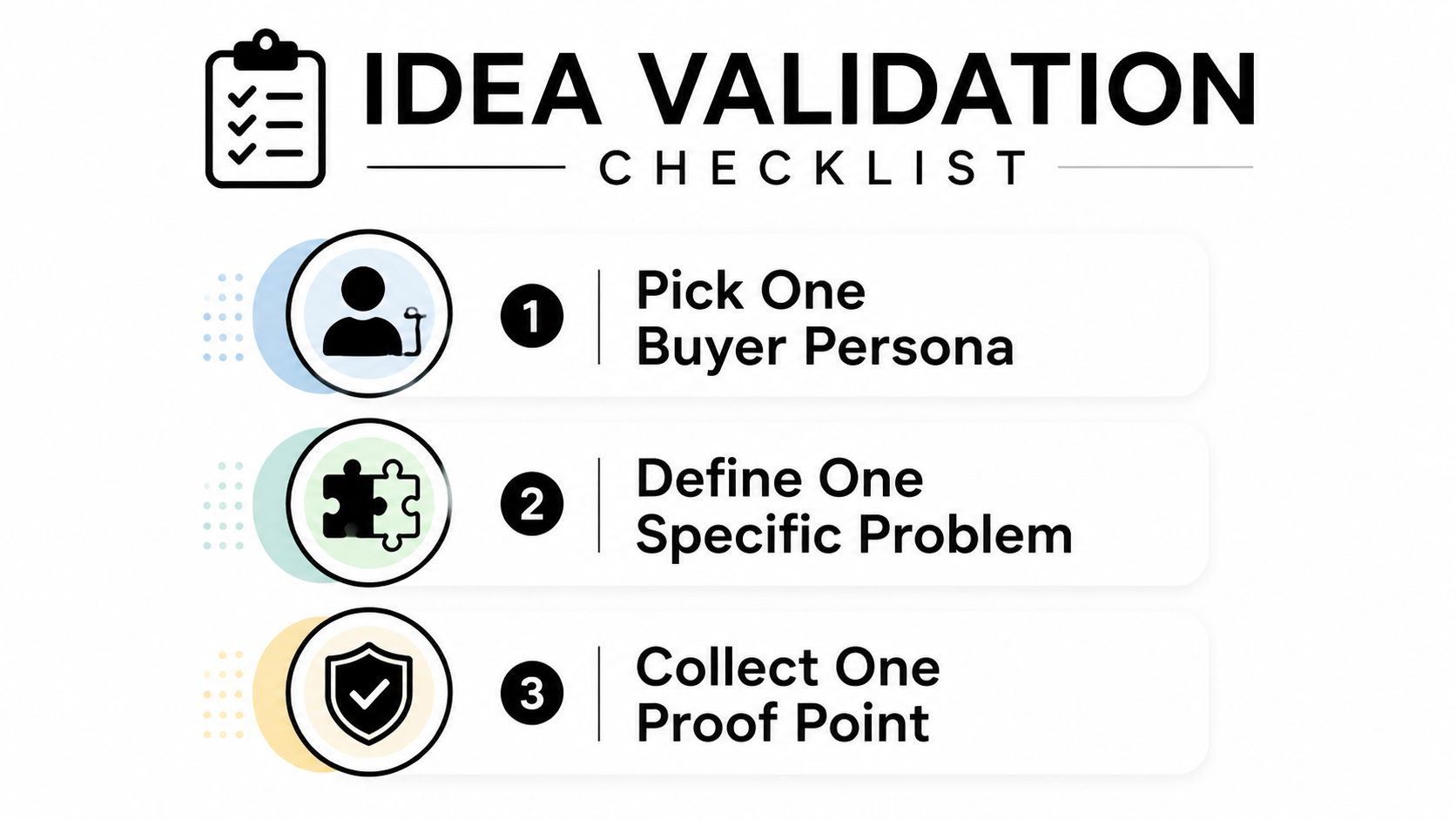
Three tests that cost less than a production mistake
Start with a pre-order page. Show the product, the intended use, the expected delivery window, and a deposit option. A deposit gives you stronger evidence than a waitlist because the buyer has accepted a real tradeoff.
Take the product to a market. A weekend pop-up or farmers market is a paid mini-survey. Watch what people pick up, what they ask, what they ignore, and which price makes them pause. Don't measure success by foot traffic. Measure completed purchases and the questions that repeat.
Have direct conversations with ten target buyers. Ask what they use now, how often they buy it, what frustrates them, what packaging they trust, and what price feels reasonable. Don't pitch through every answer. Your job is to find the language buyers already use.
You can also study how established independent products communicate their use case. For example, DefendAER | Lumen Botanica by Loyaltie presents an all-natural, non-toxic blend of essential oils made for soothing respiratory relief. The useful lesson isn't to copy the product. It's to notice how a product name, category, ingredients, and intended benefit need to work together so a shopper understands the offer quickly.
Use Loyaltie's seller resources while shaping your product page and sales process, but keep your validation work close to actual buyers. Product development has a high failure rate. One industry summary reports that 70% of product development projects fail, while 40% of new consumer products succeed in the market and 20% survive beyond two years, as reported in product development statistics from Jobera.
The rule is simple: if the first ten buyers don't return unprompted, fix the offer before scaling production. Improve the product, message, use case, or buying experience before ordering more inventory.
Prototyping and Small-Batch Production
Your prototype proves that you can make the product once. It doesn't prove that you can make it repeatedly, at a stable cost, with consistent quality. That distinction separates a satisfying craft project from a product people can buy again.
Refine one sample until the process is boring. Record the materials, labor time, measurements, curing or drying conditions, assembly steps, and packaging actions. If each unit takes a different amount of time, your pricing is guesswork. If each unit looks different, your customer experience is unpredictable.
Build the first batch around evidence
Run a pilot batch based on validated demand plus a modest buffer for reorders. Don't size it around the business you hope to have next year. A smaller run protects cash and gives you a chance to discover problems before they multiply.
Watch for three common traps:
- Inconsistent units: A candle with a different fill level, a soap bar with uneven weight, or a sticker with misaligned printing creates quality questions.
- Hidden cost creep: Labels, protective wrap, test materials, damaged units, and last-minute local purchases can change your unit economics.
- Premature scaling: A recipe that works once may fail when you mix, pour, cure, package, or store a larger batch.
For early production, choose the method that gives you control without forcing a large commitment. In-house production works when the process is safe and manageable. A shared maker space can provide equipment and a more suitable workspace. A small contract manufacturer may help when you need repeatability but aren't ready for a large minimum order.
| Option | Upfront Cost | Min. Batch Size | Best For |
|---|---|---|---|
| In-house | Lower equipment commitment, but requires your time and workspace | Small | Products you can make safely and consistently |
| Shared maker space | Usage fees and travel, with access to equipment | Small to moderate | Makers who need tools without buying them |
| Small contract manufacturer | Setup and production fees | Low to moderate, depending on the supplier | Products that need repeatable production |
| Larger manufacturer | Higher setup and inventory commitment | Larger | Demand that has already been validated |
Packaging can also become part of your product test. The Waterproof Vinyl Motivational Sticker, “You Got This”, Removable Dishwasher Safe Decal, Weatherproof, 4x4 in | Chika Paper Studio by Loyaltie offers a clear example of communicating format and use, including its 4x4 size, waterproof and weatherproof material, dishwasher-safe use, and clean removal.
Move on from prototyping when production time per unit is steady, rejection is low, and you can source materials twice in a row without scrambling. Until then, you're still developing the production system.
Packaging, Compliance, and Pricing for Real Margins
Packaging is a cost line first and a brand asset second. A beautiful box that raises your unit cost beyond what local buyers will pay isn't branding. It's an expensive obstacle between you and a workable margin.
Start with the container. Choose a size that protects the product and fits the actual quantity buyers need. Source short-run labels before committing to a large order, and test how the label behaves under moisture, friction, refrigeration, or shipping. Don't pay retail for a large volume of packaging until your sales prove you'll use it.
Compliance depends on the product and location, so check your city, state, and category requirements before selling. Baseline questions include whether you need a business license, how you'll collect and remit sales tax, what FDA labeling applies to consumables, whether a Prop 65-style warning is relevant, and what liability coverage fits the product. Food, skincare, supplements, pet products, and household goods don't all follow the same rules.
Price from the full cost
Suppose your build cost is $4. That's only the beginning. Add labor, packaging, payment fees, spoilage or rejects, delivery materials, and the time required to sell. A defensible local retail range might be $14 to $18 when the product, presentation, and buyer value support it. That range isn't a universal answer. It's a reminder not to guess upward or underprice because you're nervous.
| Line Item | Example Cost |
|---|---|
| Materials and ingredients | $4.00 |
| Labor per unit | Calculate from timed production |
| Packaging | Add container, label, insert, and protection |
| Payment fees | Add the fee charged by your payment method |
| Local delivery or market costs | Allocate across the units sold |
| Retail price | Test a defensible $14 to $18 range |
Read your receipts after every selling period. Which products sold without explanation? Which required discounting? Which consumed too much time? Your shelf space, market table, and production hours should go to products that earn their place.
Packaging can also carry information beyond the minimum label. If you're exploring traceability and product information, start with what is a digital product passport from DPP Grid. The concept can help you think about how buyers access useful product details, though it doesn't replace the legal labeling requirements for your category.
Pricing discipline: Never hide labor because you enjoy making the product. Enjoyment doesn't pay for materials, replacements, taxes, or the next production run.
Choosing Where Local Buyers Will Find You
A weekend market can put your product in front of nearby buyers who want to inspect it, ask questions, and take it home immediately. A neighborhood shop can provide steady shelf visibility, while a social profile can show how the product is made. Choose the setting that matches how people decide to buy your product.
Start with one primary channel that can generate orders and one secondary channel that provides discovery, proof, or customer feedback. Opening five channels at once creates scattered work, not meaningful reach.
The U.S. direct-to-consumer market is large but uneven. PipeCandy analyzed about 21,000 brands and found that roughly 75% generate under $1 million in online sales, while less than 1% have passed $500 million, according to Retail Dive's summary of the analysis. Food and beverage represented 8.1% of DTC brands and 16.1% of ecommerce sales in the same analysis. For an independent maker, the lesson is practical: build a focused local business before chasing broad scale.
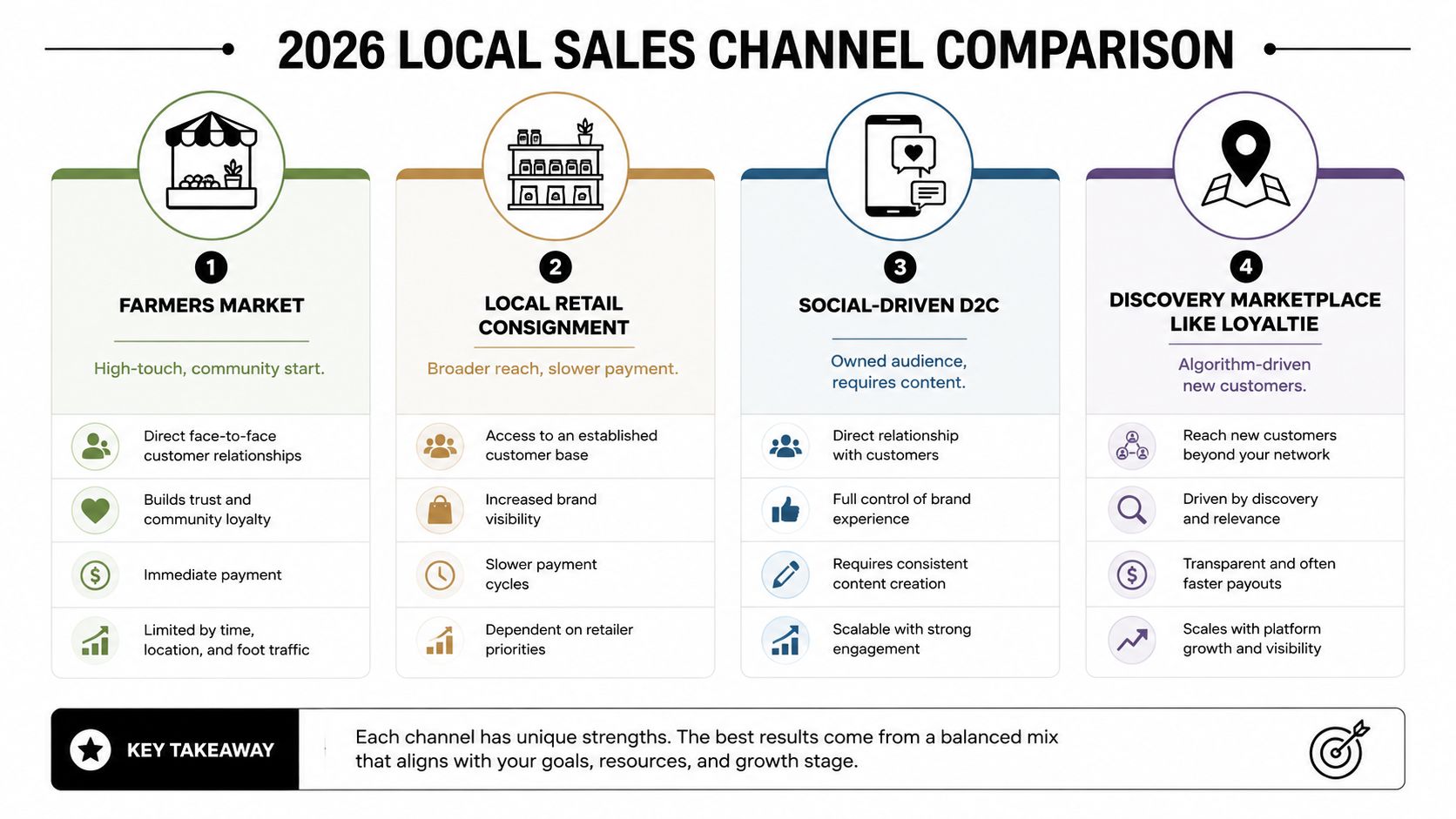
Four channels with different tradeoffs
Farmers markets build trust quickly. Buyers can smell, touch, taste, or inspect the product, and you hear objections immediately. Account for your time, setup, travel, and dependence on one selling day.
Local retail consignment gives you shelf presence and wider local reach. Inventory remains tied up, payment often arrives later, and the retailer takes a share. Choose it when your packaging can explain and sell the product without you beside it.
Social-driven D2C gives you an owned audience and a place to show production, customer use, and new releases. It requires consistent content. If every post reads like an advertisement, attention fades.
Discovery marketplaces such as Loyaltie give nearby shoppers another way to find independent brands. Loyaltie's seller page describes how makers can present products online and reach local audiences.
Use markets and social content to collect buyer reactions before launch. Add retail or a discovery marketplace after your product page, packaging, and fulfillment process are ready. For replenishable products, introduce buy-on-a-plan options, regular delivery, or reorder reminders only after buyers show a natural repeat cycle.
My recommendation is simple: one primary channel, one secondary channel, and no expansion until you can fulfill both without chaos.
Marketing That Turns Buyers Into Regulars
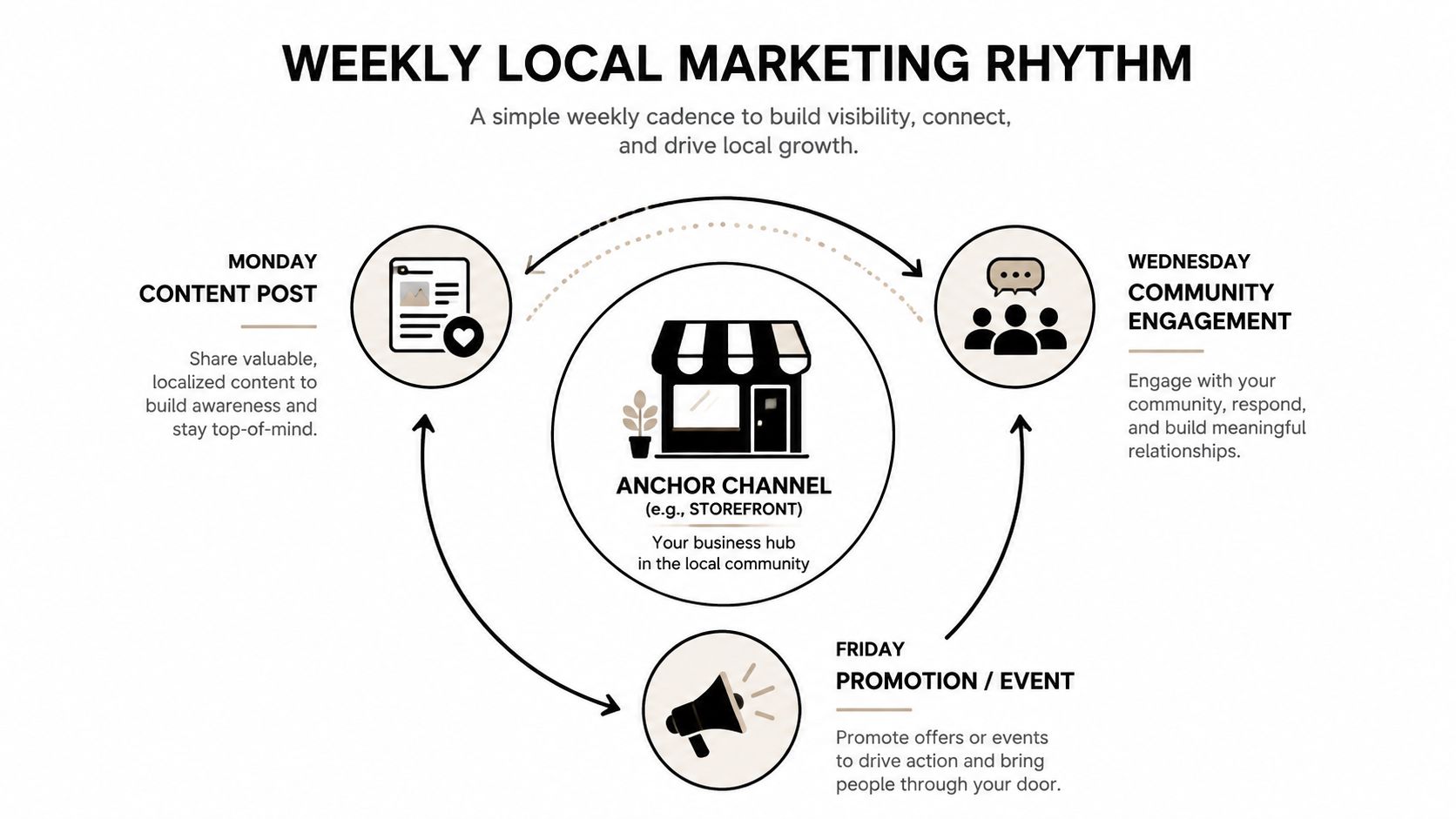
A launch post isn't a marketing system. Local buyers need repeated reasons to notice you, understand the product, and remember where to reorder. Build your week around one anchor channel, such as a Loyaltie storefront, an Instagram profile, or a market booth.
Use a three-post rhythm:
- Proof: Show the product in use, a customer photo, a texture, a finished package, or a clear answer to a common concern.
- Story: Explain who makes it, why the formula or material exists, and what you've changed after listening to buyers.
- Offer: Give people a direct next step, such as ordering for local pickup, reserving the next batch, or visiting your market table.
Make the second order easy
Your follow-up should feel connected to the buyer's experience, not like an automated sales ambush. Send a thank-you message after purchase. Ask for a photo or review once the buyer has had a fair chance to use the product. Then send a reorder nudge based on the product's real life, not an arbitrary calendar timer.
Add an offline prompt as well. A small card at pickup can include care instructions, the maker's name, and a visible reorder path. If referrals fit your margin, test a clear line such as “Bring a friend, both get 15%.” Don't offer that blindly. Confirm the discount still leaves enough room after materials, labor, and fees.
The most useful weekly metric is repeat purchase rate, not follower count. Followers can admire the product without buying it. Repeat buyers have already confirmed that the product delivered enough value to earn another order.
Customer habit beats audience size. A smaller group that reorders and refers friends is more useful than a large audience that never reaches checkout.
Fulfillment, Support, and Building Recurring Revenue
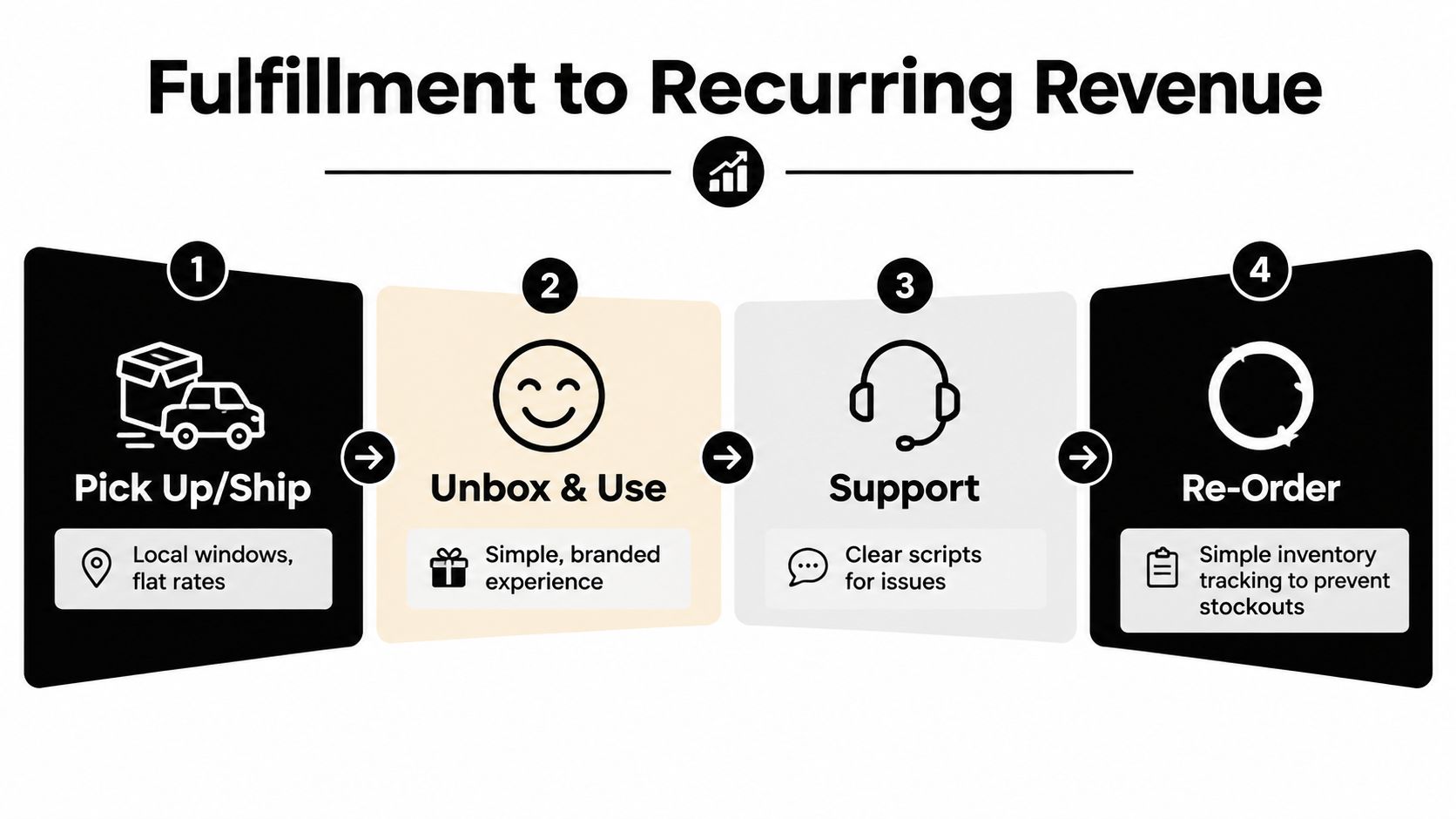
Fulfillment is part of the product. A good item delivered late, damaged, or with confusing instructions still creates a poor buying experience. Set local pickup windows that you can reliably keep, offer a clear shipping method, and use simple inventory tracking so your storefront doesn't promise products you can't deliver.
Write your support responses before the first complaint arrives. For a damaged package, acknowledge the problem, ask for the information needed to resolve it, and state the next action. For a return or refund, publish the conditions clearly and apply them consistently. Buyers don't expect every maker to have a call center. They do expect a human response that doesn't make them argue for help.
Use the order fulfillment guide from SelfServe as a practical reference while you define picking, packing, shipping, and order-status steps. Keep the system simple enough that you can follow it on a busy production day.
Turn usage into a reorder loop
Recurring revenue starts with a product people naturally use up or replace. Build around refill cycles, regular delivery, seasonal drops, or a VIP list that receives first access. Avoid forcing a recurring plan onto a product that doesn't have a predictable use pattern. The buyer should feel helped, not trapped.
Your weekly operating check can be short:
- Count sellable units before promoting the product.
- Confirm pickup and shipping capacity.
- Review unresolved customer questions.
- Identify buyers who may be ready to reorder.
- Record which product, channel, and message produced the order.
This is how you move from making a product to running a sustainable local business. Set up one product page, one fulfillment routine, and one follow-up message this week. Then invite your first buyers to reorder through a visible path instead of relying on scattered direct messages.
Loyaltie is a marketplace where people discover and buy directly from the best independent brands in the US, giving makers a discovery layer for reaching nearby buyers online. Visit Loyaltie, create your seller presence, and put one validated product in front of shoppers who want better everyday alternatives from real makers.