
You're probably in a familiar spot. You make something good. Maybe it's coffee people reorder because it tastes fresh, skincare with ingredients you can explain without a chemistry degree, or pet products you'd use for your own dog without hesitation. Customers like the product, but you still get the occasional message that says shipping felt confusing, the package arrived looking rushed, or someone loved the item and still never came back.
That gap matters more than most makers realize.
A great product gets the first order. A satisfying experience gets the second, the third, and the unsolicited text a customer sends to a friend. If you want to learn how to improve customer satisfaction as an independent maker, the answer usually isn't a big corporate system. It's tighter listening, clearer communication, and using your real-person advantage better than mass retail ever could.
Table of Contents
- Great Products Deserve Happy Customers
- Start with the moments that matter
- Build a simple make-it-right loop
Great Products Deserve Happy Customers
A lot of makers hit the same wall. They spend months refining the formula, sourcing better ingredients, dialing in roast profiles, testing packaging inserts, and obsessing over texture, scent, or shelf feel. Then they realize customer satisfaction is its own craft.
That's not bad news. It's the part of the business where independent brands have an edge.
People are already leaning your way. Americans are willing to spend an extra $150 per month to keep their favorite local shops going, which shows real financial commitment to independent brands as a quality choice, not a pity purchase (finance-commerce survey finding). They want better products from real people. Your job is to make the experience feel as considered as the product itself.
You don't need to act bigger. You need to feel more human, more consistent, and easier to buy from.
That usually means noticing the parts of the journey that don't feel like “the product” to you, but absolutely feel like the product to the customer. The order confirmation. The wait after checkout. The note in the box. The speed of your reply when something's off. Those details shape whether buying direct feels refreshing or risky.
A customer might love your face oil or mushroom coffee and still hesitate to reorder if the first experience felt vague. On the other hand, a straightforward, warm, well-handled order can make even an everyday item feel memorable.
If you're building on a marketplace where people discover and buy directly from the best independent brands in the US, that human connection gets easier to show. That's part of what Loyaltie's seller experience is built around. But the platform isn't the magic. Your habits are.
First Understand What Your Customers Really Think
Most founders guess wrong about satisfaction at least once. They assume customers care most about product variety, or a prettier homepage, or one more scent. Meanwhile, buyers are annoyed by slow updates, unclear delivery timing, or packaging that looks nice but protects the product badly.
You can't fix what you haven't heard clearly.
Start with the moments that matter
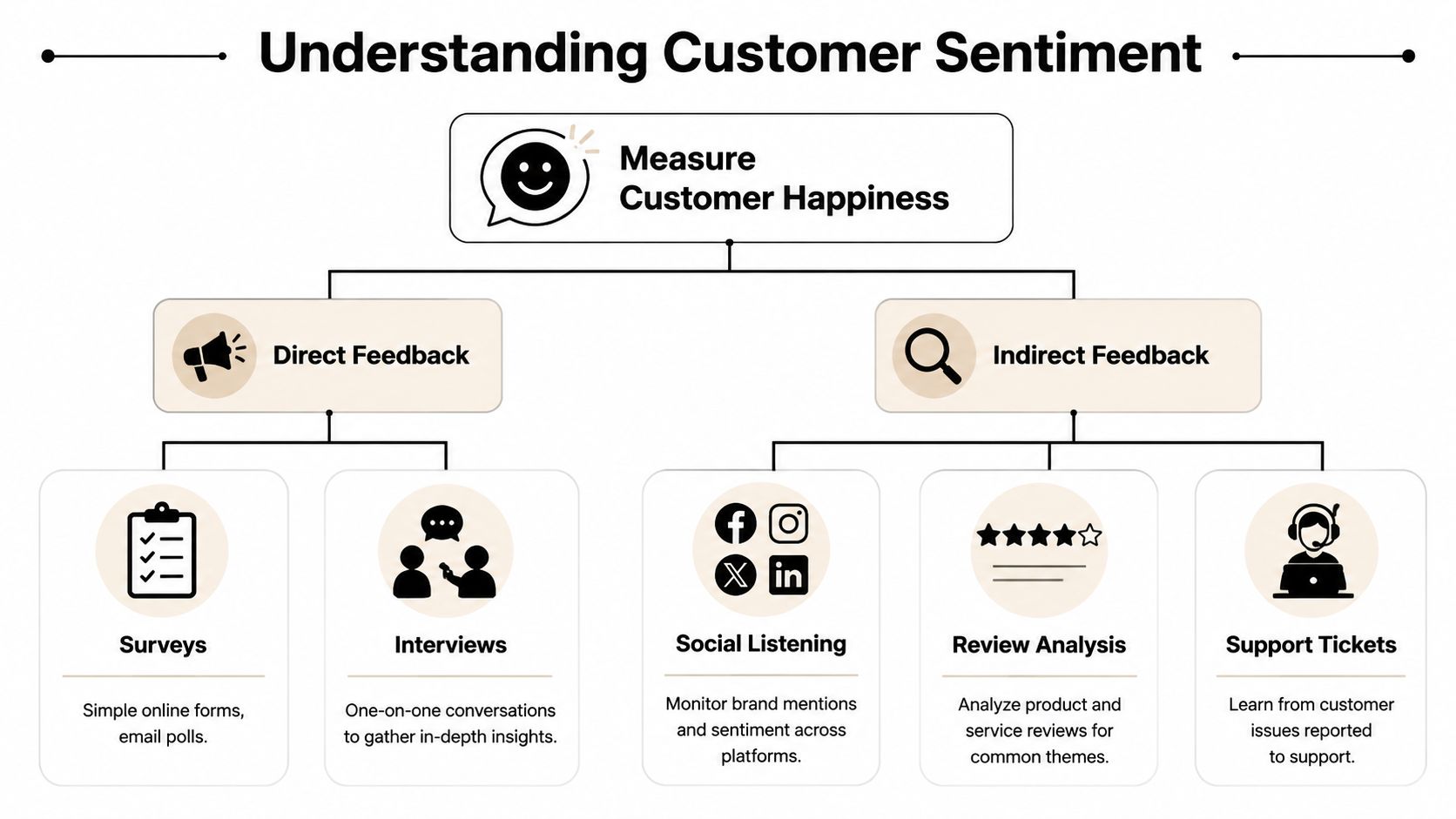
You do not need a giant software stack to measure customer happiness. Start with a few touchpoints where emotion is strongest:
- After delivery: Ask one short question about how the order experience felt.
- After support replies: Ask whether the answer solved the problem.
- After the first reorder: Ask what almost stopped them from buying again.
- After a refund or replacement: Ask whether the resolution felt fair and easy.
The practical tools here are micro-surveys, usually CSAT, CES, and NPS. Used after key touchpoints, they help you catch dissatisfaction while the moment is still fresh. A fast “make it right” loop for low scores can reduce churn by up to 30% and improve retention by 25% within six months (Contentsquare guidance).
If you want a simple framework for turning feedback into action, the Double My Leads customer playbook is a useful reference because it keeps the process practical instead of overcomplicated.
Practical rule: Don't ask for more feedback than you're willing to act on this week.
For a low-budget brand, I'd keep the system plain. One question in email after delivery. A review request a little later. A spreadsheet or tagged inbox for patterns. Your goal isn't to appear complex. Your goal is to hear the truth early.
Build a simple make-it-right loop
When someone gives you a low score, the response matters more than the dashboard.
Use a trigger. If a customer leaves a bad rating, writes a frustrated comment, or sends a confused reply, someone owns the next move immediately. That could be you. It could be a part-time support lead. What matters is that the customer doesn't feel dropped into silence.
A good response usually has four parts:
Acknowledge the issue clearly
Name what went wrong in plain English.Take responsibility for the next step
Tell them what you're doing now, not what they should do next.Offer a clean resolution path
Replacement, refund, clarification, or a timeline update.Close the loop later
Check back after the fix lands.
That same approach works whether you sell pantry staples, soap bars, supplements, or paper goods. For example, if you sell something practical like Birthday Greeting Cards Set, 100% Recycled Paper, Hand-Drawn Designs, Last-Minute Ready, 5-Pack w/ Envelopes | Chika Paper Studio by Loyaltie, the customer isn't just buying paper. They're buying readiness. “Never get caught without a birthday card again” is a convenience promise. If delivery timing or packaging creates uncertainty, satisfaction drops even if the cards themselves are lovely.
That's the pattern to watch. Customers don't rate isolated parts. They rate the whole feeling.
Elevate Your Product and Unboxing Experience
The package on the doorstep is a trust test.
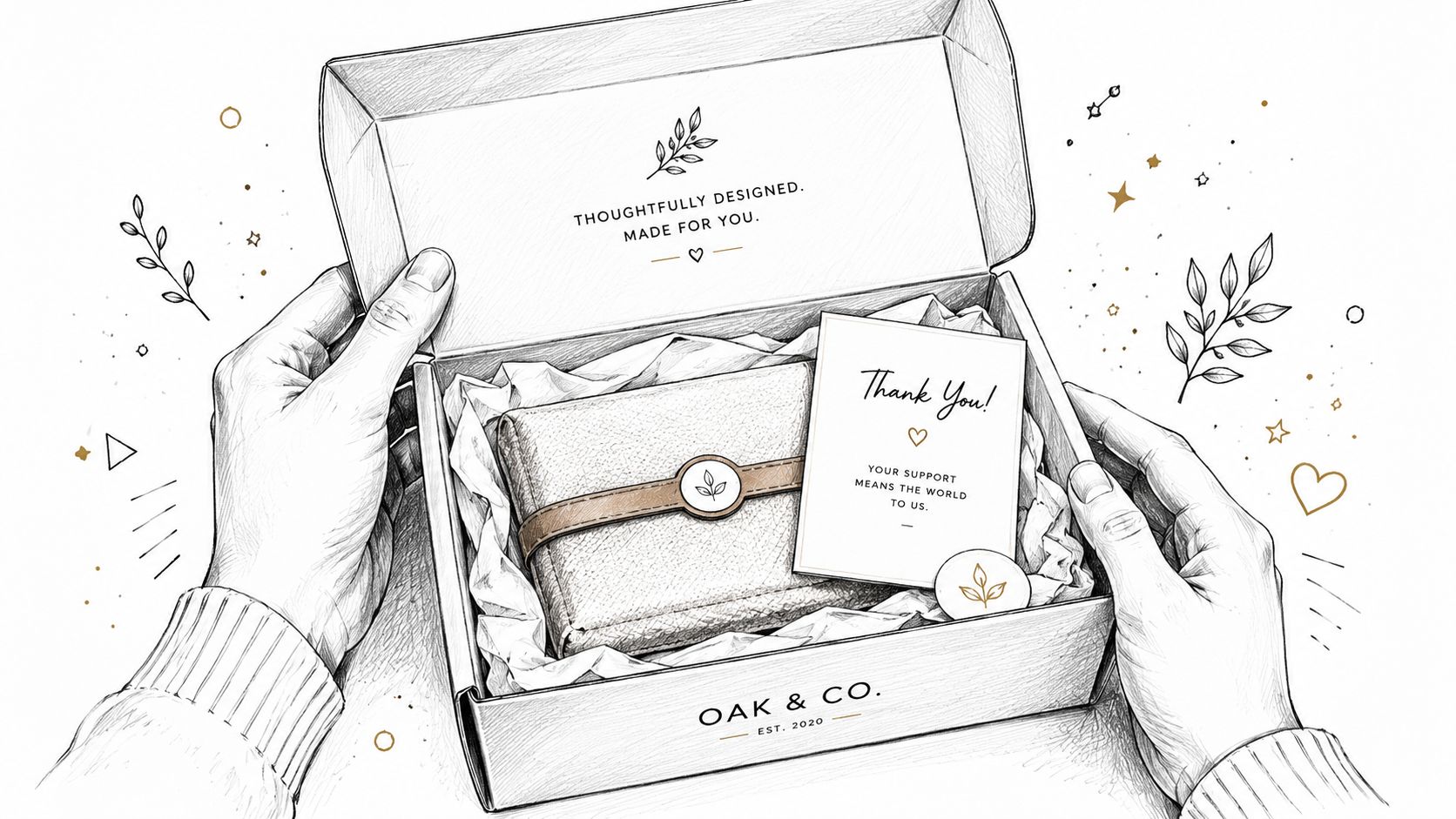
If your brand sells a better alternative to mass-produced daily products, the first physical impression has to support that claim. 56% of U.S. consumers believe local brands offer higher-quality products than national ones, and packaging is often the first proof point of that quality (Bizrate Insights).
Your package is part of the product
A plain box isn't automatically a problem. A careless box is.
Customers notice when an item shifts around, leaks, arrives scuffed, or includes paperwork that feels generic and detached from the maker. They also notice when the packaging fits the product, protects it well, and carries the same tone as your site and product page.
That doesn't require expensive materials. It requires intention.
- Protection first: If the item arrives damaged, no amount of branding saves the experience.
- Clarity next: Include a short note that says what they received and anything they should know right away.
- Personality last: Add a human touch only after the basics are solid.
If you're reworking mailers, inserts, or labeling, this guide to custom packaging design is a helpful way to think through presentation without drifting into packaging for packaging's sake.
A satisfying unboxing feels calm, clear, and deliberate. It should never make the customer work to understand what you sent or why it matters.
Small touches beat expensive touches
A lot of brands overspend on flourishes and underspend on coherence. A satin ribbon doesn't rescue a confusing insert card. Foil stamping won't fix weak protection.
What tends to work better:
- A short thank-you note that sounds like a person wrote it
- One useful insert with care instructions, ingredients, or reorder guidance
- A sensible sample only if it fits the order naturally
- Consistent visual cues so the box matches the brand they thought they bought
This is especially important for giftable or personal categories. A product can feel more meaningful when it leaves room for the buyer's own voice. That's why something like the A2 Celebration Greeting Card, 100% Recycled Paper, Blank Inside, Hand-Drawn Congrats Card, Includes Kraft Envelope | Chika Paper Studio by Loyaltie works as a good example. It's hand-drawn, made from 100% recycled paper, blank inside for a personal message, and comes with a kraft envelope. The product itself leaves space for connection. Your packaging should do the same.
A quick visual walkthrough helps here:
Customers buying directly from the maker want to feel that no middleman flattened the experience. Unboxing is where you prove it.
Master Communication and Proactive Service
Communication is where independent brands can win without a bigger budget. You don't need a call center voice. You need a clear one.
A Simply Business survey found that 39% of consumers believe independent brands provide better customer service than larger corporations (Faire summary). That expectation cuts both ways. People come to you hoping for a more attentive experience. If your replies feel robotic or delayed, the disappointment lands harder.
Say what's happening before they have to ask
The easiest way to improve customer satisfaction through communication is to answer the next question before it arrives.
If an order is delayed, say so early. If your best-selling roast won't ship until Thursday, tell them on the product page or in the confirmation email. If a skincare item needs patch testing or has a strong natural scent, say that before purchase, not after a confused review.
Good proactive service usually sounds like this:
- Specific: “Your order is packed and waiting on pickup.”
- Grounded: “This batch is running a little later than usual.”
- Helpful: “If timing is tight, reply here and we'll help.”
Bad communication usually sounds polished but empty. “We're experiencing delays” tells the customer almost nothing. “We haven't forgotten you, your order goes out tomorrow” tells them enough.
If you're looking at where to sell and manage direct customer relationships, Sell on Loyaltie is one option for brands that want a marketplace where people discover and buy directly from the best independent brands in the US.
Customer Communication Quick Wins
| Situation | Instead of This (Generic) | Try This (Human & Helpful) |
|---|---|---|
| Order confirmation | “Your order has been received.” | “We got your order and we're packing it now. We'll email again as soon as it's on the way.” |
| Shipping delay | “We apologize for the inconvenience.” | “Your order is running late, and I wanted to tell you before you had to ask. It's expected to go out next, and I'll keep you updated.” |
| Out-of-stock item | “Item unavailable.” | “That item sold through faster than expected. If you want, reply and I'll point you to the closest fit.” |
| Damaged delivery | “Please send photos.” | “I'm sorry it arrived that way. Send a photo when you can, and I'll sort out the fastest fix.” |
| Product question | “See product details online.” | “Here's the short version. This works best for ___. If you want, I can also help you choose between the two options.” |
| First reorder nudge | “Buy again now.” | “If you're getting low, this is a good time to reorder so you don't run out.” |
Customers forgive delays more easily than silence.
Tone matters, but usefulness matters more. Friendly and vague is still frustrating. Warm and precise wins.
Turn Problems Into Your Superpower
Most brands treat complaints like interruptions. That's a mistake.
A problem order is one of the few moments when a customer is paying very close attention to your character. They already know whether the product is good. Now they're learning whether you're dependable when things get messy.
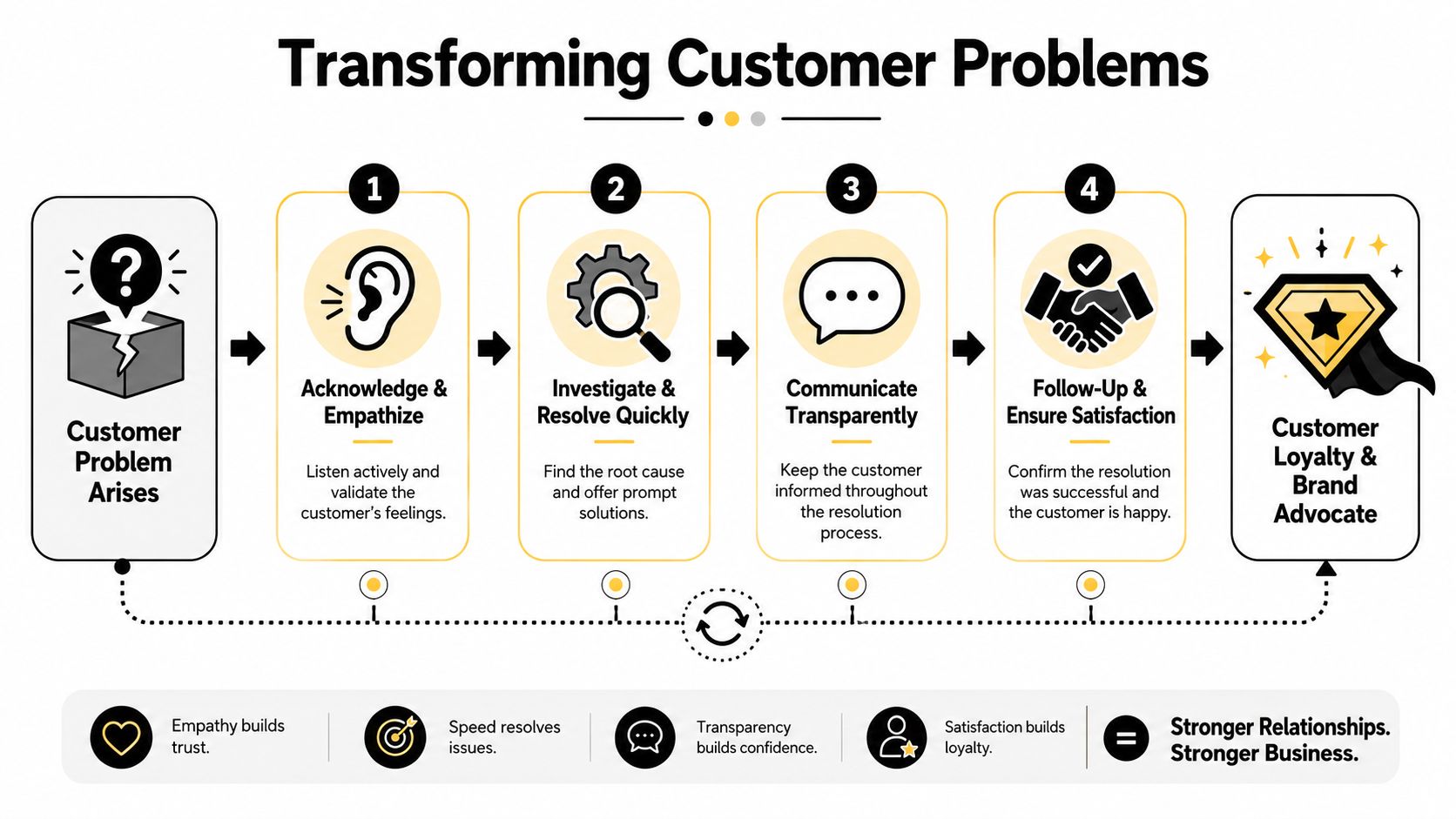
Most brands waste the complaint
The common bad response is slow, defensive, or procedural. “Please allow several business days.” “That issue is with the carrier.” “Send us a video from three angles.” Even when those steps are technically reasonable, they can make the customer feel like they're now doing support work for you.
Independent makers can do this better because you're closer to the product and closer to the decision.
Organizations that use structured feedback loops with clear ownership for fixes see a 35% increase in CSAT scores within 12 months, and “You said, we did” communication increases brand loyalty by 28% (Drive Research). The point isn't the phrase itself. The point is visible follow-through.
Use a visible follow-through habit
When something goes wrong, try this sequence:
- Reply like a person: “I'm sorry this arrived damaged.”
- Solve the immediate issue: replacement, refund, or a corrected shipment
- Note the cause internally: weak mailer, unclear sizing note, bad handoff, fulfillment miss
- Tell the customer what changed: “We added extra padding to prevent this going forward.”
That last part gets skipped all the time. It matters.
“You said, we did” only works when the customer can see that you changed something real.
A clean recovery can create more trust than a frictionless order, because the customer has now seen how you behave under pressure. They know there's a real person behind the brand, no middleman, no script, and no vanishing act.
Your Ongoing Plan for Happy Customers
The best way to think about how to improve customer satisfaction is to stop treating it like a campaign. It's an operating rhythm.
Listen in small, steady ways. Tighten the rough edges in ordering and delivery. Make the package feel considered. Write like a person. Fix problems fast, then tell customers what changed. That's the whole playbook. It's not flashy, but it compounds.
The business case is strong too. 86% of customers are willing to pay more for a better customer experience (SurveySparrow). For independent brands, that means your attention, responsiveness, and care are not extras. They are part of the value people are buying.
If you want help scaling the communication side without losing your voice, tools like AI solutions for e-commerce teams can help organize support and response workflows. Just keep the standard high. Automation should make you clearer and faster, not colder.
For practical reading on building the systems around your brand, Loyaltie seller resources are worth bookmarking. They're useful when you want to sharpen the direct-to-customer experience without drifting into corporate habits.
Stay close to the customer. That's the advantage. Protect it.
If you want a place where people discover and buy directly from the best independent brands in the US, take a look at Loyaltie. It's a marketplace built around buying from real makers with no middleman, which makes it easier for customers to find better everyday products and for brands to build stronger direct relationships.