
You're probably closer to your target audience than you think.
A lot of makers get stuck because they try to solve this like a big-brand marketing problem. They open a blank doc, invent a dreamy customer profile, pick three social platforms, and start posting into the void. Then they wonder why good products get polite likes instead of steady orders.
That's backwards. If you want to know how to find your target audience, stop guessing and start with evidence. The people who buy handmade soap, low-acid coffee, small-batch skincare, or clean-ingredient wellness products aren't “everyone who likes quality.” They're specific people with specific routines, budgets, tastes, and reasons for buying. Your job is to find those patterns and use them.
Table of Contents
Start with the People Who Already Love Your Work
The fastest way to waste time is to ignore the customers you already have.
Practical guidance from SparkToro on finding your target audience with a data-driven approach says to start with first-party data and look for common traits in existing customers, especially age, location, employment, interests, habits, and purchase behavior. It also recommends updating those audience profiles on a quarterly cadence. That's smart advice because it keeps you grounded in reality instead of fantasy.

Read your own receipts
You don't need fancy software to begin. You need a notebook, a spreadsheet, or even a stack of order confirmations.
Start with your last group of orders and answer simple questions:
- Who bought from you more than once. Repeat buyers tell you more than one-time gift buyers.
- What they bought together. Product combinations reveal routines. Coffee plus flavored add-ons tells a different story than coffee plus brew gear.
- Where they live. Not just state or city. Look for clusters that hint at lifestyle and shipping comfort.
- When they buy. Right after payday, around holidays, after in-person events, or after email sends.
- What they asked before buying. Ingredient questions, scent questions, shelf-life questions, shipping questions. Those are buying clues.
If you sell in person, your best data may not live in a dashboard. It may live in market-stall conversations and DMs. What do people pick up first? What makes them hesitate? What do they compare you to?
Practical rule: If a customer says the same thing three different ways in three different places, that's not random. That's signal.
Look for repeated language
This part matters more than most makers realize. The words people use to describe your products often become the words that sell them.
You might think you sell “hand-poured botanical soap.” Your buyers might actually care that it feels like a calm end-of-day ritual, that it doesn't smell fake, or that it makes a gift feel thoughtful without feeling generic. Those are very different buying motives.
Pull language from:
- Customer emails that include praise or questions
- Instagram comments that explain why someone bought
- Reviews and reorder notes that reveal what they noticed first
- In-person chats where people compare your product to what they used before
Then create a rough customer snapshot. Not polished. Just useful.
For example, if you make food, wellness, or beauty products, your current buyers may turn out to be people who care about ingredients, want a better everyday routine, and prefer buying directly from the maker instead of grabbing whatever sits on a chain-store shelf. If you need help tightening your direct sales foundation, this guide on selling handmade products online is a solid next step.
Don't overcomplicate this. Your first audience profile should feel more like field notes than a boardroom document. What matters is that it reflects real buyers and gives you a clear place to start.
Sketching Your Ideal Customer Not a Corporate Persona
Corporate personas are usually dead on arrival.
They sound polished and useless. “Female, 30s, interested in wellness, values quality.” That doesn't help you write a product page, choose a photo, or decide whether to post a behind-the-scenes video or a how-to.
What helps is a person you can envision.
Turn patterns into a person
Let's say your recent buyers keep showing a similar shape. They care how things are made. They don't want harsh ingredients or generic flavors. They like products that improve everyday routines, not flashy one-time gimmicks.
Now give that customer a life.
She's not “Women 25 to 45.” She's someone who works a full week, shops online because it's easier, reads labels, and wants the stuff she buys for her home and body to feel considered. She'll spend more for something she'll enjoy using, but she hates hype and can smell fake marketing from a mile away.
That kind of sketch changes everything. You stop writing broad copy and start speaking to a person with standards.
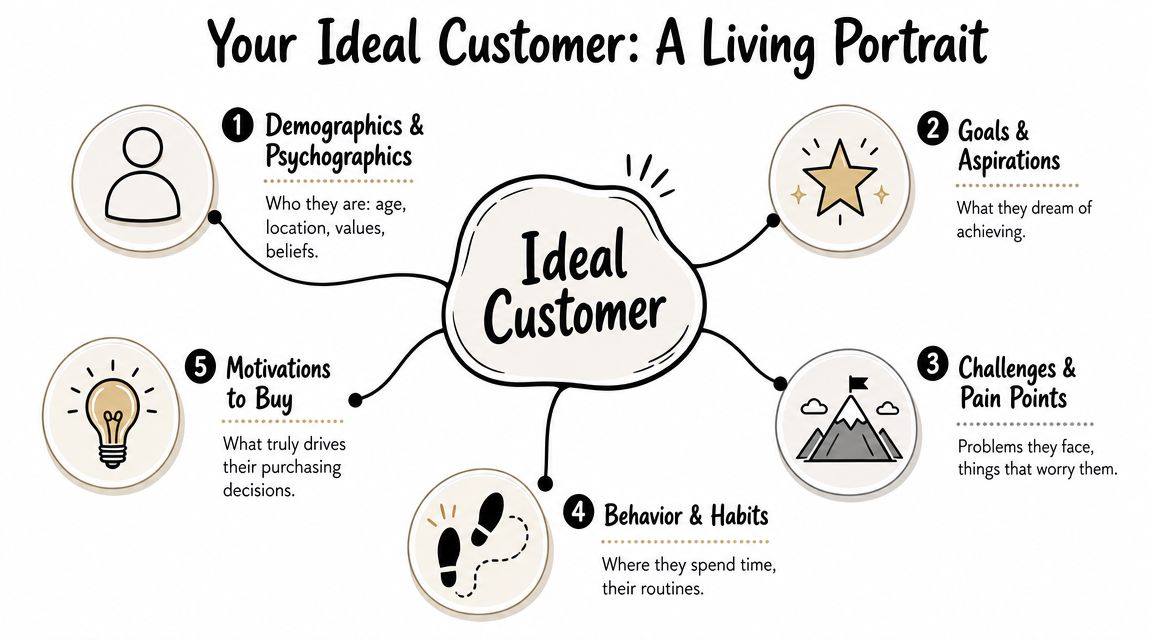
Write a living portrait
Use five lenses and keep it human:
- Daily rhythm. What does her day look like? Rushed mornings, packed afternoons, quiet evenings?
- Taste level. Is she drawn to clean design, cozy comfort, ingredient transparency, local discovery?
- Purchase trigger. What gets her to buy now? Running out. Wanting an upgrade. Needing a gift. Starting a new routine.
- Hidden objection. What makes her pause? Shipping cost, ingredient confusion, not knowing if the product is worth switching for.
- Desired feeling. What does she want after the purchase? Relief, ease, comfort, confidence, a better morning, a calmer night.
A good audience sketch should help you answer, “Why this product, from this maker, instead of the easy default?”
Here's the test I use. If your customer portrait could describe ten thousand brands, it's too vague. If it helps you choose a tone, product photo, and headline, it's working.
And yes, social platforms can sharpen this picture. If short-form video matters to your category, this guide on how to find your ideal TikTok audience is worth reading because it pushes you to look at behavior and content fit, not just demographics.
The best customer profile isn't static. It breathes. It changes as your buyers change. Keep it simple enough to use and specific enough to matter.
Find Your People Where They Already Are
A lot of audience advice falls apart here. It tells you who your customer is, then jumps straight to “post more on social.”
That's lazy. Your people are not hanging out everywhere. They have habits. They search in certain ways, trust certain voices, and buy in certain contexts. If you don't map that properly, you'll burn time on channels that never had a real shot.
Match the channel to the buying habit
Guidance from Appinio on target audience research is useful here because it pushes segmentation toward measurable demographic and behavioral variables. It also points to a mix of demographic, behavioral, consumer-expenditure, and geographic data from customer databases, surveys, and website analytics. That repeated measurement beats a one-and-done persona workshop because buying behavior changes.
That's the key. Pick channels based on behavior, not vibes.
If your customer buys coffee to make mornings easier, search matters. Someone looking for a smoother daily brew may respond to a clear product page much more than a trendy reel. For example, Single Origin Nicaragua Coffee Beans, 100% Arabica, Medium Roast, Low Acidity Smooth Cup, Whole Bean, 12 oz Bag | Three Avocados by Loyaltie is described as a sweet, low-acid medium roast made from 100% Arabica beans for a balanced, fruity finish without harshness. That kind of product appeals to someone searching for a better everyday cup, not just someone passively scrolling.
If your buyer discovers skincare or wellness through trusted creators, partnerships may work better than broad ad targeting. If they ask friends in neighborhood groups where to get better pantry staples or pet products, local community spaces may outperform polished brand content.
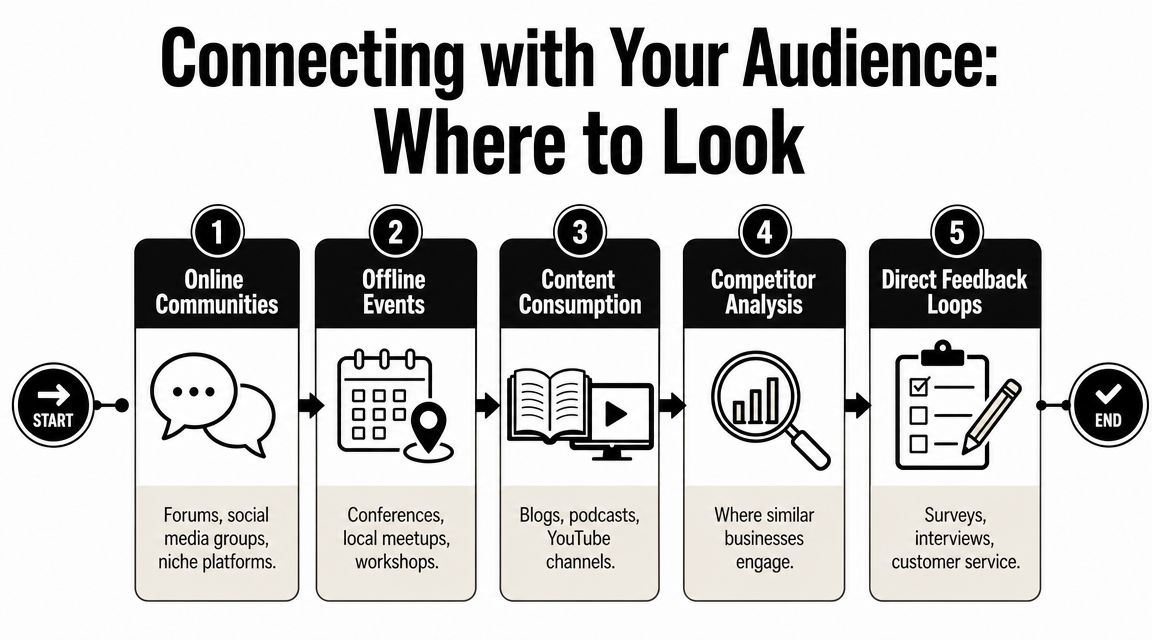
Build a channel map you can actually use
Make a short list with real places, not generic platform names.
- Search intent. What would they type when they're ready to solve a problem?
- Community spaces. Which groups, newsletters, or creator circles do they already trust?
- Offline touchpoints. Farmers markets, pop-ups, neighborhood events, fitness studios, gift shops.
- Content habits. Do they watch demos, read ingredient breakdowns, or save recipe-style posts?
- Buying environment. Are they buying from your site, from Instagram DMs, through events, or through a marketplace?
A marketplace can also be part of the mix if it helps shoppers buy directly from the maker without a middleman. For example, what community commerce means is relevant if you want to think beyond one-off transactions and closer to direct local discovery.
Don't ask, “Which channel should I use?” Ask, “Where does this customer already go when they want a better option?”
If you want to sharpen the execution side once you've chosen channels, Klap's social media marketing advice is helpful because it focuses on practical posting habits rather than empty “be everywhere” advice.
Ask and Listen How to Validate Your Audience
Your audience profile is still a hypothesis until people confirm it with their behavior.
Makers face a choice: get sharp or stay confused. The sharp ones ask direct questions, listen without defending their product, and notice where real buying stories don't match the story in their own head.
Ask about past behavior
When you talk to customers, ask about what they already did. Past behavior is more useful than polite future promises.
Bad question: “Would you buy this new product?”
Better question: “Tell me about the last time you bought something like this.”
That one question opens the door to everything that matters. Where they shopped. What they trusted. What almost stopped them. What annoyed them. Why they switched.
For quantitative research, Appinio's audience analysis guidance recommends 500–1,000 respondents to improve statistical significance and reduce margin of error in surveys. It also recommends pairing surveys with qualitative interviews, internal data, and user testing. Most independent brands won't start there, and that's fine. The lesson is simpler: don't build your whole strategy from a tiny, biased sample and call it insight.
Use a simple interview table
Here's a practical template you can use in email, a short form, or an in-person conversation.
| Question Category | Sample Question | What You're Listening For |
|---|---|---|
| Buying trigger | What was going on when you decided to buy this kind of product? | Immediate need, frustration, gift occasion, routine change |
| Previous solution | What were you using before? | Competitors, substitutes, “good enough” defaults |
| Decision factors | What mattered most when you compared options? | Ingredients, taste, scent, origin, convenience, trust |
| Friction | What nearly stopped you from buying? | Price sensitivity, uncertainty, shipping, confusion |
| Discovery | Where did you first hear about products like this? | Search, referrals, creators, events, community groups |
| Language | How would you describe the product you wanted? | Customer wording you can reuse in copy |
| Repeat potential | What would make you reorder without thinking twice? | Consumption habits, consistency, packaging, ease |
Ask a few follow-ups that keep them in story mode:
- “What made that important?”
- “What did you try before that?”
- “How did you decide this one was worth it?”
- “What would have made the choice easier?”
The point isn't to hear compliments. The point is to hear how people actually decide.
You'll notice patterns fast. Not in giant statistical charts. In repeated motives, repeated hesitations, and repeated language. That's what validates your audience.
Speak Their Language with Messaging That Connects
Once you know what your customer wants, your messaging should get simpler.
Most product copy fails because it describes the item, not the outcome. It lists materials, scents, ingredients, or process details and assumes the buyer will connect the dots. Some will. Most won't.
Lead with the upgrade
Independent brands win when they frame the product as a clear improvement to everyday life.
Don't sell “locally roasted whole-bean coffee.” Sell the smoother morning, the better cup, the reason to stop settling for stale shelf coffee. Don't sell “botanical soap with lavender.” Sell the few minutes of quiet at the end of a loud day.
That's the key move. Your product isn't competing with similar products only. It's competing with habit, convenience, and inertia.
Try this shift:
Feature-first
“Made with natural oils and floral notes.”Benefit-first
“Turns a rushed shower into a calmer reset, with a scent that feels soft instead of overpowering.”
The second version gives the buyer a reason to care now.
Rewrite features into benefits
Use a simple conversion exercise. Take one product detail and ask, “Why does that matter to this person?”
A few examples:
- Low-acid coffee becomes easier daily drinking without harshness.
- Direct-from-maker skincare becomes more trust, fewer mystery ingredients, and a product with a real point of view.
- Small-batch pantry goods becomes fresher flavor and a more satisfying everyday staple.
This also changes how you write headlines, captions, and product descriptions. Speak to the moment of use.
Instead of “Handmade balm with clean ingredients,” try language closer to, “Keeps your routine simple when your skin is angry and you don't want ten steps.”
Instead of “Vegan flavored coffee with no added sugar,” say what the buyer gets from it. Maybe it delivers a cozy, dessert-like cup without turning breakfast into a sugar bomb. That's a reason.
Good messaging makes your brand feel like it understands the buyer's standards. That's what creates connection. Not louder claims. Not trendier language. Just sharper relevance.
An Audience Is a Relationship Not a Target
If you treat audience research like a one-time worksheet, you'll miss the whole point.
People change. Their routines change. What felt like a treat last year might feel like a necessity now, or the other way around. A maker who keeps listening will keep up. A maker who freezes the customer profile in time will drift out of sync.
Keep the conversation open
The strongest brands keep a living loop between product, feedback, and message.
That means you notice what new customers ask. You notice what repeat buyers come back for. You notice which words appear in reviews and which product angles fall flat. Then you adjust. Not with a full rebrand every month. With small, smart corrections.
A simple habit helps. Revisit your customer notes every season and compare them with current orders, comments, and questions. If your audience profile no longer matches the people buying, change the profile. Don't defend outdated assumptions.
Your audience is not a target to hit once. It's a group of people you keep learning to serve better.
Choose places that help direct connection
This is also why channel choice matters so much. You want selling environments that let people feel the difference between your product and a generic alternative.
For some makers, that's their own site. For others, it includes events, creator partnerships, or marketplaces where shoppers are already looking for independent brands and want to buy directly from the maker. Trust matters too, especially when someone is trying a new brand for the first time. If that's an area you're tightening up, this piece on how to build customer trust is worth your time.
And if you sell coffee, skincare, wellness, pantry goods, pet products, or similar everyday categories, remember what you're really offering. Not charity. Not guilt. Not “support local” as the whole pitch. You're offering a better product, made by real people, without the middleman. That's a strong position when you say it clearly and back it up with the experience.
The makers who grow aren't the ones who shout the loudest. They're the ones who stay close to the buyer.
If you want a place where shoppers can discover and buy directly from the best independent brands in the US, take a look at Loyaltie. It's a marketplace built around direct connection, making it easier for people to find quality products from real makers and easier for brands to meet customers who already care about what makes those products worth buying.